WWE 2K26 review: Keeps its place at the Head of the Table but still isn’t Mr Perfect
2K’s latest is the best there is, the best there was, but hopefully not the best there ever will be
- Creative director
- Lynell Jinks
- Key Credits
- Alan Flores (Design Director), Jeffrey Horn (Art Director)
March is always a big month for wrestling fans, and not just because it’s Sting’s birthday on the 20th (happy 67th when it comes, big man).
For a sizeable group of the wrestling fanbase, March is WWE 2K month, where everyone feverishly snaps up the latest entry in 2K’s long-running grapple ‘em up series, then – because it’s the 21st century – quickly runs to social media to moan about what they don’t like this time… before getting on with it and putting hundreds of hours into it anyway.
This year it’s already clear what the main bone of contention is going to be. WWE 2K26 completely overhauls the game’s reversal system for the first time since the series made its much-celebrated comeback with WWE 2K22 (after taking a year out due to the critical panning WWE 2K20 took), and while I can fully understand the reason for doing it, such a large change certainly takes some getting used to.
One of the main reasons 2K22 felt so much better to play than its shonky predecessor was the removal of reversal stocks. In 2K20, a player had a set number of reversals available to them, and every time they reversed a move their stock was reduced by one. When they ran out of reversals they were essentially defenceless until they slowly recovered their reversals one at a time. It resulted in immensely frustrating fights where players were punished for playing well.
This was changed in 2K22 and reversal stocks were scrapped, giving players infinite reversals but making the timing window much shorter to make up for it. The problem is, over the course of the next four games, players got increasingly better at learning the exact timing to reverse most moves, meaning a 2K25 match between two expert players is essentially a reversal-fest until someone blinks first. It had become a problem again, albeit for the opposite reason.
The game had basically reached the point where the best way to play was not to attack your opponent first, but to wait for them to attack first and reverse it. 2K26 attempts to remedy this, then, by tying reversals to stamina, entirely changing the way the game is played for some players. This time, along with your health, signature and finisher bars, you have a new yellow bar which represents an all-encompassing stamina and reversal meter.
While your stamina still slowly goes down any time you run or rapidly perform a series of quick moves – something that’s been in the series for a while to prevent spamming the attack buttons – now when you perform a reversal or dodge an attack a big chunk is taken off the bar too. Once it runs out you’re given a new temporary purple gauge, which signifies that your wrestler has ‘blown up’ and is exhausted. During this time, you can still move and perform attacks, but you can’t perform reversals until the purple gauge ticks away.
For the expert players who understood that reversing moves has been the bedrock to success for the past few years, it’s a huge shift in the way the game is played. Now, instead of waiting for the opponent to move first so you can reverse them, the new strategy is to attack first and try to get your opponent to reach their purple state before you do.
On paper – and in practice, after a not-insignificant adjustment period – it does make matches more back-and-forth like the real thing, but anyone who knows this community (as with any passionate community online) knows the initial knee-jerk reaction will not be a positive one, and acceptance will only come after a while. Look forward to that, then.
This is really the only major gameplay change in the ring this year in WWE 2K26. There’s also a new push move you can execute by grappling then holding L2 / LT, which lets you quickly force your opponent backwards against the ropes or the turnbuckle – it’s more satisfying than having to hold L1 / LB and slowly drag them there, but it doesn’t make a huge change to gameplay.
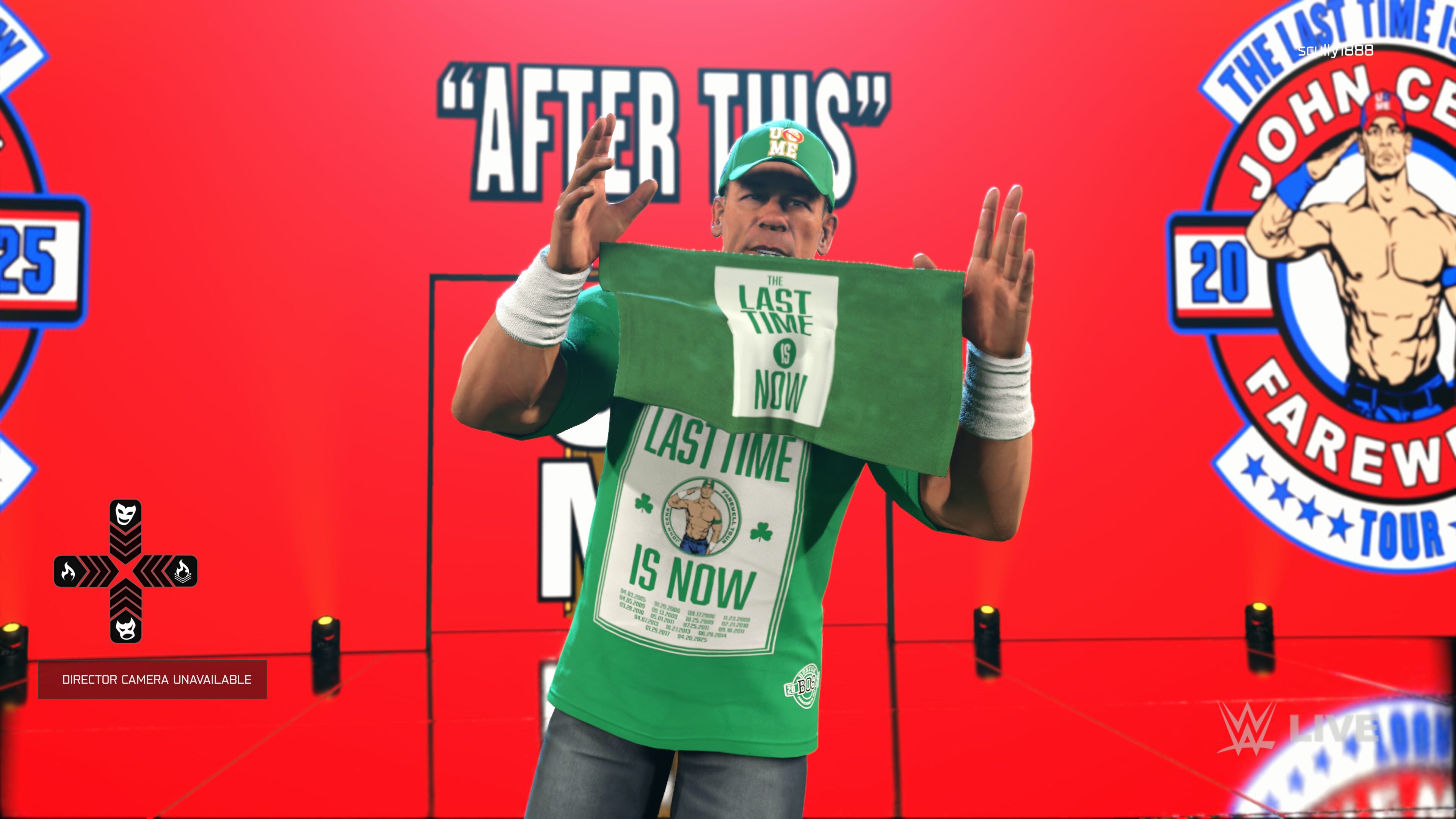
There have been other new additions – such as the option to manually perform taunts and trigger pyro during entrances, updated physics which see wrestlers more realistically land on things like ladders and steel steps, and new weapons like thumbtacks and shopping carts – but these are mainly new nice-to-haves rather than fundamentally game-changing.
The same goes for the new match types, which are certainly welcome because they make an already hefty variety of matches even more expansive, but don’t change things massively either. The new Dumpster match is a Casket match with a different box, while the I Quit match is basically a Submission or Last Man Standing match with a different mini-game at the end (though the addition of ‘blockers’ to hinder your opponent is fun).
The marquee mode is the Inferno match, which is a 1v1 fight where performing big moves on your opponent increases the temperature of the flames around the ring. Once the temperature hits maximum it basically turns into Royal Rumble rules, where you win by throwing your opponent out of the ring (and into the flames, where they’re promptly and comically extinguished by a referee). Again, the Inferno match isn’t hugely different in gameplay terms, but it’s a spectacle at least, and lets Visual Concepts show off the sweat tech it loves to dial up to 11 in the NBA 2K games.
“The Inferno match isn’t hugely different in gameplay terms, but it’s a spectacle at least, and lets Visual Concepts show off the sweat tech it loves to dial up to 11 in the NBA 2K games.”
As ever, WWE 2K26 boasts an intimidating selection of modes, each of which could almost pass as a full game on their own back in the day. This year’s Showcase mode – which takes a single superstar, faction or era and lets players relive key moments in their history – focuses on the career of CM Punk, who introduces each fight in his typically charismatic way.
Whereas last year’s Bloodline Dynasty Showcase meant there was a bit more variety – one minute you were playing as the Usos, the next you were controlling Yokozuna – the fact that this year’s Showcase is focused on a single wrestler means things naturally feel a bit more repetitive here, though thankfully when you reach the ‘What If’ section (where Punk gives you dream scenarios that never took place) you get to choose to play as either Punk or his opponent, mixing things up a little.
It’s still an entertaining mode regardless, and the only way to unlock certain wrestlers (such as Stone Cold Steve Austin, AJ Lee and JBL) as well as older variants of other wrestlers – you won’t be able to move for old CM Punks, obviously – and given that you likely won’t come back to it after taking the 4-5 hours needed to beat it, it’s a good starting point.
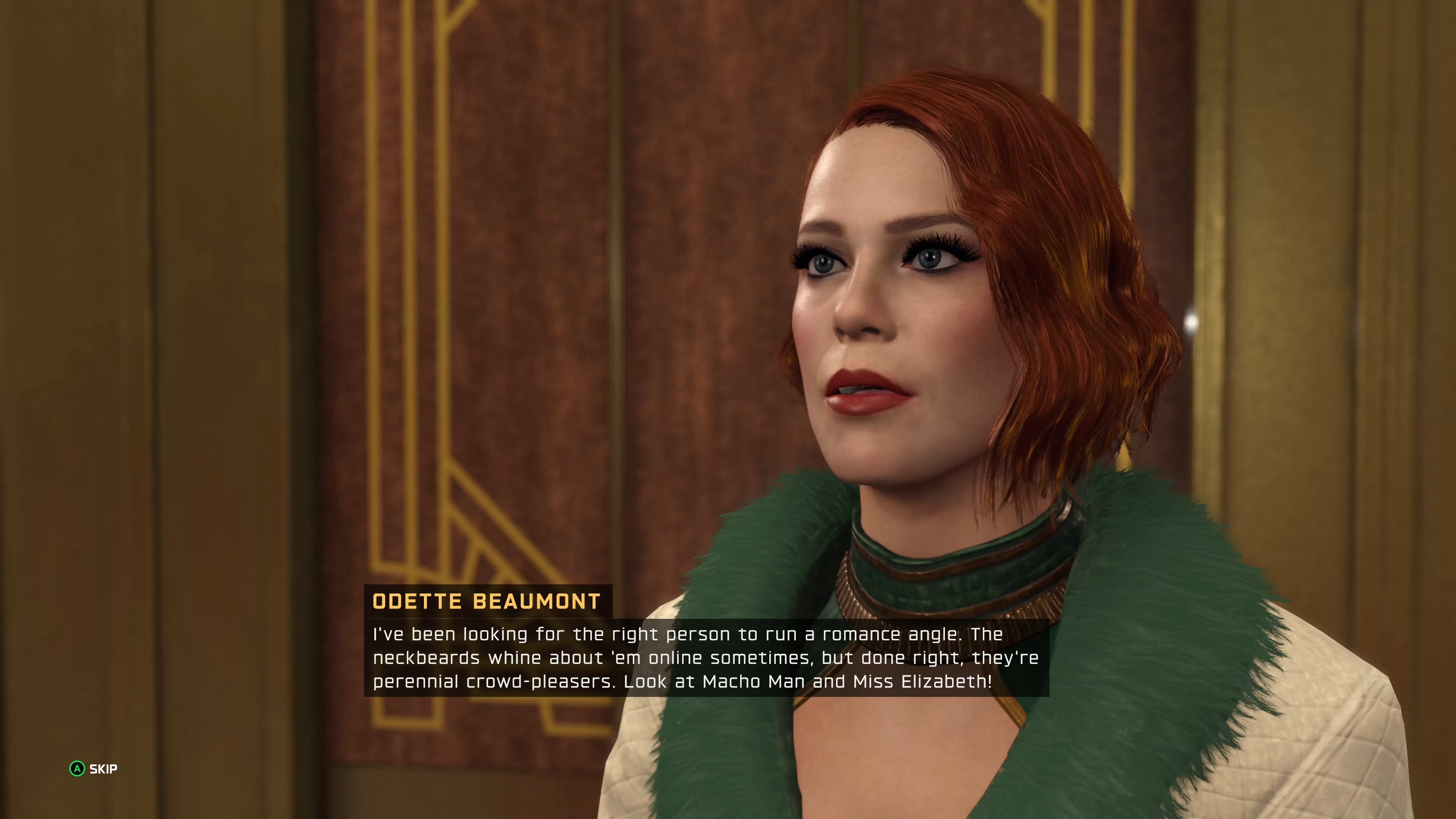
Story mode MyRise also returns this year, and this time the angle is that the player is controlling the Archetype, a superstar who was previously the champ but has been out for two years (for reasons you get to choose). There are separate male and female MyRise stories this time, though the general idea is the same – Paul Heyman is representing either Bron Breakker or Jordynne Grace, and you have to fight your way up from the bottom to earn a title shot.
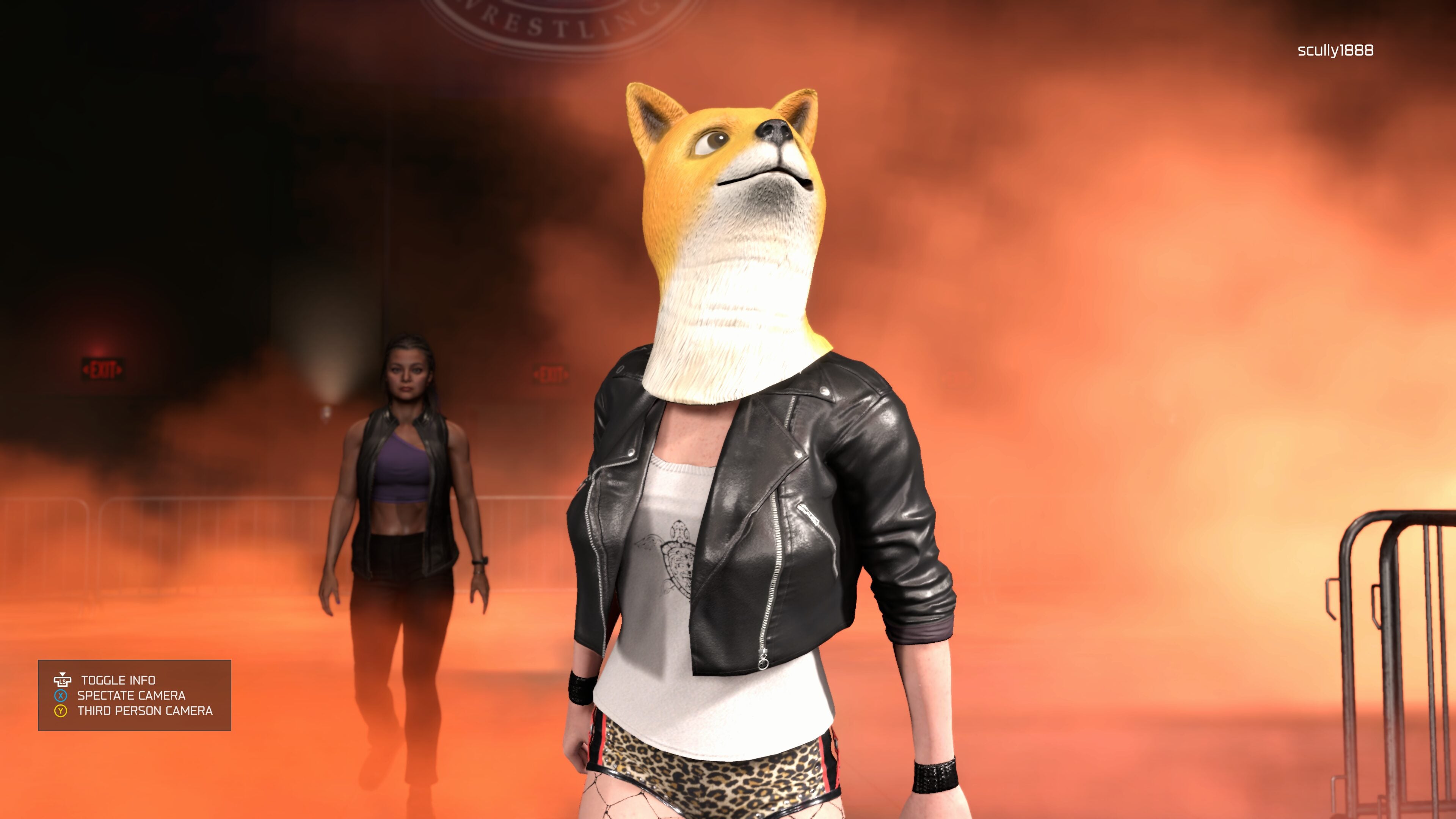
Last year’s MyRise had paths that branched all over the place, and while it was fine in terms of variety it became a bit of a mess when trying to replay the game and unlock everything. This time it’s a lot easier to keep track of this, with two clear face and heel paths. While you can jump from one path to the other at certain points in the story, players going through MyRise with the main aim of unlocking everything now have a much more straightforward route – play through it as a face, play through it again as a heel, job done.
There’s also a new secondary unlock system in MyRise where more wrestlers, arenas, MyFaction cards and other items can be unlocked over time with the star ratings you get at the end of each match. While this rewards players for putting together entertaining fights, the fact you can continue defending your title once you’ve finished the story means you can still grind out sloppy 2-star matches until you reach the 200 stars needed to unlock everything, should you choose.
The semi-open world Island mode returns for the second year, and the new story has you choosing between one of three factions – the Order of Anarchy (led by CM Punk), the Order of Shadows (Rhea Ripley) or the Order of Tradition (Cody Rhodes). While you get to play every main path story regardless of which you choose, the cutscenes you get will differ.
There’s certainly more to do in The Island from day one this time around, thanks in no small part to the introduction of Towers. These essentially bring the roguelike Faction Wars mode over from MyFaction, and have you working your way through separate runs, taking on a series of opponents and collecting rewards along the way. Each Order has its own Tower, and completing runs earns you reputation points which unlock new gear and other items.
Each Tower has its own unique rewards and you can take on all three Towers regardless of which Order you choose, plus there are limited-time Towers planned – the first is a luchador-themed one where you can unlock masks – so it’s clear that 2K is trying to give players a reason to stick around in The Island even once the main story is finished, something that was a problem last year.
Less welcome is the new Prestige system in The Island, which lets players reset their stats for more rewards up to three times. Naturally, the game sells this as a good thing – each time you Prestige your OVR cap goes up, and you get extra perks – but in practice the fact that building stats can only be done with the premium VC currency means it’s not a great feeling having to rebuild every time.
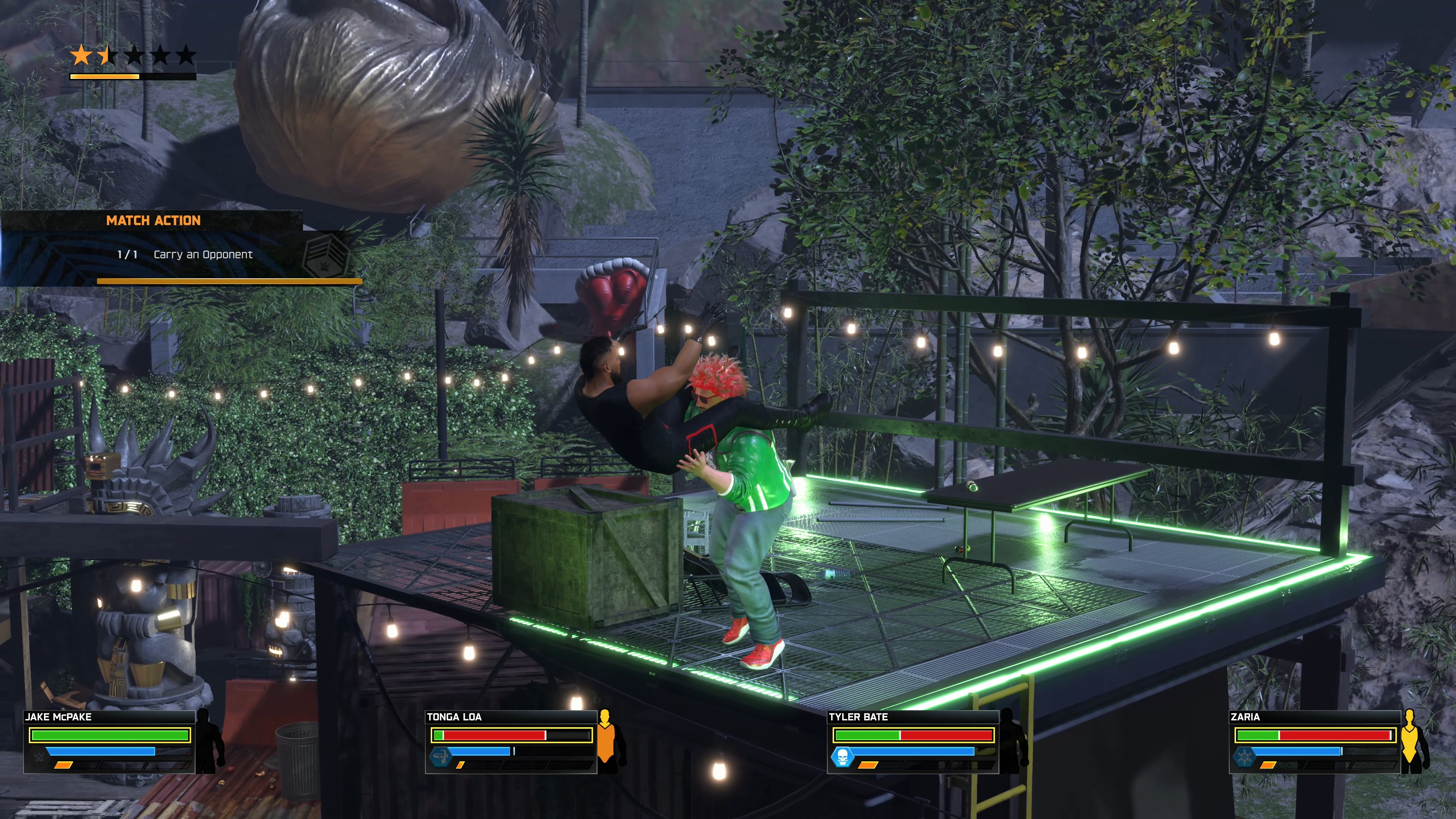
Then there’s MyFaction, WWE 2K’s equivalent of NBA 2K’s MyTeam and EA FC’s Ultimate Team. This time 2K has ditched the men’s and women’s divisions in MyFaction, giving more freedom in putting together your own four-person squad. A new Quick Swap match type – where you can instantly switch between partners and have to KO all four of your opponent’s wrestlers before they can KO all four of yours – is fun if a little lengthy, and the addition of chemistry adds buffs and nerfs depending on your foursome.
While MyFaction remains entertaining – it’s easily the mode I put the most time into last year, and I can see it being the mode I keep returning to in 2K26 too – it’s difficult to ignore the notorious practices slowly creeping in year-on-year, given that this is the one mode that pushes microtransactions heavily (The Island does it too, but you earn enough currency through normal play that it’s unnecessary).
In recent years MyFaction has been criticised for some of its Live Events. These time-limited fights give big rewards and often require certain ‘cards’ (wrestlers) to take part in them. While these cards are eventually added to the Card Market and can be bought with currency – either earned in-game or with real money – there are often situations where you need a specific card that’s currently only found in random packs (i.e. loot boxes), meaning you have to throw money at it until you get the specific card you need.
At the time of writing the game isn’t out yet and there are already a bunch of these card-specific Live Events, and for players who have a completionist mindset it can be very disheartening to realise right off the bat that, once again, it’s going to be practically impossible to collect all the exclusive Persona outfits in this mode (which then unlock across all other modes) without heaps of money and luck in equal measure.
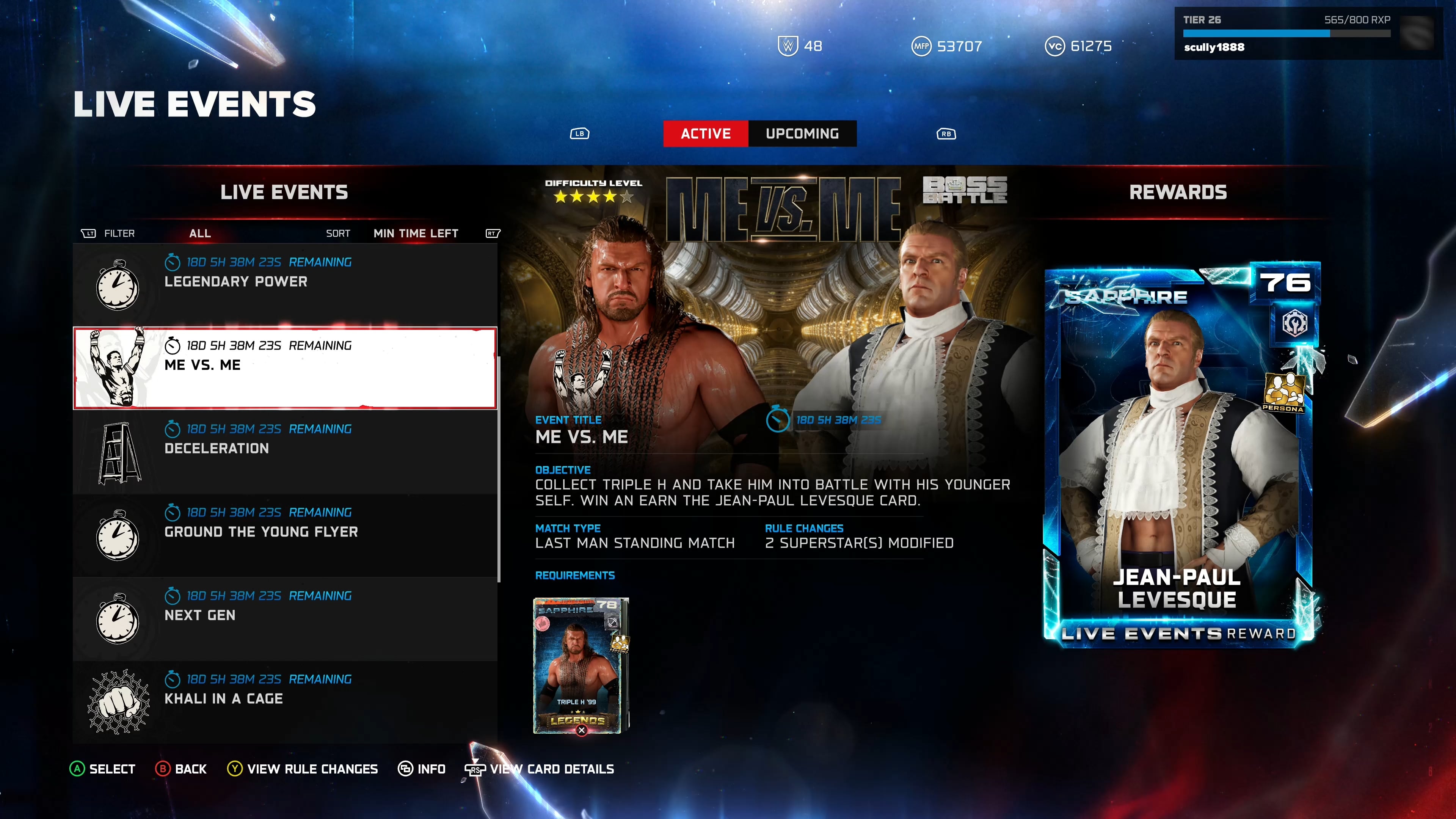
The new stamina / reversal system doesn’t help with this either, because as WWE 2K25 went on some of its Live Events became comically hard, needing a steady stream of perfect reversals to have a chance against the AI opponents. Much as the new system makes multiplayer matches more interesting, I’m not looking forward to taking on eventual 5-star difficulty AI opponents with it.
Another point which will be throwaway to some but important to others like me – it’s not clear if this is a bug but the option to hold buttons down instead of tapping them in some mini-games has now been removed in MyFaction. The submission mini-game (which is the same one in ambulance, casket and dumpster matches) is a button-bashing affair which is weighted far too aggressively in favour of AI opponents, and battering a constantly-changing button prompt is tiring, especially for an old duffer like me who often has joint pain in my fingers and wrists.
2K25 let you replace the button-bashing with simply holding the button down, and while this still required some skill – the button prompt changes every few seconds so you need to quickly switch or lose your momentum – it greatly reduced the stress on my hands and my controller. This is still an option for other modes, but it’s now been turned off for MyFaction, meaning button-bashing is mandatory. The cynic in me thinks this is a deliberate move to make some Live Event matches even harder – expect more submission-only and ambulance matches in the future – but the optimist (and accessibility advocate) in me hopes it’s an oversight that will be fixed in a patch.
All these modes and the others returning alongside it – Universe, MyGM, even standard exhibition matches – are tied into the Ringside Pass, the new system for unlocking more content including DLC wrestlers. Rather than releasing six waves of paid DLC, 2K is now using a Battle Pass style season structure with each season lasting roughly seven weeks. Thankfully, a season won’t expire when the new one arrives, so if you’re still working through Season 1 when Season 2 turns up in April just before WrestleMania, you can choose to keep working on the first pass before moving to the next one.
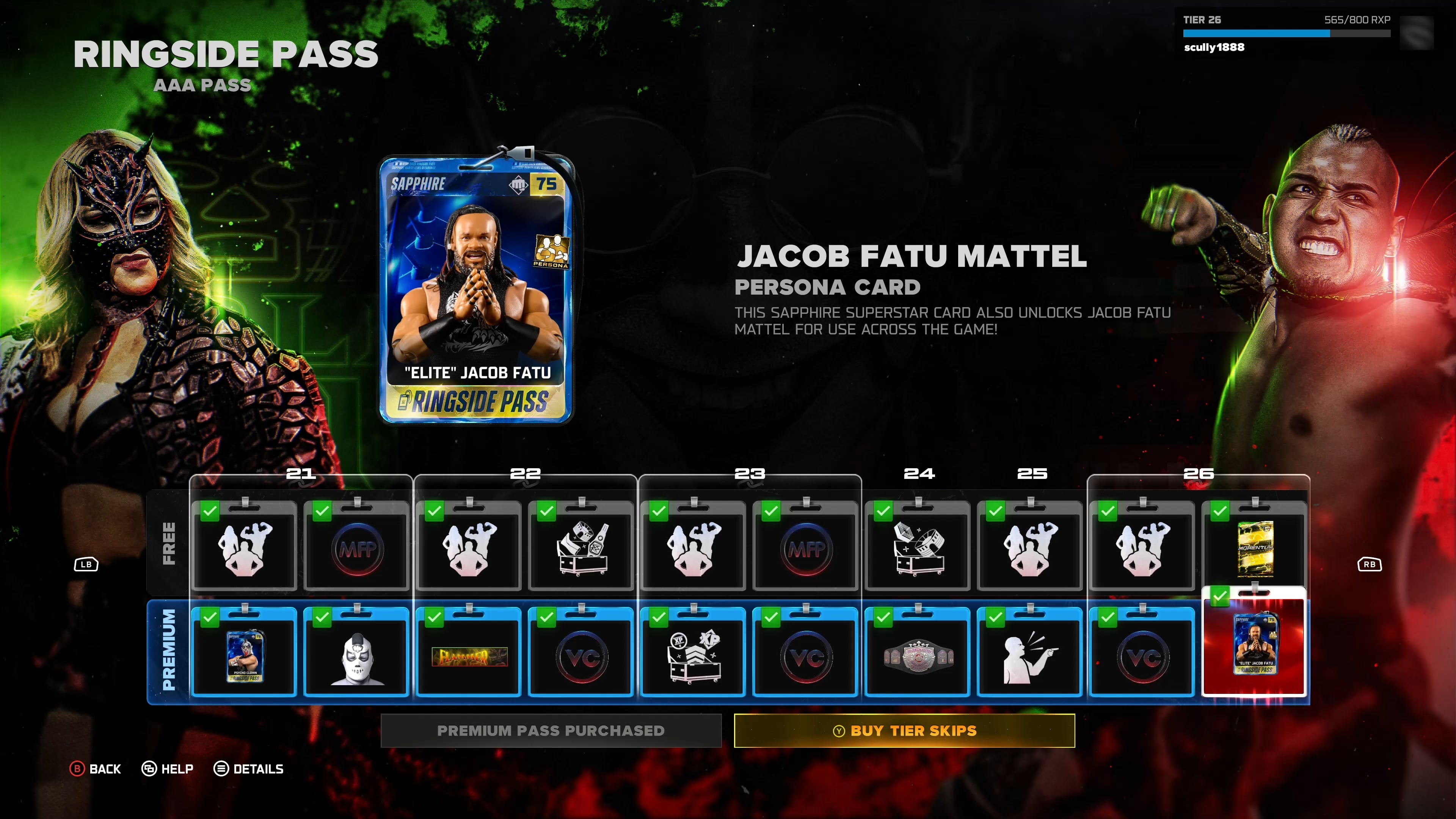
There has been a lot of backlash online about the Ringside Pass, most notably the option to pay money to skip the tiers and unlock everything at once. It should be stressed that this really isn’t necessary – Season 1 consists of 40 levels, and after completing Showcase, completing MyRise once, playing MyFaction for a few hours and playing the first few matches in The Island, I was on level 26. All modes earn you RXP for the Ringside Pass, and there are daily and weekly rewards which earn you more (The Island, for example, has a weekly reward which essentially gives you a full level’s worth of RXP in one go).
Battle Pass systems will always have their critics, but the fact the Ringside Pass unlocks tiers relatively quickly and reduces FOMO by not letting its seasons expire means it’s far from the most egregious example of the practice in gaming, especially when MyFaction is sitting there with its pricey random loot boxes. The free tier of Season 1 also unlocks the vast majority of the legend superstars, meaning players who only tend to buy the base game can unlock them a lot faster than usual.
“The fact the Ringside Pass unlocks tiers relatively quickly and reduces FOMO by not letting its seasons expire means it’s far from the most egregious example of the practice in gaming, especially when MyFaction is sitting there with its pricey random loot boxes.”
As has been the case for some time now, the main benefit of WWE 2K26 is that you can engage with as much of this or as little of it as you see fit. There’s such a wealth of thematically separate modes – the Ultimate Team squad-building of MyFaction, the story mode of MyRise, the management sim of MyGM, the open-world comedy fantasy nonsense of The Island, the curated presentation of Showcase – that the game is essentially a buffet where players can choose to fill their plate with certain dishes and completely ignore others should they choose.
In this awkward metaphor Universe mode is pasta, the ever-reliable offering that can completely fill you on its own. For those not aware of it, Universe is the sandbox mode where players can create their own show with their own rosters, set a calendar with weekly events and PLEs, then play through it endlessly week-by-week, with rivalries either forming automatically or as chosen by the player.
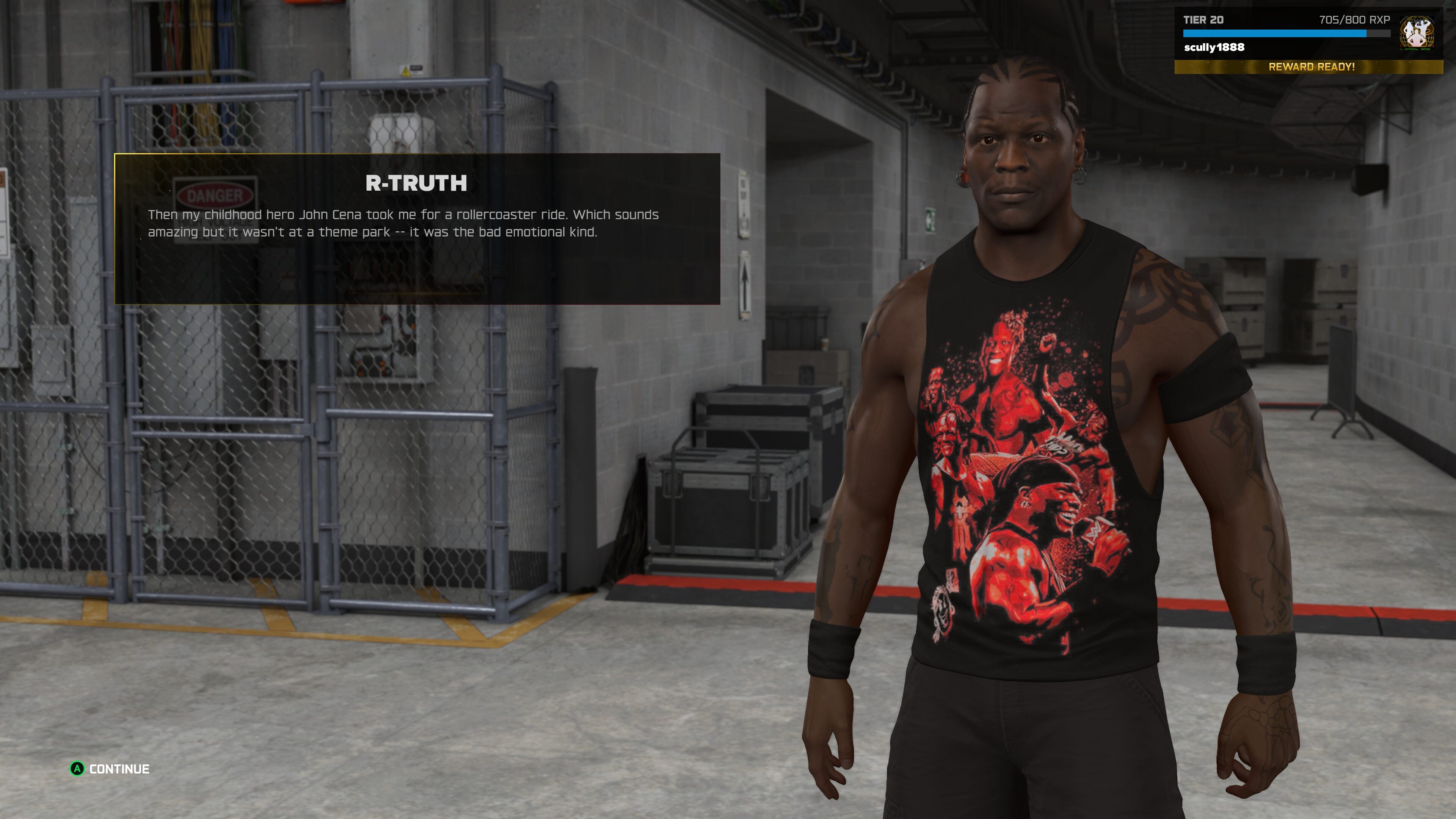
There are some players who only buy a WWE 2K game for this Universe mode, and – even if you only buy the base game and don’t bother unlocking anything in the other modes – the starting roster is large enough for a hefty Universe. A new Universe Wizard option also makes the initial setup faster, if you aren’t interested in filling the roster manually.
The result of all this is another enormous wrestling package that offers as much or as little as you want from it. The fact that microtransactions are confined to MyFaction and (to a lesser extent) The Island, rather than being shoehorned into every mode, mercifully means that players can easily put tens or hundreds of hours into the base game without ever spending another penny or feeling the pressure to do so.
Further reading
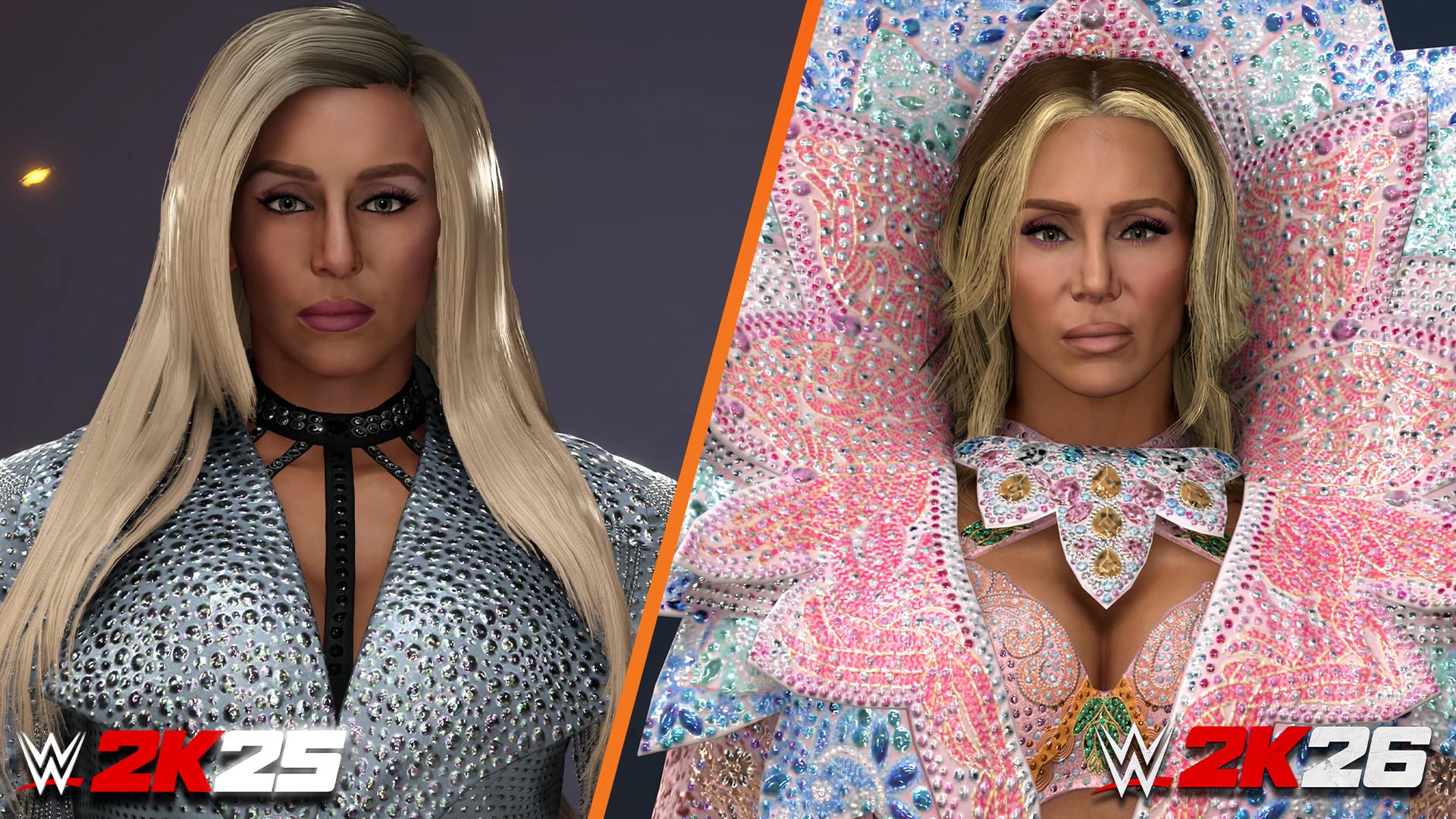
The new reversal system will divide players, but the reality is that – as the only big show in town – they’ll persevere with it and eventually realise its benefits, even if it has the potential to be a hindrance in MyFaction Live Events in the future.
By and large, though, the drawbacks this year are surpassed by the improvements made, meaning WWE 2K26 comfortably takes the title from its predecessor, even if it’s more of an Evolution than an entirely New Day.
WWE 2K26 review
WWE 2K26 offers another net gain over its predecessor, ensuring the series continues to evolve in a positive direction. While its new reversal system will initially divide players and the spectre of microtransactions continues to loom over MyFaction, the overall package introduces more quality-of-life features to ensure each of its numerous modes is better than it was last time.
- A typically enormous helping of modes and content
- Simplified MyRise structure is an improvement
- Quick Swap matches are a welcome addition to MyFaction
- CM Punk's Showcase is entertaining
- Revised stamina system means reversal-fests are gone...
- ...but that could be exploited by harder AI
- MyFaction continues to slowly chip away at fairness