Splatoon Raiders review: A challenging, all-out action game that’s well worth 50 squid
Nintendo’s solo spin-off may be a one-trick pony, but it’s a thoroughbred
- Director
- Yoshihiko Ito
- Key Credits
- Seita Inoue (Producer), Shintaro Sato (Co-producer)

Splatoon is an unusual series for Nintendo, in that it mainly revolves around the one area Nintendo isn’t usually famed for – online multiplayer.
There’s doubtless a sizable portion of the Nintendo player base who may be curious about Splatoon’s popularity and unique style but aren’t really interested in playing with others online – and that’s even before you take parents with younger players into account – and for those people, Splatoon may have passed them by so far.
While Splatoon 2 and 3 had single-player modes, they were very much considered add-ons to the main multiplayer game. Splatoon Raiders bucks this trend with the first solo-focused game in the series, with not a shred of competitive multiplayer to be found (though there’s local and online co-op here if you like).
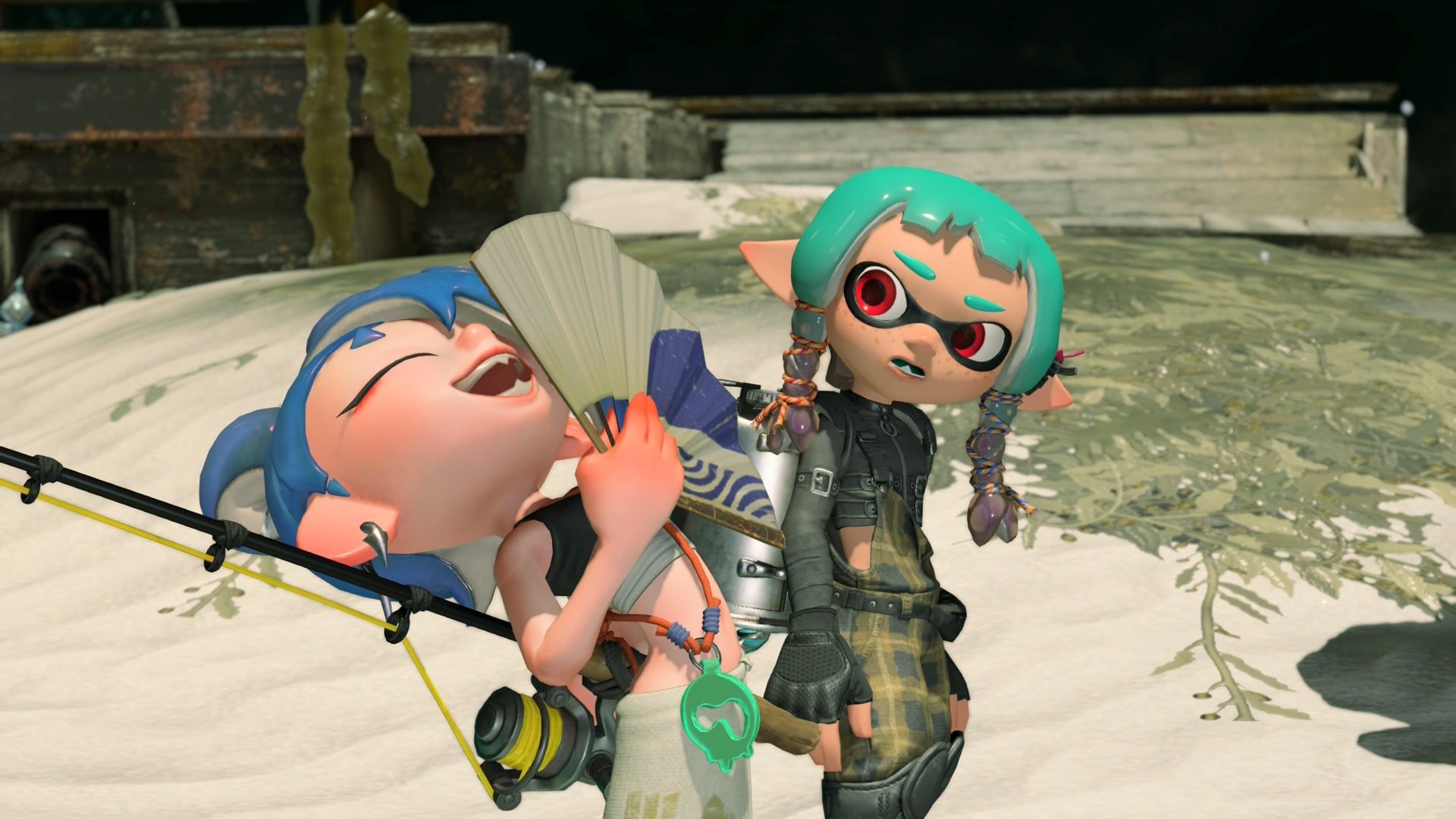
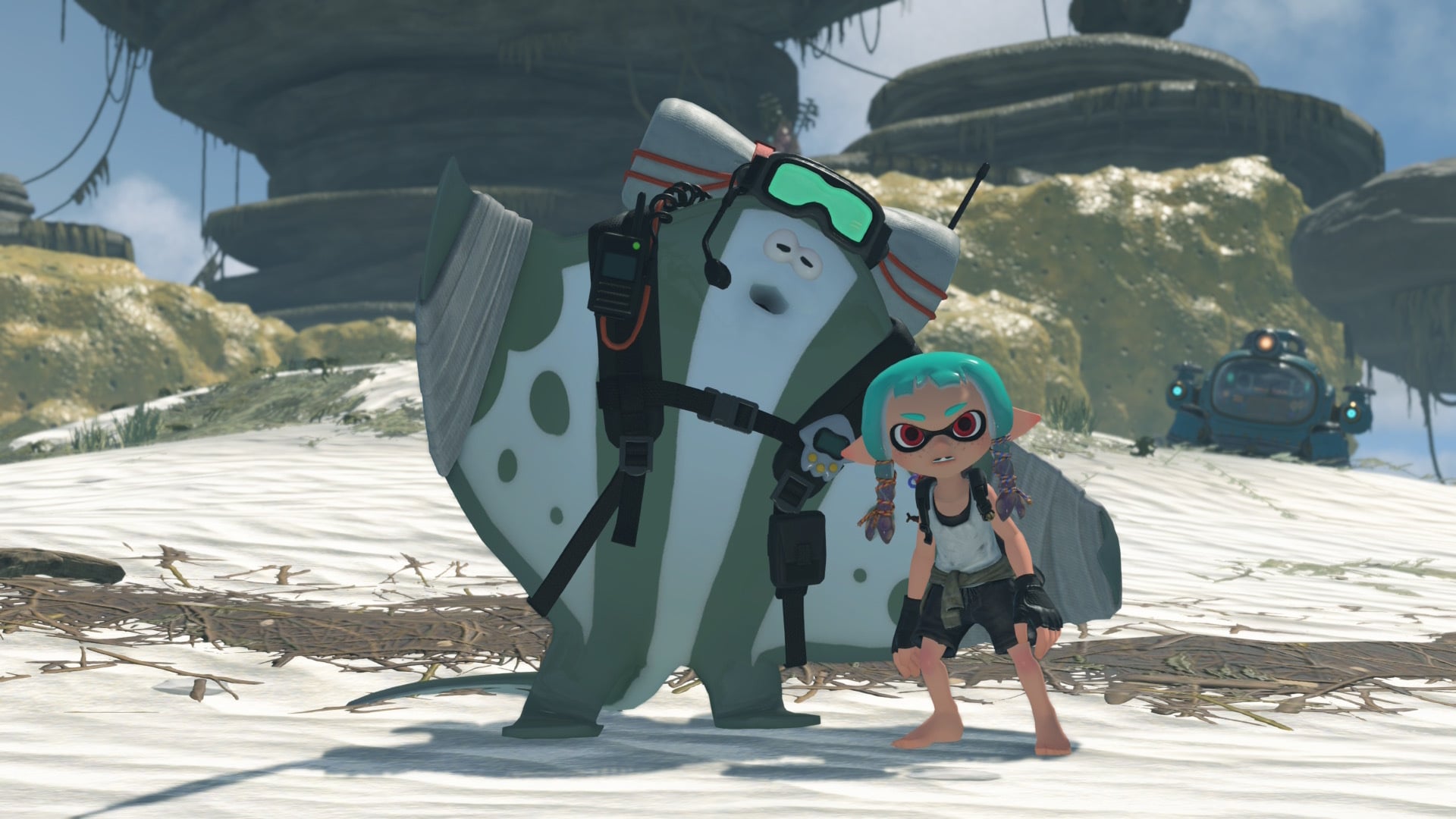
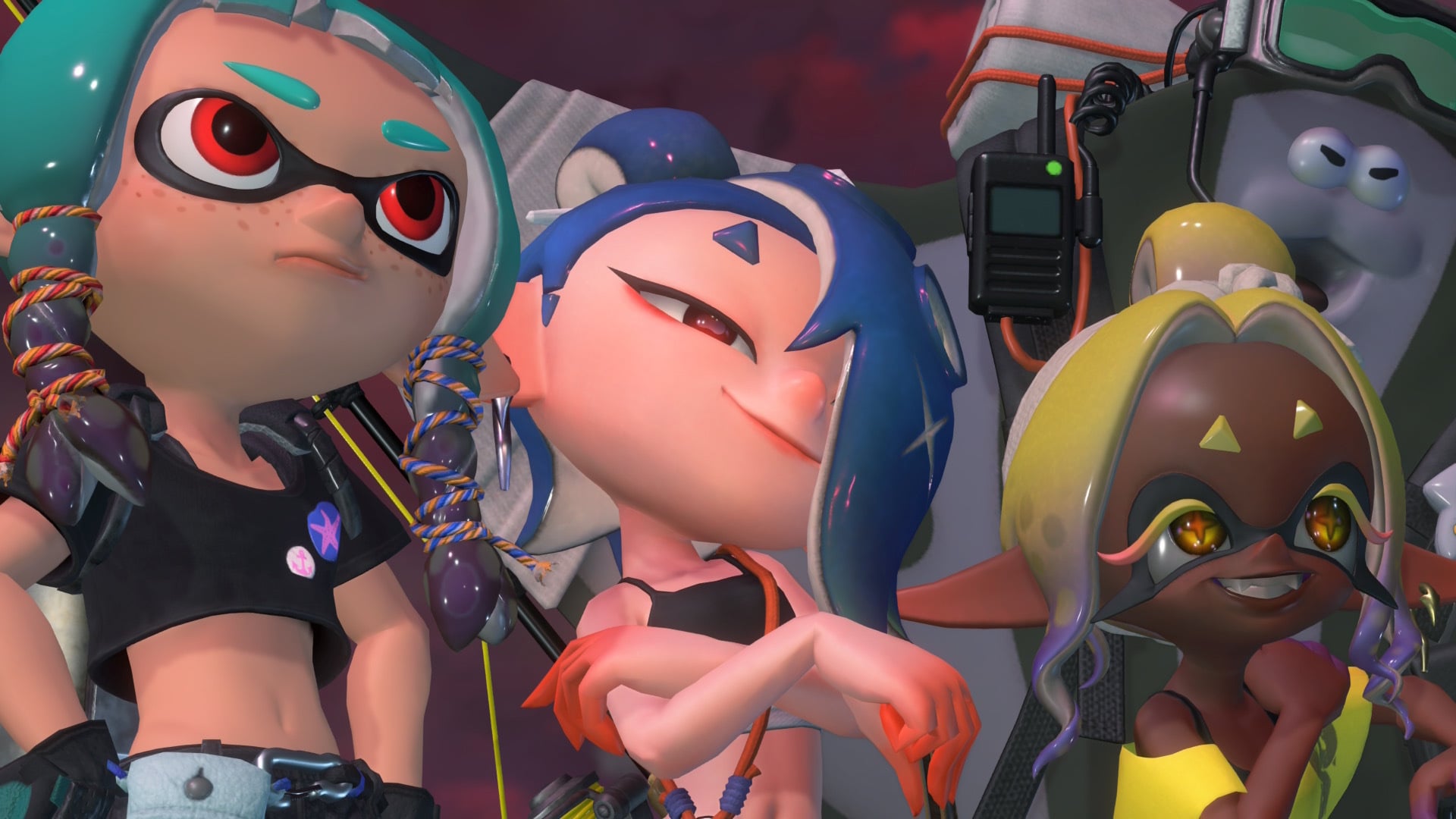
The game opens with an unnamed mechanic flying a helicopter for Deep Cut – the band from Splatoon 3 – over the mysterious Spirhalite Islands. When a large beam of light shoots from the center of the islands, causing a massive cyclone, the helicopter crashes and leaves the foursome stranded.
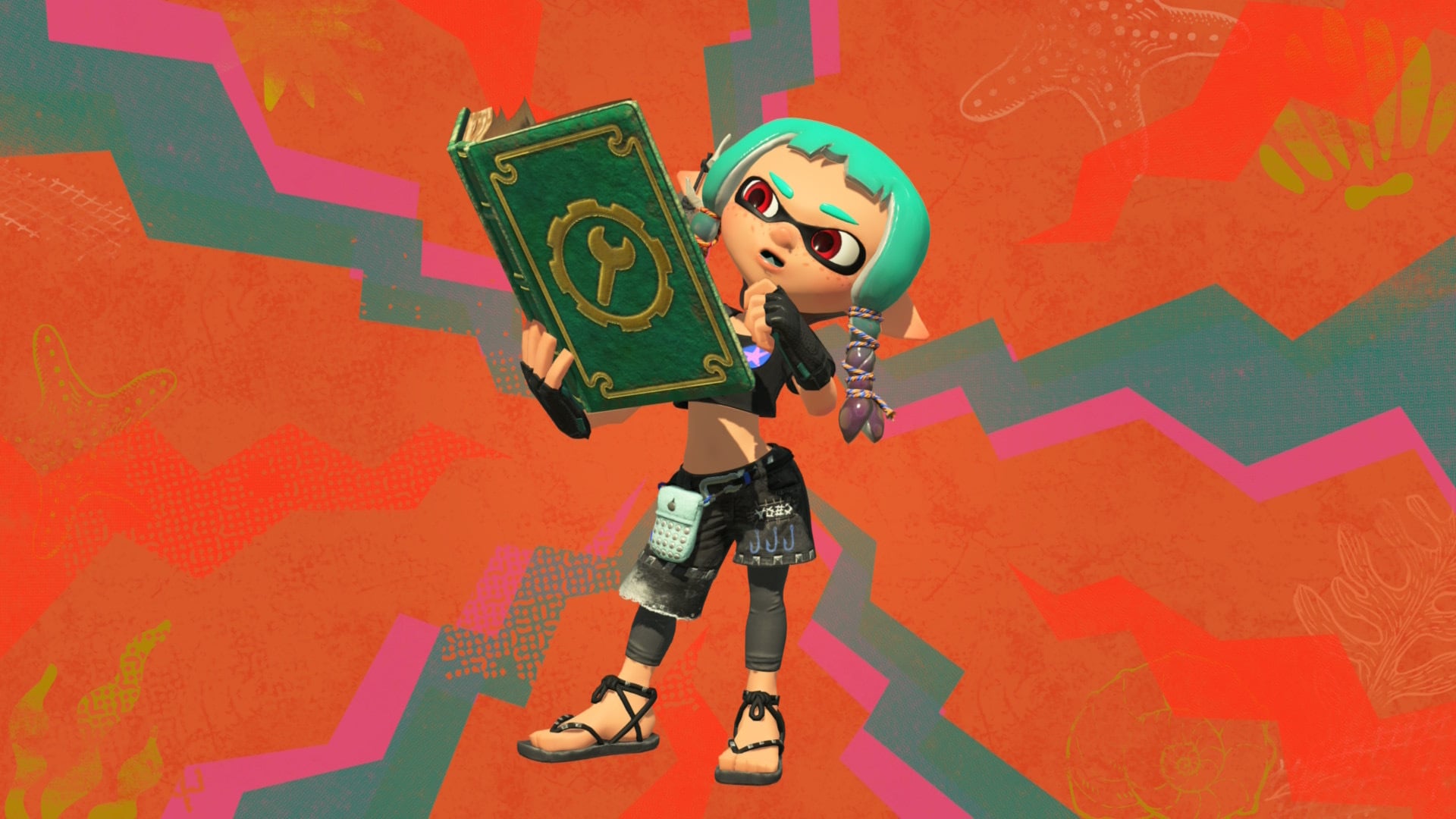
It’s up to the player – as the mechanic – to lead an exploration campaign across the Spirhalite Islands in an attempt to find out how to get back home, figure out why the islands are inhabited by hostile Salmonid enemies, and collect as much treasure as possible along the way (after all, while you’re there, you may as well).
Progressing through Splatoon Raiders is fairly straightforward. Players make their way through a series of stages, revealing more of the map as they do, with the eventual aim being to reach the center of the cyclone’s vortex and discover the source of the beam of light.
There are three general types of stage, the first of which are exploration stages, where you freely explore the level in your own time. These are populated with large blue crystals, and the aim is to kill all the enemies near each crystal, then use a large drill to excavate crystal shards from it. These shards can then be used for upgrading your base, weapons and numerous other things.
Then there are the hidden trial stages, which can only be found by using compasses found in other stages. These act a bit like the Shrines in The Legend of Zelda: Breath of the Wild and have the player trying to reach the prize at the end with the specific gadgets given to them at the start of the stage.
These can probably be considered very light puzzle stages, but most of them feel more like tutorials – albeit enjoyable ones – which teach the player how the various gadgets in the game work. More on those in a second, though.
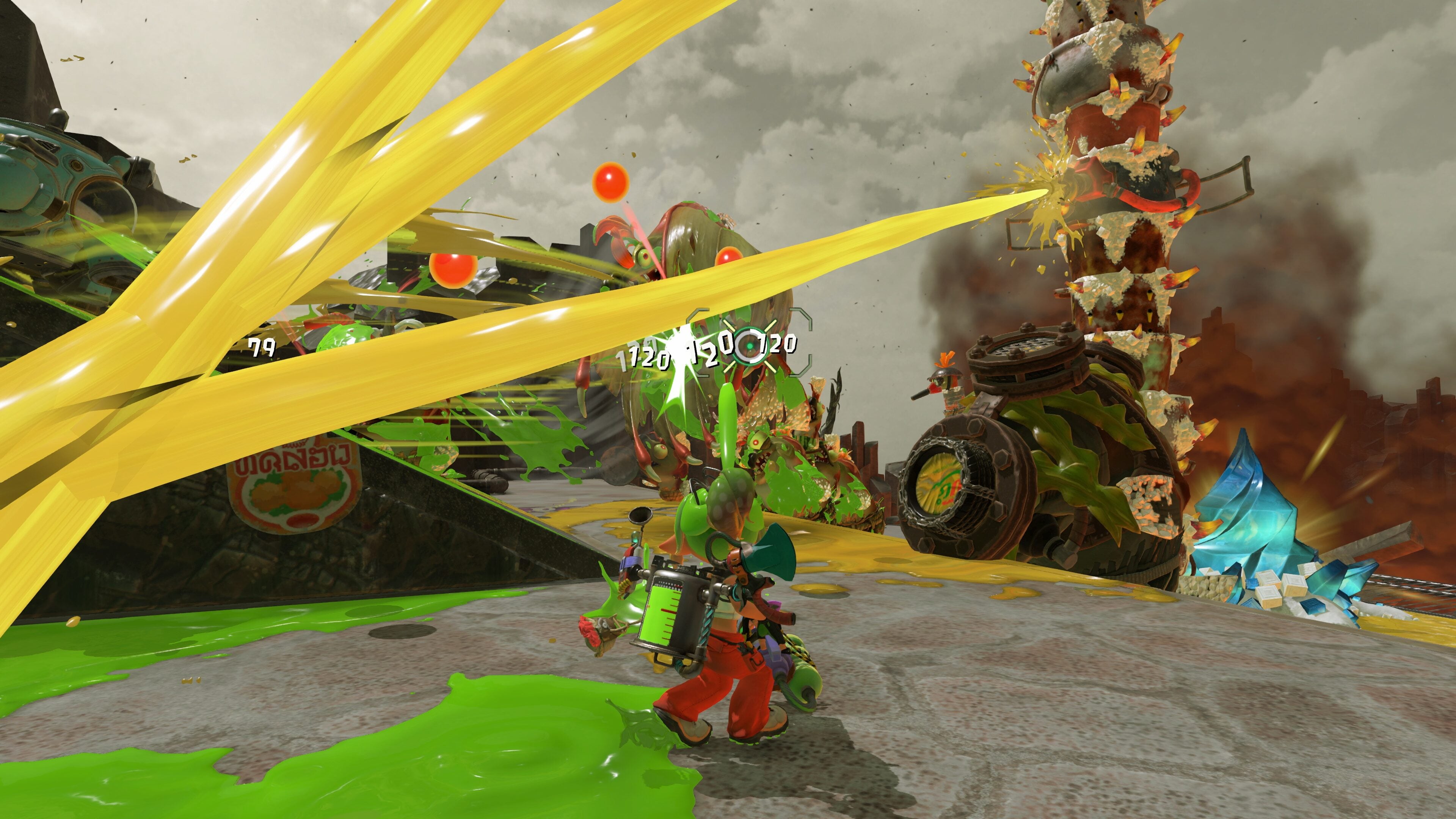
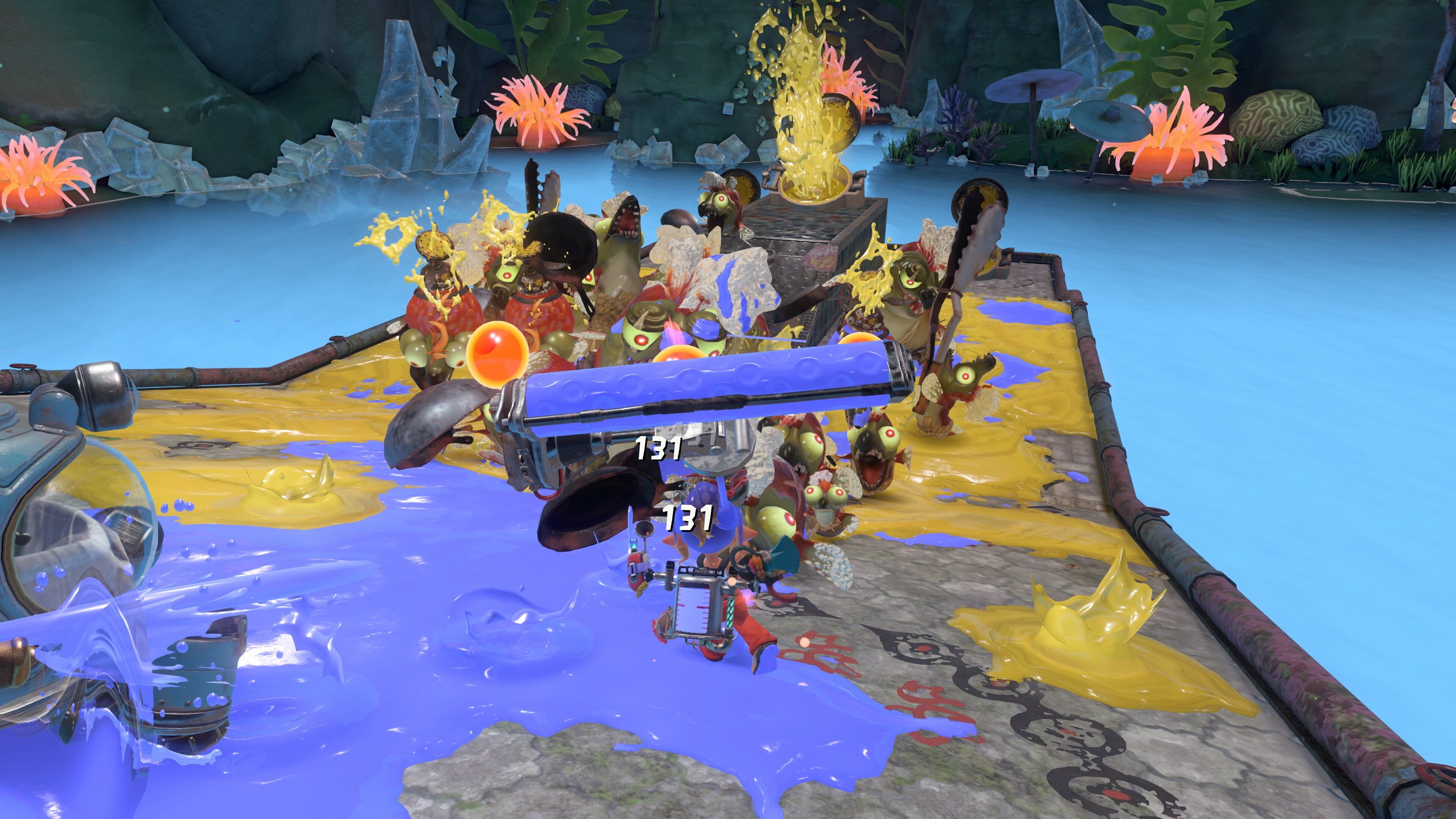
Finally, there are the dungeons. These are the stages that everyone will be talking about, because they’re the most action-packed but also the most stressful and difficult by design. Here you’re placed in a room full of spawning enemies and have to collect a certain number of Power Eggs and Mega Power Eggs (earned by defeating larger Salmonids) before a time limit runs out.
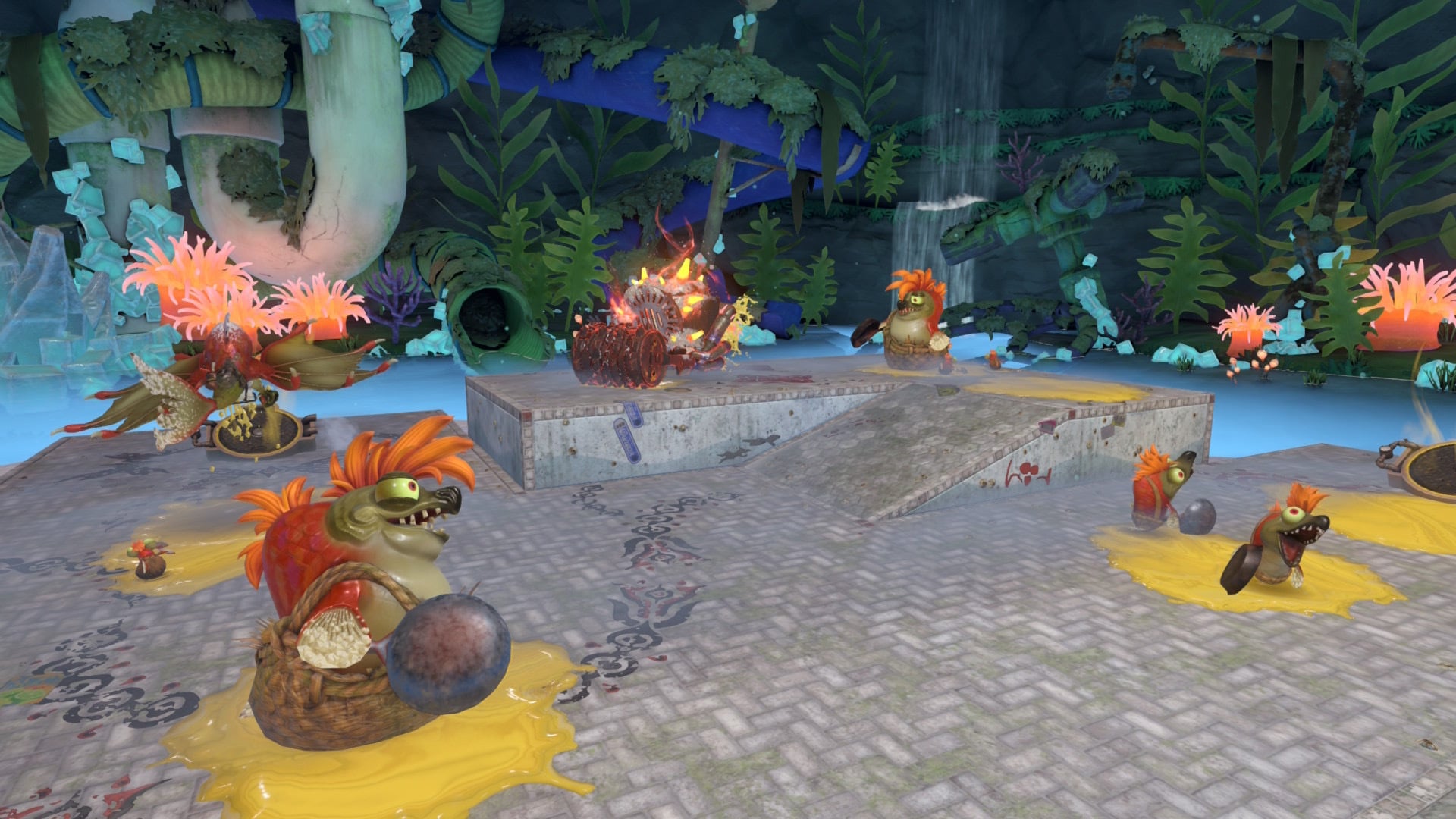
These dungeons can just be a single floor, but they can also often be three floors (and sometimes even more than that), with the player having to drill to the bottom floor and defeat the boss in a single run. Die or run out of time on any of the floors, and it’s back to the start again.
It’s the dungeons where Splatoon Raiders’ main characteristic, its difficulty, really comes to the fore. While the game’s exploration stages are manageable enough, the dungeons’ tight time limits and their slews of enemies – all different types, with different strategies to defeat them – mean it’s not uncommon to fail a few times (or more) before you finally reach and defeat the boss.
This is intentional. Players are reassured at the start of the game that dying is okay, because any XP and items collected during a run are kept even if you lose. This is a game which frequently presents you with stages ranked at a higher recommended level than it’s possible to reach without dying at least a few times. Failure isn’t just an option here, it’s crucial to success.
“This is a game which frequently presents you with stages ranked at a higher recommended level than it’s possible to reach without dying at least a few times. Failure isn’t just an option here, it’s crucial to success.”
Key to all this is the weapons and other abilities which are earned along the way. As in the main Splatoon games there’s a wide variety of guns, rollers, paint buckets, swords, killer umbrellas and numerous other weapon types available to collect. These are randomly dropped by enemies on each run, and have different levels and rarities. You can junk the ones you don’t need and earn shards which are used to upgrade the ones you want to keep.
There’s then a variety of Gadgets which can be applied, split into Power, Speed and Technical categories. These have an extreme impact on how a run plays out, meaning careful Gadget choice can make the difference between winning a tricky dungeon and having the entirely wrong tools for the job.
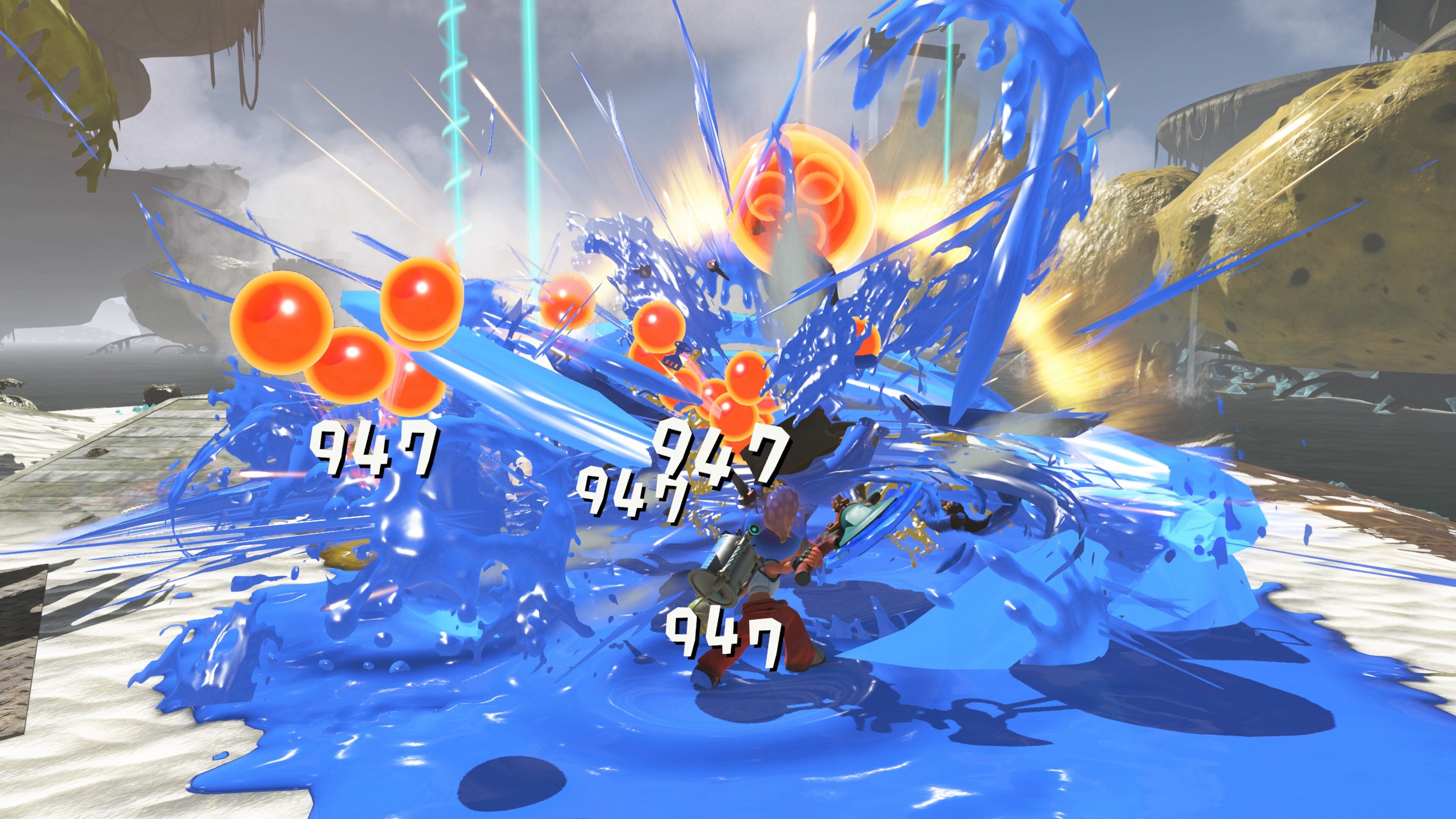
The Splatchet – which involves numerous dashing attacks – may be useful on flat stages with certain types of enemies, but if the bigger ones have shields or the stage has a lot of narrow walkways you can fall off, it becomes much less effective. In those stages you may want to switch to the Meteor Mitt, which has you jumping straight up into the air and landing straight down for big damage.
On top of this, every Gadget has a bunch of separate parts which can be collected. These are essentially rougelite-style buffs which can be applied to your gadget, but you can’t apply them all at once so you have to consider the appropriate loadout. That Splatchet attack, for example, can be upgraded to add more dashes in the sequence, or to add vertical slashes for enemies in the air, or to do more damage if a bunch of Salmonids are hit in a single dash.
The mantra of Splatoon Raiders, then, is ‘try, try, try again’. On the default difficulty level you’re likely to have your squiddy rump handed to you frequently, and there’s a harder difficulty level on top of that for the real masochists, where enemies do more damage.
It can get properly chaotic (even on the lowest difficulty at times), and for players like me who may have never entirely fallen in love with Splatoon’s gyro aiming, that control method can get a bit much here.
It’s fine when facing a few opponents online, but having to constantly swing around and gun down enemies from all angles can often have you centering your controls. While there are gyro devotees who will swear it’s still better, there’s thankfully an option for more traditional twin-stick controls, and these work an absolute treat.
One of the good things about the difficulty settings – though the ‘git gud’ crew may disagree – is that the difficulty only affects how hard the enemies are, not the rewards you get. Those who decide to play through the game on Tourist difficulty (which still has its tricky moments, incidentally) will earn the same weapons, gadget parts and shards as those who play on the hard-as-nails Survivalist mode.
Ultimately, whether Splatoon Raiders is the game for you depends on your tolerance for repetition. It may stray from the formula a couple of times – there are a few enormous boss fights which mix things up a bit, and I’m obsessed with one of the unlockable retro arcade games – but 95% of the time it’s a one-trick pony.
Thankfully, it does this one trick very well. Gunning down enormous hordes of enemies with paint splatting all over the place and the frame rate refusing to budge below 60fps is immensely satisfying, and even after rolling the credits I’m still keen to keep playing the post-game (of which there’s a lot, even though most of it is still more of the same but harder).
“Gunning down enormous hordes of enemies with paint splatting all over the place and the frame rate refusing to budge below 60fps is immensely satisfying, and even after rolling the credits I’m still keen to keep playing the post-game.”
I can easily see this being the sort of game I’ll continue to boot up while traveling, for a quick fix of all-out action. It’s the video game equivalent of a Spotify playlist with a single track on it, but it’s such a banger that I’ll happily play it on repeat.
There’s a bunch of lore in here for long-time Splatoon fans, and the characters are wonderfully endearing (and brilliantly animated in the cutscenes), ensuring newcomers will quickly see what the fuss was all about and hopefully understand why the series is so massive in its native Japan in particular.
At its core, though, this is a game about shooting lots of things – sometimes very quickly – and if you can’t click with that, then it doesn’t matter how charming Deep Cut are; there won’t be much for you here.
Those looking primarily for an action game that provides plenty of challenge, however, will find that Splatoon Raiders delivers one of the purest, most no-nonsense servings of non-stop action I’ve seen in a Nintendo game for a long time.
Splatoon Raiders Review
Splatoon Raiders shows that Nintendo's online multiplayer series works just as well in an offline solo setting. It's very much a game with a single, simple loop – shoot everything, die, upgrade, shoot everything again – but it delivers this loop with such engaging, enjoyable action that you don't need to worry about repetition creeping in, you'll happily open the front door and invite it in for dinner.
- Some of the purest, most satisfying action you'll get on Switch 2
- Puts up a challenge, and Survivalist difficulty is hard as nails
- Encourages experimentation with weapons, gadgets, parts and abilities
- Endearing characters and some entertaining cutscenes
- Mercifully still offers a twin-stick alternative to motion controls
- It's a one-trick pony so if you don't like action, you're out
- Not a lot of diversity in locations