Silent Hill Townfall review: Outstanding horror marred by infuriating stealth
Top tier atmosphere is let down by some truly frustrating moments
- Director and writer
- Jon McKellan
- Key Credits
- Paul Abbott (Art director), Motoi Okamoto (Series producer)
The decision to no longer set its Silent Hill games in Silent Hill may be one of the smarter ones Konami has made in recent years.
While on paper it sounds like it shouldn’t make much sense, by giving developers the freedom to make their Silent Hill adventures wherever they like instead of always having to set them in a small American town, it opens up the series to a much wider variety of experiences.
After all, anyone who’s played just a handful of previous entries knows that Silent Hill is just a metaphor for the protagonist’s trauma, so does it really need to take place in a similar environment each time? Last year’s fantastic Silent Hill F, with its rural 1960s Japanese setting, delivered the strongest possible message that no, it doesn’t, and now Scottish developer Screen Burn is putting the same point across with Silent Hill: Townfall.
Townfall is set in 1996 and takes place in St Amelia, a Scottish coastal village. It doesn’t exist in real life, but as someone who spent much of my childhood visiting Scottish fishing villages, it’s stunningly authentic anyway (especially to St Monans, the Fife hamlet it’s based on).
The streets and houses themselves are brilliantly presented but it’s the tiny details that really make the difference here. The Post Office (or its trademark-shimmying equivalent, at least) has exactly the kind of charmingly crap promotional posters on the wall that you would expect to have seen there at the time. Residents with computers keep their floppy disks in those little boxes with the clear lid (and some of these are locked, leading to puzzles where you have to find the key).
Even the photos of people dotted around the village look authentically Scottish, which may sound like a strange thing to say, but it’s something that’s very hard to put into words. There’s a certain look that old Scottish family photos from the 70s, 80s and 90s have, and it’s perfectly replicated here (to the extent that I’m fairly certain it wasn’t ‘replicated’ at all, and just consists of real old photos of friends and family of the development team).
Later, when the game takes players to another housing estate elsewhere, it’s even more authentically grim. I’ve been to many shopping districts that looked like this back in the day (with apologies to the fine people of Motherwell and Cumbernauld), and while I appreciate the vast majority of Silent Hill fans will simply see this as a new, detailed town to visit, on a personal level I’ve never had a game conjure up imagery from my childhood in such a starkly authentic manner before.
Indeed, as I looked through the digital artbook accompanying the game, I found a piece of concept art that literally shows my own hometown of Coatbridge, so it’s no surprise at all that I related to it so strongly.
This makes it all the more frustrating, then, that Silent Hill: Townfall – for all the things it does exceptionally well – has some infuriating downers that were substantial enough to spoil the experience for me.
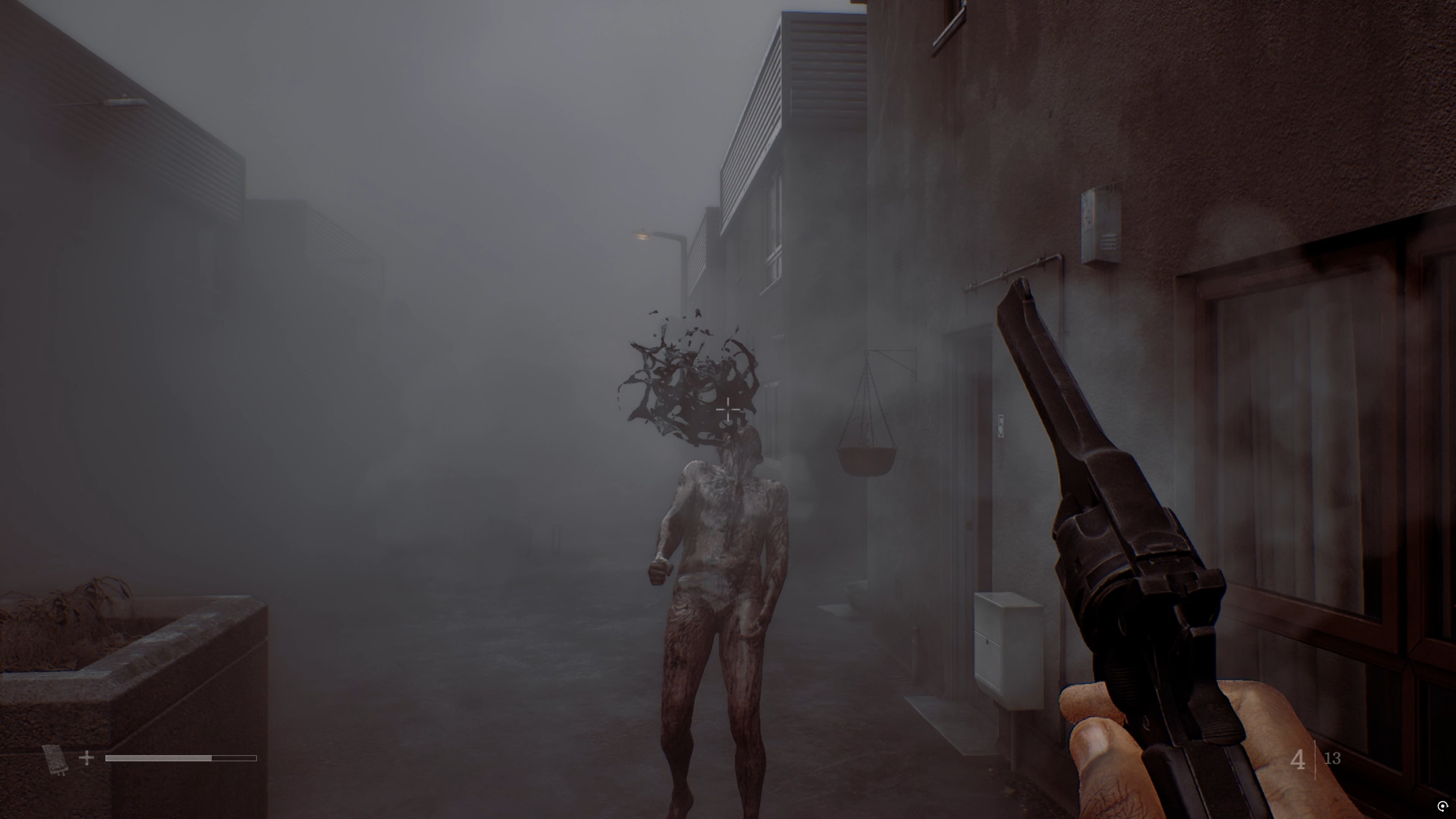
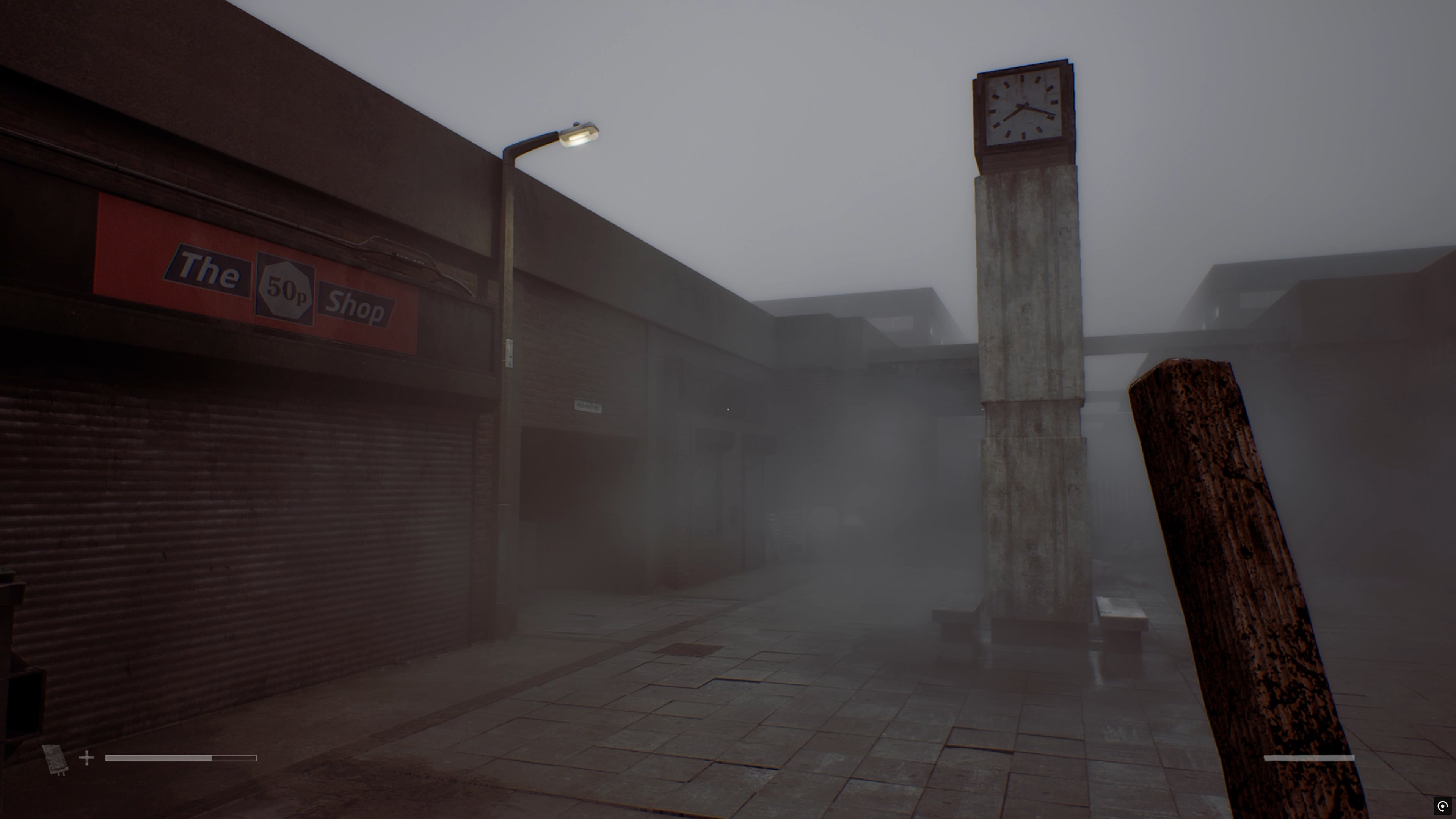
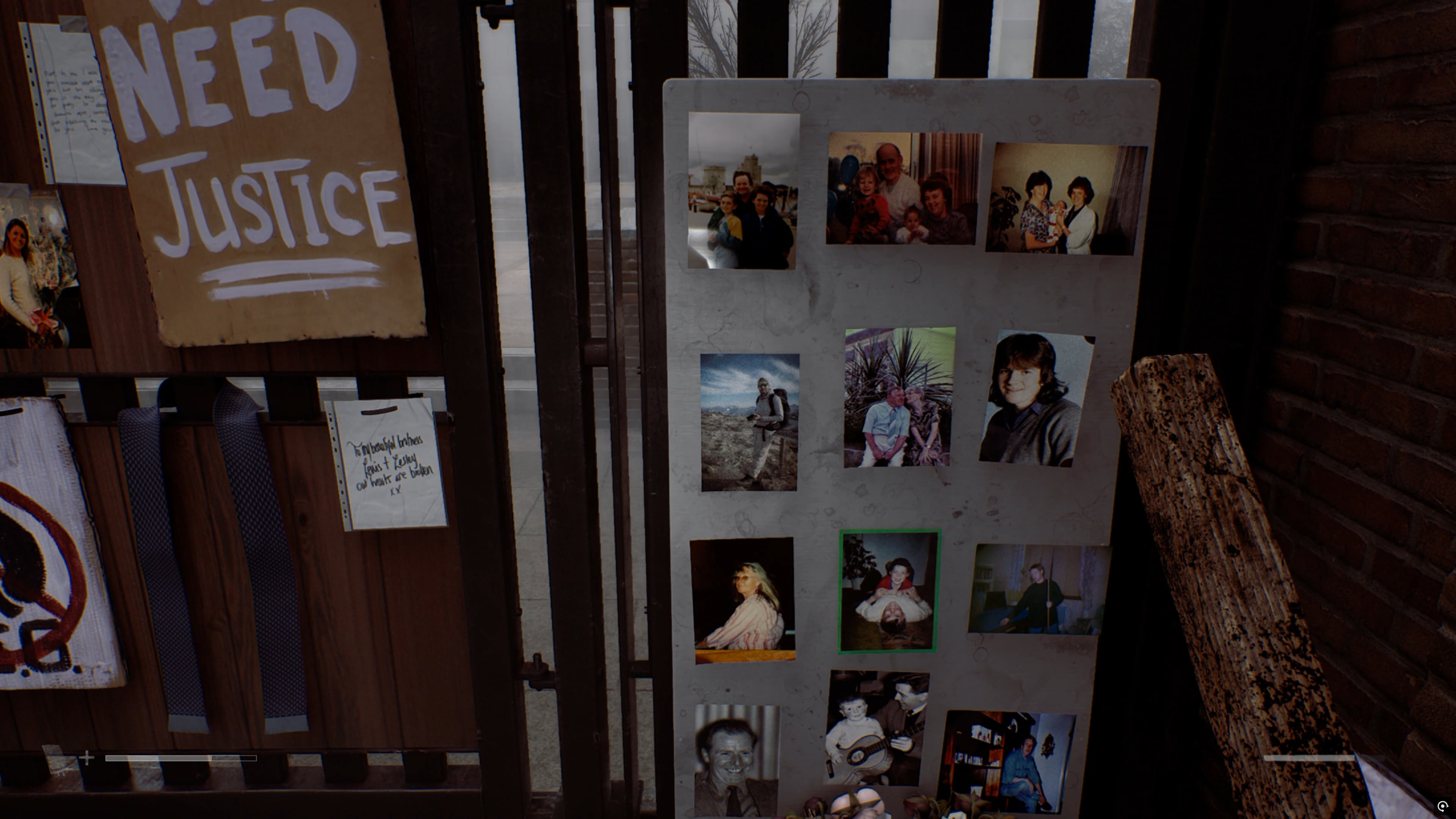
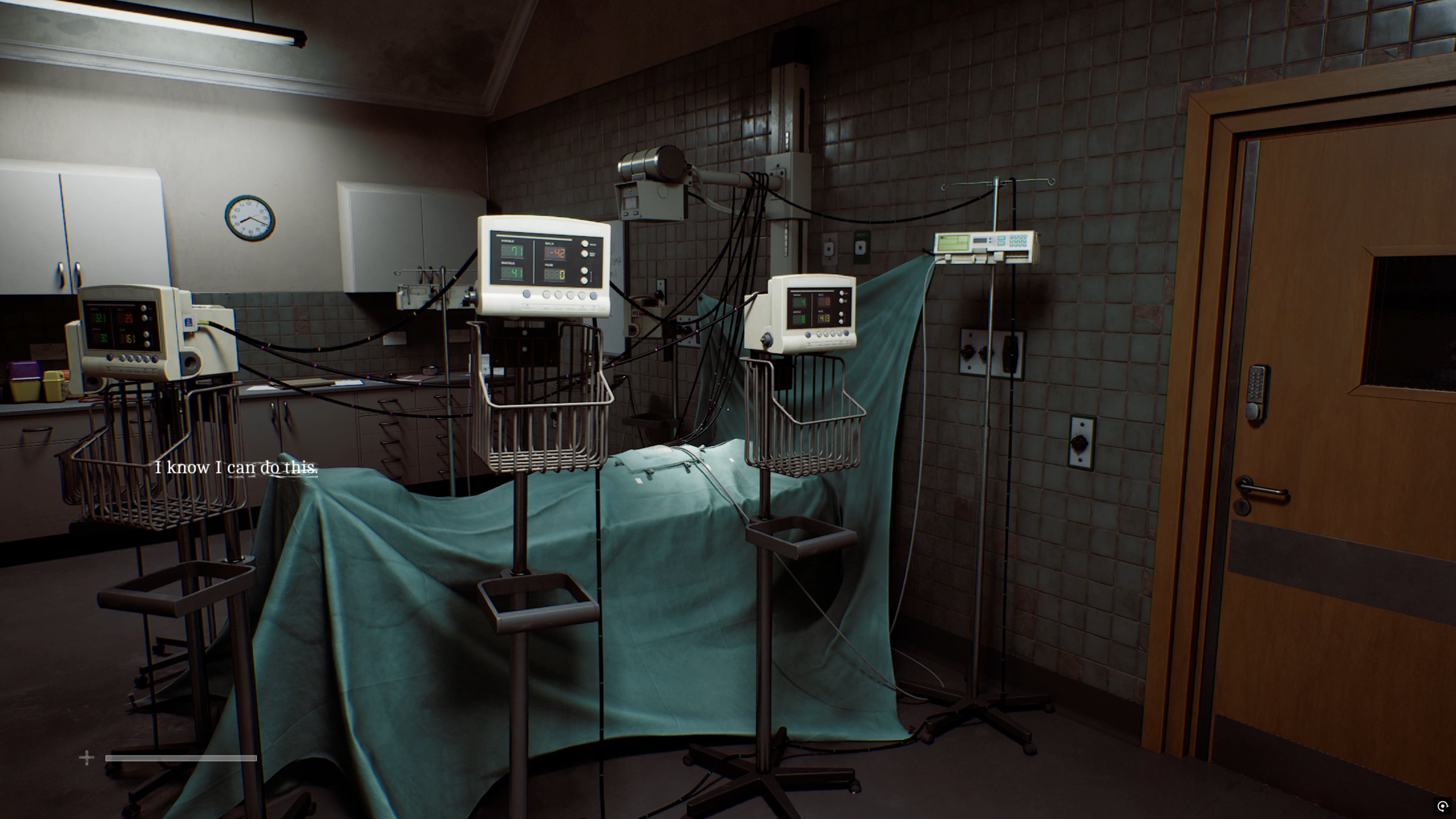
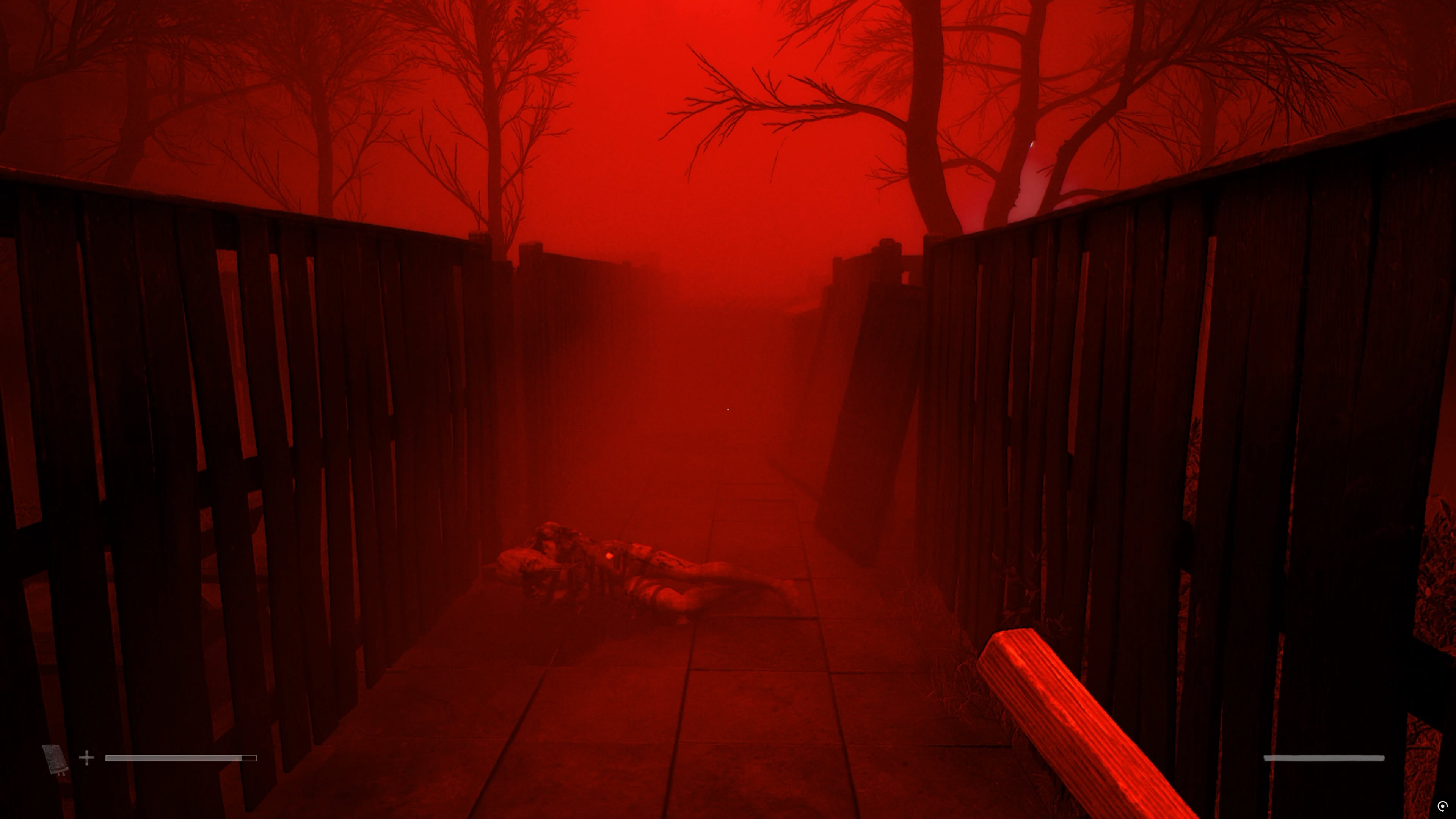
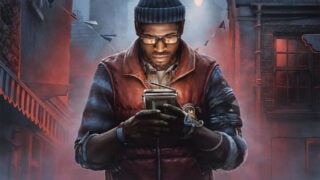
Townfall tells the story of Simon Ordell, an American who wakes up in the water at St Amelia. When he scrambles ashore he finds a village that’s seemingly been abandoned – that is, apart from the mutated creatures shambling around the streets. Simon also finds himself communicating with a mysterious nurse called Zoe and a chap called Richard, who tells Simon he can help with whatever unknown incident has occurred.
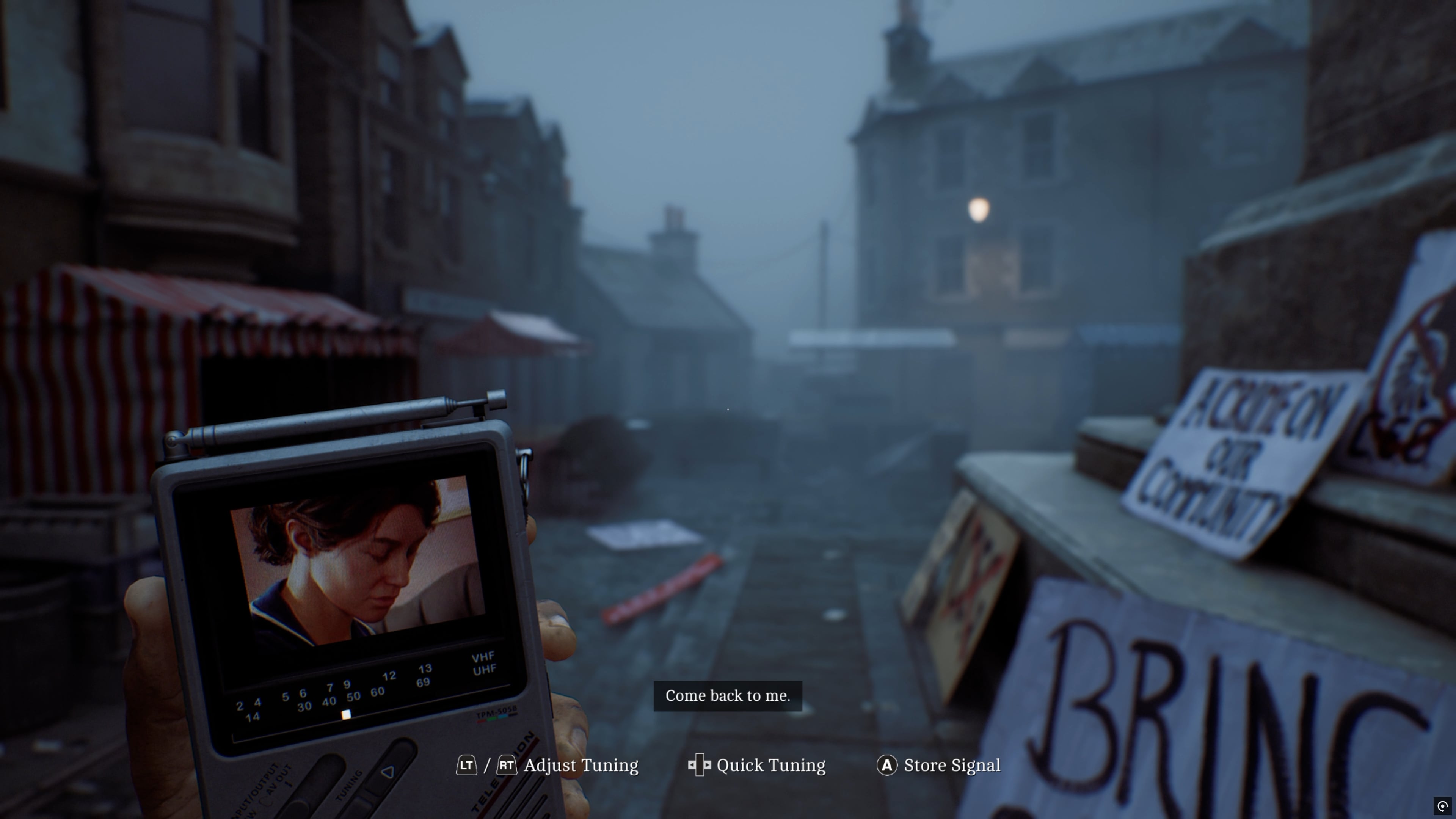
The main gimmick in Silent Hill: Townfall is the way it plays with tech to create tension. Simon is armed with a CRTV, a small handheld device which replaces the radio from other Silent Hill games. The CRTV can be tuned to find clues and short video clips revealing some of the plot, but its main use is as an enemy tracker.
When you hear a brief burst of static, you can look at the CRTV and tune it to find a monster nearby. The CRTV’s scanner can detect enemies wherever they are and shows them as a sort of silhouette, so you can hide behind walls and point it in a creature’s direction to monitor its movements.
Some may consider this cheating a bit, and may feel it removes the tension somewhat, but considering Townfall is played from a first-person perspective instead of the third-person view the series is usually known for – and therefore you can’t turn the camera around to get a better view of what’s going on around you – it’s a useful tool to own (especially during the frustrating sections, which I’ll get to).
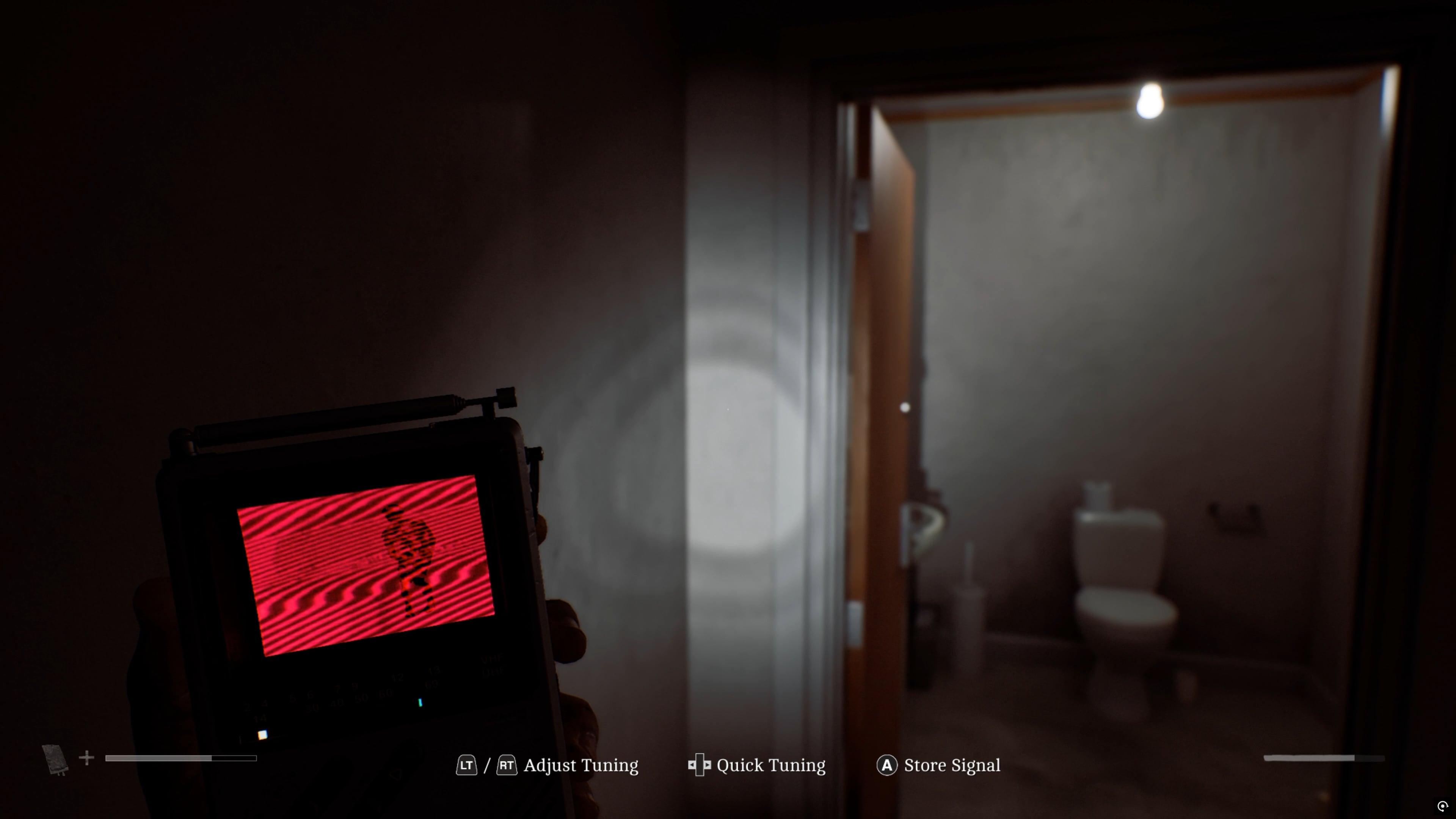
Without spoiling things too much plot-wise, there are sections of the game where you aren’t armed with the CRTV and instead own a small pager. This also doubles as a radar of sorts, but a less effective one – instead of explicitly showing you the outline of enemies, it just features a circular gauge with black dots showing their location, meaning you can tell roughly which direction they’re standing in.
This being a Silent Hill game, combat isn’t always encouraged, and players are advised to hide when they can and only fight when they need to . When you do, however, it feels solid enough, with players able to gather a modest but effective selection of planks of wood, steel pipes and a few types of gun.
Firearms are particularly satisfying and pack more of a punch than they usually do in a horror game, but this just cements their place as a last resort, a luxury you can’t go wasting (especially if your nerves get the better of you and you miss a shot, losing one of your precious bullets).
Where the game falls apart is in specific sections involving a character called The Weight. This is a larger enemy which wanders around as if it’s carrying a large weight on its back, hence the name. Not only is it almost invincible, when it catches you it triggers an animation where you die instantly.
Stealth is the name of the game here, then, but that’s problematic when the first area The Weight appears in is an almost pitch black, underground area with a number of corridors and a bunch of doors, some of which are locked. Essentially, you’re expected to do the usual survival horror routine of trying doors, finding keys and other important items, all while this big clunky sod is stomping around.
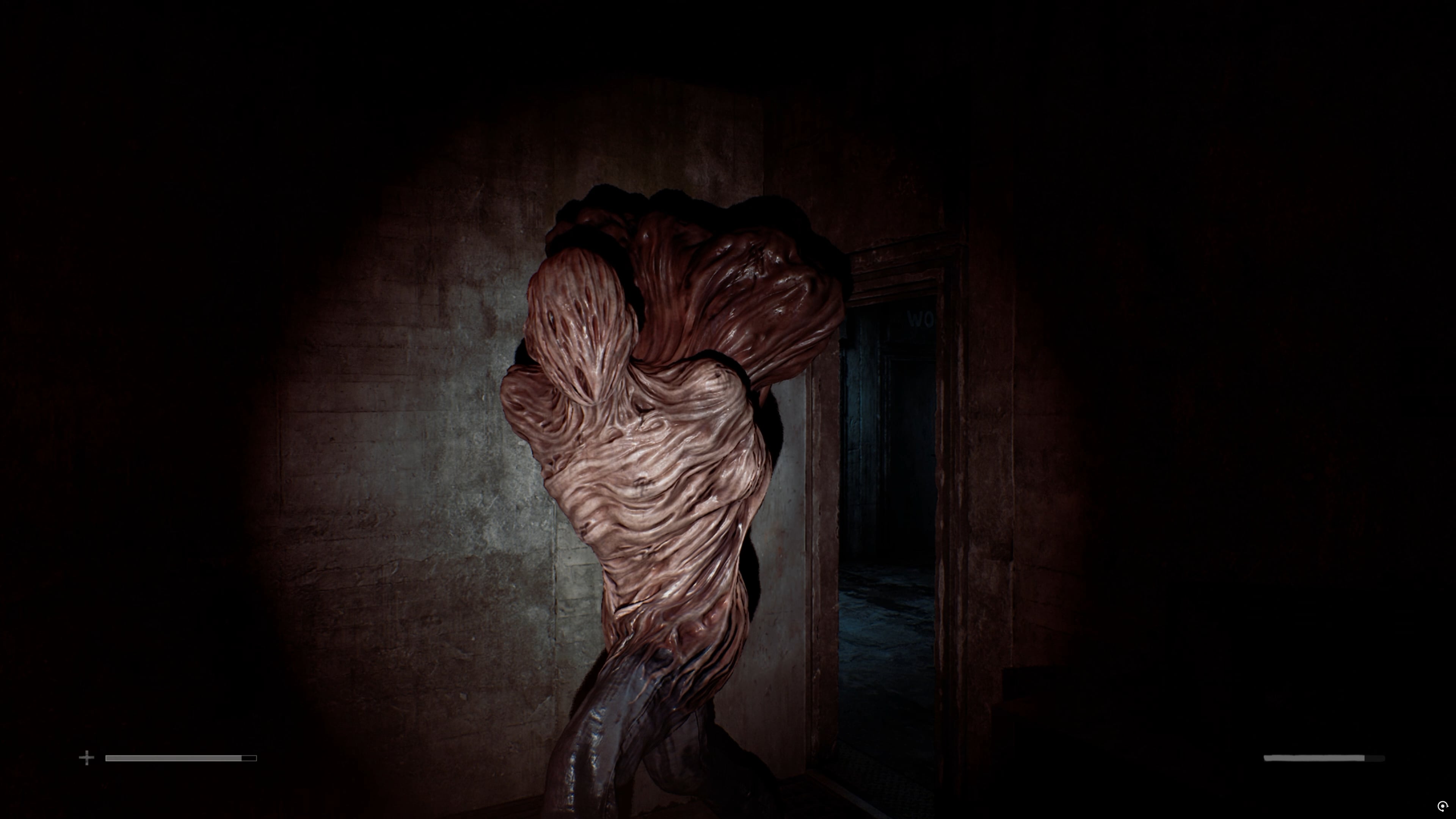
The main problem here is that the Weight seemingly seems to have some sort of sense of where you roughly are. You can throw a brick or bottle at a wall downstairs to make it come and investigate, then run upstairs to try and explore without being bothered, but somehow The Weight will still find its way back to where you are relatively quickly.
You can also hide in lockers to avoid detecting from The Weight, but it then takes an age to sniff around the locker, then slowly amble out of the room, and even then it tends to just stand around the door instead of investigating the entire floor, meaning there’s a hell of a lot of waiting around for a chance to somehow sneak out without it seeing you, and when you do get into the hall everything’s so dark you have to turn your light on and risk it seeing that.
This section is deeply frustrating – not just in terms of the actual stealth gameplay itself, but because until this point the game is ticking away nicely and this brings everything grinding to a halt.
“This section is deeply frustrating – not just in terms of the actual stealth gameplay itself, but because until this point the game is ticking away nicely and this brings everything grinding to a halt.”
To get through these sections, as in most survival horror games, you have to keep checking your map to see which rooms you’ve visited, which ones still have to be tackled, and which ones have items you have to return to once you have the appropriate key or what have you. To keep the tension going, the game doesn’t pause when you read the map – it’s checked in real-time.
This is all well and good at every other point in the game but I wish you could read the map while hiding in a locker, because standing out in the open and planning your next move while The Weight is arsing around nearby is too risky. Some will argue that adds to the tension, but the way it’s executed here often feels cheap.
Here’s the real kicker, though. Simon can equip an IV drip which basically gives him an extra ‘life’. If you die while the IV drip is equipped, the screen blacks out, but then fades back in again as you get up, gaining a little extra life from the drip. Anywhere else in the game this works great. Here, almost every time the drip brought me back to life, The Weight was still standing nearby, meaning he instantly spotted me and one-hit killed me right away again.
Everything around The Weight sections is fantastic. Exploring an abandoned housing scheme and another large location (can’t spoil the details because it relates to the story) is a treat, and both areas are given even more lavish attention to detail than the opening fishing village area.
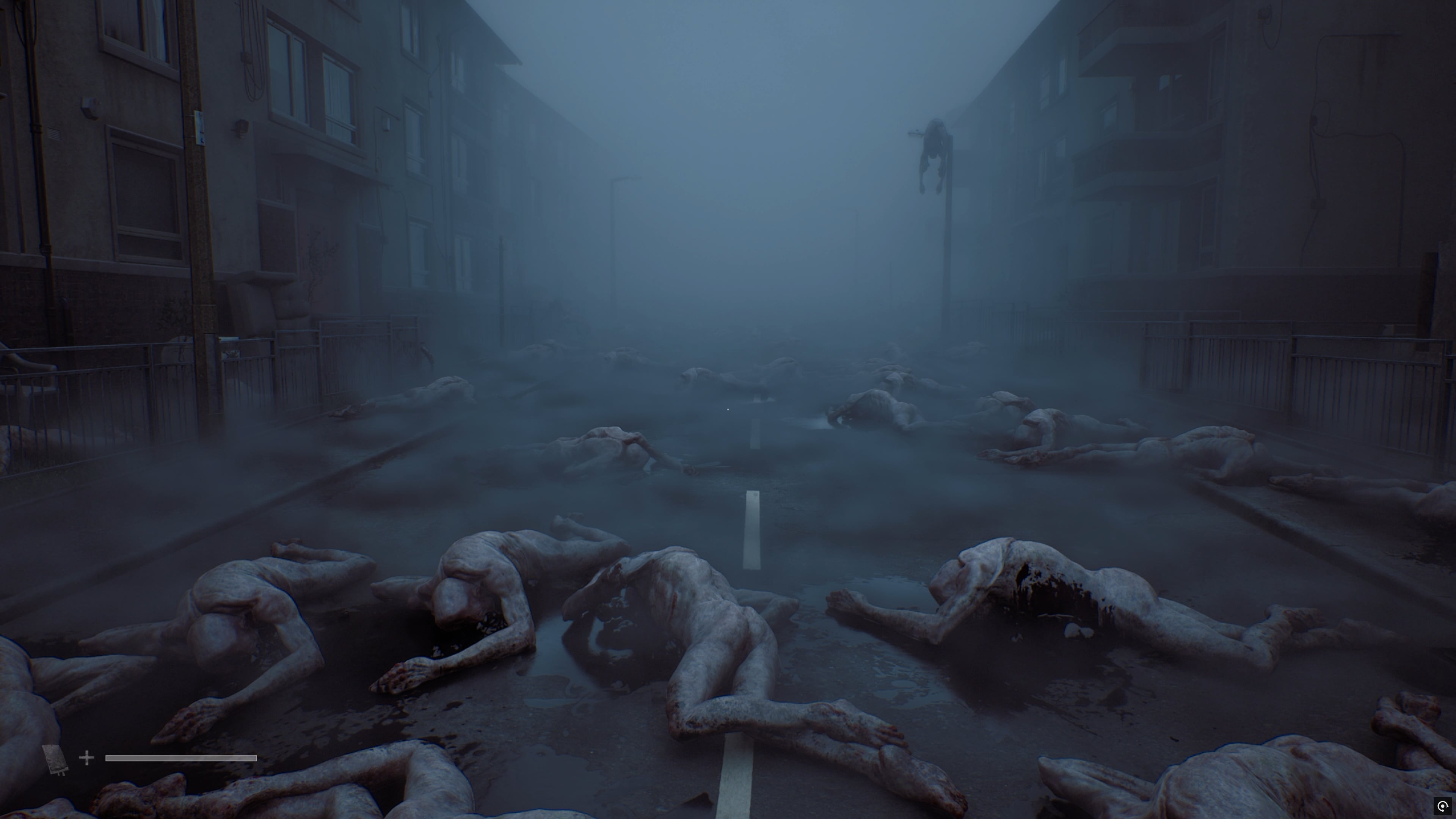
There are some very clever puzzles in here too, especially one involving dictaphone tapes and time travel. And one surprise section – the game’s fifth ‘Part’ – involves a repeating visual that is both darkly hilarious and brilliantly clever (this section also features the game’s best enemy, a screaming widow who charges the player with a cloth over her head and photos of her dead loved one attached to her).
And then, frustratingly, The Weight appears again. This time in an even darker section, and this time without a map. And the whole thing falls apart once more.
It’s infuriating because in every other sense, Silent Hill: Townfall is a game I would recommend. The world design is immaculate (especially if you’re from Scotland), the atmosphere is great, and the performances are strong – even if none of the main characters are actually Scottish.
The puzzles are balanced enough to make you think without ever getting truly stumped, the music is hauntingly effective and the story’s numerous twists and turns are engaging.
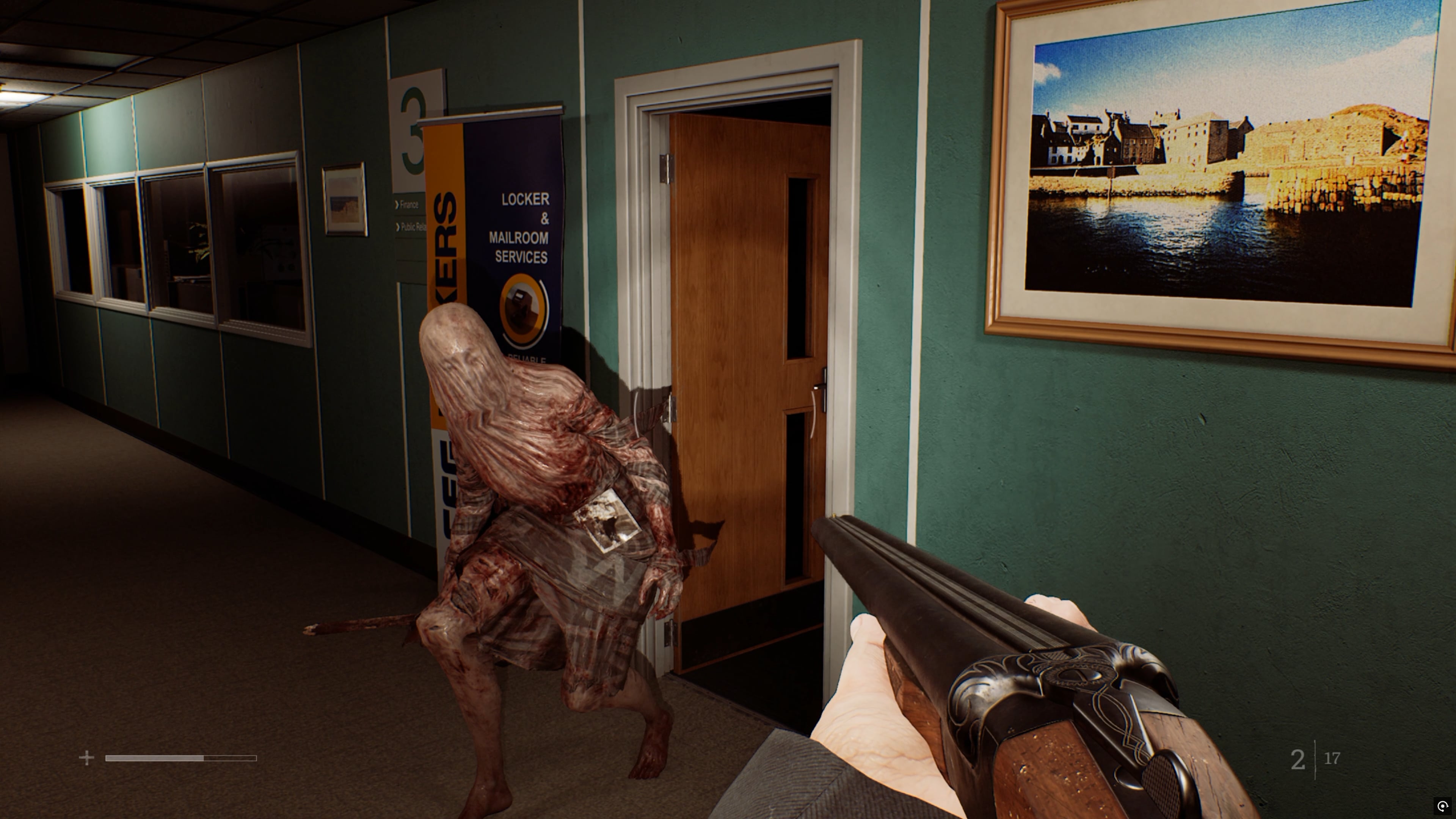
It’s rare, however, that I find sections in a game that hit a brick wall and kills the momentum dead like Townfall does.
For a game that has made me feel more immersed and engaged than most horror games I’ve played in a while, to yank me out of that immersion and change my mindset from “what’s going on here” to “how do I reverse engineer this guy’s bloody AI” is deeply disappointing. It is, to use Scottish vernacular, a real boot in the baws.
Silent Hill Townfall Review
Silent Hill Townfall provides players with one of the most hauntingly atmospheric and meticulously detailed settings in the series' history, and delivers an engaging storyline to go with it. Where the game disappoints, however, is in the actual 'game' itself, specifically the stealth sections near the middle and end of the game which completely ruin the momentum and descend into frustration. Without these sections Townfall would be an absolute must-have, but their presence means it has to settle for being a flawed masterpiece.
- St Amelia is one of the most detailed settings you'll ever see in a game
- Puzzles are perfectly weighted: not too easy, not utterly stumping
- Wonderful performances and an engaging storyline
- Haunting soundtrack by Canadian musician Pilotpriest
- A clever vertical-based environment in the game's final third
- Stealth sections with The Weight ruin things entirely
- Only a small handful of repeating enemy types