Saros review: Housemarque comes back stronger with a bold Returnal follow-up
Sublime gameplay and a stellar central performance make Saros one of PS5’s most memorable first-party games
- Key Credits
- Gregory Louden (Creative director ), Simone Silverstri (Art director), Sami Nurmio (Executive producer )
There is perhaps nothing better in this medium than when a game “feels,” right. When the moves in the player’s arsenal are tied to hyper-responsive controls, matched by clear, dazzling visuals, and an epic soundscape. This is where Housemarque has always excelled.
In its latest game, Saros, the Finnish studio pairs that gameplay mastery with a deeply mysterious, unsettling story and a wonderful central performance from Rahul Kohli for one of the most memorable first-party games on the PlayStation 5.
Saros is a third-person, rogue-lite shooter. From the same team that brought you the brutal, but beautiful Returnal, Saros takes much of the feedback from that game and uses it to make Saros a no-frills representation of what the studio has been trying to achieve. As Arjun Devraj, the player explores various biomes filled with hostile enemies, each of which is a combat puzzle of reaction times, parry windows, and rapid movement.
One of Saros’s most effective balancing acts is that everything you encounter can kill you easily, and you can kill it easily; it’s all about concentration. If you’re careless, you’ll quickly be overrun and watch your health bar deplete, but if you’re on the front foot and high-press the enemies, you will feel like the Doomslayer.
Encounters in Saros are similar to Returnal in the sense that they’re largely confined to smaller battle arenas, but unlike Returnal, which involved a large amount of defensive, evasive play, Saros is aggressive.
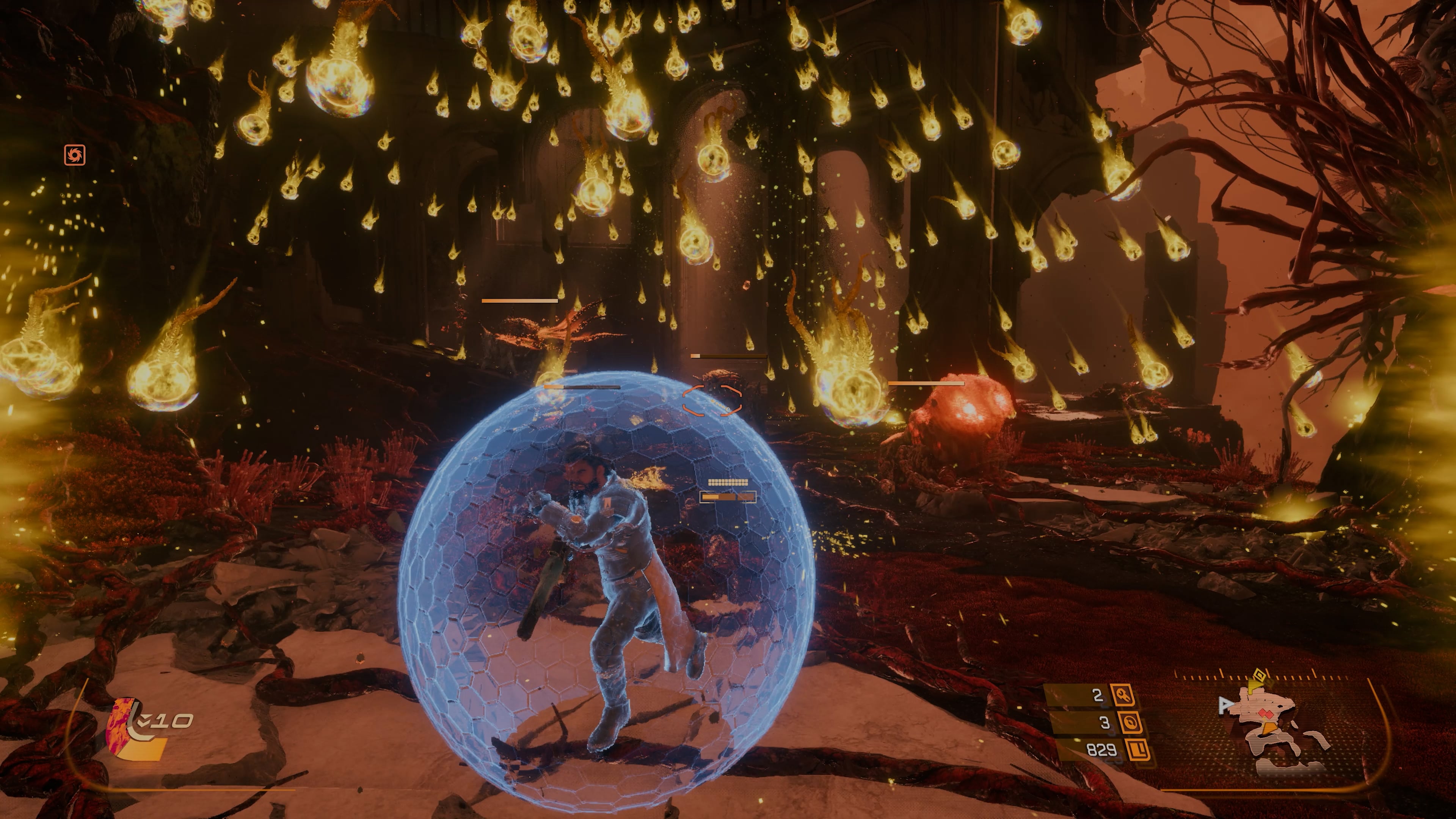
In what the game’s director, Gregory Louden, describes as the “bullet ballet,” Saros allows the player to absorb enemy bullets to convert them into a powerful weapon. Blue bullets can be absorbed, yellow ones can be dodged through, and red ones can be parried.
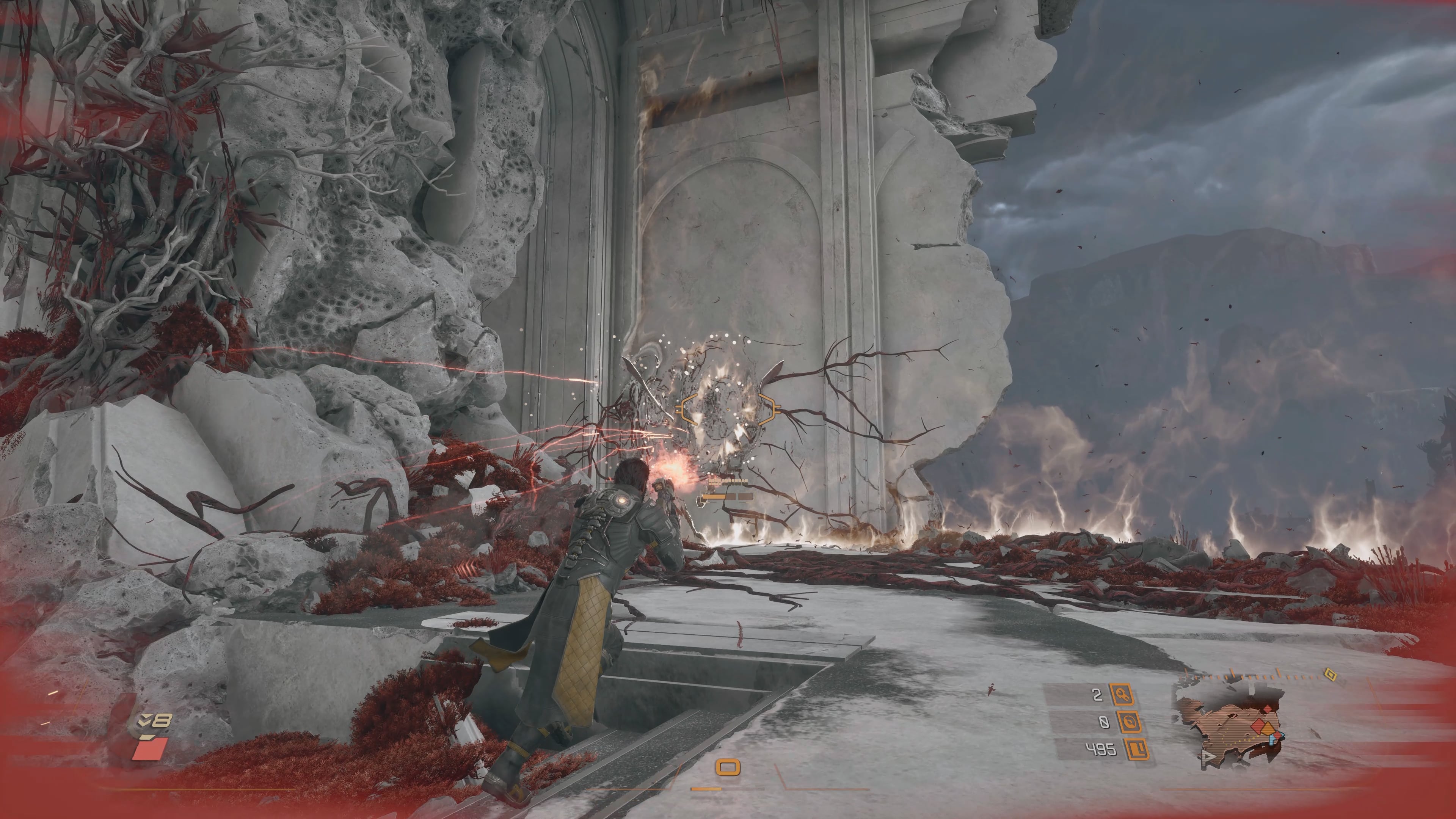
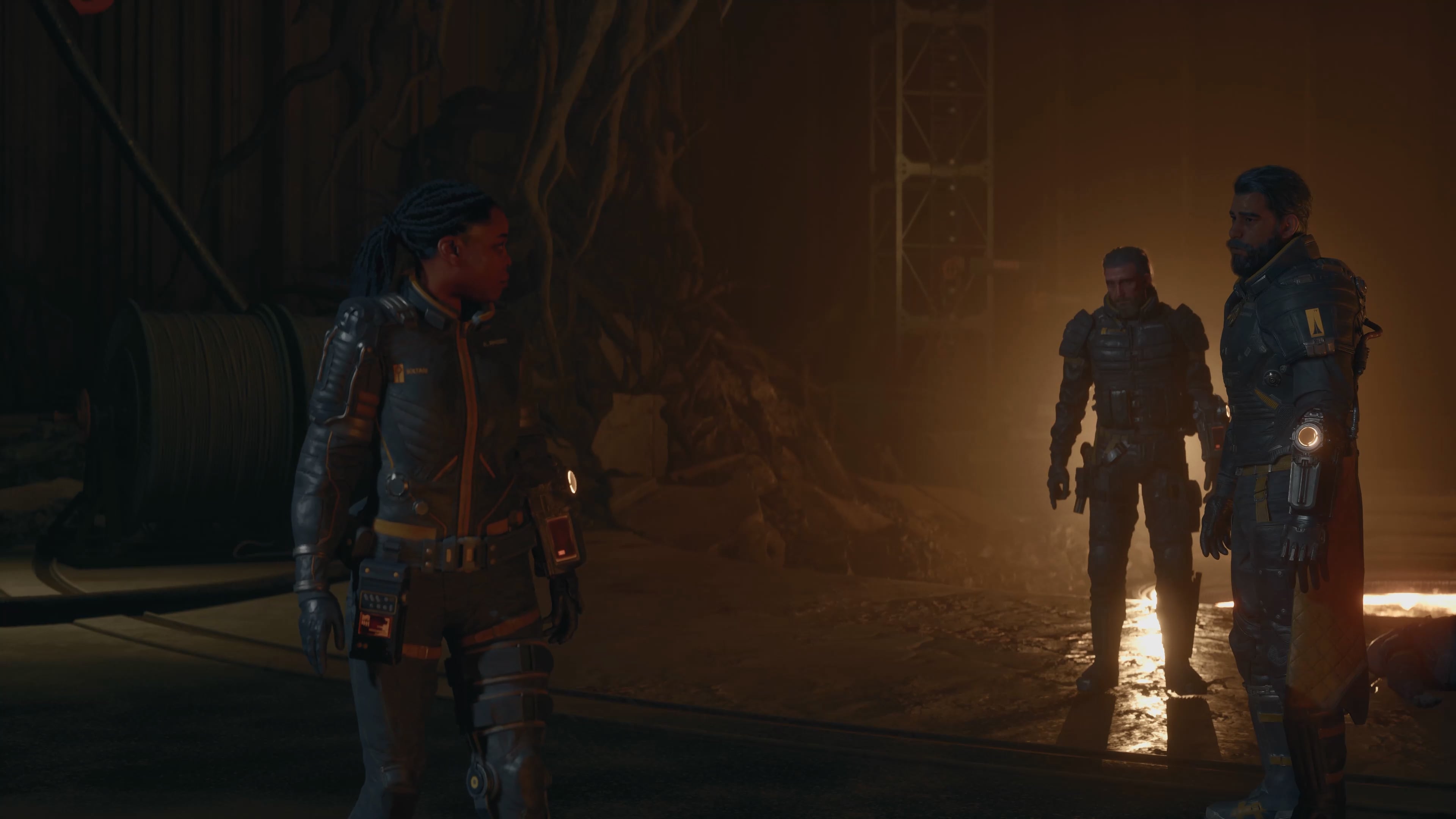
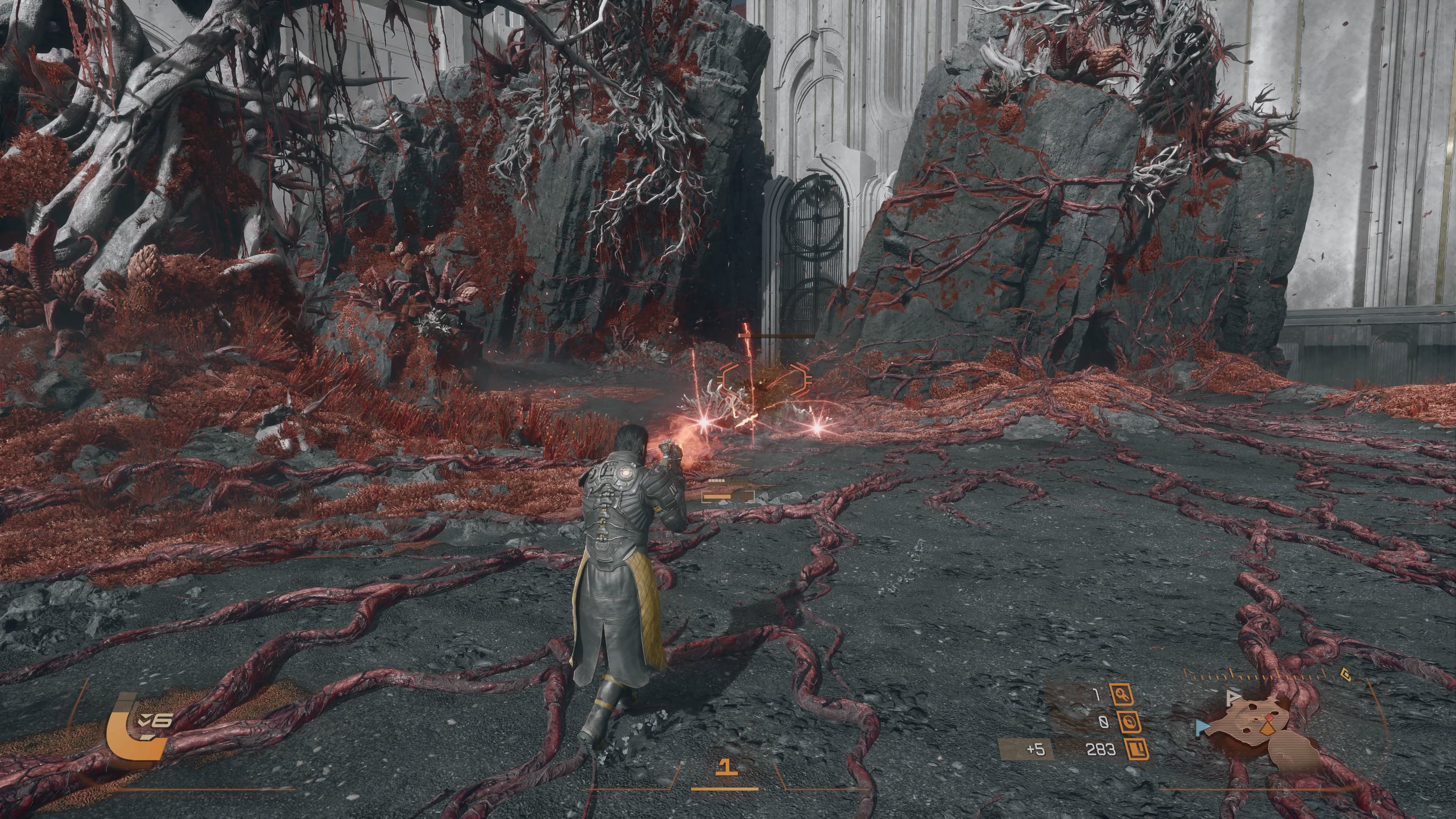
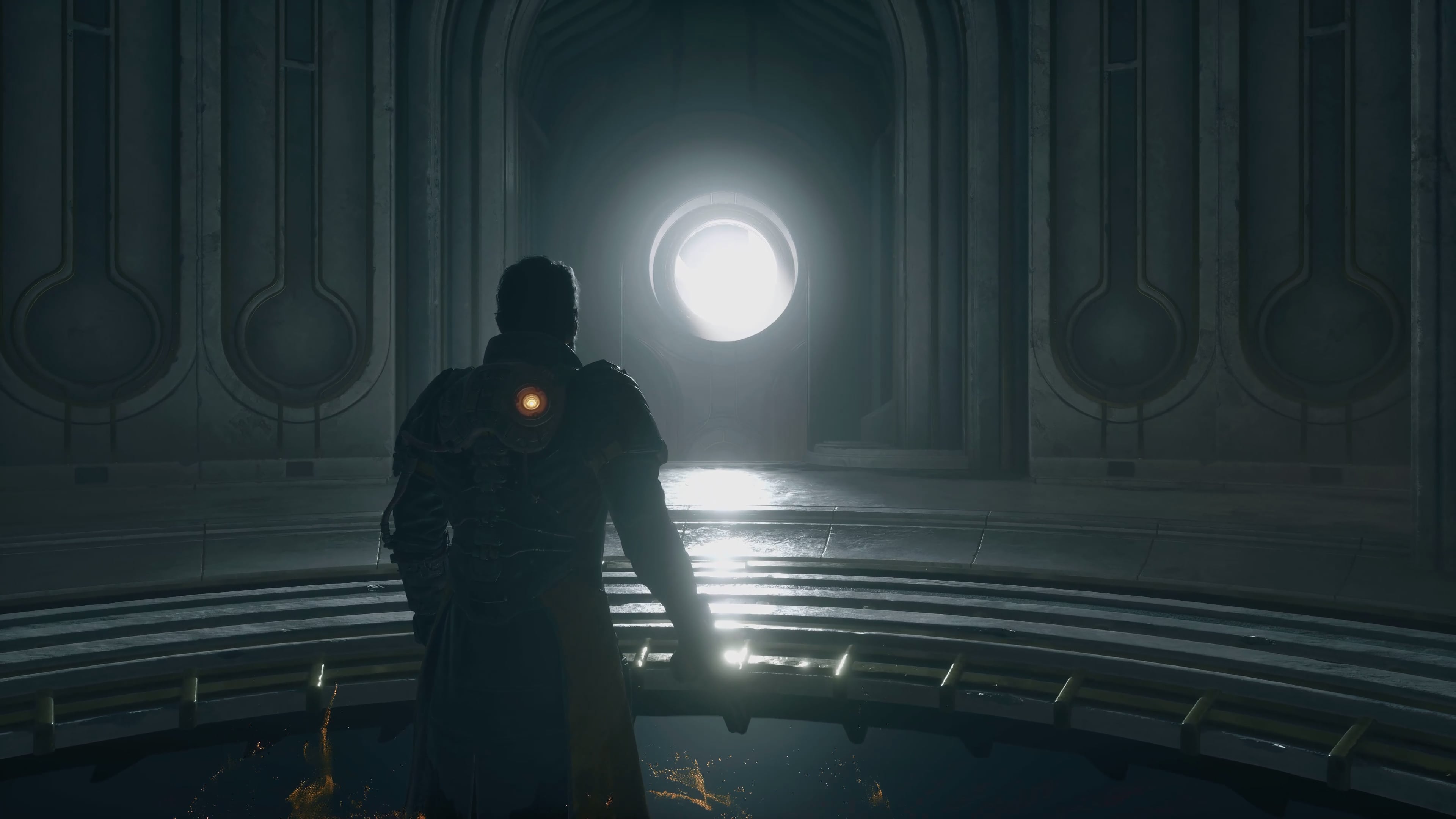
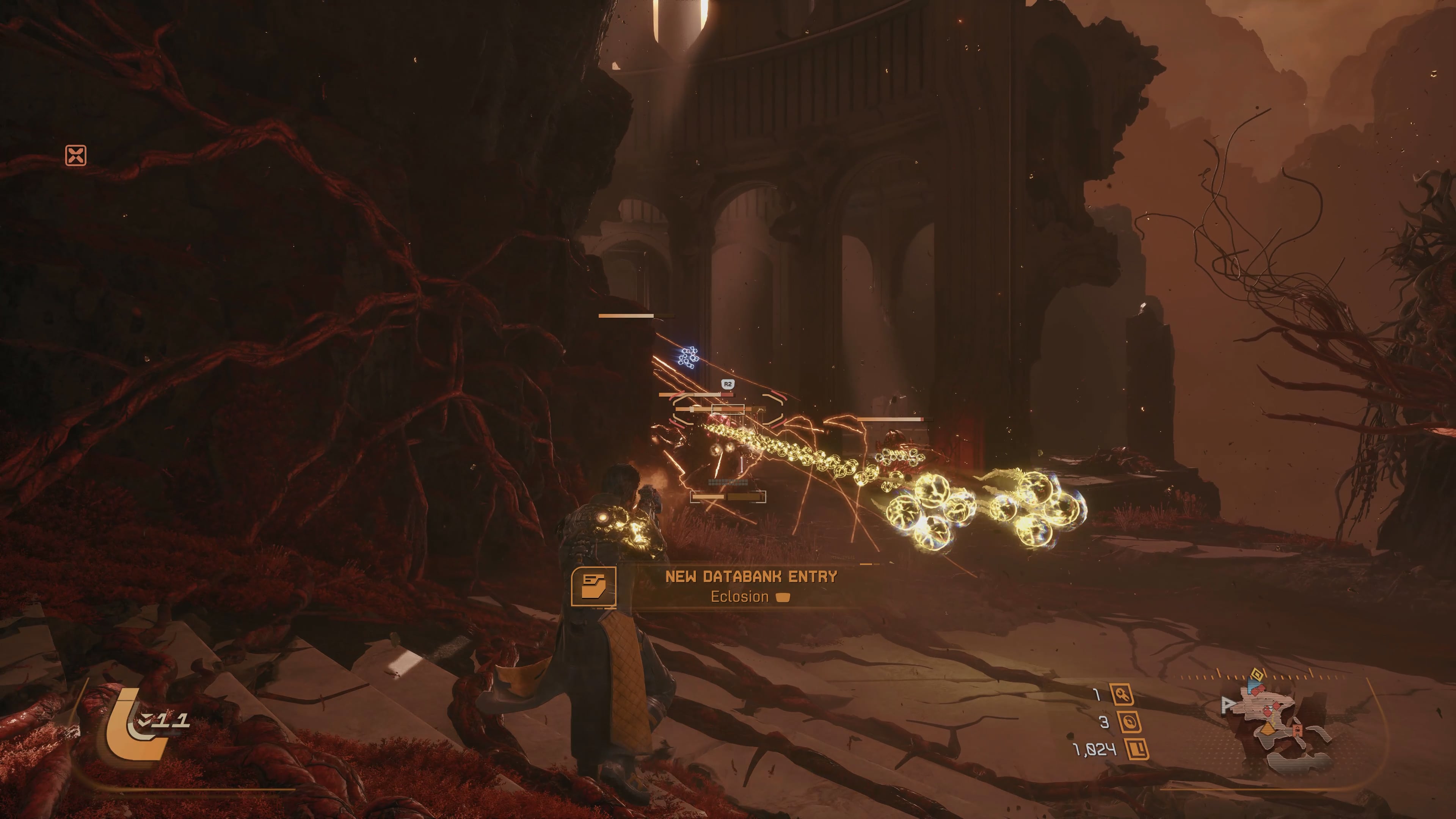
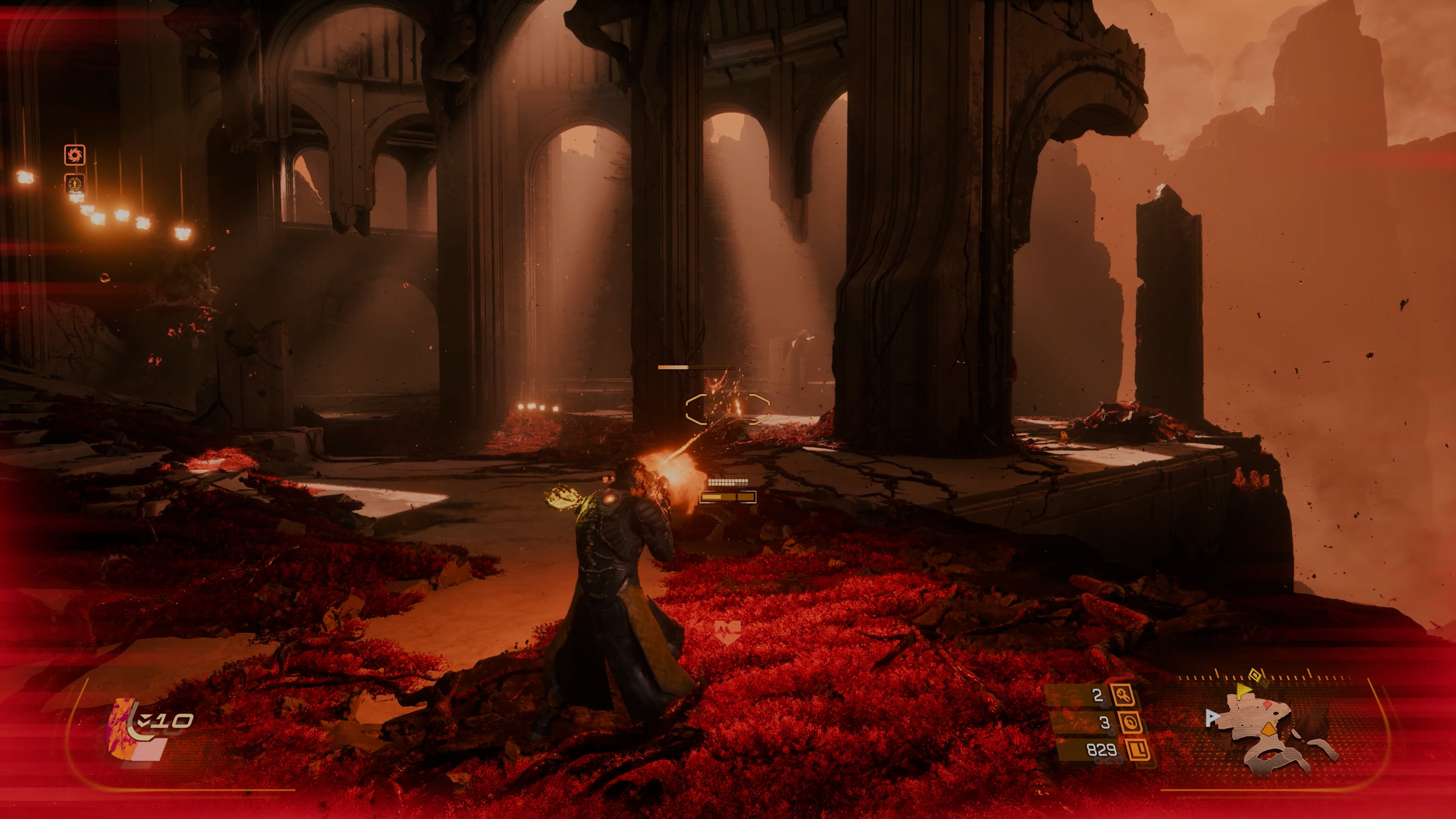
If you’re fully focused and you’re adept enough at dodging and countering, you never, ever need to take a step back. There’s an incredible sense of momentum, and enemies die quickly enough that it feels like you’re knocking down a new combat puzzle every few seconds, rather than piling into bullet sponges. Though eventually, you will die.
Housemarque, like Team Asobi and Insomniac before it, is one of the very few developers this generation to actually make use of the DualSense controller. Pulling the left trigger halfway will initiate alt-fire on guns, with a full pull activating Arjun’s power weapon. I can’t get too specific with it due to spoilers, but the way haptics are used to convey certain conversations is incredibly innovative, and indicative of a team that absolutely loves experimenting with technology.
When you do end up dying, you’ll return to The Passage, the home base of Echelon 4. Arjun and the crew of Echelon 4 are on the hunt for previous expeditions to Carcosa, none of which have been seen for some time. How much time, exactly, is impossible to tell; the crew is helpless, unaware whether they’ve been on Carcosa for weeks or years.
Saros sets up a gripping mystery story. Most players will probably realize that a missing crew on this extremely hostile planet isn’t going to fare well, but the web that unfolds as the player picks up more text logs, audio messages, and speaks to the rest of the crew is Housemarque at its best. The story will inspire fans to argue over lore, character fates, and more for years. Even now, around a week after beating the game, I’m replaying elements of its closing act in my head, and preparing to head back to the game on a fresh save file to see what threads I missed the first time around.
All of this is hung on Rahul Kohli’s exceptional performance. It’s a performance that feels destined to earn a swath of award nominations. While he enjoys more co-stars than Returnal’s protagonist, Selene (including Selene’s actress Jane Perry, who provides a memorable turn as one of Arjun’s crew), Kohli spends the vast majority of this game playing off of himself. I’d have enjoyed more time spent with the crew, especially given the novelty of a much larger cast this time, but what I did get was very engaging. Most of it is totally missable if players just want to get back out there, but for Housemarque lore nerds like myself, there’s plenty to dig into.
Kohli’s performance is rich, deeply guarded, and often unsettling. It’s a rare thing to spend so much time with a character and still feel like there’s plenty that the game isn’t telling you. There’s a sense of unease and mystery across the game’s writing and performances that never lets the player feel totally at home in this alien world. The journey the character goes on during Saros, and the evolution of his performance as some of the game’s truths are revealed, will stick with me for a long time.
When it’s time to head back out into Carcosa, you can either start from the beginning of the run, and defeat all the bosses on your way to your next objective or warp to the biome that you sent you back to The Passage. The advantage of going through the whole run again is that by the time you get to your obstacle, you can find yourself at a much higher level than if you simply started back at the biome you were last at. However, if you feel like you’ve dialed in a boss fight and you simply want quicker runs at it, the game gives you that option too.
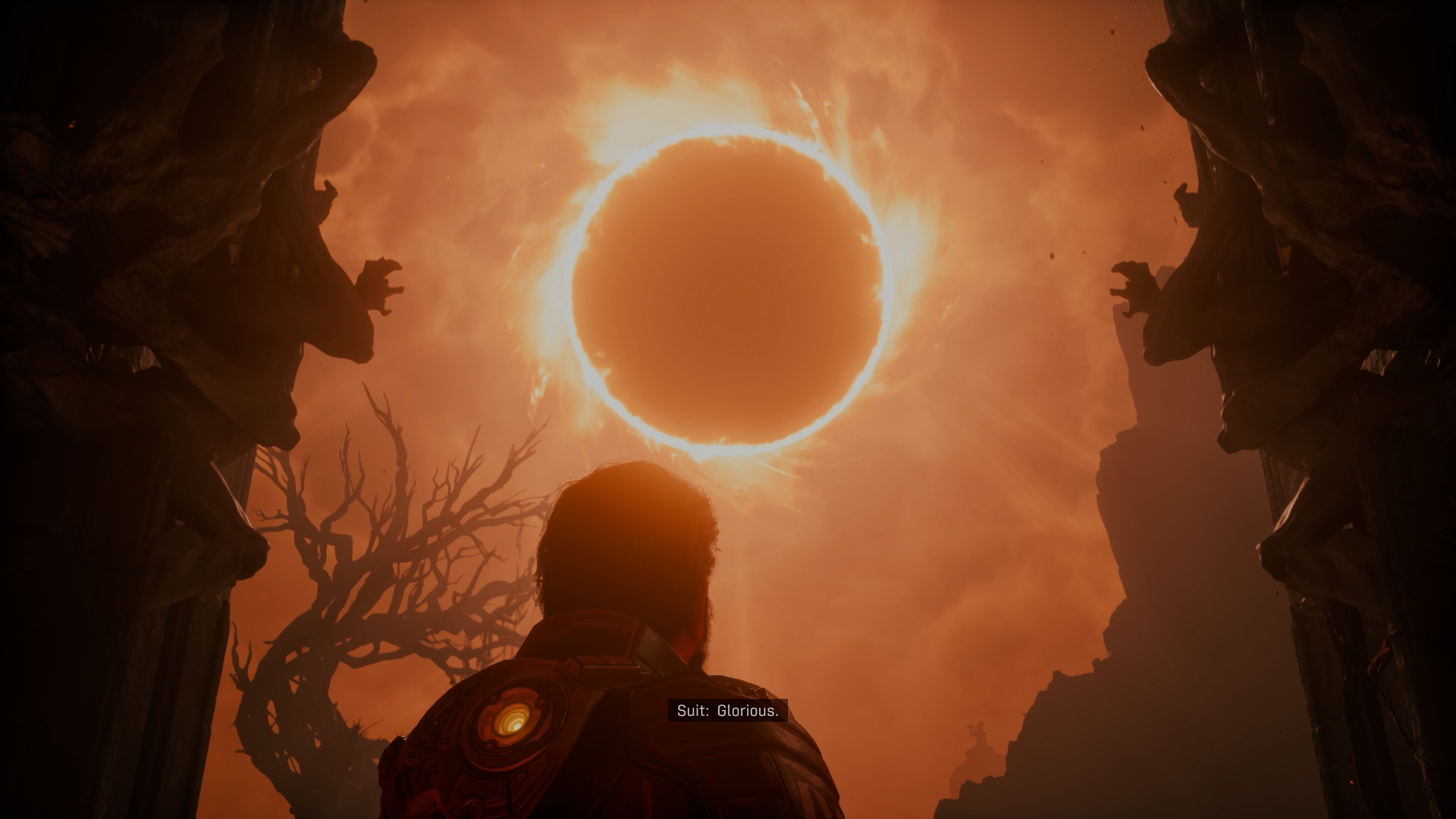
You can complete a biome in around 30 minutes, or as short as 10 if you really know what you’re doing, and you’re not spending too much time exploring non-essential side rooms. At some point in each biome, players will trigger The Eclipse, which increases the intensity of enemies and gives them the ability to corrupt Arjun.
Performance-wise, the game was locked to 60 frames per second for 99% of my playthrough, save for one very specific room that would cause some slowdown each time I visited it. Curiously, before a patch was deployed mid-review period, this wasn’t the case, so this incredibly minor issue may be addressed before it’s released publicly.
Across the board, Saros feels like Housemarque took all the feedback from Returnal and managed to implement it in a way that doesn’t compromise its vision. This is also felt in the game’s Carcosian modifiers, which are a series of buffs and nerfs that you can apply to Arjun before a run in order to customize the game more to your liking. You can do more damage, but that also has to be balanced with a negative effect, which includes less experience gained, or disabling the ability for certain upgrade materials to appear in the world.
Saros is still an extremely tough game, and plenty of bosses gave me a FromSoftware level of satisfaction to overcome, but it’s certainly a less intense challenge than Returnal. As you progress through the world, and the standard of enemies gets tougher, the game’s soundtrack kicks into higher gear.
The game’s score, which combines drone metal with occasional electronica notes, gets more oppressive as your opponents get tougher. There’s a smothering effect to how each of the soundtrack’s disparate stems gets louder and louder as you progress. I am not typically one to wear headphones while playing games, but for Saros, the use of 3D audio makes it absolutely worth it.
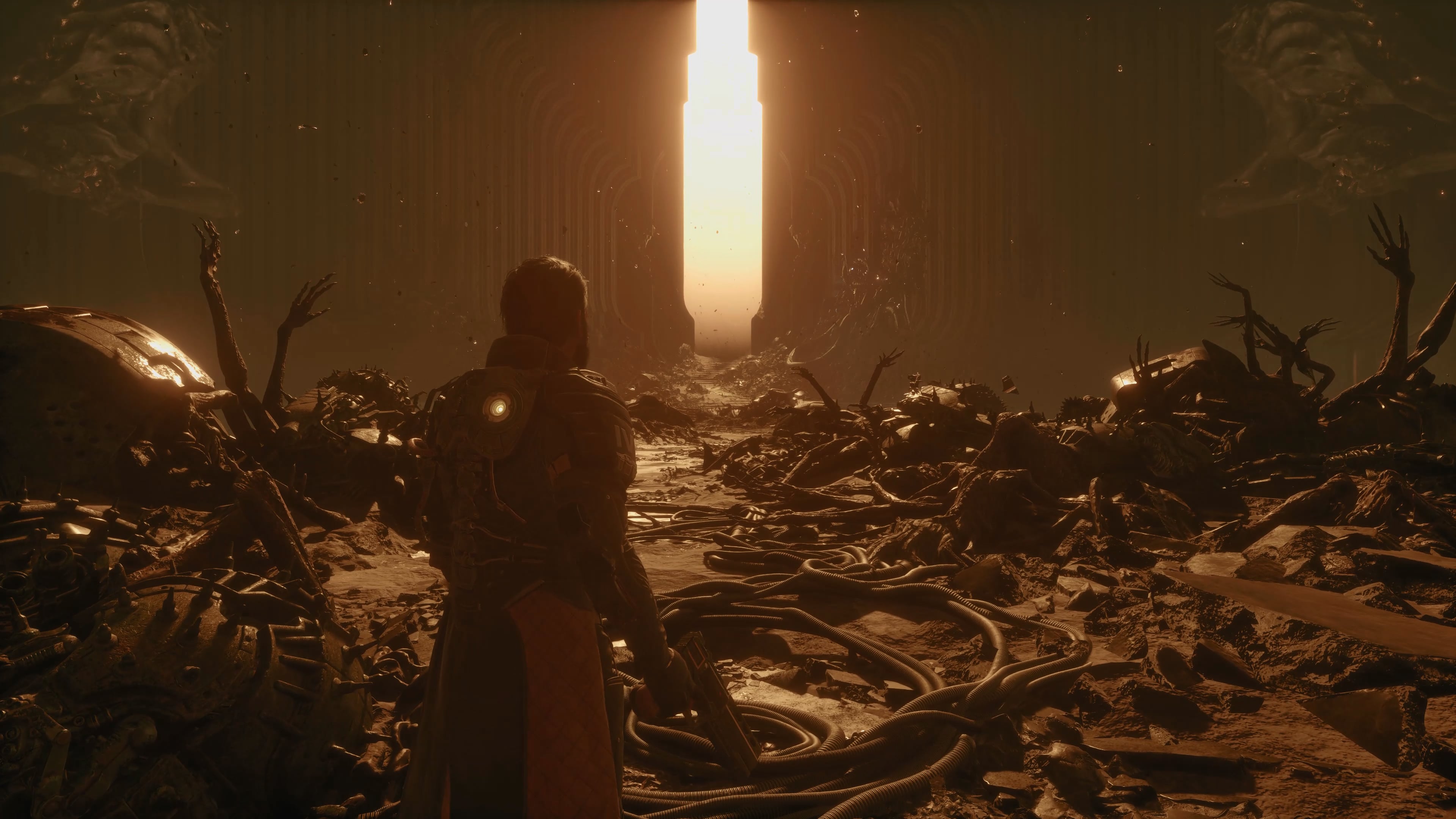
Carcosa is a visual feast, ranging from sun-bleached ancient ruins to opulent, black marble architectural wonders. Saros has to balance a world that looks incredible without infringing on the player’s ability to see what is going on, and I think they absolutely nail it. There’s an obvious intentionality to save some of the big visual wow moments for the quiet beats between the action. You can see late-game biomes in the distance when exploring early-game biomes. This isn’t a case of “if you can see it, you can go there!” This was more “what on earth is possibly waiting for me there?”
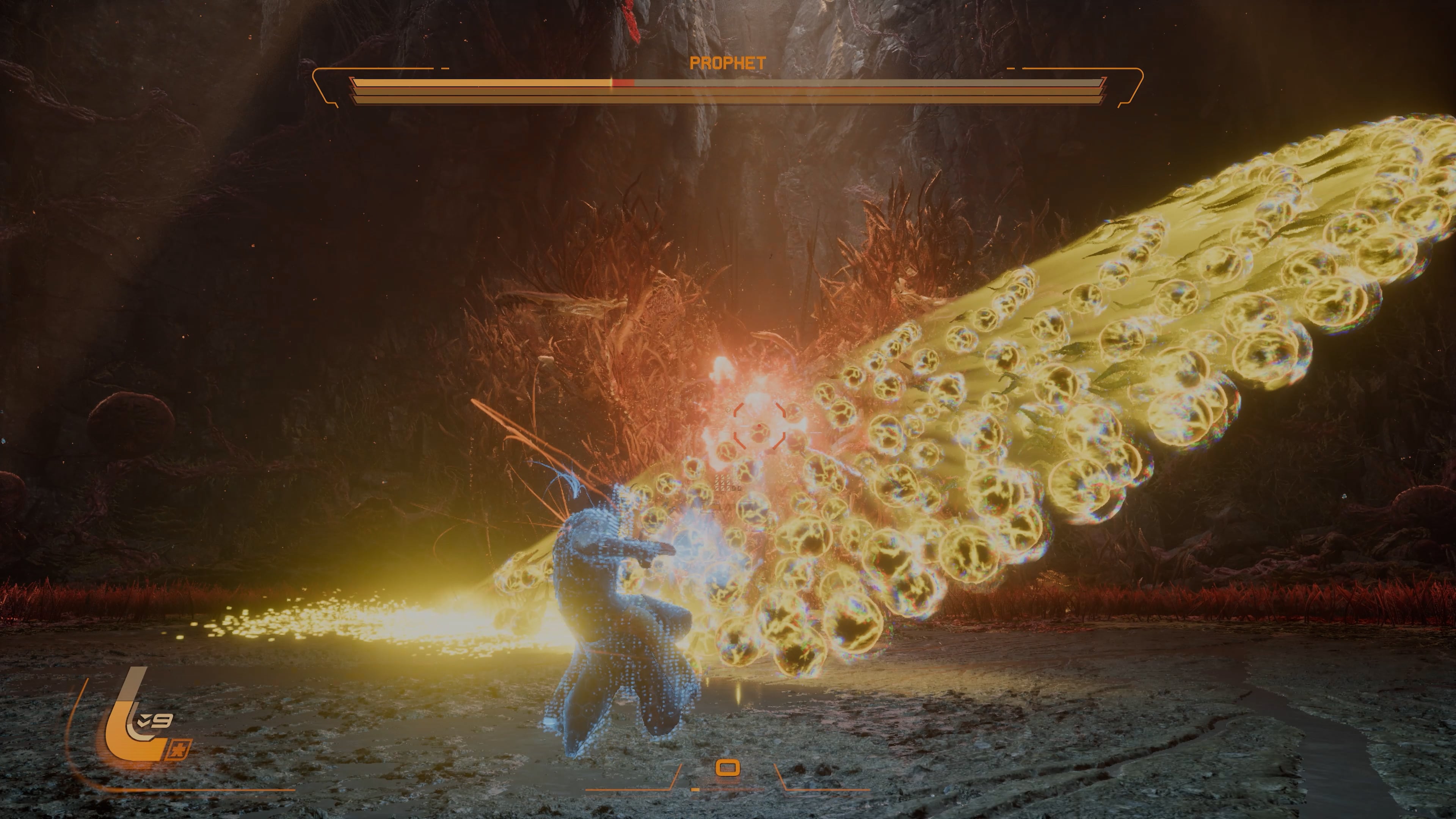
What was waiting for me was some great boss fights. The concept of a boss fight has largely fallen out of fashion in mainstream gaming, except for the perennially popular Souls series. I suppose when one series makes it such a calling card, it’s naturally for others in the space to turn away. Saros absolutely achieves that feeling of dread when you’re approaching a boss room. That sense of trepidation while you wait for the boss to make its move.
They are, in essence, skill checks for what you’ve learned in that biome, or what new weapon has been introduced to you. In Saros, enemies in a biome leading up to a boss will often have moves that mirror the boss’s attacks, with every small encounter essentially becoming a tutorial for the main fight. There are one or two bosses that are more focused on screen-filling spectacle than intense fighting, but they’re earned in the context of the rest of the game.
Before playing Saros, I was concerned that the wrong lessons could have been learned from those who didn’t click with Returnal, but I’m glad those worries were unfounded.
While parts of Saros may feel like a day off for Returnal’s most hardcore devotees, what Housemarque has created is an incredibly tight, polished experience that triples down on what the studio is best at. In a market where Sony has been regularly accused of making the same third-person adventure with different skins, Saros stands out. It’s tough, rewarding, and full of intrigue.
Rahul Kohli’s Arjun Devraj is a captivating leading man who sustained my interest throughout the 20-hour campaign. Even now, some days after seeing everything the game has to offer, there are layers to both Kohli’s performance and the game’s overall mystery that I’m dying to pick apart with fans.
Almost 10 years after CEO Ilari Kuittinen declared that “Arcade is Dead,” Housemarque is very much alive.
Saros Review
Saros is a bold, confident realisation of 30 years of Housemarque. It builds on the mystery and exceptional gameplay of Returnal with an excellent lead performance, and changes to the formula mean even more players will come to realise that Housemarque is PlayStation's secret weapon.
- Best-in-class shooting gameplay that feels amazing
- Sublime visuals and score
- Rahul Kohli gives an award-worthy performance.
- Customisable difficulty will give more players a chance to experience it.
- Moving, mysterious and unsettling narrative.
- Veteran Housemarque fans will likely find it much easier than Returnal.