Romeo is a Dead Man Review: Suda51’s sci-fi spectacle is pure Grasshopper action
No More Heroes studios’ latest action game can be confusing and uneven, but it’s never, ever dull
- Director / writer
- Goichi Suda
- Key Credits
- Ren Yamazaki (Director / writer), Kunihiko Taniwaki (Art director)

In a recent interview, Grasshopper Manufacture founder and CEO Goichi Suda (aka Suda51) summed up his opinion on where his studio’s games sit within the wider gaming landscape.
“I play a lot of these really amazingly well-done games, and I think ‘wow, I can’t think of a single problem with this game’,” he told Kinda Funny. “I’m sitting there playing it, trying to find mistakes or little sucky parts, and there’s nothing. It’s a flawless game, perfectly made. And after a while, I start feeling like it’s a bit too well-made.”
He continued: “If the game market was like school, and you had all these kids who were nailing their tests, and they’re doing all their homework, I feel like every class should have one kind of fuck-up. One kid who just screws around, and he’s funny, and kids might like him, and he doesn’t really do his work and isn’t the best student.”
If the game market were a classroom, Suda said, Romeo is a Dead Man would be that fuck-up. “It’s not made too perfectly, there’s going to be flaws in it, there’s going to be stuff that pisses people off, but it’s funny, it’s interesting, and it’s a break from all the stuff that’s made too well and way more expensive than we could afford to make.”
In a world where developers frequently play the media game and put a wholly positive spin on everything, it’s a refreshingly blunt appraisal of a studio that has always made up for occasional lapses in competence with an abundance of confidence. On his new game, Romeo is a Dead Man, Suda’s summary is spot on: the sci-fi action adventure absolutely does have its issues, but its outright refusal to play it safe means it’s also a hugely memorable adventure.
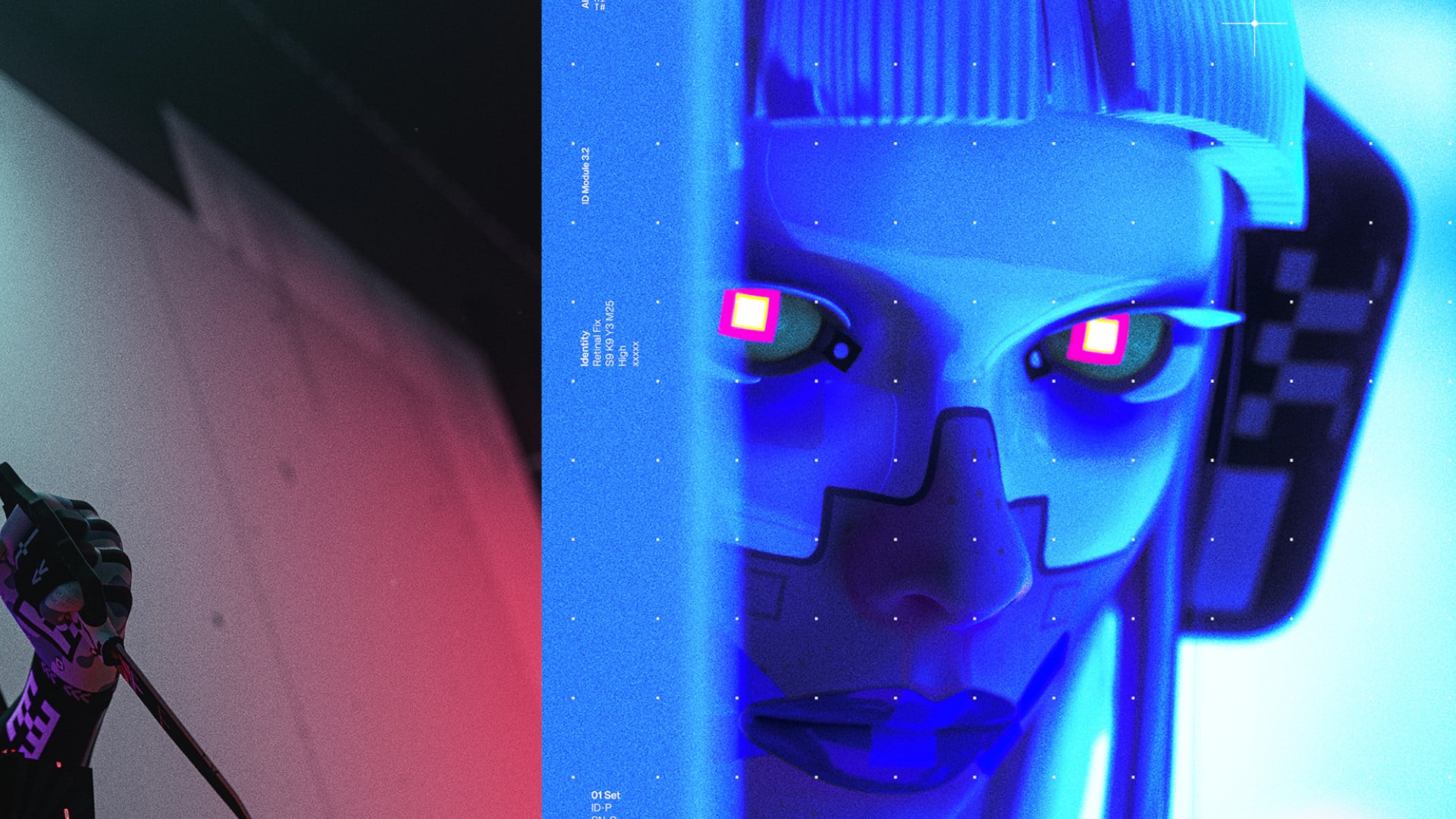
To attempt to describe the plot would be to pretend it entirely makes sense, but the general gist is that Romeo Stargazer, seconds from death, is kept alive when his grandfather travels through time and uses special technology he invented called the Dead Gear Life Support System to preserve his life.
The time paradox created by this breaks the fabric of space-time, so Romeo joins the FBI as a space-time agent and is tasked with traveling through various time zones, killing history’s most wanted fugitives, in an attempt to repair the space-time continuum. Oh, and there’s also the small matter of Juliet, a mysterious love interest who keeps appearing as an enemy in each of these time zones for some reason.
Given that Suda’s love for the work of the late David Lynch – most notably his surrealist TV series Twin Peaks – is well-reported, anyone expecting this story to be wrapped up in a concise, convenient, and comprehensible bow is going to be left wanting. Romeo is a Dead Man will confuse the hell out of you, and that’s by design.
“Anyone expecting this story to be wrapped up in a concise, convenient, and comprehensible bow is going to be left wanting. Romeo is a Dead Man will confuse the hell out of you, and that’s by design.”
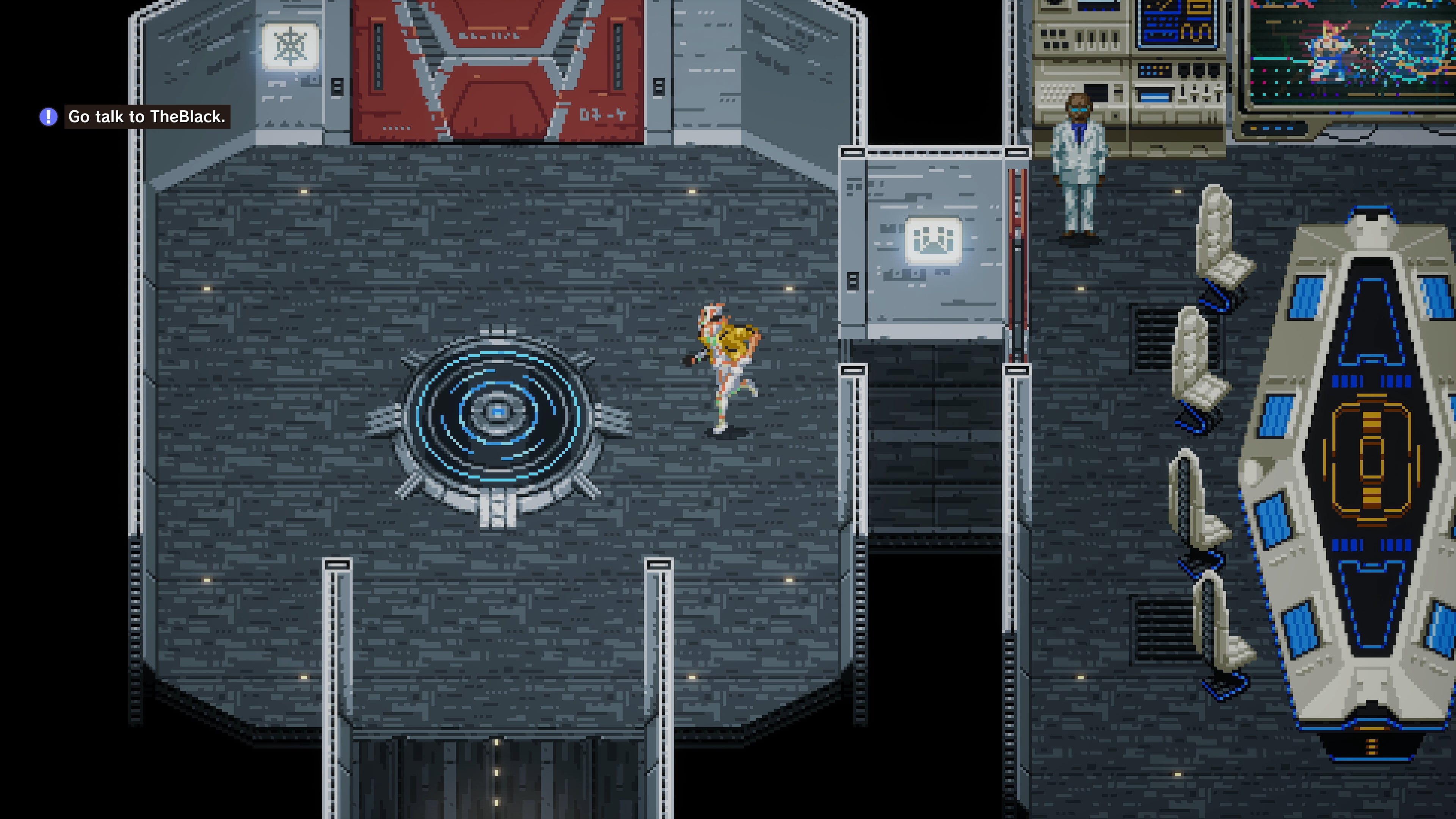
Mercifully, the underlying core of Romeo is straightforward enough. Each of the game’s main stages sees Romeo travelling to a different time zone, exploring both the real world and its underlying parallel ‘subspace’ world, until he reaches and defeats that area’s boss enemy. Then it’s back to the Last Night (the FBI’s spaceship) for a debrief, a chat with the rest of the space-time police crew, and the planting of a few zombie seeds – we’ll get to that – before it’s off to the next stage.
Combat will be familiar to fans of the No More Heroes series, as Romeo’s initial sword, the Spazer, controls similarly to the Beam Katana wielded by Travis Touchdown in those games (although thankfully you don’t have to keep charging it). Blood flows profusely as enemies explode in showers of crimson, and as you attack enemies, you build up a special meter which lets you pull off Bloody Summer, a screen-fillingly colourful attack which does huge damage to anyone in its radius and restores some of your health.

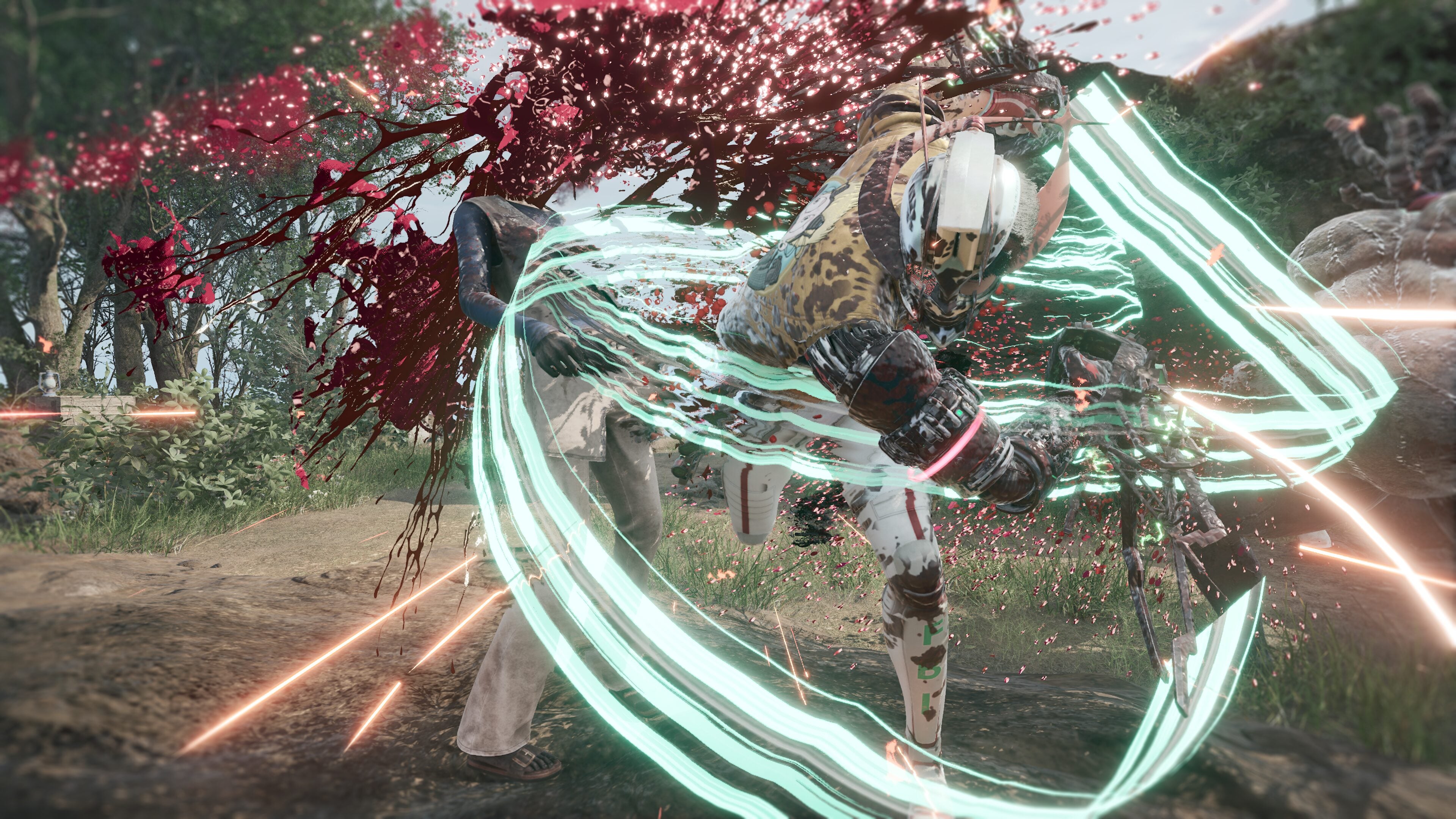
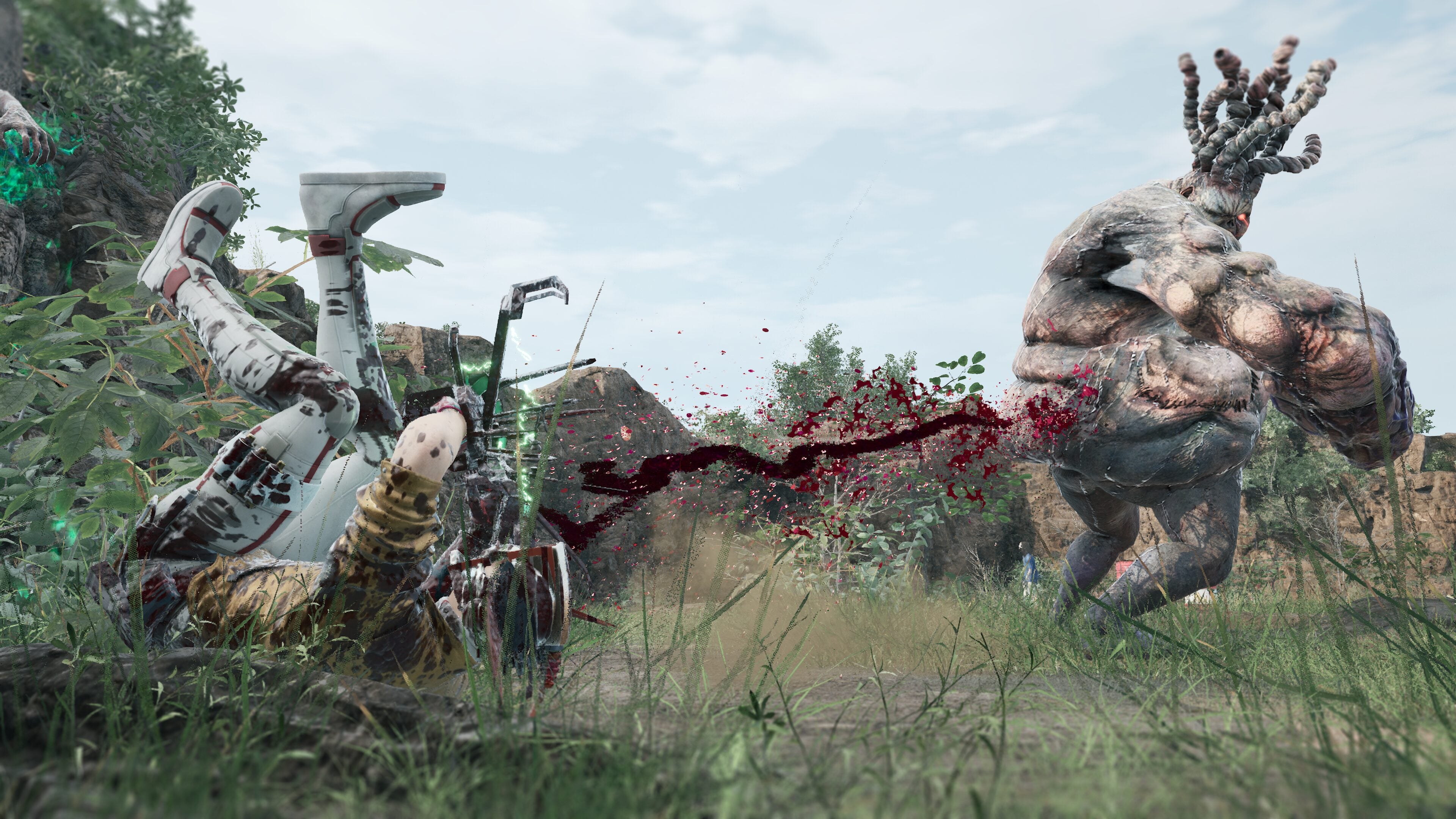
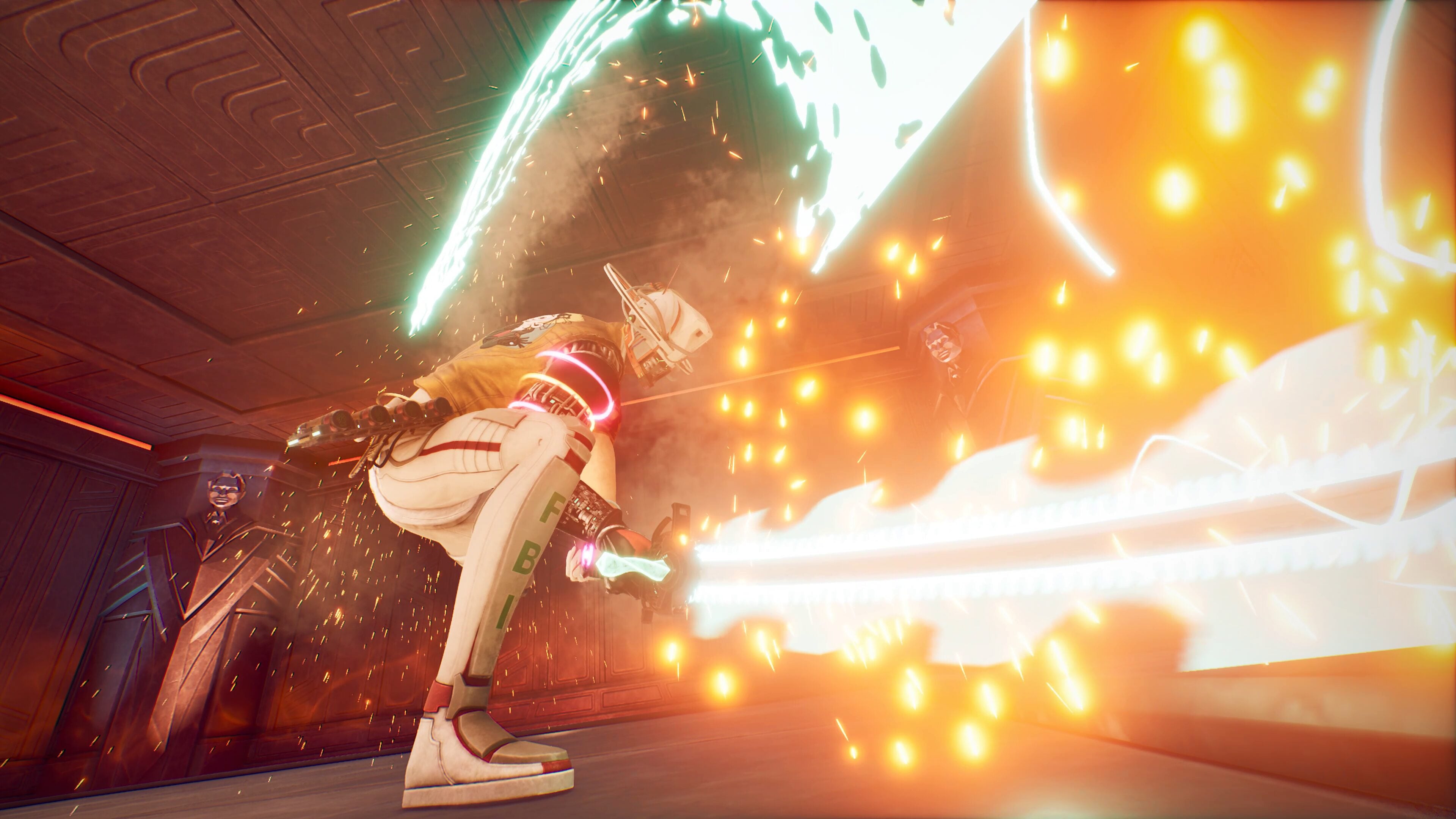
Whereas No More Heroes was a melee-only game and Grasshopper’s recently remastered Shadows of the Damned focuses primarily on shooting, Romeo is a Dead Man strikes a balance between the two, arming Romeo with a melee weapon and a gun simultaneously. There are eventually eight weapons to unlock – four melee, four guns – each of which controls very differently, and can be levelled up to suit your playing style.
If you want to play through the whole game with the standard sword and pistol, levelling them up as you go along, that’s perfectly possible. But the option to mix things up with the likes of the Arcadia (a giant staff which can transform into an axe or two separate swords), the Juggernaut (two spiked boxing gloves for faster attacks), the Nebuchadnezzar (a machine gun ideal for taking out weak spots) or the Yggdrasil (a hugely powerful bazooka which takes about a month to reload) means the combat can be as varied as you like.
Regardless of what combination you go with, the combat can be punishingly hard at times. Even on the standard difficulty level, you’ll get overwhelmed with enemies at times, and the boss battles can be very lengthy affairs where you’ll likely die regularly until you figure out the patterns. While this could be one of the pain points – the “stuff that pisses people off” that Suda referred to – in reality, Romeo is a Dead Man adds two major features to ensure things don’t get too frustrating.
Firstly, when you die, you’re presented with a charmingly cheesy roulette wheel where you can earn a power or defence boost, or make your Bloody Summer meter fill quicker, when you next attempt the battle. On occasion – usually during boss fights but sometimes during the normal stages too – one or two of the roulette panels will also revive you, refilling your life bar and continuing exactly where you left off.
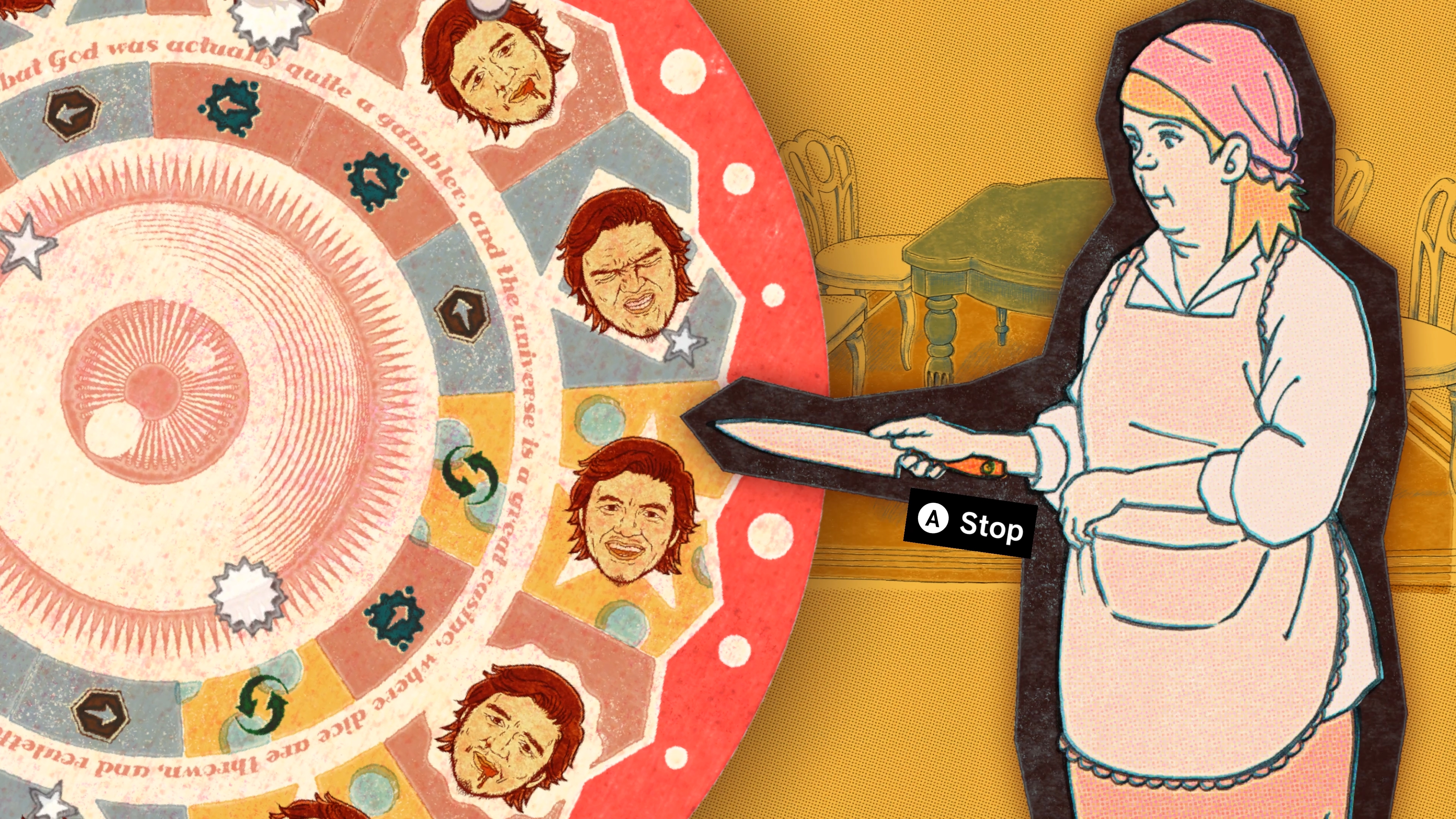
Since spotting these roulettes is entirely skill-based, if your timing is perfect, you can continually revive yourself during boss fights and brute force your way through if you wish. Obviously, it’s not quite as satisfying, and it’s far more time-consuming to battle this way, but given the game doesn’t let you change your difficulty level once you start, it’s nice to know there’s a way to at least make it through to the next stage when you could otherwise be stuck.
The other major feature to assist you in battle is the Bastards. These wonderfully named creatures are spawned by collecting the aforementioned zombie seeds, taking them to the hub area on the Last Night ship, and planting them in its garden section. You can temporarily spawn Bastards while fighting (there’s a cooldown), and each one has its own special ability – one of them might fire shots at enemies, another might perform a taunt that distracts enemies’ attention, or another might roll a giant bowling ball, hitting anyone in its way.
Bastards can be combined to create new ones, either with entirely new abilities or the same ones with more powerful stats, meaning that over time, as you collect more Bastard seeds, you can build a progressively stronger and more varied group of zombie helpers to summon while fighting. It’s an entertaining system.
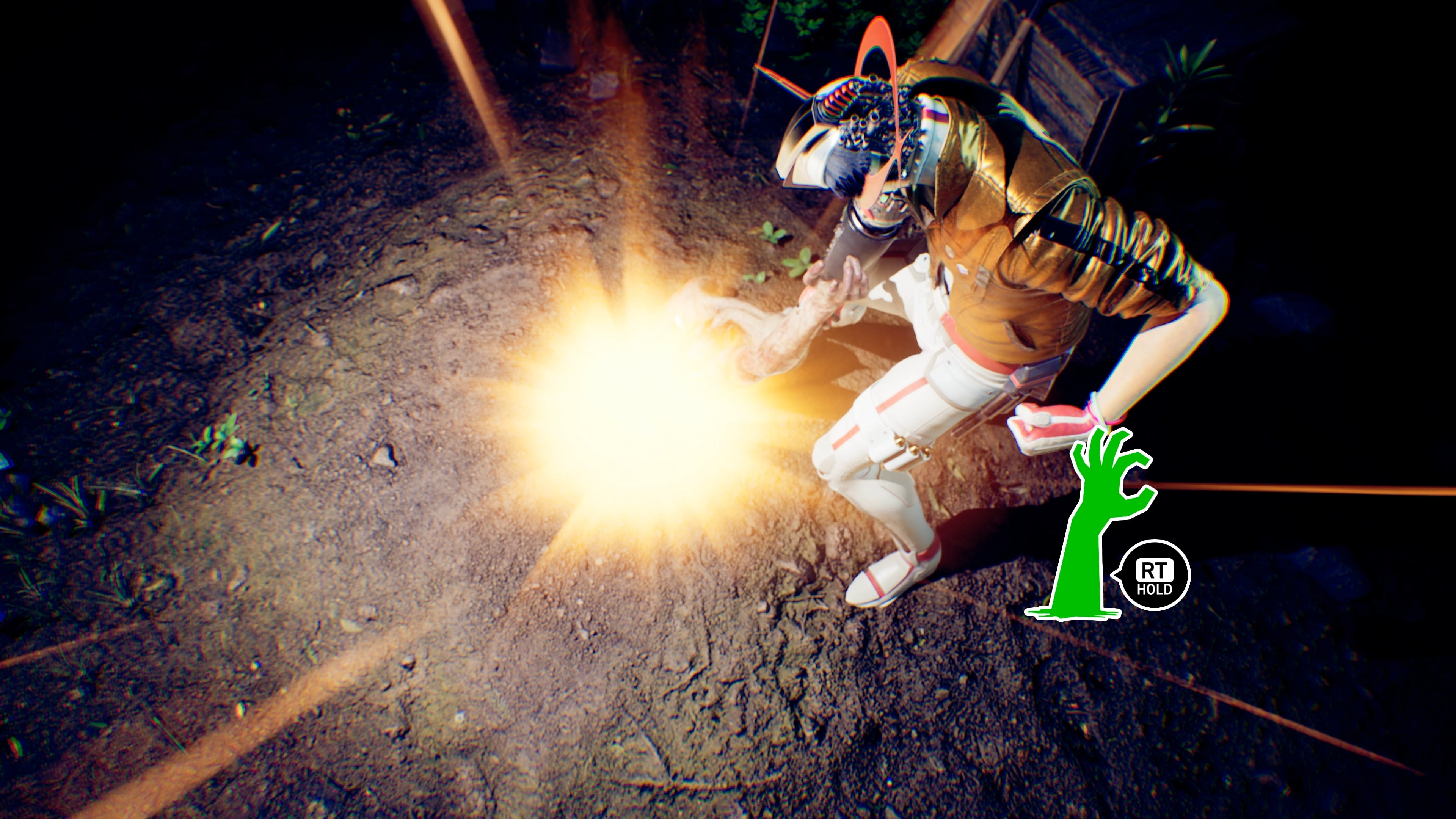
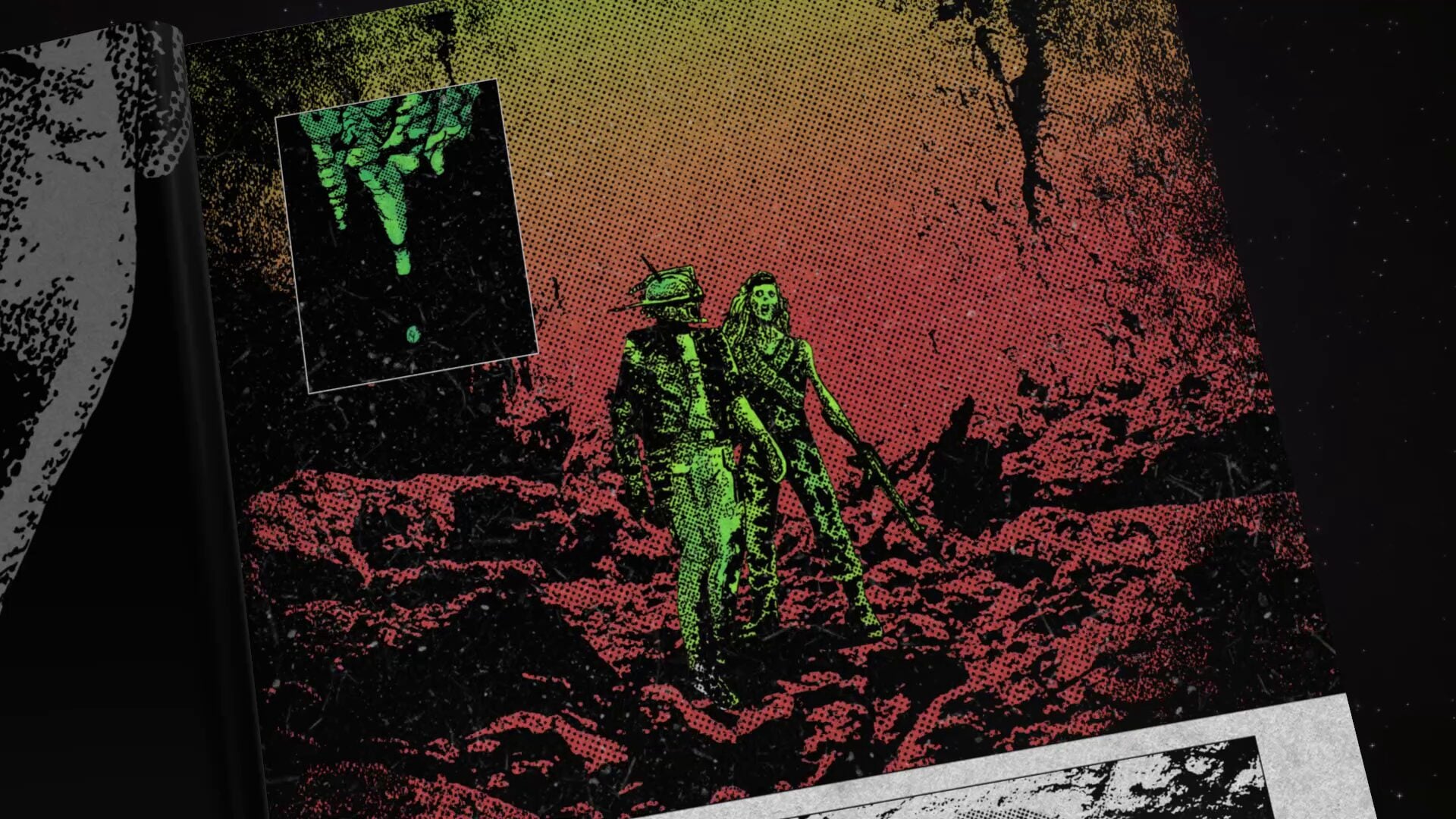
Given that this is a Grasshopper game, the tone is deliberately all over the place. The story is told through in-game cutscenes, comic books, cartoons, music videos, 1980s text adventures, and rather than simply offering a rinse and repeat solution, each stage features a unique gameplay element to distinguish it from the others, whether that’s exploring an underground dungeon maze, using a stone key puzzle system to navigate the grounds of a cult, or the completely tone-shifting asylum stage which turns Romeo is a Dead Man into a stealthy survival horror.
It’s probably here where Suda’s reference to things pissing some players off is probably most likely to rear its head. Players expecting all-out action may not appreciate the switch to survival horror for an hour or so, and I’m sure the random jump scare thrown in for a laugh won’t go down too well either. Others may not like the frequent visits to Subspace, the minimalist alternate dimension where Romeo has to go to find other TV screens and use them to teleport to new areas on the real-world stage.
By the time credits roll at the 10-11 hour mark, you’ll likely be left very confused (especially after the post-credits sequence). But something about Romeo’s sheer balls and commitment to doing things the Grasshopper way is endearing enough to make you want to increase the difficulty level and play through it again. Thankfully, there’s a New Game+ mode for just such an occasion.
“By the time credits roll at the 10-11 hour mark, you’ll likely be left very confused (especially after the post-credits sequence). But something about Romeo’s sheer balls and commitment to doing things the Grasshopper way is endearing enough to make you want to increase the difficulty level and play through it again.”
Each of Romeo’s levels are introduced with a parody of The Clash’s London Calling album cover. It’s fitting – Grasshopper’s motto has long been “punk’s not dead”, and by referencing a classic punk rock band before each stage, the game is quite clearly setting out its stall. Like so much of Grasshopper’s previous content, this is very much a punk video game – it’s raw, it’s rough around the edges at times, and it’s unashamedly doing its own thing, with no regard for who likes or hates it.
As Grasshopper’s first self-published game, a lot is riding on Romeo is a Dead Man. “Punk’s not dead” may be the mantra, but “money talks” is another one the studio will doubtless have in the back of its mind if it wants to ensure the status of ‘punk’ continues to remain very much on the non-dead side of things.
Thankfully, it couldn’t have offered a better example of its wares. Romeo is a Dead man is peak Grasshopper, warts and all – not perfect, but not predictable – and whether it ends up becoming a turning point for the company’s fortunes (for better or worse), at the very least it’s something we wholeheartedly recommend as the purest form yet of what this studio’s all about.
Romeo is a Dead Man review
Romeo is a Dead Man is Grasshopper Manufacture at its most confident and its least conformist. It's got its fair share of rough edges, but the combat is satisfying – offering a challenge without being frustrating – and the sheer inventiveness in its myriad art styles and its bizarre plot ensure this is an adventure you won't have seen before. Anyone with an interest in wandering off the beaten track of familiar third-person action adventure games should check this one out.
- Wildly offbeat plot told through a wide variety of art styles
- Refuses to sit still for too long, continually changing gameplay
- Combat is extremely satisfying and caters for individual play styles
- Roulette and Bastard mechanics provide assistance in fun ways
- With such a wide range of ideas, not all will land with everyone
- Subspace sections get repetitive by the end