Monster Hunter Stories 3 Twisted Reflection Review: Gotta Hatch ‘Em All
Capcom’s gorgeous third turn-based Monster Hunter spin-off might be the best one yet
- Director
- Kenji Oguro
- Key Credits
- Ryozo Tsujimoto (Producer), Daisuke Wakahara (Lead game designer)
It doesn’t matter how old I get, I’ll always be compelled to catch ‘em all.
Whether it’s in Pokémon, Shin Megami Tensei, or now in Monster Hunter Stories 3, completion beckons me. There’s nothing nicer than having a filled Pokédex, or Monstiepedia, or whatever the equivalent is, and even if I rarely get all the way there, I’m always going to do what I can to catch ‘em all and be the best there ever was. If you’re on a similar journey, then you should know that Monster Hunter Stories 3 is one of the biggest and most epic-feeling of any similar monster-catching adventure.
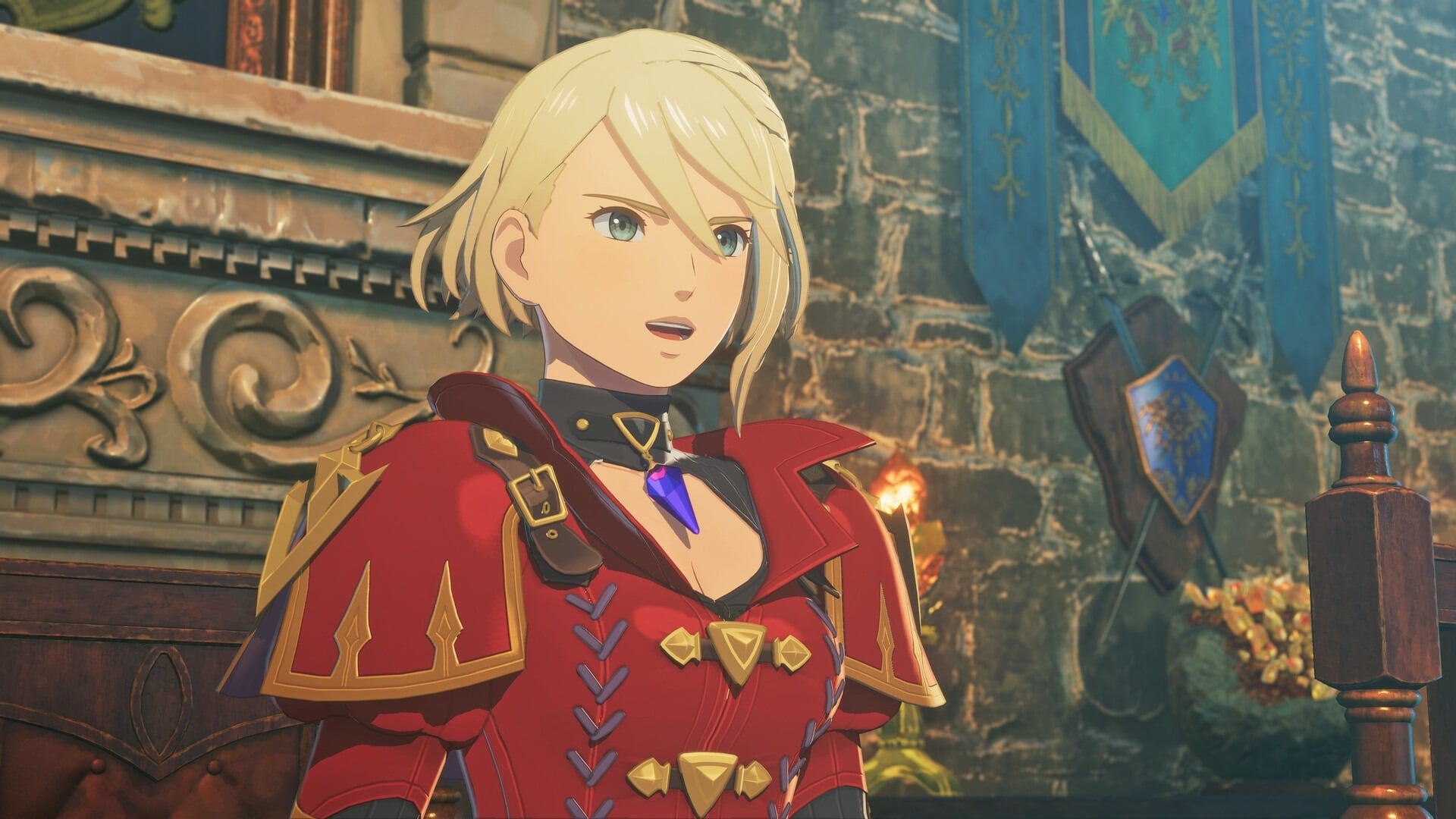
You are the Prince (or Princess) of Azuria, a flourishing land filled with verdant pastures and friendly wildlife. One day you are approached by the Princess of the competing kingdom, Vermeil, with grave news of the Crystal Encroachment that threatens to swallow the land, monsters, and people living there. Azuria’s time of peace hasn’t prepared it for a metaphysical blight, and Vermeil’s struggle against it has hardened its rulers, who are now intent on taking land and resources if it means survival.
Thus, you and your band of Rangers – Riders that strive to maintain the balance of nature – venture across the world to find the source of the Crystal Encroachment for yourselves, and the truth behind the two competing kingdoms. It’s a classic tale with few surprises, but it makes for a grandiose and epic backdrop to what you’ll actually be doing for most of your MHS3 journey: raiding dens for eggs.
Catching ‘em all truly is the name of the game, and to do that, you’ll need lots and lots of eggs. Monster dens spawn across each of the game’s four open-world environments and the various dungeon-like caves you’ll explore. Inside each monster den is a bunch of gathering points for a variety of items, and one or two egg nests. You can take one egg from each nest, and then hatch your eggs back at base.
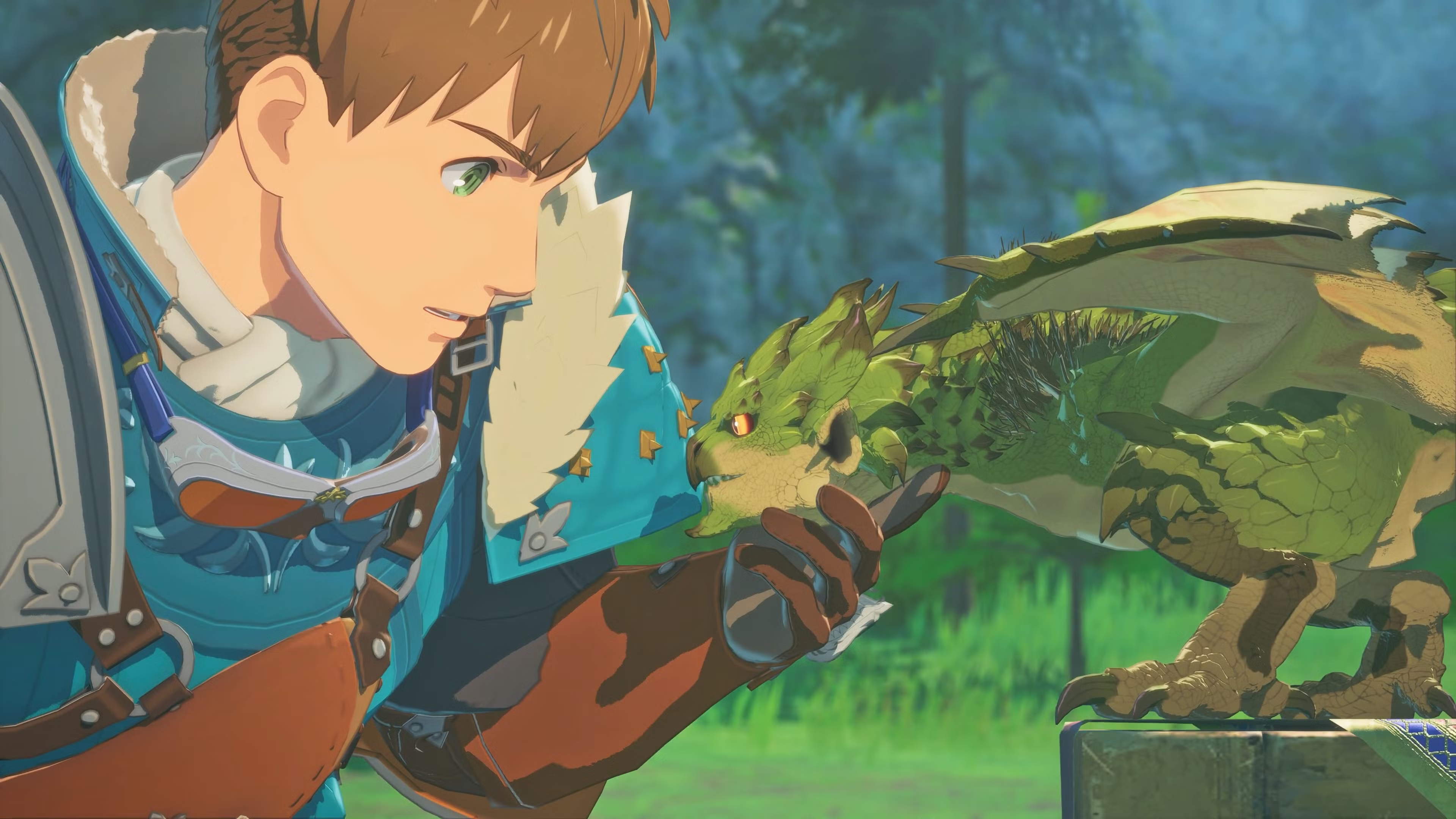
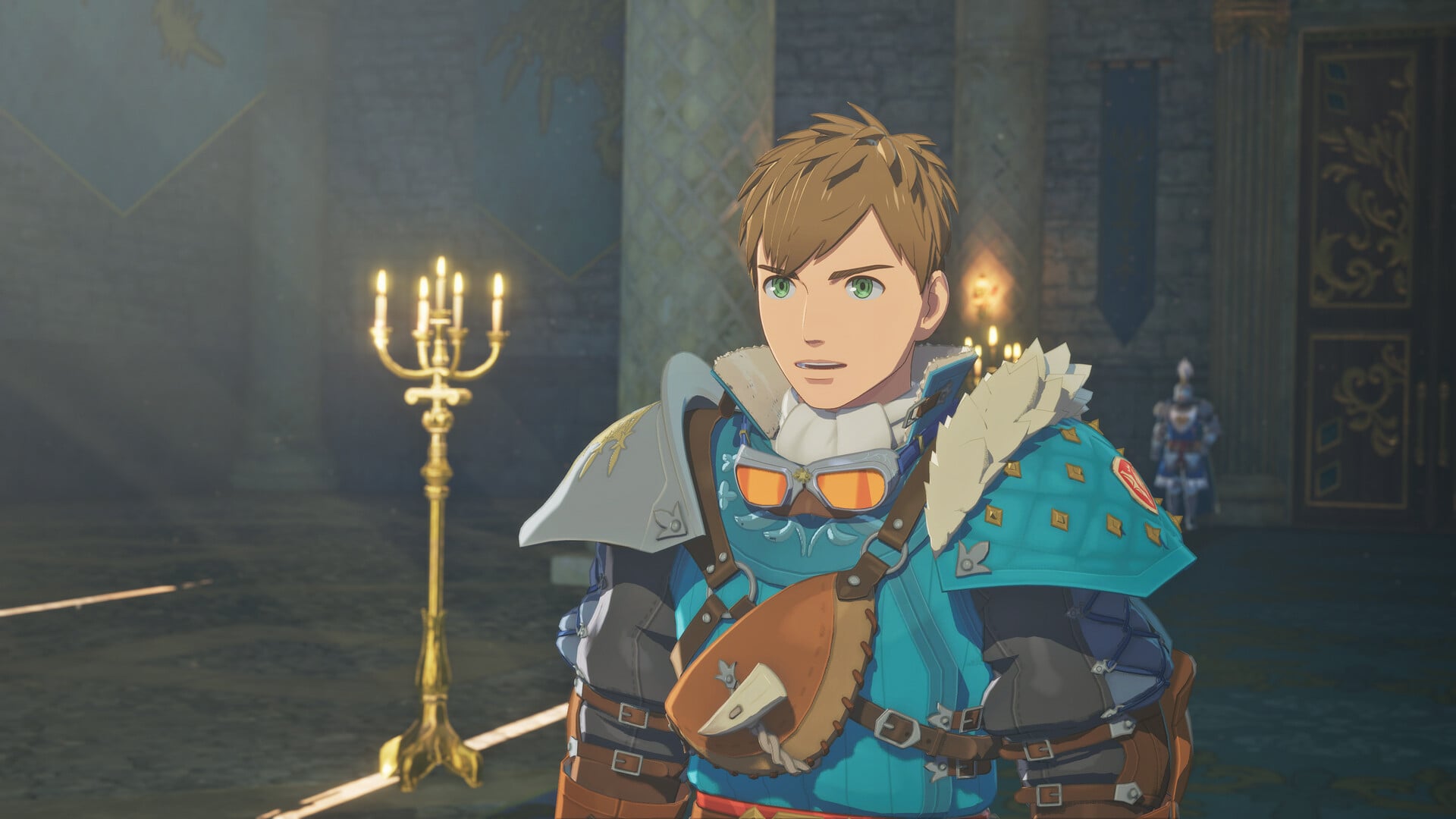
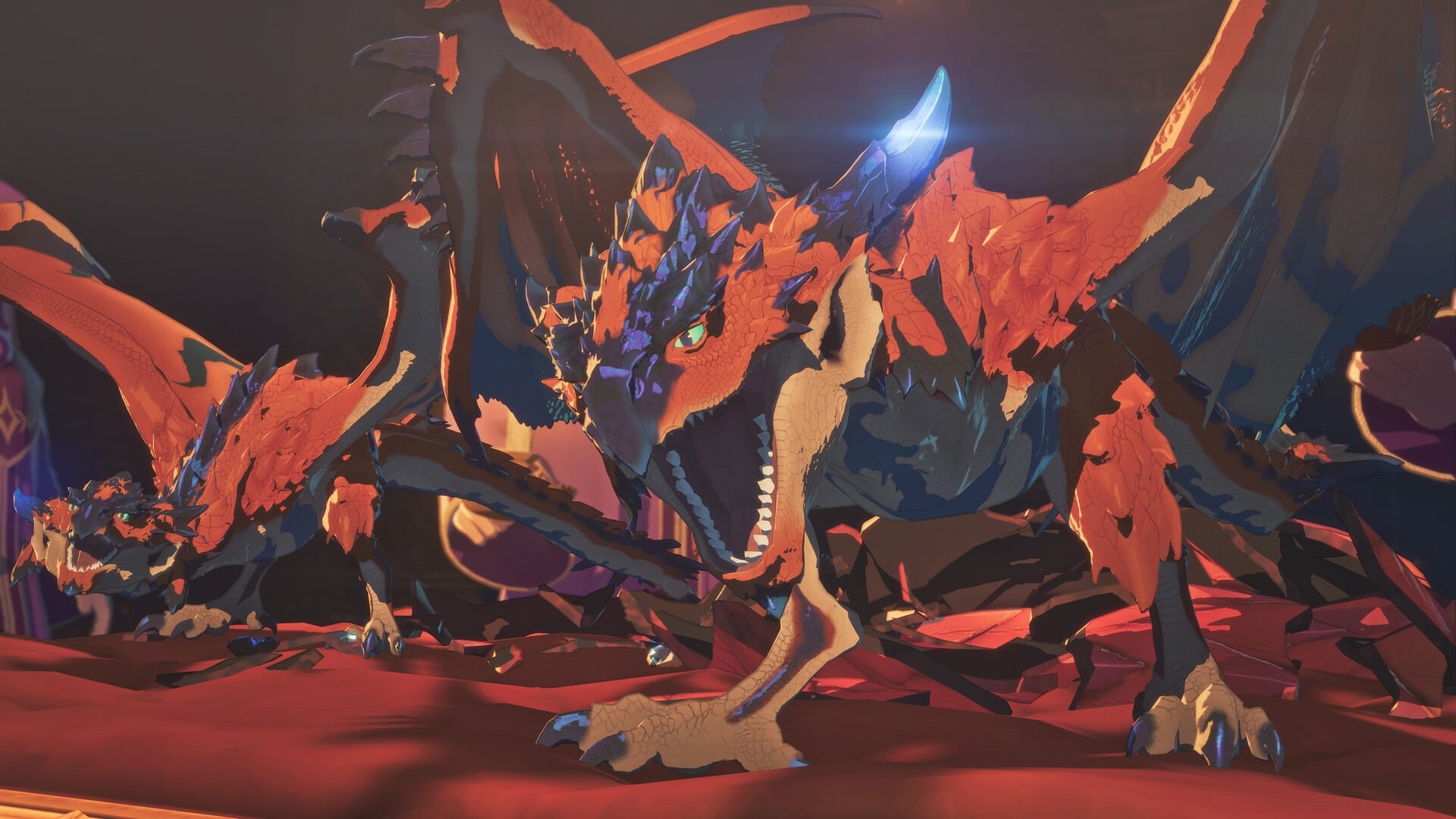
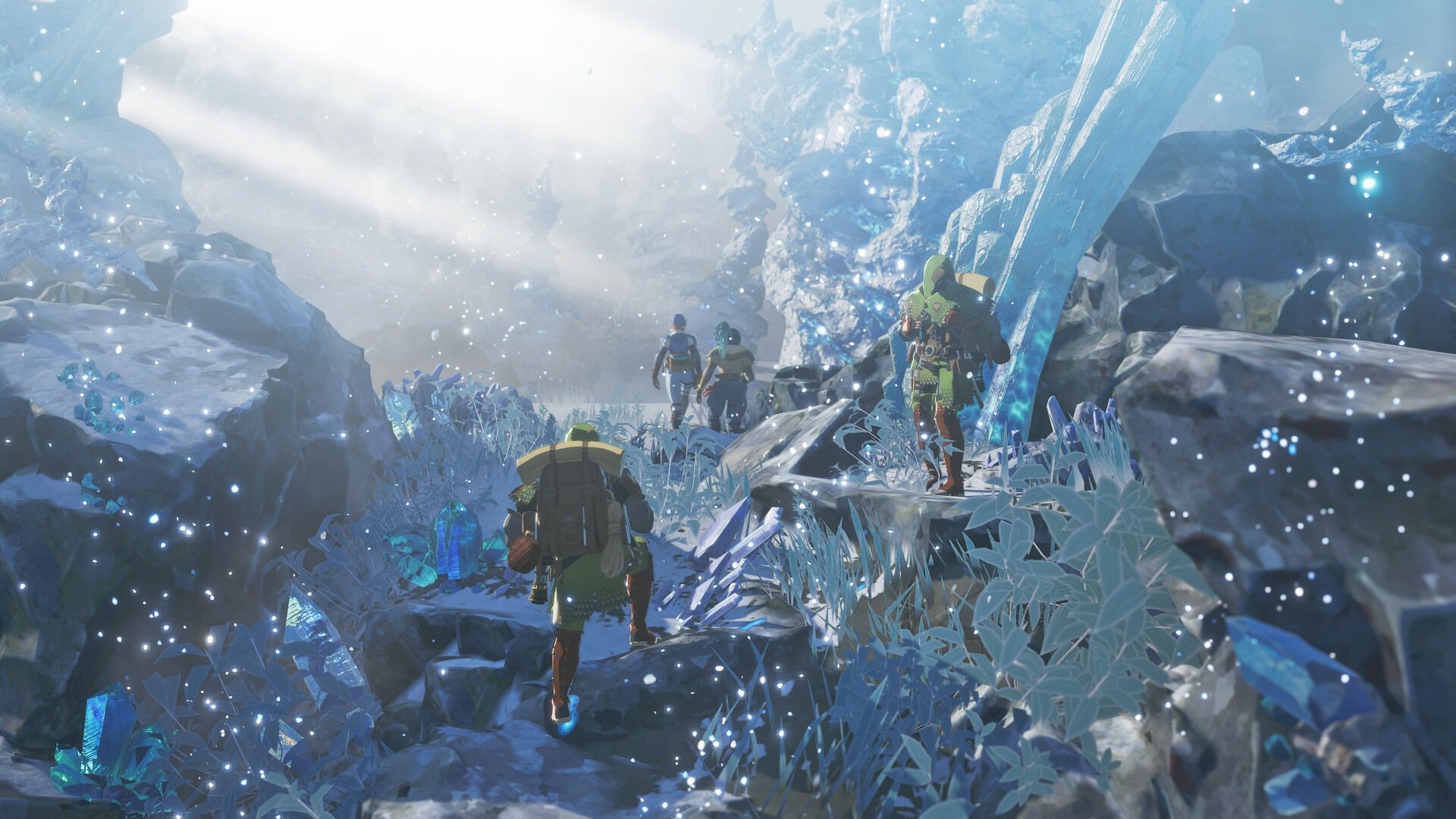
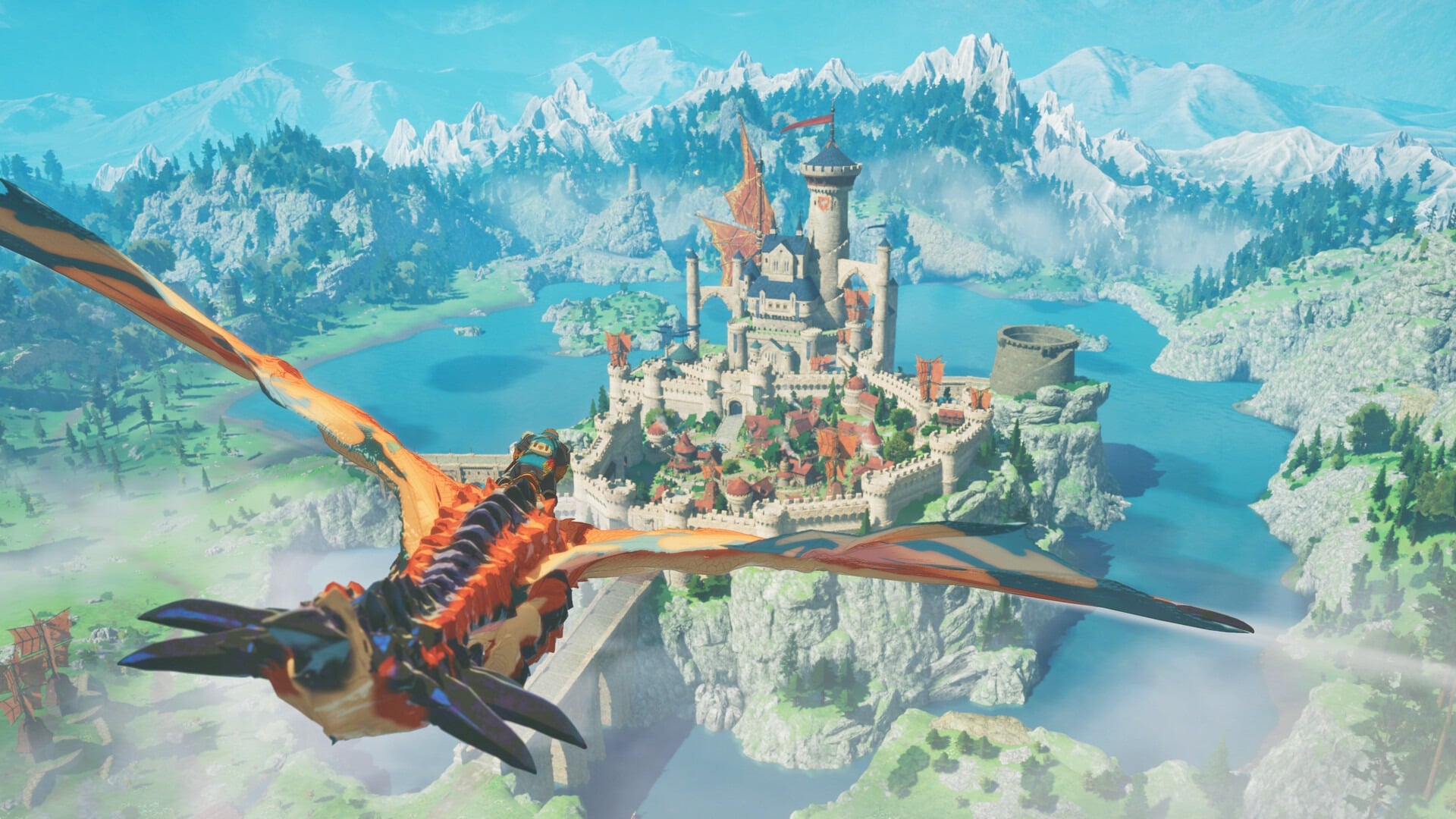
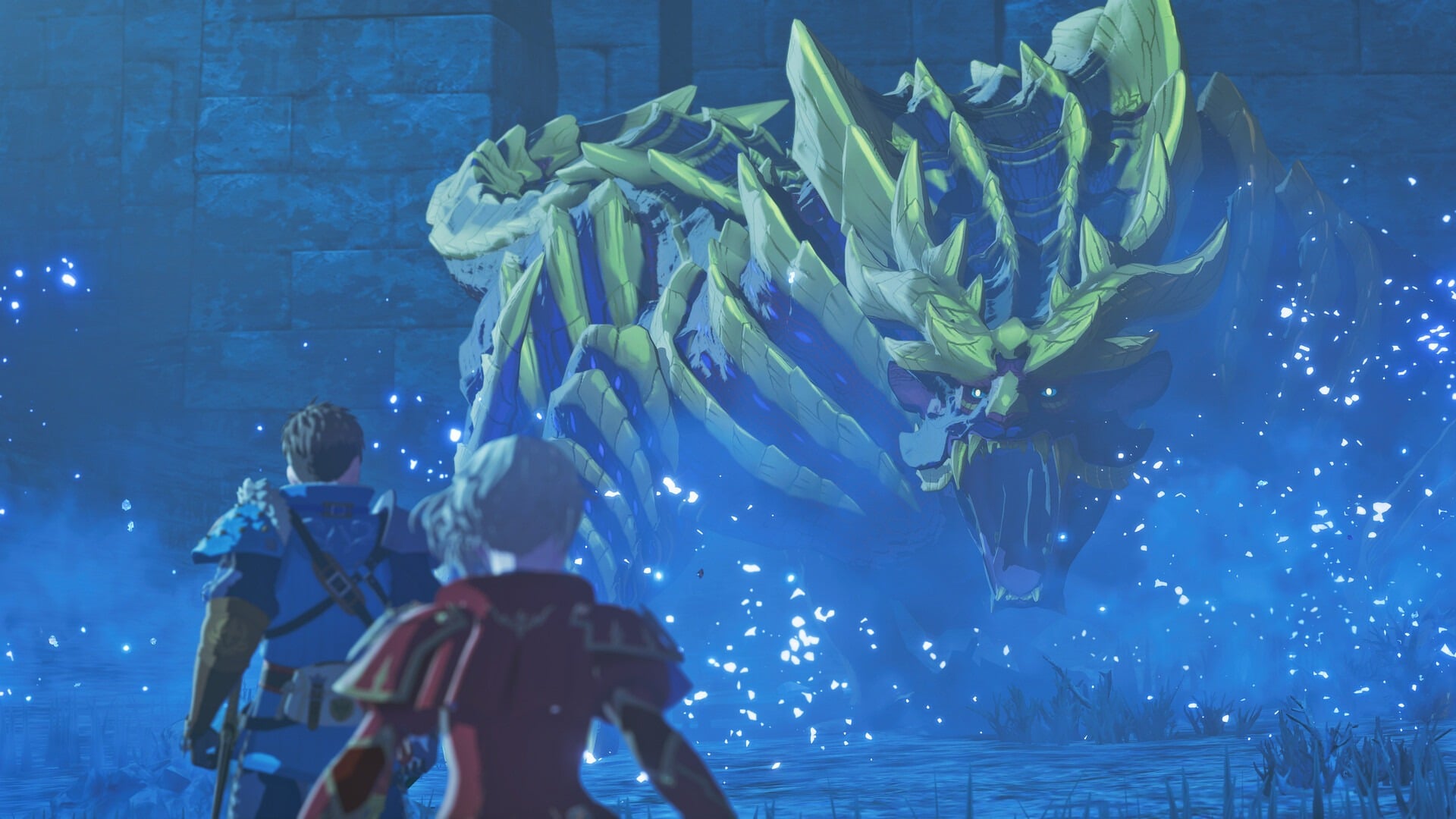
Once at the base, you can hatch your egg instantly, and the monster inside will be fully-grown and ready for battle before you know it. You can carry up to 12 eggs at a time, and you’ll be picking up many of the same monsters. That’s fine, because you’ll need to defeat the Feral monsters in each habitat before releasing the native creatures you’ve hatched back into that habitat.
Increasing the population of each species will result in dens that spawn rarer and more powerful eggs, in addition to monster mutations, which will introduce powerful monster variants into each area. The more monster eggs you hatch and release, the better your odds of encountering creatures with rare skills that can supercharge your team.
It’s a surprisingly engaging loop, even if it can become repetitive fast. Each monster den for each open-world area has the exact same layout, and it takes time – and a lot of monsters – for each habitat to be upgraded fully, especially if you’ve just been passively egg hunting. Still, each gathering point and egg you take gives you and your monsters valuable EXP, meaning you can level up for a tough fight without actually having to grind battles.
“The more monster eggs you hatch and release, the better your odds of encountering creatures with rare skills… It’s a surprisingly engaging loop, even if it can become repetitive fast.”
It’s not that the battles are bad, but the Janken – Rock, Paper, Scissors – battle system isn’t particularly endearing. Battles have been smartly adapted from Monster Hunter’s action combat system with varying weapon types and weakpoints, to a turn-based system where you still get the satisfaction of bludgeoning a monster’s head with a hammer, if you so choose.
When you and a monster attack one another, you’ll choose between Power, Speed, and Technique type attacks, with Power beating Technique, Technique beating Speed, etc. These moments are called Head-to-Heads, and if you win the Head-to-Head, you’ll get some small bonuses, like not dying.
In tougher fights, that’s almost all it amounts to. Win or lose the Head-to-Head, you’ll still both take and deal damage. You might inflict a bit more damage as the winner, but it doesn’t actually impact the battle as much as the game wants you to think.

It just becomes an extra thing to worry about in a combat system that is, honestly, complex enough without adding Janken to each move. Using the right weapons to attack each monster’s weak point to inflict Stagger and Topple – in addition to a variety of other ailments familiar to MH fans – before dealing big damage is already good stuff, and the Head-to-Heads just become annoying fluff.
It became so annoying that I found myself fleeing from almost every optional battle, choosing to spend almost all of my time on hatching and releasing monsters to upgrade habitats. Luckily, that’s a valid way to play, but you’ll still need to overcome story bosses and take down beasts to forge equipment, and you can pick and choose your targets and gear goals.
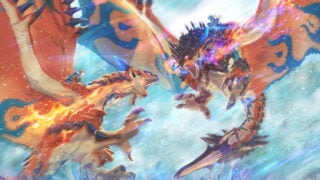
The fact that, dozens of hours deep, I still wanted to keep progressing, hatching, and upgrading my kit and my team, despite being annoyed by the battle system, really proves how good MHS3 is otherwise. Visually, it’s beautiful, and one of the best-looking cel-shaded games we’ve seen this generation.
“The fact that, dozens of hours deep, I still wanted to keep progressing, hatching, and upgrading my kit and my team, despite being annoyed by the battle system, really proves how good MHS3 is otherwise.”
The open-world environments are hardly complex to navigate, but there are just enough weird paths and routes to find hidden areas to make you feel like you’re actually exploring and not just filling in a map. But best of all, hatching monsters and upgrading habitats to find rarer monsters is just an incredibly satisfying loop, regardless of how repetitive it can become if you decide to grind it out.
The story is somewhat oddly paced, too, being mostly found at the beginning and end of the game. There are smaller plot and lore revelations along the way, with some small references to previous games in the series, but most of the actual events happen as you begin your journey, and after you’ve uncovered the four main areas. Though again, the meat of the game is in your monster collection, so the uneven pacing isn’t too distracting.
All said, Monster Hunters Stories 3 overcomes its annoyances to deliver a high-quality, gorgeous JRPG with dozens of hours of monster hatching and raising to keep you occupied as you uncover the truth behind the Crystal Encroachment. If you’re looking for a charming JRPG with some cosy game distractions, there are few better choices than Monster Hunter Stories 3.
Monster Hunter Stories 3 Review
While its battle system is going to divide some players, the monster hatching and raising is some of the best in the business. Monster Hunter Stories 3 might be the best turn-based Monster Hunter yet, and shouldn’t be ignored by fans of Capcom’s larger-than-life series.
- Beautiful art style and environments
- Monstie hatching is engaging and enjoyable
- Raising a strong team is hugely satisfying
- Rock, Paper, Scissors battles
- Some story bosses have annoying mechanics