Metroid Prime 4: Beyond Review: Ocarina of Prime
When it feels like Metroid, Beyond is a blast, but often Nintendo’s sci-fi revival is lost in space
- Design director
- Bill Vandervoort
- Key Credits
- Kensuke Tanabe (Producer), Jhony Ljungstedt (Senior art director)

Like the titular alien species burrowing into the skin of the next hulking boss creature, Metroid Prime 4: Beyond sees the Nintendo sci-fi classic undergo a drastic metamorphosis.
The fourth instalment in a series dormant for so long that it might as well be a reboot, Metroid Prime 4 attempts to simultaneously satisfy those hardcore players who remember and love the GameCube originals, while also plotting a new direction for the franchise, presumably so that we don’t have to wait another two decades for the next one.
The result is a Frankenstein fusion of ideas, which at its peaks delivers some great series moments, but at its troughs, feels like a dilution of the formula that made these games beloved in the first place.
Throughout Prime 4, players neck-jerk between horror-style FPS sequences, open-world vehicle exploration, and comedy banter between a crew of wisecracking support characters. It’s an experience that feels like a collage of styles plucked from past Samus Aran adventures, The Legend of Zelda, and Halo, but never really settles into a clear identity.
Guides: Read our Metroid Prime 4 Walkthrough for a step-by-step guide to finishing the game 100%. We also have simple guides for all Missile Expansion Locations, Energy Tank Locations, Mech Part Locations, All Shrine Locations, Scout Bot Locations, a Green Energy Crystals Guide, Lamorn Lore and Data Log scan locations, and how to get the secret ending.
It’s the same tug-of-war that was at the centre of the last Prime game, Wii’s 2007 instalment, Corruption. But regardless of how disgruntled Metroid purists might feel about some of the big changes – and I’ve already made it clear how much I dislike the chattier cast members – the end experience is, at least, anything but dull.
Prime 4’s action plows forward like a freight train, with excellent boss battles, and some truly gorgeous environments to explore. But it does so in a popcorn, switch-your-brain-off style of comfort, which feels odd to write about a game in this series.
The setup in Metroid Prime 4 is familiar stuff: after a dramatic introduction sequence, interstellar bounty hunter Samus Aran is left stranded on a strange planet, Viewros, where she must investigate the fate of an extinct alien race by unlocking new abilities, defeating formidable threats, scanning absolutely everything, and backtracking to unlock doors that previously wouldn’t open.
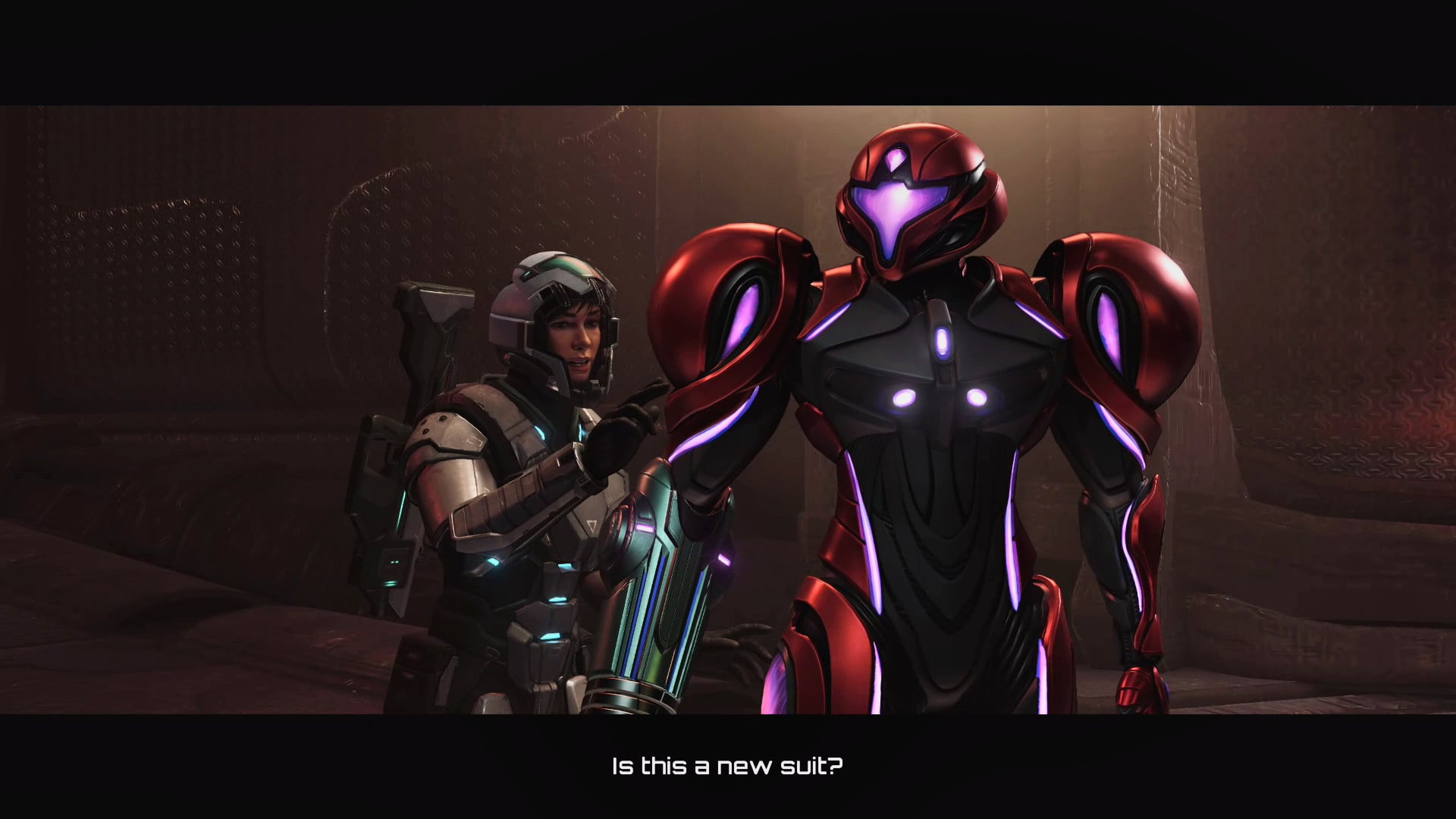
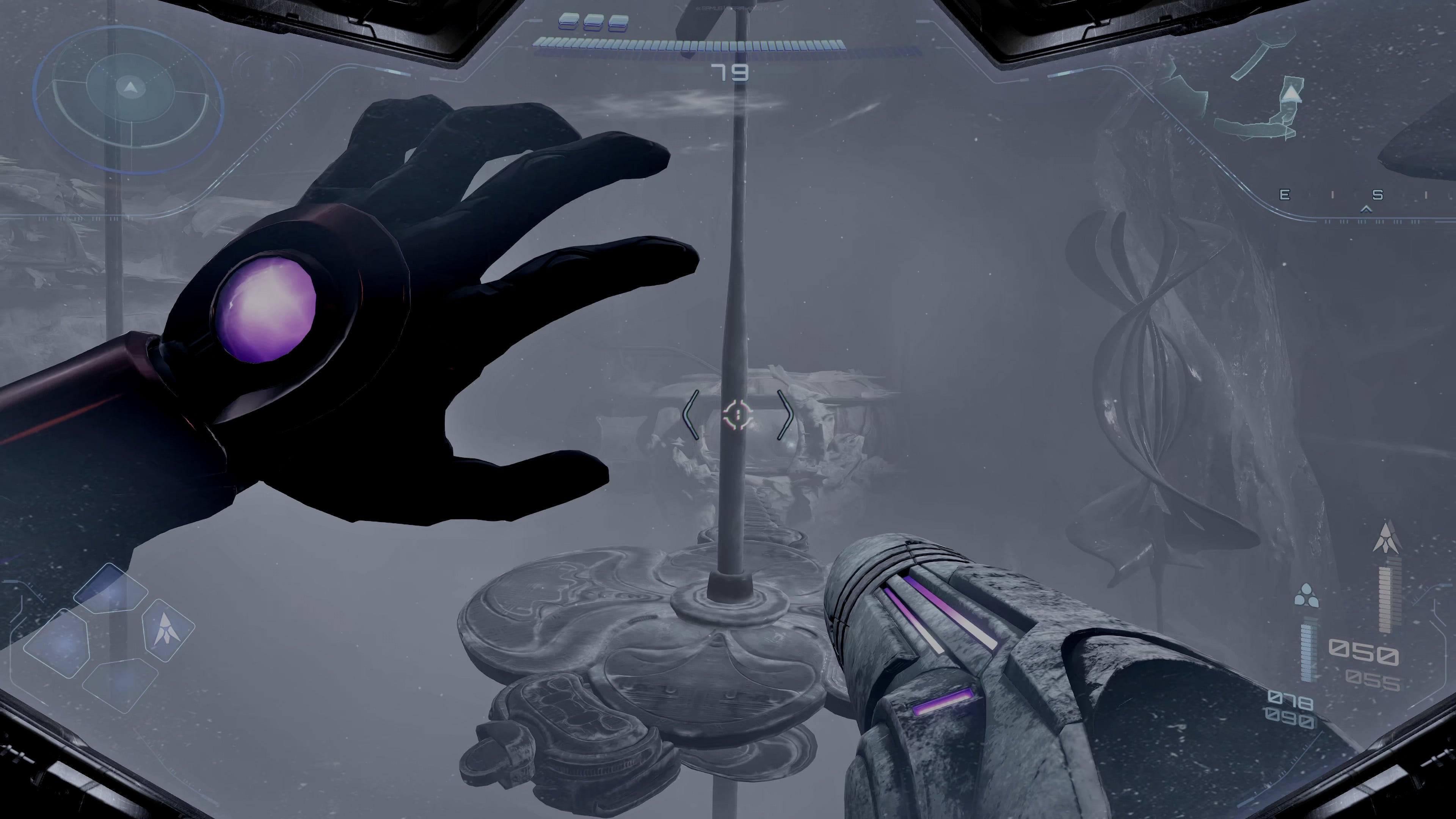

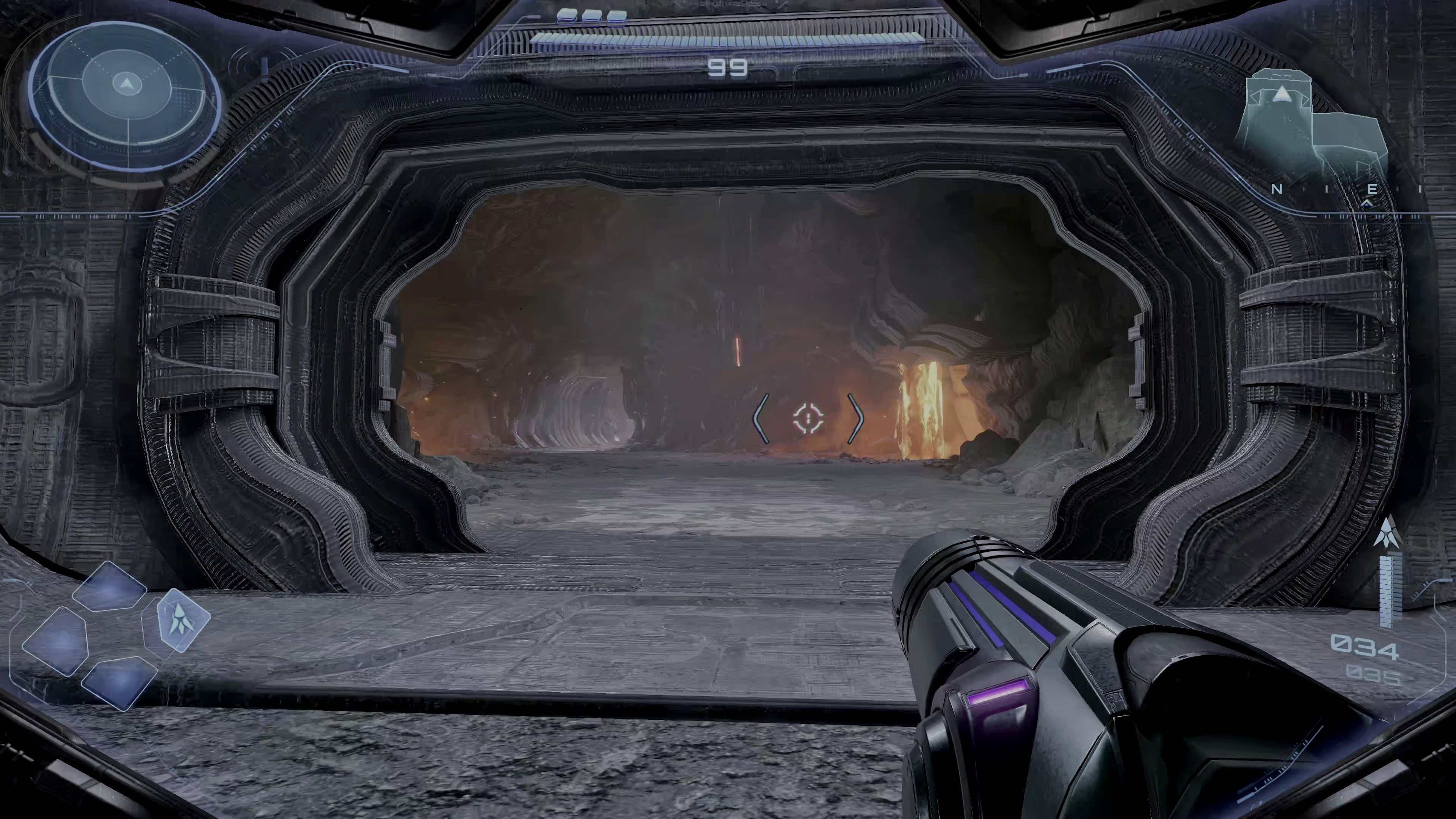
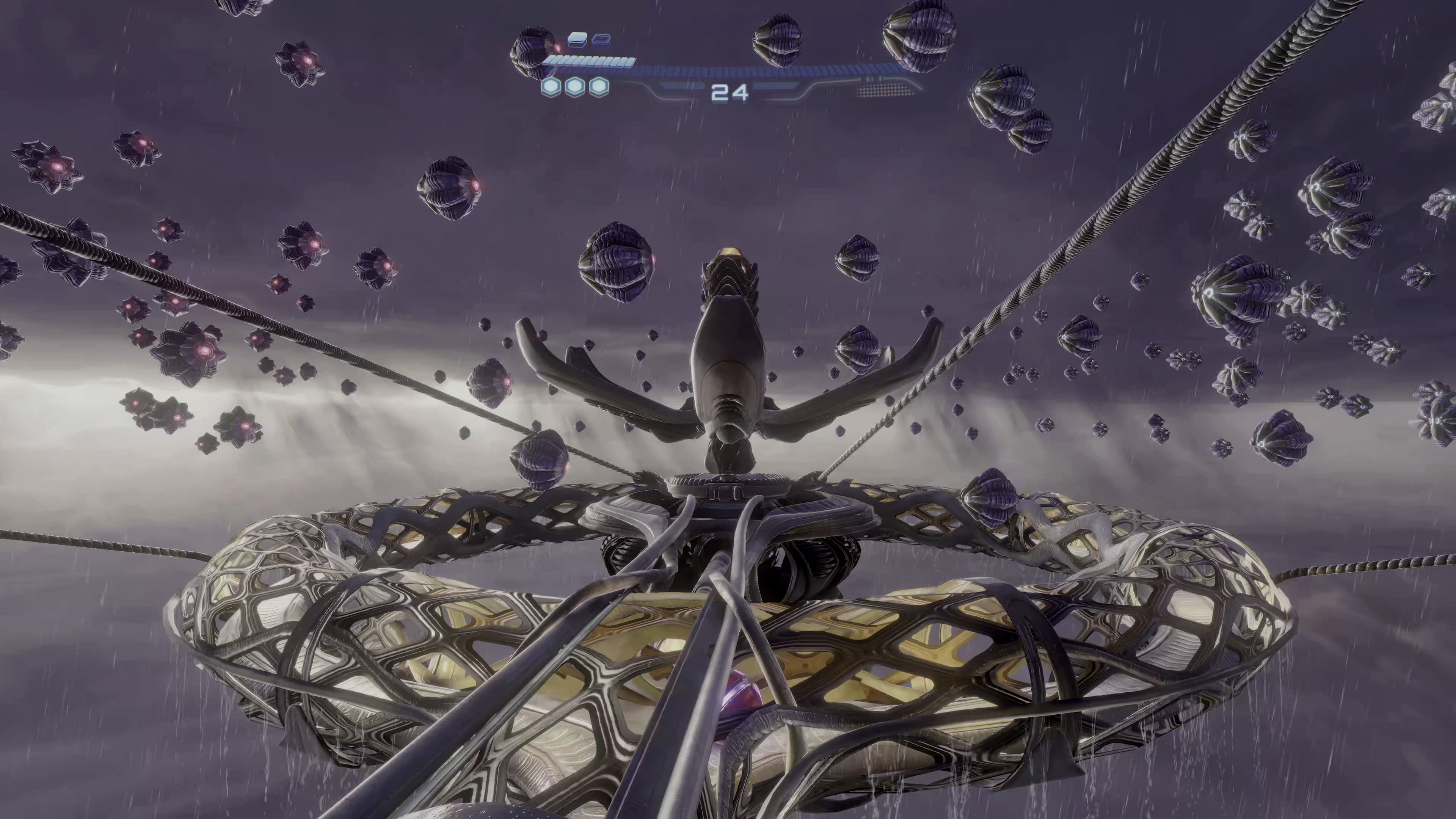

One of the main ideas in Beyond is the psychic powers Samus inherits from the ancient alien race she’s investigating. A new psychic visor, which is basically the scan visor from previous games but with purple bits, allows players to not only pull up lore on various game furniture, but also move certain specific items around, Jedi-style, to solve puzzles, like putting a key into a hole, or tracing a pattern to open a door.
In practice, the psychic abilities aren’t particularly interesting and don’t meaningfully evolve throughout the story. The powers Samus gains during Beyond are also almost entirely Metroid staples – only this time more purple – the main exception being the Control Beam, which players can manoeuvre in slow motion and hit multiple targets at once.
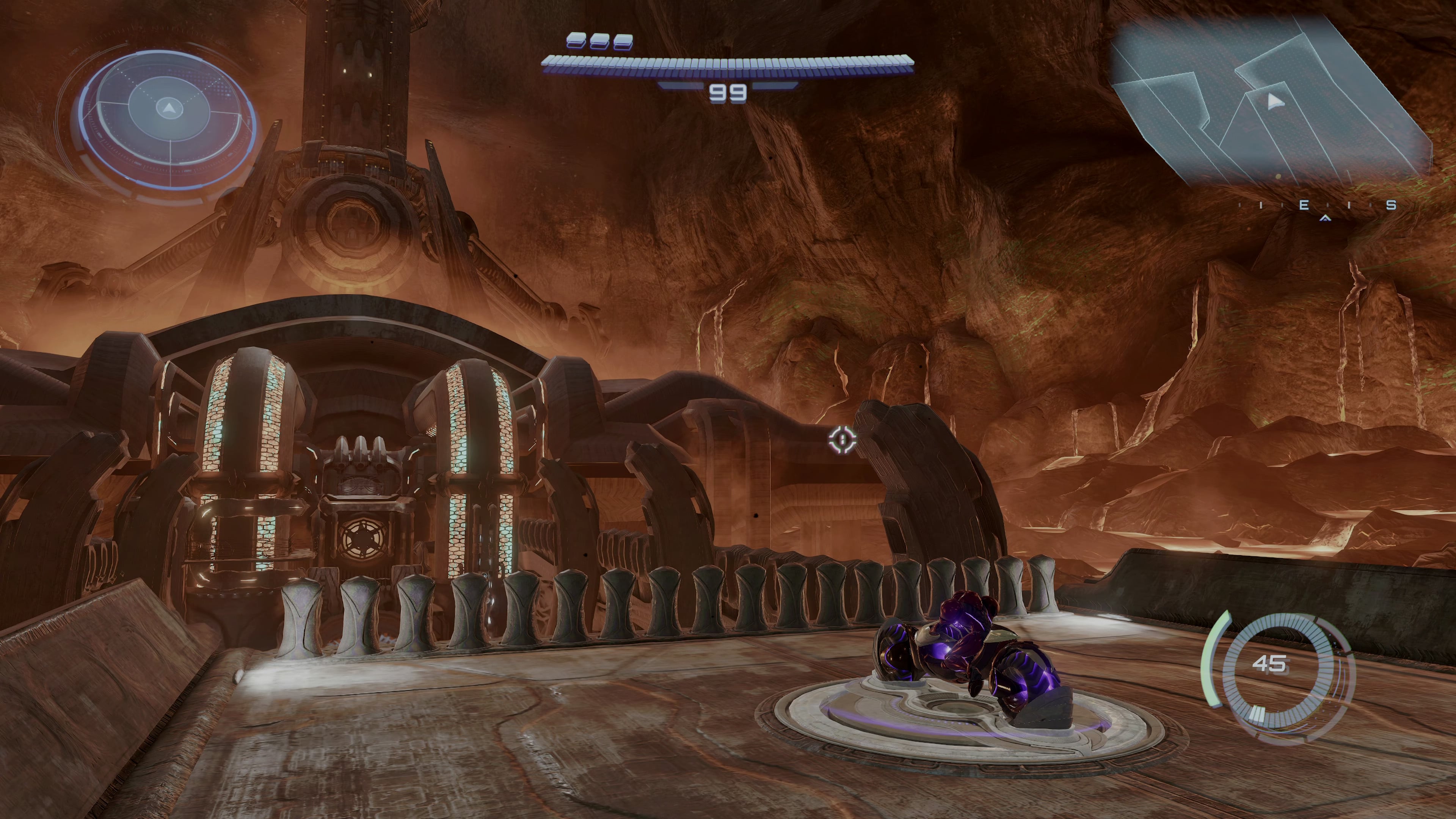
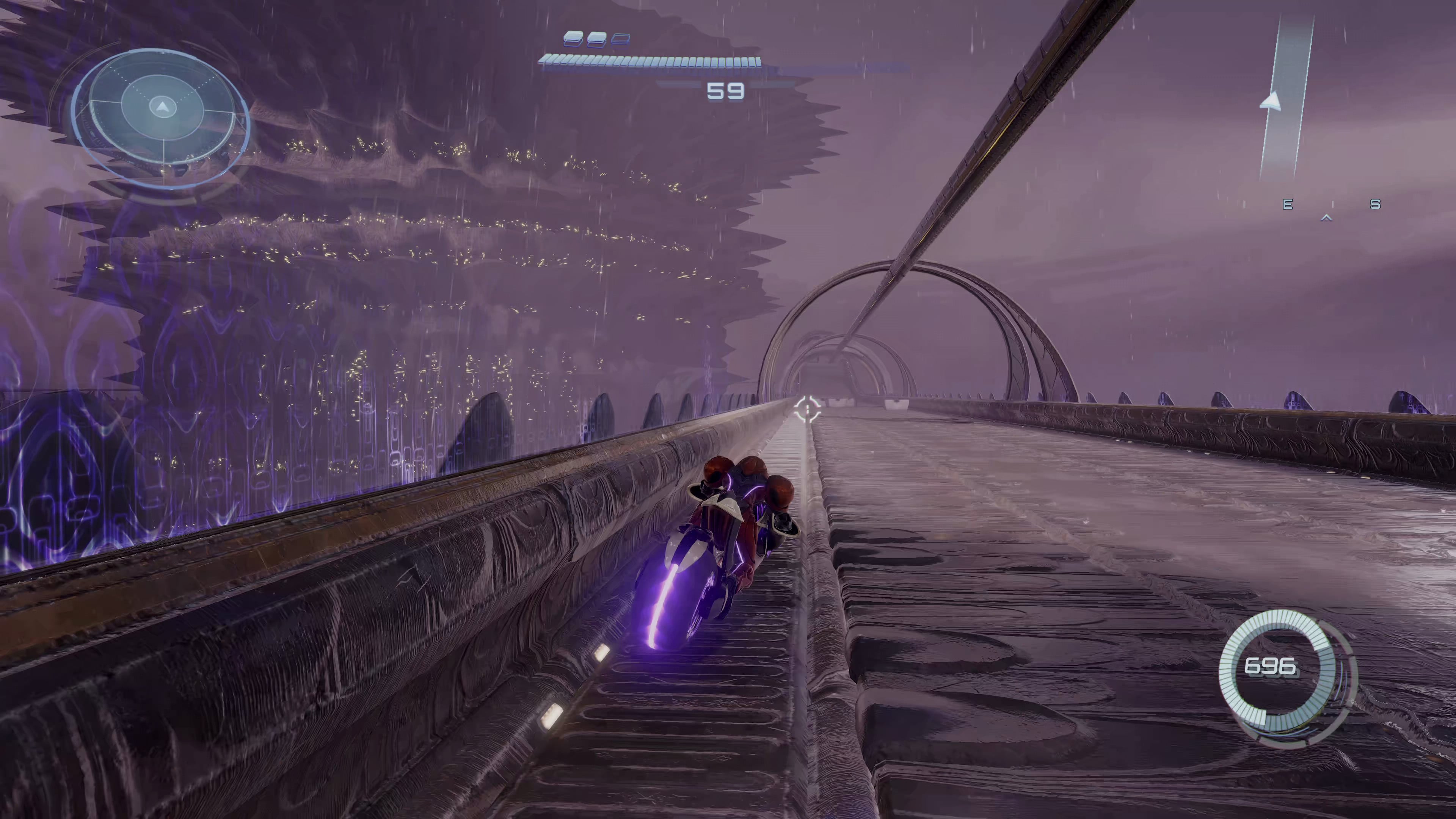
The bolder introduction is Vi-O-La, a sci-fi motorbike that players can use in certain areas of the game to drive and battle at high speeds. Thankfully, Vi-O-La is used tastefully throughout the campaign and rarely outstays its welcome. If anything, it could’ve been used more.
“Prime 4’s action plows forward like a freight train, with excellent boss battles, and some truly gorgeous environments to explore. But it does so in a popcorn, switch-your-brain off style of comfort”
The biggest compliment I can give Prime 4 is that, at its core, even after 18 years, it feels like the series never went away. Despite turbulent development and decades of personnel changes, the Switch game mechanically and aesthetically lives up to the series’ past, even if its worlds, creatures, and abilities can lean a bit too conservatively in their design.
Exploring derelict research labs and scurrying through platforming tubes in Morph Ball form, boosting up a half pipe and grappling to a humming missile expansion, is as compelling as ever – even though it’s been done better before – especially when the art and audio direction is this sublime.
As we’ve come to expect from Nintendo’s Retro Studios, the art direction here is fantastic. The world of Viewros is a captivating odyssey, with environments that feel simultaneously ancient and alive. Alien wildlife scurries across tree branches, icy winds batter your suit, rain trickles down your visor, and Samus’s actions in the story have meaningful consequences for the scenery around her.

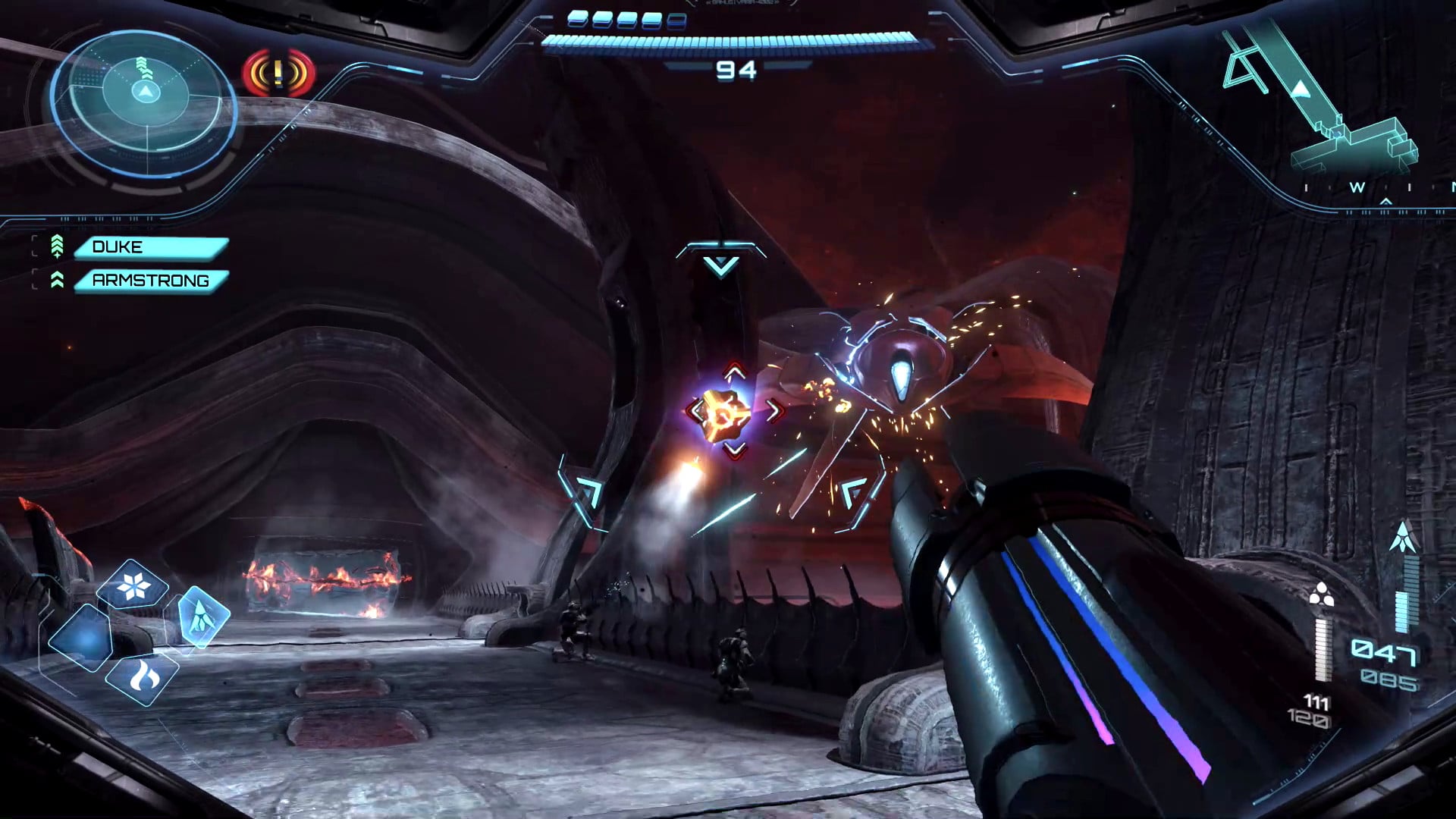
However, as the story unfolds, Prime 4’s traditional Metroid gameplay increasingly feels foreign within the framework of its own game, as the shadowy corridors make way for open-world fetch quests, and Halo-style expeditions with AI companions. This leaves Beyond feeling like a diluted experience that, rather than focusing on what series fans want, too often feels like a series of awkward compromises.
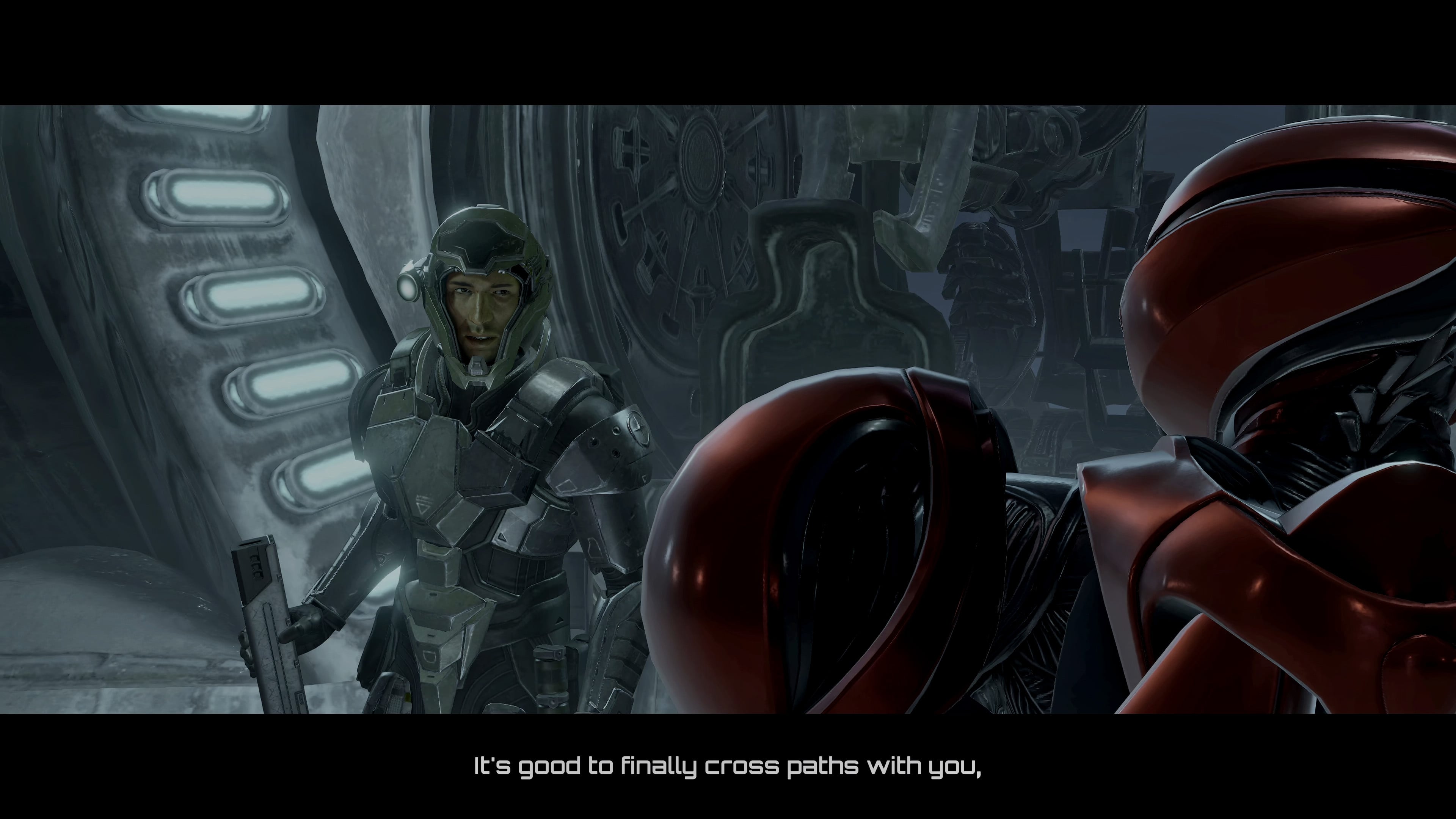
First, let’s address the elephant in the room, or more accurately, the Myles MacKenzie in your earpiece. To purists, the addition of chatty support characters to a Metroid game sounds about as appealing as a weekend with Everybody 1-2-Switch. However, their presence in Prime 4, in the form of a squad of stranded Federation Troopers whom Samus rescues throughout the story, isn’t an issue by itself, but rather their clumsy implementation within an overall weak story.
Myles, as feared from those divisive initial previews, turns out to be the main supporting character in the game, gracing players with his Jar Jar Binks brand of comedy quips via intercom messages and regular visits throughout the game. The other cast members are also flimsy caricatures, including the equally irritating Armstrong, a Samus fangirl who winces at the bounty hunter’s presence and, at one point, even asks for her autograph.
“As we’ve come to expect from Retro Studios, the art direction here is fantastic. The world of Viewros is a captivating odyssey, with environments that feel simultaneously ancient and alive.”
It’s sombre stuff for fans of the more grounded games in the Metroid series, and powers some dated gameplay segments, including escort and protection sequences that result in a game-over screen if your AI companions aren’t properly protected. All the while, they’ll reward you with dialogue barks like, “Sarge, look! She’s doing Morph Ball!”
Other characters, like the stoic hunter Tokabi and the emotionless droid VUE-995, show how support characters could resonate more positively in future games if handled with greater care. Speaking parts have also been done well in previous Metroid games like Dread and Fusion, though on a smaller scale, but here their tonally disjointed application feels incompatible with a series that used to be about isolation, atmosphere, and mystery.
As has been the direction of travel for the Prime series, Beyond isn’t much of a traditional Metroidvania anymore either, but more like a pre-Breath of the Wild 3D Zelda game. Sol Valley, the desert environment shown in trailers, is basically Hyrule Field, with each main area positioned like a self-contained dungeon on each corner.

There’s a smoking mountain for the lava area, a huge tree for the jungle starter environment, a huge shielded tower in the center… swap Vi-O-La for Epona, and you’d think this was Ocarina of Prime. There are even five special keys to collect, one in each ‘dungeon’.
There’s plenty of backtracking to reach previously inaccessible rooms with your sparkly new weapon upgrades, but like in Prime 3, the worlds are split apart and not interconnected at all, so each time you need to backtrack, you’ll need to return to Sol Valley, spawn your bike, and ride there.
On the surface, that’s fine, as the bike mechanics are entertaining, and boosting off the sand dunes often brings the added benefit of discovering secret shrines hiding additional power-ups. Unfortunately, that’s pretty much the extent of discovery in Beyond, thanks to some off-puttingly aggressive hand-holding.
“As has been the direction of travel for the Prime series, Beyond also isn’t really a Metroidvania anymore, but more like a pre-Breath of the Wild 3D Zelda game”
Historically, Metroid has often been hard, scary, and thought-provoking. Here, the rounded edges of Samus’s new motorbike extend to the experience itself, with players rarely having to ponder a solution too long before it’s pointed out directly on-screen or shown on a map.
When you need to backtrack to a previous area, Myles – frontline contender for most annoying NPC of the decade – will phone you up virtually immediately in Sol Valley to tell you where to go next, and from what I can see, this can’t be turned off, even with tutorials disabled. In the late game, you’re even able to display all missing items straight onto your map, making this comfortably the easiest Metroid game to 100%, as I did first time in my review run.
So for those, like me, who love the discovery and challenge of the Metroid series, Beyond feels like a step backwards.
My biggest frustration is that occasionally, when a metal space door opens to reveal a beautiful alien vista, or an explosive countdown initiates a frantic escape sequence, Metroid Prime 4 is fleetingly moody, engrossing, and puzzling in all the ways I love previous entries for. But as the story progresses and its full structure is revealed, it progressively becomes a shallower and less interesting game.
Metroid Prime 4: Beyond feels like a game stuck between two worlds. There’s a lot of sacrilegious stuff here for series fans, but it’s also tough to recommend it to newcomers over the excellent Dread and Metroid Prime: Remastered. There’s an entertaining adventure here, but it doesn’t fully deliver the spirit of earlier entries I was hoping for.
Metroid Prime 4: Beyond Review
Metroid Prime 4: Beyond feels like a game stuck between two worlds. When it’s emulating the series’ past, Beyond is an entertaining, if overly conservative, sequel. However, as the shadowy corridors make way for open-world fetch quests, and Halo-style expeditions with AI companions, it’s left feeling like a diluted experience that doesn’t fully deliver on the spirit of earlier entries.
- The core Metroid Prime gameplay is as compelling as ever
- Gorgeous worlds with phenomenal art and audio direction
- A cavalcade of thrilling boss battles
- NPCs are mostly poorly executed within a weak story
- Overly-aggressive handholding kills discovery
- Fewer memorable ideas than Prime Remastered