Mario Tennis Fever review: Camelot serves a double fault with another fun but flawed entry
An undercooked single-player mode and imbalanced gameplay let down an otherwise entertaining Nintendo Switch 2 sports game
- Director (Nintendo)
- Tomohiro Yamamura
- Key Credits
- Shugo Takahashi (Director (Camelot)), Takeshi Tateishi (Art director)
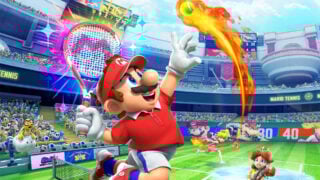
When Mario Tennis Aces was released on Switch nearly eight years ago, the general consensus was that it was a solid tennis game, let down by two things: its special shots and its disappointingly short Adventure Mode.
Fast-forward, and we now have its Nintendo Switch 2 successor, Mario Tennis Fever, another solid tennis game in terms of its core mechanics, but one that, disappointingly, suffers from the exact same issues as the last entry.
When it comes to the actual action on the court, anyone who’s played any of the Mario Tennis games going back to the N64 era will know what to expect in Fever. The same range of top spin, flat, and slice shots remains here as ever, alongside lobs and drop shots, though the latter can thankfully now be assigned to single shoulder buttons, making them easier to pull off at the last second.
Further reading
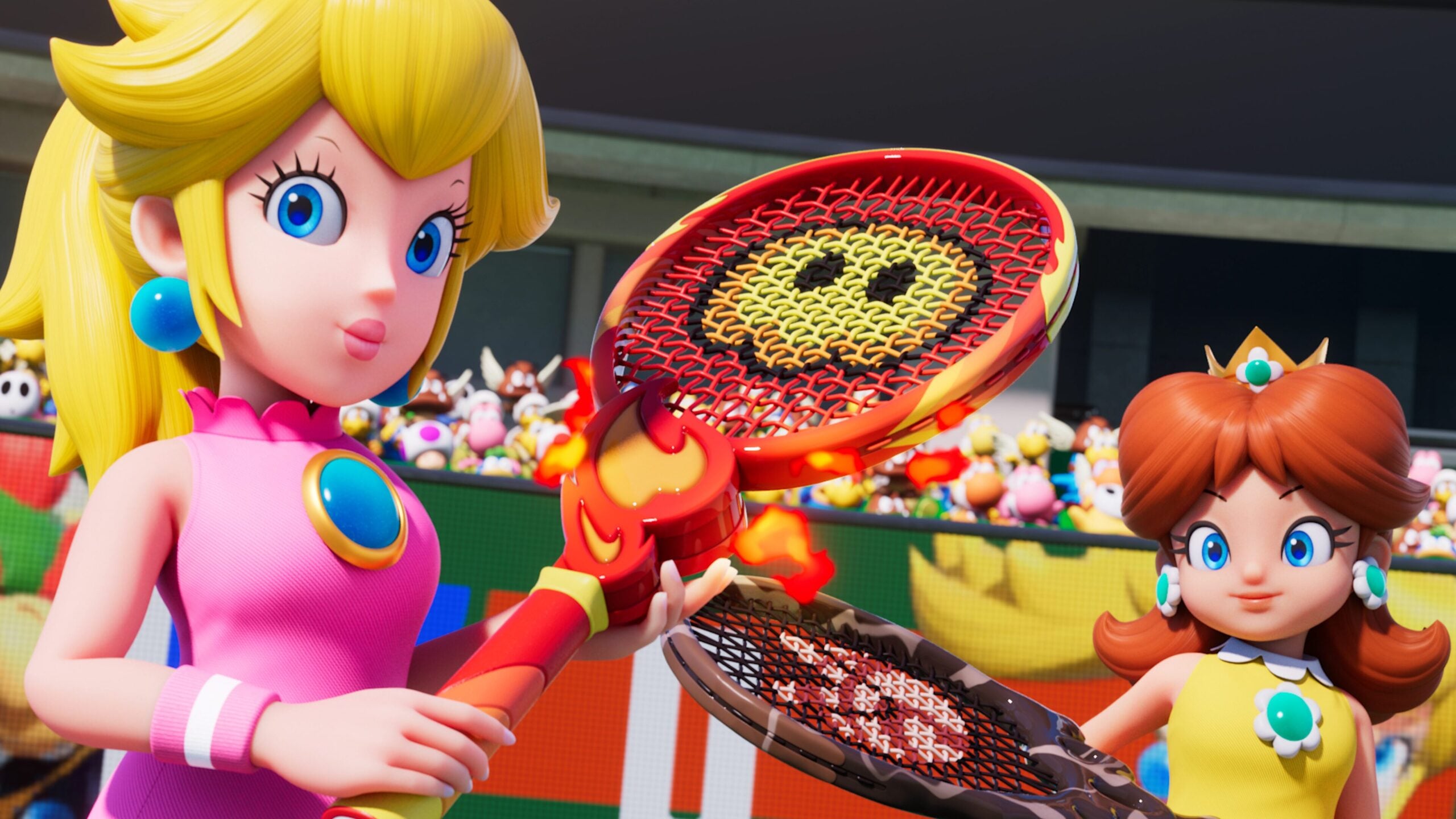
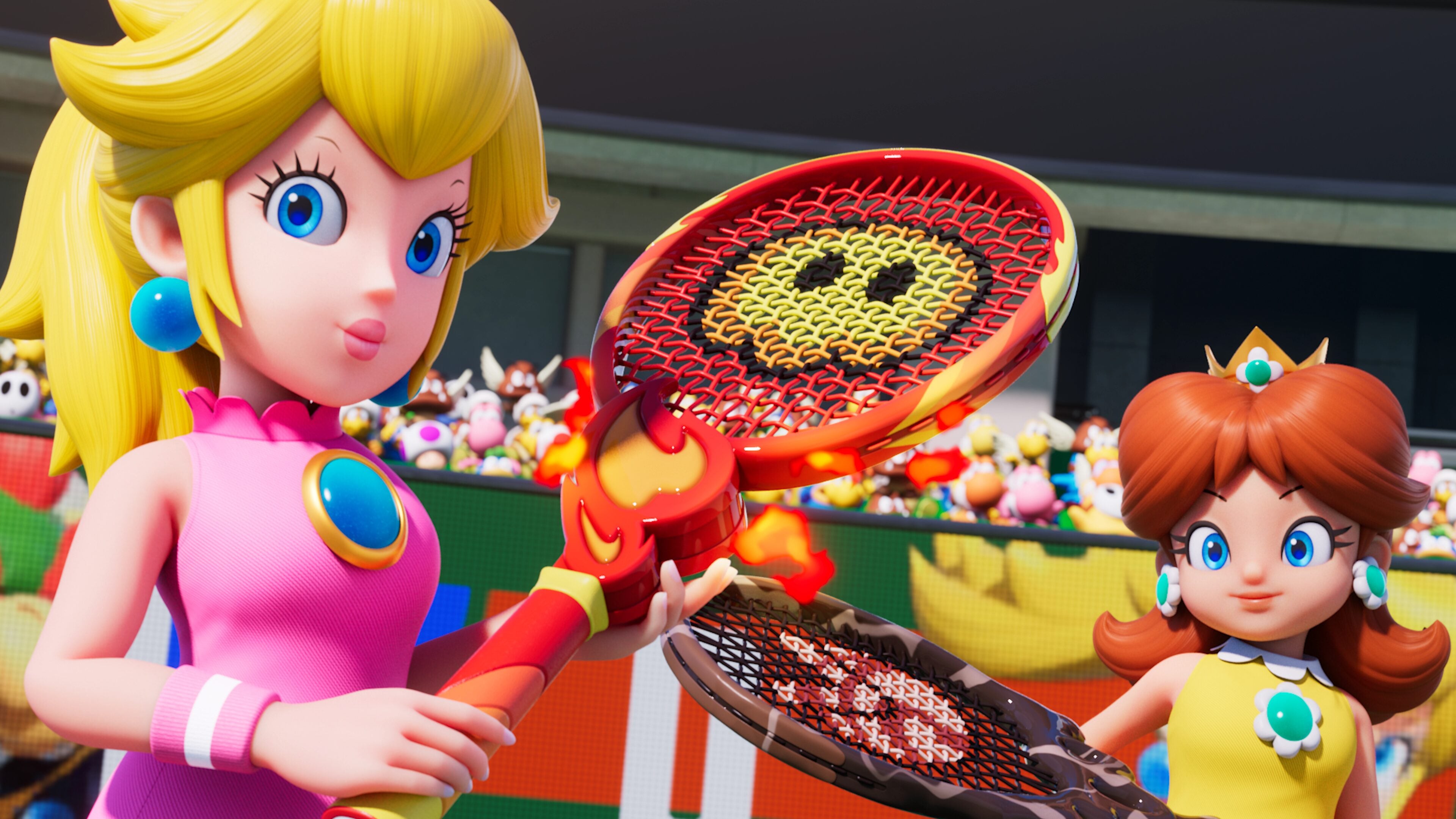
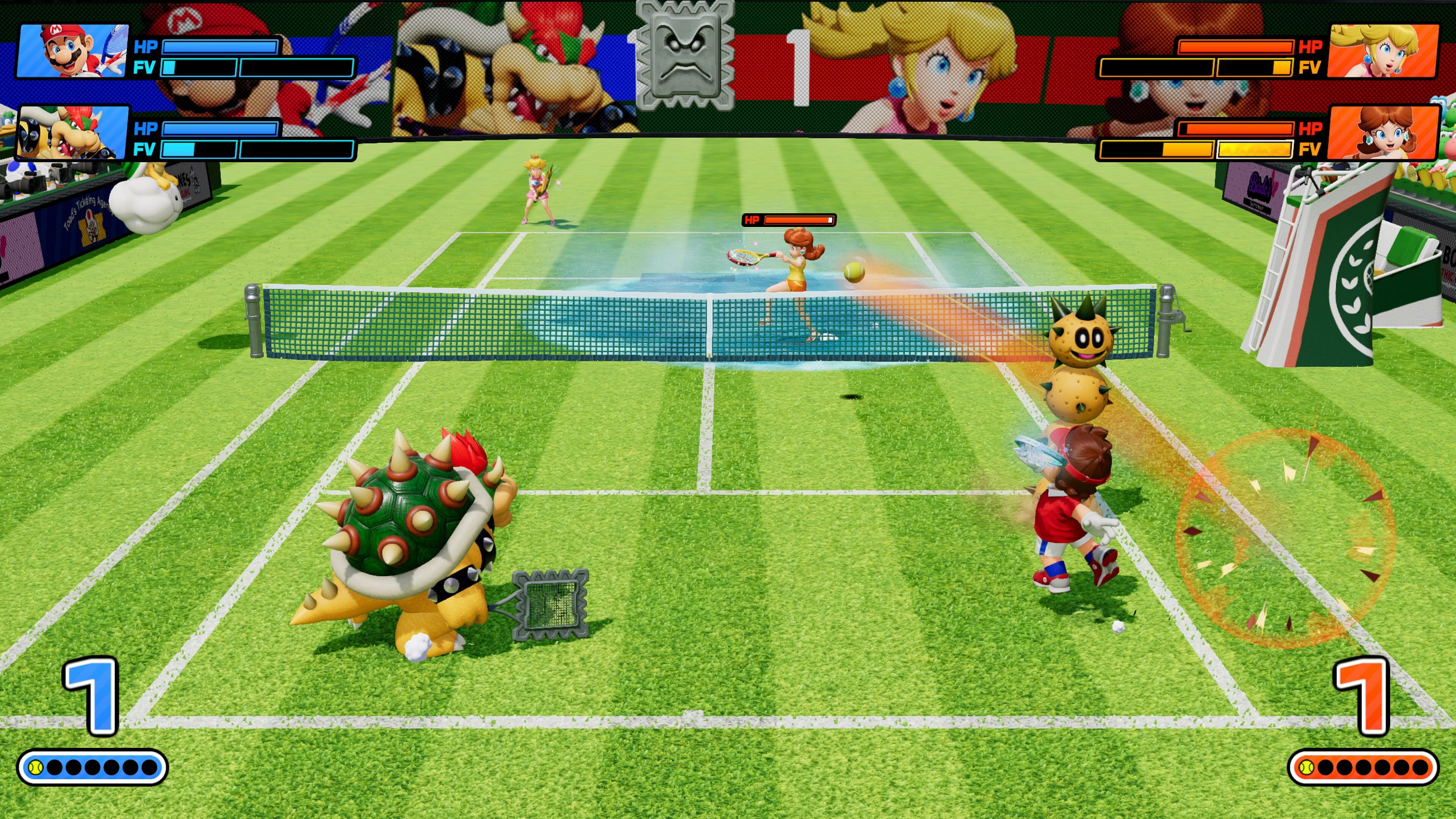
Each new entry in the series adds a new on-court gimmick to distinguish it from the others – the Mega Mushroom in Mario Tennis: Ultra Smash on Wii U, the Chance Shots in Mario Tennis Open on 3DS – and Mario Tennis Fever is no different. This time it’s Fever Rackets, a collection of 30 unlockable rackets, each of which has its own special ability.
This ability can be activated once a special meter is filled – when the ball comes to you, you simply hit the X button, and you have a second to aim where your shot goes before it’s fired off, triggering the effect.
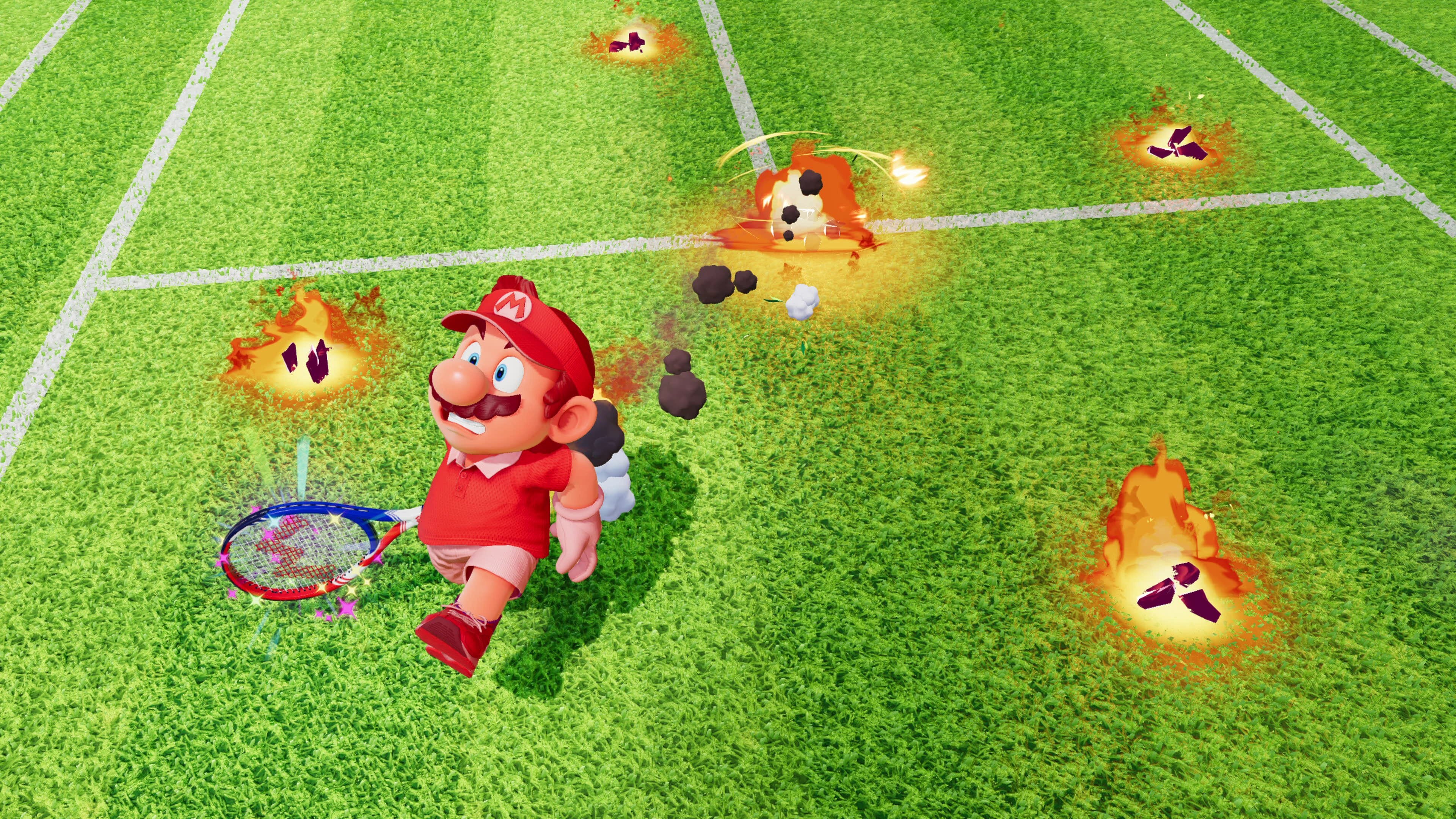
Some of the Fever Rackets drop hazards on the court – fire bars, volcanoes, Thwhomps – which can not only stun an opponent, but also reduce their life bar. When it runs out, they’re severely slowed down (or sidelined if it’s a doubles match) for ten seconds. Other rackets let you make the court slippery, or give you wild swerving shots, or let you reach a ball if you missed it.
Not every Fever Racket is born equal, however, mainly because they’re not born at all, they’re made in a factory, meaning some are far more useful than others. Before long, you’ll realise that of the 30 rackets on offer, less than a third of them can have a major impact on the game. I’d imagine that once the online community turns up, it’ll only be a matter of time before the metagame kicks in and the vast majority of these rackets are dismissed in favour of the handful that have the most obvious advantage.
While similar special shots have threatened to become game-breaking in some past Mario Tennis games, at least Fever Rackets aren’t a guaranteed win. If a player hits a Fever shot and their opponent returns it on the volley (before it bounces), the effect is sent back over the net to the player who activated it. If it lands on their side, it’ll backfire and affect them instead. This means two good players can find themselves in a tense volley-off, sending the same overpowered shot back and forth until it bounces and finally triggers the effect.
Expert players will find ways around this (as they always do) and it soon emerges that playing opponents to the back of the court with lobs is a good strategy, because when the lob is returned, the front of the court is left open, and triggering the Fever shot – which is always performed as a smash, no matter how low the ball reaches you – and aiming it to the front of the court will spike it right down, triggering the effect with effective frequency.
“Before long, you’ll realise that of the 30 rackets on offer, less than a third of them can have a major impact on the game.”
Thankfully, in both online and offline multiplayer, there’s the option to play without Fever Rackets in a straightforward tennis match. It’s not entirely free of potential exploits, either; however, already Donkey Kong feels overpowered (his Speed, Control, and Power are all high, and he’s only bad at Spin, arguably the least vital stat).
Standing at the net on either the left or right side of the court, and hitting a B-button Slice to the other side, also feels a tad overpowered. It makes the ball fly at an extremely wide angle, and the game’s tendency to only call outs on rare occasions means it’s a very effective way to either score a point or force your opponent into a vulnerable position.
If you can put up with these potential issues, and can come to terms with the likelihood that either these or numerous other exploits might be used widespread online, everything else plays as well as Mario Tennis ever has. The controls are tight, hitting the ball is satisfying and the forgiving positioning means two good players can get some pleasingly long rallies going.
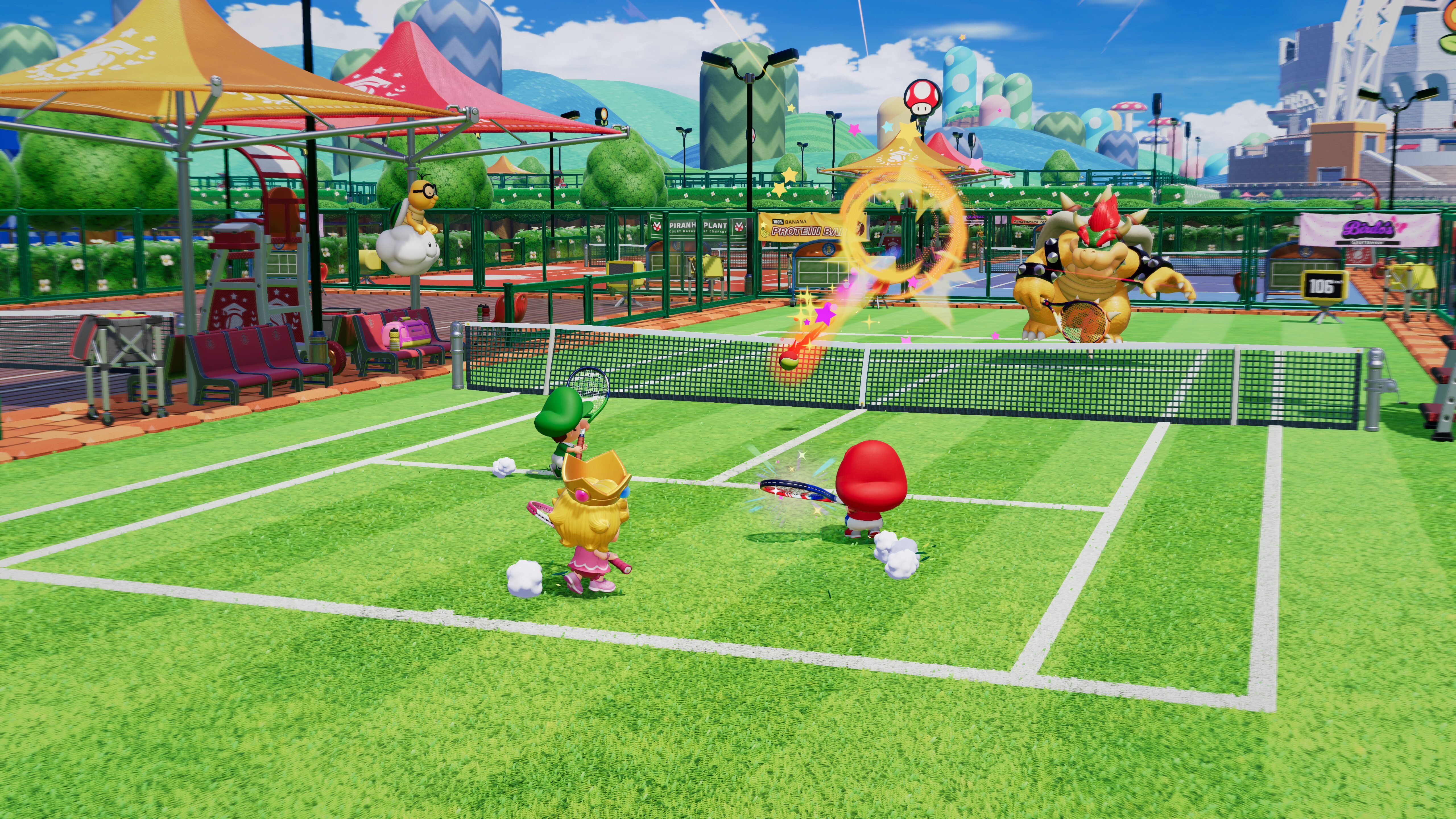
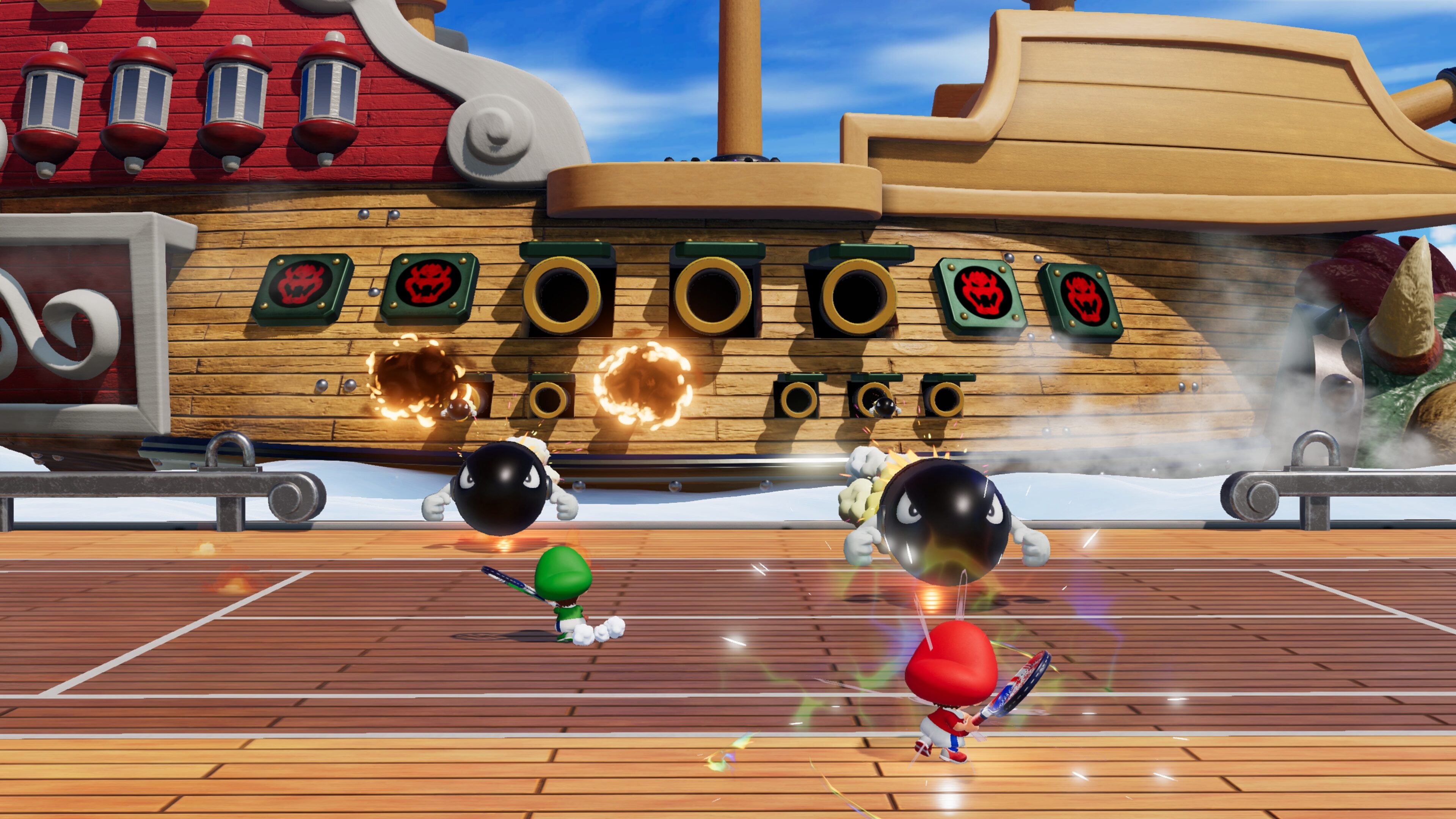
While Mario Tennis games are generally considered multiplayer titles first and foremost, Nintendo has been promoting the game to solo players by advertising its Adventure mode, which sees Mario and Luigi transformed into babies and forced to relearn their skills to return to their adult selves.
To cut to the chase, if Adventure mode is the main reason you’re considering buying Mario Tennis Fever, you might want to rethink that, because – as with similar modes in recent times – it’s disappointingly short once again. Decent players will take around three hours to roll the credits, and there’s no post-credits content that I could see.
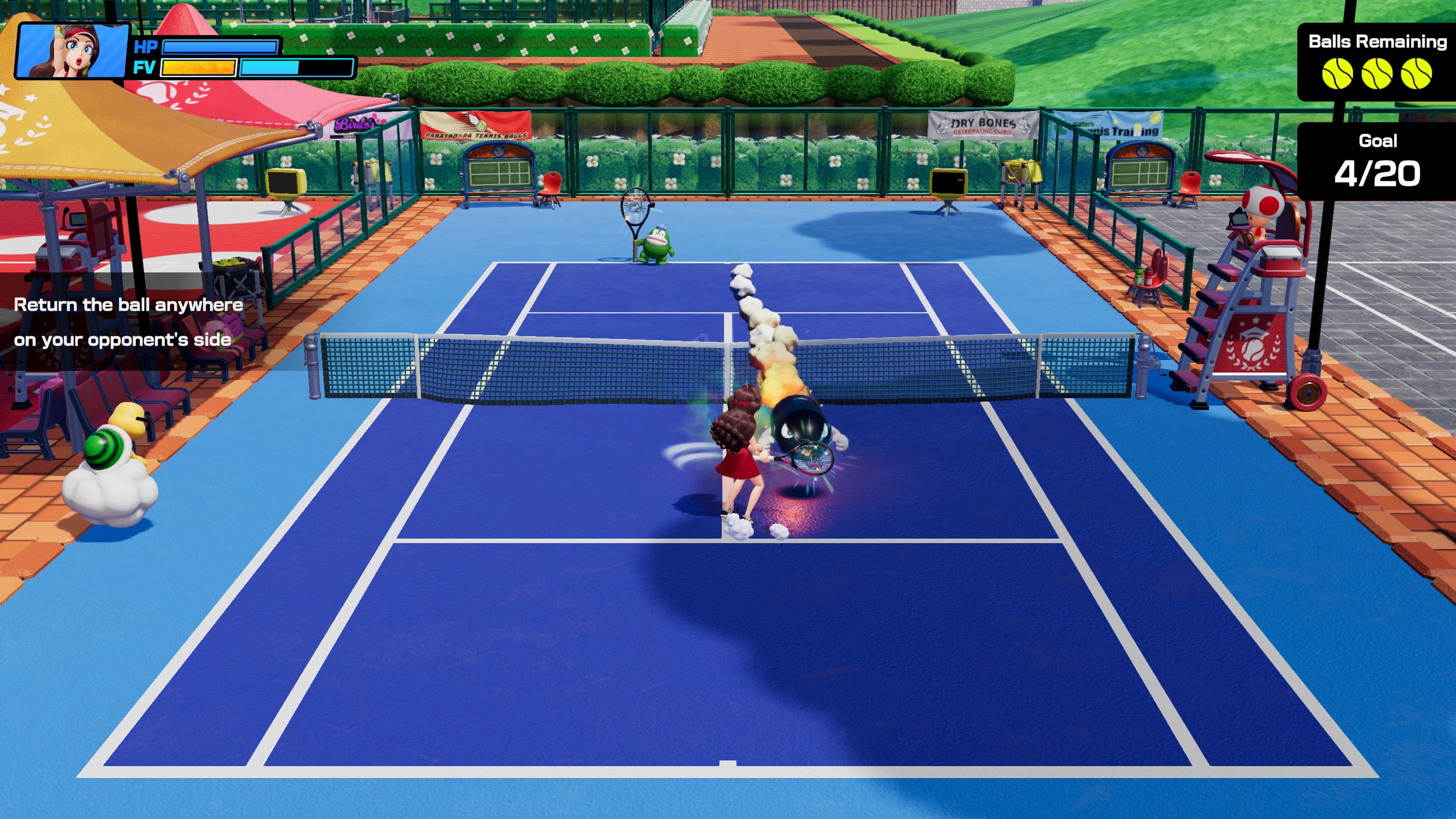
It’s a really strange mode because so many elements make it feel like it was originally meant to be much larger. The first half takes place in a tennis academy, and you take on a series of mini-games to improve your skills, but the game stresses that you’re playing Level 1 of each of these mini-games. The implication is that you’ll play Level 2, Level 3, etc later as you get better, but you’re never instructed to play them again, so if you follow the in-game directions, they never return.
“If Adventure mode is the main reason you’re considering buying Mario Tennis Fever you might want to rethink that, because it’s disappointingly short once again.”
After players graduate, you gain access to a World Map and it feels like the game’s about to open up into a sprawling… well, Adventure. But the World Map ends up being arbitrary, and you only visit a handful more locations before you reach the final boss and beat the game. The addition of three save slots is also bizarre – given that players choose their user account when starting the game, everyone gets their own set of three save slots, which, for a three-hour game with no real branching paths, seems wholly unnecessary.
You’re also constantly levelling up after every match, your stats slowly building too. Again, the implication is that this is some sort of long-haul journey you’re about to go on, but it all basically comes to nothing – you can’t really tweak the stats to sculpt your character to fit your playing style, and you can’t export them to play online, for example, so it’s another strangely arbitrary addition.
What’s particularly frustrating is that what little content the Adventure mode does have, especially after you graduate, is very good. The game does a great job of giving you a wide range of mini-games and boss battles, using the basic tennis mechanics for every possible combat permutation it can think of. It’s just annoying that it’s over just as it feels like it’s getting properly started.

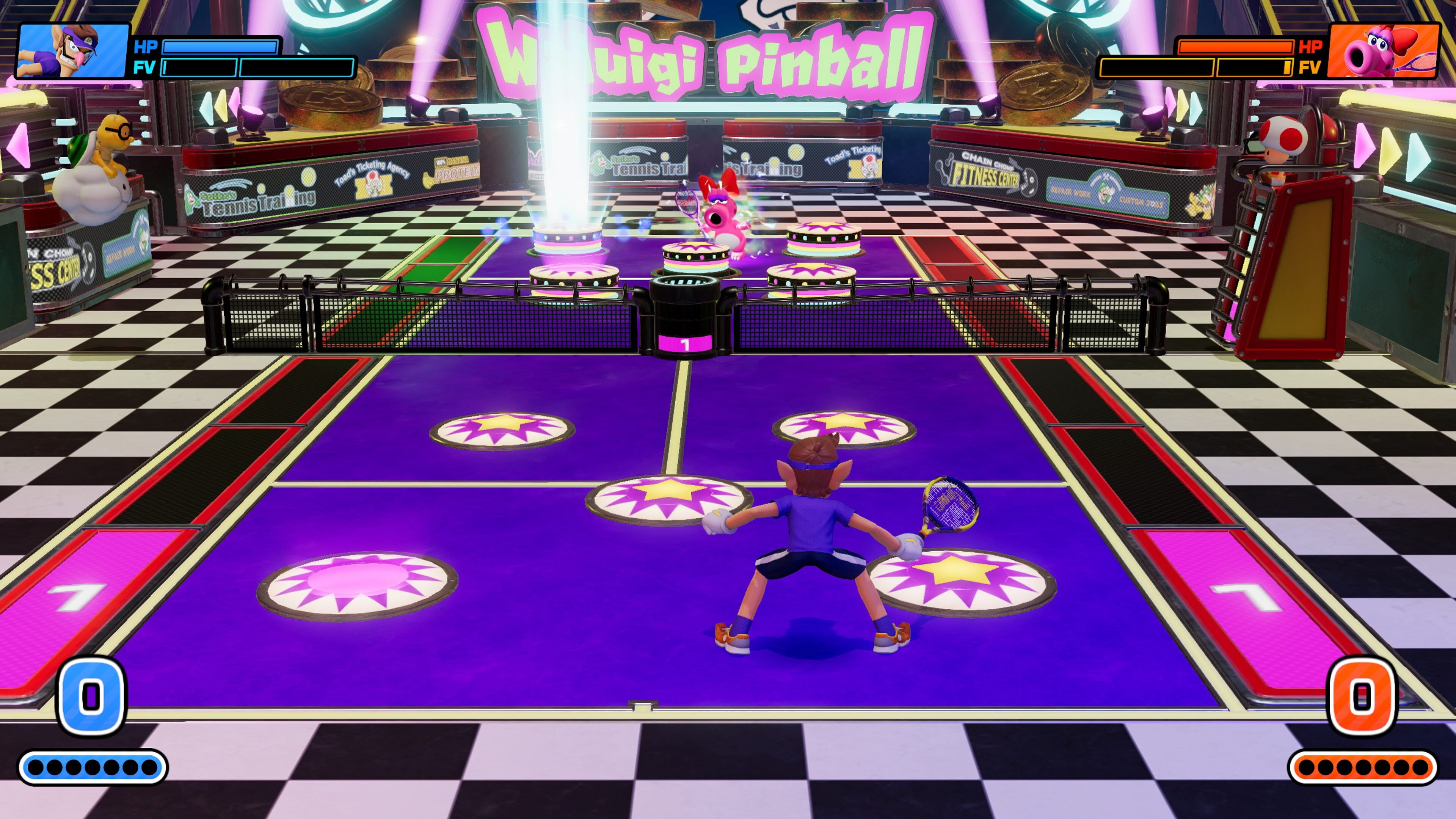
My overriding takeaway of Mario Tennis Fever is that it’s a jack-of-all-trades but a master of none. There is a wide range of options here, from the Tournaments to the Trial Towers (where you take on three groups of challenges), to a motion control mode, to the Mix it Up section, where you play on gimmick-ridden courts. But none of these options feel fully fleshed-out, and the vast majority of the unlockable rackets and characters are earned through simple ‘play X matches’ tasks, rather than bespoke challenges.
Mario Tennis Fever isn’t a bad game: there’s still a level of presentational and mechanical polish that you rarely see in other sports games, and families or friends just looking for a bit of shallow fun will find value here. But for those who expected something deeper from Mario Tennis’s Switch 2 entry, that’s where the ball is dropped. Twice, obviously, because it’s tennis.
Mario Tennis Fever review
Mario Tennis Fever is another solid enough sports game from Camelot, but a disappointingly short single-player offering and a real risk of imbalance – whether using Fever Rackets or not – means what could have been fantastic will have to settle for simply being good.
- Solid tennis gameplay at its core, as ever
- A larger roster than ever before (38 characters)
- Fever Rackets are fun and can thankfully be countered
- Adventure mode is painfully short
- Fever Rackets will still almost certainly be exploited
- Some characters are overpowered