Final Fantasy Resonance Review: A nostalgic JRPG limited by its mobile origins
Alongside Square Enix’s Pixel Remasters and other HD-2D games, Resonance isn’t an essential experience
- Director
- Hiroto Furuya
- Key Credits
- Kei Hirono (Producer), Noriyasu Agematsu (Composer)
Final Fantasy Resonance doesn’t really have to do anything new.
This is a new adaptation of an older mobile game, Final Fantasy Brave Exvius, with the gacha system removed and progression completely reworked to befit a more standard, single-player, premium JRPG. Those are all points in its favor, and Resonance evokes the atmosphere and spirit of classic Final Fantasy, but it’s still an adaptation of that older mobile game.
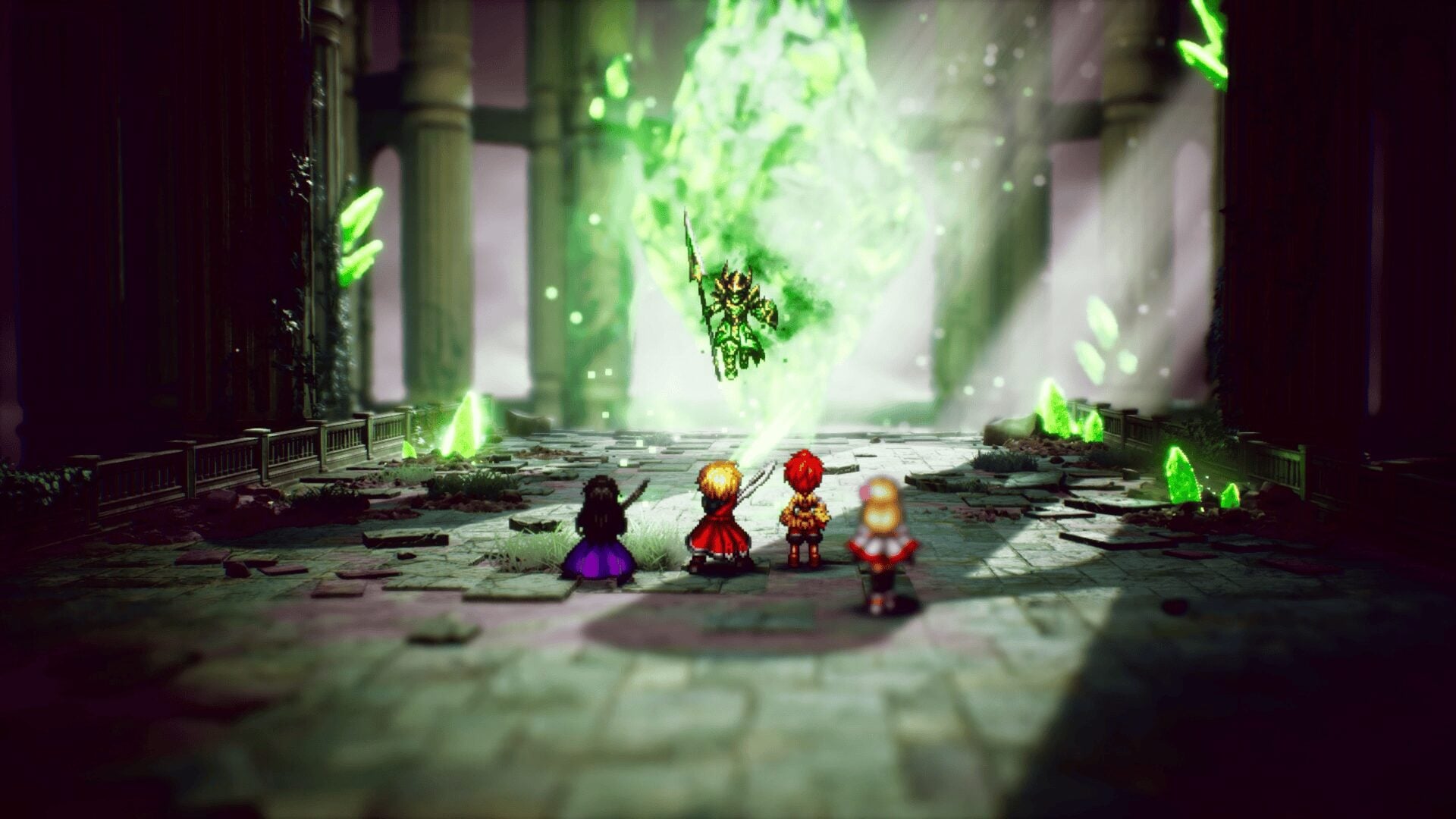
Resonance is set in a Final Fantasy world that’s familiar, but not the same as the ones you’ve played before (unless you’ve literally played Brave Exvius). Armor-clad knights, elemental crystals, spirits, and summons. Everything about the setting, character designs, and major story beats feels cherry-picked from classic FF games that fans are nostalgic for.
That’s not necessarily a bad thing. Final Fantasy games have a unique vibe that other long-running JRPG series just can’t quite muster, and Resonance manages to evoke that atmosphere even when some numbered entries struggle to do so. On the other hand, this familiarity makes it difficult to connect with the cast when their archetypes shine through more strongly than their own personalities.
I quite like the protagonist duo of Rain and Lasswell. Rain is boisterous and doesn’t have the gentlemanly qualities of most knights, but is an innately talented warrior. Lasswell, meanwhile, picks up the slack to ensure his adopted brother Rain can rise in the ranks and let his talents shine. But while Lasswell is a more interesting character, he has to give way to Rain, who has unique magical abilities he doesn’t understand the origin of.
Aside from one major exception, most of your party members are downplayed by the plot past the chapter in which they’re introduced. Lid is incredibly charming when you first meet her, but past that point her character moments are few and far between. Nichol’s introduction is intense and emotional, but once it’s over, it feels swept under the rug. Past that point, they’re functional party members that give you more options in battle, and rarely more than that.
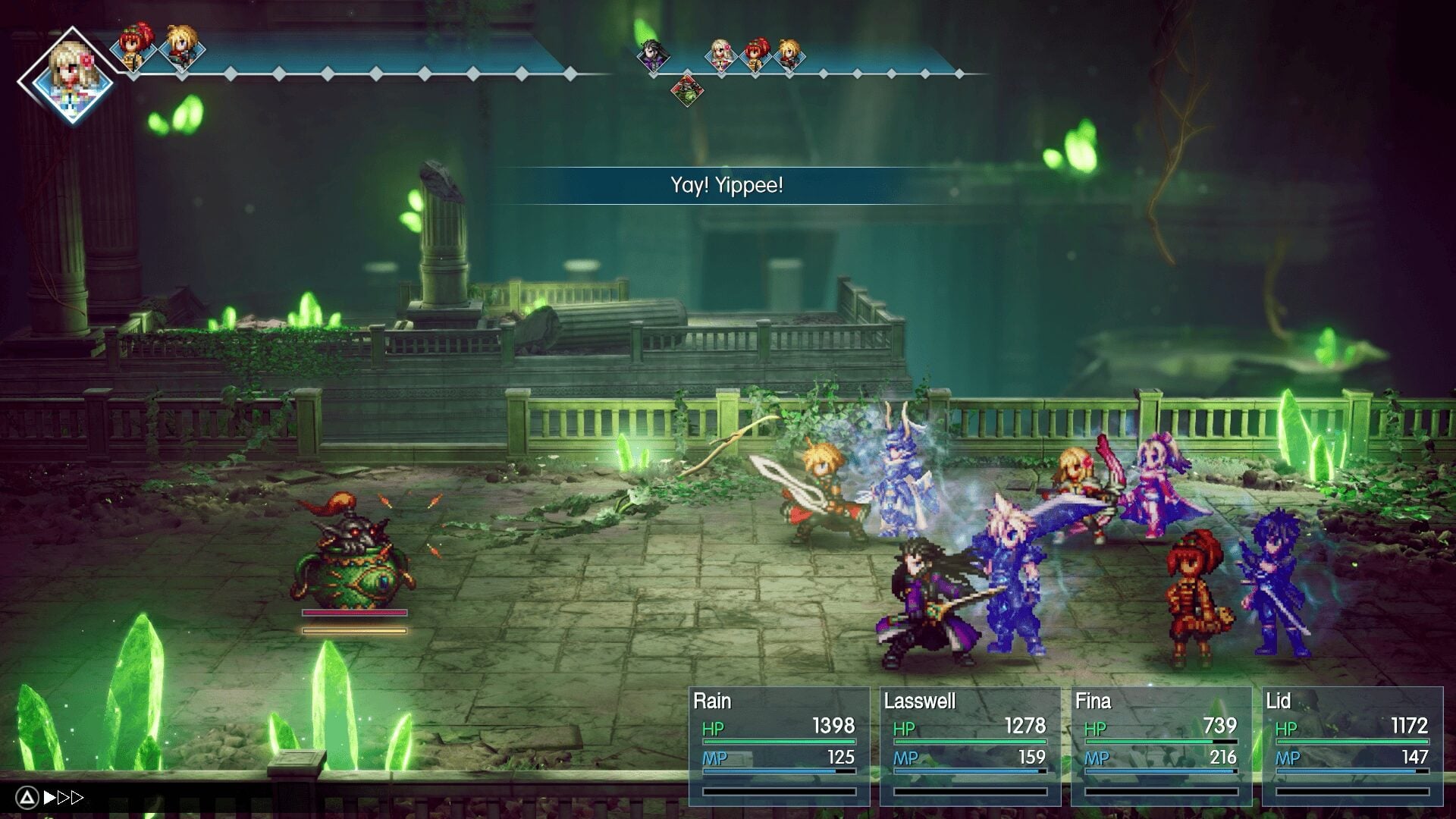
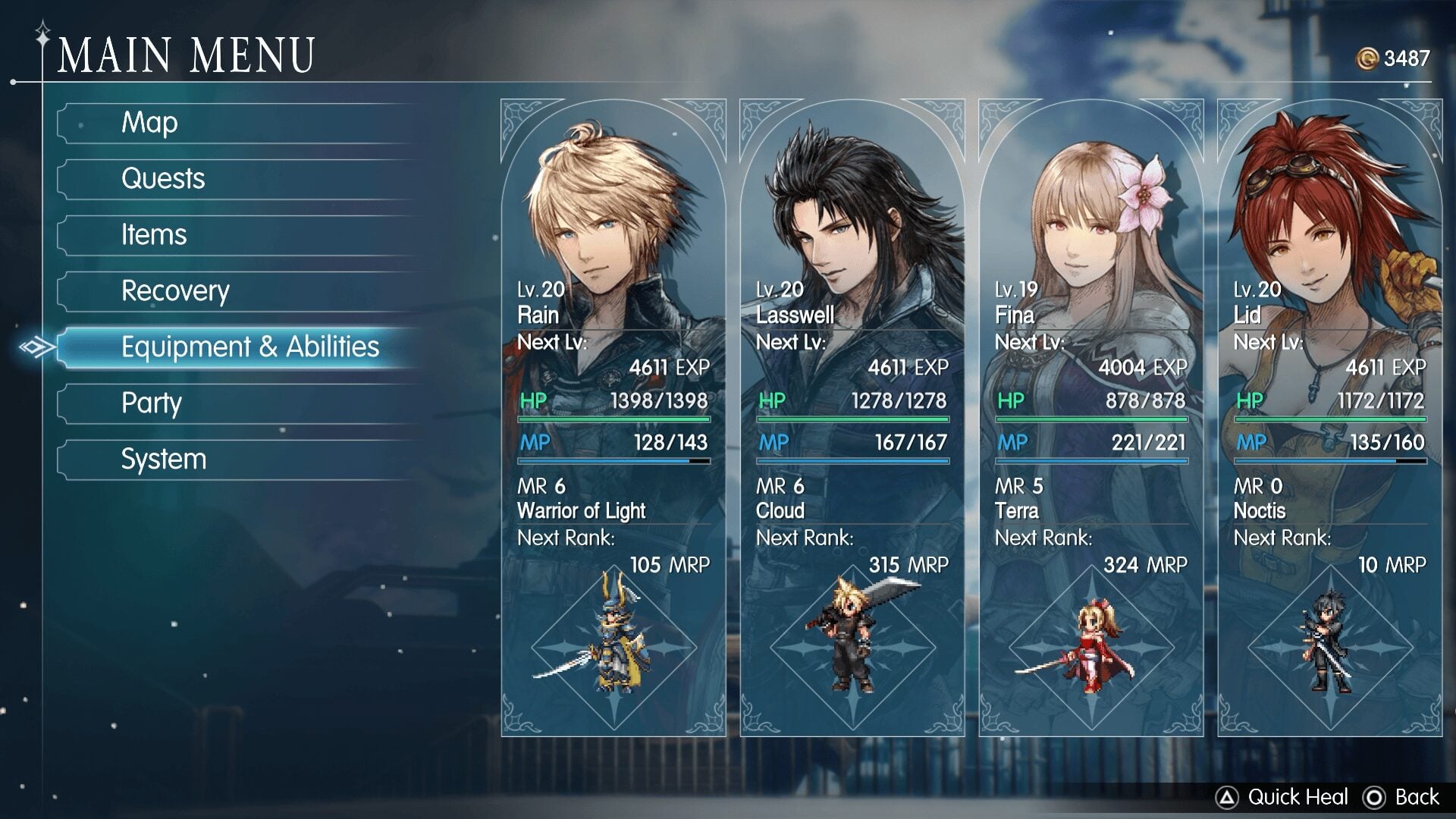
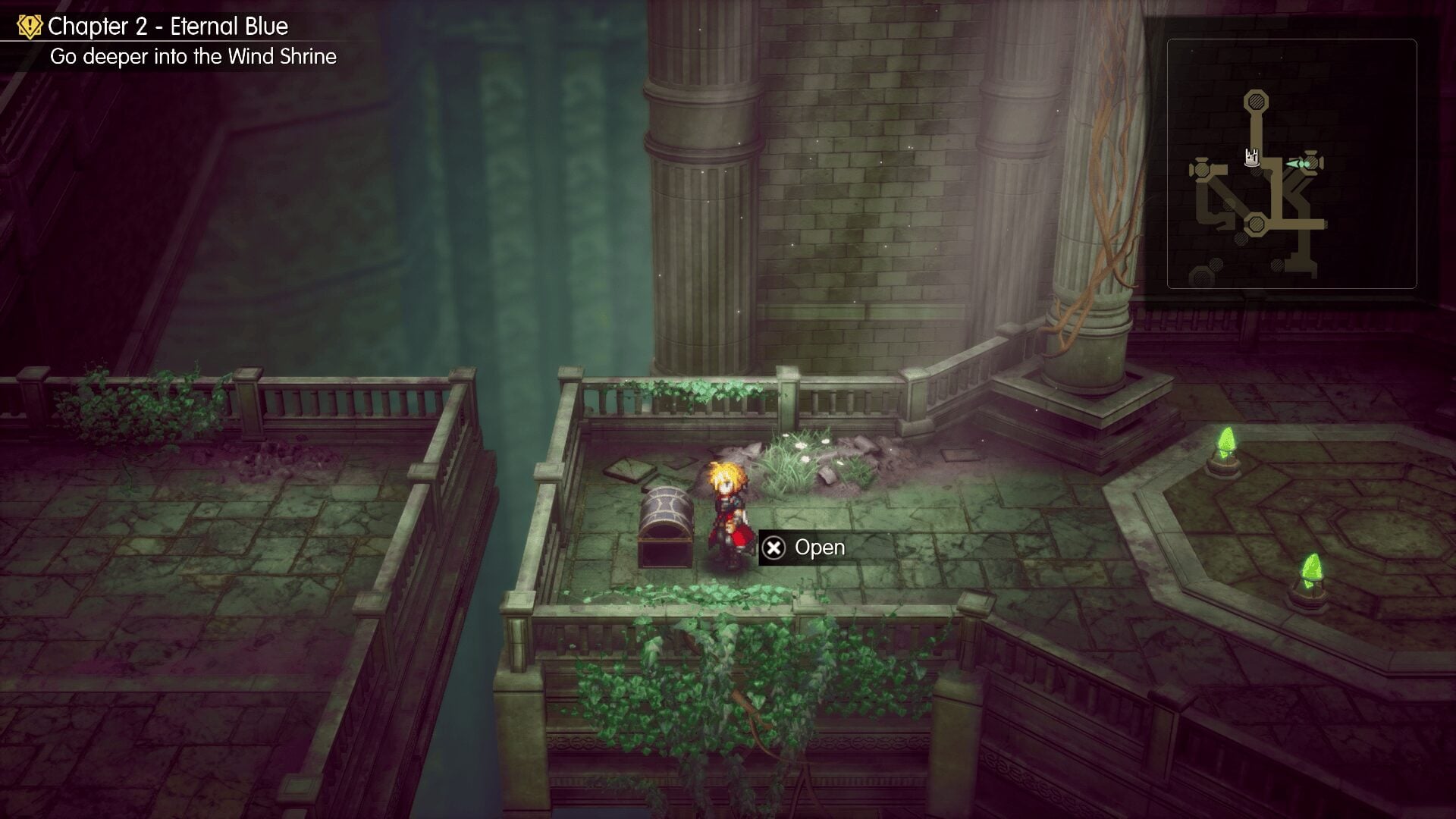
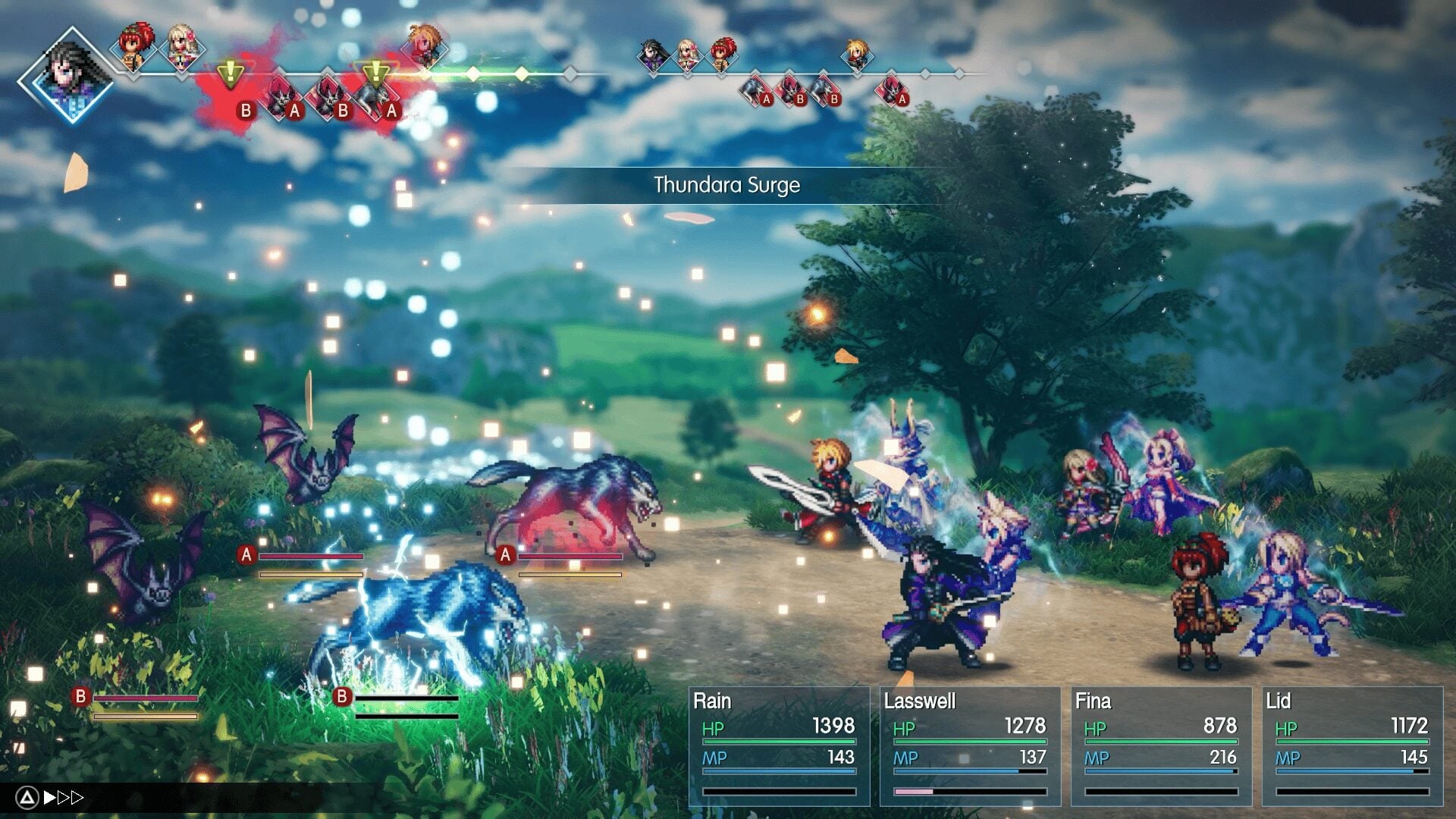
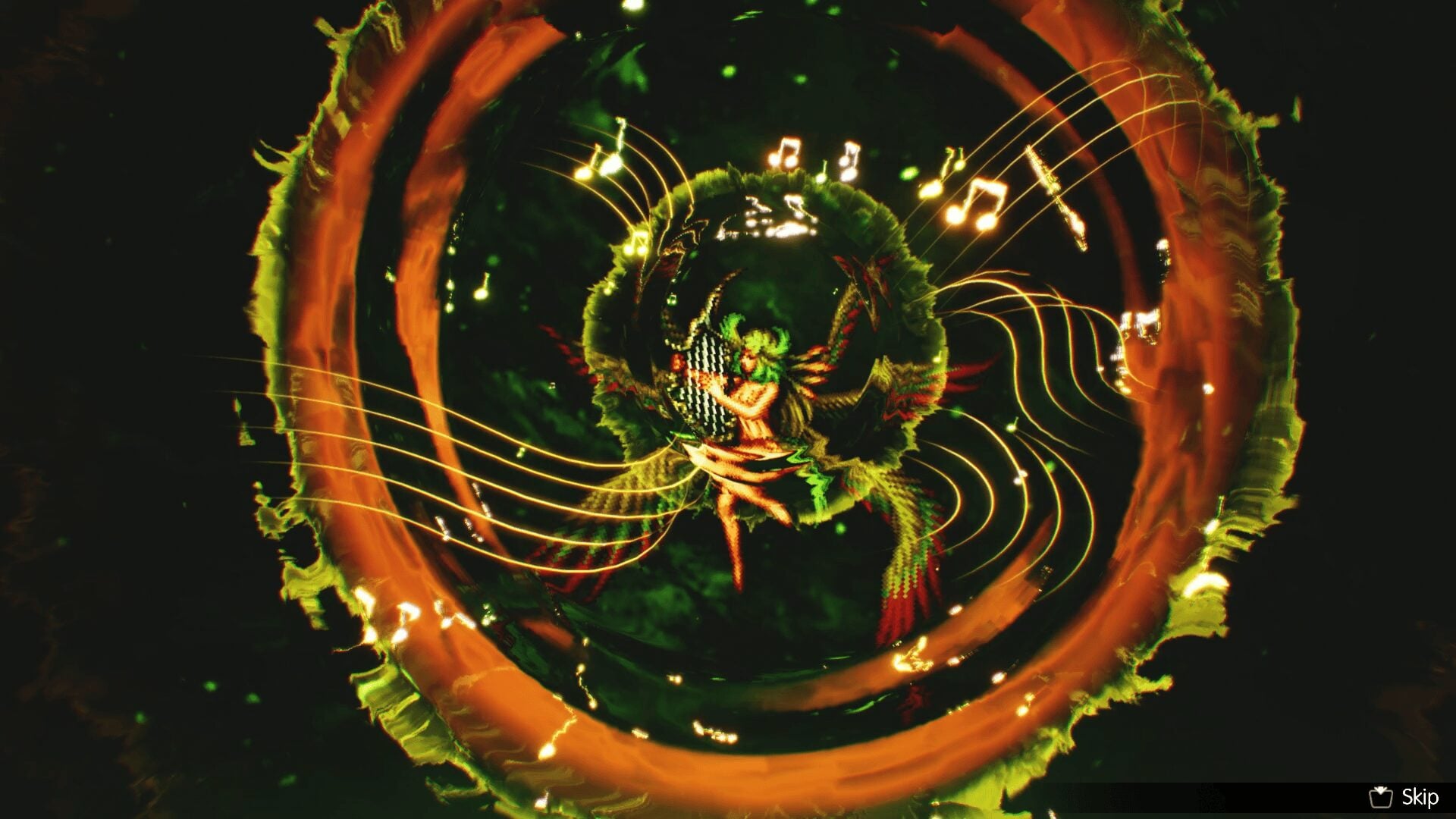
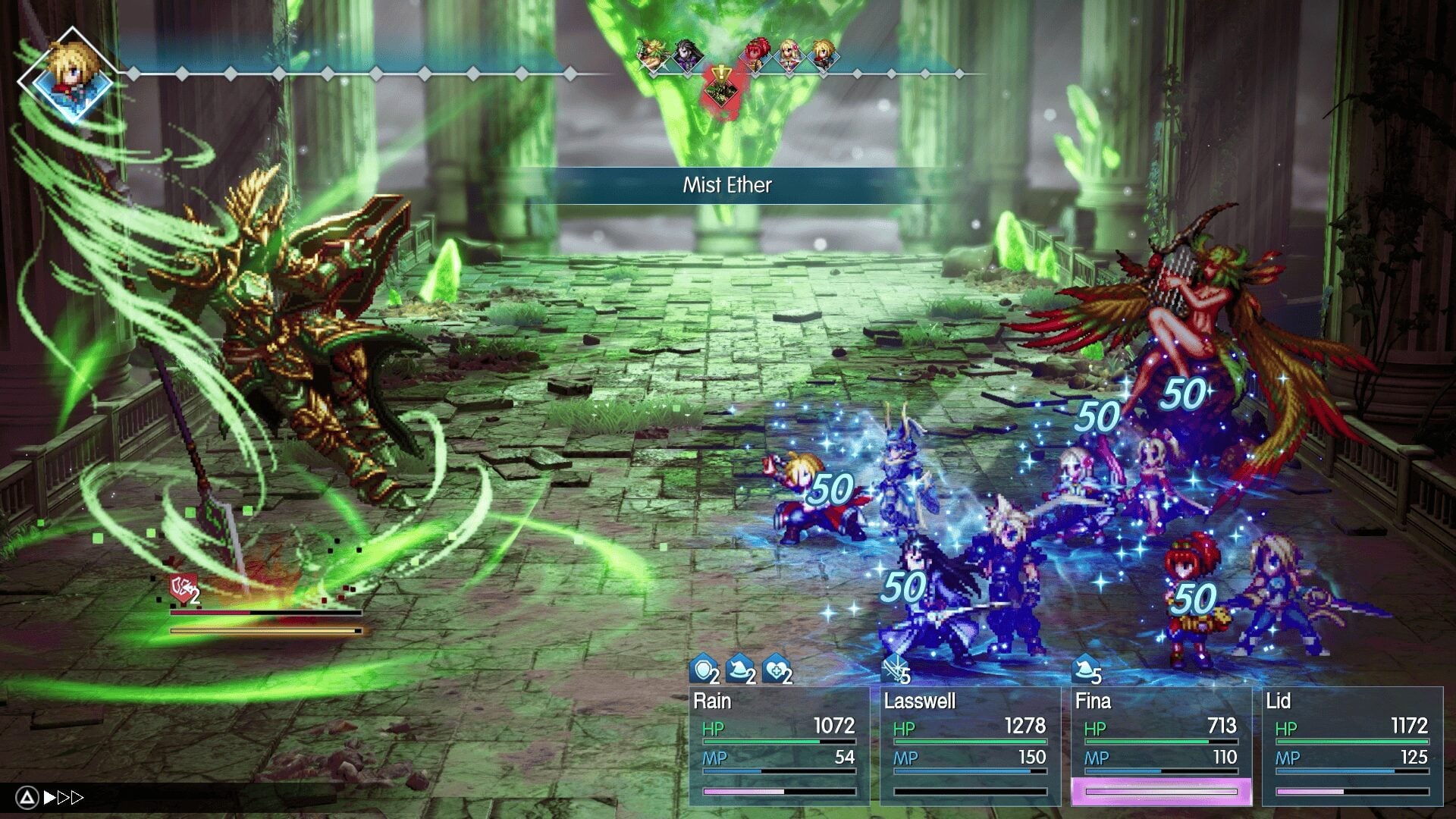
The major defining feature that sets Resonance apart from other FF games is the Vision system. You’re able to equip a Vision to each party member, and this Vision takes the form of another character from across the Final Fantasy pantheon. Upgrading Visions gives you access to more of their attacks in battle, and you can freely choose between your own character’s pool of skills or their equipped Vision’s. Keeping a Vision equipped will enable you to level up a character’s synergy with it, allowing you to equip abilities and skills from that Vision permanently.
It’s like a hot-swappable job system. If you feel one of your characters needs more curative skills, then you can equip them with a White Mage Vision. If you need access to Water and Thunder element attacks, then teaming up with Cloud Strife is a good idea. There are dozens of characters from different FF games available to unlock and equip as Visions – protagonists and final bosses alike – and this acts as the game’s main hook. Swapping through Visions, increasing synergy across the cast, and building your main party members to be as capable as possible.
“There are dozens of characters from different FF games available to unlock and equip as Visions – protagonists and final bosses alike – and this acts as the game’s main hook”
When collecting Visions from the various Sanctums of Light across the land, you complete a quick three-step quiz to see how well you resonate with the Vision you’re summoning, and the questions are worded so obviously that you’ll probably understand what the correct answers are without ever playing the game the Vision is from. It’s obviously an improvement over Brave Exvius’ gacha system, but these moments feel somewhat cheap, evoking nostalgia for better games. It makes sense for a mobile title, but as a premium game it falls flat.
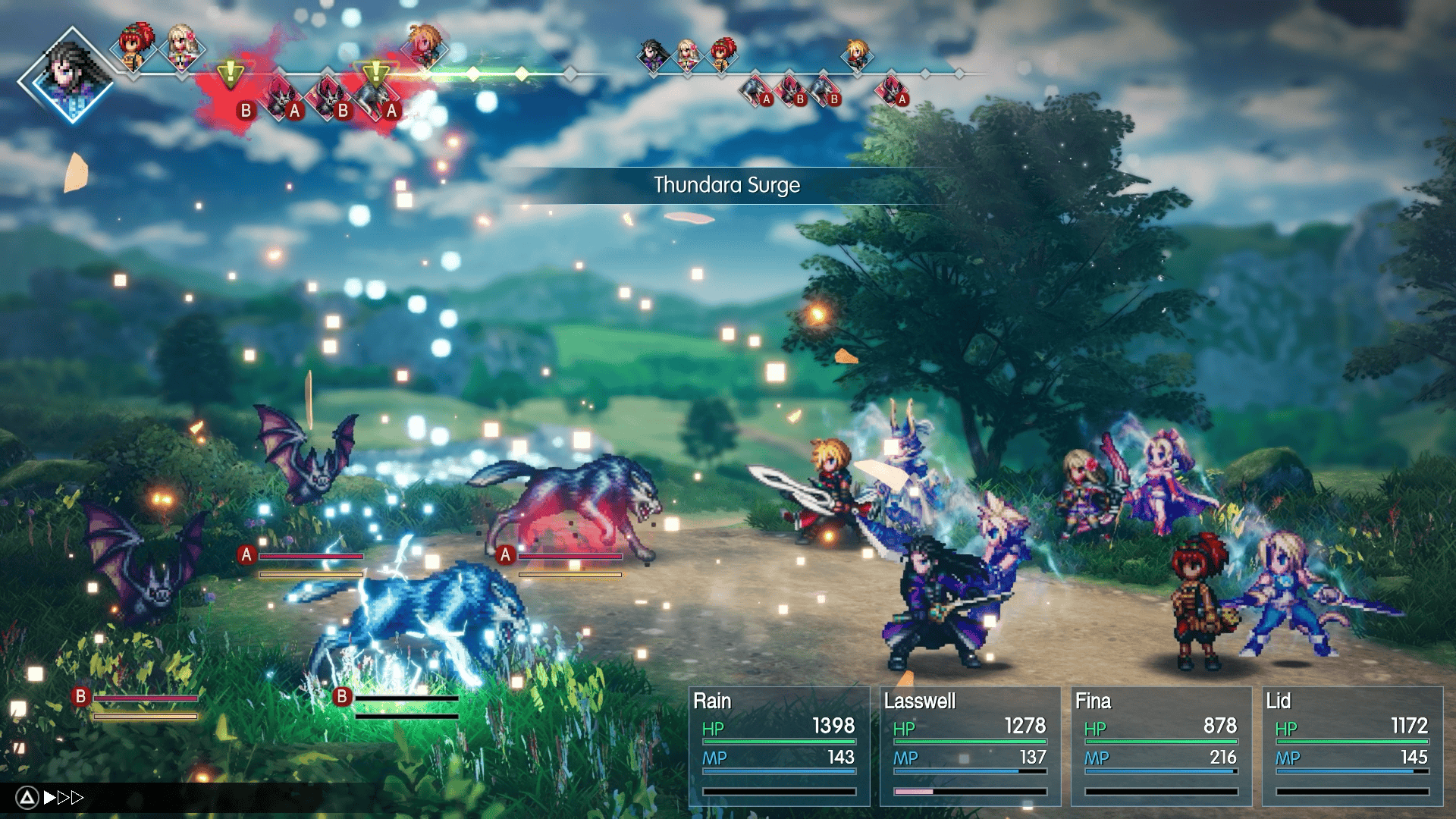
Still, Visions do a lot to spice up a battle system that is otherwise tried and tested. It’s a traditional turn-based affair with a basic attack, each character’s own skills, and those of your equipped Vision. You also get access to Limit Break abilities, and modifiers that allow you to build LB more quickly. The final piece of the puzzle is summonable spirits, called Espers, that act as a fifth party member for a short time in battle before unleashing a final strike on your enemies. Otherwise, you’ll be using familiar Final Fantasy strategies such as using Protect and Haste to strengthen your team while staggering and damaging foes.
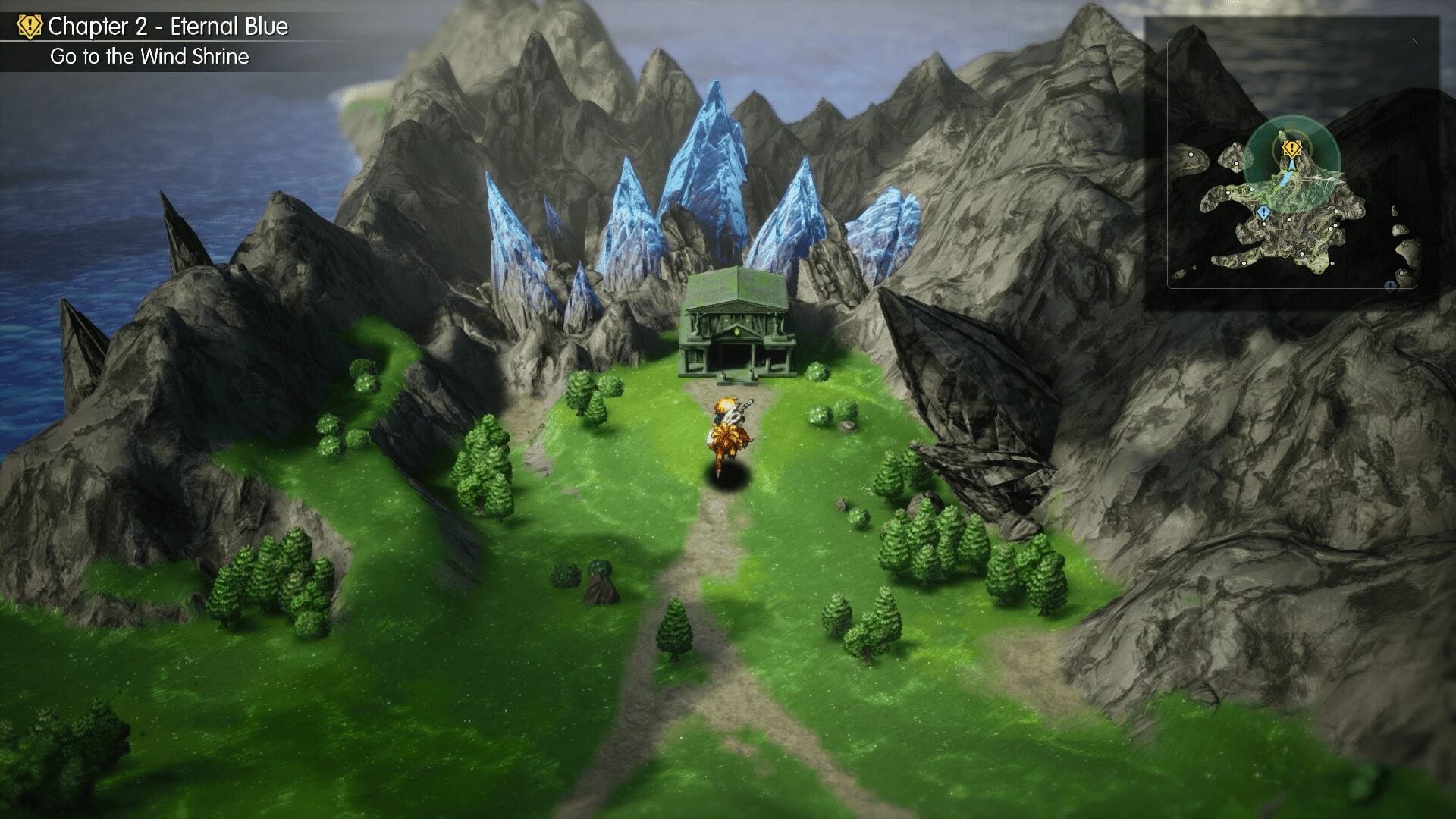
It’s impossible to get lost in Resonance thanks to a map which constantly shows where your next main objective is, along with any side quests you’ve picked up. Side quests can offer decent rewards – including some nice upgrades for Lid’s Mecha Chocobo – but by and large they’re pretty dull, often having you backtrack a bit through an earlier dungeon to witness a new scene or collect an item.
Resonance successfully evokes the vibes and atmosphere of Final Fantasy, sure, but it doesn’t live up to its inspirations. The battle system and Visions are the standout features, and even they aren’t any kind of revolutionary, being broadly bettered by other HD-2D titles from Square Enix.
Many of the minor qualms and complaints aren’t because of any lack of talent on the behalf of the developers, I think they’ve done a great job adapting a mobile game into a premium title. But the design of its mobile origins limits this game’s ambitions. Resonance, if it were a truly original title, could’ve been a bigger, bolder celebration of Final Fantasy’s history. As it is, it falls short of that.
Final Fantasy Resonance Review
Final Fantasy Resonance is a fun JRPG releasing just when I personally needed a classic turn-based experience, but in a world with HD-2D releases of classic Square Enix games and Pixel Remasters of the first six Final Fantasy games, Resonance just isn’t an essential experience. Final Fantasy Resonance doesn’t have to do anything new to be a good game, but something fresh could’ve made it a great one.
- A strong celebration of the Final Fantasy series
- Evokes the vibes of classic FF games
- Visions offer a fun twist on traditional turn-based battles
- Main cast isn’t as strong as other FF games
- Tropey story is too predictable