Evercade Nexus review: The best Evercade handheld yet makes it a joy to play retro games on the move
With nearly 90 carts and 750 games, Evercade is one of the best ways to build a modern, legit retro collection
The debate around game ownership has never been as heated as it is now, which is why the Evercade range of systems is as important as ever.
Originally introduced by Blaze Entertainment in 2020 as a handheld device, the Evercade has continued to evolve over the years, providing players with a variety of ways to play its growing collection of retro titles, from home consoles, to budget pocket handhelds with built-in games, to bartop mini arcade cabinets.
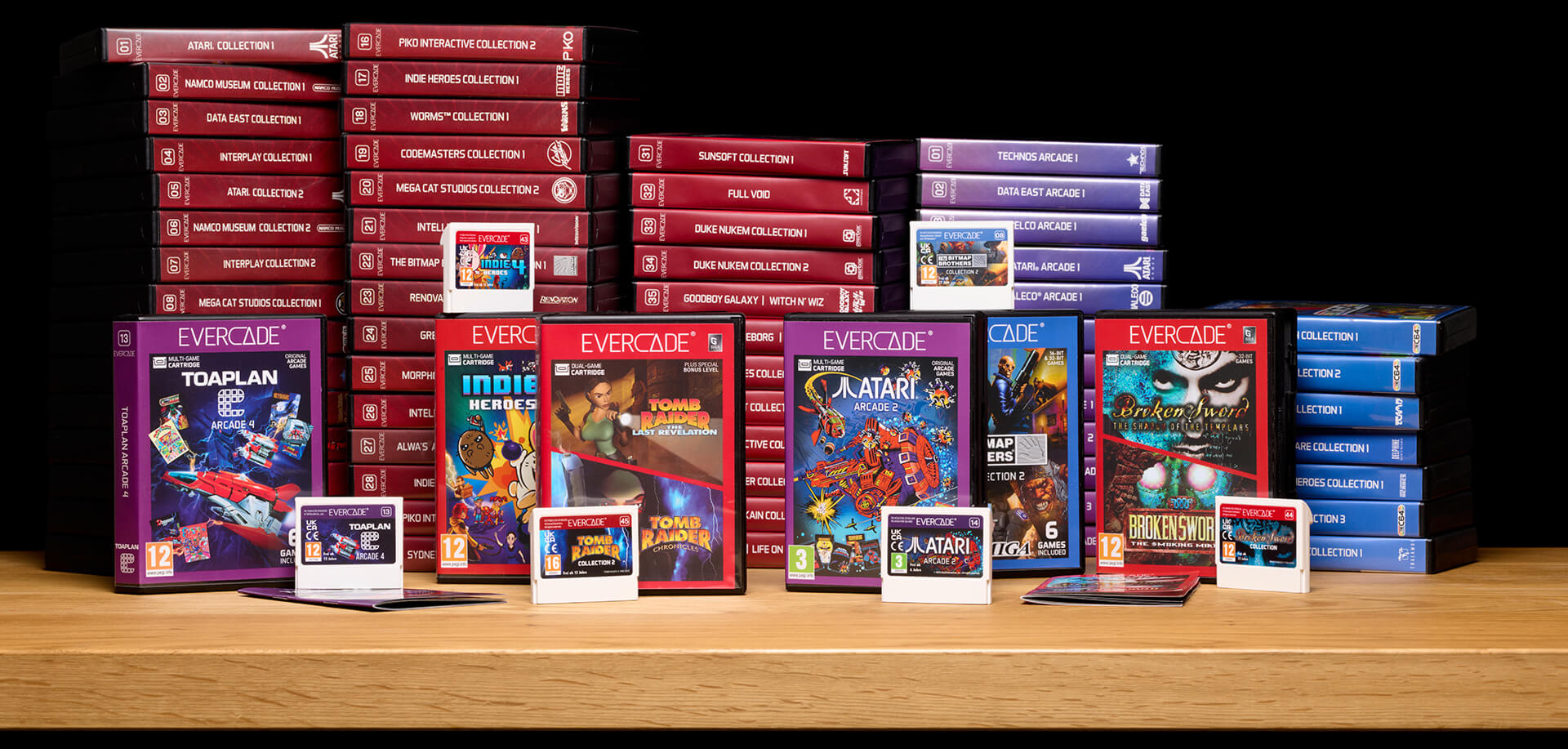
The big selling point of the Evercade devices is that they can play compilation cartridges, each of which holds a number of retro games. Blaze has spent the last six years doing licensing deals with developers and publishers all around the world, releasing official compilation cartridges.
There will be 90 of these cartridges by the end of the year – split into separate numbered arcade, console and computer collections – covering such companies as Rare, Activision, Atari, Taito, Codemasters, Data East, Gremlin, SNK / Neo Geo, Irem, Interplay, Jaleco, Namco, Sunsoft, Toaplan, Commodore… the list goes on, with more than 750 retro games covered so far.
Each cartridge comes in a box, and contains a full colour manual with controls, tips and information on each game. Most importantly, you ‘own’ these games, in the same way you owned cartridge games in the past. All the data is on the cartridges, they can’t be delisted or anything like that: as long as you have a working Evercade device, you will always be able to play these games.
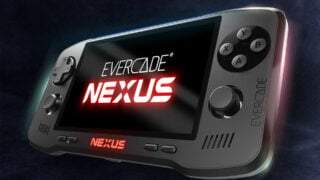
Now, with the Evercade Nexus, Blaze has returned to the handheld space with a major revision designed to address some of the feedback and wishlists players have provided over the past six years.
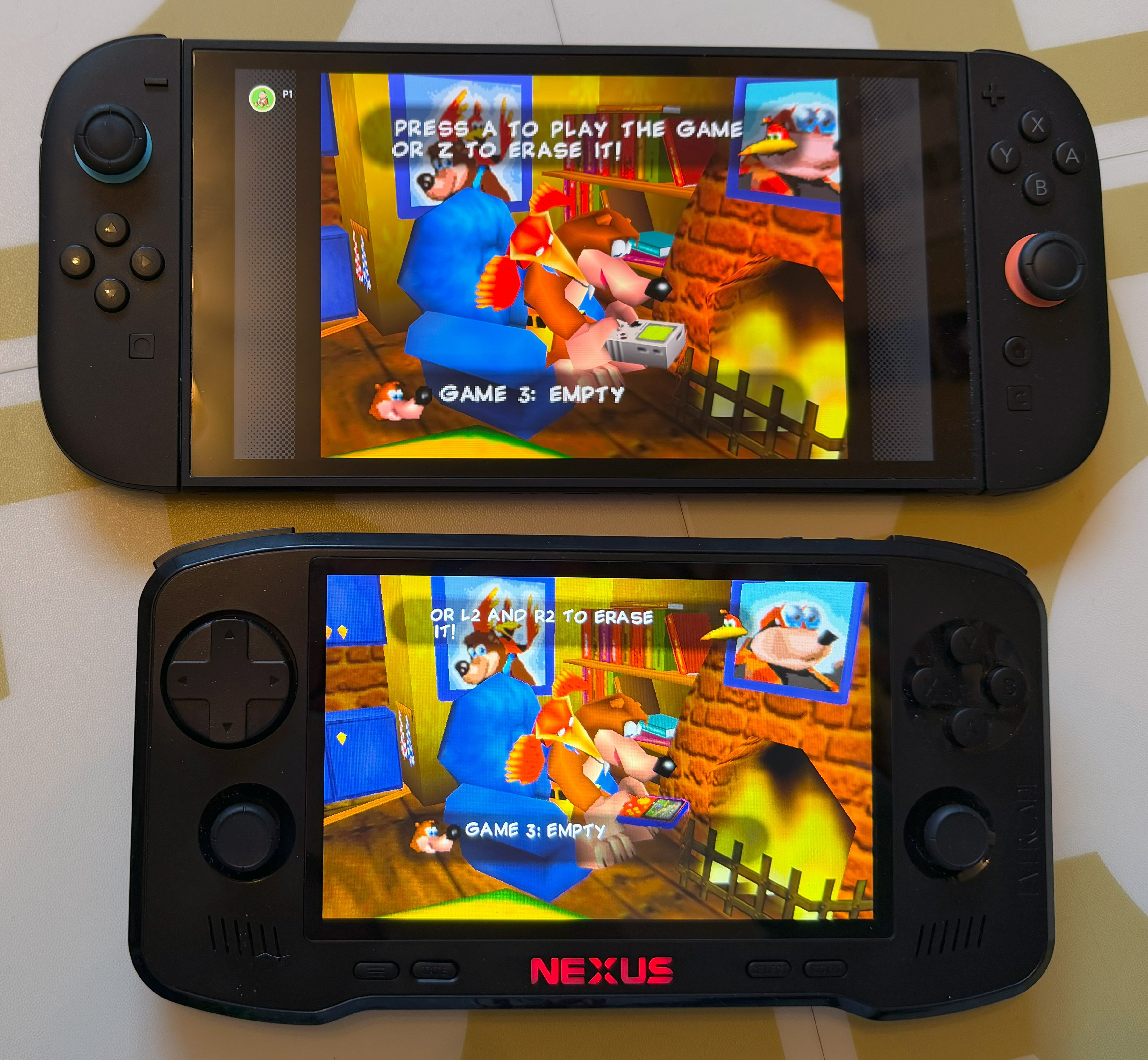
For starters, the Evercade Nexus is not a pocket device, unless you’re wearing cargo flares. The main reason for this is the large 5.89” screen, which places it somewhere in between a Switch and Switch Lite.
It’s an IPS display, which may upset some OLED purists, but the reality is that this thing was never designed to play an Avengers movie in 4K. The screen is very bright, the colours are vibrant, it’s nice and responsive, and overall I’ve got no issues with it at all. Anyone who owns an existing Evercade handheld will clearly be able to see the difference – this is a better screen than before, by quite some distance.
The sound has been improved too. The front-facing stereo speakers absolutely boom out on the highest volume, while 3.5mm headphone support returns and support for Bluetooth headphones has been added for the first time.
What doesn’t make the cut – as was the case when Blaze gave its Evercade EXP handheld a refresh and replaced it with the Evercade EXP-R – is an HDMI-out port. Older Evercade handhelds had this, making it possible to play on a TV when at home. Now it seems that if you want the Switch or Steam Deck experience Blaze wants people to buy the Evercade VS console if you want to play on the big screen, which is a shame.
Of course, if you already have an Evercade VS – or any other Evercade device, for that matter – all the games you already own for them will work on the Nexus. The vast majority of these games are for 8-bit and 16-bit systems, but in recent years Blaze has been dabbling more with PlayStation titles. That’s where the Evercade Nexus’s other main new feature comes into play, the addition of two analogue sticks. These are rubbery and concave, and feel quite nice to use despite being small (which they have to be for a handheld) and loose.
While the number of Evercade games which specifically support analogue control is still relatively low – there are around 15 out of 750 at the moment, including the likes of Soul Reaver, Tomb Raider 3, Duke Nukem: Time to Kill and 40 Winks – you can still use the stick instead of the D-Pad for any other games should you so wish (though the purist in me thinks that’s sacrilege, of course).
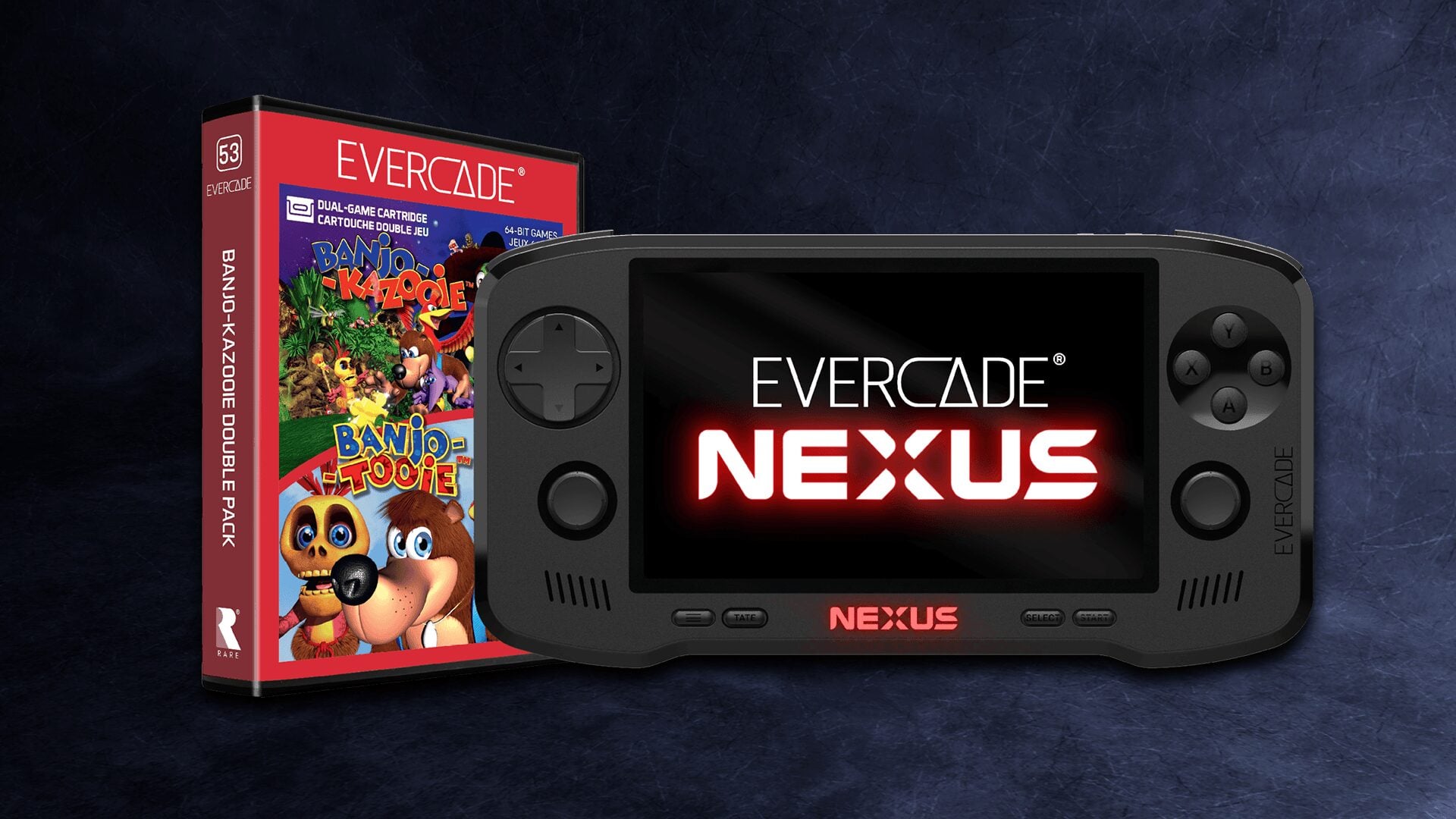
Those sticks really come into their own with the cartridge bundled with the standard version of the Nexus, the Banjo-Kazooie Double Pack. This includes both Banjo-Kazooie and its sequel Banjo-Tooie, but these aren’t ROMs running on an N64 emulator.
Instead, they’re new native ports offering widescreen support, higher resolution, 60fps and dual stick controllers (which means when you switch to the first-person Breegull Blaster sections in Banjo-Tooie, it controls like a modern FPS). Blaze worked with Evercade to add new features like a working Stop ‘n’ Swop and other new bonus content, and overall it’s an outstanding cartridge that really shows off the hardware.
The same goes for The Doom Collection, which will also be released on the same day as the Nexus. It too consists of native ports of Doom, Doom 2 and six official mission packs, and while (as with every other Evercade cart) it can be played on all the previous Evercade devices, being able to play with twin sticks on the Nexus makes it so much more satisfying.
TATE mode returns in the Nexus too, which is good to see. This was first introduced with the Evercade EXP handheld and works on around 50 of the 750 games released to date. The idea is that, because a lot of arcade games back in the day (especially scrolling shoot ‘em ups) were presented on vertical displays, by pressing the TATE button you can instantly rotate the screen 90 degrees and use the widescreen display vertically to play these games in their original aspect ratio.
The only slight issue with TATE mode this time is that the way the controls line up, you’re forced to use one of the sticks rather than the D-Pad. If you’re absolutely adamant that an analogue stick can’t match the feel of an eight-way joystick then you’re either going to have to deal with it here, or stay away from TATE mode.
One new feature that I haven’t yet had the chance to test properly is EverSync. The idea is that this is similar to Switch 2’s GameShare mode and lets you stream your display to another Nexus user, meaning you can play two-player games with a single cartridge. Because it’s not out yet, the number of Evercade Nexus owners living near me is exactly zero, so if this is the main selling point for you, I’d maybe hold fire until they’re out in the wild and it’s been properly tested first.
The only real issue I have with Evercade Nexus – and it’s not a huge one, but not insignificant either – is that it could do with a little more processing oomph.
“The only real issue I have with Evercade Nexus – and it’s not a huge one, but not insignificant either – is that it could do with a little more processing oomph.”
It’s understandable why Blaze has done this – its commitment to making sure that even the original Evercade handheld from 2020 can still play the cartridges being released today means the Nexus is held back to some extent, so anyone expecting PS2 games on it may have to wait until a true ‘next-gen’ device takes things up a notch.
Even so, though, I’d hoped that the hardware would still be faster at booting up to the OS, and then to booting up games themselves. From the second you hold the power button to turn on the console, I timed it at 42 seconds to reach the main menu, and another 20 seconds or so to load Banjo Kazooie. For a device designed for playing on the move, that’s a bit of a wait, especially when there’s no sleep mode, meaning you have to do the full boot each time.
Once it’s up and running, however, the Evercade Nexus is a brilliant little (well, not so little) retro handheld which offers the best way yet to play the company’s collection of licensed cartridges on the move.
There will of course be those who point to less legitimate ways of playing retro games, and yes, we’re all aware of that. There’s a growing audience, however, of retro fans who are willing to pay for their old games, but don’t necessarily want to pay the exorbitant prices being charged by some people in the retro community these days.
Evercade solves this, letting you build a collection that’s legal, physical (manuals and all), can never be taken away from you and makes sure the IP owners are properly compensated (and, indeed, that more will come on board over time).
If you’re new to Evercade and want to get into it, the Nexus is a no-brainer. If you already have one of the earlier handheld models and aren’t interested in its wireless multiplayer, the larger and brighter screen is the main feature here, so if that floats your boat then its definitely a worthwhile purchase, even if it could do with being a little speedier.
Evercade Nexus Review
The Evercade Nexus is easily the best handheld Blaze has released to date. The lack of HDMI output is disappointing (if understandable), and boot up times are longer than they really should be for a retro handheld, but the wonderfully big and vibrant screen, the twin sticks and the full support for the ever-growing library of Evercade carts makes it a fantastic way to play retro games on the move.
- The new screen is large, bright and vibrant
- Twin sticks make games like Banjo Kazooie and Doom a treat to play
- Supports the 90 or so Evercade carts released to date
- Solid battery life of around 5 hours
- Takes a long time to boot, and no sleep mode to speed this up
- Need for carts to support all devices means it's limited by how far it can go
- No HDMI port means you need an Evercade VS console to play at home