‘We were almost dead’: NeoGeo boss reveals forced redesign behind AES+ delay
Plaion reveals how the AI-driven chip shortage nearly cancelled NeoGeo AES+ entirely
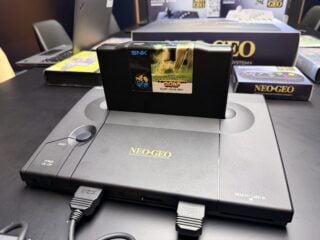
The director behind SNK and Plaion’s upcoming NeoGeo AES revival has revealed how the global chip shortage forced it to reengineer the console, leading to the recently confirmed year-long delay and nearly canceling the device entirely.
NeoGeo AES+ was announced earlier this year, featuring full compatibility with original 1990s NeoGeo cartridges and a suite of quality-of-life improvements. However, months after pre-orders opened, Plaion and SNK recently announced a ten-month delay to September 2027.
Speaking to VGC at Tokyo Game Show, Plaion hardware & software director Ben Jones explained the slip came after it failed to procure the memory chips required to manufacture NeoGeo AES+, forcing it to rethink how the console worked.
“After we announced AES+, we received an overwhelming response and really significant levels of preorders,” Jones said. “So I straight away went into the procurement phase, and advised our partners in the Far East what our requirements were, and it’s the first time I’ve ever been refused ordering chips, and I’ve worked with Plaion for nearly 20 years in this field. I was like, ‘What do you mean you can’t get these chips? Oh, AI.’”
Jones is referring to the ongoing global chip shortage, driven by demand for AI data centers, which has caused the price of many consumer electronics to rise significantly as memory supply becomes increasingly constrained.
The particular form of memory Plaion needed for AES+, Parallel NOR flash, was “basically unavailable”, according to Jones. “I actually flew out to Taiwan to see these companies to basically see if there was any way that we could procure it, and it was a six-month wait to even see if we’d be considered,” he said.
The director told VGC there was a real risk that the console would have had to be canceled entirely, but thankfully, its engineers found a solution within the game cartridges AES+ was designed to play.
“We had already made the two ASIC chips in the cartridges that kind of deal with the memory chips, and then send the message to the machine itself. We had thousands of these chips ready for the cartridges,” Jones explained.
“With that in mind, we tasked ourselves to try and see if there was some kind of a workaround with using what’s called Serial NOR flash, which is basically the same as parallel, but because the NeoGeo only uses parallel flash, you have to do a conversion that lets you use serial flash, which is in easier demand and you can basically get them.”
Plaion ultimately determined it needed to redesign the cartridge chips with added technology that converted a serial signal into a parallel one. This work, combined with extra testing, is what resulted in NeoGeo AES+’s ten-month delay, Jones said.
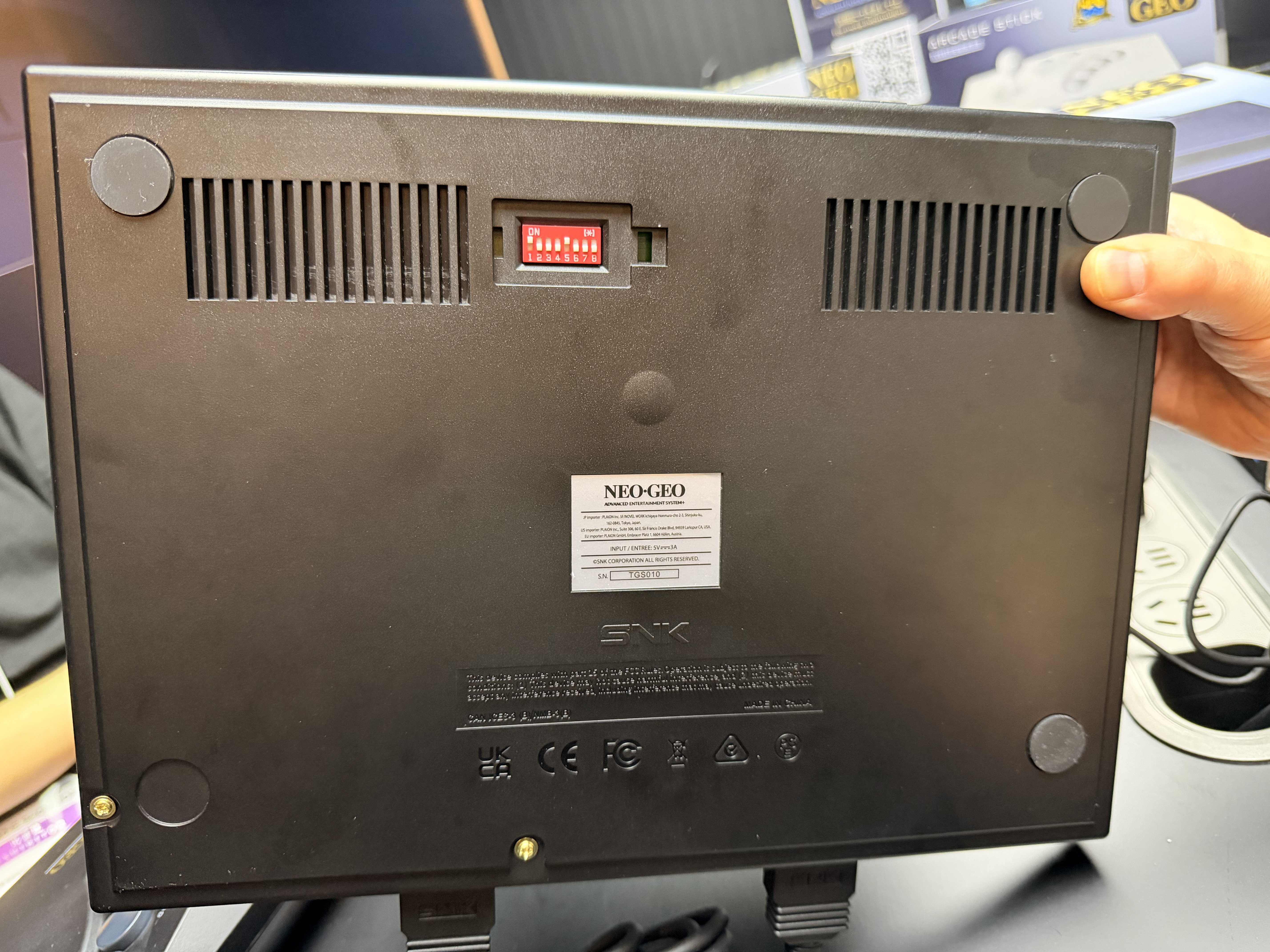
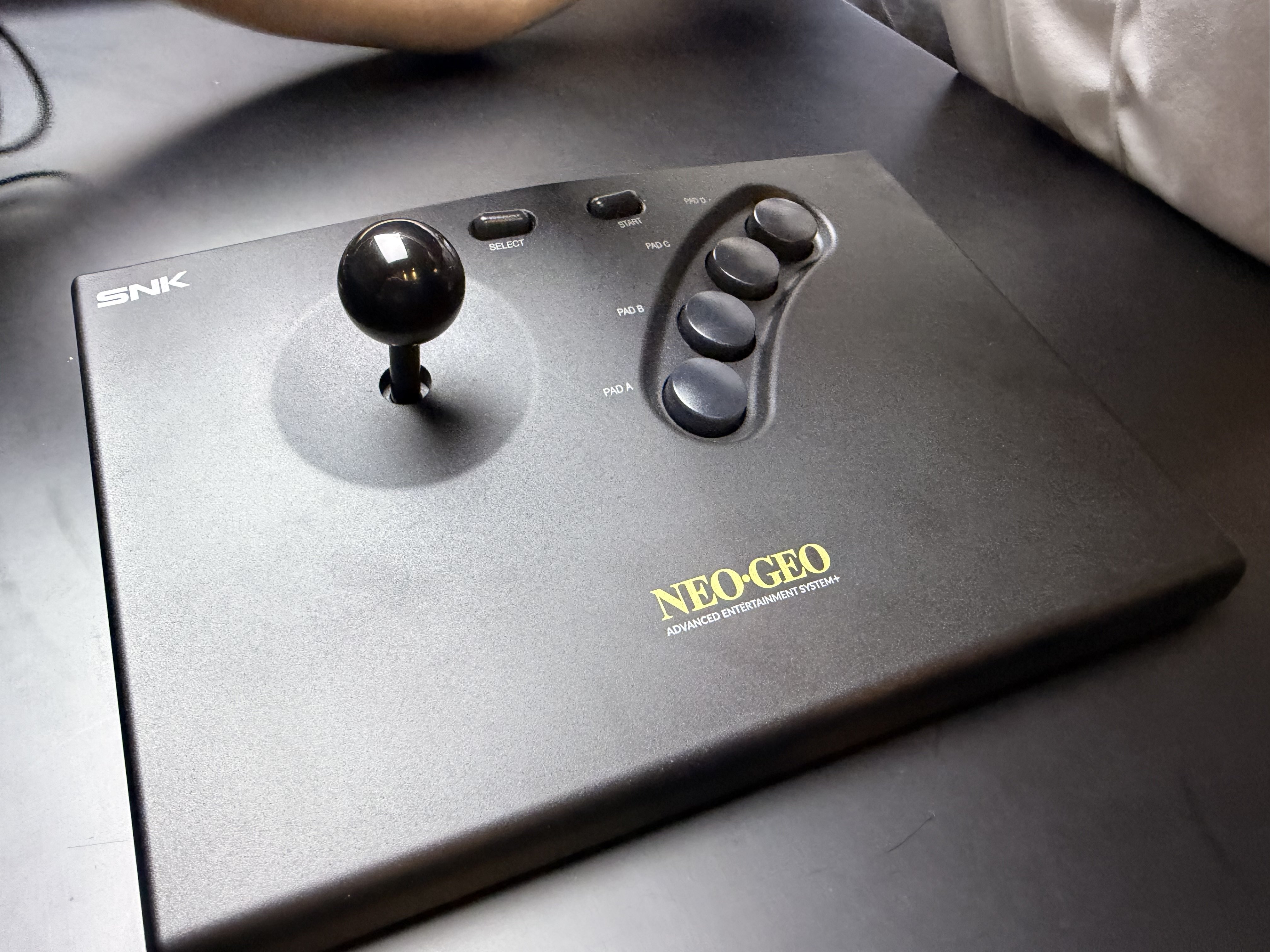
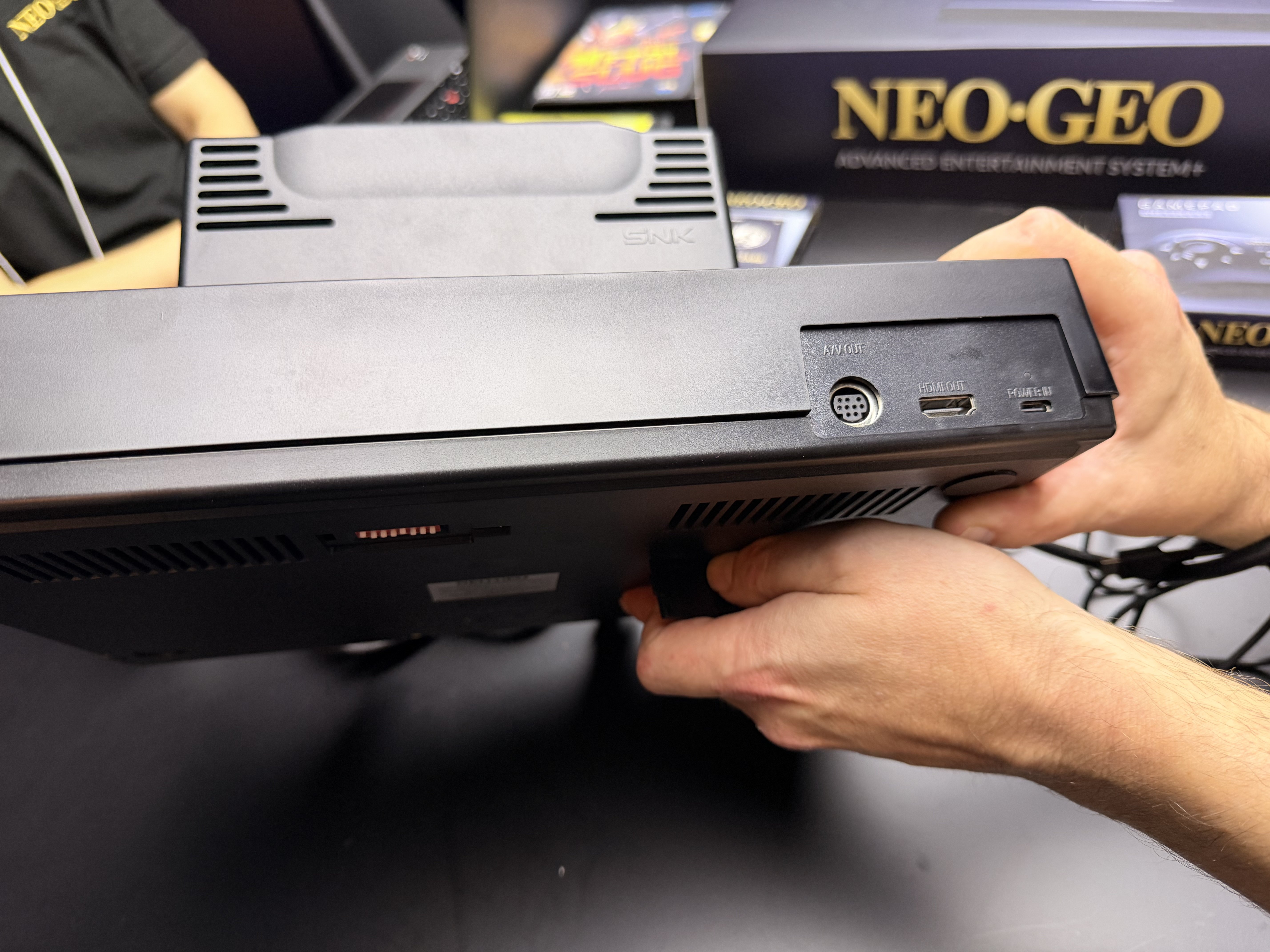
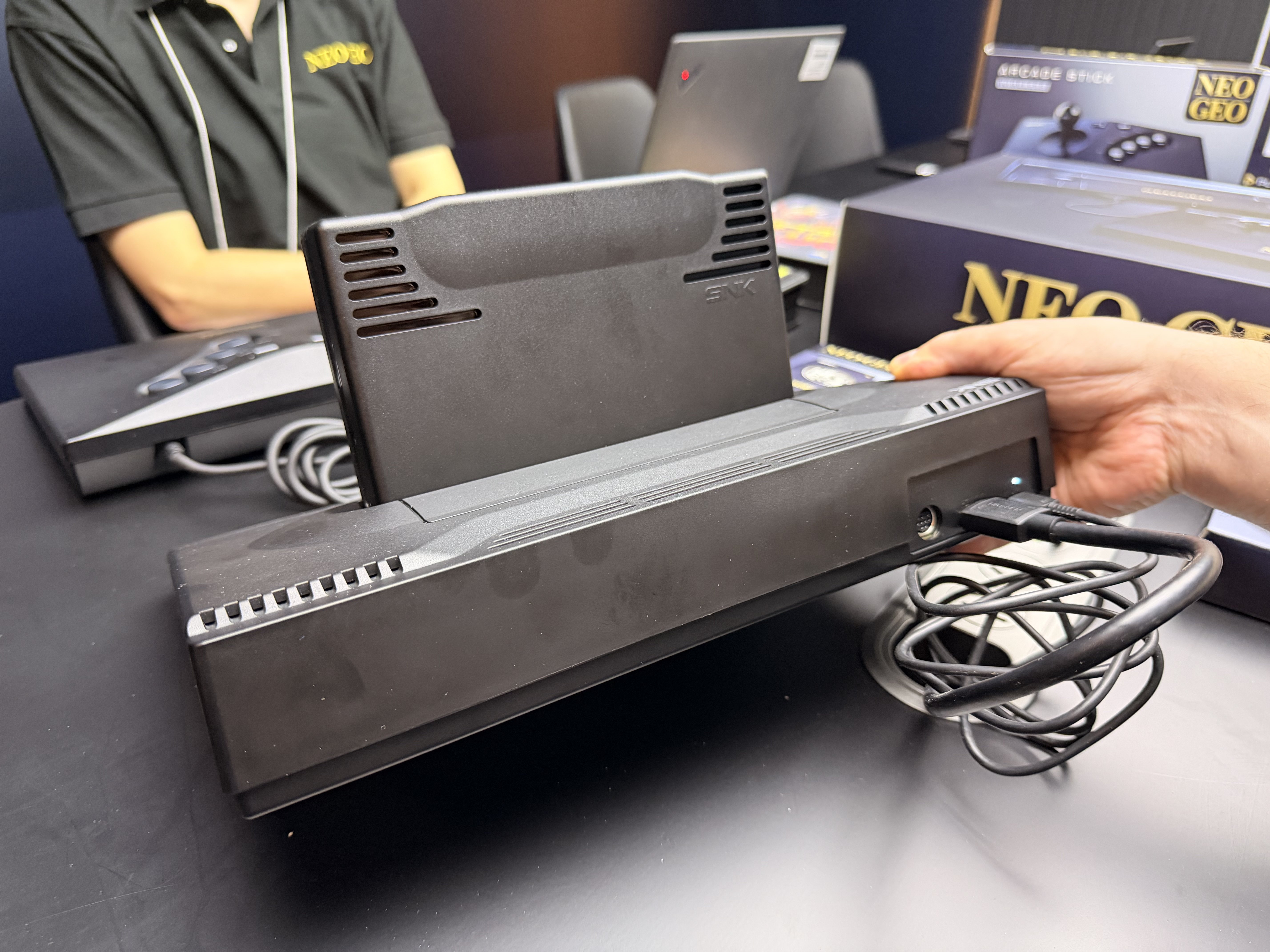
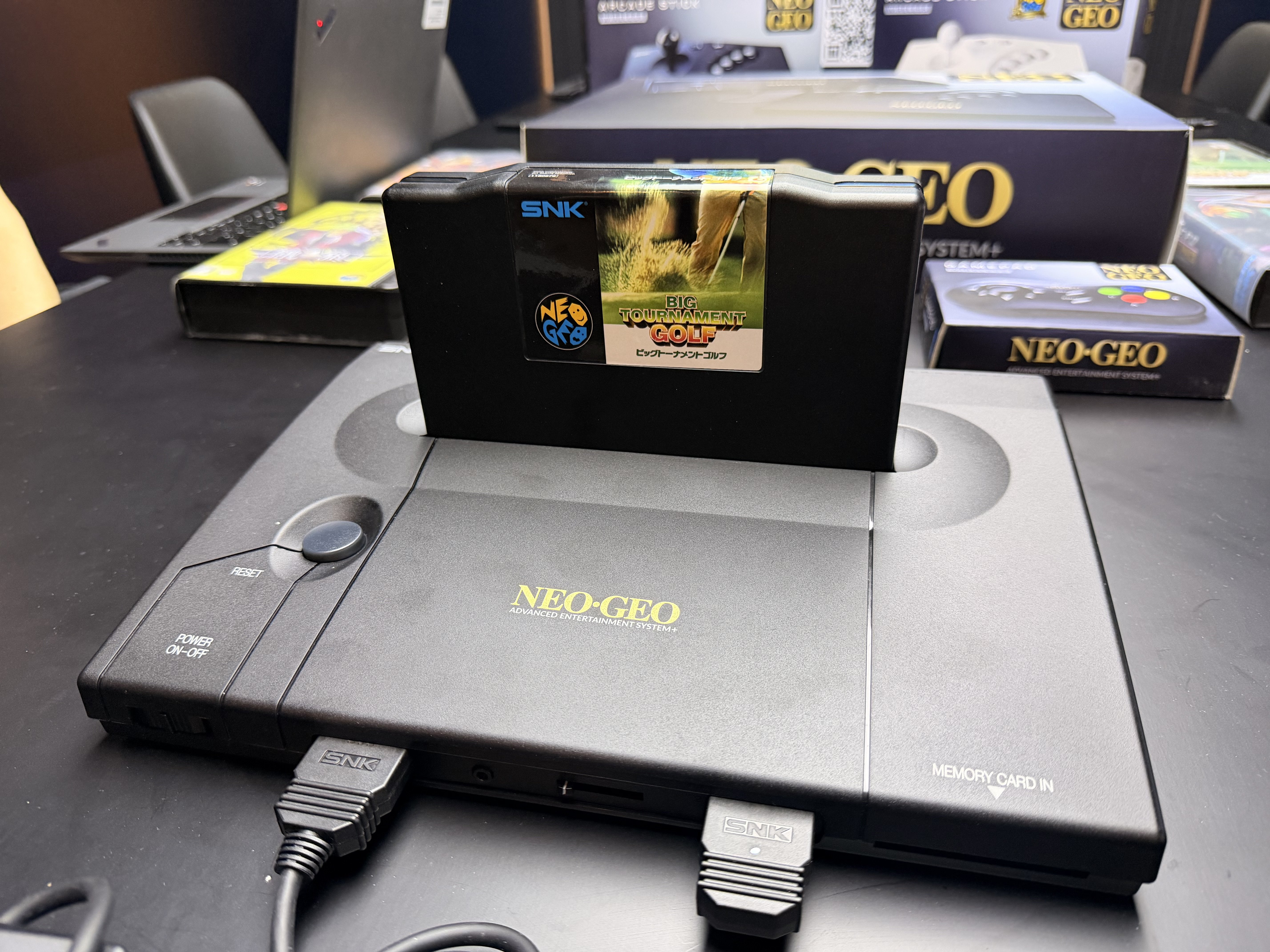
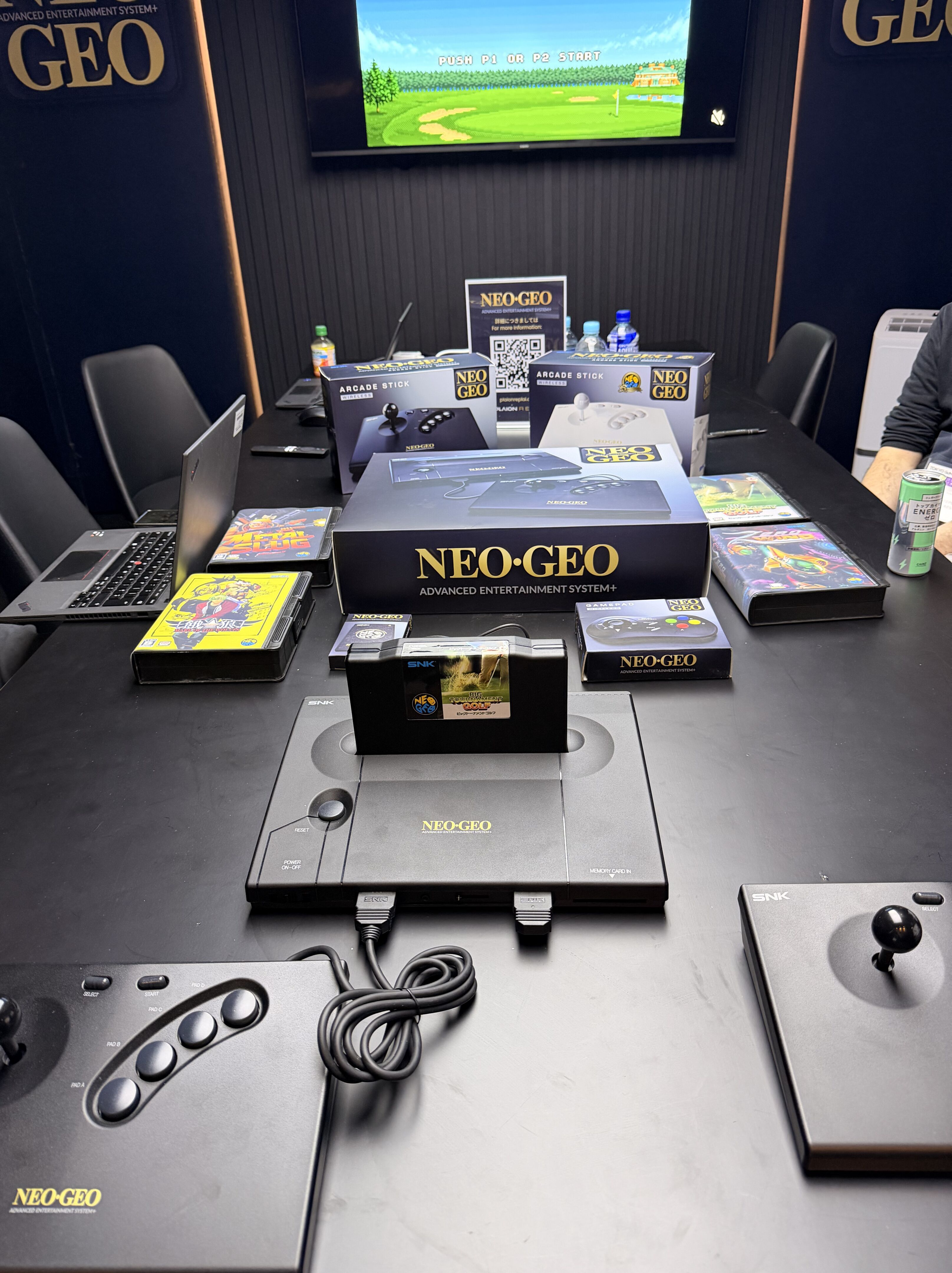
Chief Technical Officer Bruno Steux said the decision to redesign and delay AES+ was tough, but “we didn’t have a choice”. He said: “Otherwise, we would have had to wait too much time, and probably spend too much money.”
Jones added: “If you hadn’t had the solution for the flash, I think everything was dead. But that’s the journey. And remember, we’ve been working on this for years as well, so it was a bit of a ‘nothing stops this train’ moment. I had to go to Taiwan, I had to speak to everyone, we just had to exhaust all options and be 100% focused. We had to deliver.”
At TGS, Plaion and SNK announced a further five games shipping for AES+ (Zero Wing, Karnov’s Revenge, Magical Drop II & III, Spinmaster, and Street Slam / Street Hoop), bringing its announced library to 15. According to Jones, more announcements are coming.
“We’ve signed other third-party names, and obviously we have SNK sitting there with a vast catalog and library that we would love to continue to utilize. But there are also interesting things like bringing in more arcade conversion ports like Zero Wing, possibly doing more enhanced games.
“So, for example, on Big Tournament Golf, you can now play the Scotland course. These are things that really excite me. I mean, it’s so nice to have all the reissues and things, but to also bring new things. Really, I think it makes the machine alive and a viable platform, even though it’s a 35-year-old machine.”