The War Thunder team looks back on 14 years of service: from planes and ponies to tanks, choppers, and even frontline infantry
With War Thunder gearing up to add infantry FPS gameplay after over a decade, here’s why (and how) we got here
Well into the second decade of the gaming sphere’s premier military simulator, it’s clear that the War Thunder team over at Gaijin Entertainment still has a lot of gas left in the tank.
From its humble beginnings as an aerial combat sim to a robust simulation engine encompassing tanks and battleships, the team doesn’t shy away from a challenge. Looking back at the arrival of UFOs, cartoon ponies, and anime girls, it knows not to take itself too seriously, too – even when various military bodies have been known to depend on its accuracy.
So, what goes into making a game that refuses to slow down? And how does a game that’s far outgrown its original premise continue to innovate? War Thunder is one of gaming’s clearest examples of why a “full release” is often far from the end of the road.
To celebrate almost 15 years of big victories and bigger battleships, we spoke to Gaijin Entertainment to find out how they continue to grow a game that reached its 1.0 release a decade ago — including how it’s leveraging additional talent to bring a genuinely competitive boots-on-the-ground infantry shooter to what should, by now, be a dusty old vehicular warfare simulator.
The Line of Contact update feels like a massive change to the core focus of the game. What was behind the decision to work on the mode after more than a decade of purely vehicle-based War Thunder gameplay?
War Thunder is the most comprehensive military action game already, and it always seemed logical to add infantry to it one day similar to other military assets that do exist in the real world but are not a part of War Thunder yet
It’s also important that a significant portion of existing War Thunder vehicles (i.e. armored personnel carriers or infantry fighting vehicles) are in fact designed to fight alongside infantry.
Players have been constantly asking us to add infantry. It was not easy, though, as infantry basically requires us to build a separate game within a game to make the gameplay right. It took time. We’re in the early testing stages of the mode right now, as we’re committed to do everything right and are not rushing anything.
War Thunder’s development has been so focused on vehicles for so long now. How did the team adapt to building the systems needed to support infantry-style gameplay? What were the challenges?
Infantry mode is being developed by a separate in-house team, made of industry veterans with shooter game experience. Adding this mode does not affect updating and upgrading existing War Thunder modes, as infantry did not draw any resources from their developers.
On the other hand, War Thunder producer and other key War Thunder people oversee the infantry mode development to make sure that it fits War Thunder brand and style. The key challenge was to build a shooter game that would be a War Thunder style shooter, with the same level of realism and authenticity.
What sort of challenges have you faced balancing over a decade of war machines against infantry soldiers?
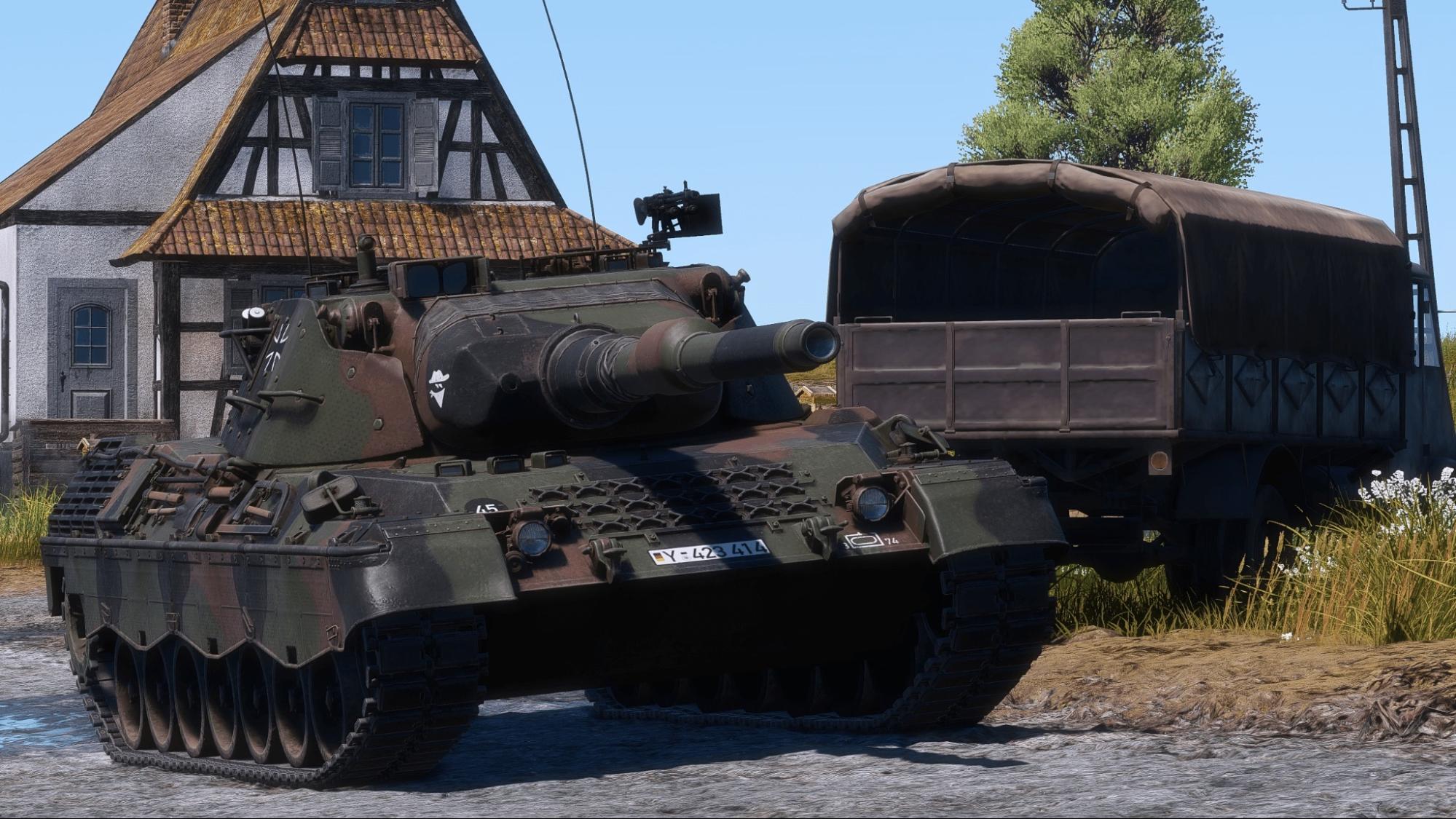
These war machines were actually designed for the battlefields with infantry fighting alongside or against them, that’s how it works in the real world.
For example, certain secondary weapons like machine guns, as well as high explosive shells are meant to be used against infantry. So the balance will be heavily inspired by reality, typical for War Thunder. In fact, we’re targeting to eventually make all ground vehicles available for the players in the infantry battles.
The key challenge that would require a lot of work is to create interesting maps for this mode. They should have a lot of cover for soldiers with anti-tank weapons to give them a fighting chance, but still open enough to allow vehicles to escape ambushes and unleash their immense firepower.
Getting the rights to hulking war machines sounds tough. Can you talk us through that process? And are there any dream military vehicles or vessels the team is still struggling to add?
As there are not many military hardware manufacturers around, we managed to license the use of trademarked names for many vehicles in bulk, but that’s not as important as some might think.
In reality, using those names for weapons and vehicles doesn’t offer much benefit to players, as it is still legally possible to recreate those vehicles and use official military codenames for them instead. Their appearance and functionality are not protected by copyright, only the trademarked names and logos are.
Getting the licenses for the trademarked names in fact could lead to a lot of problems, far more than one might think, including interference from some manufacturers in how certain vehicles should be represented in the game, and that’s a no-go for us. The good part is that military vehicles, planes and ships manufacturers usually have guidelines that can be easily followed in non-narrative game like ours.
War Thunder has patch notes and balance tweaks that are infamously difficult to decipher. One tiny tweak to something as seemingly small as a vehicle’s acceleration can have some very dramatic consequences. Can you remember a time when a tiny tweak had massive repercussions in terms of game balance? Can you name a couple of vehicles you’ve always struggled to balance?
Typically, small quantitative changes don’t lead to significant changes in combat effectiveness. This shouldn’t be confused with simple but significant changes, such as a single digit change in a tank’s reverse speed or an aircraft’s engine power.
Most often, “quantum” changes occur when raising or lowering a vehicle’s combat rating, sometimes even by a single step — and the vehicle begins to encounter opponents it doesn’t perform well against, or vice versa.
In fact, one of the most notable tweaks, simple to implement but significantly changing game balance (and ultimately removed), was the “Last Man Standing” feature, created based on player suggestions. It allowed the tank to be operated by a single remaining crew member.
It might look like a minor tweak, but in fact it was a very significant change to balance and gameplay. As a result, battles overall became slower, the feature was hated by the players and was removed.
As for vehicles that are difficult to balance, these are usually machines with uneven combat characteristics. For example, an aircraft might have excellent flight characteristics, decent missiles, and an outdated radar warning system (RWR).
Thus, when in the same BR range, it’s overly effective, and statistics suggest it should be increased. However, as the BR increases, it begins to encounter opponents with radars that it simply cannot detect, its effectiveness plummets, and it becomes too uncomfortable to play.
Even in leaning into history to source the vehicles that hook players, War Thunder has a deep history of its own. From embracing mobile, journeying onto consoles, and even being an early pioneer of virtual reality, the team seems ever ready to explore new experiences.
We asked the team what it was like tackling VR in those scrappy startup days, and heading back into battle with the recent standalone spin-off, Aces of Thunder, as well as how the main game began, and continues, to naturally collaborate with seemingly unnatural sources for its iconic April Fools pranks.
War Thunder was part of the very first VR boom back with the original Oculus Rift. What felt like the next evolution of gaming is now around 13 years old. What stories of that initial VR push can you tell, and how hard was it to adapt to? Is there anything you’re still hoping to see VR evolve into?
Vehicle simulation games are naturally a good genre to adapt to VR, and we were always eager to try new technologies as soon as possible. VR, though, was always a niche tech, and VR gaming as a whole never became widely popular. It’s just way more comfortable for most users to play on flatscreen in the majority of game genres.
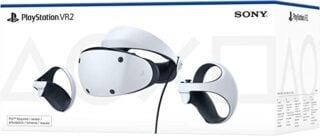
VR creates deep immersion, but it requires both technical and game design solutions to be a cohesive experience. That’s why we created a standalone game Aces of Thunder that’s entirely focused on deep immersion, on how to feel like a real pilot.
Aces of Thunder faced numerous challenges integrating control settings and fixing the learning curve on PC, where the majority of players don’t play in VR anyway, and there’s still a lot to polish. But the PS5 version delivered a very cohesive and powerful experience for PSVR users, and players and critics alike praised this standalone VR spinoff of WT.
There’s always a certain subset of people who get a little unhappy when a military-coded game introduces a brightly-colored anime crossover. War Thunder has had a few, suggesting they perform well enough to warrant more. What’s the story behind those? Do you seek out these collaborations, or do they come to you? And even if they don’t fit the theme of the game, what’s a dream anime collab you’d love to bring to War Thunder?
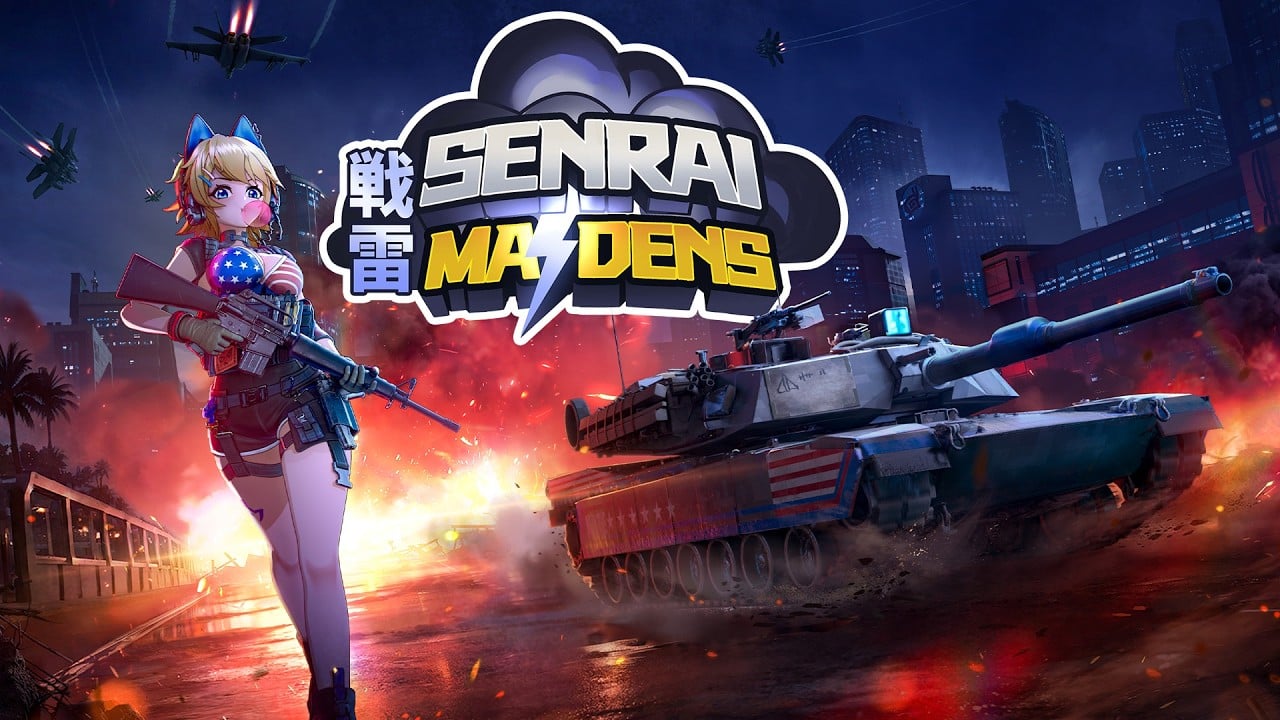
Some of those collaborations were initiated by our Japanese publisher for the local market, and international players asked us to bring this content for the global market as well. Our research shows that a lot of War Thunder players like anime. The problem is that only a few anime franchises have military vehicles in them, so it’s difficult to do crossovers that make sense. So we found a new approach and basically started our own anime franchise (Senrai Maidens).
It all started when we found a talented Japanese artist drawing great pictures of anime-style girls piloting realistic military vehicles. We ordered several original characters and key artworks showcasing each, and added body pillow items to War Thunder featuring these characters.
This move was a tremendous success, as we got a lot of coverage in social media and extremely positive feedback from the players. So our next step was to build upon that, create a short anime-style film with those characters and provide a Senrai Maidens content in War Thunder. That, again, was a success, and we’ll continue expanding the Senrai Maidens universe in the future.
It’s really easy for players to snap and share some of their craziest in-game moments. Are there any that have really stood out to the team in the past? Things they didn’t think were possible? Second to that, are there any crazy gameplay moments the team have experienced? Tales of match domination, close calls, comebacks, or utter humiliation? The sort that might get shared around the office like an urban legend?
We play War Thunder the same way that our users do, so our stories are similar. We’ve had stories where a mission was won by a razor-thin margin, or where a player with a nuke won a nearly lost battle.
As for unusual situations, our players have been asking for a lot of interesting stuff, so we even released a Thunder Show on YouTube featuring these incredible moments.
If you want to have your chance to test pilot War Thunder’s upcoming infantry mode, new play tests have been dropping throughout the year. Sign up for the main game, jump into air, land, or sea battles before you’re invited to enlist, and you’ll be ready to pair up against the war machines designed to put you in your place.
War Thunder is free-to-play on PC, console, mobile, and even VR. And if anything is clear, nothing is off the cards with this robust theatre of war simulator.