The original Grand Theft Auto was open-world because ‘we didn’t want to have to build a front end’, dev says
A retrospective GTA panel revealed secrets about the game’s development
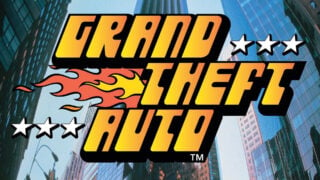
The main reason the Grand Theft Auto series was open-world was because the original game’s development team didn’t want to put together a front-end menu system for it, it’s emerged.
A number of DMA Design developers recently took part in a Grand Theft Auto Origins panel at the Scottish Game Developers Association’s Games Day 2026 in Dundee, Scotland, to discuss the making of the first game in the series.
DMA’s creative director Gary Penn recalled that the game was originally supposed to be far more linear and provide the player with a list of missions to choose from.
“I certainly remember from the visits when I used to come up on a regular basis to see progress,” Penn said, “and certainly in those early days it was all over the place, and it was even linear at one point.
“That open world thing was not part of the game – it was a very linear experience, and you chose missions from a menu.”
“Honestly,” lead programmer Keith Hamilton replied to laughs from the audience, “the open world thing arose because we didn’t want to have to build a front end. You just start one level and then that’s you, it just keeps going from there.”
Referring to the decision to replace the linear mission list with telephones which could be answered in any order, Penn asked: “What was that film, the one with the telephones?” to which Hamilton confirmed the inspiration was Die Hard with a Vengeance.
“Yeah, that’s where that came from,” Penn said. “Because then suddenly you’ve got the missions naturalised in this space and suddenly it changes to a very different game, a very different experience.”
More Grand Theft Auto secrets revealed
Elsewhere in the discussion it was revealed that:
- The idea of radio stations came up when a series of 30-second music sketches in a wide range of genres were created to figure out which style of music the game would have, and it was decided that if they were split into different categories they could all be kept.
- The team thought that because music company BMG was publishing the game it would be able to use its library of music for free, but quickly realised it would actually cost a fortune and instead paid for a recording studio to make their own music.
- Players don’t often realise that the codes being read out by the police radio (“there’s a 1014 in north west Hackenslash”) were taken from an actual internal list of crimes in the game, and were being declared in real-time as the player was committing them.
- There was a lot of “unnecessary simulation” behind the scenes. When the police are called they actually leave from the police station and navigate all the way to the player’s location, even though the player has no way of knowing this had happened.
- The traffic lights had a proper working sequence in the game. Lead programmer Keith Hamilton jokes that he was the only person who ever stopped at the traffic lights, because of all the effort that went into making them work.
- Many of the ideas were created through ‘feature creep’, by thinking of new ideas when trying something out. The example given was the way the ambulance arrives when someone is run over – the team then decided to make it so the player could steal the ambulance, then decided they could turn on the lights, then decided traffic would get out of the way for you if you did.
- The team was worried about PS1 game Driver looking much better because of its 3D world, so it did what it had previously done with Lemmings and arranged for a playable demo. This was included in the Official PlayStation Magazine, and by getting the game in players’ hands it won them over.
- The team experimented with making the car’s indicator lights show the player which direction to go (as The Getaway would later do), but realised that when the car took damage this stopped working, so decided “oh f**k it, just put a big yellow arrow in”.
- They were secretly happy when Nintendo decided it didn’t want the game, because they didn’t want to have to figure out how to do the radio stations without CD music.
- DMA co-founder Dave Jones said he spoke to Shigeru Miyamoto years later, who reportedly joked “maybe we should have stuck with it”, when it came to approving GTA for Nintendo 64.