‘The biggest f**k you moment in my career’: Former Overwatch director Jeff Kaplan reveals why he left Blizzard
An ultimatum over redundancies was what “broke” him, he says
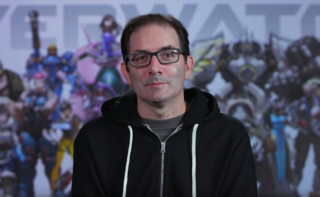
Former Overwatch director Jeff Kaplan has shed more light on why he left Blizzard five years ago.
Kaplan left the company in April 2021 after 19 years working there, while Overwatch 2 was still in development.
Now, in a lengthy interview with Lex Fridman, Kaplan has revealed the exact moment that “broke” him and convinced him to quit.
According to Kaplan, the introduction of the Overwatch League – a global esports league for the game made up of permanent city-based teams like a professional US sport – was a huge drain on resources and affected the development of Overwatch 2, but it was an ultimatum made to him by Blizzard‘s CFO that made him resign.
“In 2016 and 2017 I felt very in control of the Overwatch team, and of the game as a game director, working with Ray Gresko as the production director,” Kaplan explained. “It felt like we were running Overwatch, and we were very, very successful, and doing a good job, and I think the fans were happy.
“And then as we transitioned, Overwatch League was the best intention – my parents always say the road to Hell is paved with good intentions, that was the Overwatch League – and it ended up being an albatross. And then Overwatch 2 was the same thing.
“And what ultimately broke me in my Blizzard career was I got called into the CFO’s office. And he sits me down, and he says… he gives me a date, which at the time was 2020 and was going to slip to 2021, but at the time it was 2020.
“And he said ‘Overwatch has to make $[redacted] in 2020. And then every year after that it needs a recurring revenue of $[redacted]’. And then he says to me, ‘if it doesn’t do $[redacted] we’re going to lay off 1,000 people, and that’s going to be on you’.
“And that was just the biggest ‘fuck you’ moment I had in my career. It felt surreal to be in that condition. As somebody who’s worked on a lot of games, made a lot of games, you get in these meetings where they’re like: ‘Fortnite has 1,400 people working on it, if you just hire 1,400 people and make it free-to-play we’ll make that money, right?’
“I had believed I would never work any place but Blizzard. I loved it. It was a part of who I was, and I felt I was a part of it. And I literally thought I would retire from the place, I never thought the day would come. And that was it, I was like, ‘we’re done here’. Luckily for Blizzard, that CFO is no longer there.”
Earlier in the discussion, Kaplan explained why the Overwatch League – which ran from 2018 to 2024 – started off as a good idea that he had backed, but ended up growing far too complicated due to over-marketing, ultimately affecting the quality of Overwatch 2.
“We had a coalition on the team that really wanted Overwatch 2 built instead of the live events,” Kaplan said. “And then the executive pressure became monumental. And what would have been correct was to do more world events, keep it going. But the major derail was Overwatch League.
“The weirdest part about Overwatch League is I believe in it. I helped pitch it along with some other people. We thought it was the future of esports and doing regional-based teams, ensuring minimum player salaries and player protections. There was a lot of very good about Overwatch League.”
He added: “The team’s part of the dream was more like regional-based player protection, [to] try to make esports more of a first class citizen, because there were all these stories about shady teams screwing their players over. Where it got away from us was there was a lot of excitement about Overwatch League – like, too much so – and then it got over-marketed to the people buying the teams.
“They went on this roadshow where they had a deck – and you could put anything in a deck and sell anything – and they were pretty much selling the Brooklyn Bridge, that Overwatch League was going to be more popular than the NFL. And we got a bunch of billionaire investors in these teams.
“And when 2018 started, for example, the day got back they said: ‘We’ve signed this huge deal with Twitch for streaming of Overwatch League, like a media rights deal. And that means here’s all these commitments we made for Overwatch League.’
“[It was] like in-game stuff that had to exist, integration with Twitch, camera control and that kind of stuff. The other part of it was a bunch of skins, uniforms for all the teams, which was not just getting the art in the game, but there was huge technical challenges to how all that worked and was efficient and hit the right memory footprint and all of that kind of stuff.
“And so all of your plans at that point kind of go out the window. You’re not going to work on new world events. You’re not really even focused on Overwatch 2, you’re just kind of treading water.
“There was a lot of of talk of ‘oh God, the deal didn’t go well and we’ve got to do make goods to make the deal better for them’, and I’m like ‘just give them some money back’. You know, if the deal isn’t what people wanted, putting it on us, the Overwatch team, to support this beast?
“It was a great idea that the wrong instincts… I don’t know how to phrase this in a way that’s not damning, but there was too much focus on ‘let’s make lots of money really fast’, and a lot of people got dragged into it.”
Kaplan noted that while the Overwatch League was “great for Overwatch in terms of the players that it brought in”, and that he loved working with the League players, and the Blizzard staff working on the Overwatch League, he felt it was “a house of cards waiting to fall”.
According to Kaplan, the introduction of investors backing each Overwatch League team meant more pressure to deliver returns on their money, which had a negative effect on Overwatch 2.
“Now we didn’t just have executives at Activision and Blizzard who cared about the bottom line of Overwatch,” he explained. “We had all these people who basically invested in the game, and then they started to express their opinions.
“Originally, the business model was going to be that they were going to do in-person events, and there’s going to be big ticket sales, and then merch and all of that. And I think really quickly everybody learned we can’t do in-game events when you have a London team and a Shanghai, how does this work? So that fell apart super quickly. The merch was good, but it wasn’t going to be making NFL-level money, whatever insanity anybody thought that was going to be.
“So everybody defaulted back to: ‘Hey, didn’t Overwatch make like $500 million just in the live game last year? What can we sell, what can you give us?’ That pressure comes onto the team, and then the pressure to ship Overwatch 2, and all care and love that we had for the live game and the live service – let’s just make events, and new heroes, and new maps – we’re losing all these resources.
“I believed in Overwatch 2. I think we could have made a great… I have a lot of hindsight of how I would have designed that game differently with what I know now versus what ultimately we didn’t ship. Overwatch 2 is out now, but it’s not the Overwatch 2 we planned and announced.”