Shigeru Miyamoto explains why AI won’t make human creativity obsolete
Mario and Zelda creator argues that rise of AI could make creators even more important

Nintendo’s Shigeru Miyamoto, the acclaimed designer behind Super Mario and The Legend of Zelda, has explained why he believes the rise of generative AI won’t make human creativity obsolete.
Nintendo hasn’t publicly confirmed whether it’s adopted AI in the development of its games. However, during a press conference marking his acceptance of Japan’s Order of Culture, Nintendo’s creative fellow was asked for his thoughts on the technology’s use in game creation.
Miyamoto argued that as generative AI takes over more of the work involved in building things, creators’ individual visions will become even more important than they were in the past.
“Our generation lived through a period of rapid computer development—a time when tools were constantly evolving, moving from typewriters to word processors,” he said, translated by VGC.
“In the past, for instance, designers were taught in school how to create beautiful lettering for posters; possessing that skill alone was enough to be called a ‘designer.’ Alternatively, one could simply take a design that was trending abroad, give it a ‘Japanese-style’ twist, and be labeled a designer.”
Miyamoto continued: “However, as computers and technology advanced, a designer’s true individual capabilities, such as their innate sense of layout, finally came to the fore. I believe generative AI represents a similar shift.
“We distinguish between ‘creating’ something and the ‘labor’ involved in the process. When you set out to create, you first establish a broad structure, then begin the hands-on work: the tasks that follow, such as filling in gaps or refining the details.
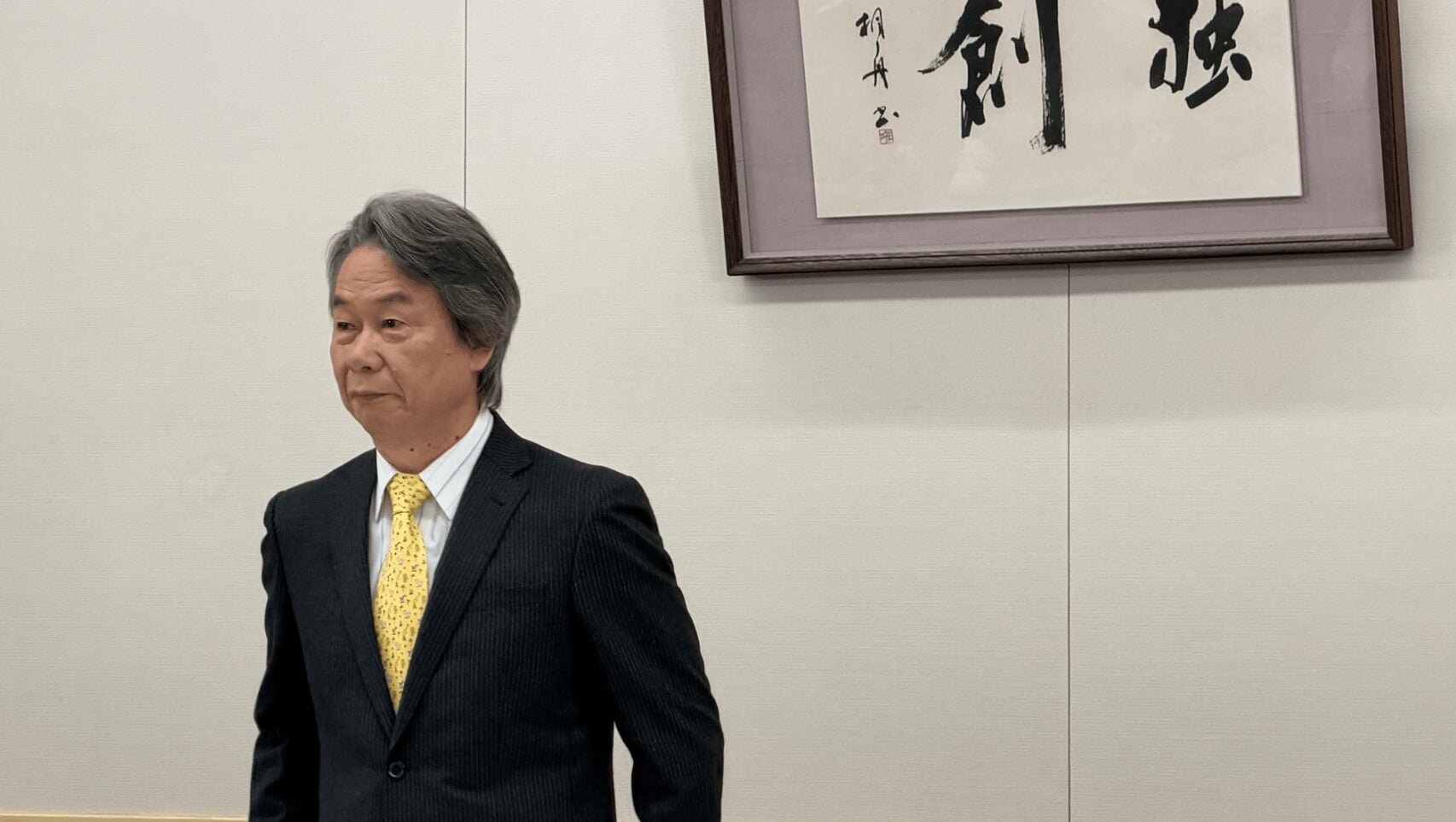
“The tricky part is that this labor can actually be quite enjoyable,” Miyamoto added, warning that, with lower barriers to entry for game developers, some will mistake the satisfaction of building something for the achievement of creating something genuinely good.
“While the act of creation is inherently satisfying, there’s a danger: one might find satisfaction in the labor itself and mistakenly believe that a high-quality piece of work has been created,” he said. “In that sense, the more AI replaces these tasks, the more it provides an opportunity to reflect on what’s really important, which I think is a positive thing.”
The Mario creator concluded that, rather than viewing generative AI as a threat, he sees potential benefits if the technology forces game creators to reconsider what creativity involves.
“Looking back at past designs, there are some that were created merely by copying and pasting. Yet, such work rarely stands the test of time; it lacks the individual’s particular design intention,” Miyamoto said.
“Because the process relies on an individual’s intent, with the computer serving as an assistant for the labor, I believe that even as technology continues to evolve, and even if AI were to eventually handle everything, there will always be a role left for us to play.”
Nintendo has stopped short of ruling out generative AI in the development of its games. President Shuntaro Furukawa has acknowledged the technology’s creative potential while warning of intellectual-property risks, while former Nintendo of America president Doug Bowser said its potential use was being discussed internally. Both have emphasized the importance of human creativity.