Sega says it will use AI in game development, but only in ‘appropriate use cases’
The company is aware that AI can “face strong resistance in creative areas”

Sega has said it will start incorporating AI into game development, but only in certain ways.
In a Q&A session following the publication of its Q2 financial results for the current fiscal year, Sega‘s executives were asked about the increasing costs of game development, and whether the company will go along with the trend towards larger projects, or look into more efficient ways of development instead.
The official response, as provided by Sega, is that the company will make use of efficient development methods, including the use of AI in game development.
However, noting that the use of generative AI has been a particularly contentious topic in recent years, most notably when it comes to its use in art roles, Sega says it will only use AI tools during development when it considers it appropriate.
“Rather than fully following the trend toward the large-scale development, we will also pursue efficiency improvements, such as leveraging AI,” the company’s official answer reads.
“However, as AI adoption can face strong resistance in creative areas such as character creation, we will proceed by carefully assess appropriate use cases, such as streamlining development processes.”
The topic of generative AI is one that is proving increasingly divisive as its use across the games industry becomes more widespread.
Earlier this week, Japanese news publication Daily Shinko cited a chief graphic designer at an unnamed Japanese game developer, who revealed that anyone who now applies for an art role now has to draw something during the actual interview process, to prove they actually have artistic ability and don’t just use generative AI.
“There are many people who claim that artwork generated by AI is their own creation,” they explained (via machine translation). “We’ve actually ended up hiring such people, only to find they weren’t productive, which led to several problems.”
The source warned that the situation could be changing, with upper management at his studio continuing to ask questions like “do we even need to hire creators when generative AI is good enough”, or “we should be hiring people who are masters at using generative AI”.
Further reading
Last month Shams Jorjani, the CEO of Helldivers 2 developer Arrowhead Game Studios, says he wants to see a “middle ground” in the debate surrounding AI, claiming that too many people sit on the extreme ends of the argument.
Discussing with The Game Business the difference between AI tools that replace creativity versus AI tools that increase efficiency – the example given was the use of AI to transcribe content versus being used to actually write it – Jorjani said this distinction needed to be addressed more.
“That nuance is lost, right?” he asked. “Sometimes we don’t end up with ‘let’s remove the stuff that nobody wants to do’ and instead it’s like ‘you know what, let’s actually never… all AI is bad AI’. We have a very similar approach. We don’t put any AI in the games, but if it can allow me to do my receipts faster, then that’s more Helldivers for everyone. Not Helldivers specifically, but you get the point.”
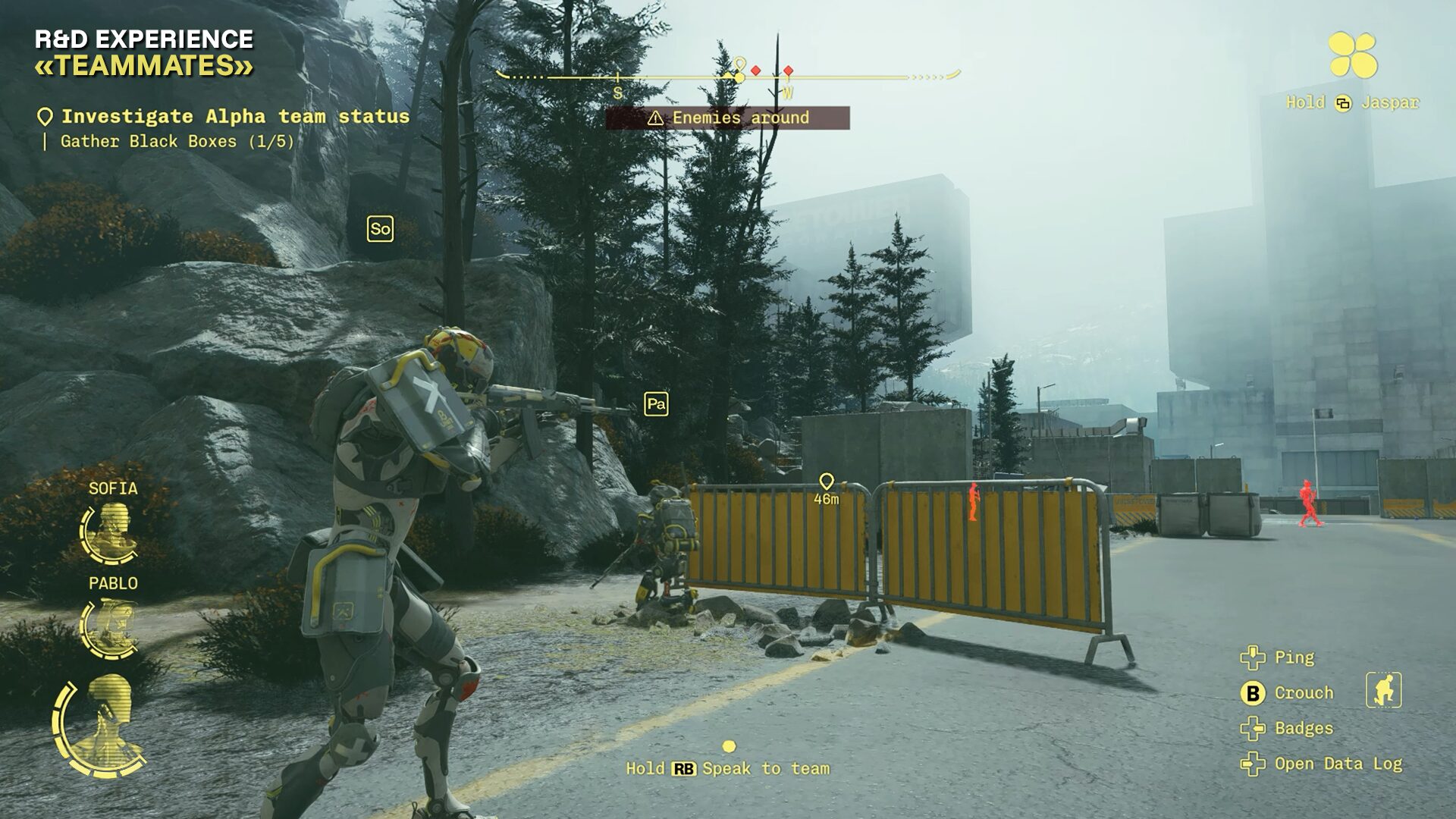
Last month VGC visited Ubisoft‘s Paris studio to try its AI tech demo Teammates, in which players issue commands to their AI-controlled squadmates.
“While this all works surprisingly well, and made me think for the first time that I’d genuinely like to play through a whole adventure like this, there are still plenty of issues that have to be navigated before a game using this technology can even gain widespread acceptance in the first place, let alone sell well beyond that,” we wrote.