‘I don’t think this is a good idea’: Veteran Bethesda world artist says Starfield having 1,000+ planets was the wrong move
“I would have done a handful of planets with bespoke layouts”, the Fallout 3/4 artist says
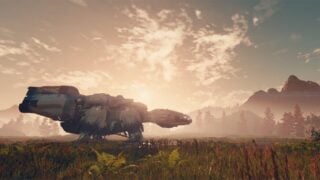
A former veteran environmental artist at Bethesda says the decision to have more than 1,000 planets in Starfield was the wrong move.
Nathan Purkeypile worked at Bethesda for 14 years, during which time he served as world artist on Fallout 3, Fallout 4 and The Elder Scrolls 5: Skyrim, as well as lead artist on Fallout 76 and Fallout 3’s expansions The Pitt and Point Lookout.
Purkeypile also worked as a lead lighting artist on Starfield in the game’s early days and worked on the Neon city in the game, before leaving Bethesda two years before the game’s released.
In a new interview with The Examined Game on YouTube, Purkeypile was asked if he would have changed anything about the way Starfield’s planet exploration worked.
He replied that if he had been the one to decide the game’s general structure, he would not have decided to include more than 1,000 planets in the game and would instead have focused on making a smaller number of more distinct planets.
“I would say it’s very accurate that if I was in charge of Starfield, I would have not done it that way at all,” he explained. “I would have done a handful of planets with bespoke layouts.
“Even playing Starfield after it came out, during the main quest I was running into repeated locations on the main quest, and I was like ‘well yeah, because you’re only going to have time to make a certain number of dungeons’, and if you’re going to have a thousand planets you’re going to be repeating content.”
“That’s not procedural, I call it ‘space quilts'”
Purkeypile stated that the plan may have worked well in his opinion if Bethesda had procedurally generated the planets, but that instead it felt like the first Mass Effect game, where players who landed on planets that weren’t part of the main story found a lot of repeated content.
“It’s not actually a procedural game,” he explained. “Those dungeons are built, they’re not going the full No Man’s Sky route or anything. So, even early on, I was drawing parallels to Mass Effect 1 and how those procedural planets with repeated dungeons played out. And I was like, ‘I don’t think this is a good idea’.
“Because to me, if you’re going to do the thousands of planets thing, you really need to go the full No Man’s Sky route and have it actually be generating unique content all the time, not just stitching stuff together in slightly different ways. That’s not procedural. I call it ‘space quilts’, where it’s just chunks of things getting rearranged.”
Starfield was released on PlayStation 5 in April alongside two major content drops. The first, Terran Armada, is a paid story expansion which introduces new characters, locations, enemies, quests, systems, and rewards.
The second, Free Lanes, adds free improvements to the game experience, including interplanetary travel, new encounters, new points of interest and dungeons, as well as a new land vehicle called the Moon Jumper.