Final Fantasy 7 Remake director explains why Part 3 being multiformat won’t compromise performance
Naoki Hamaguchi says PC is considered the lead platform and even the PS5 Pro version is optimised

The director of the Final Fantasy 7 Remake trilogy has explained in detail why making the third chapter a multiplatform release won’t result in a compromise in quality.
In an interview with Automaton, director Naoki Hamaguchi was asked his opinion on certain players suggesting that the decision to develop Part 3 with Xbox Series S and Switch 2 in mind – rather than developing primarily for Sony‘s consoles and optimising at a later date – could mean the overall game may be compromised to run better on those systems.
Hamaguchi replied that the decision to go multiplatform with the third game “will not in any way lower the quality of the third instalment,” adding: “Our development structure simply doesn’t work that way to begin with… I suppose I’ll just have to keep saying it.”
When it was put to him that some players would consider this marketing talk and that developers would never speak negatively about their game before release, Hamaguchi said he would “like to take this opportunity” to explain in detail “why there’s no need for concern”.
Hamaguchi went on to explain the development process in detail, in terms of CPU, GPU, RAM and storage media. Noting that the Switch 2 version is a Game-Key Card, he explained that there was no need to shrink data just to fit on a slower cartridge.
“As for RAM, the Switch 2’s ample memory means there’s little concern there,” he said. “The Xbox Series S does have its limits, but we already optimize for each platform individually to the absolute limit, so memory constraints on one platform don’t impose restrictions on others.”
In terms of CPU, Hamaguchi explained that the team’s philosophy is that if a game runs at 30fps on Switch 2 or Xbox Series S, it should be able to hit 60fps on a higher-end platform. “In other words, we don’t design the game to fully saturate a high-end CPU at 30fps,” he said.
“Instead, on hardware that lends additional CPU headroom, we scale density elements, like increasing the number of NPCs in towns. As a result, towns feel more alive on higher-spec hardware, while lower-spec systems may display fewer NPCs. So even when factoring in Nintendo Switch 2 or Xbox Series S support, CPU-related bottlenecks are unlikely.”
Finally, with regards to GPU, Hamaguchi explained: “As our fundamental principle, we do not design assets to meet the lowest baseline. Instead, we create them for high-end environments first.” The team therefore develops with a high-spec PC as its lead platform, and proceeds to scale the game down accordingly until it hits the lowest specifications.
According to Hamaguchi, PS5 and even PS5 Pro are categorised as “mid-range platforms” by the studio, saying: “Compared to high-end PCs, texture sizes may differ by roughly 1.5 to 2 times, mesh loading by 1.5 to 2 times, and polygon counts by more than three times. That’s how big the difference can be.
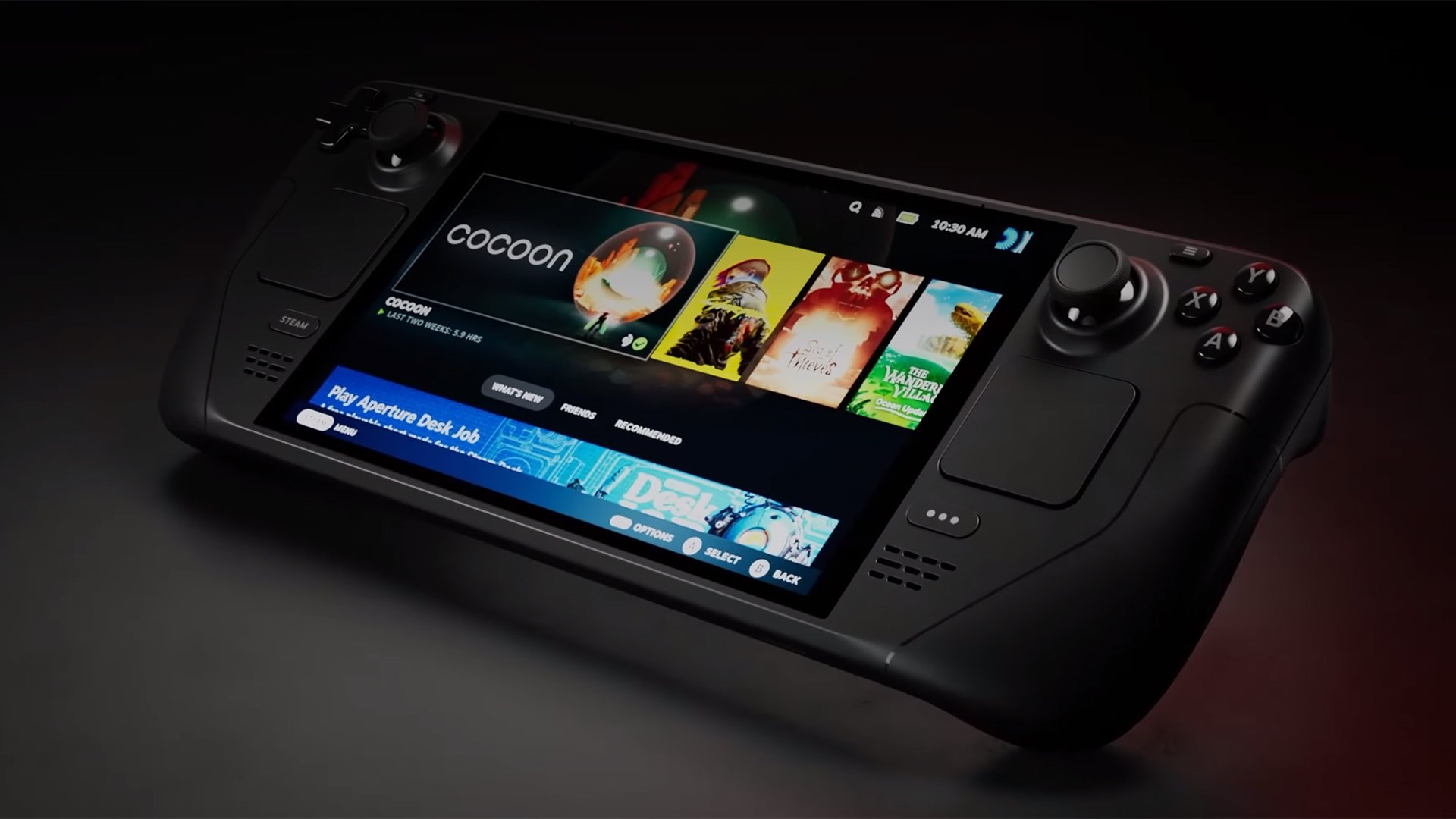
“Conversely, among currently supported systems, the one adjusted toward lower specifications is the Steam Deck, since it operates at less than half the PS5’s baseline. Therefore, I’d like to once again say that supporting multiple platforms does not impact overall quality.”
Last month Hamaguchi explained that the decision to stick with Unreal Engine 4 for Part 3 rather than moving to Unreal Engine 5 was because the development team has made so many adjustments to the base engine that sticking with it has made for a smoother transition to the third game.
“We’ve been using Unreal Engine 4, but we’ve made a lot of modifications to fit our needs,” Hamaguchi explained. “It’s more beneficial to have something we’re already familiar with and have customized to fit our needs.”