Female players are an overlooked opportunity for growth in the industry, research firm says
“There is certainly potential to expand the overall number of female gamers,” it suggests

The games industry is overlooking potential for growth by not fully accommodating female players, according to new research by Ampere Analysis.
The firm – which combines consumer research (with 46,000 global respondents annually), gaming market data and forecasts, and title-level sales and tracking data – says there are steps that can be taken to get more women interested in playing games.
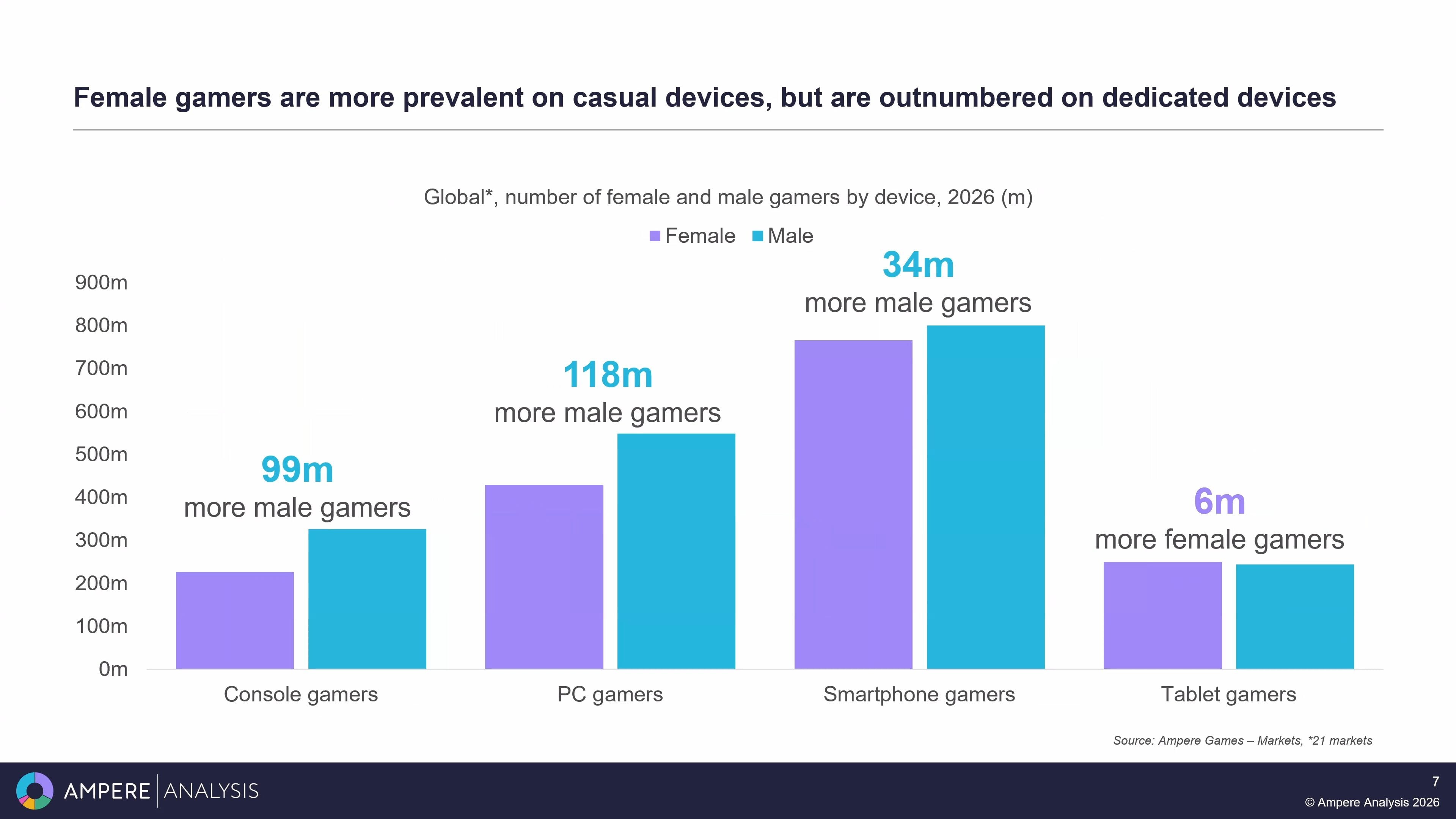
Women represent 48% of the gaming population – around 922 million players – across 21 markets, Ampere says. “But at such a large scale, this 4% difference does represent 93 million fewer female gamers [than male],” senior analyst Katie Holt said during a presentation held today.
This represents a gap in the market that could be considered “a missed opportunity, with potential to increase monetisation and engagement,” Ampere says.
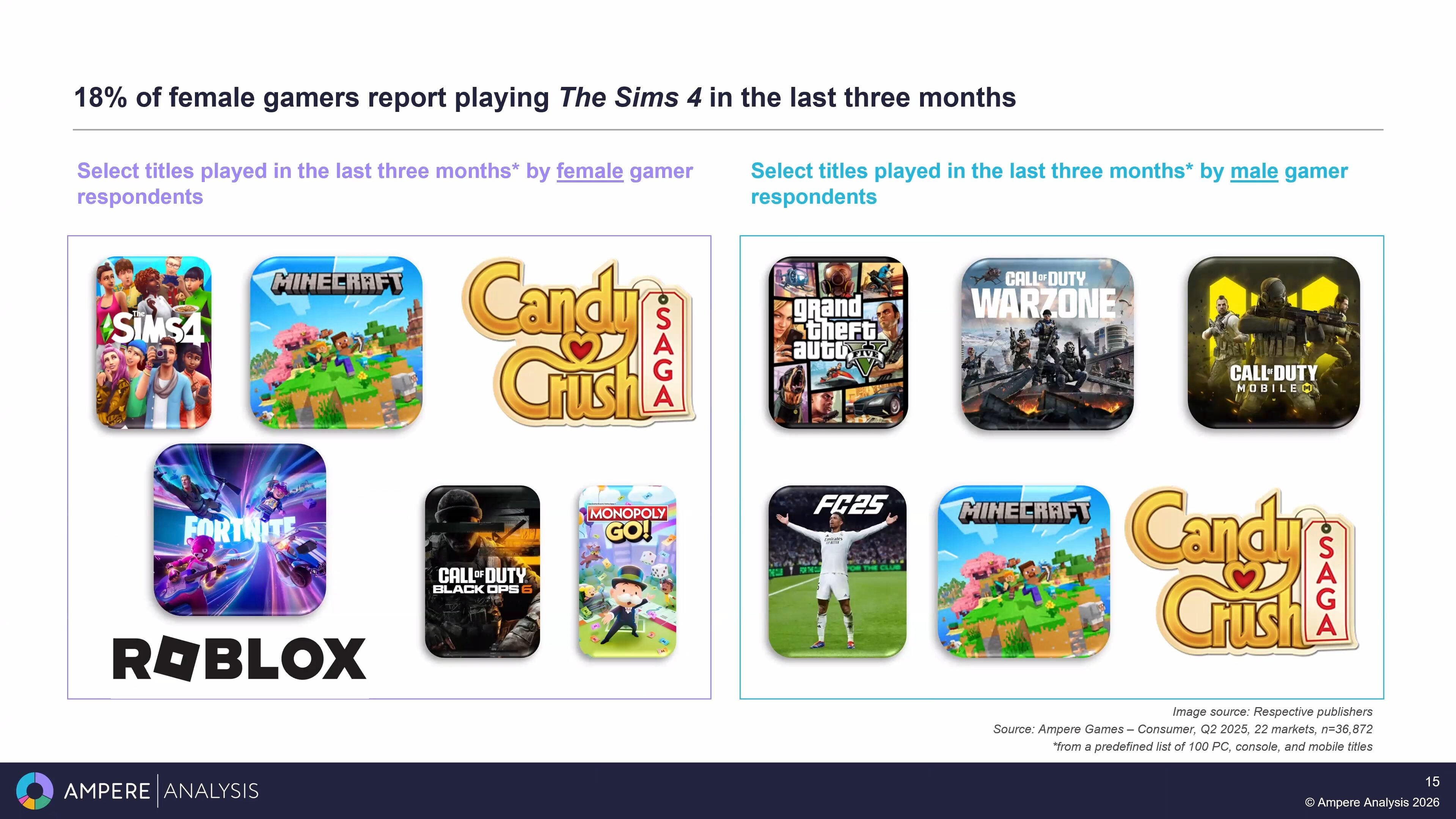
The company’s research found that women tend to prefer narrative-driven, single-player experiences over competitive multiplayer games, with 18% of those surveyed saying they played The Sims 4 in the last three months.
It also found that female players are more prevalent on casual devices like smartphones and tablets, but outnumbered on console and PC.
When given a list of 52 console console and PC games and asked which ones they played, only three titles – Animal Crossing: New Horizons, The Sims 4 and Roblox – had more female players than male. Conversely, when given a list of 50 mobile games, 13 had more female players.
It also noted that when given a list of reasons for not playing games, women are more likely than men to choose, “I don’t like the culture or community” or, “it’s hard to find games that suit my needs”, and less likely than men to choose, “I don’t have enough time” or, “gaming is too expensive”.
It concludes, then, that the main barrier to entry for some women isn’t a lack of money or time, but the lack of games with themes that appeal to them, and a gaming culture that doesn’t appeal to them.
“This indicates that there’s a subset of female non-gamers who are interested in gaming but lack the education around how to play these games and what content is out there,” Holt explained. “By creating entry-level content that is appropriate and marketing it effectively, there is certainly potential to expand the overall number of female gamers”.
In terms of creating content that appeals to players, Ampere notes that its TV and film research finds that women enjoy romance, drama and lifestyle (cooking, travel, fashion) genres significantly more than men.
“Pairing these with popular game genres and themes, like puzzle or simulation, and light-hearted or adventure, presents a significant opportunity for monetizing the female gamer audience,” Holt said.
Holt explained that by studying what themes and content appeal to female players, developers can not only introduce them to the medium, but also better integrate them into existing titles that may have more male-heavy player bases.
“Female gamers in Ampere’s sample were more likely to state that character customization was important to them than males,” Holt explained. “Fortnite has done a particularly good job of creating interesting first-party skins, as well as bringing in a variety of collaborations with artists and media popular among women. When the Sabrina Carpenter skin was introduced to the game, you would find gangs of Sabrinas dancing together instead of fighting.”
In terms of improving the culture and community for women, Holt explained that toxicity prevents some women from engaging with online communication, giving the inaccurate impression that online games aren’t being played by women.
“Colloquially and definitely in my own experience, women expressed that they avoid using voice chat in online lobbies due to toxicity concerns,” Holt said, “and this contributes to the misconception that we aren’t playing these games at all.
“Publishers need to prioritize moderation. With AI technology rapidly improving and lowering costs, we do hope to see this improve in the coming years. In the meantime, we’ve seen innovative workarounds through titles like Marvel Rivals or Arc Raiders who have introduced voice changers.”