Capcom: ‘AI is not for creating art, but to unlock the potential of creators’
Capcom staff go on the record about how they use AI tools, and how they won’t

“AI is not for creating art, but for unleashing the potential of creators,” according to Capcom’s VP of game development platform and AI solutions, Shinichi Inoue.
Speaking from Google Cloud Next 2026 in Las Vegas to 4Gamer.net, Inoue-san talks about how Capcom uses AI during development, and clarifies that Capcom is not using the tools to create art.
This follows on from Google Cloud’s Jack Buser saying, “I think what players don’t realise is that their favourite games right now were already built with AI,” in April, suggesting that Capcom was one example of a developer utilising AI.
Now, Inoue-san seems to be clarifying how Capcom uses AI, and that AI cannot replace human artists because of “sensibility,” among other things.
“AI is developing rapidly and possessing increasingly advanced intelligence. At times, it surpasses most humans, and I feel that it has even surpassed the best humans,” Inoue-san tells 4Gamer.net (via machine translation). “On the other hand, what we in the entertainment industry consider extremely important in relation to this intelligence is ‘sensibility.’ Even AI with the highest level of intelligence still falls short of our creators in terms of sensibility. Therefore, focusing on sensibility is more efficient in terms of resource concentration from the perspective of human capital management, and is also important for coexistence with creators.”
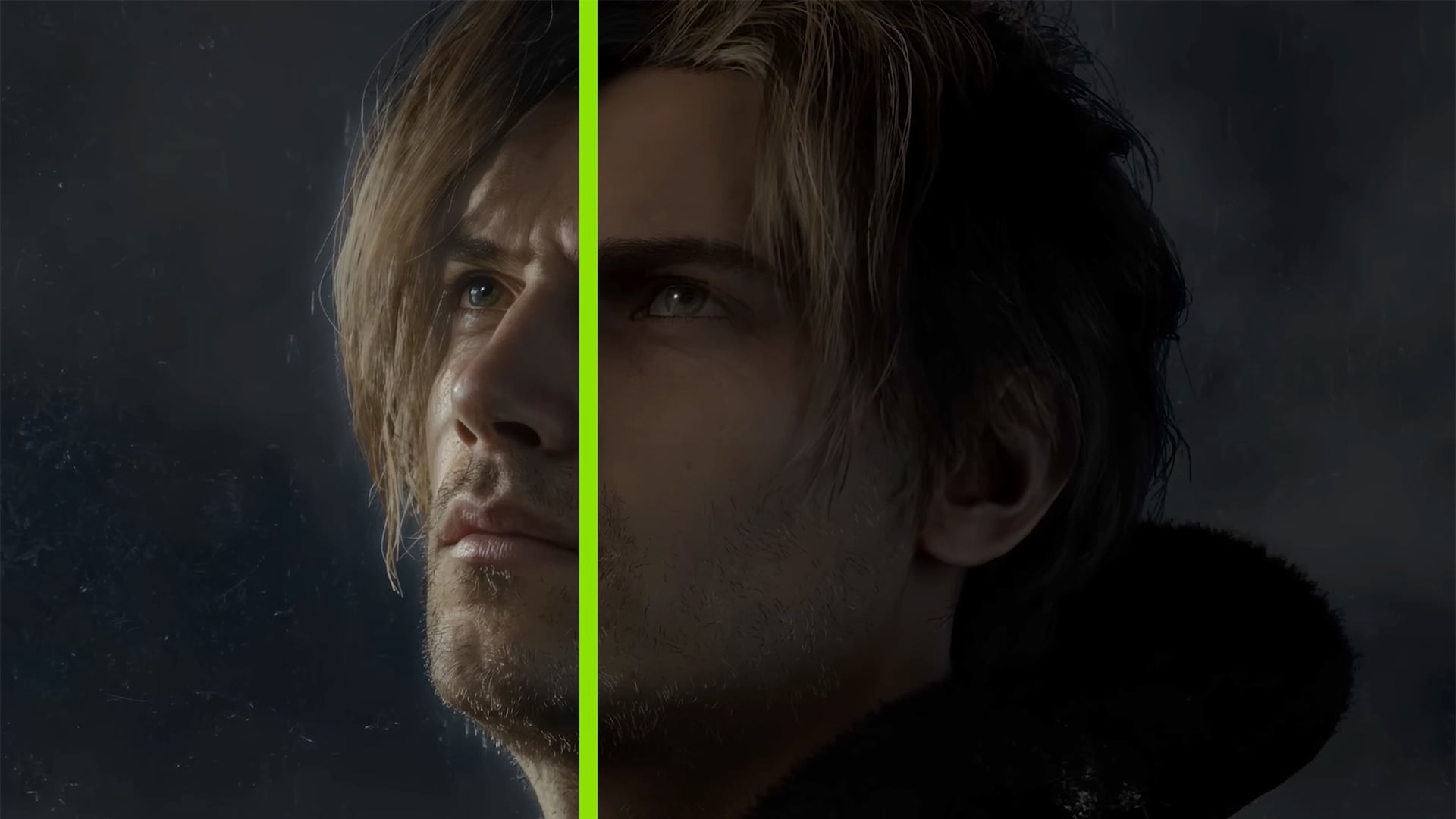
An example that Inoue-san gives is with debugging. “The AI reports to a debugging check agent, but instead of leaving it to humans, an agent that checks the director’s concept first evaluates it. A huge number of such checks and evaluations are performed while humans are sleeping,” Inoue-san explains. “Then, it screens out things that are highly likely to be ‘wrong from the game’s concept’ and presents them as a general framework. Therefore, it feels like the AI has checked everything in advance, and humans are not required to perform a huge amount of checking work.”
Capcom technical director, Kazuki Abe, was also present and wanted to emphasise the importance of human creators. “The goal is to replace the routine tasks that arise in conjunction with creative work with AI,” Abe-san explains. “Humans must always guarantee quality, so humans control the input where commands are given to the AI and the output where the results are produced. We are building a system that allows the AI to efficiently handle the intermediate steps.”
Game development has become increasingly difficult and expensive over the course of the last few decades as the demand for visual fidelity and mechanical complexity has increased, and Inoue-san wants to use the new technology to return to tradition.
“The idea is simple. We want to return to the state of the past, when people discussed interesting ideas, reached a consensus, and then brought them to life,” Inoue-san continues. “Back then, everyone involved in development fully understood the context and intentions, which allowed for maximum performance.
“That’s why we want to provide a contextual model for person-to-person communication and clarify intentions. Our ultimate goal is to provide a medium that facilitates collaboration.”
Earlier in May, Capcom developers went on the record to say that the development team “got the design right” after fans expressed their distaste for DLSS 5’s version of Grace Ashcroft.