Wolverine directors explain why Insomniac’s latest game has the Weapon X-factor
VGC goes hands-on with Wolverine then sits down with its game director and creative director

Stepping out of the bus which had ferried us north of Los Angeles to Burbank, the Summer heat was already beginning to beat down on us at full force, despite it still being the early hours of the morning.
It felt appropriate for the occasion – while the West Coast of the US had been spared the bulk of the heat wave that had been arresting the rest of the continent, there was a tension in the air for what this week meant for Insomniac Games, and its current project.
Later that week, the studio’s leadership would be heading a few hours south to San Diego to showcase Wolverine at San Diego Comic Con, as one of the convention’s much hyped ‘Hall H’ panels. While the team were no strangers to SDCC, having developed 3 other titles under the Marvel umbrella, crucially Wolverine is the first to step away from the framework that the team had been utilizing since Spider-Man released for PlayStation 4 in 2018.
“At the heart of Spider-Man, every decision flowed down from ‘how can we deliver an authentic experience where you feel immersed as this particular character?’. We took that same philosophy to Wolverine; we know we want to deliver the ultimate Wolverine game.”
Speaking to VGC, Game Director Mike Daly and Creative Director Marcus Smith gave an example of how the team has tailored the game’s design to Wolverine as a character. Instead of swinging from rooftops, Wolverine has a weight to him – they want players to feel how he leans close to the ground, how his claw combat is intimate and visceral, and how his healing factor and animalistic rage aren’t something directly at his control.
“We knew that in order to authentically represent that character, it meant sort of embracing this character’s violent nature, and not looking away from it. That led us to a more mature tone, and sort of unopened the door to a sort of more nuanced emotional maturity as well.”
Mike Daly described Wolverine’s appeal as a character that hurts so much, but keeps going despite all of his anguish. “To really understand Logan, you have to get through his outer shell, realize he has this big heart, and empathize with him as a human… so that you can finally understand just how much he’s hurting inside. Despite those physical and emotional struggles, he’s relentless – he keeps going anyway.”
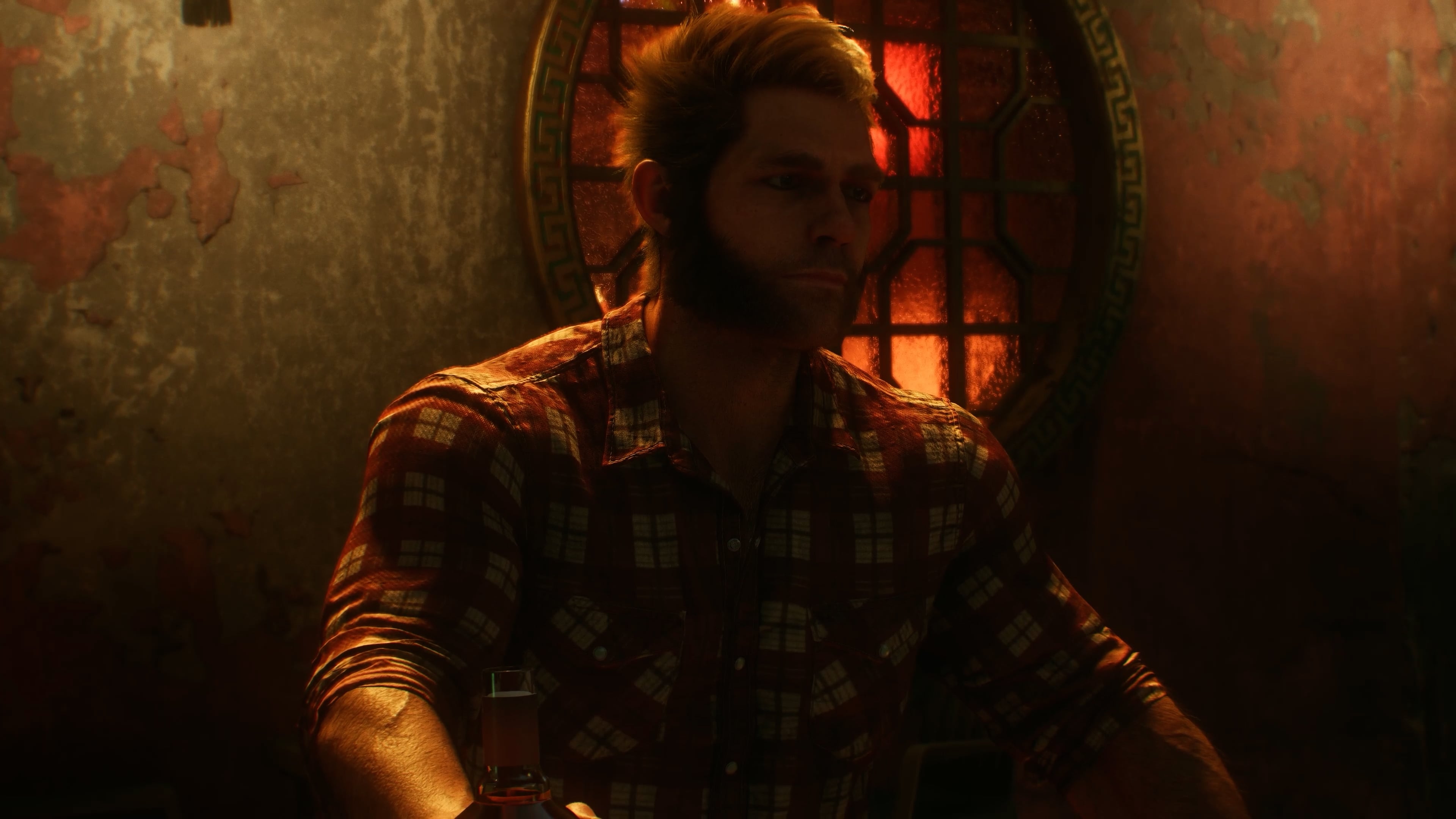
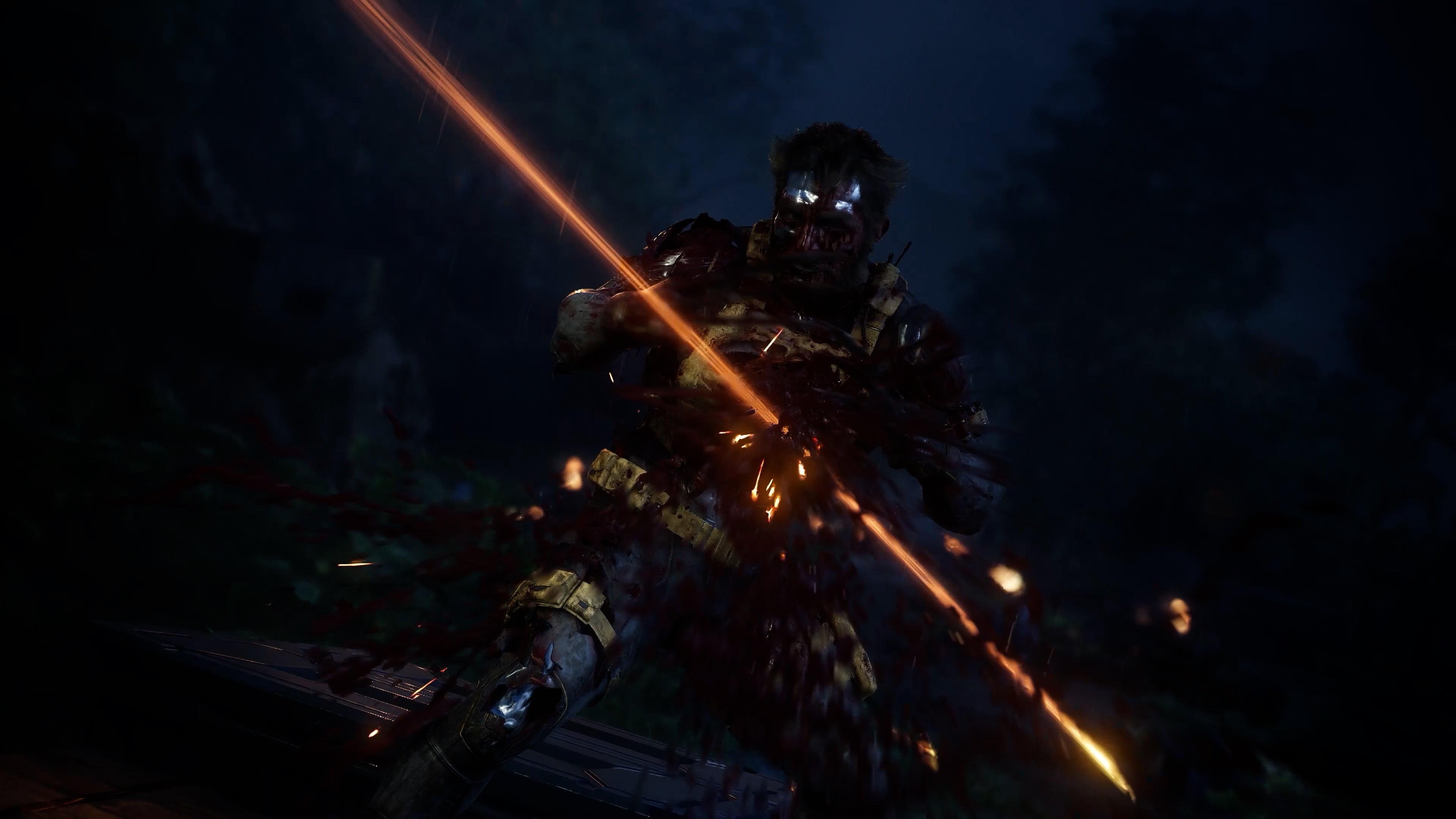
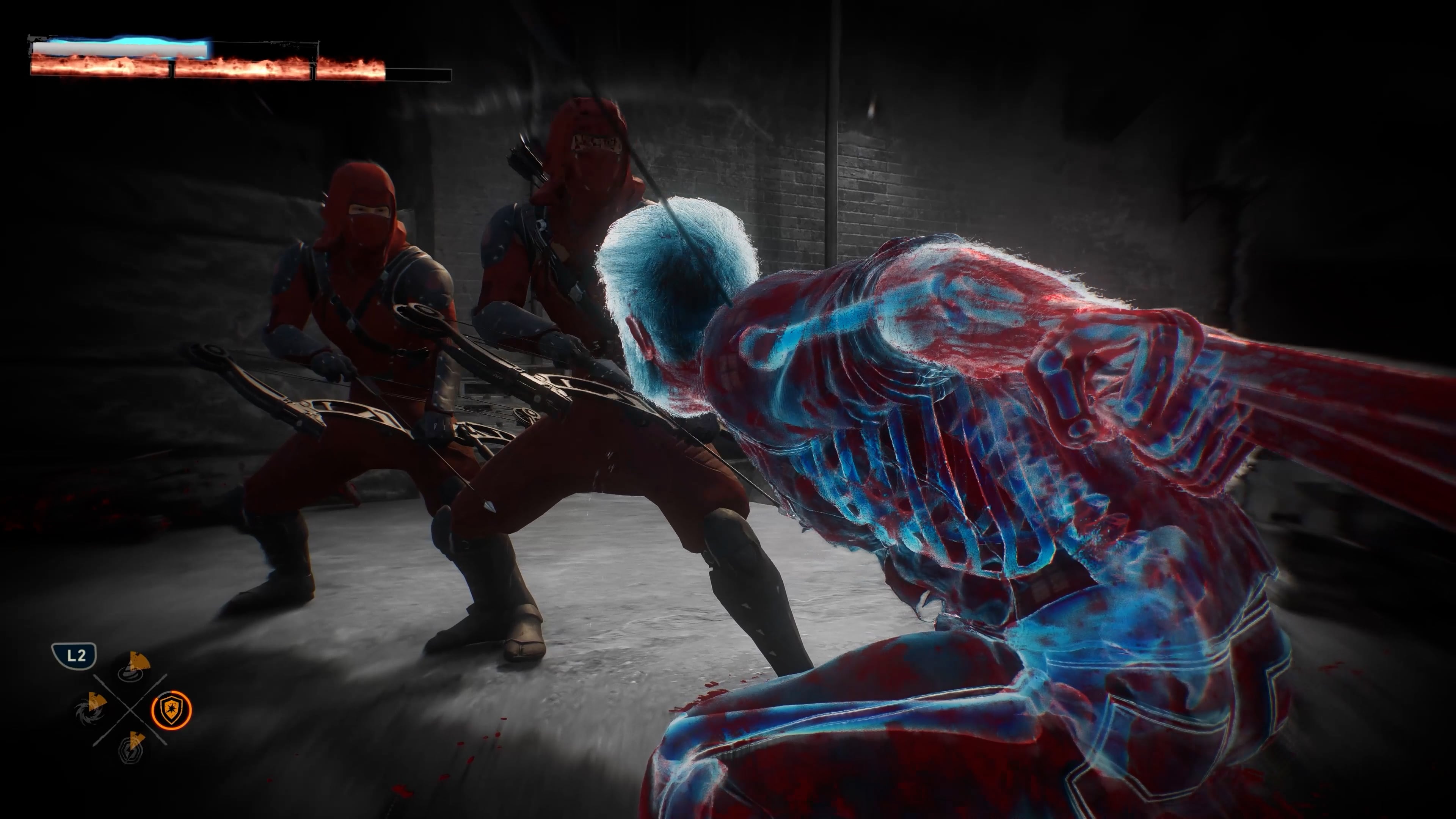
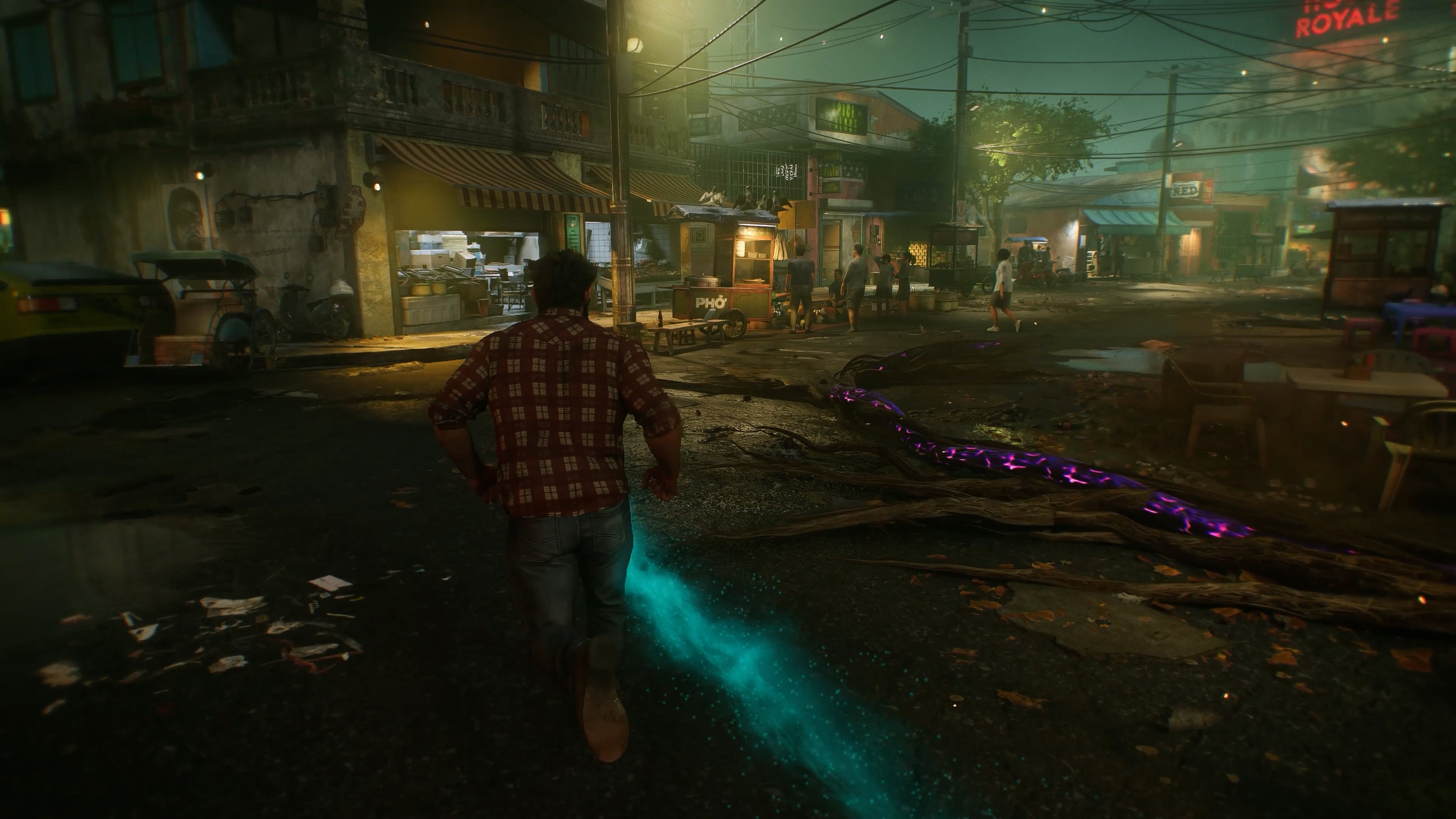
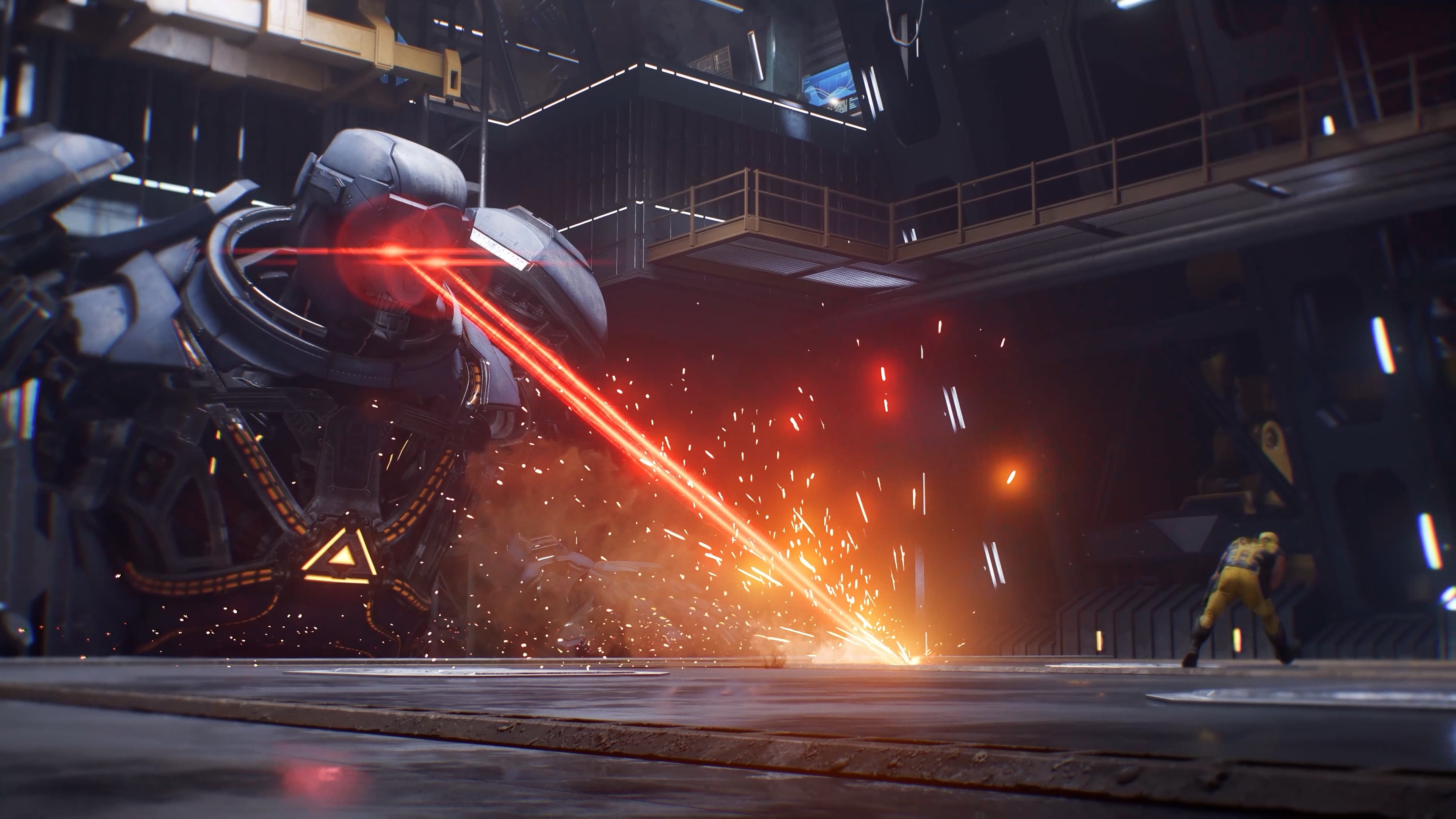
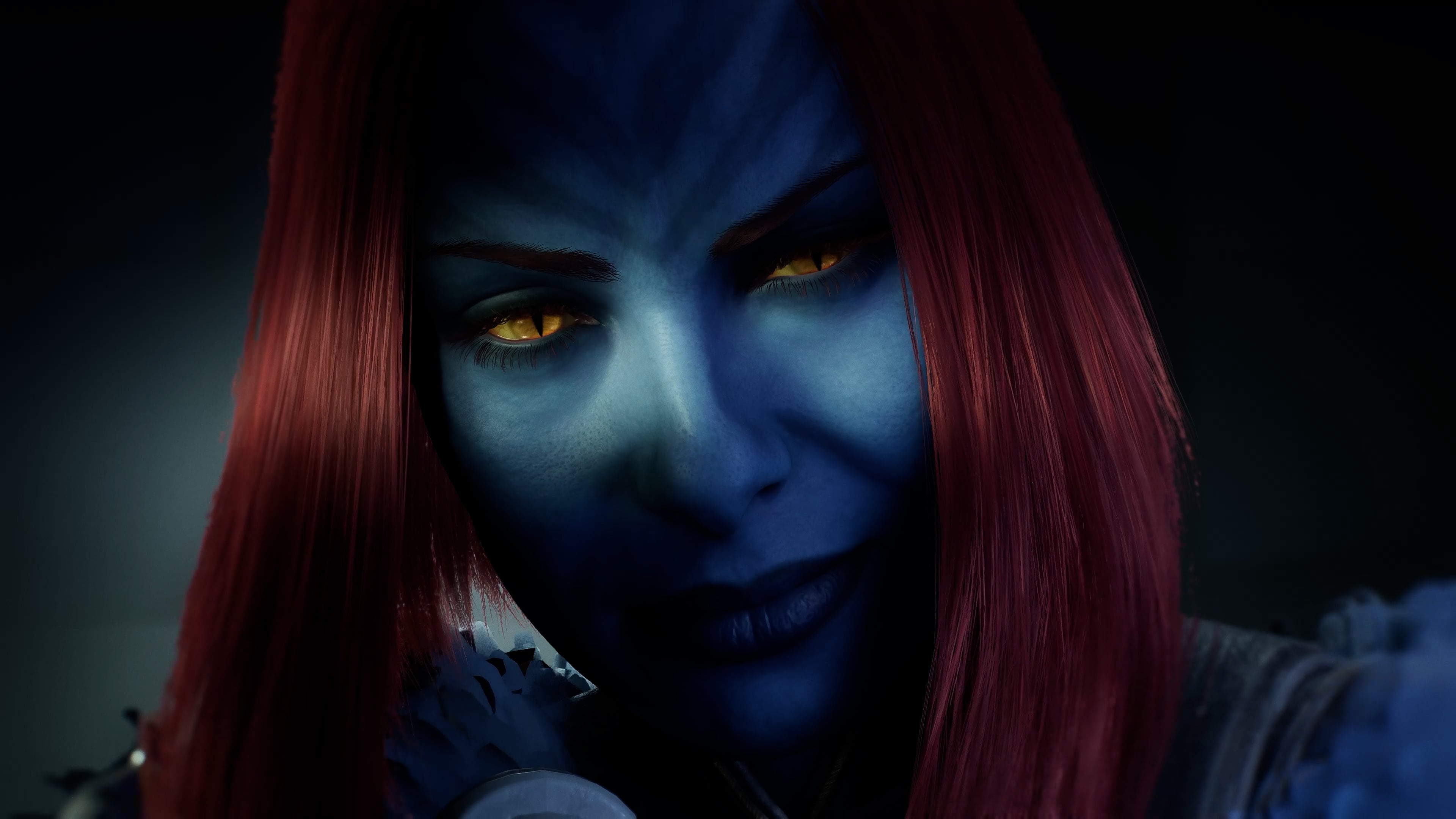
To that end, just as Peter Parker’s character influenced the type of game that Insomniac chose to represent him, the same holds true for Logan. Rather than a connected open-world, Wolverine shoots for a linear cinematic action game approach. For your friendly neighborhood Spider-Man, it made all the sense in the world to center the experience around New York City; for the globetrotting Wolverine, this felt much more in line with his character.
Q&A: Wolverine
What considerations did the team put into game structure? Obviously, Wolverine is a broadly linear experience, whereas the Spider-Man titles were open world. What are the philosophies there, where they’re both superheroes, but things couldn’t be more different in terms of scope?
Daly: When you look at Spider-Man, he’s a friendly neighborhood crime fighter. It makes sense for him to experience New York City. When we looked at our favorite Wolverine stories, he’s always getting into trouble – not because he’s driving it, but rather he got sucked into it by a sense of duty. This, and because of his long destroyed past, takes him all around the world. He’s not anchored.
So, what we wanted to tell was a story that felt like it had that comic book roller coaster narrative that goes around the globe and exposes you to a ton of different characters, enemies and locations in a dense succession. From that, the structure seemed clear – let us tell this linear narrative that really can concentrate on the storytelling aspect of Logan’s journey.
Smith: In terms of what Mike said – we’re basing it off of ‘how do we embody the player fantasy?’ Obviously, webslinging is very important to Spider-Man – open world makes perfect sense for that, in a ‘grounded’ New York City. But, you do play missions in that game, and I’d say the philosophies of mission design is very similar to what we do on Wolverine, what we’ve done on Ratchet & Clank: Rift Apart, and so on. We didn’t have a big philosophical shift – it’s more of bringing things tighter in.
The camera’s tighter in, Wolverine is not somebody who webslings. In fact, he’s 500 pounds of an adamantium skeleton. It means he’s going to be a lot more grounded, and everything is going to be a tighter experience. So that was the only major difference, was we’re doing a much more curated and linear mission design. But it is, at the end of the day, not that different from Spider-Man.
You mentioned storytelling, and I do know when you introduced the game to us earlier this morning – you very specifically said, this is not an origin story. That being said, it’s very clear that Wolverine as a narrative is very focused on legacy, and “scars of the past”. What would you say is informing the pacing of how Wolverine’s past is getting doled out across the story?
Smith: First of all, being an unreliable narrator is kind of in the DNA of Wolverine, and we wanted to make sure that we were telling an original tale in that regard. That’s why I say this is not an origin story, because we’re not talking about how adamantium was introduced to his skeleton. But, we’re also mixing and matching some of the canonical timelines of other media.
For us it was important to start off with a story that can highlight Wolverine as a character – because of that, there’s no X-Men, largely because as soon as you introduce those giant personalities, all the oxygen gets sucked out of the room. Then it’s not a Wolverin” game.
So, what is going to make the best Wolverine game? We start with kind of a greatest hits. What are the things you think of? We know we’re going to have certain locations, certain characters – then we start building, what is the arc of that story? Paramount to that is what does he know, and how can he learn about these things through interactions with other characters?
A lot of times we have characters that we really wanted to use, we thought made perfect sense, but then didn’t fit the arc and kind of got phased out. Other characters come in and serve the role of facilitator to try to sort out the past, but it all goes back to what serves that narrative storyline that suits Wolverine as a character, first and foremost.
Daly: Yeah, so Wolverine’s a character who has many sedimentary layers of lost memories. So, as the story progresses, you know, it’s kind of fun to peel back one layer at a time, and it always seems to get deeper.
Initially, we open up with like, it’s mentioned that he left Team X – why is that? It’s a question we ask. We don’t take too long to answer it, but it always leads into the next question. Like, why are The Hand here? Why is he familiar with them; what’s the past there? So it kind of goes on that remembering the past is an omnipresent element of the story, but it just gets deeper and deeper.
On top of that, you get a chance to see the Nightmare Doors, which are like a physical manifestation of him trying to explore what’s going on in this crazy brain of his, and struggling to unlock what’s hidden there. That’s a player-driven optional layer of memories from his past that you can unlock as well, that acts as an extra layer of depth beyond the main narrative, and the reveals of the cinematics.
If you’re at liberty to say, about how long do you expect the game length to be – is there anything you can discuss about possible New Game+ at this point?
Daly: As far as game length goes, we don’t have an exact figure for you. Obviously, mileage varies wildly depending on how much optional stuff you engage with. But, speaking of replay value, I can say that even in your first playthrough, whenever you get to a Nightmare Cabin you can immediately replay any of the missions you’ve completed so far.
By doing that, you can sort of complete the collectibles if you want to, and that feeds into your progression in the main campaign. So, your first time through the game, you don’t have to worry about catching every single thing as you go – if you really want, you can go back and get what you missed. That’s built in from the beginning of the game.
On the disc, New Game+ is supported: you can carry over all your progression, you can start the story again. Our goal was to make the second playthrough as fun as the first. So, to spice things up, of course it’s fun at first to basically go through and stomp everything with your awesome kit, but we also added a few New Game+ specific additions.
They’re optional, but you can mix and match them, turning on the ones you’re interested in. That can really accelerate combat in the game and make it feel extreme, in terms of how quickly you can take out enemies and in terms of how quickly you can get a game over if you’re not careful. In a way, it almost makes it feel even more like the Wolverine fantasy that a lot of people were aiming for.
We had the chance to check out how this all holds in practice, with a roughly two-hour demo stretched across the opening hour and another moment slightly further along in the game. Controlling Logan feels like you’re steering a beast – while he lacks for the webslinging technique of Spider-Man, he’s by no means a slow or unwieldy character to play.
Holding down the right trigger allows you to sprint at full tilt – the Triangle button lets you lunge at enemies while the Square button is used for basic combat. While you can dodge, most attacks are best countered by parrying with Wolverine’s claws. It brings to mind a mixture of Rocksteady‘s Batman: Arkham combat, and Respawn‘s Star Wars: Jedi.
Special skills that can be unlocked by investing resources earned from levelling up and completing Nightmare Doors – timed combat or platforming rooms that also unlock bits of Logan’s memories in the form of lore drops – while passive skills can be equipped depending on your number of gene slots. Exploring levels can lead to you finding resources that can be spent crafting new outfits: craft enough, and you’ll upgrade your maximum HP at the same time.
A core element of combat is, of course, Wolverine’s healing factor. While you’ll replenish HP out of combat, and specific upgrades can help you replenish more health with finisher combos, most of the time it makes itself known in combat via Logan’s rage.
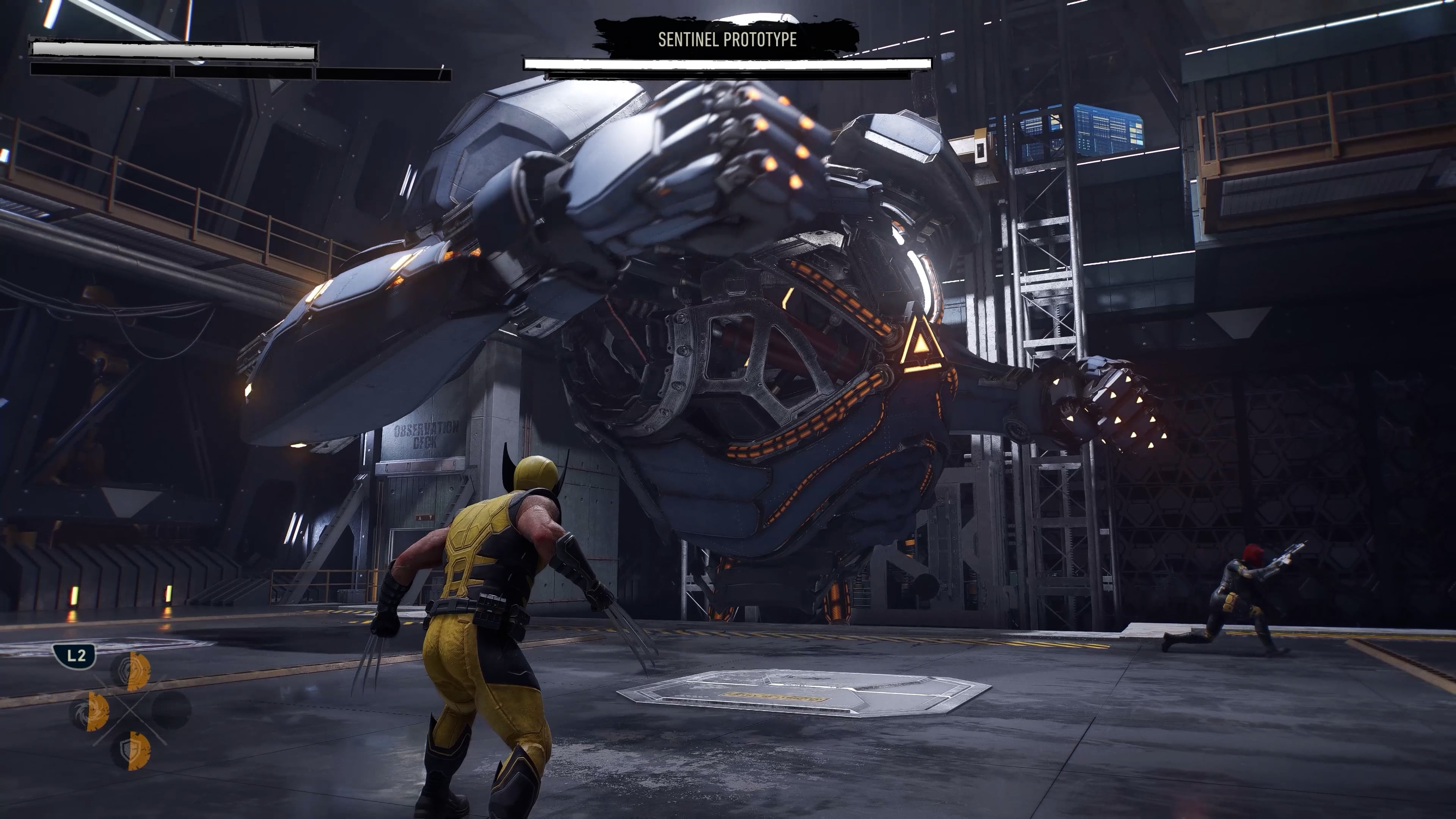
Dealing damage slowly builds up Wolverine’s rage, with each segment corresponding to an increase in his anger. The higher his anger, the more relentless his attacks: max it out, and Logan will automatically enter a primal rage, greatly increasing the power of his attacks, while depleting the gauge over time.
What sticks out most about this mechanic is how little players have control over its function. As a means to showcase Wolverine’s emotional instability, the team has made the deliberate choice to leave it out of the player’s hands.
“That was a distinct challenge, because a simplistic healing factor of just, like, your health regenerates over time incentivizes slowing down the pacing of combat, because instinctively you want that HP. That also ties into this other element, which is Logan’s got this rage. It’s like this wellspring coming out of him.” Smith relayed that connecting these two systems ended up being foundational.
The decision to tie those two components of Logan’s character led to the Rage system. If players run out of HP, but they have a bar of Rage, Logan can jump back up into the fight as a safety mechanism. Yet, on the other end of the equation is the showcase of Logan’s unbridled aggression. Once his Rage is maxed out, it’s out of the players’ control – they have to roll with it, just like Logan.
Insomniac has made it a point to meld the gameplay and storytelling as best they can. During the opening moments of the game, players will run into machines that can disable your healing factor, forcing you to destroy them in order to regain its use. Those same machines are present as a narrative framing device to help build tension, since you know what they can do to Wolverine outside of cutscenes. This becomes a race against time, as you try to restore a captured mutant’s healing factor before a bullet in their heart kills them.
During our visit, we also had the chance to tour some of Insomniac’s facilities, and it’s clear that this passion for Wolverine’s world and characters permeates the entire team. Insomniac proudly showed off its body and facial-scan rigs, Spiderscan and Cerebro, as well as its motion-capture studio and audio-mastering room. Everywhere we visited, Insomniac employees proudly rambled about their specific part on the project, and how it went into making Wolverine truly special, in a way that only a modern AAA production really can.
Insomniac’s scanning rigs are stationed in two rooms, directly across from each other. Both were developed specifically and internally for work on Insomniac’s Spider-Man projects, as ‘Spiderscan’ might give away. We were given a brief example of how both are used, with hundreds of high resolution cameras working in tandem with software to capture as close to a perfect scan of a subject.
While each has its own quirks, the core idea is the same for both the full-body and facial scanners, with actors tasked with showing a range of expressions to help complete the data. With the full body scanner, this means sometimes flexing muscles or taking a few poses. For the facial scanner, this means sitting in place and making a number of different faces for an extended period, in the dark.
Insomniac’s motion capture studio, then, couldn’t be more different in practice. While the body and facial scanners are restrictive, and ask actors to hold deliberate positions, the motion capture studio is spacious. Computers around the perimeter showcased how the team can overlay rough 3D models of characters on top of performance actors in real-time: a trampoline leaning against one wall of the set gives an idea of some of the stunts particularly arduous shoots may entail.
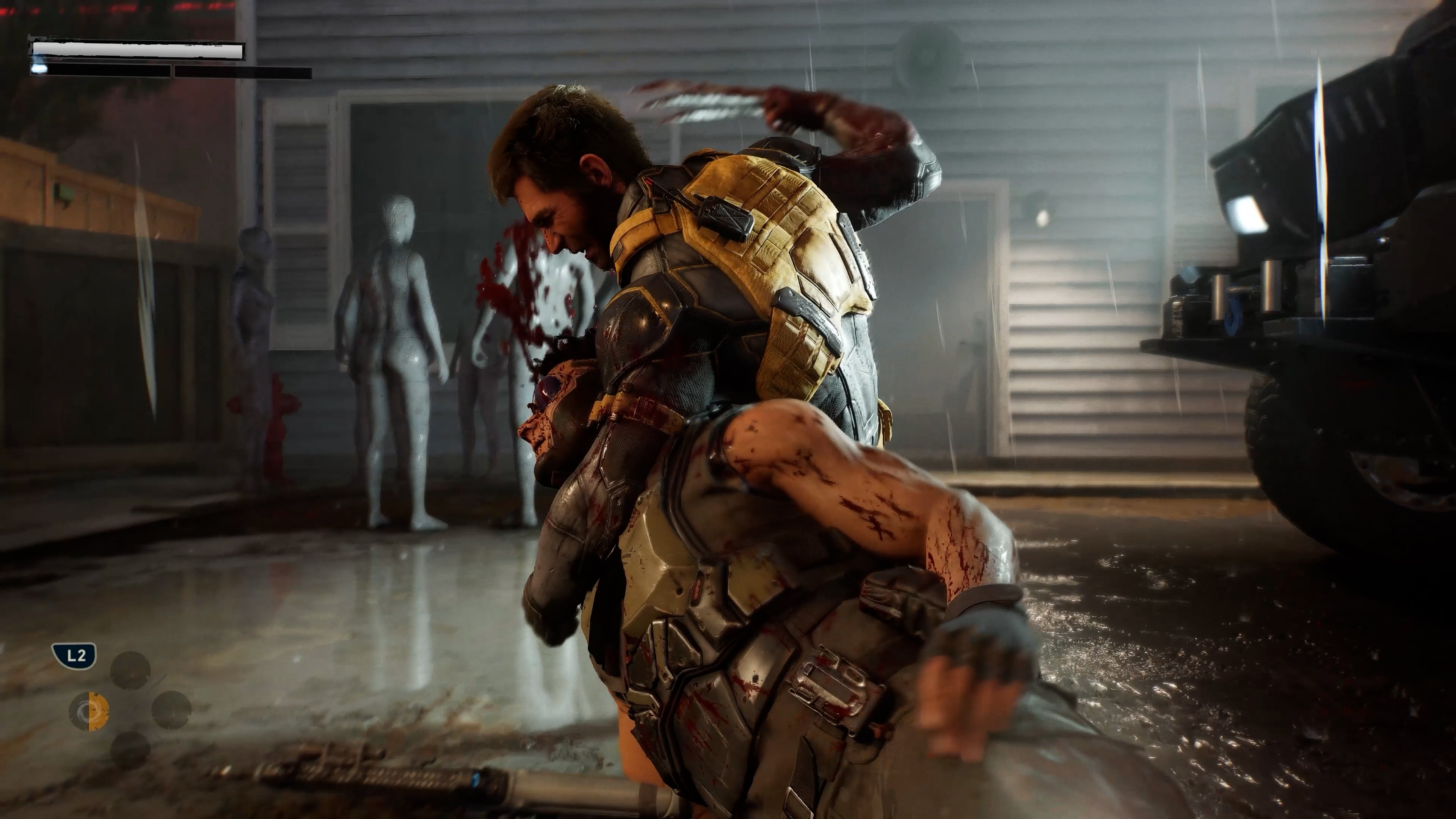
As if to showcase the pipeline of realizing these characters and the world they live in, the last stop for us was the audio mastering studio. While the office outside is lively, the moment the door is shut all becomes quiet. Here, we were treated to a demonstration of how Wolverine has been mastered for a 7.1 surround sound home theater setup. During the demonstration, the audio team went at great lengths to emphasize how Wolverine’s gore audio in particular was layered with explicit sounds for his claws puncturing skin, muscle, and then bone.
While our full gameplay session unfortunately didn’t offer us the chance to play with a full surround sound system, it feels noteworthy that this was my first time using a Pulse 3D Wireless headset. Back on the PlayStation 4 I’d experimented with 3D audio, but the mix of poor audio clarity and frankly disappointing hardware on the headset side of the equation had left me whelmed. While I can only speak to a short session with it, Wolverine felt like a compelling argument for picking up a Pulse 3D headset in the near future.
Returning to that studio tour, the message being relayed was received loud and clear: no expense was saved when it came to bringing Insomniac’s rendition of these characters to life. To that end, both Daly and Smith have nothing but praise for Liam McIntyre, Logan’s actor in the game.
“Well, I think that kind of started with casting. I would say, when we were searching for who was gonna represent our Logan, the face is a big part of that, but we had a tough challenge there because it’s easy to sort of accidentally deliver a character that doesn’t feel like the version you want it to be. In that respect, we got really lucky finding Liam.”
“You know when you see his performances. You’re just like… that’s it. This guy is Logan.”
One of the reasons that the team labored over who to base their Logan’s appearance on was the fidelity that they needed in order to sell the story moments that they wanted to tell, which is where all the fancy scanning rigs and motion capture come into play.
“How he presents himself, his range of expression, that went a really long way to helping us understand Logan’s look. Beyond that, we knew that with a character like Logan, the camera’s gonna be closer. We want to deliver in gameplay, so you can see the claws connecting to the other body, and, as you know, this is a cutting edge game releasing in 2026, with higher fidelity characters. One of the tech investments we made was to bring that cinematic quality appearance to the gameplay, and not just the cutscenes.”
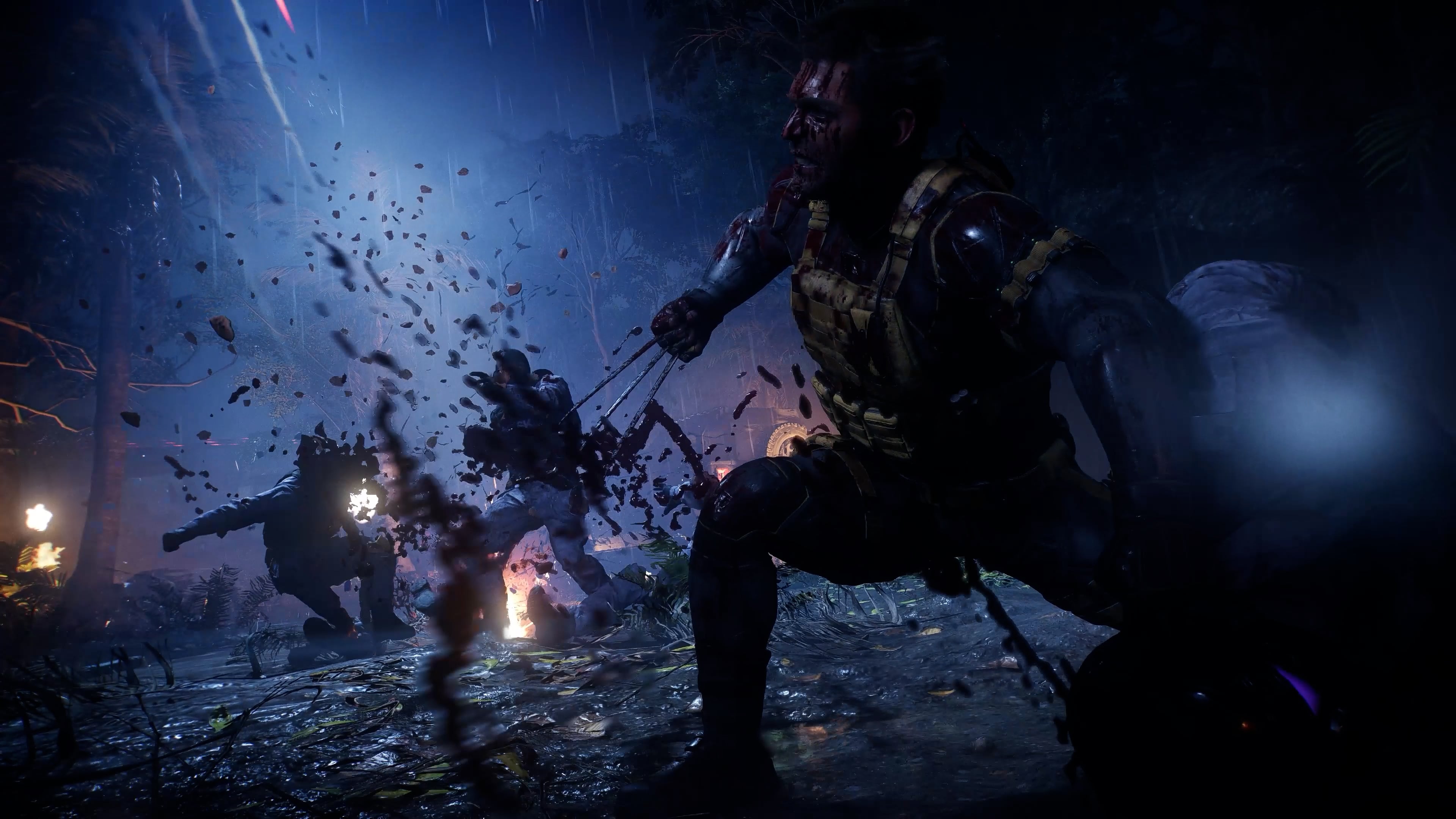
Daly remarked about how cinematic visuals has remained a cornerstone of the project. Part of that investment included a focus on the hair that so many have commented on.
“You know, our director tackled designing the suit and figuring out the details of his body, and from that, we knew we also had to make a big tech investment in higher quality hair that could be more carefully groomed, and stood up to the forces of weather just that little bit better,” he told us. “That all comes together in very careful, meticulous attention to detail that bring Liam’s face onto Wolverine’s carefully crafted body, to manifest Wolverine in the best way we could.”
Smith sidestepped some of the grandeur to get at the core of the issue. “We’re trying to make the ultimate Wolverine experience. Wolverine is short and hairy. In the comics he’s 5’3″, and we did our due diligence. We’re not going for Hugh Jackman, 6 foot whatever. We’re in the middle a bit, around 5’7″. So we tried to keep the spirit of it, that he’s short, hairy, and full of passion.”
Smith remarked that while Logan would be at crotch height for Sabretooth, at 5’3″ in gameplay he would have ended up at crotch height with everyone whenever he was hunched down.
Speaking more directly to the reception to Wolverine’s hair during the recent State of Play, Smith expressed some surprise at the scope of the responses. “To be honest, the hair technology made a bigger impression than I was expecting,” he recalled. “We watched the gameplay reveal, and a lot of influencers were just like ‘now that’s hair, whoa’.”
The team’s focus on Wolverine’s animalistic nature doesn’t just stop at his character design, or even the Rage system – if anything, it’s as core to the game’s identity as anything else. Speaking to how some players may have complained about hand-holding in more recent Sony first-party releases, Daly remarked how Wolverine was designed with a different state of mind.

“You’ll notice that the UI in this game is intentionally pretty minimalist. Going back to the Spider-Man example, his HUD fits Spider-Man because he has a visor and he is a thoughtful guy who wants access to a lot of information. It feeds into your decisions, knowing what all the numbers are. Logan is very different: we want your eyes, and your thoughts, to be on the world.”
To that end, the team wants any ‘nudges’ for players to head in the right direction to be diegetic, and something they have to seek out for themselves. An example is the now classic ‘objective trail’ – in-game it’s actualized as Wolverine catching a scent. Some cutscenes even playfully draw attention to this, with Wolverine pointing to his nose when asked how he found someone.
That playfulness permeates through the rest of the game’s story. Wolverine comes with a markedly darker tone, but there’s a balancing act with Wolverine, Jean Gray and the rest of Nathaniel Essex’s crew. While the X-Men don’t exist in Insomniac’s universe, or at least not yet, mutants still have each other as their family – even if all the intricacies of those relationships aren’t immediately obvious to us with what we’ve played so far.
While it’s too early to say how things will shake out with the full release, and the team are keeping things vague regarding how long they expect a playthrough of the game to take players, the team’s enthusiasm is infectious. As I finished my interview with Daly and Smith I wished them luck with SDCC. Comic fans are fickle, but something told me they had nothing to worry about – the first step to a successful story is believing in it yourself.