I came away impressed by Tides of Annihilation, a Chinese studio’s Bayonetta-like take on British myth
Players are all too accustomed to exploring Eastern settings through a Western lens – yet here, the tables are turned

After traveling 5,500 miles to Chengdu in southwestern China, I find myself – against all odds – walking around the British Museum.
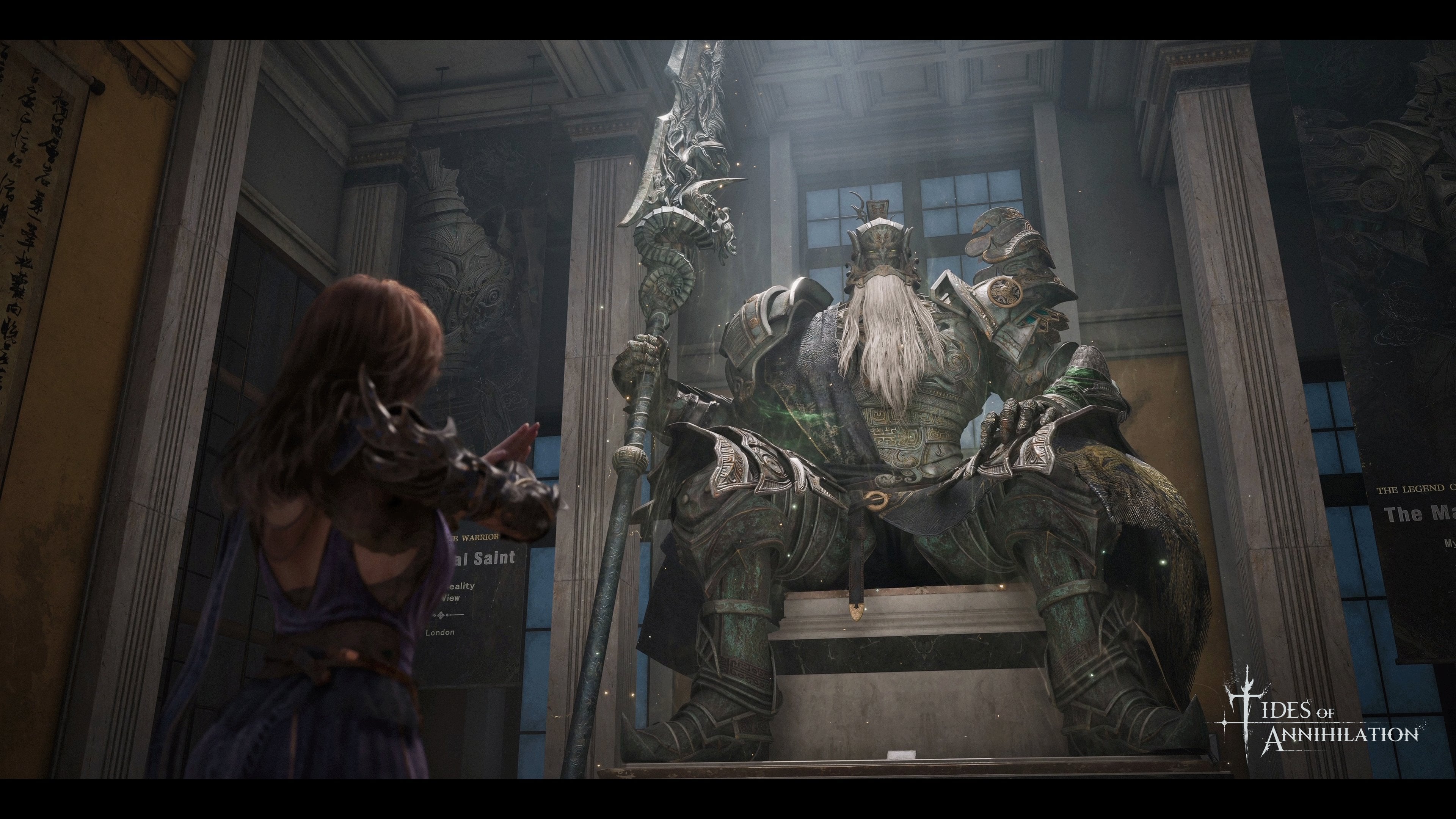
Overgrown and eerily abandoned, this version of the iconic London landmark has definitely seen better days. Water floods into the domed atrium while gargantuan tree trunks burrow through the crumbling brickwork of exhibit walls. Yet despite the disrepair, as I walk past authentic-looking £5 donation signs and step over a tattered Ancient Egypt exhibition poster, I can’t help but smile.
This is Tides of Annihilation, a flashy action RPG that reimagines Arthurian legend with enjoyably over-the-top anime excess. Turning heads during last year’s State of Play, Tides stood out by trading grueling grey soulslike sadism for incandescent, PlatinumGames-esque action. I came into my demo expecting two hours of knights, QTEs, and barmy boss fights, but what I wasn’t expecting was to see Lady Gwendolyn comboing across Trafalgar Square and banishing ancient evil along the Southbank.
Watch our exclusive Tides of Annihilation gameplay video:
“Tides of Annihilation brings a Chinese perspective to Arthurian legend,” explains game director and Eclipse Glow Games co-CEO Ary Chen, on the game’s intriguing blend of modernity and mythology. “There are familiar London locations like our Great Russell Museum, inspired by the British Museum, alongside plenty of fantasy elements.”
As my demo begins, I take a second to admire the transformation of this once-bustling metropolis into a surreal, post-apocalyptic wasteland. Following a mysterious otherworldly invasion, humanity is all but wiped out, placing players in the knee-high boots of the sole human survivor: Lady Gwendolyn.
Gwendolyn was originally played by Clair Obscur actor Jennifer English, but after she pulled out of the project citing health reasons, it’s now been revealed that Angela Sant’Albano, the voice of Resident Evil Requiem’s Grace, has been recast in the role.
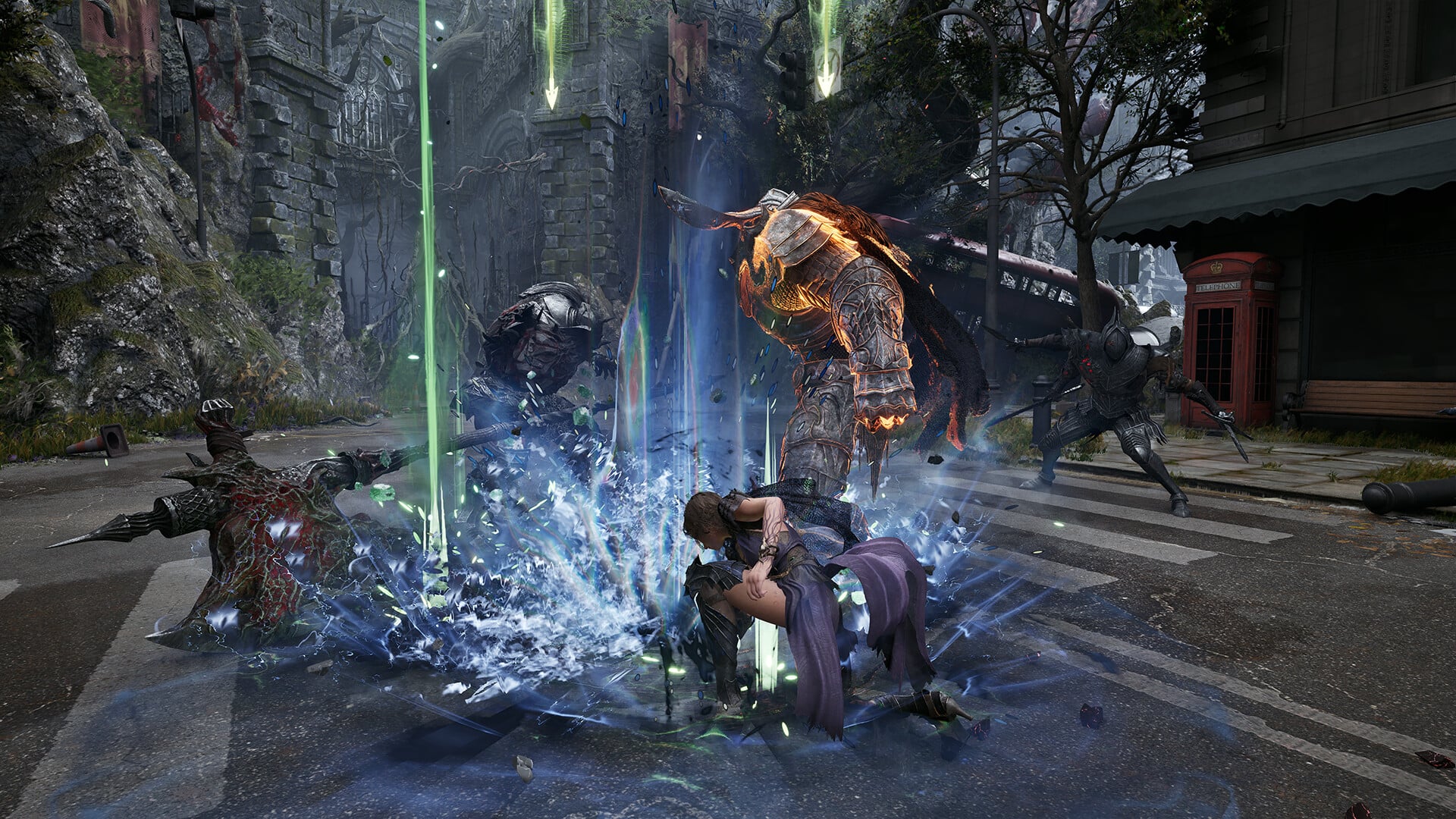
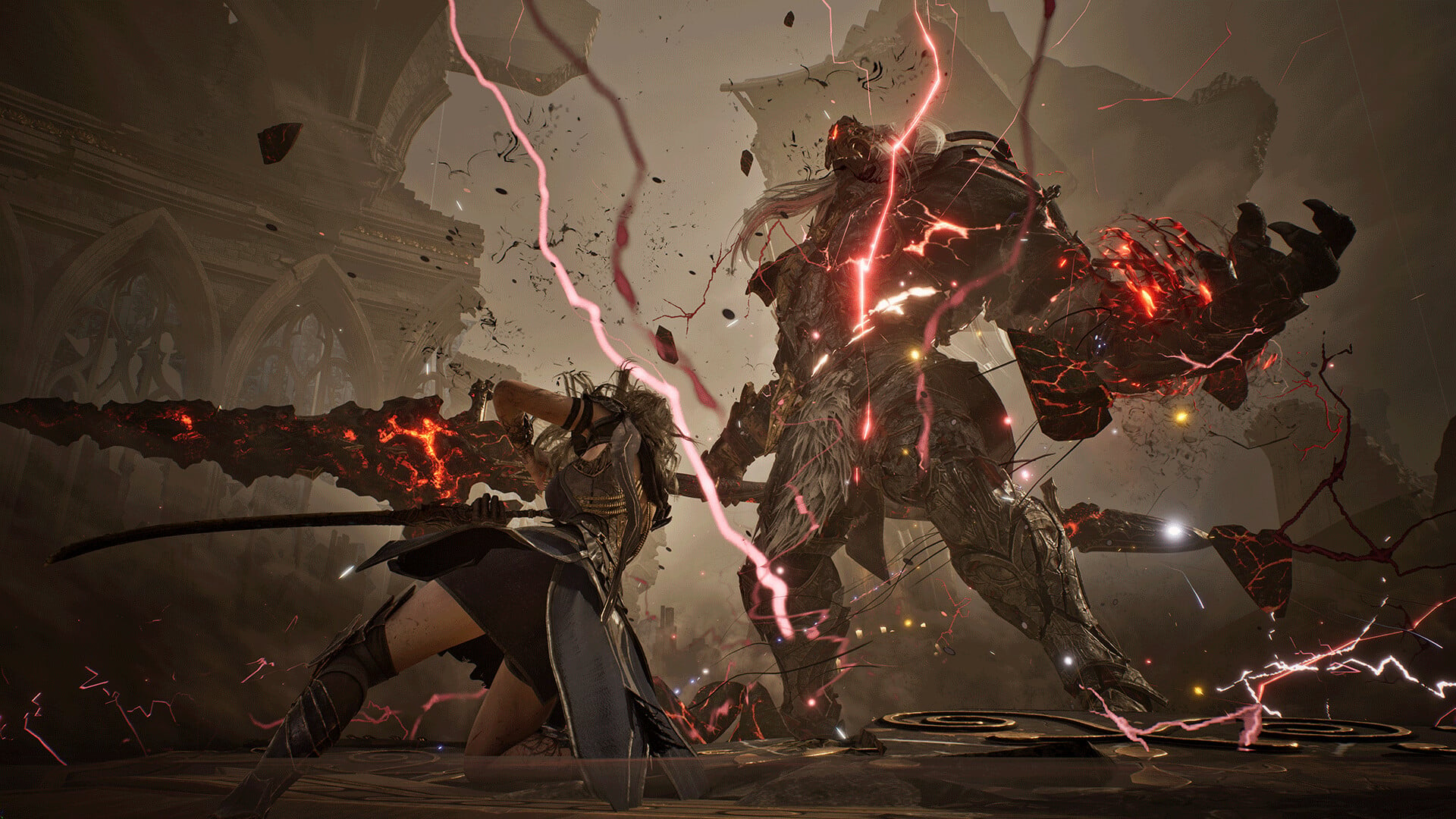
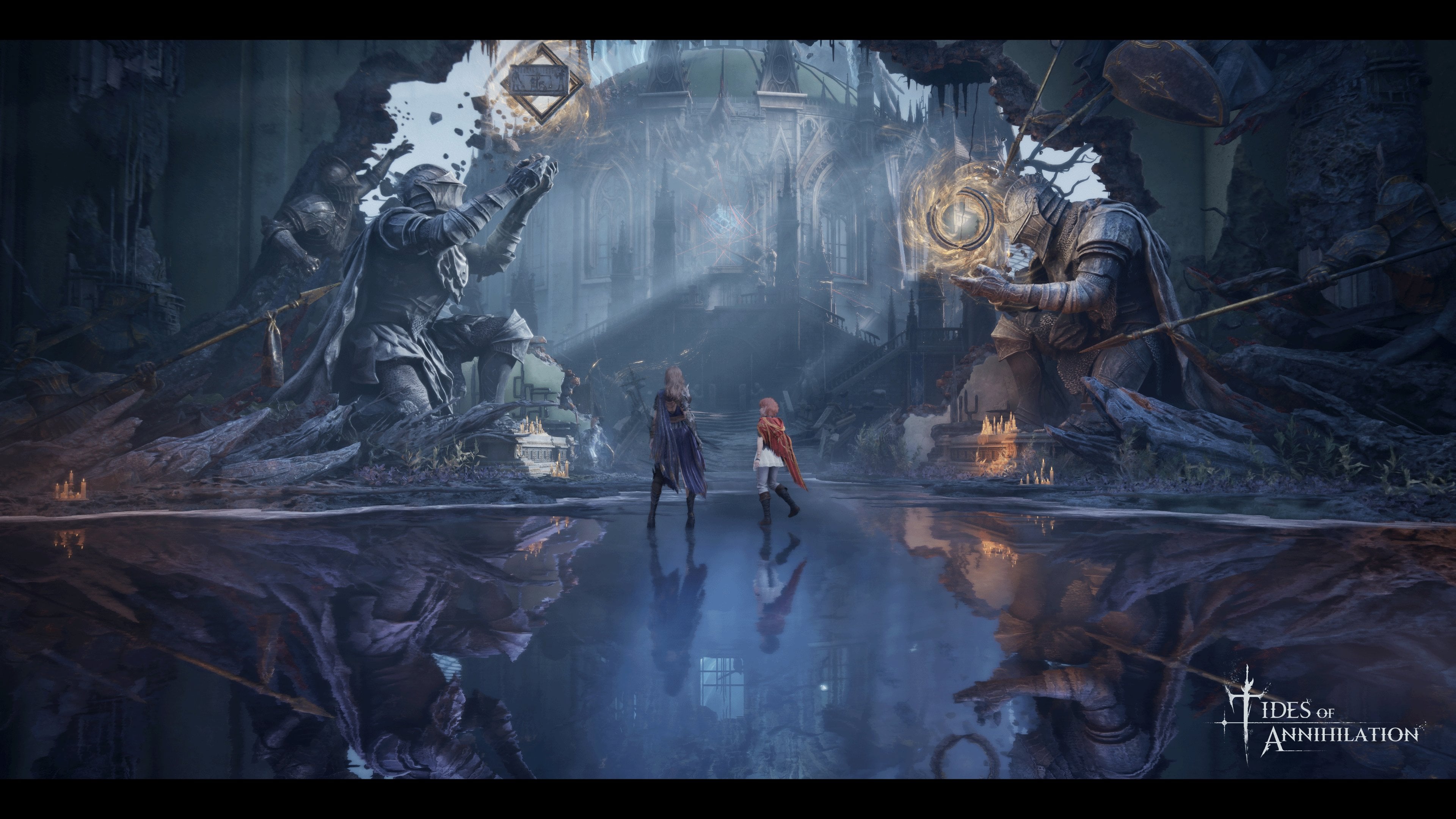
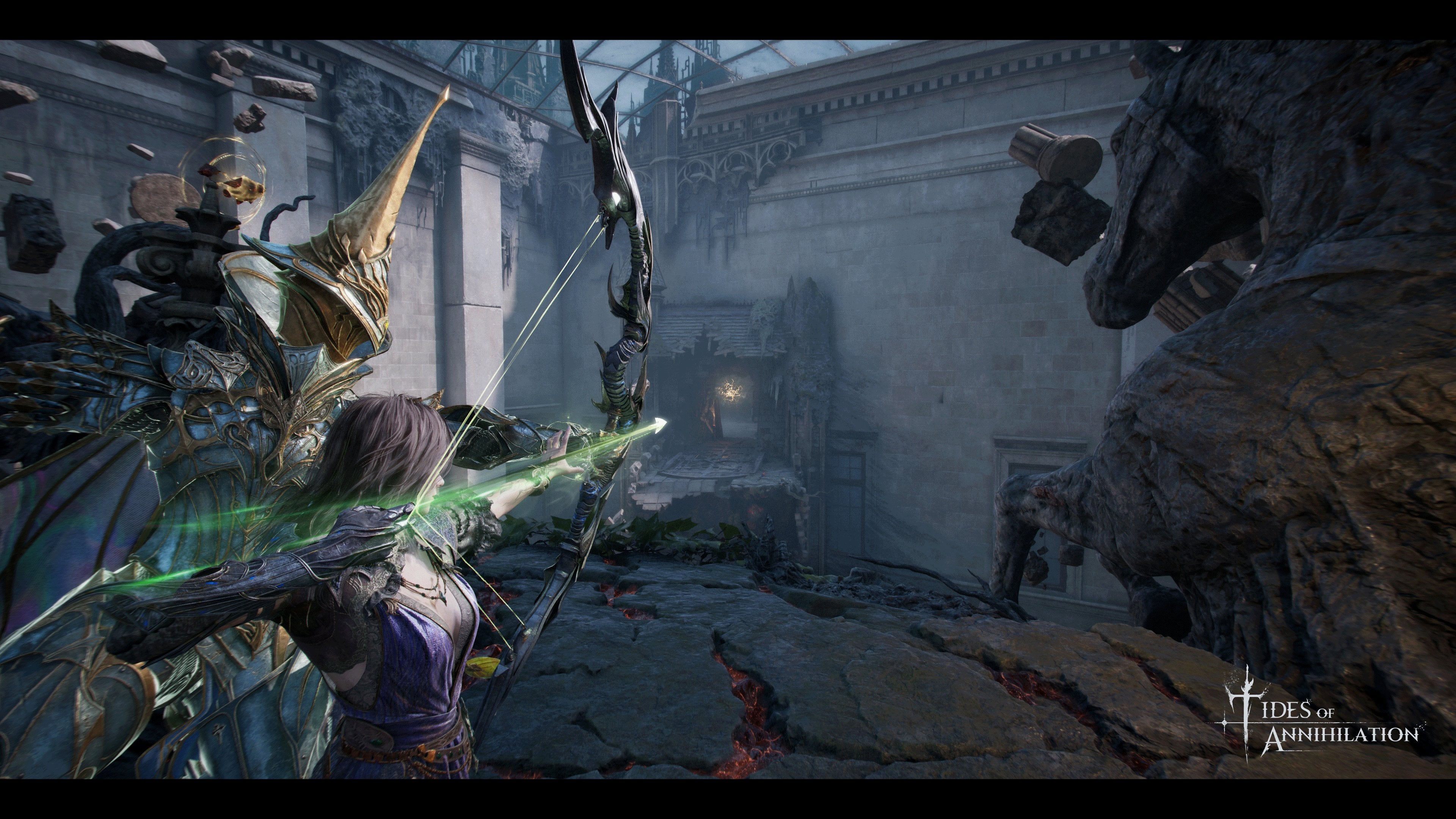
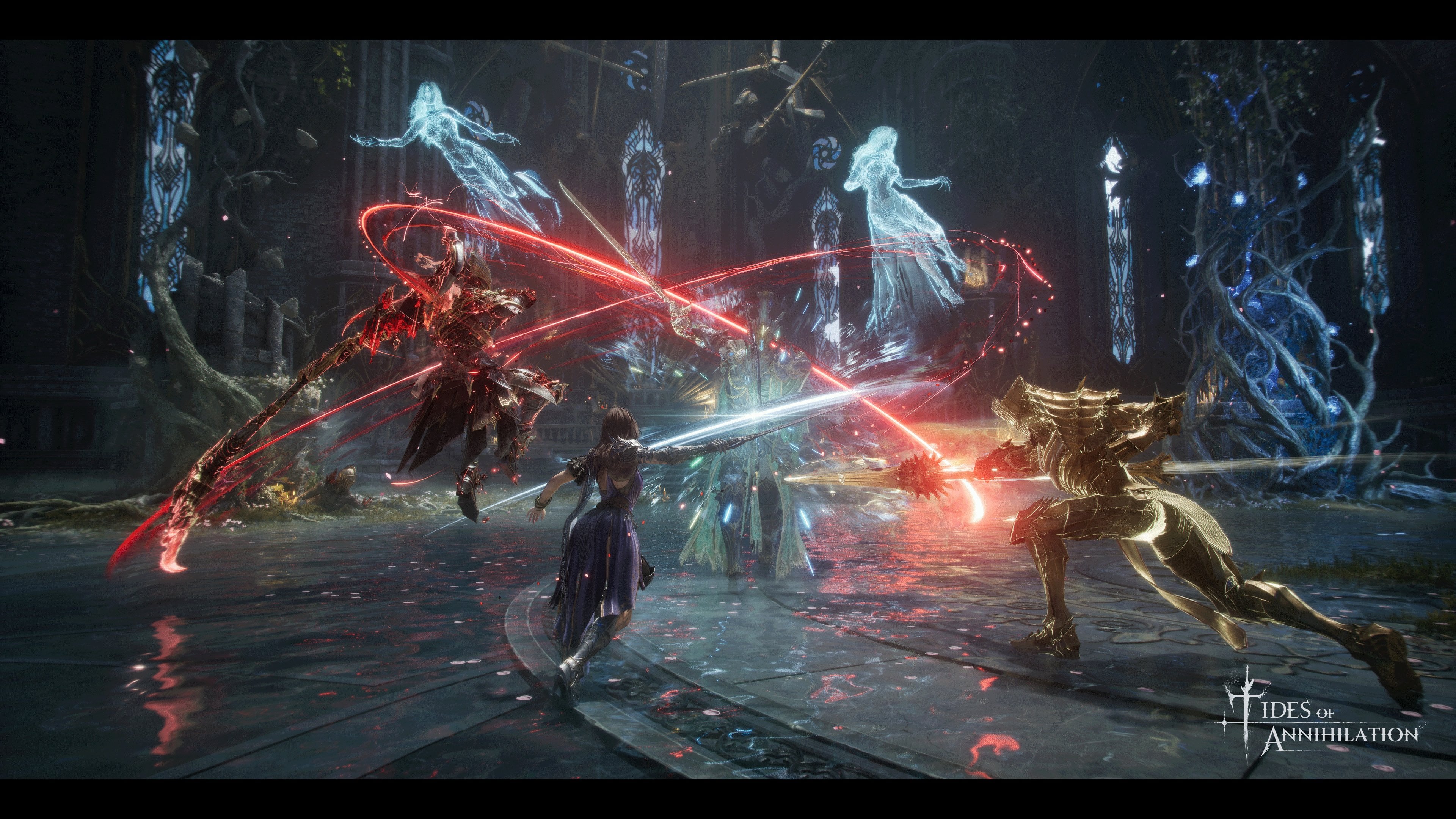
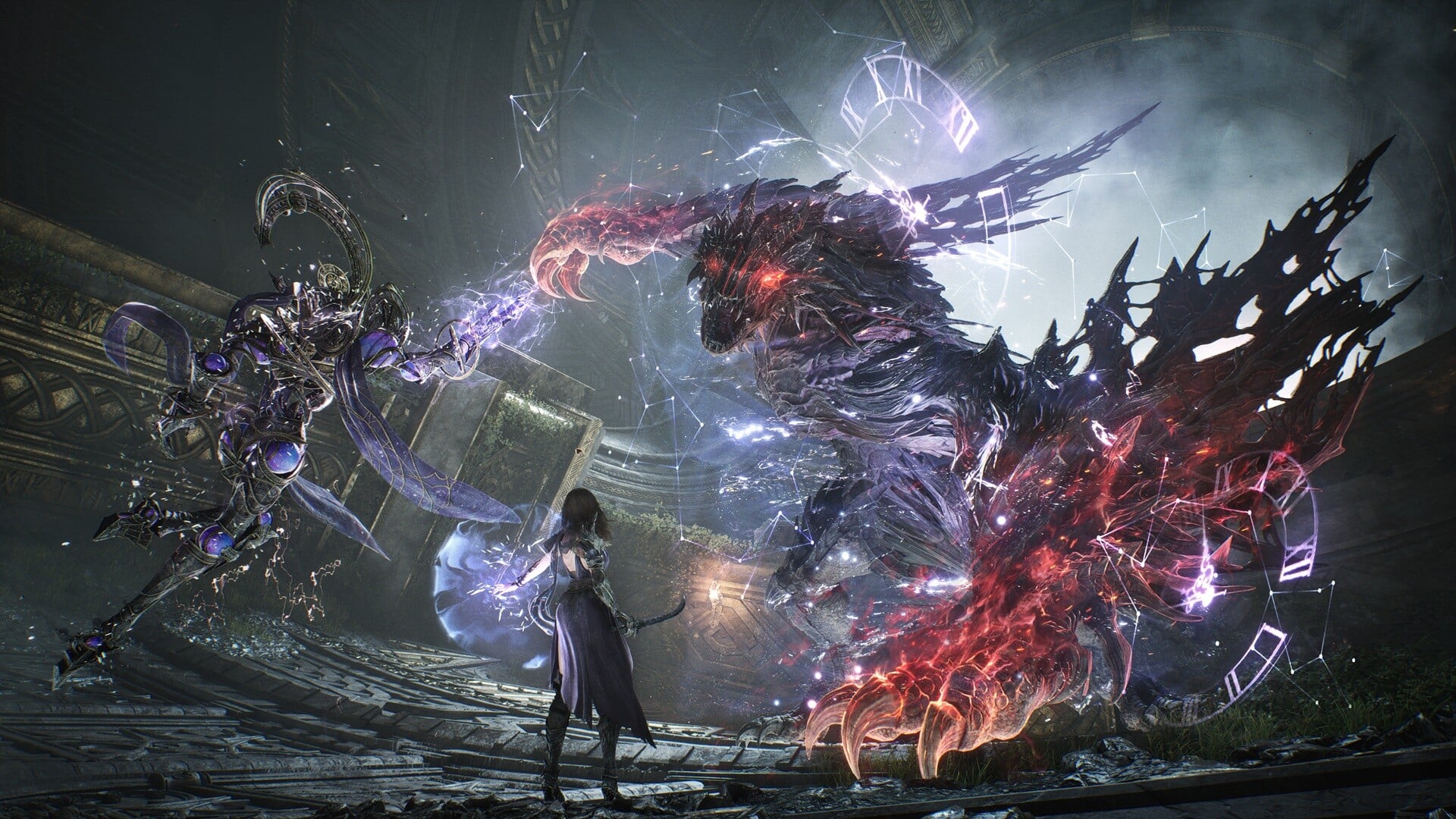
While it borrows from Dark Souls and Final Fantasy XVI alike, once you’re in the thick of it, Tides of Annihilation feels closer to a blend of Devil May Cry and Stellar Blade. Part action RPG, part Bayonetta-esque combo-racker, Gwendolyn can summon two ancient knights to her side mid-battle, combining rapid sword attacks with devastating blows from her bruising behemoths.
“We wanted to create a game where the main character is accompanied by knights and the gameplay is combo-driven,” says Chen on how the setting came about. “This core gameplay concept came first, and afterward we realized that Arthurian legend fit the idea perfectly.”
As Gwendolyn approaches the iconic silhouette of the game’s legally distinct British Museum, two blindfolded twins float menacingly ahead before a skyscraper-sized, stone-encrusted behemoth stomps overhead, looming over the crumbling ruins. It’s a satisfying blend of Chinese folk horror and stereotypical British architectural grandeur, a mishmash of disparate cultural references that feels refreshingly unique.
“We wanted to create a game where the main character is accompanied by knights and the gameplay is combo-driven… we realized that Arthurian legend fit the idea perfectly.”
Once inside the museum, I’m greeted by two leviathan-like creatures with gloved hands for faces-who dart about comedically, God of War (2018) style-before being left alone to face its occupying monstrosities. This demo is the only time I’ve ever enjoyed running around a near-empty British Museum, making for a novel fantasy in itself. Where I’m usually battling through hordes of tourists, Lady Gwendolyn finds herself slaying demonic entities instead.
Fighting hulking suits of armor within the great hall’s crumbling walls, combat feels suitably slick. I juggle my attackers in the air with a series of lavish animations, swapping between Gwendolyn’s knightly summons at will using the D-pad (much like Bayonetta 3’s familiars). I can send the brutally strong Palamedes to deal Hulk-like damage or stop an enemy in their tracks with Kay’s time-altering abilities. Combined with modern action staples like parry windows and stagger meters, it creates a fluid, combo-happy spectacle.
“The UK and London are full of history,” explains Chen on Eclipse Glow’s impressively detailed virtual London. “We’ve been to London several times on field trips, and both the history and architecture left a really strong impression. We also spoke with scholars who study Arthurian legend to do deep research. All of these elements helped shape the development of the game world.”

With each visit to my home city, the team tells me a new London locale made the list. As I leap and slash across London’s crumbling streets, I find myself transported through striking post-apocalyptic vistas. An ash desert reveals iconic scenery coated in grey dust, with a ruined London Eye lying half-buried on the horizon, while my local hospital, St Thomas’, is enshrouded in thick vines and foliage.
While it takes a while to unpack, I’m impressed by the build variety already on offer in my demo. I unlock multiple weapons throughout my hands-on, alongside pieces of armor and equippable badges that alter your playstyle. One badge drastically resurrects you once mid-battle at the cost of using healing vials, rendering them unusable, for example, while another drastically boosts your speed at the cost of your attack. You also gain XP from each battle, though it wasn’t entirely clear from the demo how levelling up works or what kind of skill trees will be available at launch.
While this is Eclipse Glow Games’ debut, the 150 developers who comprise the Chengdu-based studio have worked on globally renowned franchises like Persona, Yakuza, For Honor, and Assassin’s Creed. It’s a shared pedigree that shows, with almost everything in my demo executed to a high standard. The game looks utterly gorgeous running on a high-end PC, continuing the trend of visually stunning releases from Chinese studios. Yet it’s the near-constant gameplay variety that really impresses.
“While this is Eclipse Glow Games’ debut, the 150 developers who comprise the Chengdu-based studio have worked on globally renowned franchises like Persona, Yakuza, For Honor, and Assassin’s Creed.”
Gwendolyn’s ‘Fog Sense’ ability is your classic visual filter that reveals hidden environmental pathways, leading you toward puzzles and items hidden across each area. A cool magical bow fires arrows that create ethereal ziplines, while summoning Palamedes allows you to move heavy objects, break down walls, or position pillars to reach previously inaccessible walkways. The puzzles are all fairly simple but enjoyable, and along with brief snippets of platforming, help to break up the combat and improve the pacing.
As expected from a modern action game, there is a Bonfire-esque system awaiting players in Tides of Annihilation. Adorned with a gigantic sword sitting atop a stone basin, these enemy-respawning save points are known as ‘Oath Reforged’ thrones. While they allow you to recover health, swap equipment, and change knights, their best utility in the demo was serving as fast-travel points.
After wandering into an impressively detailed replica of the museum’s Ancient Egypt exhibit, my educational surroundings suddenly lurch to life. Transported to a floating platform, I am attacked by Anubis in an enjoyably epic, multi-stage boss fight where the Egyptian deity transforms into an aerial menace, bombarding me with ranged attacks from the sky.

It’s a battle that undoubtedly emphasizes cinematic spectacle over raw skill, but it’s an absolute blast – and after combining parries, knight abilities and ultimate attacks, I take down my first boss and the medieval melee really begins to click into place.
“We had a lot of creative freedom to build these kinds of bosses within the museum’s pavilions-Anubis, or bosses in the Chinese pavilion,” says Chen. “A museum like this is a place where many cultures converge, and that’s what we wanted to bring to life for the player.”
After entering some kind of ancient tome, defeating Anubis warps me to an arid, sand-coated version of the Great Russell Museum – seeing London’s once overgrown abandoned streets replaced by a vast desert. Before heading into the newly Egyptian-inspired structure and cracking on with the story, players have the option to freely roam the surrounding sandbox – and who am I to say no to a bit of beckoning distraction?
“We had a lot of creative freedom to build these kinds of bosses… A museum like this is a place where many cultures converge, and that’s what we wanted to bring to life for the player.”
Exploring the desert reveals plenty to discover: I battle giant lizards, unearth buried treasure, solve a series of mini-game-led puzzles, and get my arse handed to me by an optional boss named Redrend. I’m told there will be multiple large explorable zones throughout the game, offering optional distractions between the more scripted path of linear story beats.
Before heading back inside to the museum, I encountered another tough optional challenge in the samurai exhibit. It’s in these optional encounters that players can seek out a true test of skill, dropping panoramic cutscenes in favor of tight, precision parrying.
When I return to the museum once more, it is transformed again-this time coated in frost. I solve puzzles on a giant chessboard and platform across an ancient library before fighting a magic-wielding Mordred. The Mordred boss fight spans three stages, featuring her commanding knights, freezing your summons, and attacking from the skies atop a colossal dragon. It’s a spectacle worthy of PlatinumGames, complete with QTEs and seamless mid-fight cutscenes. With more than a whiff of Final Fantasy XVI’s glorious excess to this spectacular finale, I end my demo feeling elated.

One key aspect repeatedly showcased in trailers that I unfortunately didn’t get to test, however, was the Shadow of the Colossus-esque behemoth battles. “We have this giant knight, and it is very important to our plot, though to say any more would spoil it,” says Kun Fu, the game’s Lead Producer. “[Facing these knights] involves very dynamic battles. Players can climb on or walk inside its body, making [these showdowns] an interactive and pivotal moment in the game.”
All in all, I came away from my time with Tides of Annihilation thoroughly impressed. From Ghost of Tsushima to Assassin’s Creed Shadows, players are all too accustomed to exploring Eastern settings through a Western lens- yet here, the tables are turned.
As someone who’s lived in Greater London his entire life, it’s hard not to get a kick out of seeing my home reimagined with a distinctly Eastern flourish, and I can’t wait to see what weird and wonderful depictions of London and the UK they pull off next.
“From Ghost of Tsushima to Assassin’s Creed Shadows, players are all too accustomed to exploring Eastern settings through a Western lens- yet here, the tables are turned.”
Gameplay-wise, it’s all slick-feeling stuff. Balancing depth and accessibility is never an easy task, but Tides of Annihilation’s flexible approach to combat and difficulty looks to offer enough cinematic spectacle with additional challenges that will cater to more hardcore playstyles.
The only area that really underwhelmed me was the game’s writing. The dialogue in and out of cutscenes felt a bit flat, and the lore notes I discovered relied on clunky clichés. Despite being set in London, each lore pick-up was heavily Americanised-employing US vernacular like ‘movie’ rather than film, omitting ‘u’s, and using ‘z’ instead of ‘s’, all cardinal sins for a UK setting, innit. That being said, a weak story has rarely detracted from the brilliance of the Bayonetta games, so time will tell whether that really matters.
One story that is undoubtedly a winning one is the rise of Chinese-made games. Since Eclipse Glow Games started development in 2023, games made by their peers have enjoyed increased visibility in the West, with high-quality action titles quickly becoming a hallmark of the country’s dev scene. “It’s just been a blast,” reflects Chen on the studio’s journey and the impressive rise of Chinese-made games.

“We’re so happy to have players enjoying our game, and we’re really proud to see games from China reaching a broader audience. Seeing titles like Black Myth: Wukong played around the world is amazing.”
Yet as the duo sit before me in a lavish event space with hundreds of players queuing up outside, it’s the enthusiastic online response to their debut that Chen says has inspired the team the most. “It’s been a journey, and the support of the fans is what we’re most proud of. Since last year’s State of Play announcement, we received so much feedback. We were at a tough stage of the project at the time, and the players really gave us the strength to keep going and make the game better.”