Tetsuya Mizuguchi demonstrates how Rez's 'cue and response' audio design was built. pic.twitter.com/xBPHYaScE3
— Andy Robinson (@Andy_VGC) November 22, 2026
‘It was the coolest thing I’d ever seen’: The story of Rez, 25 years on
On its 25th anniversary, the developers behind Sega’s cult classic tell its story – and reveal why its sequel was cancelled
It’s August 2024. I’m riding through the neon-soaked streets of Tokyo’s Shibuya Ward in a Porsche, with the director of one of my favorite games at the wheel. We’re heading to his home, where he’s promised to show me beta builds that have never been seen before, and details on its canned sequel.
There’s no shortage of hard work involved in covering video games, but every so often you have one of those days that makes you stop and think: wow, I’m lucky to do this. This was one of them.
For me, Rez was a revelatory experience that arrived during a formative moment in my life. I was about to turn 16, leave school, and enter a hedonistic life of clubbing, music, and the human connection that comes with it. At the same time, my gaming habits had broadened into a more eclectic mix of multiplatform games, with publications like Edge encouraging me to think more about them as an artistic medium.
It was inevitable, then, that I’d eventually take a chance on an electric arthouse shooter from the arcade masters at Sega. I went in blind, and discovering its abstract wireframes and interactive techno beats for myself was a deeply affecting experience. It was like simultaneously conducting a Chemical Brothers album and the Ministry of Sound light show, behind the controls of a Space Harrier machine, in a combo only video games could power.

To view Rez as simply a shooter is to completely miss its meaning. On the surface, it shares much with on-rails arcade games like Panzer Dragoon and Star Fox, tasking players with blasting their way through waves of enemies on route to a spectacular boss. But these familiar mechanics are a vehicle for something more transcendent.
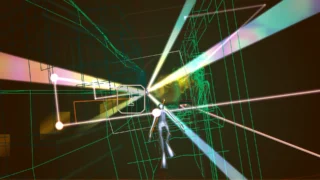
UGA’s young team were trying to do something few commercially developed games had attempted before. Rez’s central concept is synaesthesia, the phenomenon of one sensory experience triggering another, like sounds provoking certain shapes and colors.
The player is treated as a participant in a performance, with the game’s licensed music responding to every dispatched enemy with a hi-hat or synthesizer, like you’re some sort of Tron-age conductor. All the while, its pulsing, Kandinsky-inspired visuals move in harmony with the audio, and your game controller passes the vibrations through your body, as if you’ve plugged the Dreamcast into your own auxiliary port.
There was simply nothing else like Rez at the time. It isn’t hyperbole to say that United Game Artists’ extraordinary sensory alchemy fundamentally changed how I, and many others of a similar age, viewed video games and what they could be. Its sales weren’t spectacular, but Rez’s cultural impact makes it as valuable as any blockbuster.
“It isn’t hyperbole to say that United Game Artists’ extraordinary sensory alchemy fundamentally changed how I, and many others of a similar age, viewed video games and what they could be.”
Rez mattered because it showed, at a time when creators were obsessed with emulating Hollywood, that video games could create experiences that other entertainment mediums couldn’t replicate.
With its Y2K-inspired aesthetic, arcade-coded design, and deep reverence for late 90s club culture, Rez is staunchly a creation of its time, but it’s also absolutely timeless. To this day, I’ll regularly throw some headphones on, or a VR headset, and blast through Area 3, with its thumping Ken Ishii techno, or if I’m in a more energetic mood, the evolutionary rollercoaster of Adam Freeland’s finale, and go beyond synaesthesia.
“I do think as time has marched on, the game has become more celebrated and dear to people than when it was originally released,” producer Tetsuya Mizuguchi tells me in a meeting room at his latest studio, Enhance (he wasn’t the one driving the car, by the way – we’ll get to that later).
“When we were making it too, towards the end of development, it felt more like the start of something than the end of a project for me personally, but I didn’t really know what it was the start of. I think in many ways, because it was this primitive experience, because it didn’t fit exactly into one genre convention, perhaps one of the reasons it took some time for the adulation to come to the fore has a lot to do with it took people some time to find the words that allowed them to accurately describe what they liked about the experience.”
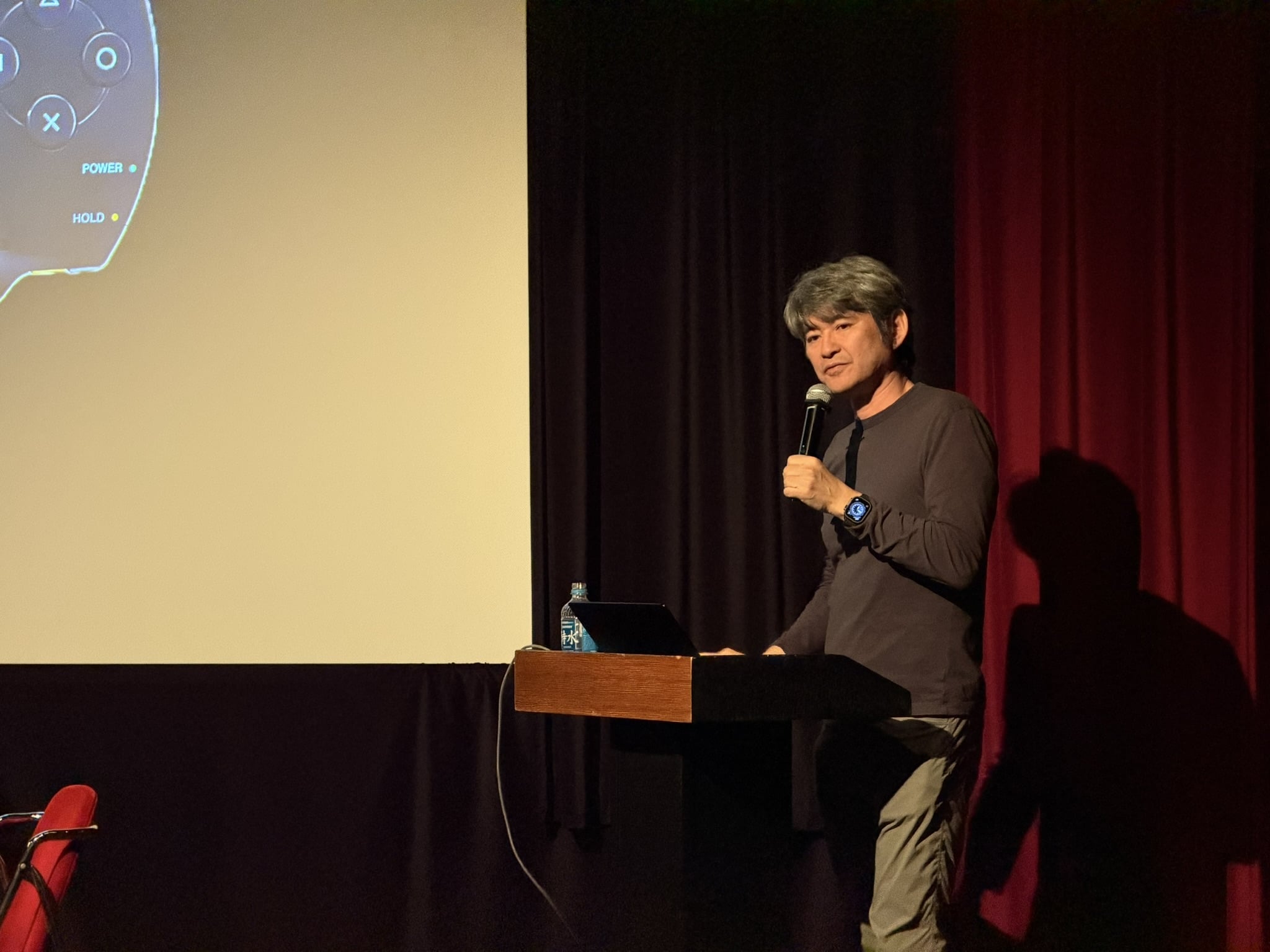
It wasn’t just the players who struggled to verbalize what that Rez experience meant, Mizuguchi says. “Looking back at myself and the development team, we had trouble when we were making it, trying to express what the team was and what we were after.
“Back then, we’d spend a lot of time doing things like going to electronic music clubs and observing the crowds there, and the kind of different types of reactions they’d have as music would change, and what would move them, and trying to kind of pick up clues from that sort of reaction and human experience that we were trying to then apply into Rez.
“Because we were young, because we were fairly inexperienced, we were really operating a lot more off of intuition about what this game was going to become and how we were going to get there and what we were borrowing from these sort of observed human experiences. And so, in that sense, not just for the players, but for ourselves, it’s kind of taken these 25 years to better define what we were trying to go after and what made it special.”
A Studio of Outsiders
Mizuguchi describes the circumstances surrounding Rez’s development as something of a ‘perfect storm’, much of which was deliberately engineered. The genesis of Rez, or ‘K-Projekt’ as it was first known, required a moment of inspiration and an unconventional work environment.
The embers of the idea came from a spontaneous road trip. In the mid-90s, Mizuguchi was traveling back from a visit to Mercedes in Germany, where he’d been researching for one of the Sega Rally games, when he stumbled upon an enormous techno parade taking place in Zurich.
Mizuguchi wasn’t particularly into electronic music at the time, but the experience was transformative. From a vantage point above the crowd, he says he watched tens of thousands of ravers move as one, responding instinctively to the shifting music as the lights pulsed in sync. The spectacle brought to mind the work of Wassily Kandinsky, the early 20th-century artist who explored connections between music, color, and visual art.
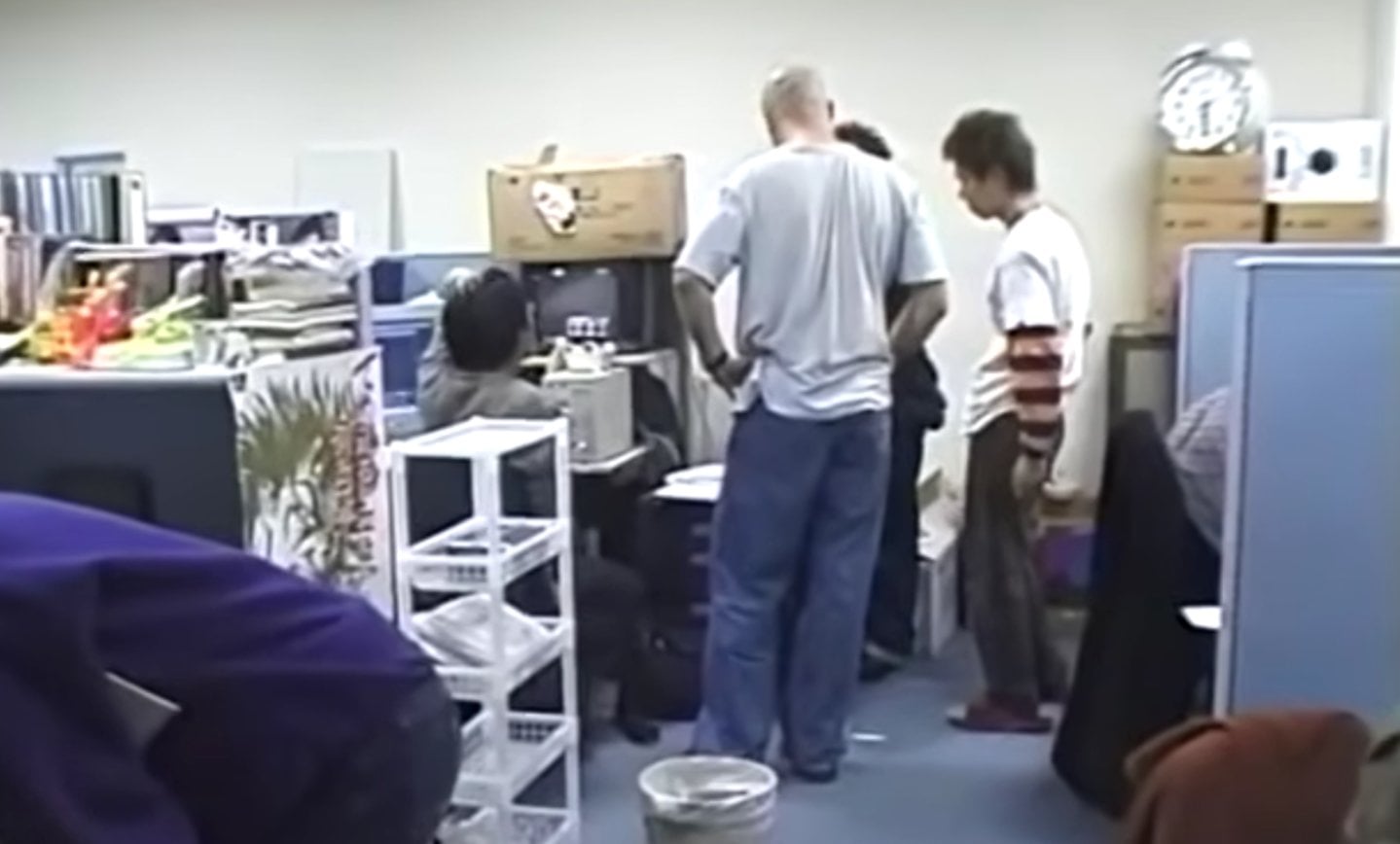
“I thought to myself, in his paintings representing sound, this might have been the kind of experience he’d had, or something that he had seen. And in that moment, I thought to myself, ‘What if I could provide an experience like that? But what if it was interactive?’ That was a formative moment for Rez.”
Although it would be several years before he could pursue it, the idea stuck. And in 1998, further inspired by a visit to the then-fairly-niche Burning Man festival, Mizuguchi pitched the idea of creating games that explored interactive music to Sega’s president, Shoichiro Irimajiri, who tasked him with building a software division that could attract new players to the Dreamcast console.
By this point, Mizuguchi had grown tired of being pulled into executive meetings at Sega’s then-headquarters near Tokyo’s main airport in Haneda. For a project so deeply connected to electronic music, he felt there was really only one place to be.
“To make games that connect to music, that meant I had to be where the music was. For me, that meant putting roots down not in Haneda where Sega was, but in Shibuya. Shibuya is a cross-section of all kinds of art, culture, and fashion, and it played a huge role in enabling the kind of exploration we did.”
“To make games that connect to music, that meant I had to be where the music was. For me, that meant putting roots down not in Haneda where Sega was, but in Shibuya.”
The decision to base United Game Artists (UGA) in the heart of Tokyo’s nightlife scene had a profound influence on the game’s development. Rather than commuting between an isolated corporate office and the city’s cultural hotspots, the team could immerse itself in the nightlife that was inspiring its work.
“The Rez team and United Game Artists as a company were envied by other people,” recalls Jun Kobayashi, Rez’s director, who spoke to VGC in several meetings about Rez’s development. “When we wanted to look at reference materials, we’d often go to Tsutaya or bookstores. There wasn’t anything like that near Sega’s HQ, so that might have made it more difficult to find inspiration.”
Art director Katsumi Yokota remembers the same atmosphere. “Everyone was fashionable. We went clubbing all the time, and we went to Tower Records every day.”
Mizuguchi wanted a studio where the line between work and play could blur. “The idea that we could just say, ‘Work’s done. Do you want to go to the club?’ definitely is something I can’t ignore,” he said. “I needed the kind of 24-hour energy that Shibuya had. If we had stayed in the Sega office, I certainly don’t think we would’ve had that, and I don’t think Kobayashi would have come. Shibuya gave me the people and the mindset to create what I wanted.”
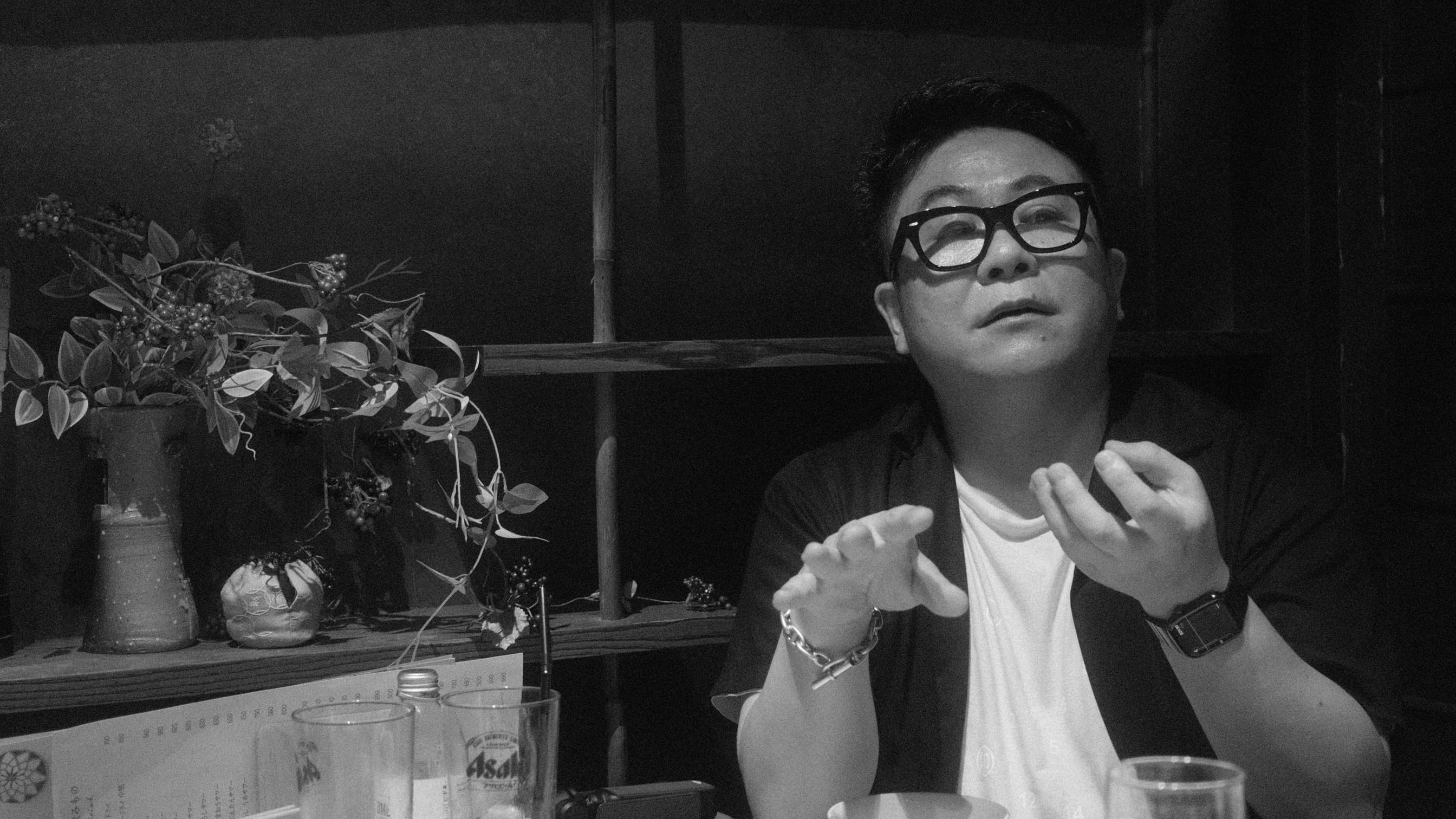
The physical separation from Sega’s headquarters was just as deliberate. Mizuguchi describes it as a little bit of calculated friction, giving the team room to experiment without constantly having to justify what they were doing to executives who might struggle to understand it.
“I promise you, we would have had people coming in to check on the game every day. And I know making something that’s kind of out there, we would from very early on be fielding questions like, ‘Is this even a game? How is this going to make money?’ And I thought that that would be counterproductive to what we were trying to achieve.”
Kobayashi agrees that the distance was important. “If we’d been at headquarters, executives might have come over and asked, ‘What is this? This isn’t a game.’ We would have been constantly asked how development was progressing, and we wouldn’t have been able to concentrate properly on what we were doing.”
Jake Kazdal, an American team member who later founded indie studio 17-Bit, remembers the contrast vividly. “Sega’s headquarters was in the most industrial, boring, shitty place,” he recalls. “When I got the job at Sega, I was talking to another American friend who was working there, and he was like, ‘You’re gonna be in Shibuya?! What the hell?!’ I was like, ‘What? What is that?’ He’s like, ‘Dude, we’re in the industrial dregs, and you’re in the heart of it.'”
“We were super isolated. We didn’t have any oversight at all. It was just Mizuguchi-san and a bunch of yahoos. The other divisions weren’t checking in on us with, ‘What are you guys doing?'”

Mizuguchi says he had little interest in recruiting a team of established veterans. He was already accustomed to working with people who hadn’t necessarily gained experience in that exact thing before (Sega Rally, he recalls, had just two team members with knowledge of car games) and believed that bringing in different perspectives could help build something entirely new.
“Rez was a team made up of people from many different disciplines,” recalls artist Noboru Hotta. “We brought people in from all sorts of different backgrounds, sometimes almost forcibly.”
One of those people was director Kobayashi, who had experience as a ‘VJ’ creating music videos, and a strong understanding of the relationship between music and art. Mizuguchi wanted someone who could bring a different sensibility to the project, even if they had little experience making games.
The team was also remarkably young. Several members were in their twenties, still learning their craft. Yokota remembers the period particularly fondly. “For me, Rez was my youth. When I first joined the project, I didn’t really understand how games were made. I was probably quite ignorant, but I was still full of confidence and would say all sorts of things.”
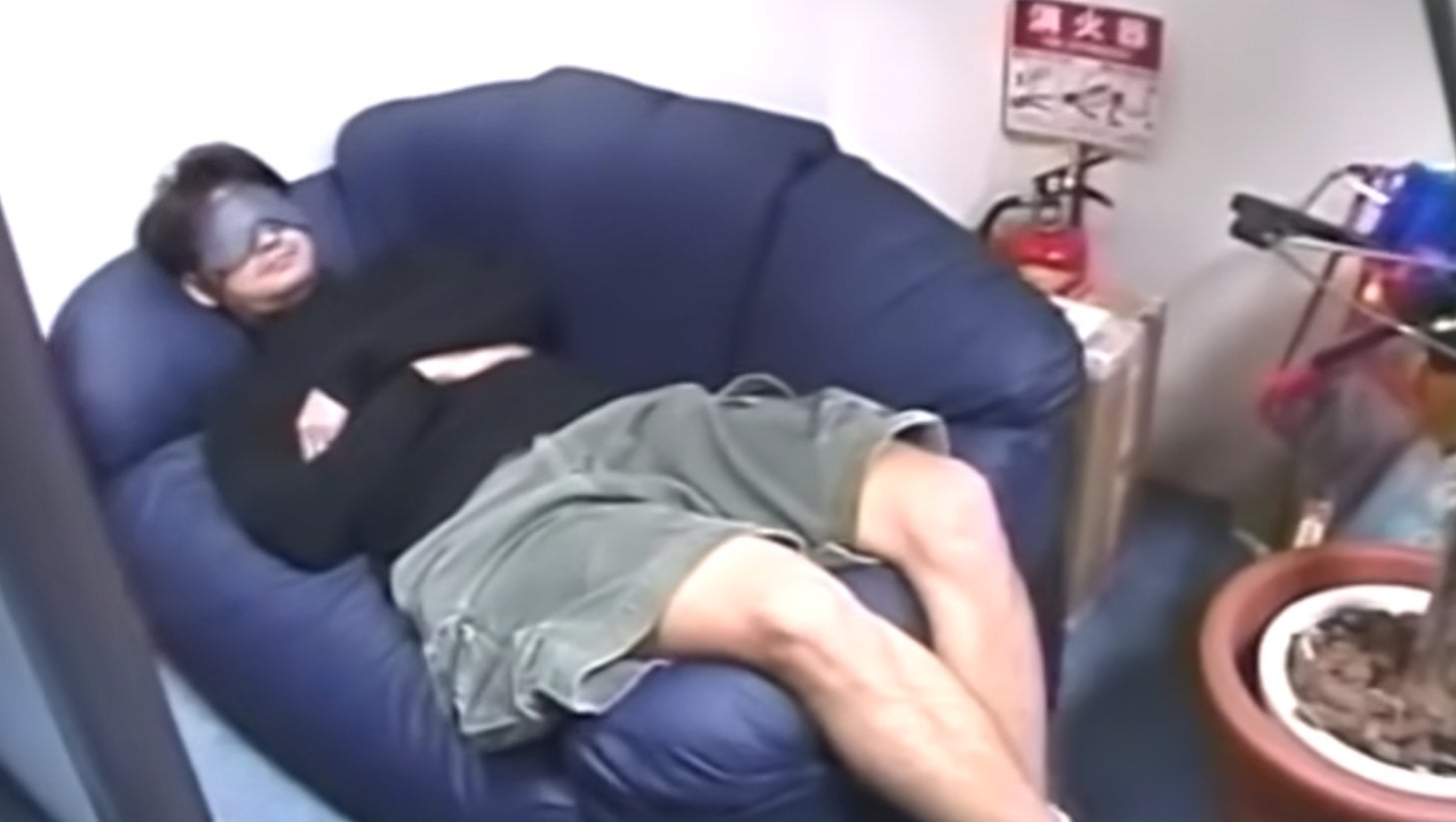
Jake, who had come from animation, found himself learning how to design a game on the job. “These guys were all designers, and I didn’t understand design. So I was just watching and learning. And I didn’t speak Japanese either. After every meeting, I would just like write all the words down, and then ask, ‘What does this mean?’”
It was an environment that could be demanding, but the developers remember those days with enormous affection. Hotta recalls regularly working past midnight, but says it never felt like a hardship. “It was incredibly fun. Entertainment in general was really exciting at the time. Games were great, and manga was great, too.”
That sense of freedom extended to the project itself. “We’d ask Mizuguchi, ‘Can we really make something like this and sell it?’ and he’d say, ‘It doesn’t matter if it doesn’t sell,'” Yokota recalls. “We had Mizuguchi there, telling us to make something we thought was interesting. Because he gave us that freedom, we threw ourselves into it.”
The Shape of Sound
In the first months of Rez’s development, Mizuguchi found it difficult to nail down and convey exactly what his interactive synaesthesia experience would be. Back then, the game was known as K-Projekt, named after Kandinsky, and the idea was more of a feeling than a blueprint for a game.
“Mizuguchi had these enormous, rather vague ideas, and the rest of us would try to work out how to narrow them down and make them more concrete,” Kobayashi remembers. “Everything was really ambiguous. We didn’t have a particularly clear picture of what we were making. It was a very hazy concept, and we were trying to turn it into something concrete.”
With UGA’s first game, Space Channel 5, already in production, Mizuguchi continued to expand his team and experiment with different ideas. Yokota, a former Panzer Dragoon Saga artist who’d taken time off from game development to work on an anime film, joined the K-Projekt team about a year into development.
Yokota recalls: “What we kept doing was presenting Mizuguchi with different ideas, changing the visuals and experimenting with how things worked, and he rejected many of them. He would often suggest various alternatives, such as turning it into a rhythm game like Taiko no Tatsujin, but we didn’t think that was interesting.”
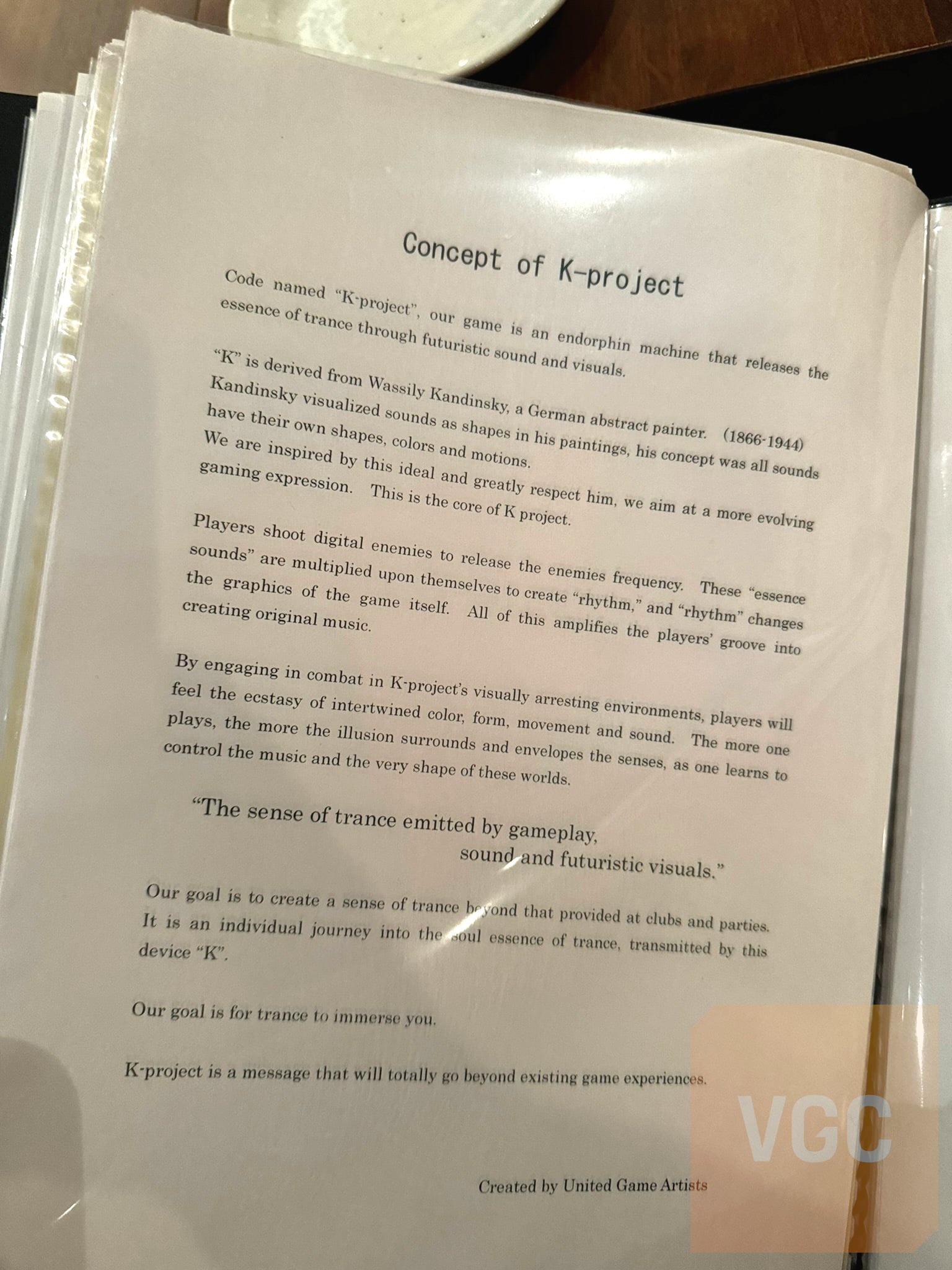
The core rail shooter mechanic was set from early on, Yokota says, but the team struggled to implement a visual style that effectively delivered on the synaesthesia concept. “Nothing was really making sense. It took a really long time to come up with [a visual direction] that worked.”
One early prototype took place underwater, with a much more realistic presentation than the abstract wireframes that ultimately defined Rez. “Everyone on the team was happy with it, and we thought it looked really cool,” Yokota says. “The concept was that you started deep beneath the ocean and gradually traveled upwards. The creatures in the water, almost like microorganisms, would continually evolve as you progressed. Eventually, you’d emerge from the ocean and rise into the sky.”
The prototype was inspired partly by the prospect of creating a dramatic audiovisual transition. The early underwater sections had heavily filtered, muffled sounds and deep bass, and the music and visuals would change together as you moved from the depths of the ocean into the sky.
The team was happy with the progress they’d made. But when they eventually showed the prototype to another division within Sega, the reaction was disastrous. “All the feedback came back, and everybody was like, ‘What the hell is this?’ No one understood it,” says Jake. “They didn’t know what they were supposed to shoot. They didn’t know what they were supposed to target. They couldn’t tell the enemies from the background.
“And so we kind of just started over. We threw it all out. We learned a lot, and then we applied all that feedback to the next iteration, with very different colors, and a big pass on the graphic design and visual communication.”
The game’s iconic wireframe aesthetic is something else credited to Shibuya. Not long after the disappointing playtests, Kazdal went clubbing, where they encountered a DJ using a visual plugin to accompany his music, powered by a program called Winamp. Though music visualizers eventually became common, they were relatively new at the time.
“I was like, ‘holy shit’. There were colors and shapes moving in time with the music… it was unlike anything I’d seen at the time.” Kazdal made a recording of the Winamp plugin and brought it to Mizuguchi, Yokota, and the team the following Monday morning.
“I’d always liked wireframe graphics, so I started building it around that idea right away,” Yokota says. “It looked cool and also solved a big problem we were struggling with, which was allowing enemies to break apart in time with the music without becoming too distracting. It just worked.”
With the wireframe design, the team could implement more visual effects in reaction to hits and music cues, without becoming too distracting. Similarly, enemies were much more clearly distinguishable, with things like missiles appearing in different colors. The player character, which by this point was a mecha-looking plane, was changed to a digital humanoid that could ‘evolve’ through five stages.
The wireframe approach required its own technical ingenuity. Hotta remembers how the developers had to work directly with the game’s polygon meshes, painstakingly selecting and deleting individual triangles to remove unwanted diagonal lines and leave behind only the shapes that looked visually appealing.
“You could only see the final result on the actual hardware, on Dreamcast,” he explained. “Even the 3D software couldn’t show you exactly what the finished version would look like.”
A visit to Britain later added the final touches to K-Project’s visual direction – and its story. “When we went to a rave event in Germany, I was first taken to London,” Yokota recalled. “Mizuguchi had various meetings at Sega’s UK office, but I didn’t have anything to do, so I went to the British Museum.
“I saw the Rosetta Stone, the sculptures from the Parthenon, and all sorts of things tracing the history of humanity. I also visited Abbey Road. I had a wonderful time.
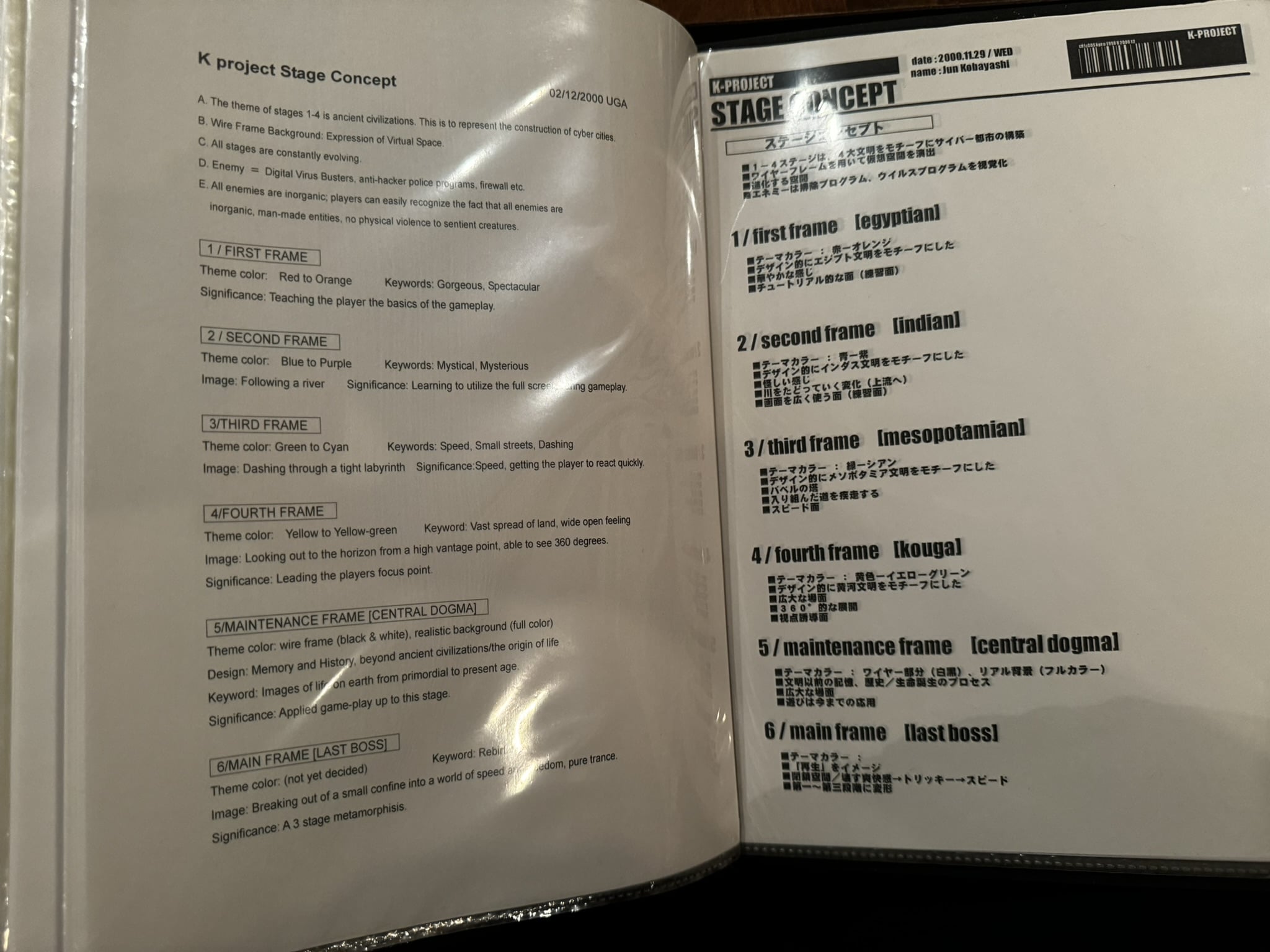
“When I came back, we still didn’t really have a subject or a story for the game. We were struggling with that, and I thought perhaps we should trace the history of humanity. Maybe going to the museum helped give me that idea. That’s why the first stage we created was based on an Egyptian space, and the final stage features a poem about the origins of humanity.”
Yokota combined his human origin story with elements that evoked concern around the Y2K problem, making the player character a hacker fighting off viruses to confront a rogue artificial intelligence, which is pondering the meaning of life. Enemies in the game would be artificial firewalls, with no violence against any sentient creatures.
Layering the Music
Another revelatory moment came when EBZ, a DJ who was consulting on the game, returned from a trip to Kenya and showed the team a video he’d captured of a group of friends jamming outside a café. In the footage, one person would tap their plate, and another would clap in response, while others would dance to the rhythm.
“We watched it hundreds of times,” says Mizuguchi. “There was a call and a response to the performance. It was like a chemical reaction. One person would make a noise, and another would say something back, and it would build and build, and everyone entered this sort of trance.”
The video directly influenced the audio design of K-Projekt. Instead of shooting, players would lock on to enemies, creating a ‘call and response’ in the delay between the projectile and the explosion, like two beats in a rhythm.
The team discovered two kinds of music satisfaction through its experiments, Mizuguchi says: “the pleasure of playing percussion, and the DJ-like pleasure of transforming the track itself”. It was decided that players would progress through ten different ‘layers’ of each stage, each adding complexity to the music and providing a sense of progression.
Initially, the UGA team didn’t know what kind of music K-Projekt would feature. They’d listened to lots of genres in search of inspiration, but ultimately settled on Techno, not just because of Mizuguchi’s familiarity with the genre through Burning Man and the Zurich street parade, but because its minimalist style was a strong fit for the sort of primal interactive experience Mizuguchi was going for.
He approached techno expert Masakazu Hiroishi, who had recently left Sony Music to establish his own company, to help coordinate the music. Hiroishi remembers how quickly the collaboration developed. “We soon came up with all these ideas for music and thinking about which artists we should ask. Ken Ishii was one of the first choices, but there were others like Aphex Twin, Underworld, and Fatboy Slim.”
The selection was ambitious, and the team was keen to involve musicians who understood the experimental nature of the project. Ken Ishii, whose music would become synonymous with some of Rez’s most memorable moments, was initially surprised by the unusual request.
“I had worked on games before, and it was a process of basically giving a song to someone, and that was it,” he explained. “But when I received the offer for K-Project, they asked me to separate all the sounds, even the hi-hats, and I was really surprised. I thought they were asking for the secrets of how I made my music.”
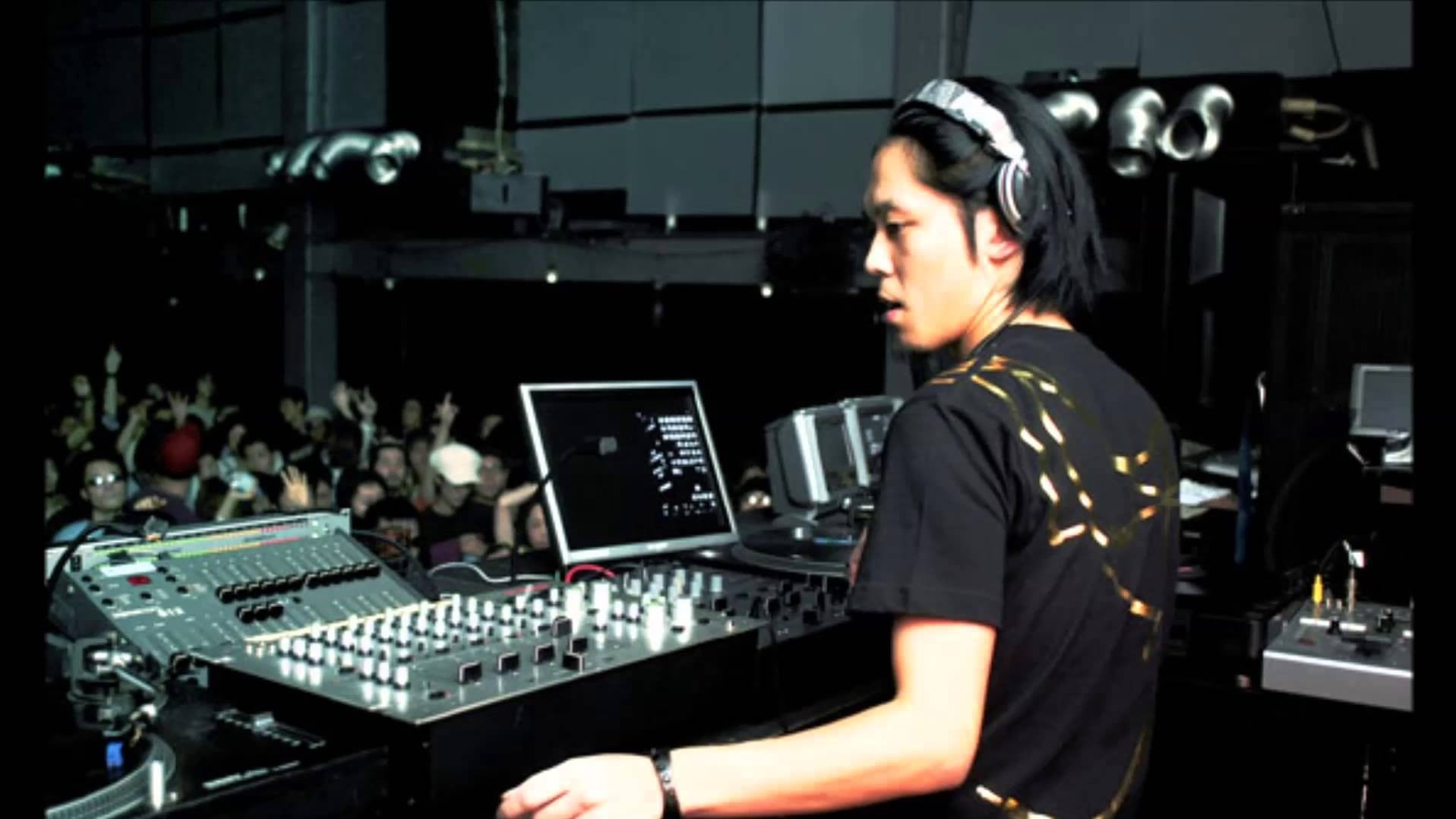
Once he understood the concept, however, Ishii was convinced. “I thought it was revolutionary and wanted to be part of it.”
Hiroishi also helped arrange meetings with potential collaborators, including Underworld, whose members were receptive to the proposal when shown an early version of the game in Japan. Unfortunately, securing the music proved difficult because the rights were split between several different parties.
There was even a last-minute change involving Fatboy Slim. Three weeks before release, the team was planning to use The Rockafeller Skank in Area 2. “It was done. It was complete,” recalls Kobayashi. “However, we heard from Sega that the track had a lot of issues because of samples from other songs, so we decided to take it out, and the new track was made in two weeks.”
Another unexpected addition came from German electronic group Oval. They visited Sega as fans of the company a couple of months before release, and Yokota, a huge admirer of their music, was determined to get them involved. “He was like, ‘I will stay up all night to get them into the game. I will make the stage myself.’ So that’s how they got into the game,” Kobayashi says.
The End of Dreamcast
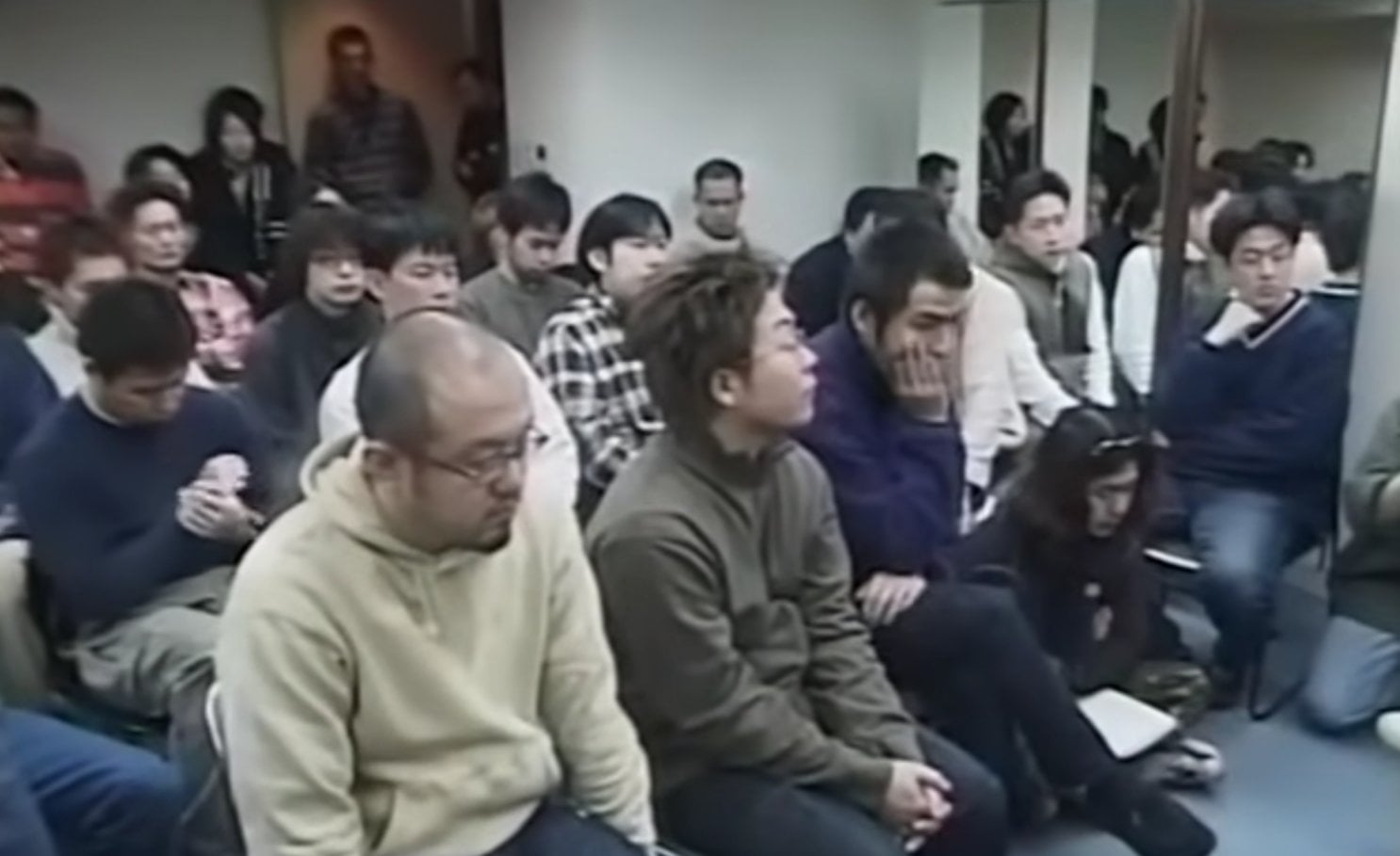
By 2001, K-Projekt, now renamed ‘Rez’ (after a term from the movie Tron, and not the Underworld track initially planned to feature in the game), was taking shape, but a seismic shift was taking place behind the scenes. Sega was struggling with the Dreamcast, and in January 2001, around 11 months before the game’s release, Mizuguchi gathered everyone together to deliver some unwelcome news: it was ending support for the console and exiting the hardware business.
Kazdal recalls the moment vividly. “We were towards the end of development, and Mizuguchi-san called everybody into this one meeting room, and it was very somber. He’s usually so happy, but he was very somber. He’s like, ‘All right, Sega is stopping the hardware business, and we’re getting out of hardware.'”
For Jake, who was in his mid-20s at the time, his older colleagues’ reaction was particularly striking. “I remember all the older guys, who were like 45, but I was 25, so I thought they were the old guys. It was like a tomb. I knew it was a moment in history.”
Sega’s decision to abandon the Dreamcast meant Rez would have to find a new home on PlayStation 2. Rather than spelling the end for the project, however, the move ultimately proved beneficial. Kobayashi believes it was a great decision to release the game on PS2, while Mizuguchi recalls finding an unexpected champion at Sony.
The transition wasn’t without its technical headaches, however. Hotta remembers that the Dreamcast was relatively straightforward to develop for, but the PlayStation 2 presented a different challenge. Its unusual architecture meant considerable work was needed to make Rez run, with textures having to be halved before the conversion could properly begin.
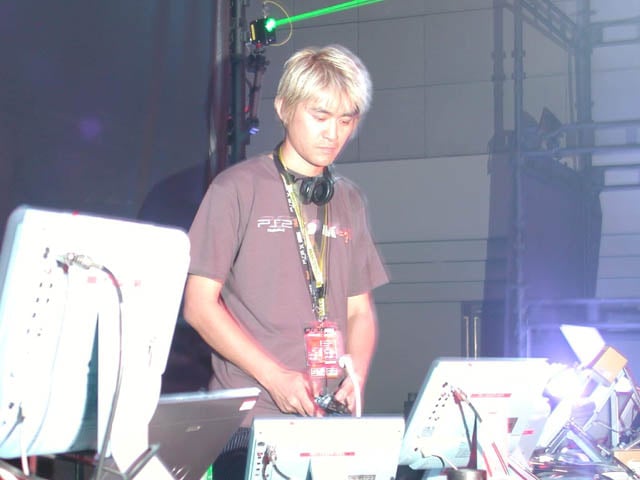
Five months later, Mizuguchi had dyed his hair platinum blonde and was about to step on stage at the Shibuya AX Sony PlayStation 2 party to unveil the final version of Rez. As part of its move to become a software-only company, Rez would become one of the first Sega titles released for PS2.
Mizuguchi felt conflicted at the time, presenting his dream project at a former rival’s event, but as he stepped on stage and booted up Rez on Sony’s enormous screen, with company executives watching from below, he sensed the opportunity to bring the game to a more popular platform. Without saying a word, he played Area 1 from start to finish, and then walked off stage.
“When he walked off, the other developers were all asking, ‘What is this? What on earth is this?’” Kobayashi recalls. “We were wondering what was going to happen. It was announced alongside some really famous titles, which were being presented one after another.”
Mizuguchi remembers the industry attendees being impressed and trying to grasp what they’d seen. “I was on a high,” he says.
The most notable feedback came from Sony Computer Entertainment chairman Shigeo Maruyama, who told Mizuguchi backstage that he was excited by what he’d seen.
“Before PlayStation, he had been the CEO of Sony Music, and so he understood the music side of things. At that unveiling, he said something to the effect of, ‘I never thought that something like this could be birthed at the intersection of gameplay and music’, and for me that was like a huge emotional support. It was very validating and gave me energy.
“I think it also changed the direction the wind was blowing for the sales and promotion teams at Sega, who decided to support the title. They were like, ‘Oh, we actually probably should put singular energy around this… we need this thing to fire on all cylinders.’ And so that was really helpful too from that perspective.”
“I don’t think there were many people in the Sega executive leadership team that understood what we were trying to do at the time. I think it was hard for them to get where the game was going.
“But I do want to caveat that doesn’t mean I didn’t have support. No one really understood it, but there were supporters.” He added: “One of the members at the time who I think really was a supporter of mine was Shuji Utsumi, who’s now the president of Sega.
“Behind the scenes, I get the sense he was saying they needed to bet on doing fresh new things. That support was actually really critical to help get the project across.”
A Game that Refused to Disappear
By the time Rez released it in Japan on November 22, 2001, for both PS2 and Dreamcast, morale among its development team was high, with many members, including Yokota, quietly expecting the game to be a hit. “I thought it was incredibly cool and that it would definitely sell,” he said. “I thought something this stylish could become something like Wipeout for Sony.”
The game received plenty of accolades from the press, with publications like Edge (9/10), Official PlayStation Magazine (90), and IGN (85) awarding it high scores. Some outlets scored the PS2 version even higher than Dreamcast because of its infamous Japan-only Trance Vibrator peripheral, which Jake Kazdal pleaded with Mizuguchi to call the ‘Rezonator’ instead (“I think he wanted the stigma around it”).
Commercially, however, it soon became clear that Rez had been something of a disappointment. “Mizuguchi-san always told us we were creating art and not to worry about sales,” Jake said. “But after it went on sale, we were having a cigarette one day, and I was like, ‘How’s it selling?’ He was just like, ‘Bad. And I was like, ‘You said it’s OK, right? We’re making a piece of art?’ And he was like ‘no, it’s not OK’.”
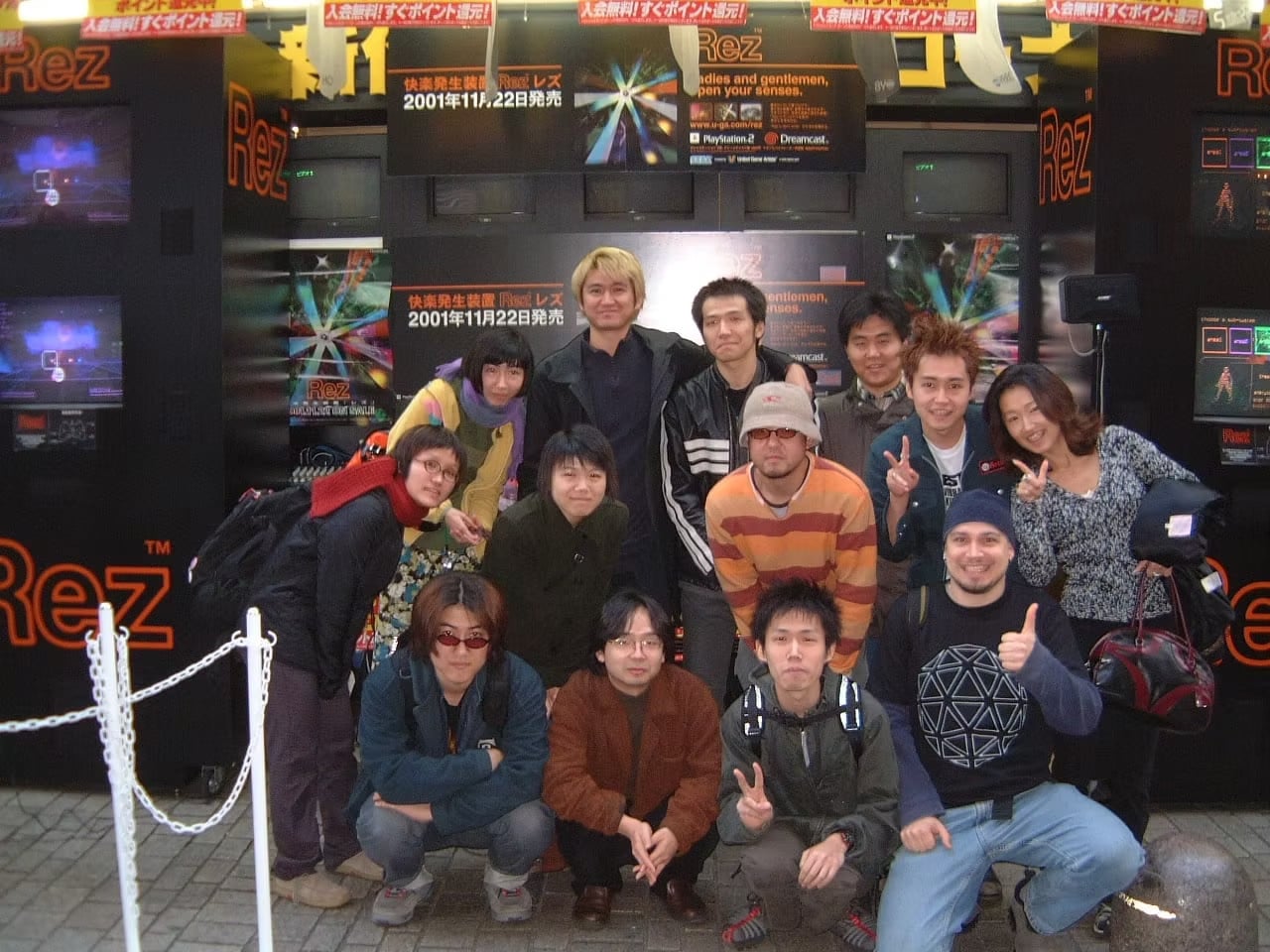
Mizuguchi remembers Japanese sales reaching a few hundred thousand copies, at a time when a million-selling game was often the benchmark. The fact that Japan was the first market also had a knock-on effect overseas. With physical game sales heavily reliant on initial orders, the relatively modest Japanese performance made American buyers more cautious about how many copies to bring to market. Europe sat somewhere between the two.
Kobayashi believes the tepid launch was partly because Rez simply didn’t resemble what people expected a video game to be. “It was quite far removed from what people generally considered a game. It didn’t have the usual progression elements, collectible elements, or other familiar features. There wasn’t anything else quite like it, either.”
Jake’s assessment is more blunt. “I think it was just too weird.” Hotta added: “The marketing, the way PlayStation did it, was really weird too. Did you see it?”
For Mizuguchi, Rez was simply ahead of its time, in terms of consumer tastes and his ability to eloquently communicate what it was to players.
“I do feel like, looking back at the game, that we may have been a bit ahead of where the market was. At the time, looking at the title, we didn’t really have a genre that we could tie it to clearly. There were parts of the game that were a little harder for people to understand and kind of put in a box.
“And it’s really interesting because when we were making it, we always felt like this was going to be a game that was going to sell big and reach a ton of people. It was going to find an audience really quickly, and then obviously it came out, and sales weren’t exactly what we wanted them to be.
“At that point in time, the sales and marketing partner I had at Sega offered me comfort and was like, ‘you know, this may be the kind of game that ten years from now people actually look upon it much more favorably than they do right now in this moment. It may take some time for this game to kind of be understood by its audience and find its people.’”
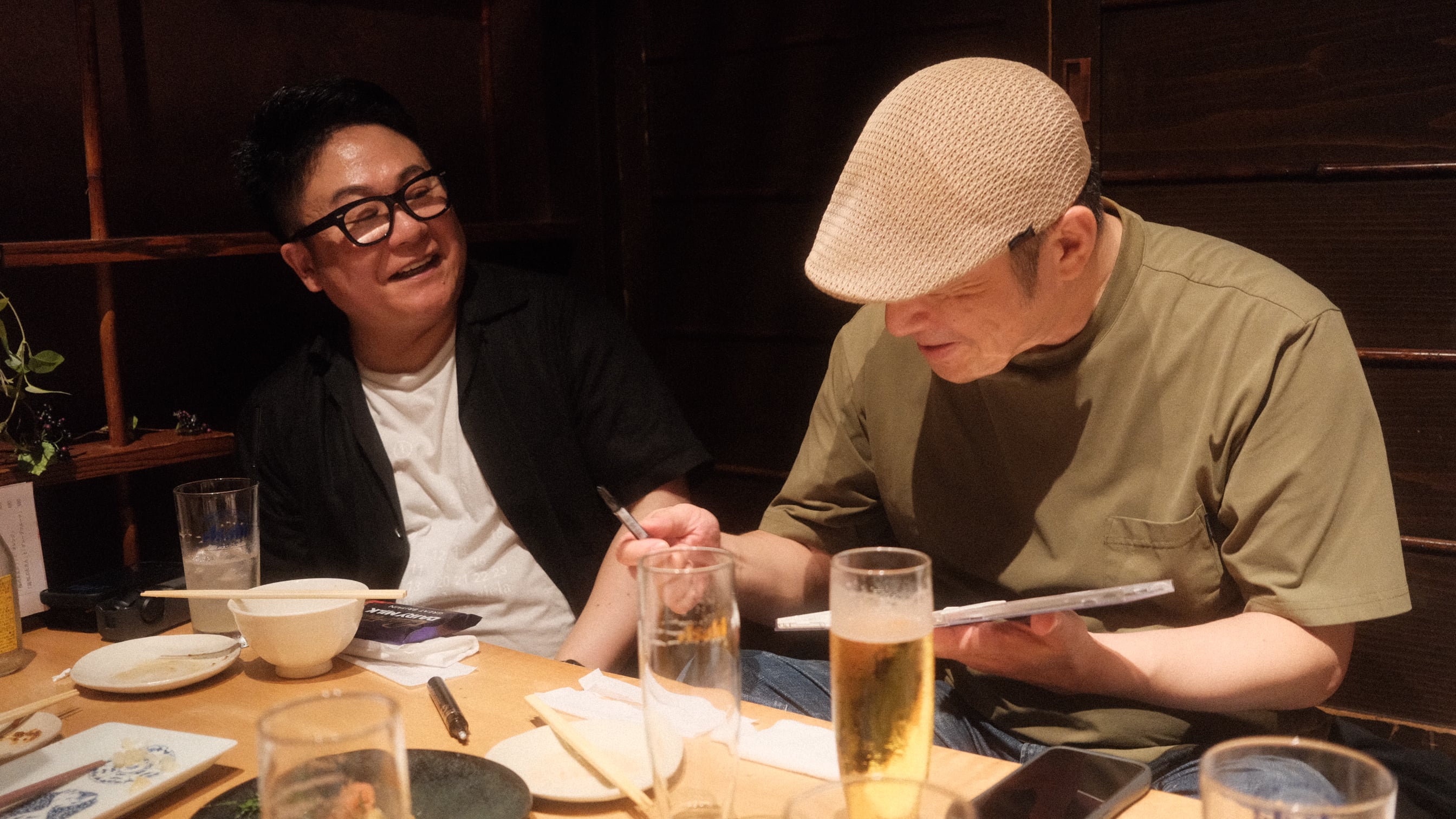
The numbers suggest Mizuguchi and Sega’s intuition were correct. Subsequent versions of Rez, like Rez HD and Rez Infinite, developed by Mizuguchi’s independent studios Q Entertainment and Enhance, eventually introduced the game to new audiences.
According to Enhance, Rez’s 2017 PC port and its inclusion in subscription services like PlayStation Plus and Amazon Luna helped give the game a second life. “Being able to have it on modern storefronts where you can watch a movie of it, buy it on sale, and it’s always available, really has helped Rez come more into its own now than it ever could have when it came out,” says biz dev boss Mark MacDonald.
For Kobayashi, it’s particularly gratifying to meet people who still remember the game and tell him how much it meant to them. “I think it offers an experience that’s completely different from anything else. Creators all around the world tell me how much they love it.”
Yokota shares that sentiment. “I’m genuinely happy that people are still discovering it. To see people today experiencing what I wanted to create back then and finding it interesting makes me feel glad to be alive.”
“I do feel like, looking back at the game, that we may have been a bit ahead of where the market was. At the time, looking at the title, we didn’t really have a genre that we could tie it to clearly.”
Kazdal concurs: “I think it’s utterly unique. I think it’s perfect for what it was. 25 years later, it’s still timeless. And it became more and more popular with every different release. There’s still nothing like it. That’s why Mizuguchi-San wanted to be in Shibuya. He wanted us to have the chance to have these different inspirations, and really do something that was utterly unique. And I think we totally pulled that off.”
Perhaps the most important aspect of Rez’s legacy, however, is what it set in motion. “I think the more than any sales number, the ultimate output of Rez has been the creation of all the art and people, and Enhance itself, that I think are inextricably tied to what Rez was, what it became and how it made people feel,” Mizuguchi says.
Even as the original game neared completion, Mizuguchi says he felt it was the beginning of something rather than the conclusion of a project. An old message he posted on United Game Artists’ website after development declared that his work on Rez wasn’t finished.

He says that statement had two meanings. The first was a commitment to improving the original experience, whether through higher resolutions or making it more immersive with virtual reality. The second was a creative philosophy he would continue exploring: the merging of music, visuals, and interactivity, and the possibility of applying those principles to different genres.
That ambition would eventually find its way into Lumines and, perhaps most successfully, Tetris Effect. The latter takes one of gaming’s most familiar mechanics and transforms it into an audiovisual experience in which every movement, rotation, and placement contributes to an evolving musical composition.
“In some ways, I think Rez has been kind of like a beacon that’s pulled people into the sphere of chasing this work with me. I’ve been working for 20 years with Mr. Ishihara, who’s the director of Tetris Effect and helped on all of Enhance’s products, but was with me even before that.
“And he played Rez as a high schooler, and eventually that led him to come to me and say, ‘I want to work with you. I want to build things with you.’ Rez seems to have this special ability to drive this whirlpool, pulling people into the kind of greater aspirations of making these synesthetic experiences together.
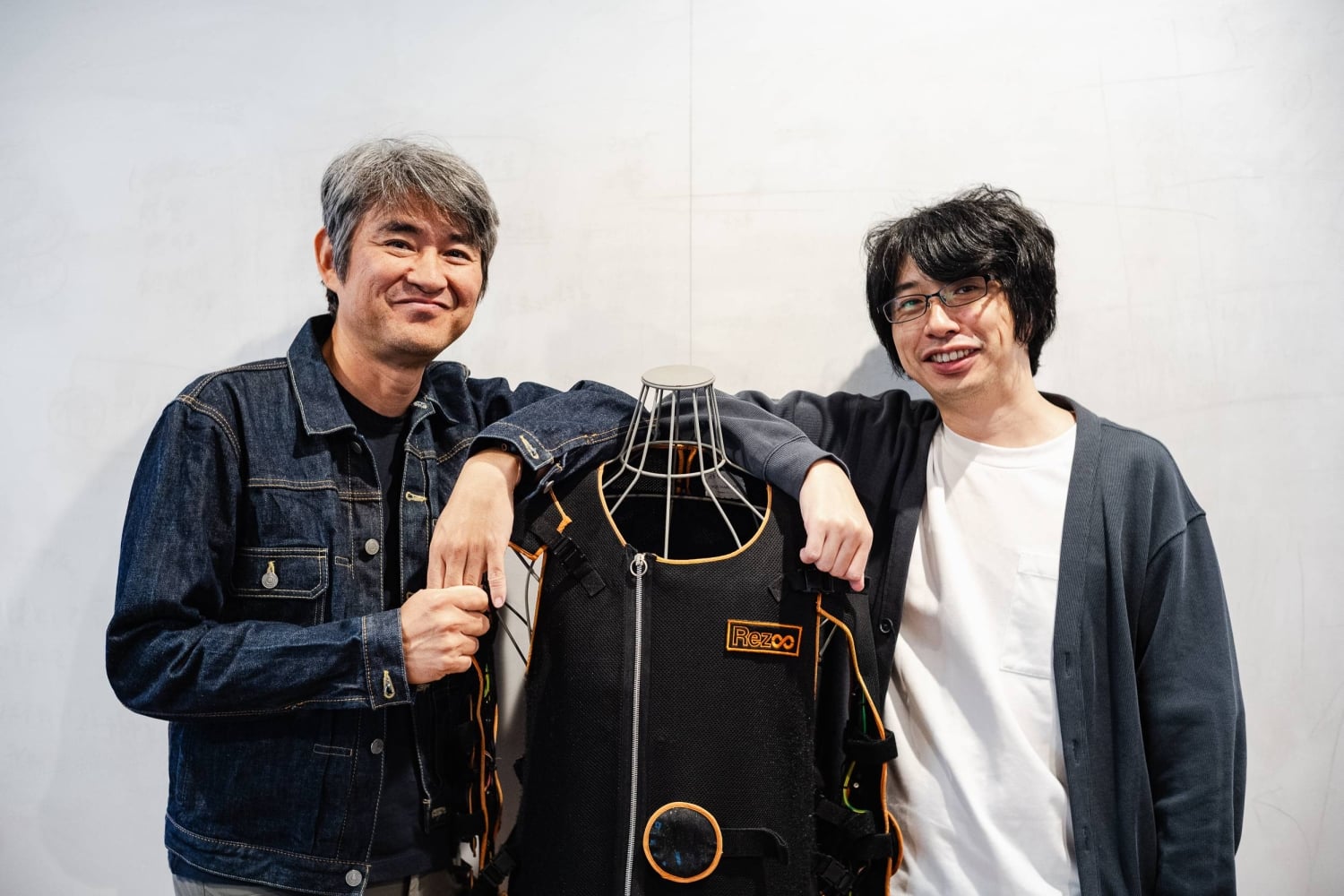
“When I first made it, I didn’t really know how to describe it or to enumerate to people what I was after, but it continues to have this pull, both for creators and I think for players years later as a result.”
The sequel that never was
There was, however, a period when Rez itself almost had a direct continuation. For a brief period in 2002, Rez 2 was a project in early development. In a recent meeting, the game’s developers shared exclusive details and concept art with VGC, showing just how far it got.
Shortly after the original Rez’s completion, Mizuguchi gathered Kobayashi and Yokota to explore ideas for a sequel. The trio spent a couple of months working through a central concept and producing a small number of basic prototypes that they were able to play internally.
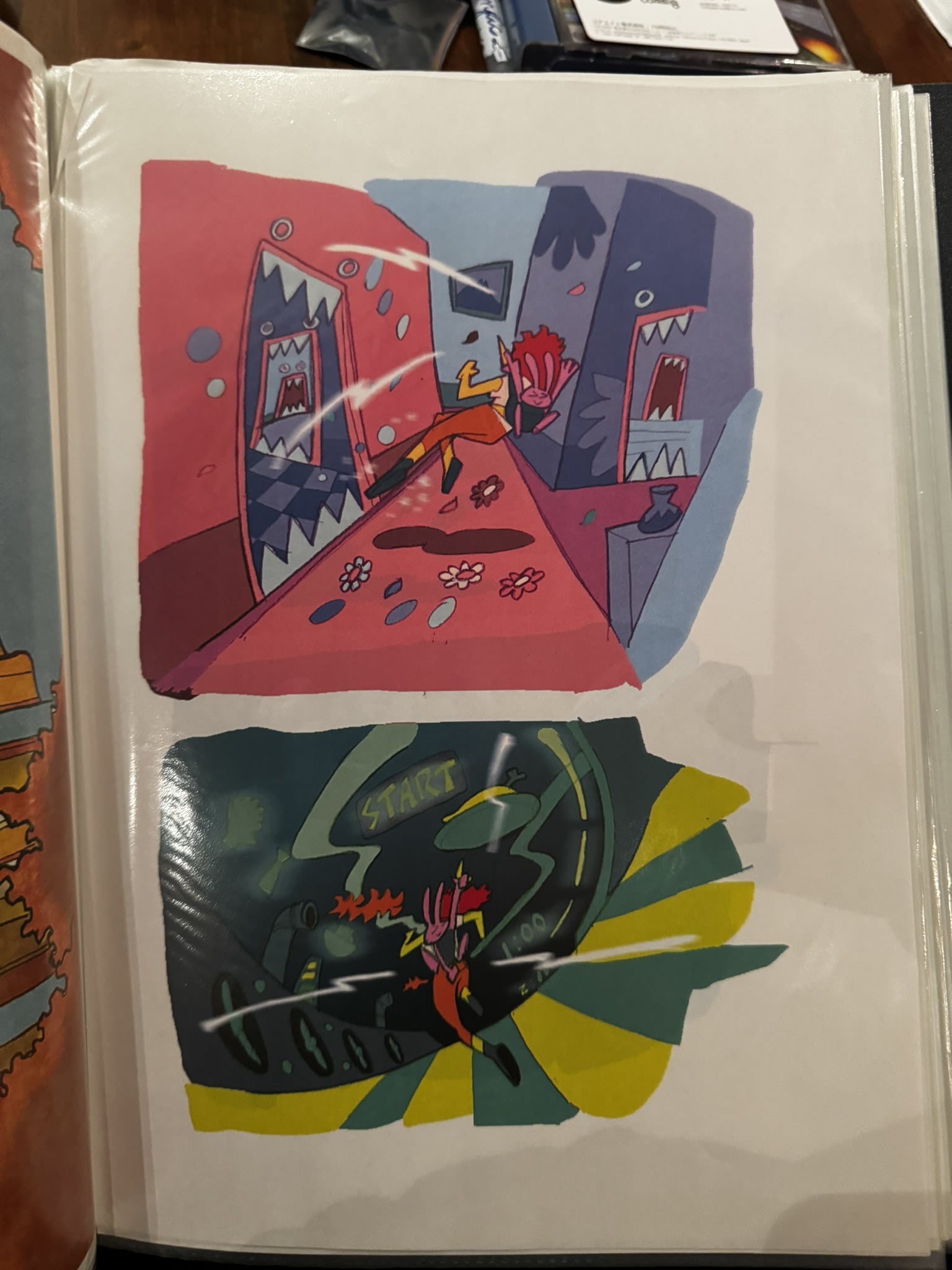
A storyboard for the game’s opening, shown to me by its developers, suggests a stronger narrative focus was planned for Rez 2, with the player character depicted as a human deployed into cyberspace to save the world from a digital threat, deployed by unknown actors who communicate via voice comms.
Unfortunately, the timing meant that Rez 2 had little chance of making it beyond the pre-production stage. “It was right at the time that Sega was transitioning to a third-party publisher,” Mizuguchi explains. “And in doing so, I think the internal climate and appetite for these titles that pushed boundaries and were a little more out there really diminished at the company level.”
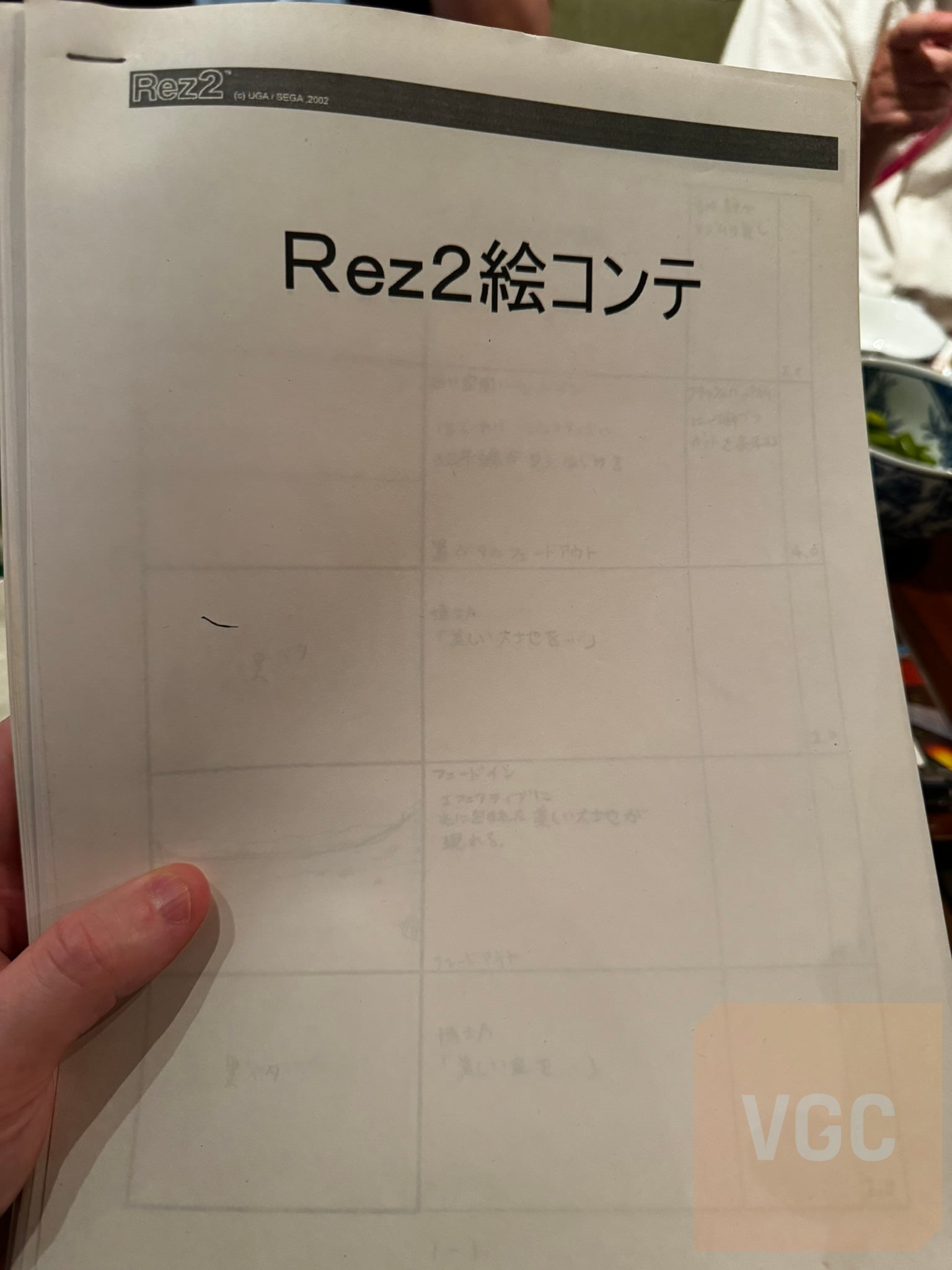
Yokota recalls: “There was an executive from Sega of America, Mike Fischer. He came to see the game and said something along the lines of, ‘Mizuguchi’s game isn’t going to work in America.’ And that was the end of it.”
“We just kind of put it in the freezer,” Mizuguchi adds, “and I think in many ways that sort of shift in how the company thought about creating things is also what sort of moved me to look elsewhere because I did want to continue to make strange and interesting and new things, and felt like if I couldn’t do it at Sega, then I was going to have to find my path.
“And so, you know, the happy end of that is that obviously spurred me to form Q Entertainment and Yokota-san and also Kodera-san, somebody else who still works with us.”
Jake remembers a little more about what the proposed sequel might have looked like. The team had produced a concept video, for which he provided the voiceover. Its central image was a girl on a swing, presented in a minimal, stylish aesthetic. “I thought it was the coolest thing I’ve ever seen,” he says. “I was like, this game’s gonna hit. This is the time.”
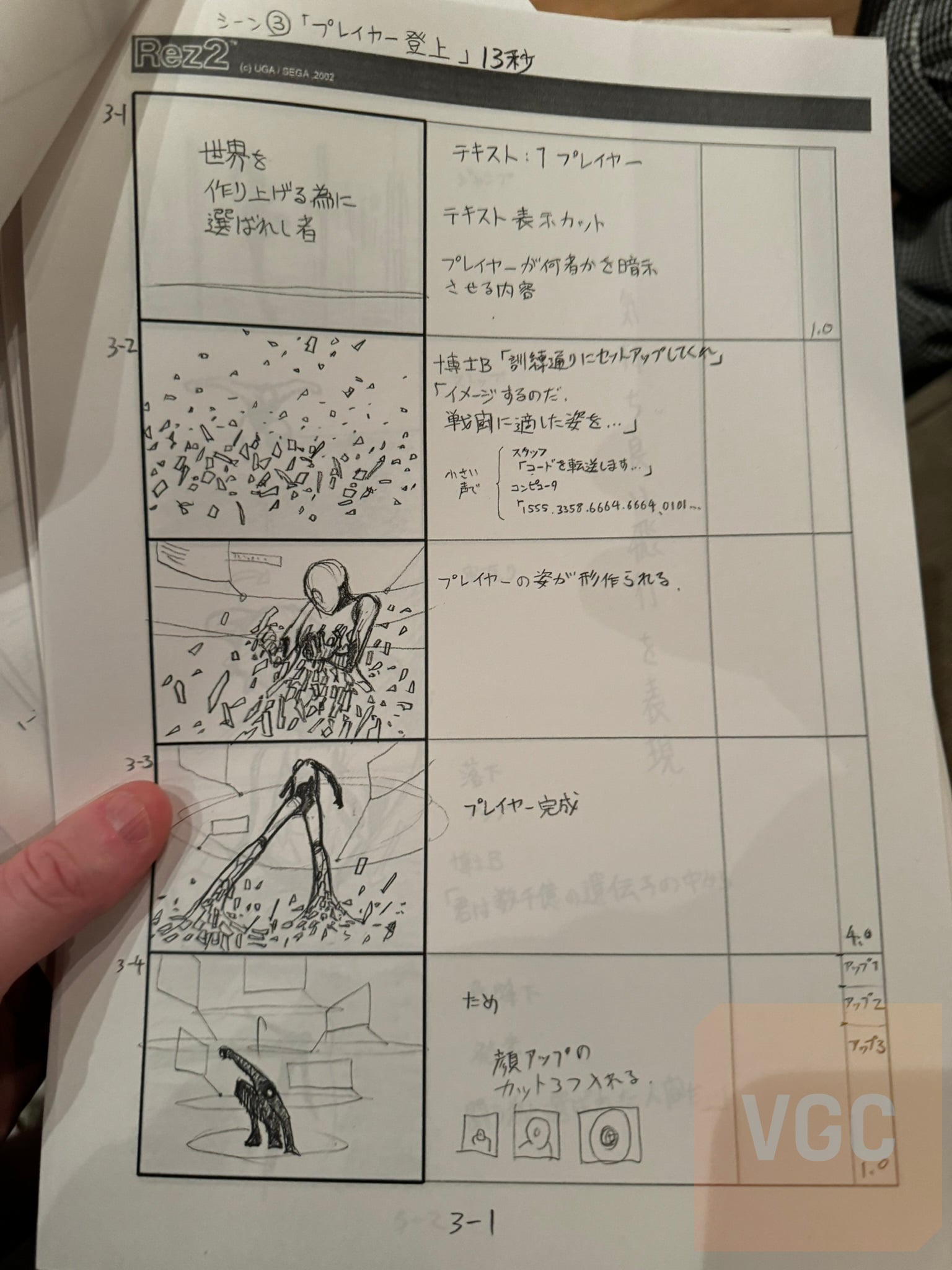
Kobayashi remembers: “For the second one, we wanted to move away from that approach a little. We had separate animated sections and tried to include more story. We had narration, too, and we were considering asking the studio that made Evangelion to produce some relatively simple animation.
“I had a feeling it might come to an end, though. Things didn’t seem particularly active, and Mizuguchi looked like he was having quite a difficult time.”
The director was right to be concerned. By the end of the following year, after work on a Space Channel 5 sequel had been completed, Sega announced the dissolution of United Game Artists and the transfer of its members into Sonic Team. The following month, Mizuguchi announced his exit from Sega.
Former Sega of America president Peter Moore offers a different perspective on why the sequel never materialized. Speaking to VGC about the project, he suggested that the issue wasn’t simply Sega’s withdrawal from hardware or its changing appetite for experimental games, but whether a sequel could offer enough of a leap to justify its existence.
“Rez 2, I can almost guarantee you wouldn’t have been successful,” he says. “It’s one of those where people loved it, and then you should leave it alone. You know, move on. It’s been a long time, but probably we looked at it and thought, it’s not a quantum leap from Rez that people would buy it fresh.
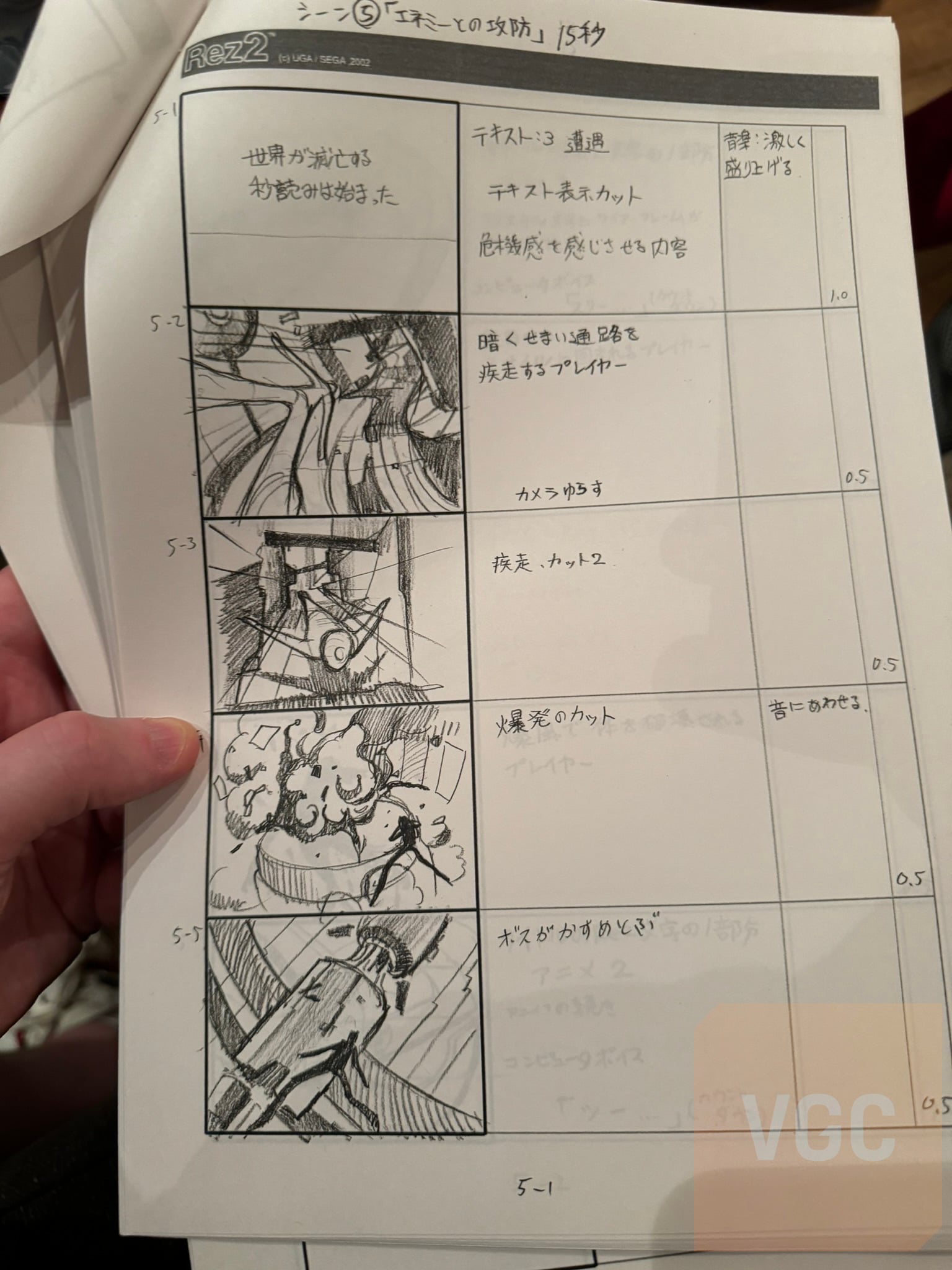
“But Mizuguchi is the nicest guy, and one of my favorite people. A lot of Rez was to do with him and his energy. He was just a super guy, especially in relation to some of the other people I had to deal with.”
25 years later, Mizuguchi still isn’t closing the door on a proper sequel one day coming to fruition.
“Rez was built with Sega’s money, and so it is, of course, Sega’s IP. But because it’s such an oddball to begin with, they’ve been very open to us revisiting it because I’m closely linked to it, and I know how to handle it.
“I’ve been really grateful to be able to continue to update it, and return the favor they granted me in allowing me to explore that IP in the first place. And I kind of get the sense that they’ll continue to be open to us exploring the IP with them and continuing to pursue and grow it.
“And as far as Sega’s current efforts resuscitating and reimagining legacy IP… I mean, I have dinner with [Sega president] Shuji every once in a while, and we talk. And maybe one day some pitch will come from him along those lines. But at the moment, there’s nothing to talk about.”
The director’s seat
For me, Rez’s success is measured not in sales, but in the number of people it inspired to look at video games differently. It was the game that inspired many players, myself included, to take the medium seriously. And in my opinion, that makes it an enormous success.
Arguably, Rez’s most tangible legacy is in how it gave Mizuguchi and his collaborators a creative language they would continue to explore at Q Entertainment and Enhance, on games like Lumines, Meteos, Humanity, and the masterpiece, Tetris Effect.
Back in Kobayashi’s car, we pull up to his apartment, head inside, and he presents a debug Dreamcast console and stack of development discs from the back of a cupboard. After a shuffling of cables and button commands, he boots up a pre-release version of Rez, then called ‘Vibes’, complete with Underworld’s Rez and Born Slippy. I am in heaven. This is why I do this job.









Some external links on this page are affiliate links, if you click on our affiliate links and make a purchase we might receive a commission.