The GTA 6 Spoiler Interview Pt. 1: Rockstar on that Chapter 1 twist, cut content, and more
Rockstar’s Rob Nelson sits down for his most open interview yet

SPOILER WARNING: This interview contains discussion of a very early-game twist in Grand Theft Auto 6 and details of the closing mission of Chapter 1. If you’ve not played the game’s first chapter, and wish to remain spoiler-free, come back to this article later.
“How on earth did you keep that a secret?”
That was one of the first questions I asked Rob Nelson, producer of Grand Theft Auto 6 and co-studio head at Rockstar North, as we sat down for a lengthy, wide-ranging conversation about the game. I got the feeling that he, and everyone else at Rockstar, was absolutely desperate to speak to someone from the outside world.
It was days before the game was due to release, and despite everything that’s happened to Rockstar during the development of its latest epic, this one, frankly giant, story detail hadn’t been spread across the internet.
Was Rockstar ever going to talk about the fact that Jason and Lucia’s motivation, the driving force behind GTA 6, was there as-yet-unheard-of, son?
“Oh my God, I’m so happy,” Nelson tells me as I recount my shock at the reveal. “No, we never were going to [reveal it]. I am still holding on. Fingers crossed, how many more days? I’m praying it stays under wraps. Given everything that we’ve gone through, every day I’m just like, ‘please, please don’t do that, please don’t do that’.”
Perhaps no game in history has been subject to more high-profile leaks and cyberattacks, so the fact that (beyond some light forum chatter that was largely dismissed at the time) there was virtually no evidence of Jason and Lucia’s son anywhere on the internet is striking.
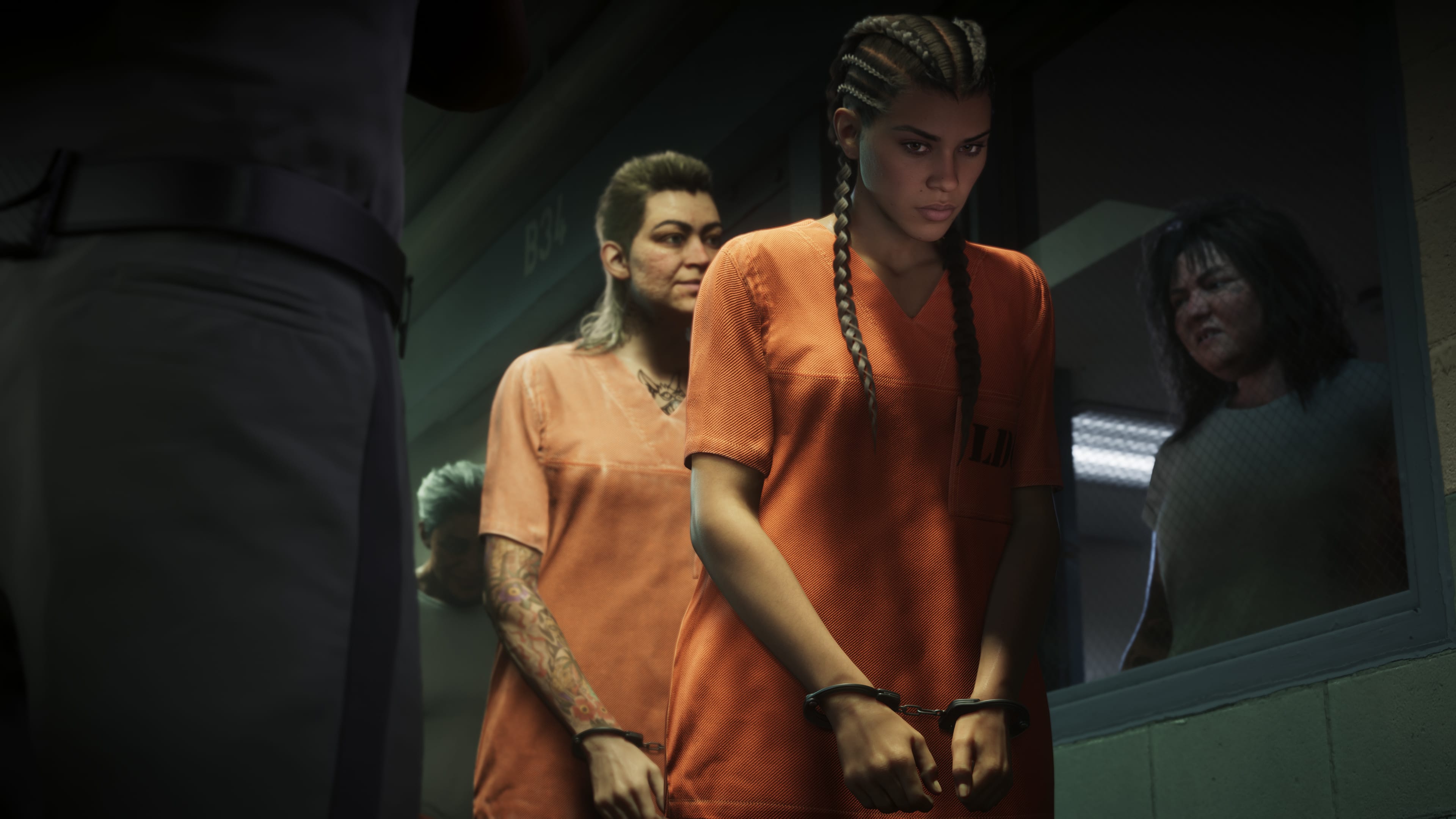
“It’s meant to shock,” Nelson says. “We were watching everyone speculate about the nature of their relationship and Jason’s character, and that takes it in a completely different context. You have something to strive for beyond a huge bank account at the end.”
As we spoke, Grand Theft Auto 6 was in the midst of taking over the world. Every mainstream news outlet had a story on people taking days off to play it. A pop-up store in London’s Selfridges attracted five-hour queues, with virtually all merchandise flying off the shelf on the first day.
Nelson was only an hour away on the other side of the M8, but I got the sense he, and by extension the team, were somewhere else entirely. “It’s a very surreal feeling. We’re extremely nervous. It’s very nice to be able to talk to someone who’s played it. You never know; it’s very different. I hope it’s a very different and a very familiar thing.
“We were watching everyone speculate about the nature of their relationship and Jason’s character, and that takes it in a completely different context.”
“We’re very nervous about that and how people react to it. It’s been a long time since we’ve shipped any of these. For us, it’s been 2018 since Red Dead 2. Time is dragging, the days are dragging. I think with everything that we’ve gone through, I’m just sitting here hoping more stuff doesn’t get spoiled. That experience of going through it for the first time is everything.”
Nelson tells me that he’s not been able to look at, much less play the game for a while. “I can’t look at it. I have to go do something else. A couple of weeks ago I had to play it for a couple of people, and I’ve not touched it since. People ask how I deal with the pressure of the expectation.
“It’s super intense, it’s super, super intense, all the way through, but I think I was always able to sort of compartmentalize it a little bit. I liken it to when you hear about a sports team in a seven-game series – just focus on the next game. We go out there to do what we’ve got to do.”
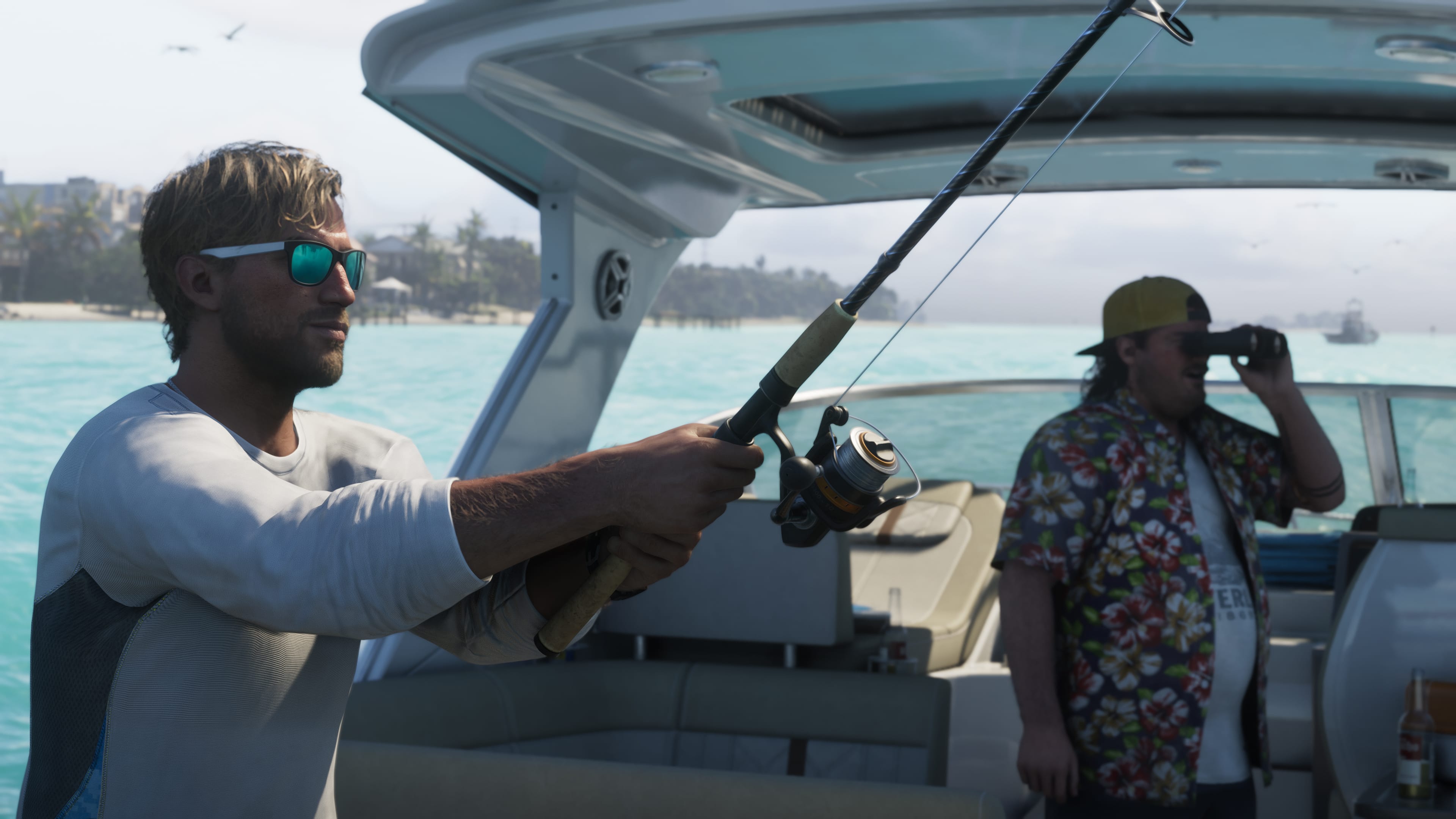
What the development team has done is deliver what is perhaps Rockstar’s greatest game. It’s a crime story that retains the spirit of GTA while leaving some elements of the past behind. While some fans in the days since release have highlighted older features they’d have liked to see included, Nelson tells me it’s not that simple.
“You’re aware of the noise all the way through development, and you’re aware of what people want, but with GTA 6, it means so much and so many different things to so many people. You’ve got to listen, but you’ve always got to ask what is important to us.
“Is it going to end up a mush? It’s challenging enough with the game being made by this many people, but we’ve ended up with something that feels very singular in terms of its version.”
One major change to Grand Theft Auto 6 is the game’s new criminal profile system, something that players have heralded as a new element of role-playing, but it’s also garnered pushback from players who want to rampage across Vice City without repercussions.
“You’re aware of the noise all the way through development, and you’re aware of what people want, but with GTA 6, it means so much and so many different things to so many people”
Nelson says that’s exactly what he expected. “It was funny, when we first started doing press for the game, it was fun, but it was frustrating because we had to talk in very abstract terms about things. But TGG (a GTA-focussed YouTube creator) was one of the early guys we showed stuff, and when he saw the little icon come up he said ‘what is that?’ He really pressed me on it: ‘Is that morality?’ and he said he couldn’t believe we did that and that it was going to change GTA.
“I thought, ‘oh shit, we’re in trouble’ but I said ‘it doesn’t change everything, it changes what GTA can be’. So for us, I think it opens a new range of choices and decisions for the player to make. You can still do whatever you wanted to do before, but now you have other options.”
Nelson says the system was designed to be additive, but that he knows and expects some players to “reject this new stuff we’re offering.”
“I hope it changes the way players who want to engage with it play the game. In GTA 5 you started with a bank robbery in North Yankton, and you’re murdering like 40 cops off the rip, and you’re setting these guys up as what they are.
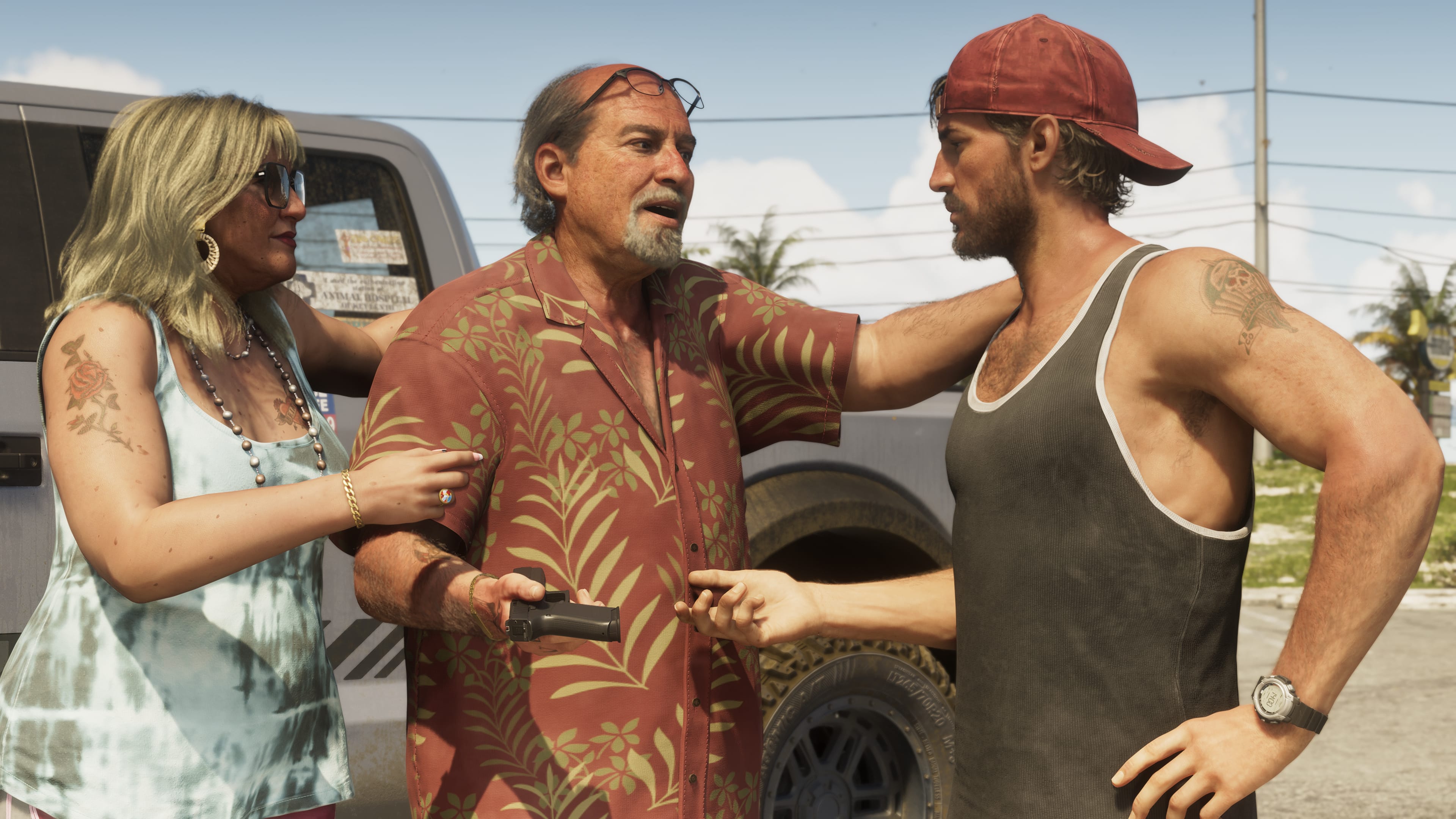
“We were conscious of that. Lucia takes the bullets out of the gun at the start of the game. She goes in, and it’s not like you can kill a bunch of people. So we wanted to start them off with a bit less baggage. They’re trying to make a go of this semi-legitimate life.
“When you pick up with Jason, he’s still a criminal; he’s still getting in trouble with Donnie and all that, but he’s sort of been living this relatively criminal-adjacent existence.”
This lack of baggage plays into one of Grand Theft Auto 6’s more noticeable changes. Hyper-violent weapons, like the chainsaw and the katana, which appeared in previous entries, are gone. “As far as the chainsaw – I think it would have been too much for this game at this resolution and these characters,” Nelson tells me. “ It’s not a resource thing.”
“Even at the most psycho, did Jason and Lucia really need that – what’s that going to look like?” Chainsaws physically appear in the game, but you can’t pick them up. In a game where players are trained to interact with most of the world, I asked about how the team decides something should be decoration only.
“Lucia takes the bullets out of the gun at the start of the game. She goes in, and it’s not like you can kill a bunch of people. So we wanted to start them off with a bit less baggage”
“You’re always trying to find what is the right sort of line and the right balance, it really just depends, you want to feel like you can interact with as much as the world as possible.”
Rob cites tennis, volleyball, darts, and golf as something you can’t do fully, but they’d have loved to with unlimited time. “We want to do everything, we want to pick up every guitar, we want to sit at the drums. Did we need to do full golf?” He laughs. “It’s not really these characters’ thing.”
Nelson explained that Rockstar decided against including a parody of Disney World for similar reasons. “It’s about whether there’s a narrative reason to spend that time to make a fully functioning theme park. We just figure out what we do need to support the story and support the feeling of being in Leonida.
“A theme park would represent a lot of work that we didn’t have, and we didn’t have a strong narrative reason to send them there,” he added. “That’s the challenge: where do you stop? When do you feel like it’s enough? We went as hard as we could on interiors, but you’ve got to fill them – they have to feel natural.”
While you might not be able to play 18 holes of golf, Grand Theft Auto 6 is a game that revels in freedom. This comes together in dramatic fashion during the closing moments of the game’s first chapter.
Jason and Lucia’s home is destroyed. Their pet snake has fled. All that housework for nothing. As the ominous beats of Travis Scott’s “Burn This Shit Down” vibrate through the controller, Lucia needs to escape.
“There’s always a trade-off between narrative and player agency. In that mission, we definitely had this feeling of ‘oh you need to sneak through this trailer and then you go through a route’ and then we’d have you look back and see the house burning all cinematical. We looked at that mission and thought ‘this is just a wanted level. I just have heat, it’s the basic game mechanic, I should be able to do whatever I want.’
“It’s a challenge for designers, it’s a challenge for the team because it’s easiest if you can control everything. If you allow it to be open, then obviously it can go sideways in innumerable ways, and we have to allow for that. It makes it harder to make sure the player hits certain beats and for production values to stay where we want them.”
Getting rid of annoying fail states was a central tenet of the game’s mission design, Nelson said. “Anytime we can reduce obnoxious or unnecessary fail states like ‘oh, the driver was spooked,’ it’s quite intentional. Your first objective in the game is to lose the cops. Not get in a car, not do this or that; it’s up to you. That’s very intentional. It can go any number of ways.
“I liken it to when you hear about a sports team in a seven-game series – just focus on the next game. We go out there to do what we’ve got to do.”
“We have to make sure there’s going to be cops there to get you, so it actually represents a lot more work to allow for that sort of freedom, but it’s worth it when it does work.”
All that work was about to pay off. Nelson didn’t know it when we were speaking, but the game was only days away from becoming the highest-rated game in Metacritic history, and the most successful media launch of all time.
“It’s nerve-wracking, but it’s fun, and we’re always having fun, but once you have to start locking it down and you can’t make changes, that’s really when the pressure is on,” he says.
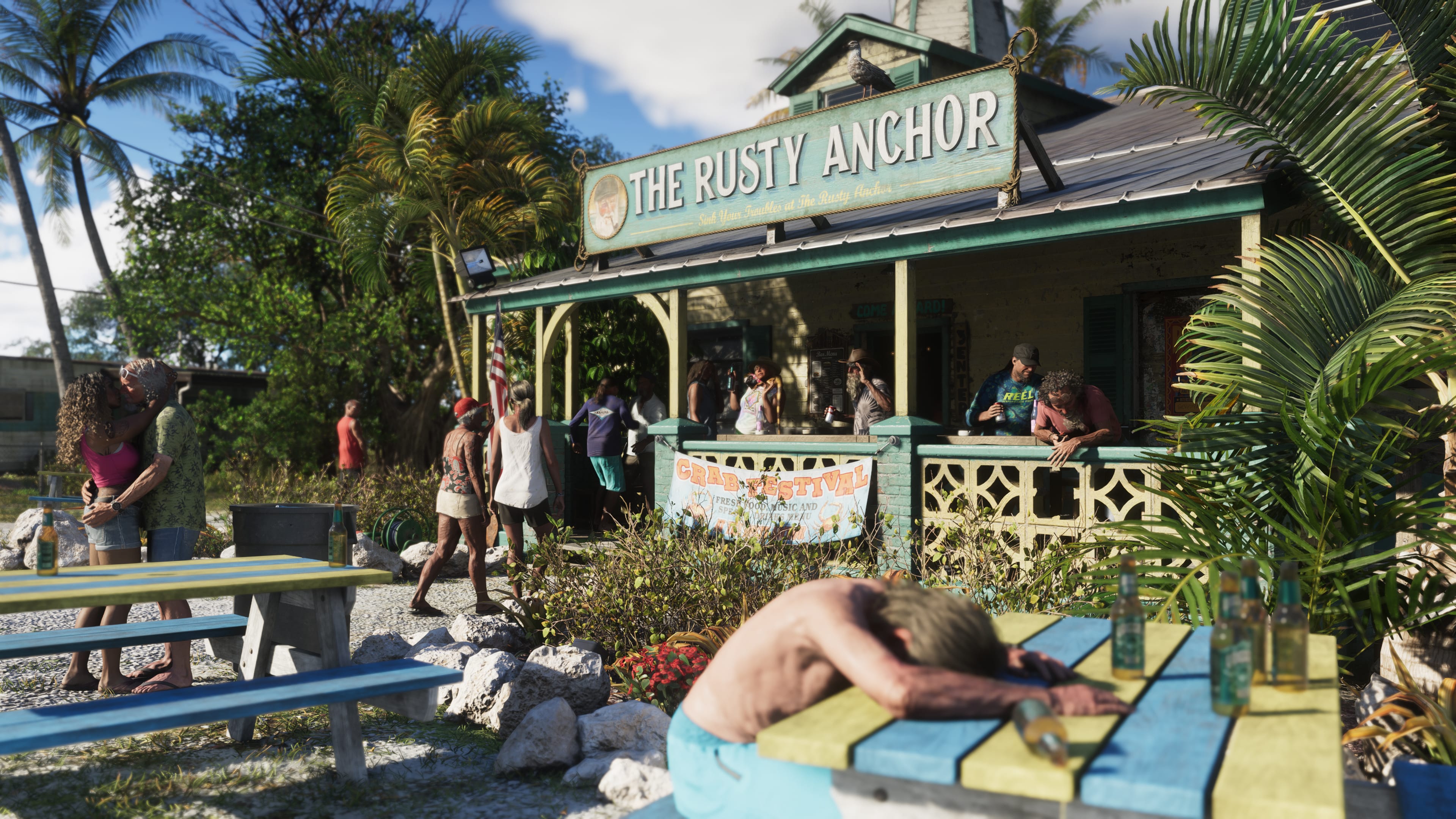
I tell him that, even early in my playthrough, I was struck by the level of environmental detail, and laughed to myself over the arguments that probably sprouted from something as simple as where a table is placed in The Rusty Anchor.
“That’s why I cannot play it,” he grimaces, “Even when I’m playing it for people, I know where all the little things are, I know where our little problems are. At a certain point you’ve just got to let it go because we would fiddle around with it forever.”
In the second part of our 80-minute conversation, we discuss the game’s explosive endings, ties to previous games in the franchise, and much more. Coming soon to VGC.