With The Duskbloods, Hidetaka Miyazaki is stepping into the unknown
The Elden Ring director explains how From Software’s Switch 2 exclusive is much more than just PvP
Hidetaka Miyazaki is feeling nervous. This weekend, select players will be able to try The Duskbloods, the next brooding action game from the globally lauded Dark Souls, Bloodborne, and Elden Ring director.
However, unlike the intricately crafted single-player games he built his reputation on, Duskbloods takes the ‘Soulsborne’ formula his games helped define and translates it into a fundamentally online experience.
Miyazaki’s games are famous for challenging players to abandon places of safety and venture into the unknown, and just like players stepping away from the comfort of their bonfire, Duskbloods feels like Miyazaki asking the same of himself.
While the Souls games are famous for their mostly asynchronous connection to other players – through messages, invasions, and summons – Duskbloods is built entirely around competitive play. And by his own admission, the director isn’t very good at it.
“I did come into this not being a big PvP player, that is definitely one element of the discussion,” he tells VGC in a recent interview in Tokyo, Japan.
“But while my nerves and reaction speeds are shot at this point, there are many other ways I can enjoy The Duskbloods and use the situation to my advantage. I like to sneak around and observe the battlefield and strike while others are fighting, or drop in as a third party and cause havoc, just mess with other players.”
“There are many ways to play The Duskbloods, and the main reason you’re playing this game is not necessarily to engage in PvP, but to win at the end of the day.”
If it weren’t for the six-foot armored knight placed in its reception foyer, From Software’s modest Shinjuku headquarters would give little indication that it houses the people responsible for some of gaming’s most influential worlds.

I’m here in the height of summer, when From’s monotone meeting rooms provide shelter from both the grueling humidity of the Japanese heat and the organized chaos just outside, where the world’s busiest transport hub hums with activity.
From is a famously secretive studio, rarely granting studio visits or interviews, and Miyazaki himself almost never appears on camera. Beyond the initial security door is a floor-to-ceiling glass cabinet filled with Game of the Year awards – one of the few clues to your surroundings.
Beyond that, I get to see very little of where the magic happens, limited only to a few bland meeting rooms and the toilets – which we’re required to be escorted to, lest we glimpse any hidden secrets other than The Duskbloods network test I’m here to try.
The Duskbloods Brings FromSoftware’s Combat Online
Unlike last year’s Elden Ring Nightreign, a co-op roguelike that Miyazaki wasn’t involved with, Duskbloods is a PvPvE experience in which eight players battle for supremacy. Miyazaki says Duskbloods presents an opportunity to use years of ideas explored during development of the Souls games and Elden Ring, which he ultimately felt didn’t quite fit inside of a single-player adventure.
“Looking back to Demon’s Souls times, we’ve always explored these online elements such as the covenants and these relationships between players,” he explains. “But for a single-player focused game, there’s a lot that you can’t kind of digest or resolve too gracefully within those confines of a single-player game.
“We’ve made many titles since then, but some things don’t quite fit. For instance, these elements don’t quite suit Elden Ring, for example. So, Duskbloods is a way for me to implement all of these ideas that I’ve been wanting to try in an online space.”
According to Miyazaki, Duskbloods began as an idea he pitched during a partner talk with Nintendo. He wanted to see if the layered worlds and oblique storytelling of his single-player games could work in an online setting. At the same time, the director wanted to empower different playstyles for those, like him, not so keen on PvP competitiveness, while exploring mechanics that could alter how players relate to one another.
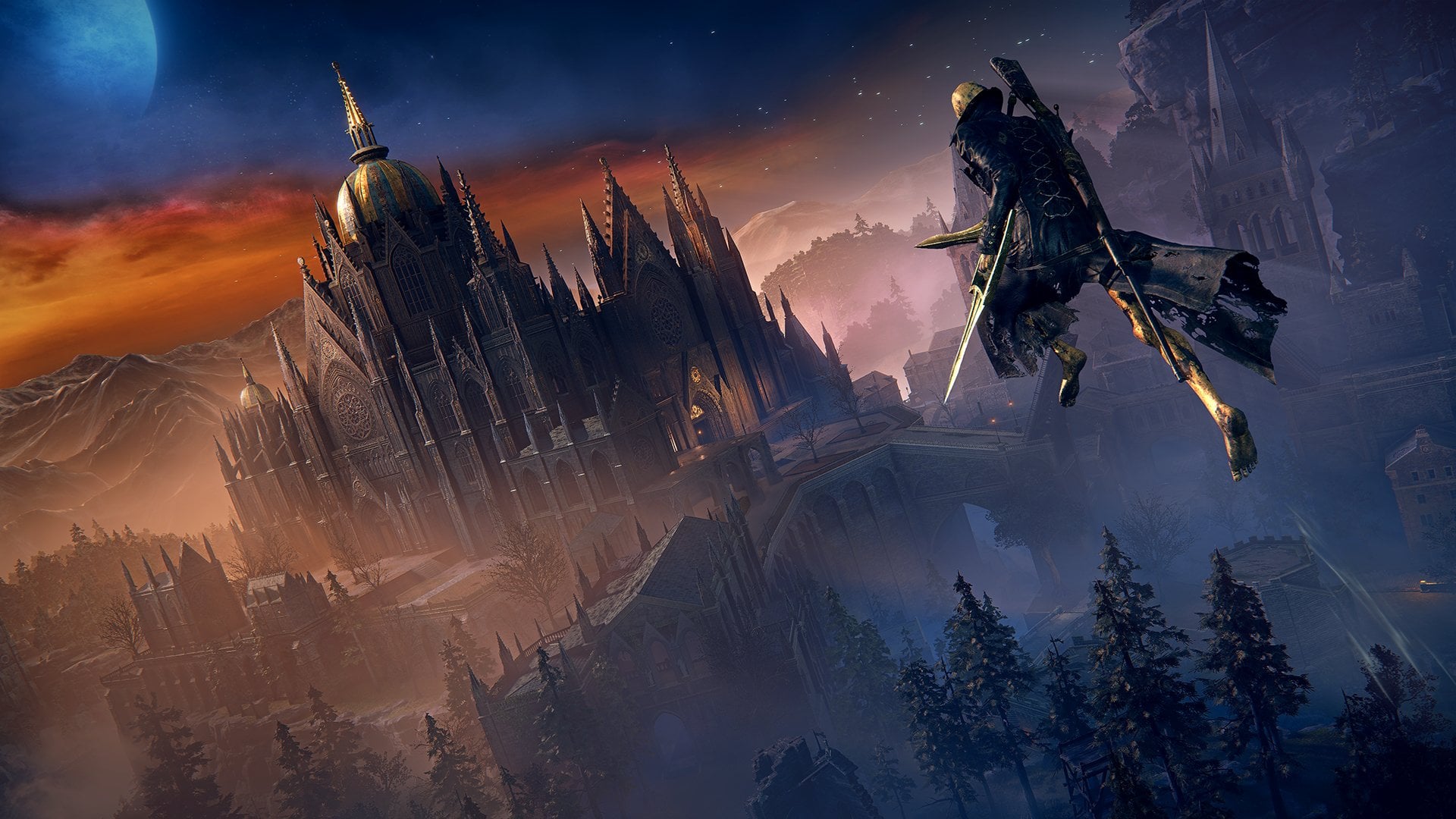
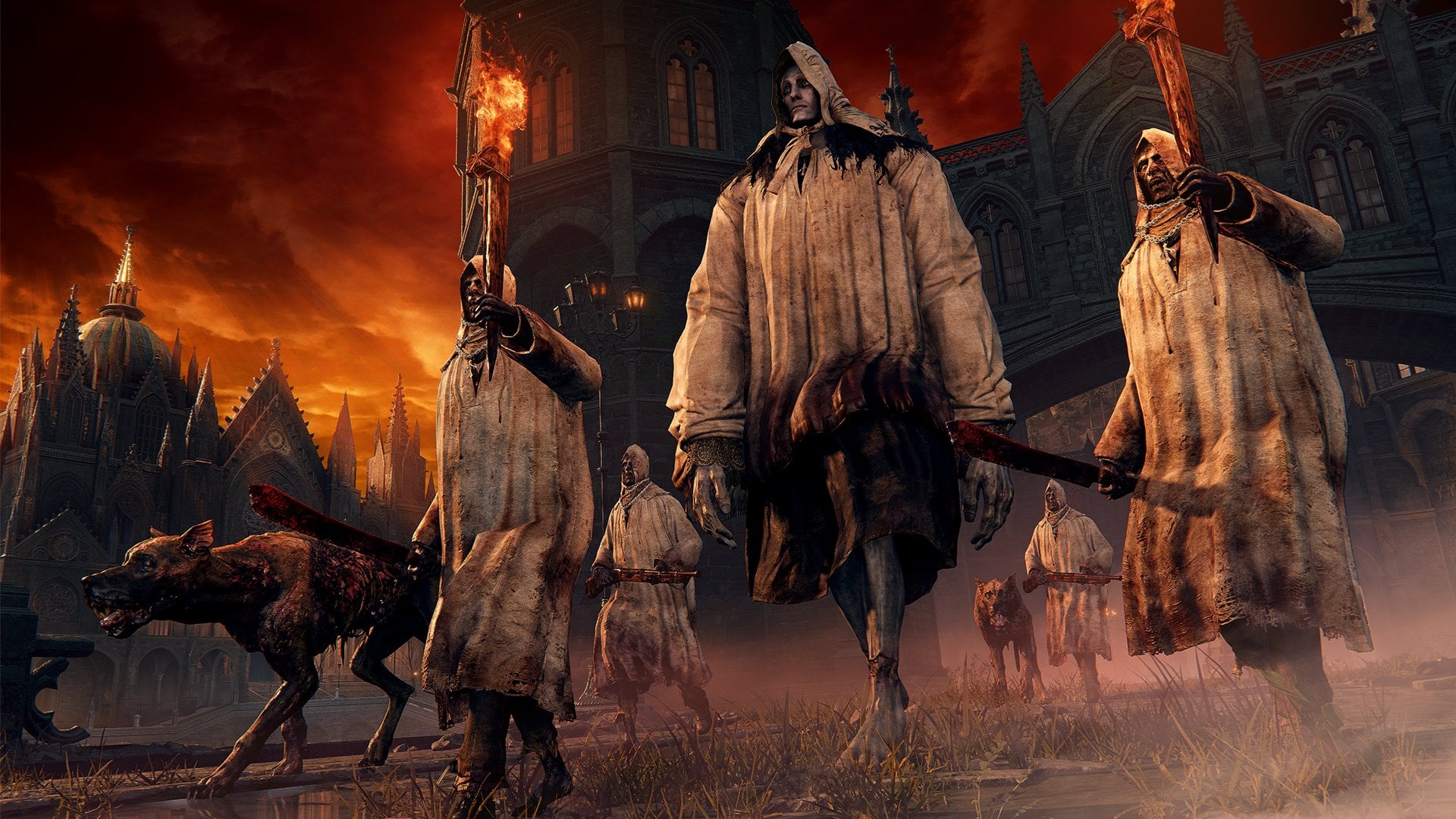
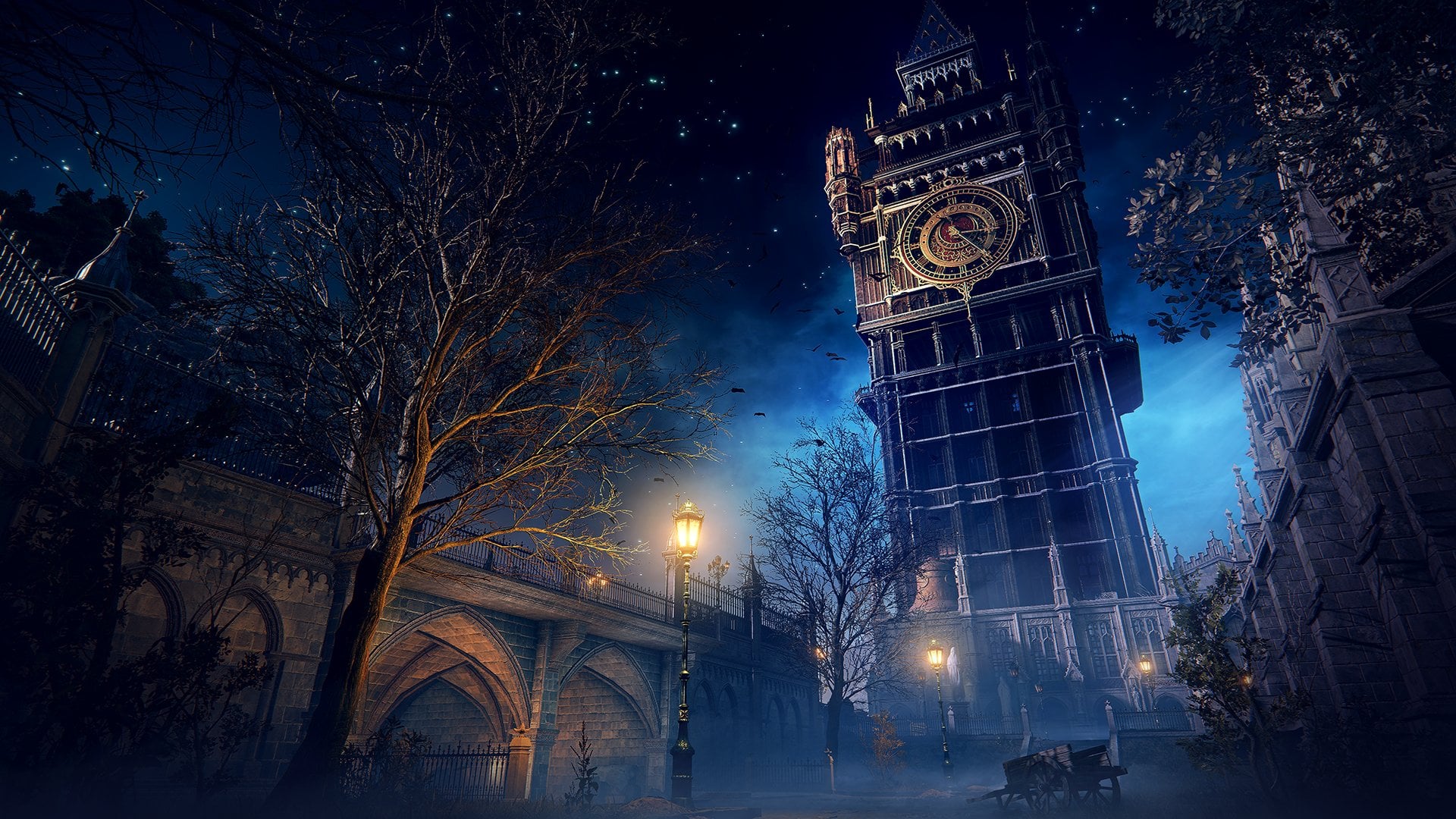
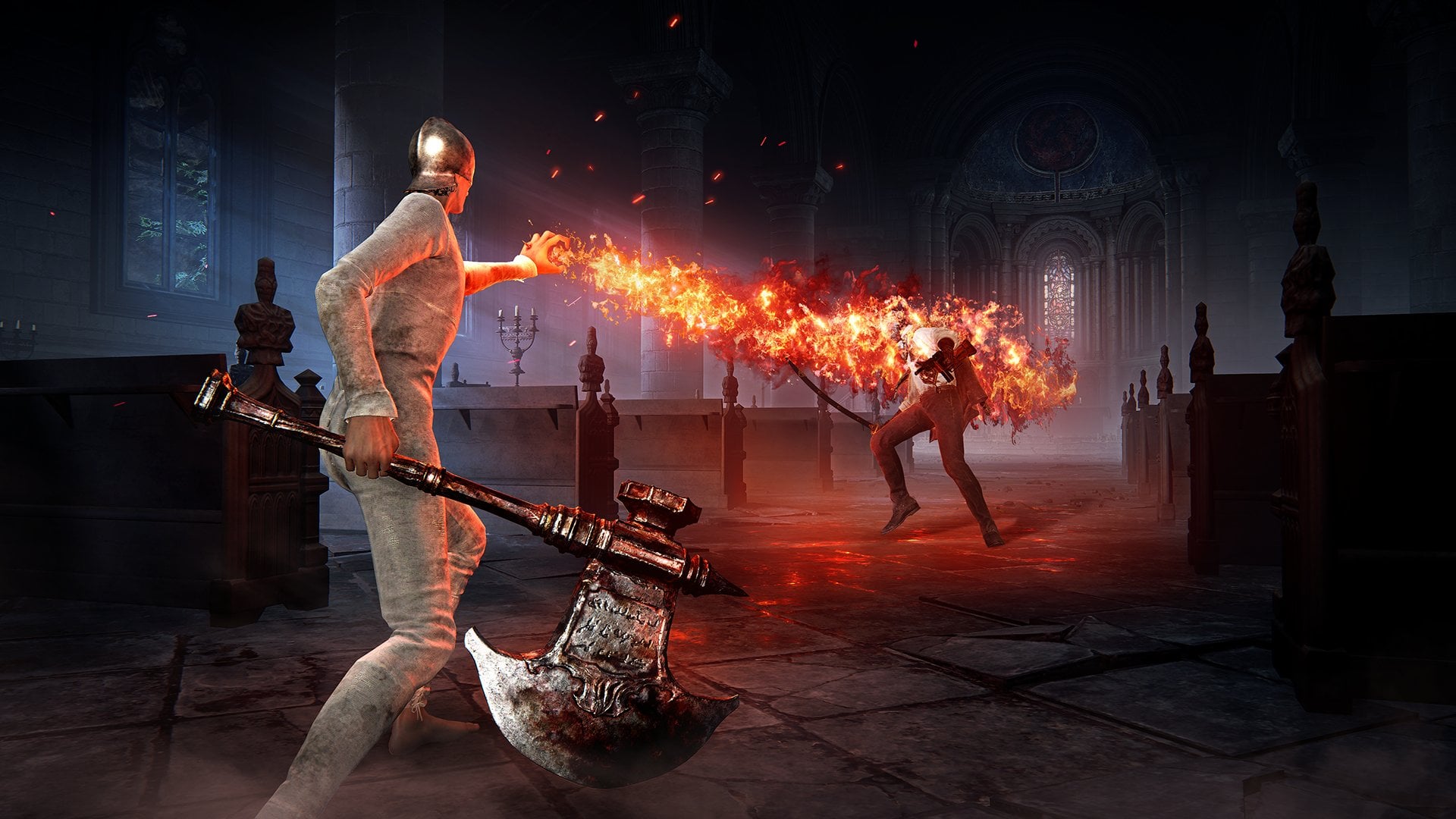
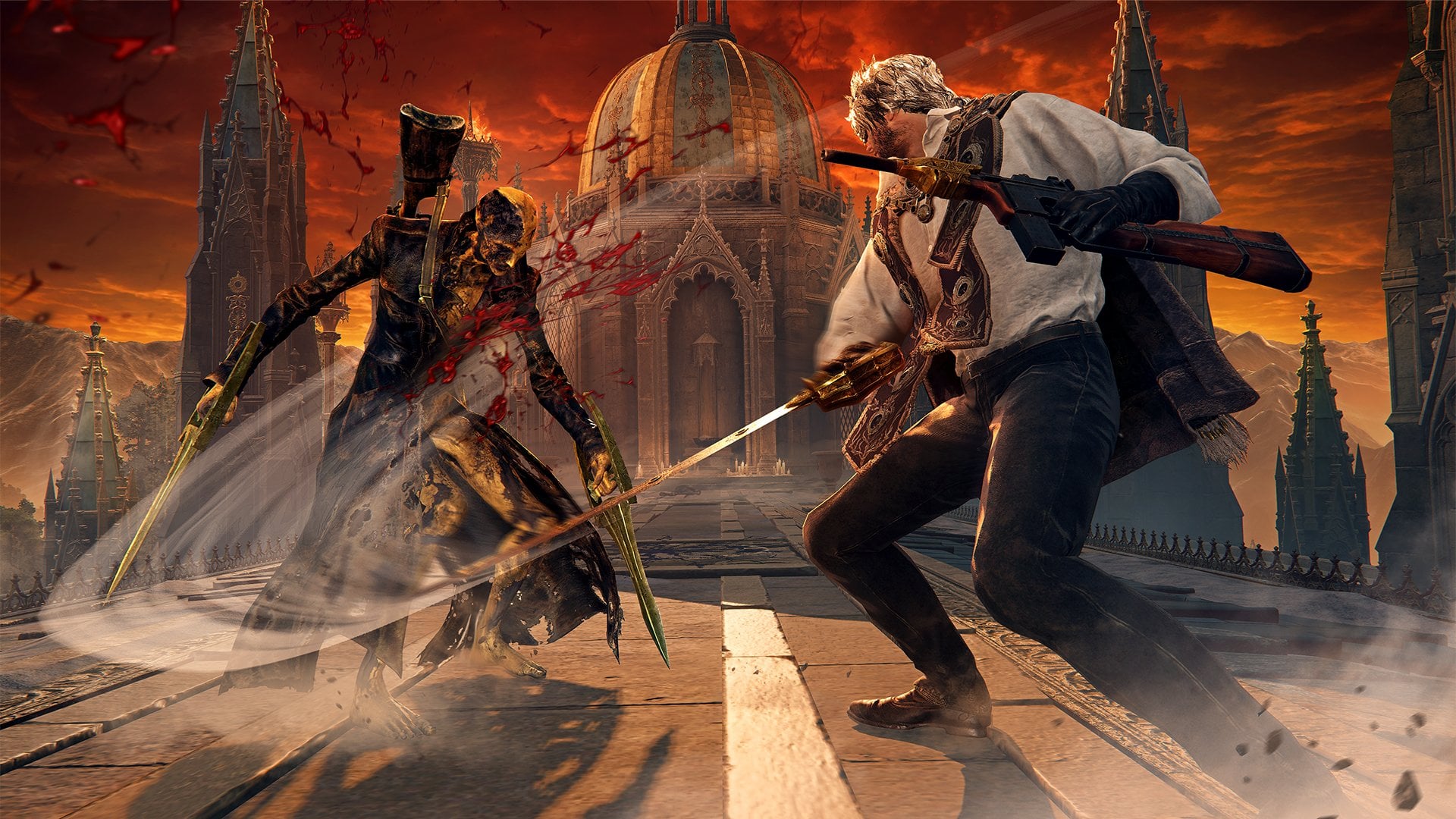
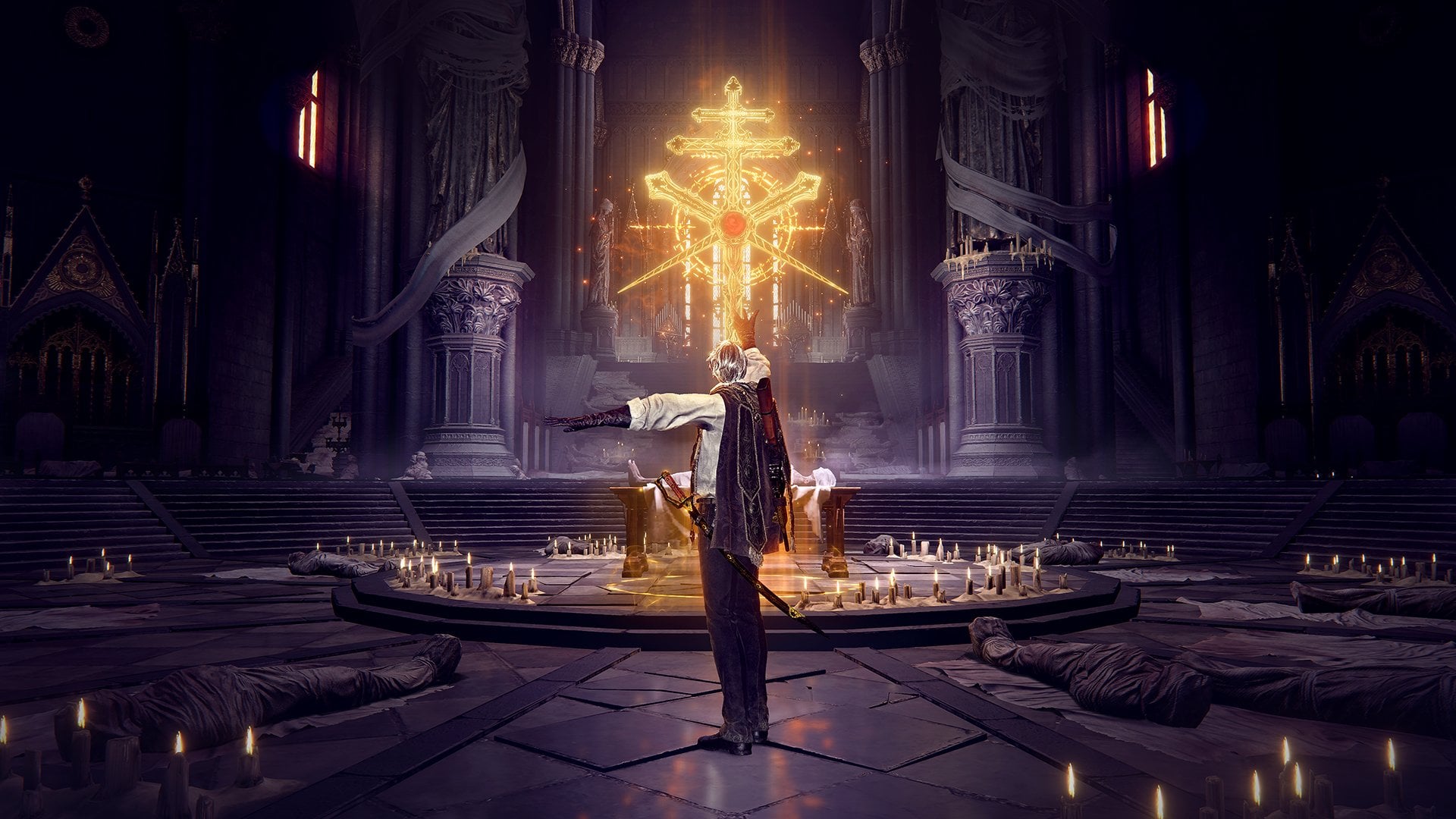
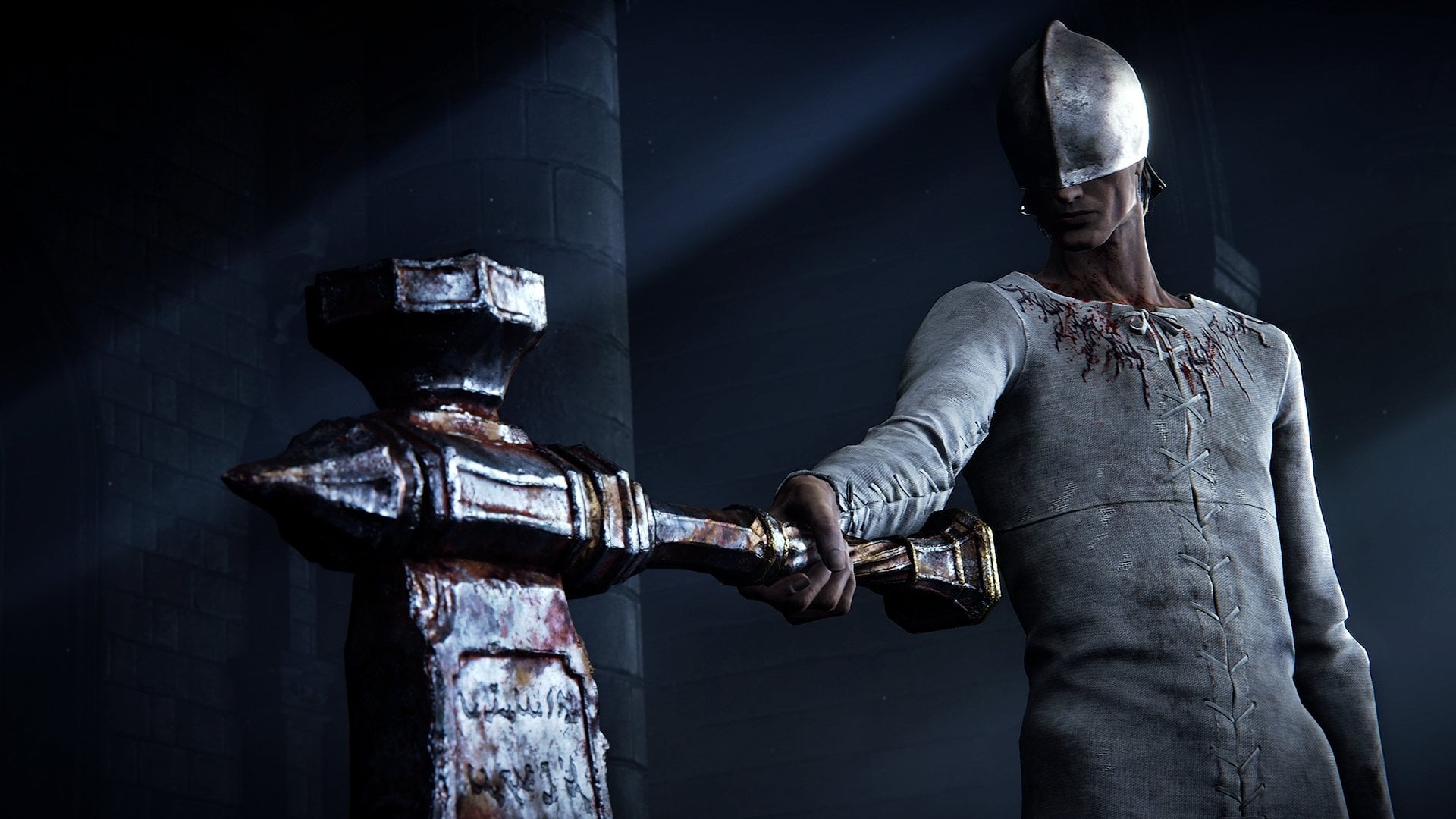
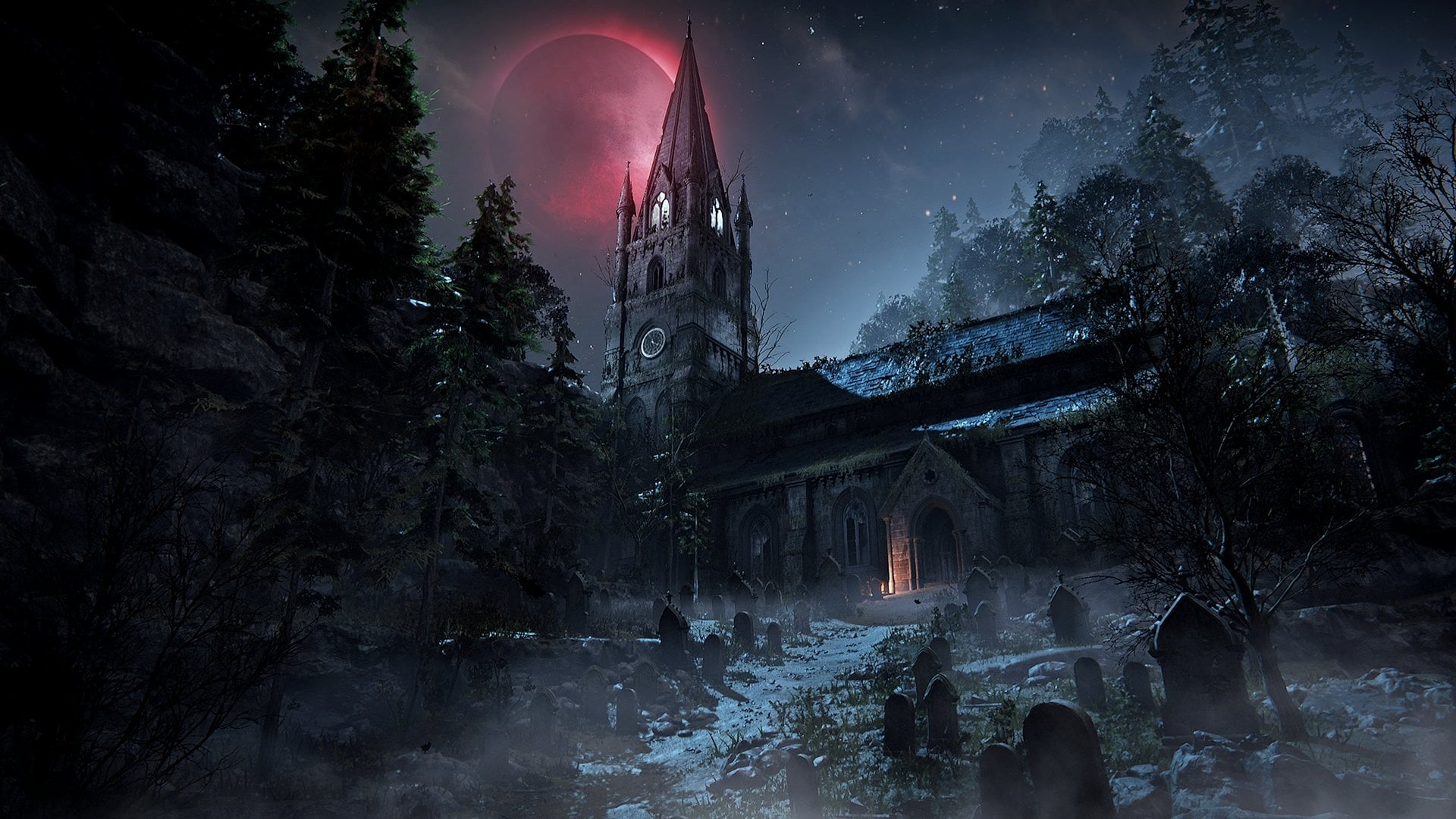
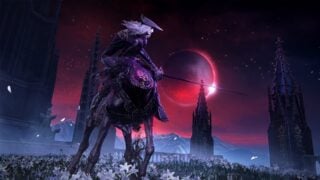
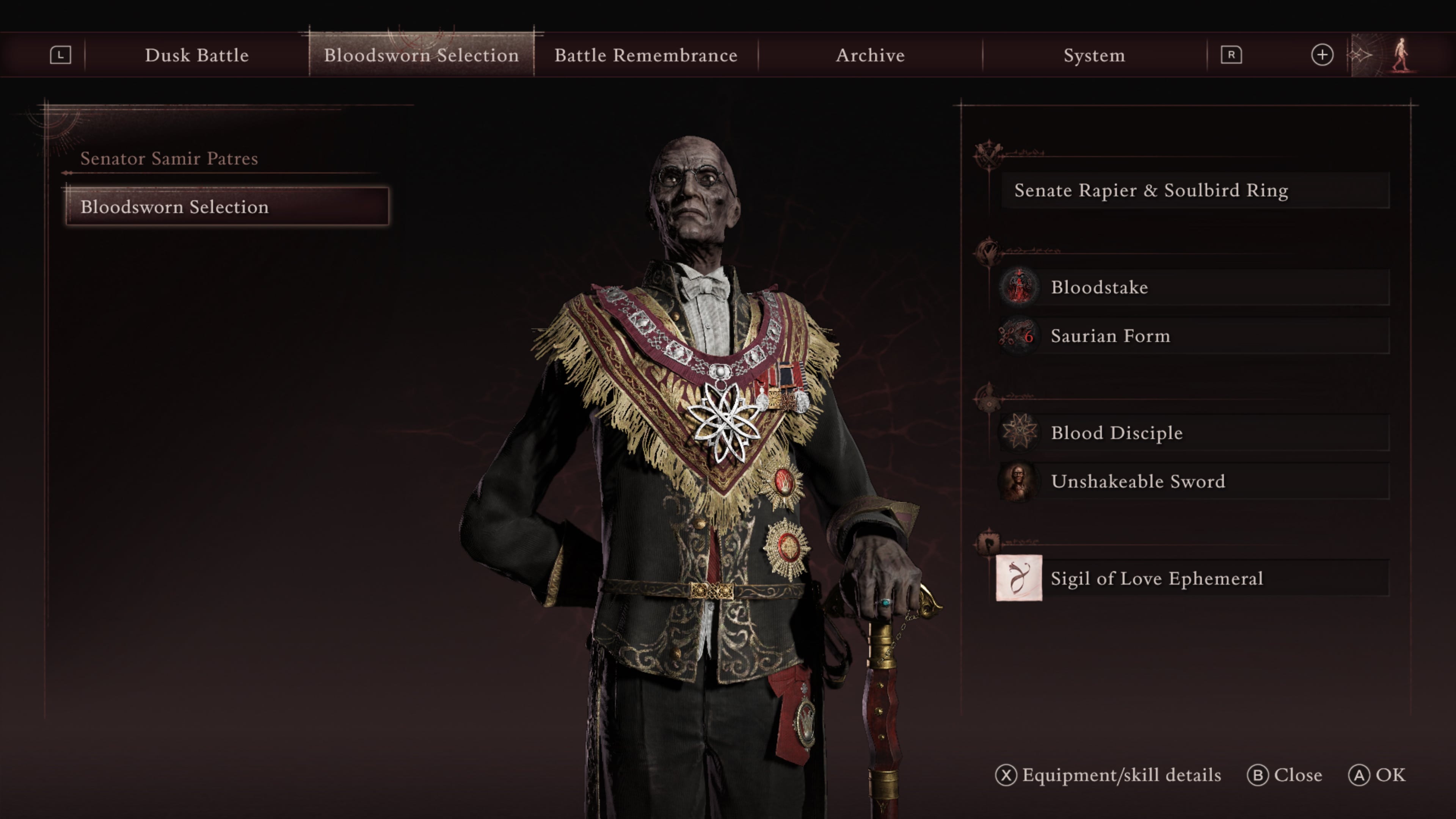
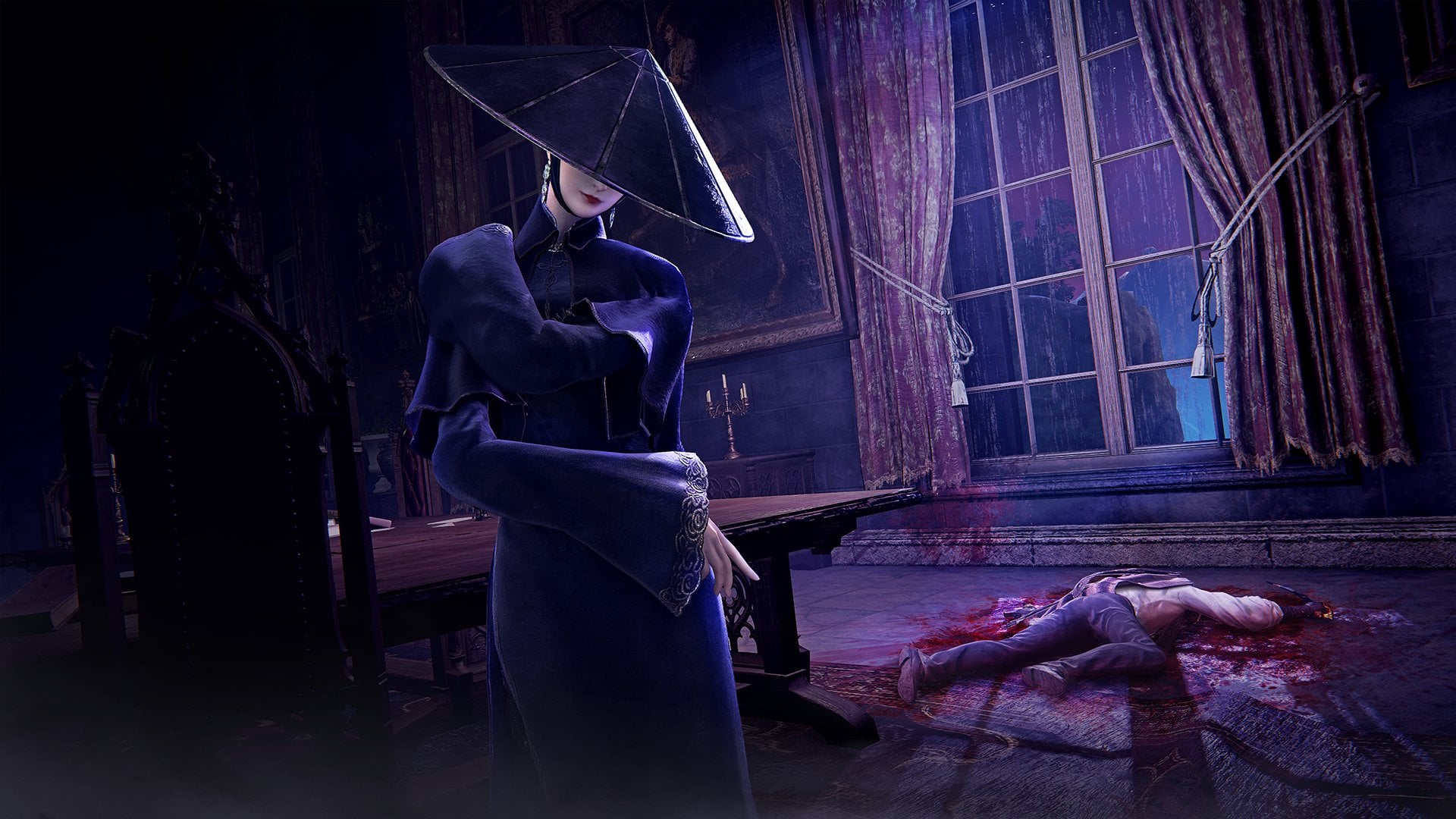
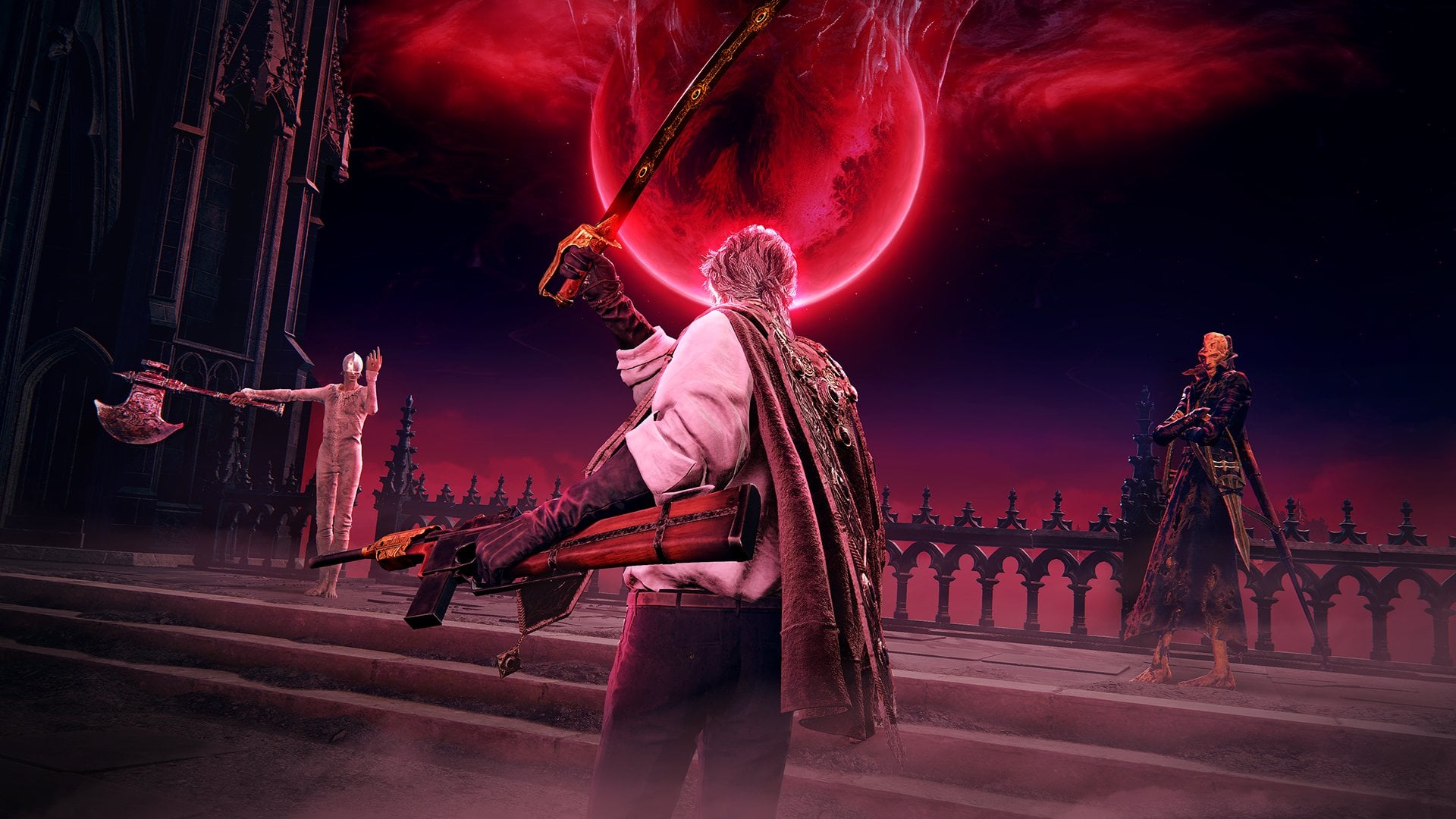
The result is a hybridized experience that incorporates bits of Miyazaki’s past games with ideas plucked from battle royale, extraction shooters, and even board games. Players control one of ten customizable characters (six of which feature in the network test) called Bloodsworn, a sort of From Software multiverse of rogues from across time who’ve been summoned to an end-of-days brawl for something called ‘First Blood’.
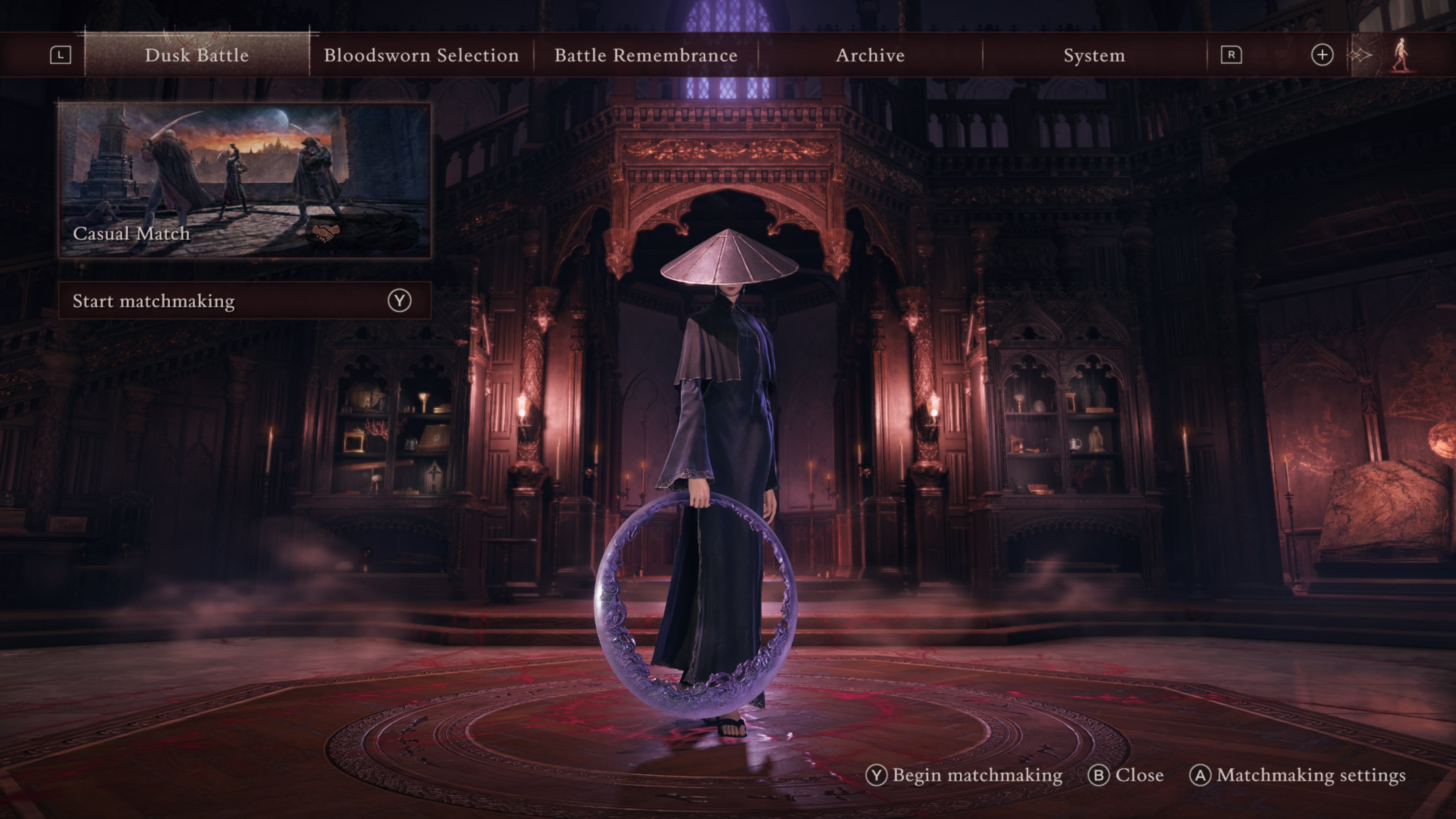
In Duskbloods’s main mode, Dusk Battle, eight players deploy onto a large map to battle unsettling AI foes and each other across four rounds, with the worst-performing Bloodsworn eliminated at the end of each stage. Six players make it to round three, then the match culminates in a three-way finale to decide an ultimate winner.
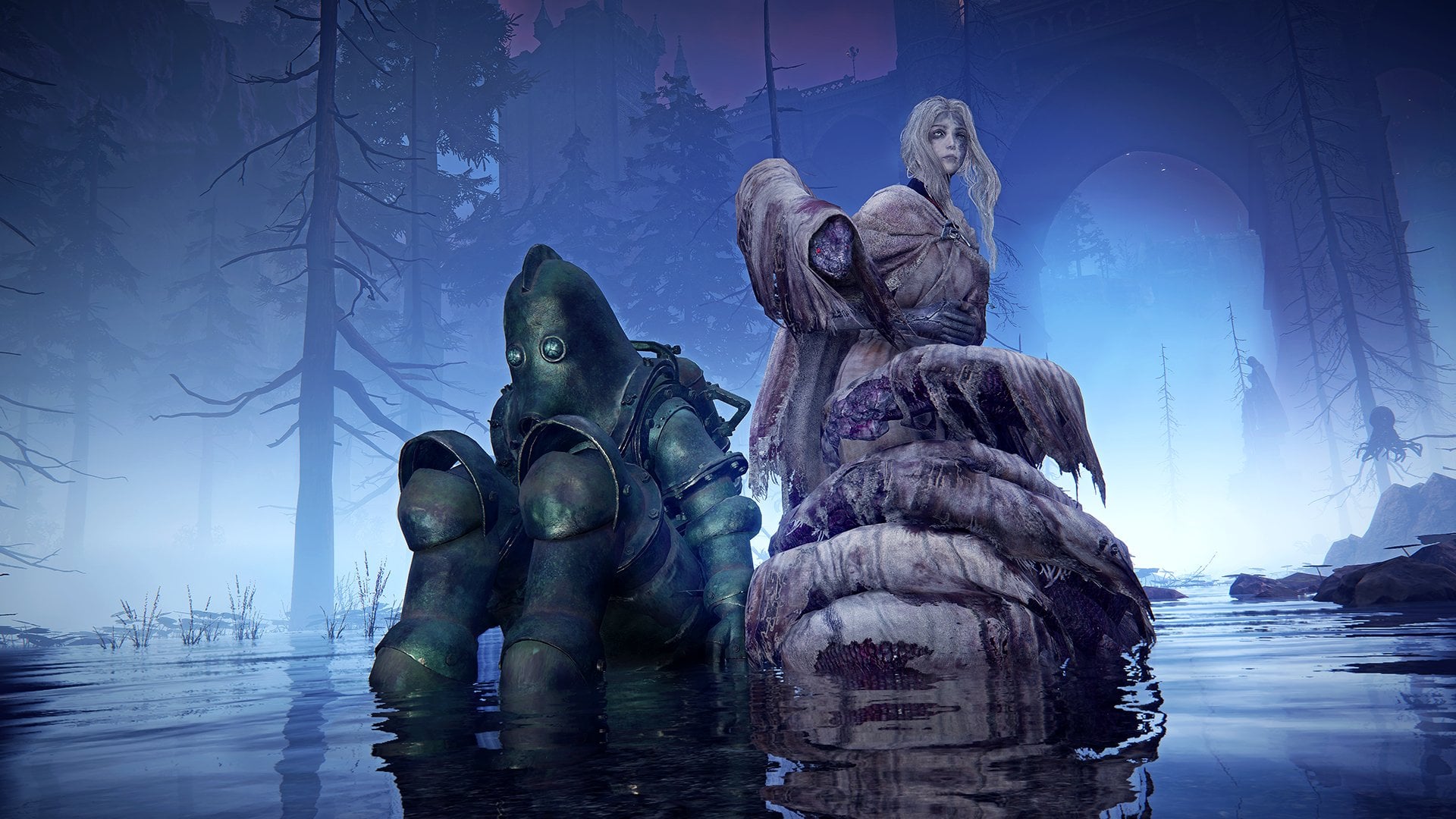
Aesthetically, Duskbloods wears its From Software influence proudly. The network test’s map, Lowanro City – one of three planned for launch – is a suitably grim gothic setting, complete with a looming clock tower, a sprawling cathedral, rat-infested sewers, and cobbled streets crawling with unsettling enemies and more formidable mini-bosses.
There are even more powerful boss characters that can appear on the map, known as Trespassers, and engaging them will prompt you to call other players for help. Should you defeat the Trespasser, you’ll be rewarded with both Virtue and a special power modifier that will boost your attributes.
Melee combat initially feels like traditional Miyazaki fare, with standard and heavy attacks. However, where it’s notably different is the movement of the characters. The Bloodsworn’s superhuman abilities allow them to jump huge distances, and double, or even triple jump or dash mid-air, with no fall damage to worry about, allowing players to traverse the rooftops like never before.

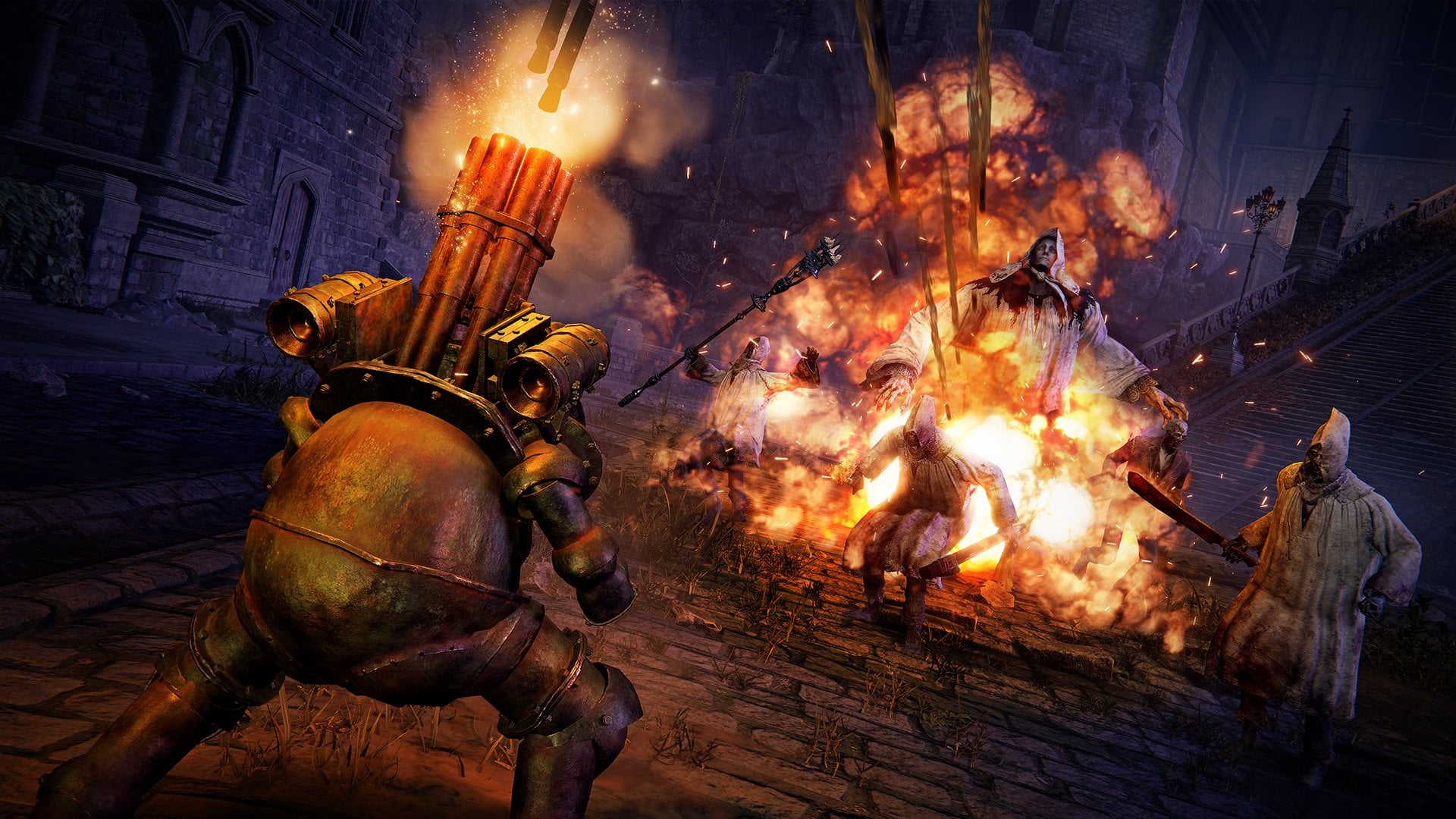
Duskbloods also breaks from tradition by giving each Bloodsworn their own projectile weapon, like an SMG, rifle, or flame projectile. Coupled with the ability to make enormous jumps, these tweaks make this the most vertical and dynamic combat in a From Soulslike since Sekiro, with late-game battles sometimes resembling a full-blown Dragon Ball Z battle as players soar through the arena.
Stamina, like in Elden Ring, doesn’t deplete outside of combat, or this time during standard combat, but it will deplete from dashing and double jumping in the air, so while leaping is now a crucial tool in PvP particularly, it’s not something you can spam.
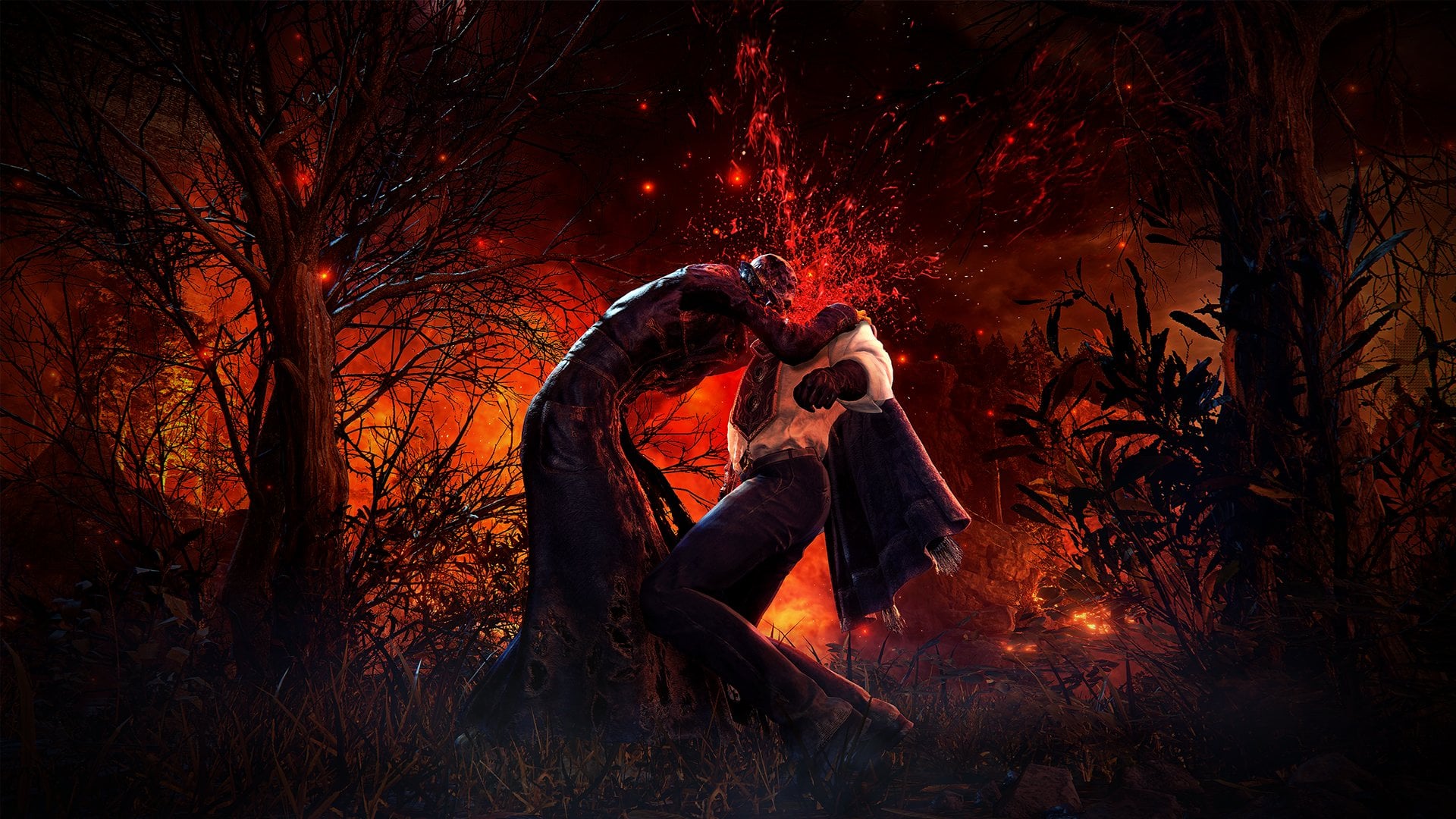
Each Bloodsworn has their own unique skill, such as the ability to turn invisible or fire a barrage of missiles. There are also passive powers, like the ability to eat an AI enemy’s blood after they’re staggered, transforming them into an ally.
Players can also summon various AI companions from specific summoning circles placed on the map. Kin, as they’re called, are similar to the spirits from Elden Ring and level them up alongside your character, granting them new skills and abilities.
Miyazaki says players will be able to unlock customization options for each character in the final game, but the network test offers limited options.

The Duskbloods’ Virtue System Gives Players More Ways to Win
Miyazaki’s big twist for Duskbloods is the Virtue system, a points system that decides who wins and who’s eliminated. Players can earn Virtue by defeating enemies, powerful bosses, and, in certain conditions, other players, but it’s also awarded for finding important objectives, completing side quests, and for the player who collects the most items.
The intention of Virtue, Miyazaki says, is to make Duskbloods enjoyable for even players who aren’t that interested in battling others. “We wanted to create a system that offered many different ways to win, basically,” he explains. “Whether it’s exploring the map and the environment, engaging in PVE, one-on-one battles with other players, or finding Virtue via other means, it’s up to the player how they strategize.”
Q&A: Hidetaka Miyazaki
Has the idea for Duskbloods evolved since your first pitch?
I would say there was no major shift from the original ideas we conceptualized with Nintendo. That being three main pillars to the game: one, the storytelling within a multiplayer network environment; two, the Virtue system and how you acquire Virtue in many different ways; and three, the Sigil system and how you engage with interplay relationships.
In terms of major things that changed in development, actually, I think the biggest thing would be the game’s aesthetic. At least in the initial concept stage, we actually experimented with very short set characters, maybe three head lengths tall, sort of more manga-stylized. So obviously that has changed a lot throughout the game’s development. That’s an area I’d like to explore another time, maybe.
How does Duskbloods connect to your previous games thematically?
A lot of my games use these worlds falling into ruin as a major theme. I like to depict that end of an era, so to speak. The Duskbloods is no different here, and playing in the what we call humanity’s dusk is a very important design impetus for that.
Dusk is a metaphor for the end of times, for the twilight of humanity. One of those areas might be Gothic-themed, and sort of the end of this Victorian Gothic era. Other maps might depict another sort of end-times theme. This is something that definitely informed the artists throughout. I wanted them to have that concept in mind, and it was up to them how they expressed that end-time theme throughout each of these areas.
What inspired the systems in the game?
I feel it’s a very analog game with analog systems, such as acquiring virtue points to win the game, and to progress to the final stage. In that sense, it’s quite similar to a board game conceptually, and a kind of board games spent on my free time playing tabletop RPGs.
This is something I wasn’t aware of initially when developing The Duskbloods, but as time went on I realized a lot of this inspiration, a lot of this, this energy is probably coming from TTRPGs – that was a source of inspiration possibly.
When playing a tabletop game, you’re making your character beforehand, your backstory, stats, and relationships with other characters as well. I think a lot of that inspired these systems.
From our eight-or-so hours with The Duskbloods network test, Miyazaki’s plan appears to have worked. As a Souls player, the initial urge is naturally to dive sword-first into the more powerful enemies roaming Lowanro, or fight alongside others against a big boss when prompted to join in.
But after a morning of finishing near-dead-last, producer Yasuhiro Kitao urges me to think more strategically, explore the map, and level up in other ways. Sure enough, avoiding the stronger enemies and other players to focus on dispatching mobs and hunting collectibles is a legitimate strategy and resulted in my best runs.
Although it was ultimately the best PvP’ers who won the final round, Miyazaki says there will be alternative climactic chapters favoring different play styles, like a three-player co-op battle against a boss.
During the end of later rounds, Ritual Sites will appear on the map, encouraging everyone to gather in a single area in an attempt to capture objectives and battle each other in exchange for Virtue points. Outside of the sites, you can still defeat players, but only to disrupt them.
There are other types of random events designed to shake up encounters, such as a blimp appearing and allowing players to call in air strikes, a storm that will teleport players randomly around the map, or falling stars that will award Virtue if you finish the match with them.
From says there’s a lot of Duskbloods that’s not included in this weekend’s test, and by its own admission, it’s still making tweaks and changes. Even during my playtest, the developer takes great interest in a moment of my own gameplay, when I managed to overlook an important UI prompt.
Miyazaki says the Virtue system will be one of the most stressful areas of the game to balance before release.
“There are different ways you can acquire virtue and we have to take into account how the player is going to approach the game, the map, and other players, how they’re going to make those choices, and how we balance according to those choices to them,” he says. “There’s a lot of different things for the player to consider which means a lot of different things for us to consider.”
Miyazaki Wants The Duskbloods to Tell a Story Through Multiplayer
Miyazaki says one of the biggest influences on The Duskbloods’ design was his memories of playing board games. During his student days, the designer regularly played tabletop RPGs, where players would take on different characters and roleplay their personalities.
He wanted to capture some of that experience in the design of his own multiplayer game, he says, and this manifests most clearly in Duskbloods’ Sigils, equipable modifiers that give each character a unique objective at the start of a match.
Sigils are designed to disrupt the flow of a game with unusual tasks, such as hunting down a particular player or even proposing marriage to them, in exchange for a significant number of Virtue points. An Alliance system takes a similar approach to player relationships, enabling you to team up with another player at any point.
Miyazaki feels these systems are a continuation of an idea that has run throughout his games: the fleeting and often uneasy bond between players.

“I think that carries forward into the design of this game philosophically, those transient links with other players and how you form these kind of temporary bonds within that sort of antagonistic environment,” he says. “I think this is an interesting aspect of our games and something that we’ve able to concentrate on in The Duskbloods.”
In the network test, Sigils are fairly rudimentary, with no customization options, but it’s a concept with high potential that could prove to be one of Duskbloods’ most distinct ideas if From Software expands the system before launch.
After speaking to Miyazaki, it’s clear that what seems on the surface like a simple idea is actually a deeper attempt to challenge some of the assumptions around multiplayer. Most competitive online games actively punish teaming up with enemy players, but From Software is giving people reason to hesitate and communicate with players you’d otherwise instinctively strike down at first sight.
The Ephemeral Love Sigil means that, in the middle of a chaotic battle, a player can emerge from the fog, kneel down and present you with a bouquet of flowers. It’s then up to you to decide whether you accept their proposal and form an alliance, or exploit their vulnerability and kill them. In the final game, From says further complexity might be added, like shunned lovers being able to later take revenge.

It feels like a very Miyazaki-like approach to game design: establish a rule, suggest how it might be used, and then leave the players to decide how it’s ultimately interpreted.
“Etiquette is part of that communication [with players],” he says. “What’s important is how they interpret that, how they interpret those elements within the game. I don’t want to say, ‘for sure this is how they should be used and what they mean.’
“The Ephemeral Love Sigil, for example, presents a rule and a sort of boundary for the players, but it’s one that they can play around and it’s one that they can experiment with the they can interpret, or they can violate. The gestures players can use are another part of this… players are free to play around with them and interpret them how they like.”
He adds: “We talked about that transient element, this idea of players coming together to fight for one minute, but then once the fight’s over, that’s it. They never see each other again, or form a bond briefly and then have to fight one another at the end. I think this idea of something that doesn’t last is quite effective and quite beautiful.”
The Duskbloods’ Biggest Mystery Is Its Story
One thing the network test leaves largely unanswered is how From Software plans to implement its famously oblique storytelling in an online multiplayer game. Miyazaki, however, assures that storytelling is a big part of his plan.
Q&A: Hidetaka Miyazaki
Were you wary of alienating players who didn’t like PvP?
I feel personally there are many ways to play The Duskbloods, and the main reason you’re playing this game is not necessarily to engage in PvP, but to win at the end of the day. And so we have to figure out many ways in order to reach that victory. It’s up to the player and how they get to that final stage.
There’s a lot of roleplay elements up to the player how they express themselves, how they conduct themselves in the environment, and how they express themselves to other players. I think there’s a lot of space for people to find their own element of fun within that system, within that framework, and I think how we convey that to players is going to be up to the task of the marketing team and our friends at Nintendo.
What’s missing from the network test?
While the player build loadouts are set in the network test version, in the final game, there is a large element of player customization. You have to customize your Bloodsworn with which weapons and skills they hold and take into each match.
One of these customization elements is actually which event you prefer. So which event you want to see come up more, and one of these events could be the final phase being a boss battle rather than a three-way match, something like this. So, these player tendencies. This is one area that the matchmaking will be looking at and trying to pool players of like mind together.
What areas are you looking to improve after the network test?
We will take a look at things and maybe tune areas in the game going forward. But I think sneaking is an area that we could look at. This is the area that I enjoy: being sneaky and playing the match to my advantage, and using other players as a resource.
We’ll try and enable that in different ways. Maybe you’ll be able to transform into a certain object and deceive other players in other ways… this is definitely a point I’m going to be looking at and tweaking. So yeah, other like-minded players can look forward to it. Maybe other staff members are different, but I’ll do my best to press for these changes.
“One of our focuses when creating Duskbloods was: how do you tell a story, and how do you make a convincing narrative within a PvP environment? But I think that’s also one area where not a lot of people are developing, and this is maybe one place we can play to our strengths: with the storytelling.”
He adds: “There are random elements and near-fixed elements within the game, and it’s those near-fixed elements where we can start to express ourselves and start to talk about why this is where it is.”
Thematically, Duskbloods continues From Software’s fixation with worlds fallen into ruin. The game plays out in what Miyazaki calls “humanity’s dusk”, with each of its maps continuing the theme of the twilight of humanity.
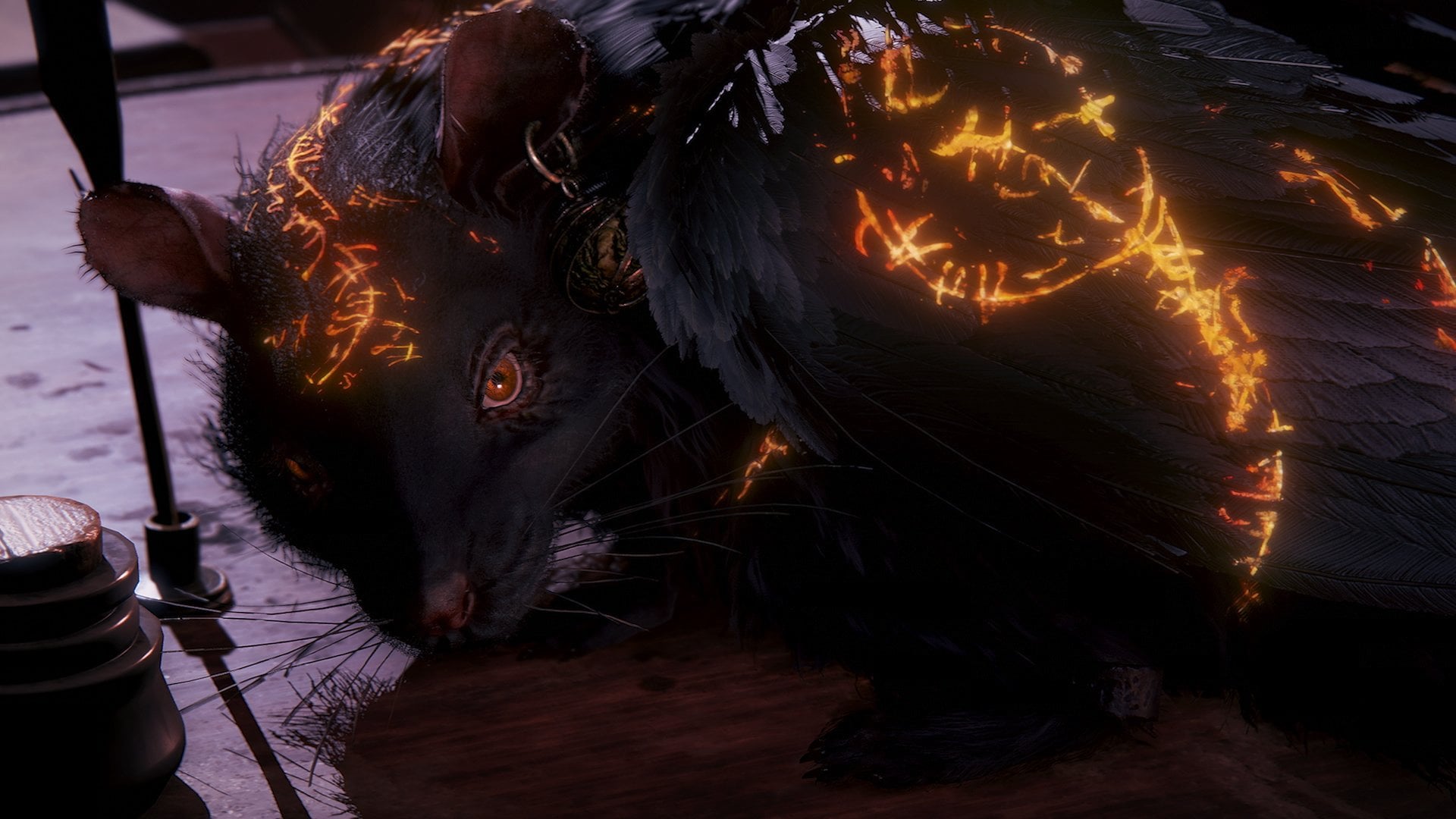
The test gives us a small look at House of Night, the hub area where players prepare between matches and speak to NPCs (which, inexplicably, are mostly winged rats), but little indication of how meaningfully it will expand or how the plot will be delivered to players.
“In the network test, there’s not a lot of these lore elements,” the director says. “But it’s something that we’re concentrating on for the full release, and we look forward to players discovering a lot about these different characters.
“They’ve all been prepared with their own backgrounds, their own personalities and settings, and there’s a lot of relationships between the Bloodsworn and their blood families, their blood ties. We hope players will pick up more on these histories and these backgrounds of the characters as they play.
“In terms of sheer volume of text and lore to dig through, I feel like it compares to our titles up until now. So I think there’ll be, as you unlock more about these characters and you uncover more of their narratives, there’s going to be a lot of a lot to dig through and enjoy there and discover the connections between the Bloodsworn and their histories.”

The Duskbloods Is a New Challenge for Miyazaki
Miyazaki admits he still has plenty to learn from the network test, which, after visiting the studio and speaking to the director, feels more significant than a simple preview of what’s ahead.
Arguably Duskblood’s biggest departure from Miyazaki’s previous games isn’t that it’s a multiplayer game, but that he’s giving up some of the control he’s traditionally exercised over the player’s experience. He can build the world and set the rules, but he can’t dictate what will happen when eight strangers are dropped into the same space.
Predicting how all the pieces will fit together is a challenge, he says. “We have to take into account how the player is going to approach the game, the map, and other players, how they’re going to make those choices, and how we balance according to those choices… There are a lot of different things for the player to consider, which means a lot of different things for us to consider.”
He sees that uncertainty as an important part of the development process. “I think that a big part of game development is receiving feedback, and over the years I’ve received more. This process of making games and taking feedback is, in a sense, communication to me. It’s a communication with the player, and as the user base expanded more over the years, that feedback has gotten bigger, and so the communication back has gotten bigger too.
“As I received more feedback, I learned more about what people find interesting, and that sort of teaches and raises me as a creator as time goes on. I feel like it’s a two-way experience and the players are helping to cultivate that.”
After years of asking players to step into the unknown, Miyazaki is doing the same himself.