Inside the Ubisoft studio remaking Rayman Legends in 3D – and what it means for Rayman’s future
We visited Ubisoft Montpellier to find out how it rebuilt a 2D classic

As I flee the South Of France’s sweltering sun and enter Ubisoft Montpellier’s studio doors, I’m immediately reminded of how wonderfully weird Ubisoft once was. Flanked between a Rayman standee and a slightly dog-eared Peter Jackson’s King Kong statue is the studio’s vast and endearingly bizarre back catalog, proudly wall-mounted for all to see.
Peering at framed copies of Beyond Good and Evil and Beowulf, near-forgotten god game From Dust, multiple entries of Just Dance, my beloved Zombi U, and Tom Clancy’s Advanced Warfighter, it’s hard not to feel a pang of nostalgia for the creative freedom afforded to developers in previous console generations.
Today’s studio tour, however, isn’t about celebrating Ubisoft’s past – it’s about giving the long-dormant Rayman a future. Revealed during Sony’s June State of Play, Ubisoft’s MIA mascot is coming back to consoles and PC in October, starring in Rayman’s first new game in 13 years.
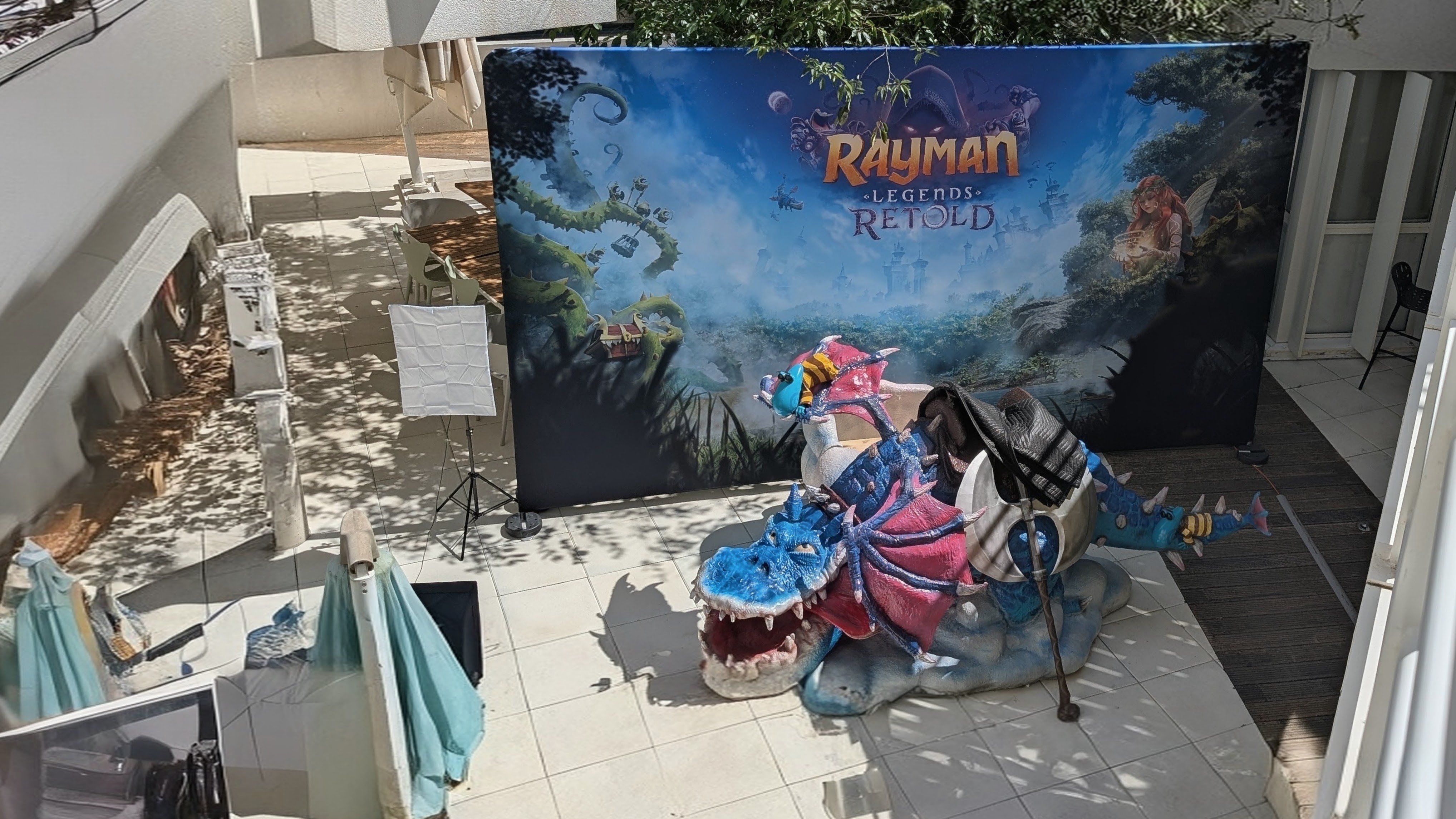
Well, new-ish. A co-development between Ubisoft Montpellier and Mario and Rabbids makers, Ubisoft Milan, Rayman Legends: Retold sees the studio returning to 2012’s Rayman Legends for a third time, reimagining the formerly 2D Wii U adventure as a newly cinematic 4K epic, finally bringing raytracing to the Rayman himself.
“Rayman was born here in Montpellier,” Istvan Tajnay, managing director at Ubisoft Montpellier, explains, on why reviving Rayman feels so crucial for this team, “ [he ]was really Ubisoft’s first superstar character. I’d say Rayman really contributed towards putting French game development on the map.”
Opening up shop in 1994 with a handful of developers, today Ubisoft Montpellier is a gargantuan building housing over 400 people. As I sip a coffee in their vast courtyard, interview multiple developers atop a shaded balcony, and see a sore-throated level designer gulp down a spoon of Ubisoft- branded honey (made in the studio’s private apiary, no less), the studio oozes a surprisingly wholesome air. It’s an interesting contrast to previous Ubisoft studios I have visited, offering a DIY vibe that feels a world away from Ubisoft’s perceived reputation as a soulless corporation.
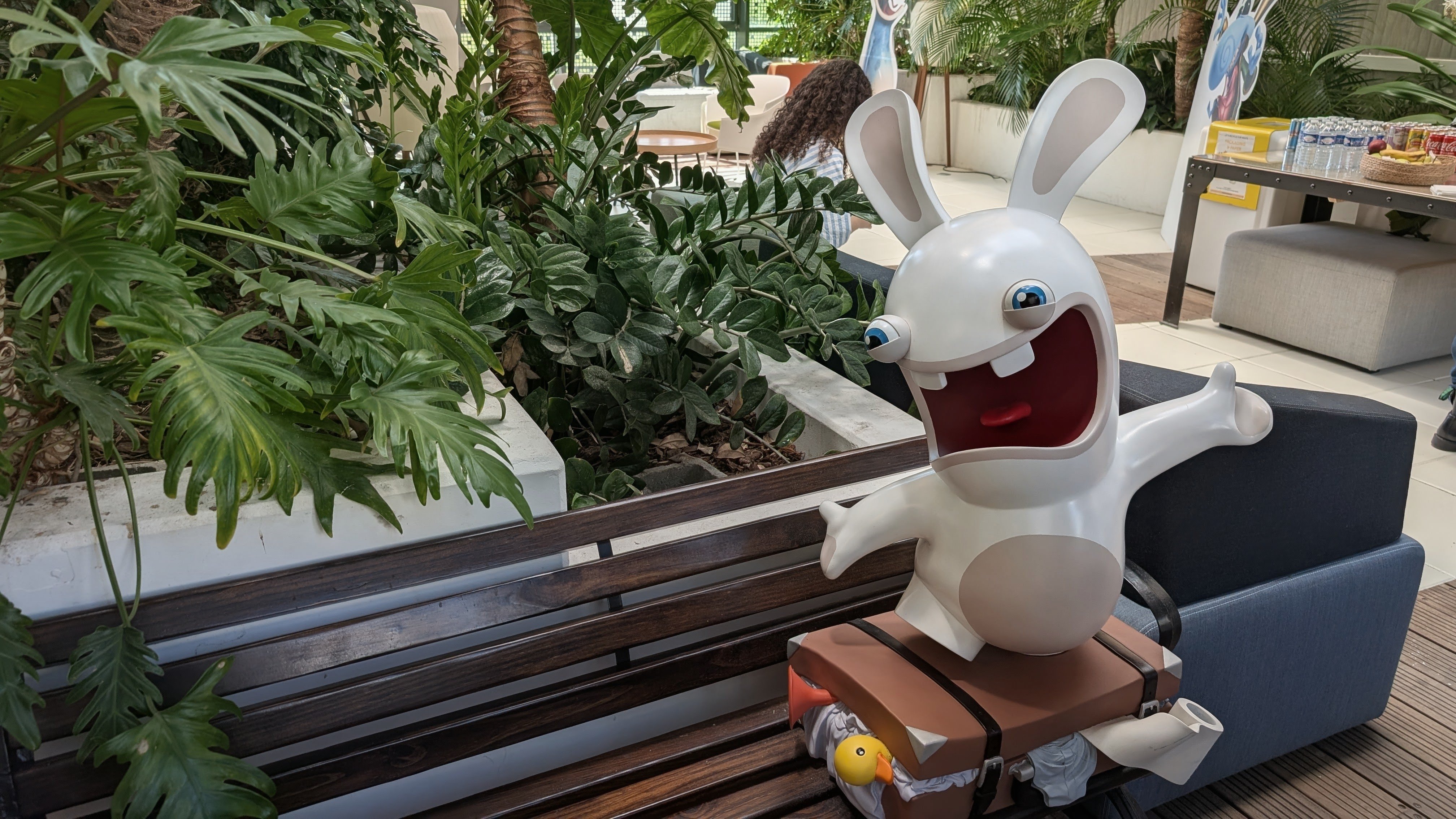
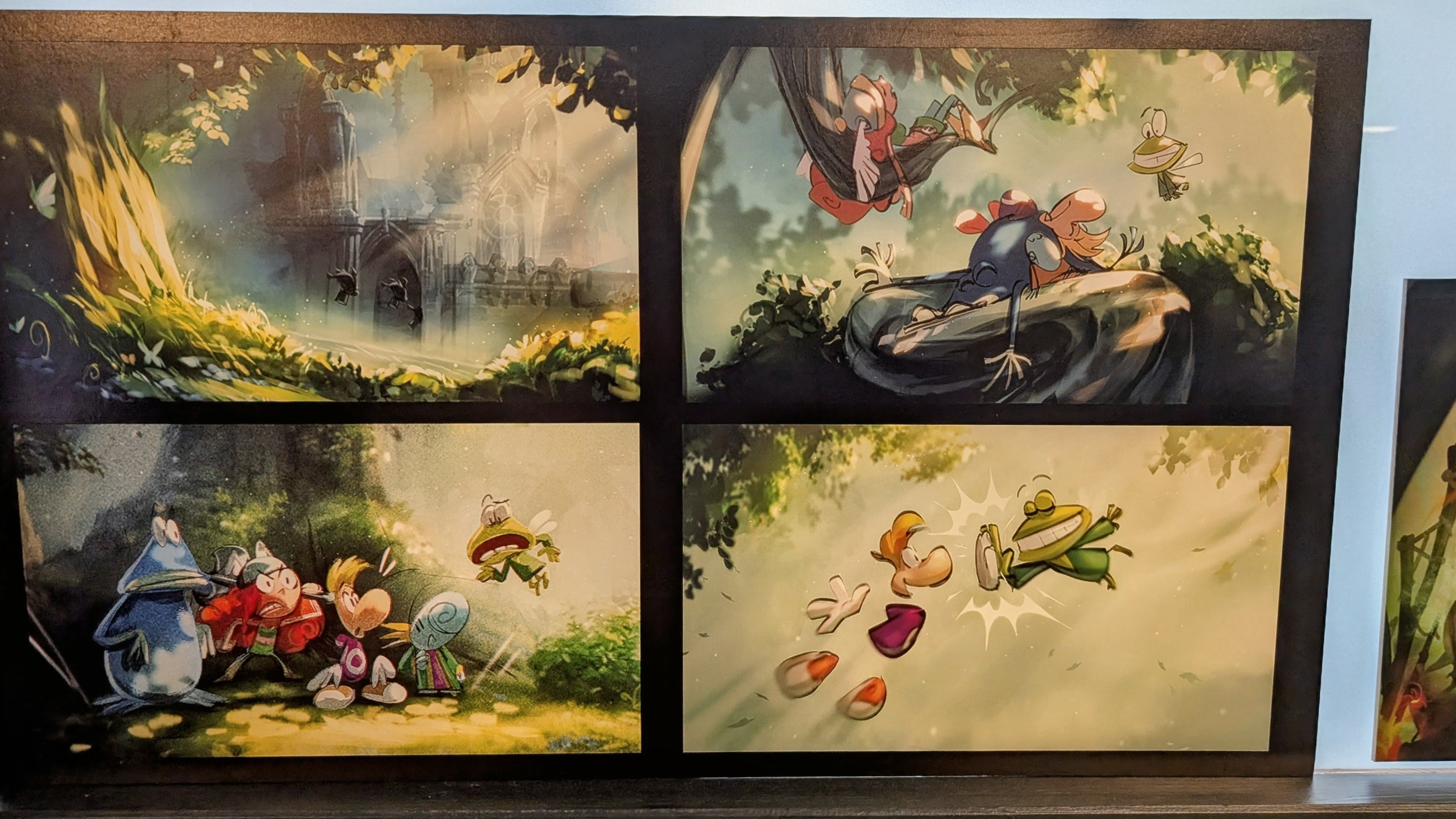
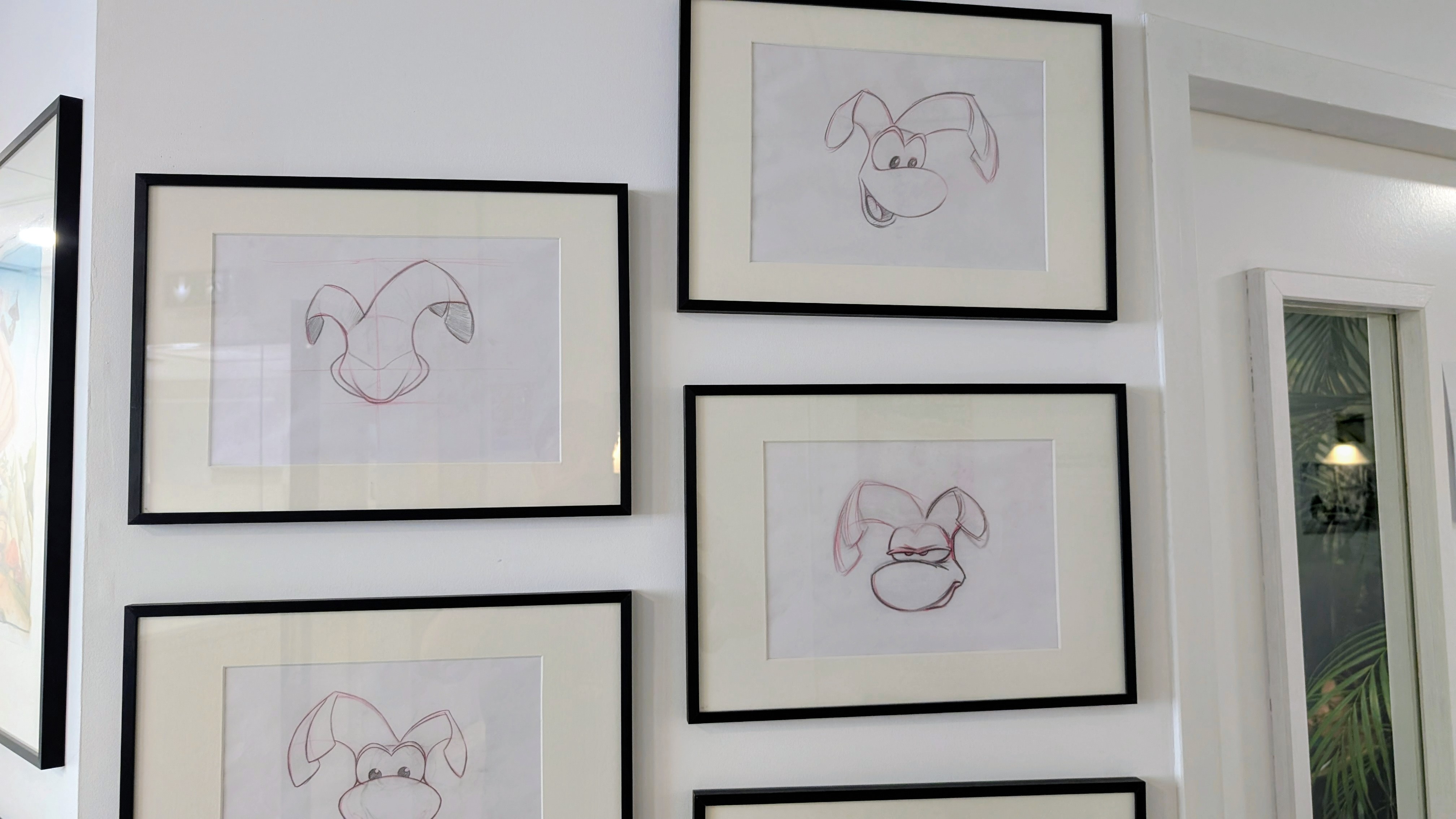
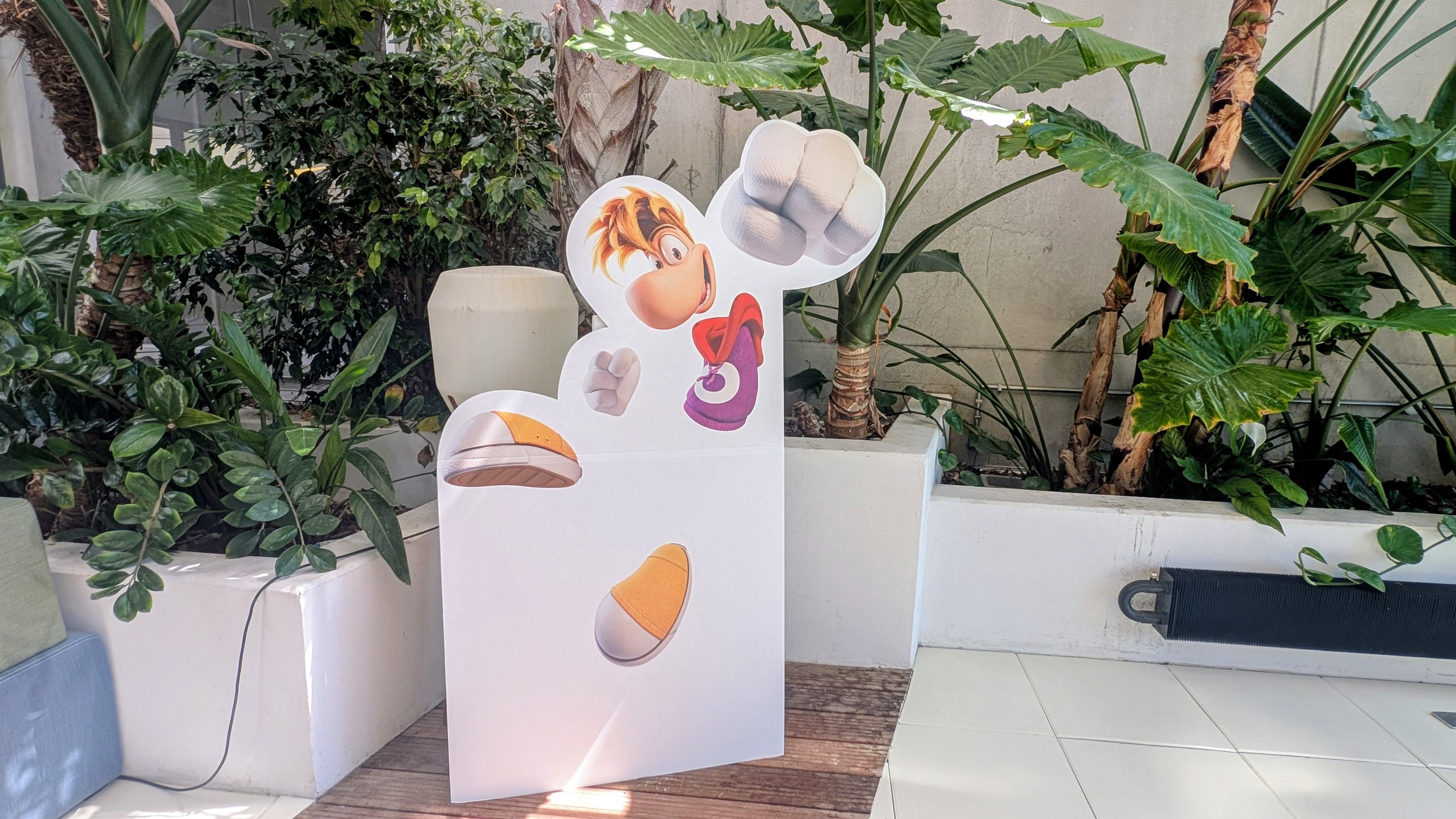
As I hear talks from – and talk to – multiple developers, there’s no doubting the studio’s clear talent and versatility. In fact, one developer confirms that he was working on Beyond Good and Evil 2 for six years before mysteriously moving on to Retold. It’s why I was initially disappointed to learn that said talent has gone into recreating a game that many players have already finished twice over.
Yet as I grin at the addition of the surprisingly Mario movie-esque cutscenes, hurtle through the skies murdering toads on the new Star Fox-inspired dragon ride levels, mould the environment to my will with a new ability in an original sixth world, and find hidden collectibles in a new explorable between-level hub, it’s hard to deny the sheer love that’s gone into this remake.
“The exact origin story of Retold is a mystery that we won’t unveil completely,” teases Alessandro Arndt Mucchi, production director at Ubisoft Milan, “but basically… Montpelier and Milan…. met each other almost by chance, at an event in Ubisoft. You know the Spider-Man meme, where the three Spider-Men are pointing at each other? It was us both saying, “You want to make Rayman too?? Let’s do it together!”
“Rayman was born here in Montpellier. [He] was really Ubisoft’s first superstar character. I’d say Rayman really contributed towards putting French game development on the map.”
With Legends playable on everything from PS4 to Switch, the question many fans may be asking is, why choose to relaunch the brand with a remake of Legends specifically? “Looking at the rich history of Rayman, it’s not easy to decide where to relaunch the brand,” says Mucchi,” but Legends felt like the perfect place to start, because it’s so beloved, the gameplay is so tight…and it’s so diverse in terms of what you can play in it.”
Rayman Legends and Origins were bursting with humor, but made a point of keeping their respective narratives as unobtrusive as possible. The castle-hopping hijinx and teenie-chasing shenanigans existed merely to serve the gameplay. For Retold, however, its creators have taken the opposite approach.“We want to look into the future,” says Loïc Gounon, “we want to go a bit more epic, more fantastic with the new vision of Rayman, while keeping what made Rayman always so special in terms of world, its dreamy, bizarre, and joyful universe.”
Levels now transition via fully-voiced, lavishly-rendered cutscenes, and instead of blurting endearingly childlike gibberish, characters speak real human words. The formerly sentient Wii U touch pad assistant Murphy is now voiced by none other than Billy West, the actor best known for playing iconic Futurama characters like Philip J. Fry, Professor Farnsworth, Dr. Zoidberg and Zapp Brannigan, with long-running Rayman actor David Gasman also reprising his iconic role.

The cutscenes are a fairly fun addition to Rayman’s Saturday morning cartoon world, but I’m less of a fan of the reams of dialogue boxes that I’m now forced to read when I arrive at a new hub world. After a few hours with Retold, I left slightly wary that all this extra exposition might get in the way of the core platforming experience.
While the jury is still out on the new narrative focus, that classic platforming experience seems to have survived the transition to 3D intact. After being left disappointed by the Crash Bandicoot remakes, I was concerned that the tight platforming of the original might get lost in the transition to the third dimension. As the level designers show me how they translated Legends’ iconic 2D art into curved, fully 3D environments, I’m surprised to see that their tech automatically rebuilds the game’s once flat backgrounds into 3D.
After my demo, the developers show me that they are able to play the original 2D Ubi art engine game inside the same window as their 3D Snow Drop creations, seamlessly switching between the two in-engine, proving that each jump and obstacle is always 1:1 between the 2D original and its new 3D iteration.
“The formerly sentient Wii U touch pad assistant Murphy is now voiced by none other than Billy West, the actor best known for playing iconic Futurama characters”
Some players, of course, may prefer the classic 2D look. Given that the two art styles play side by side so seamlessly in-engine, I ask whether players will also be able to toggle between the two art styles at will, Halo-style. “We don’t have an answer to give you on that at this time,” I’m told, somewhat cryptically. Read into that what you will.
While the added depth – and detail – makes some paltforming sections a little harder to read, the team has attempted to compensate by giving players more warning before things get hairy. With a newly added wider field of view, rising platform levels now allow the player to see more of the incoming danger before the screen scrolls up, and they suddenly get impaled by a floating spike. It’s a welcome change, making these once-instafail sections much more forgiving to navigate during my dem.
There was, however, one infuriating sidekick-led exception. In this early build, the Murphy controls are frustratingly inaccurate, with the character not locking onto the right enemies or platforms that you need him to manipulate in order for him to save you from certain death. A dev assures me, however, that this is a known issue – and that these kinks are being ironed out in the run-up to launch.
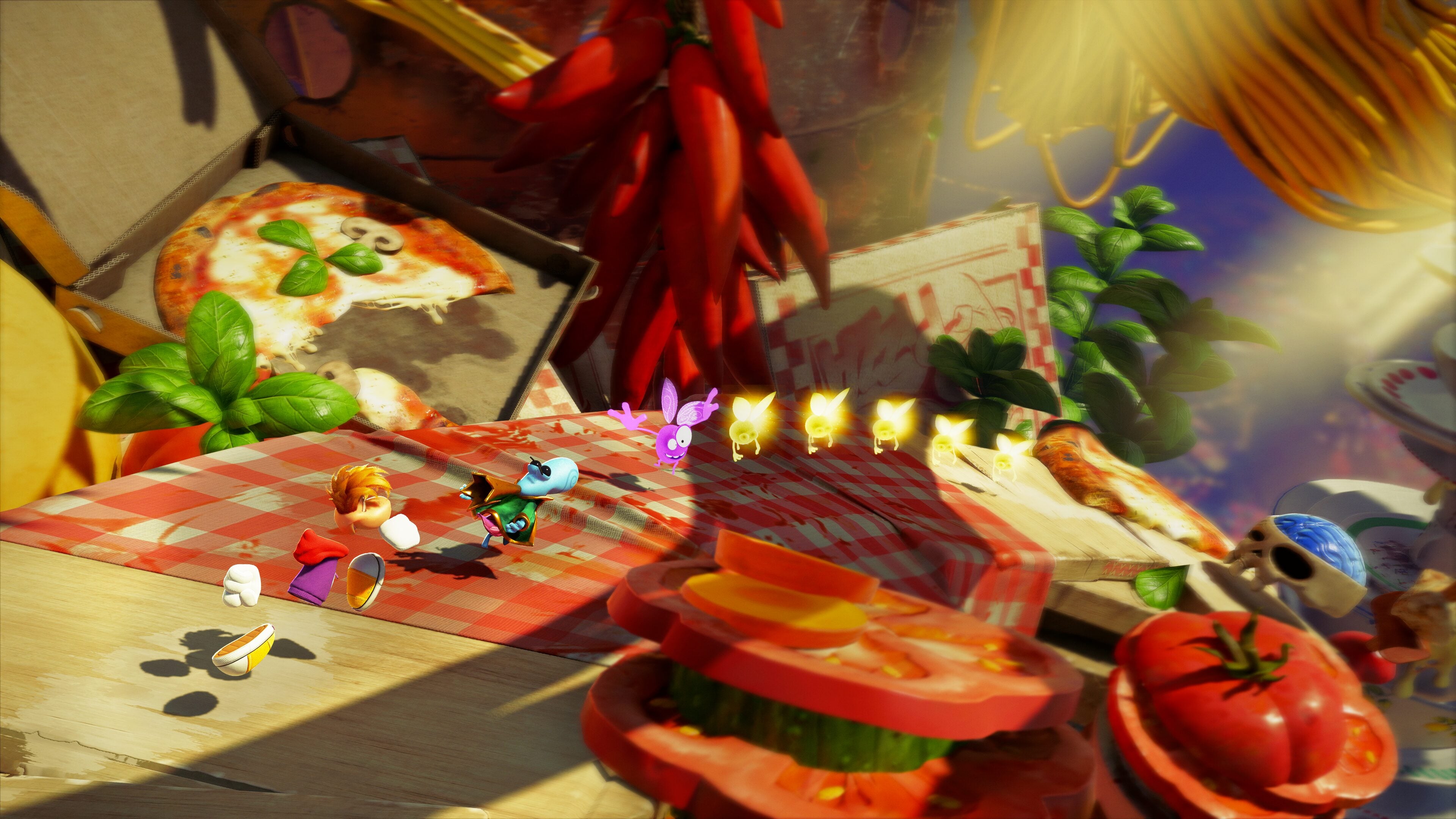
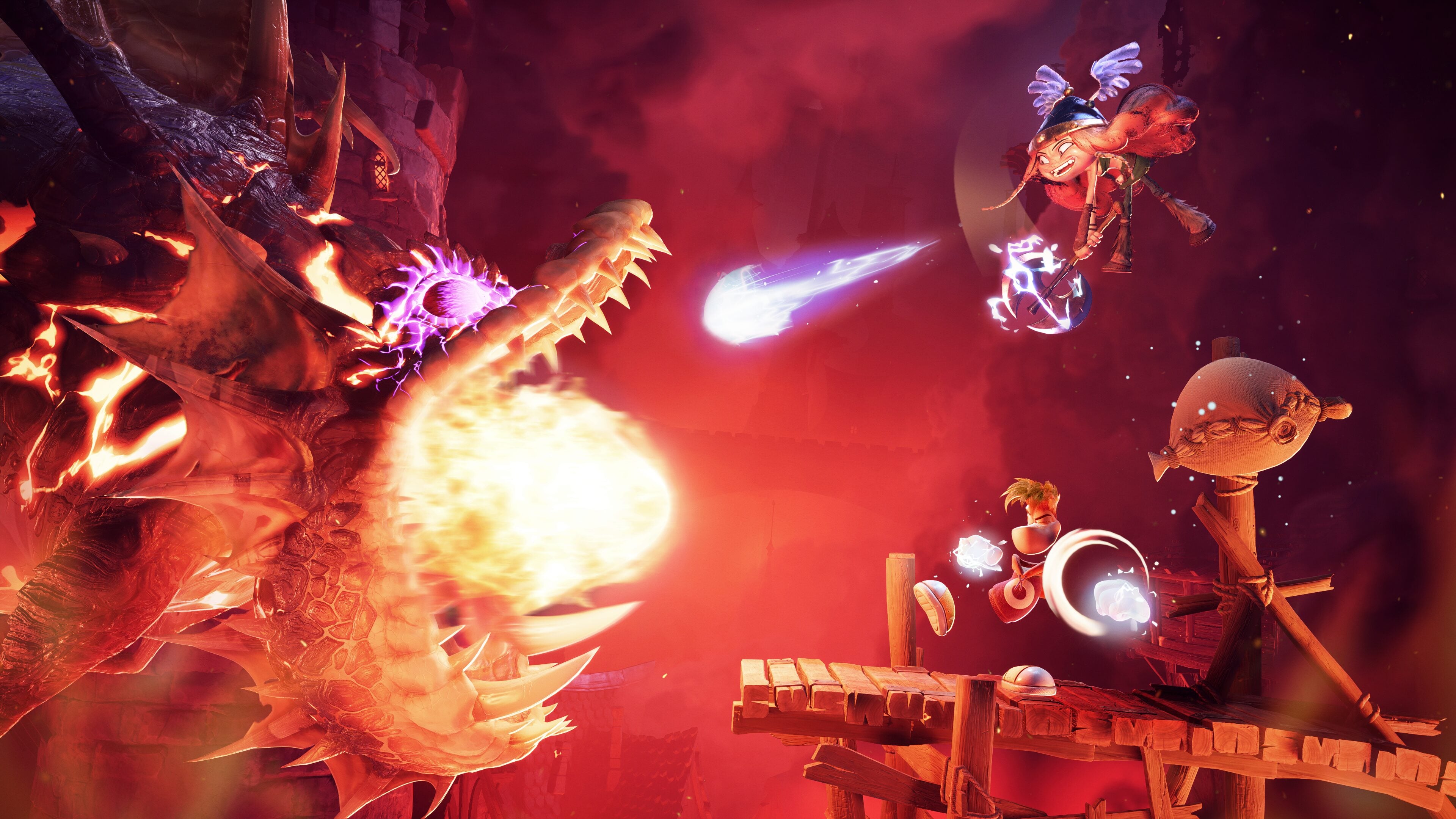
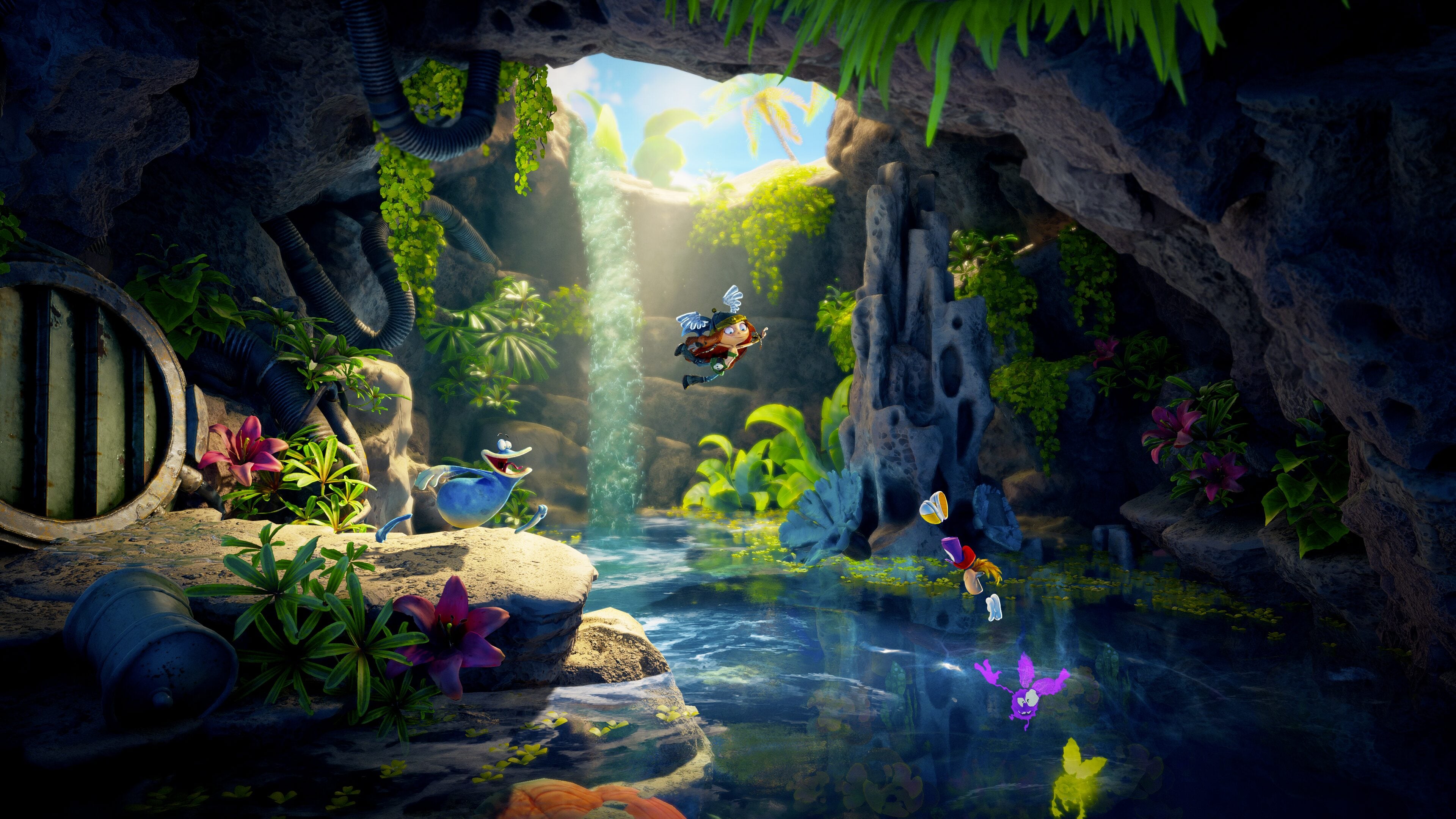
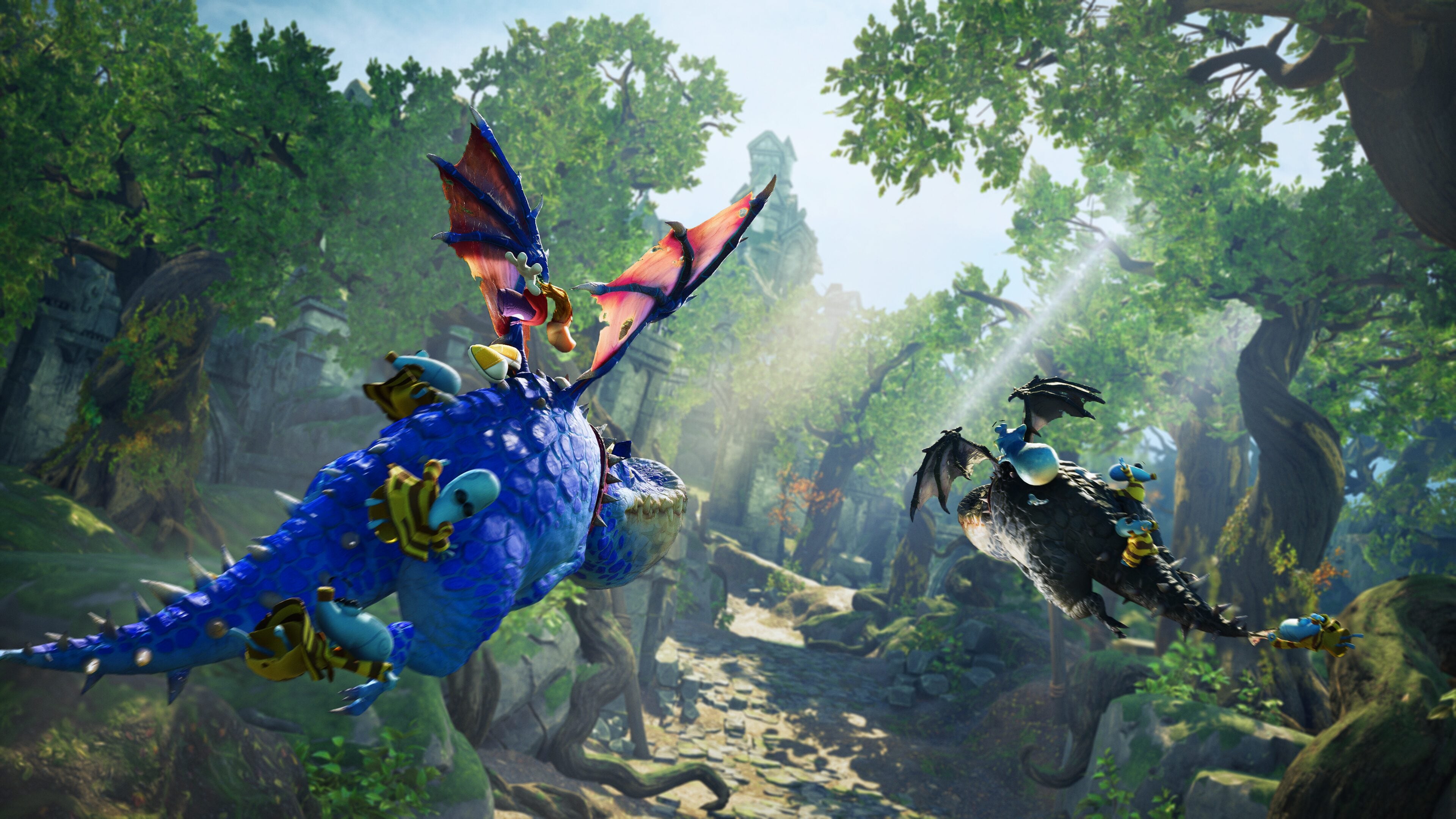
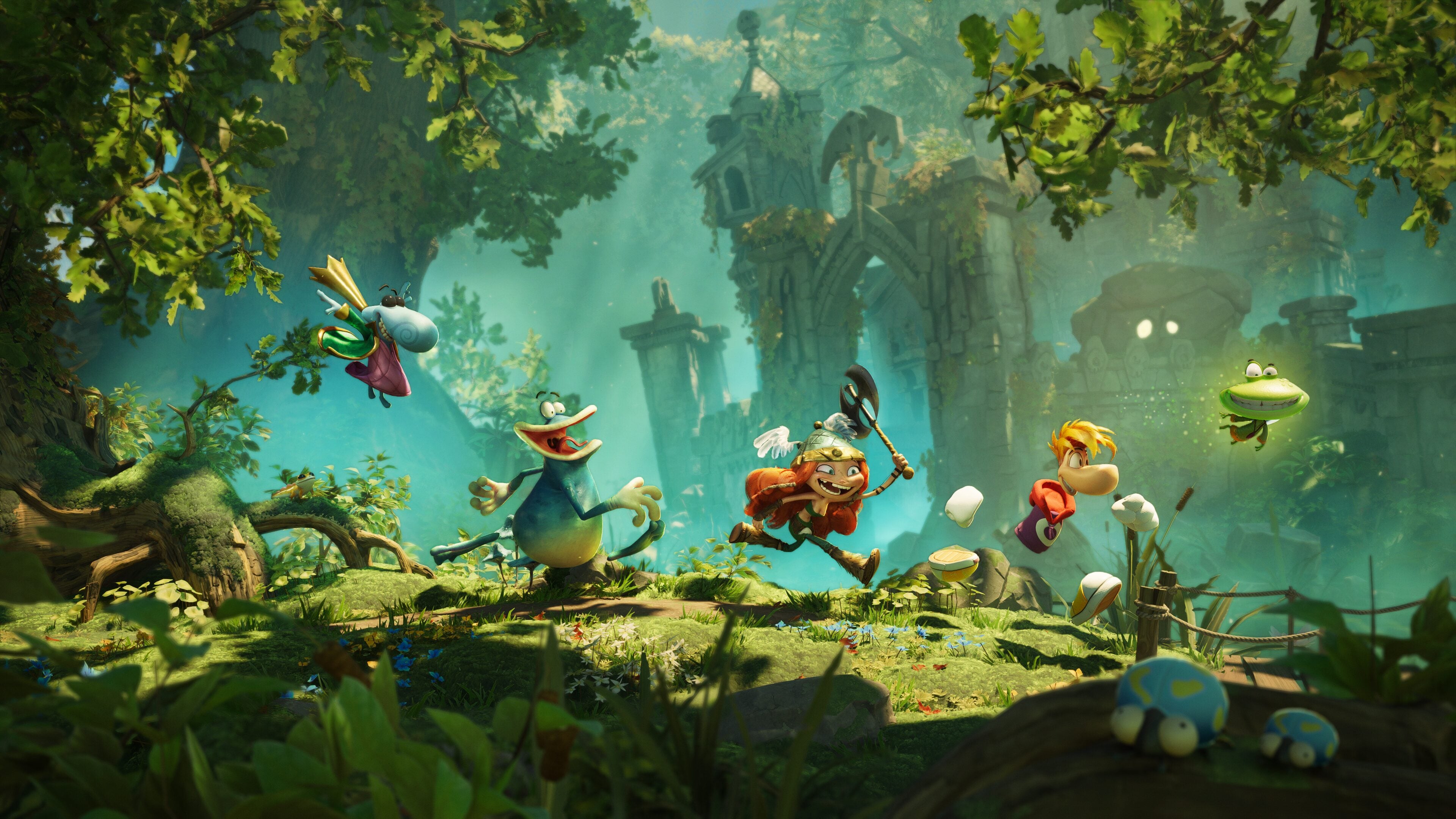
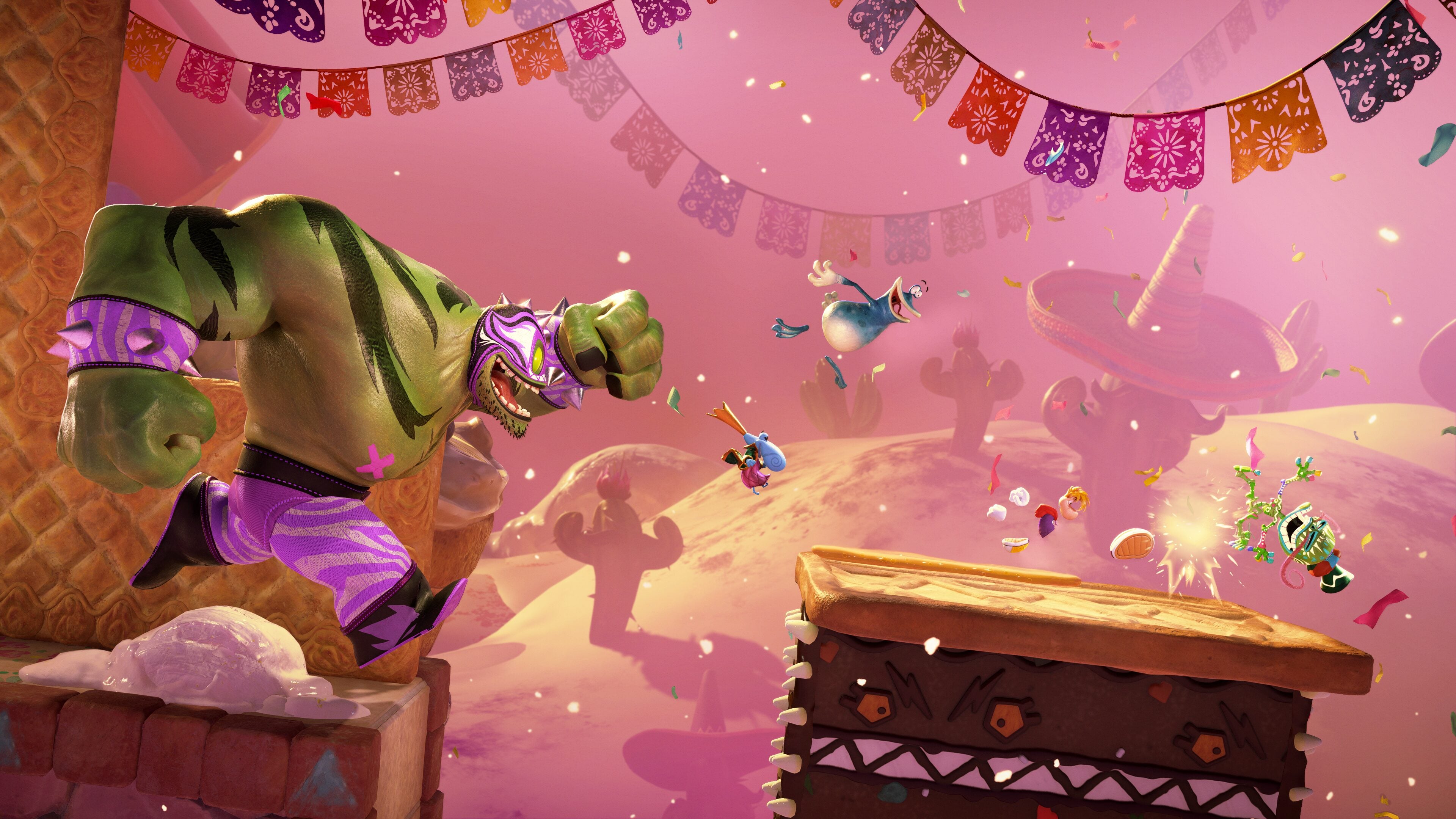
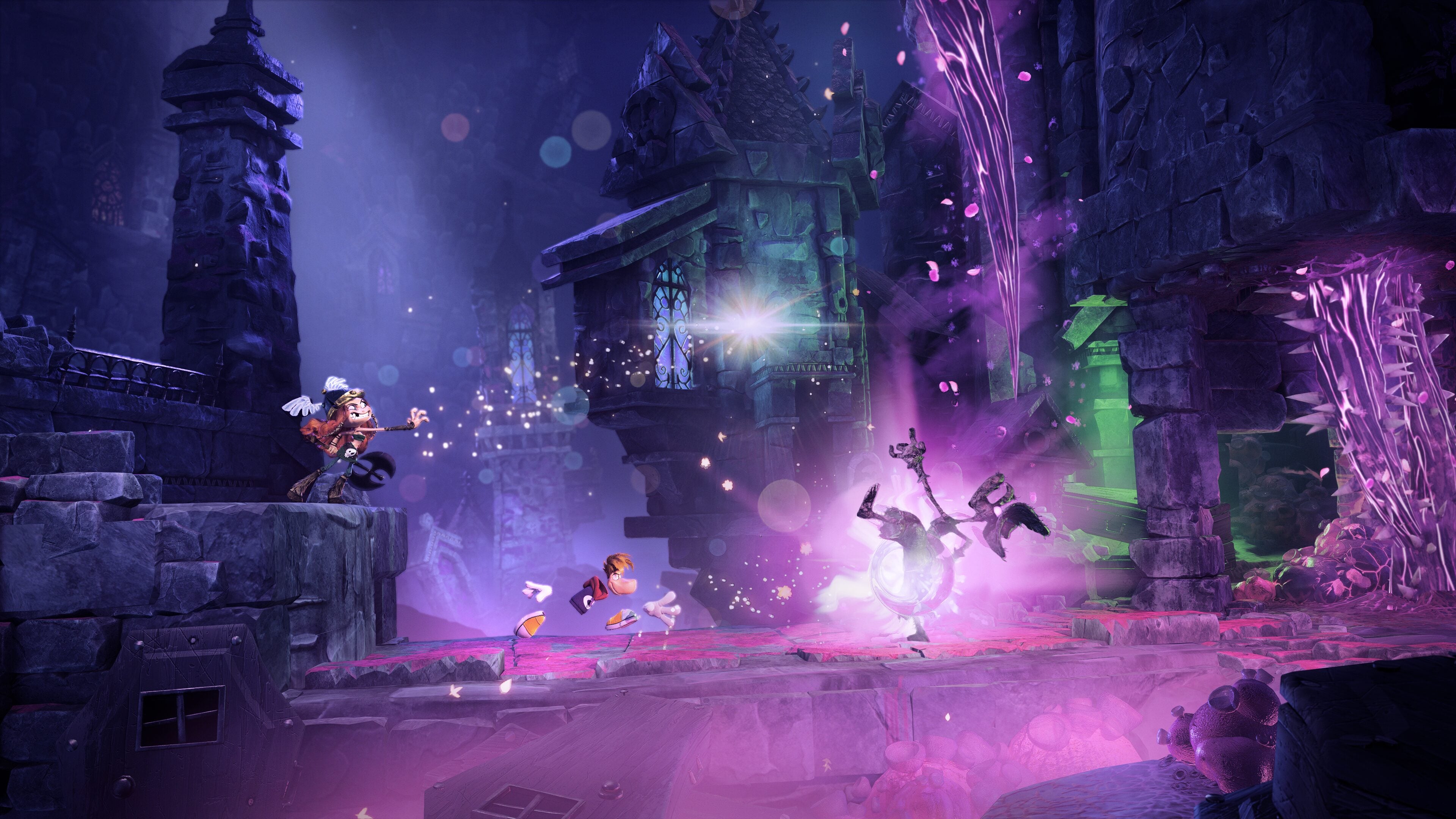
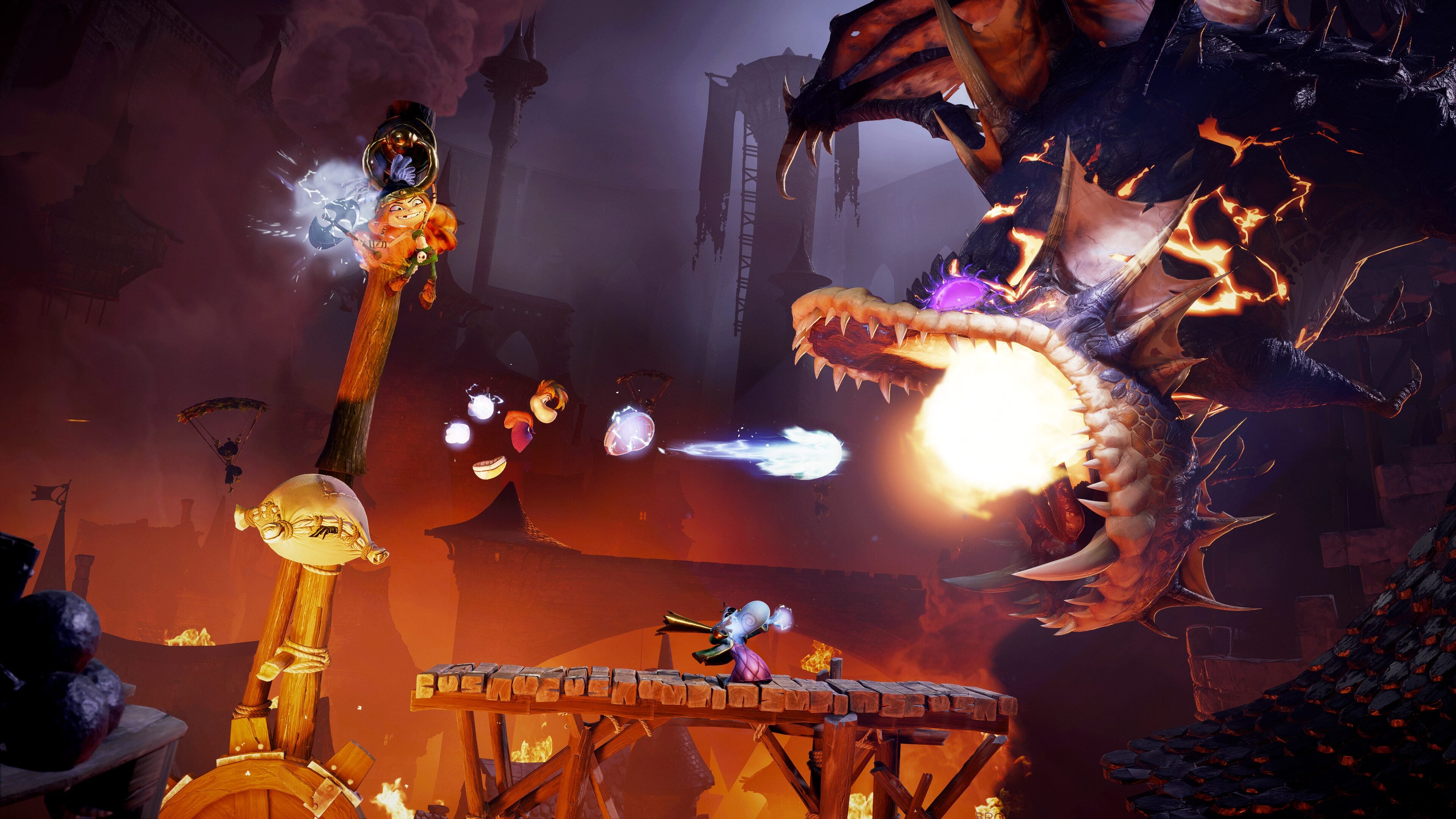
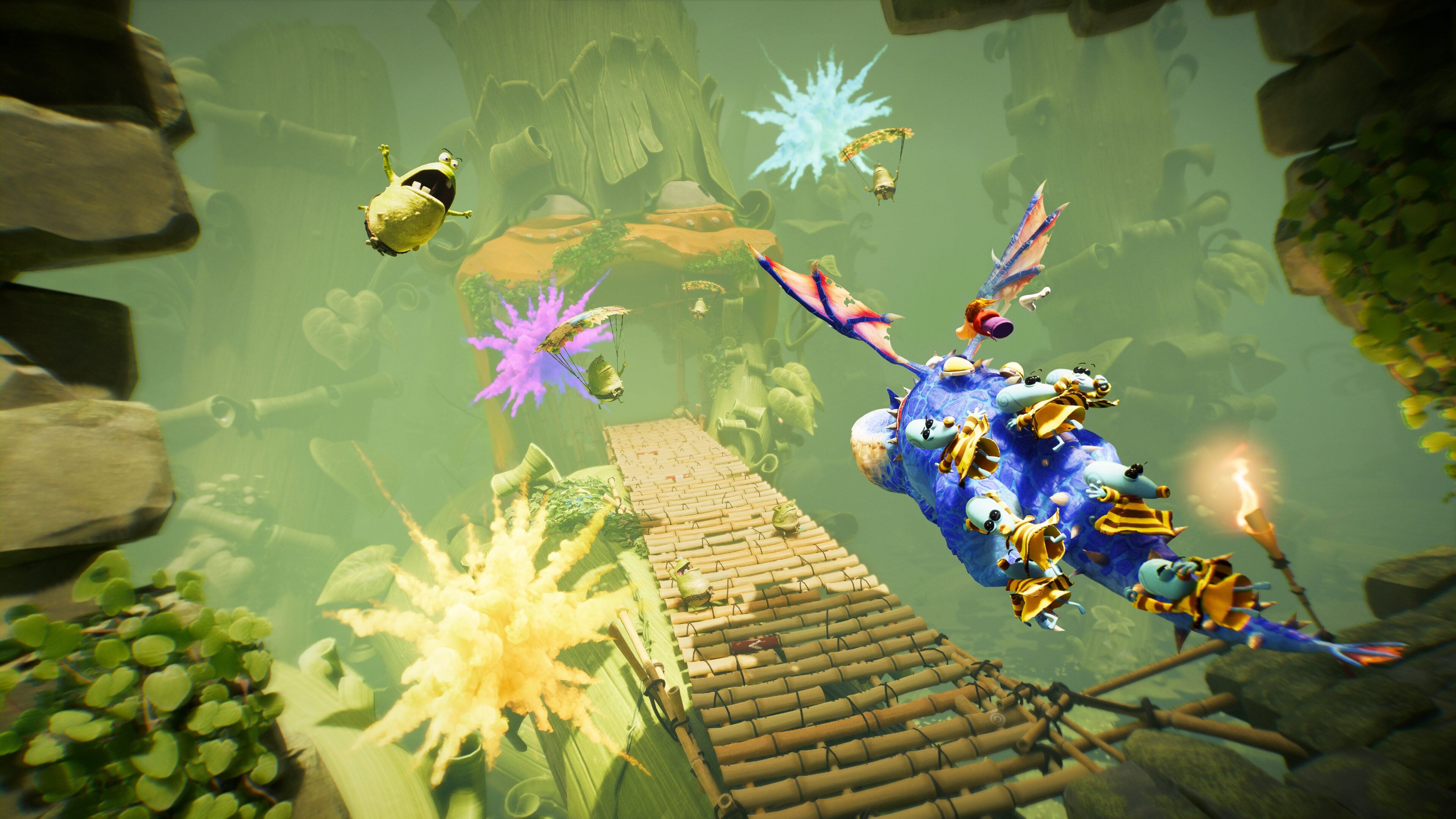
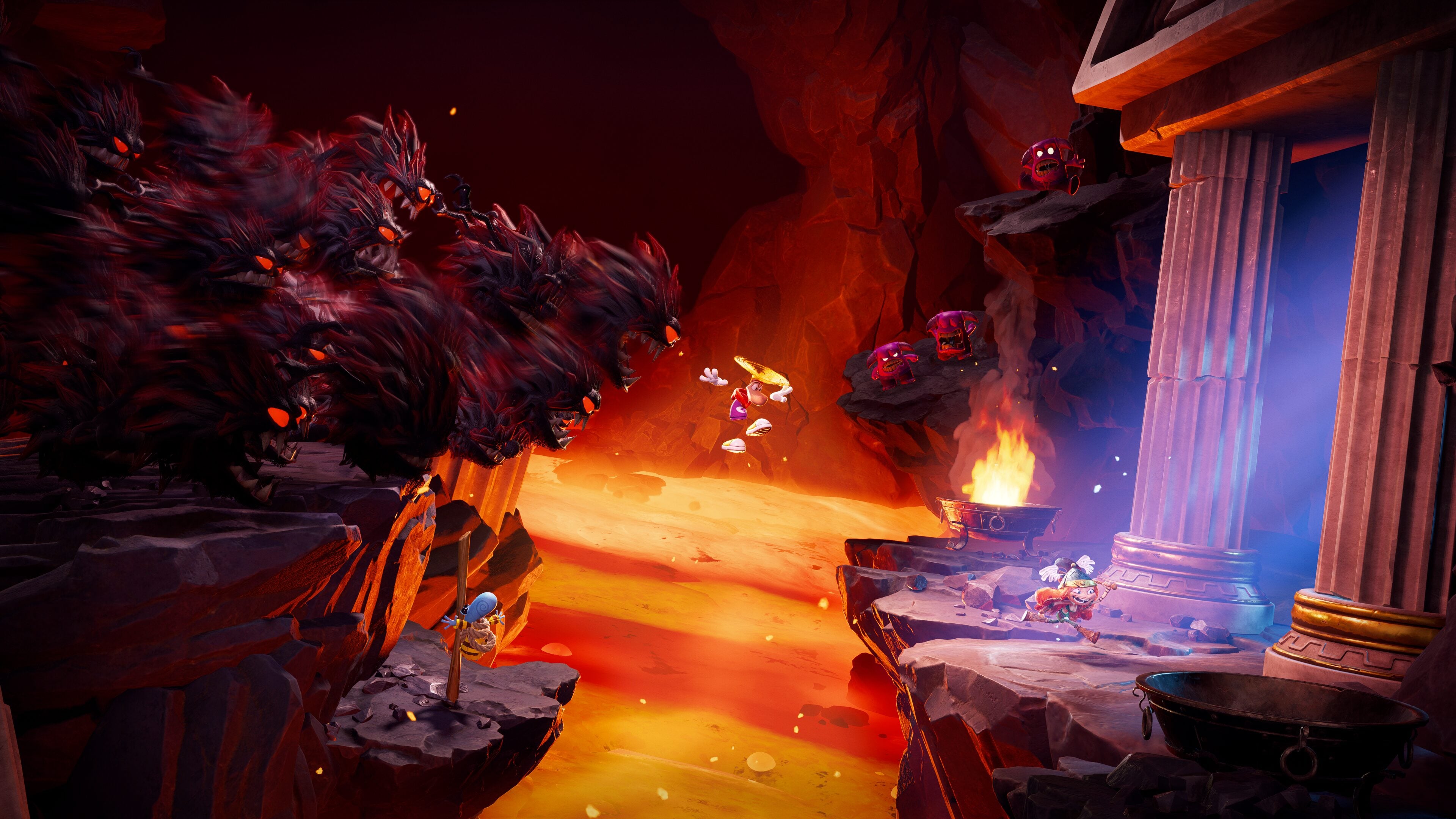
Along with the expected depth added to each new level, there’s a lot more detail and artistic flourishes added throughout Retold. Enemies have been redesigned to make them look slightly more fearsome, and in order to bring these new backgrounds to life, the team has also significantly expanded the wildlife scuttling around, with new creatures wandering around the backgrounds of these fantastical stages in a bid to make Rayman’s universe feel more like a living, breathing world.
Retold’s slightly more grown-up tone even extends to how Rayman’s world sounds. Audio effects have swapped from vanilla Legends’ cartoonish bangs and wallops into blows that land with heft. Childlike squeals have been replaced with almighty roars, all accented by an all-new score by friend of VGC, composer Grant Kirkhope.
New content-wise, the 3D dragon levels are a highlight. Part Panzer Dragoon, part Starfox, these rollercoaster-esque thrill rides offer a nice change of pace as you travel between hub worlds. One entitled ‘Fly Me to the Doom’ sees you straddling the back of a dragon as you are pursued by a giant, rocket-boot-propelled toad. This saw me transition from bog-ridden swamp to enemy-littered castles and even a vast swathe of arid desert.
“The 3D dragon levels are a highlight. Part Panzer Dragoon, part Starfox, these rollercoaster-esque thrill rides offer a nice change of pace as you travel between hub worlds.”
Instead of merely hopping into paintings to kick off the platforming like in your dad’s Rayman Legends, this time around, your new dragon rides are just as much about the destination as they are the journey, with each aerial adventure serving as a fun-filled journey to your next new biome. With each setting taking the form of a fully playable hub world, these are each littered with hidden items and platforming challenges, Mario 64 style. These areas are a welcome addition, allowing you to meet new characters – like a costume seller – and really immerse yourself in each biome as you leap across it between challenges.
“We want to bring back a bit what people loved about older iterations of Rayman – that sense of adventure that was part of the DNA of the franchise in games like Rayman two,” says Rayman series producer, Loïc Gounon. “Rayman three also has that sense of mystery as well as some voiced characters – and a bit of a deeper universe – so that ‘s really the roots of Rayman that we wanted to go back to with Retold.”
Music levels will, of course, be making a return with four new musical levels joining the game’s existing six. Yet perhaps Retold’s Sixth world is the best hint at what might be to come for gaming’s favorite limbless hero. The brilliant sixth new world sees Rayman learning a new mechanic as he battles a world ridden with corruption. Pressing the ‘B’ button sees our hero using an all-new power called ‘fairy radiance,’ causing new platforms to grow from the Earth, as well as purifying once-poisoned parts of this dark land.

Further reading

If you’re one of the ten people who loved Legends’ throwaway football mode, Kung Foot, you’ll be pleased to hear that the slap-happy footie showdown is making a grand return for Retold. In a nod to Mario Kart, Kung Foot games now feature a wealth of modifiable game-changing power-ups. From suddenly switching the location of each team’s goals to doubling the score for each goal scored, these fun ability modifiers combine with a new way to control the ball in mid-air, as well as a slew of fun new arenas.
Retold, then may be the same old story, but from my few hours with it at least, it’s a classic that looks like it’s been lovingly reimagined. Rayman’s long-awaited resurrection is very much a case of something old, something new, and something borrowed, then.
Yet the eye-catching new visuals and enjoyable additional content look to do just enough to keep long-suffering fans from feeling that they aren’t re-buying exactly the same game a third time. Yet it’s what this exciting collaboration means for the future of the franchise that ensures that I leave Montpellier on a high, returning home eager to see where these two dynamic studios will take Rayman next.
“We think that the work we did all together the last two years -both artistically and technologically- is going to lay the foundation for where we want to go next with the franchise,” teases Loïc Gounon with a knowing smile.