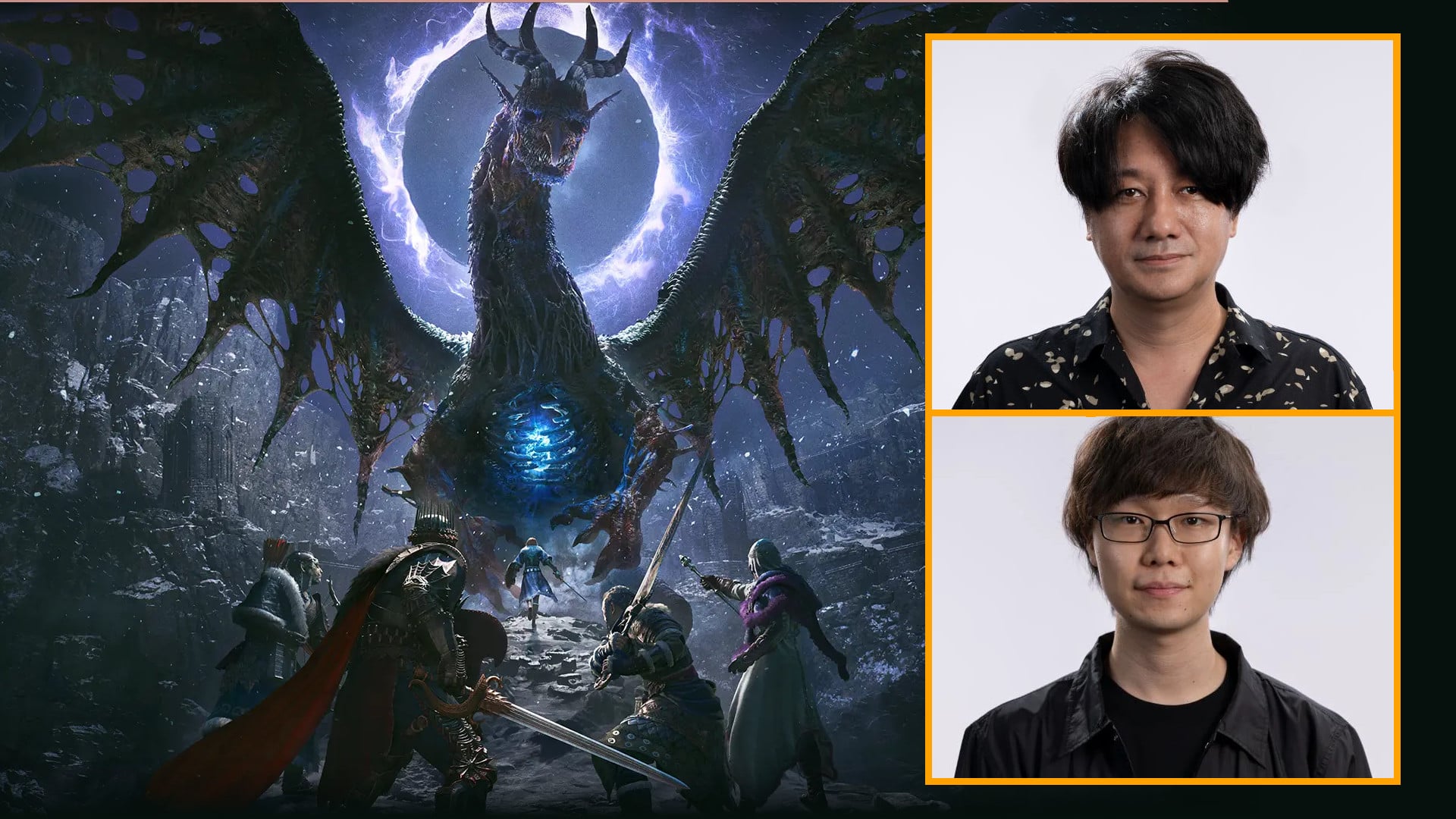
Creator of infamous $1m Kickstarter Project Phoenix says he ‘deserved the backlash’ – and insists it’s still coming
Project Phoenix dev explains what went wrong, and why it’s still coming

Back in 2013, Project Phoenix was the kind of Kickstarter success story video game players couldn’t get enough of.
Like most crowdfunding hits of the era, the JRPG promised to revive a video game genre many felt had become neglected, with involvement from veteran developers, including industry royalty like Final Fantasy composer Nobuo Uematsu, and within a month, it raised over $1 million from 15,800 backers – over ten times its initial goal.
Then things started to go wrong.
Updates became less frequent, promised release dates quietly slipped, and there was little tangible evidence the game was moving forward. By the time Project Phoenix’s developer was accused of more serious allegations (which were later retracted), trust had been largely destroyed, and one of Kickstarter’s earliest success stories became crowdfunding infamy.
By 2019, four years after its initially promised release date, Project Phoenix had become the subject of frequent online criticism, with increasingly angry backer communities wondering if the game would ever release at all. Then the project went totally dark.
Now, after seven years of silence, Project Phoenix’s developer is speaking publicly again, and it claims it intends to finally finish the game – even if it will come at its own expense, and long after most of its original backers have stopped waiting.
‘I had never led a game project before’

Sitting down with me ahead of Project Phoenix’s first Kickstarter update in seven years, Hiroaki Yura, the classical musician and former Blizzard contributor who led the Kickstarter campaign, wastes no time attributing blame for what went wrong. “It was my mistake,” he says. “I overestimated my ability to deliver. There are other underlying factors for why we failed, but that’s the main reason.”
I’m talking to Yura in a conference room in Tokyo, Japan. More than a decade after the Kickstarter for which he became notorious on the internet, Yura now leads three Japanese production companies across video (Safehouse Inc), Audio (Whistler), and game development (Area 35), collectively known as ‘The Core’.
The room itself feels strangely revealing. Far from the sterile meeting spaces typical of most Japanese developers, this looks more like a shrine to Yura’s ambition. On the wall are photographs of his various famous collaborators, alongside framed sketches by Akira Toriyama (Dragon Ball) and Katsuhiro Otomo (Akira). By the door is a hand-drawn wall doodle, clearly penned by Final Fantasy artist Yoshitaka Amano.
Long before Project Phoenix, Yura built his reputation as a violin prodigy in Australia, where he moved at age six. As a youngster, he was already a virtuoso – a title given to elite performers – and by age 22, he’d formed the Eminence Symphony Orchestra, one of the world’s earliest professional orchestras dedicated to video game and anime music, which performed to heads of state and monarchs.
“Project Phoenix was the first game that I planned. I had never led a game project prior to then, and I overestimated my abilities to deliver.”
Through his music career, he built an unusually deep network across the games industry. By 2010, growing disillusioned with classical music, he relocated back to Tokyo, Japan, where he founded the audio company CIA Inc (later renamed Whistler), quickly picking up major projects including Diablo 3, Xenoblade Chronicles, and SoulCalibur IV.
As the game crowdfunding boom emerged in the early 2010s, with the likes of Double Fine’s Broken Age, Obsidian’s Pillars of Eternity, and Yacht Club’s Shovel Knight raising millions, Yura became convinced that he could go a step further and launch his own game project. However, he now concedes that he was woefully underprepared for what would follow.
“I think the underlying problem was my experience as a producer,” he says. “Project Phoenix was the first game that I planned. I had never led a game project prior to then, and I overestimated my abilities to deliver. There were other key underlying factors for why we failed, but that was the main one.”
Yura says he had plenty of reasons to feel confident he could lead his own game project back in 2013, though he now concedes that this was misplaced.

“Around that time, I was the only external contractor for Blizzard from Japan,” he explains. “I was having the time of my life, getting to work with these guys who were my heroes, seeing everything behind the scenes. I was also bilingual. So I was in a unique position, and many friends in the games industry encouraged me to try working as a game producer.
“At the time, the Japanese games industry was in a lull, and there wasn’t much investment, he adds. “It’s different now, but at the time, I also felt like the JRPG genre was crap.
“I used to speak to [Final Fantasy creator] Sakaguchi-san about all the wonderful stuff that he made. They put so much love into what they were making. But they were also just like me, on the edge, you know? One more mistake and they’d be dead. I could feel a connection, and that’s why I wanted to make [Project Phoenix]. So I decided to give my best shot to make it happen.”
The million dollars that wasn’t really a million dollars
On August 12, 2013, the self-proclaimed “first Japan-based video game project” on Kickstarter was launched. In its description, CIA Inc loftily pledged to “set a new standard of excellence for the Japanese gaming industry” with the JRPG, which it claimed would be built by “veteran developers and creators from the East and West”.
The game was described as a “squad-based, real-time strategy game” combined with “strong Japanese RPG design influences”, developed by “top Eastern and Western creators who have worked on many blockbuster game titles.” Uematsu was also attached as the lead composer.
The project resonated immediately with its target audience. CIA Inc positioned Phoenix as the “rebirth of JRPG”, at a time when many fans and critics felt the genre had stagnated, especially with the prevalence of western games like Skyrim and Dragon Age.

In just its first day, Phoenix raised more than $300,000. A week later, it had made more than half a million. And by the time the project ended on September 11, 2013, Project Phoenix had raised just over $1 million from 15,802 backers – far higher than its initial goal of $100k.
However, like many successful Kickstarter projects from the era, Project Phoenix’s Achilles’ heel eventually emerged from how it overpromised features and underestimated its budget.
During the golden era of video game Kickstarters, many players were convinced that a million dollars was substantial funding for a video game, but the reality was often very different. Projects like Mighty No 9, Shenmue 3, and Yooka-Laylee eventually exposed how the public underestimated the true cost of building modern games (disclaimer: I ran the Kickstarter for the latter, and we felt huge strain to create the game on time and under budget).
Similarly, while Project Phoenix looked like a big success from the outside, Yura says the usable budget he ended up with was far smaller.
“At the time, the Japanese games industry was in a lull, and there wasn’t much investment. It’s different now, but at the time, I also felt like the JRPG genre was crap.”
“We ended up having about 20% less money than we expected,” he says. “From the outside, it looked like we made a million dollars, but then Kickstarter takes 5%, but then there was another 15% lost on top of that because of credit cards that declined. In the end, we got about $800,000.” More money was also spent on physical backer rewards, he says.
For a project positioning itself as an ambitious RPG that would set standards for the genre, the economics were already looking fragile. But according to Yura, by far his biggest mistake came next.
The programmer who never came
For Project Phoenix, Yura had gambled development on the promise of a single developer. Yura says a close friend had verbally committed to joining Project Phoenix upon the completion of his next game, which he has previously named in interviews as the Microsoft-published metroidvania Ori and the Blind Forest.
“He is a genius programmer,” says Yura of the programmer, known to be Britain-based David Clark. “We were waiting for his next title to ship so he could join us and that delayed production. Art we could do, but programming was a lot harder.”
Unfortunately for the violinist, Ori went on to become a hit for Xbox, and Clark could not turn down the lucrative offer of working on the sequel, he says. By the time it became clear that he wasn’t joining Project Phoenix, production had already been delayed by more than a year.

“When he was working on his other game as a freelancer, he committed to working on Project Phoenix after. All of a sudden, his game was very successful and the publisher was very happy, and they offered him more money to stay for the sequel,” Yura says.
“As a friend, I was like, ‘You should do what’s good for your career. Don’t worry, I’ll find another programmer’. But that was the biggest mistake I made during that time, because he was a fucking genius. He was so good at what he did, and that was impossible to replace.”
Despite playing down his importance to Phoenix, Clark’s alleged decision not to join the project was a disaster. According to Yura, in addition to being a “one-man engine room”, the programmer had agreed to work on Phoenix on “very generous” terms.
“He took a small residual instead of a full salary because he believed in the project. That arrangement is a big part of what made the original budget viable in the first place. So yes, staying on that budget was tied to him, precisely because his below-market rate was built into it.”
“That was the biggest mistake I made during that time, because he was a fucking genius. He was so good at what he did, and that was impossible to replace.”
Clark’s U-turn on joining Phoenix immediately made the Kickstarter budget unviable, Yura says.
“Because the moment you replace someone working for a residual with full-time programmers at market rate, you’re into a completely different budget. Hiring a full team at proper rates would have taken us well past what was left. So the real choice wasn’t whether to get a cheap replacement or not. It was compromising the game, go back to backers for more, or fund the gap myself. I chose to fund it myself, and that’s what happened.”
He adds: “It wasn’t a surprise so much as the known risk of how the project was set up. The plan leaned very heavily on one uniquely capable person on a below-market arrangement. That kept costs low, but it also concentrated the whole thing on a single point of failure.
“When that arrangement ended, the economics that made the budget work ended with it. In hindsight, that dependency was the real vulnerability, and the honest lesson is that a project this size should never rest on one person.”

VGC was unable to reach David Clark in time for publication of this story.
Although the viability of the project relied heavily on a ‘genius’ programmer working at a significant discount, Yura claims that Phoenix already had fulltime staff in place working on other areas, like art, while others took residual arrangements instead of a flat fee. “Different people, different deals, but everyone was compensated,” he says, while claiming that the team had no volunteers.
Tiny Metal and legal action
By 2015, Yura says Project Phoenix had effectively run out of money. After sitting down with a newly hired producer to review the state of the project, he says he reached an unavoidable conclusion. “We realized we were out of resources, and we had to earn money to keep going.”
This led to the most controversial chapter of the whole Project Phoenix saga.
A year earlier, CIA Inc had annoyed some backers by announcing a second crowdfunding campaign for the anime project Under the Dog, revealed via a Project Phoenix Kickstarter update, with collaborative item rewards promised between the two.
The anime was being created by production company Kinema Citrus and led by producer Jiro Ishii. However, with CIA’s name attached, many Phoenix backers were understandably concerned that it was spreading itself thin, just a year after its game project was funded, when little progress was being shown beyond concept art and an underwhelming vertical slice.
“I’m gonna be honest, I really cannot see a new Kickstarter when a previous one isn’t even close to finishing with good eyes,” wrote one backer at the time. “I understand there are different projects with different people, but having people working on both means they won’t be [able to] dedicate themselves to one project.”
According to Yura, because he wasn’t involved in the production of the anime, but rather management and ideation, he felt he could take it on without too much distraction. However, he now acknowledges that he took on too much. “Spreading myself too thin is one of my weakest traits,” he says. “I bite off more than I can chew and then overwork to cover it.”
But while backers could mostly let the anime project slide, there was a furious reaction to what came after Yura’s 2015 realization that Phoenix was out of money.
In 2016, a Kickstarter appeared for a game called Tiny Metal. The game was attached to an unknown company called Area 34 (later renamed Area 35) and billed as a spiritual successor to Nintendo’s Game Boy Advance strategy game, Advance Wars.

Despite a demo and endorsement from Nier: Automata’s Yoko Taro, Tiny Metal failed to meet its tiny funding goal of 50k USD, with its mysterious developer claiming it had secured funding elsewhere. That developer, it later emerged, was helmed by Hiroaki Yura.
“I was desperate at that time,” explains Yura, “because if I didn’t do Tiny Metal, I couldn’t do Phoenix. So I had little choice. I was catching flak for not delivering Phoenix, but if I didn’t make a hit elsewhere, I couldn’t make Phoenix, and that would just kill the whole thing for me.”
In an update to backers confirming that he’d stopped working on Project Phoenix to focus on Tiny Metal, Yura called the project his “only salvation” and pleaded for support. However, many backers were understandably furious, alleging that their funding had gone towards a game they hadn’t asked for.
This negative sentiment then exploded when, shortly after, former Area 35 employee Tariq Lacy publicly accused Yura of using Project Phoenix Kickstarter funds to finance Tiny Metal – allegations that spread quickly online and further decimated confidence in the project.
“I was desperate at that time. Because if I didn’t do Tiny Metal, I couldn’t do Phoenix. So I had little choice. I was catching flak for not delivering Phoenix, but if I didn’t make a hit elsewhere, I couldn’t make Phoenix”
Yura denied the claims and later pursued legal action. In 2018, Lacy formally retracted the accusations as part of a settlement, publicly stating the embezzlement allegations were false. When asked about the controversy now, Yura again denies that any Project Phoenix funding was used to fund Tiny Metal.
“The deal we signed for Tiny Metal was for around $350,000, which came from a private investment group,” he says. “That’s how we made Tiny Metal, and we’ve got all the contracts and legal documents detailing that. That budget was enough to pay for three people during the development of that project, which was enough to ship it.”
However, despite the retraction, the criticism did not go away, with angry backers continuing to vent their frustration. Although Lacy’s accusations were ruled false, many Phoenix backers remained annoyed by how Tiny Metal had been revealed. Overwhelmed by the criticism, in 2019, all of Project Phoenix’s social channels – including Kickstarter updates – went dark.
“It was my decision,” Yura says. “By then, we were getting personal attacks, which I deserved but wanted to stop, but also, we had nothing new to show, and I didn’t want to fill the gap with more mock-ups and promises, so I went silent.
“But that was the wrong call,” he concedes. “I owe backers a real explanation, and more than that, I owe them proof that Project Phoenix is still alive.”
Why come back now?
This month, seven years after Project Phoenix’s last Kickstarter update, the now-infamous crowdfunding campaign finally resurfaced.
In a lengthy post, Yura makes many of the same claims as in VGC’s interview and promises that the game is now back in development. Notably, he includes a newly recorded orchestral theme (embedded below) from Nobuo Uematsu, which the composer told VGC in a brief statement was written “quite some time ago,” adding, “it’s actually rather good, isn’t it?”
Yura also put out roughly two minutes of new prototype footage showing Project Phoenix’s current state. The director acknowledges that the footage shown is rough and “far from complete”. “We can do better than this, and we will be doing better, but this is the state of the project right now,” he says.
The difference now, compared to ten years ago, he argues, is that his team has the experience and talent to see Project Phoenix through to completion.
“Why now? I’ll be truthful, we want to show that we have the team now. We have the people, and we haven’t forgotten about this. That’s why we need to talk about it.”
Erasmus Brosdau, the former Crytek artist who recently directed the Netflix CG animation Gundam: Requiem for Vengeance, is now working on the game, according to Yura. Michael Chu, the former Blizzard designer and lead writer of Overwatch, is also working on Project Phoenix, he says.
“Much of the core team is still with us,” Yura claims. “Nobuo Uematsu, Go Takahashi, and Koji Moriga. Since then, we have added a lot of talent. Takuya Suzuki on environments, Hisao Takano on sound editing, Ray Hsu. Area 35 now runs a full team of thirty plus developers, so we are in far better shape to take Project Phoenix into production than we were the first time around.”
He adds: “Everything going into the game now is paid for by the studio I’ve built since, not by what remained of the Kickstarter.
“And this is the part I’d want people to take away… we now have a full team instead of one irreplaceable person. That team is better suited to actually finish and to build a bigger and better game than the original plan ever could have. I’d rather be judged on that than on what went wrong getting here.”

Yura says he believes the concept for Phoenix – a JRPG merged with Blizzard-like RTS design – remains novel 13 years later. He also believes that his companies’ experience collaborating on major Japanese game projects, as well as its work on the upcoming sequel to Tiny Metal and recent mobile game Felicity’s Door, will mean it’s better prepared to avoid failure for a second time.
So, when is Project Phoenix going to come out? Frustratingly for backers, Yura claims it’s still not anywhere near close, but says he’s willing to commit to a “realistic” deadline.
“Internally, I was forced to make a promise: I will finish development by the end of 2031. And I am serious. I don’t think I can pursue any more later than 2031 because, you know, I’ve made everybody wait too long, and at the same time, I have to be realistic with my dev team.
“Also, I’ve seen many of my biggest heroes pass away recently, and there are certain people who’ve made something for an anime for 10 years, and then it didn’t do well. I can’t do that to my company or my people or the people I work with. I need to get this out, and I’ll owe it to the backers.”
After thirteen years of missed promises, disappearing updates, and thousands left waiting, it will be difficult for backers to put faith in the new promises. However, Yura claims that future updates will not come in drips but in “little portions”, and Area 35 has opened a Discord server to communicate directly with its audience again. Refunds are not currently being offered.
Unsurprisingly, Yura tells me that Phoenix will be the last crowdfunding campaign he’s involved with.
“I don’t think I’d ever do another Kickstarter. The effort it takes to manage a Kickstarter is too much. The best thing is to be able to talk to your fans from the very beginning, but the money aspect doesn’t work out for the fans or for us.”