Pragmata feels like a throwback action game only Capcom could make
New hands-on reveals deeper combat mechanics and new environments
Deservedly, Capcom has a lot of trust in the bank right now with its decade-long run of action hits. It’s also producing games at a prolific pace, at a time when every other major games publisher feels like it’s on fire at the side of the road.
That’s what makes original IP Pragmata such an intriguing prospect. Everything we’ve played so far feels distinctly throwback, in a way that most other developers would attract scrutiny. But that’s OK: The idea of a simpler, linear third-person shooter, with a sprinkling of Sad Dad narrative, feels pretty compelling amid today’s abundance of online shooters and RPGs, especially with the Devil May Cry house at the controls.
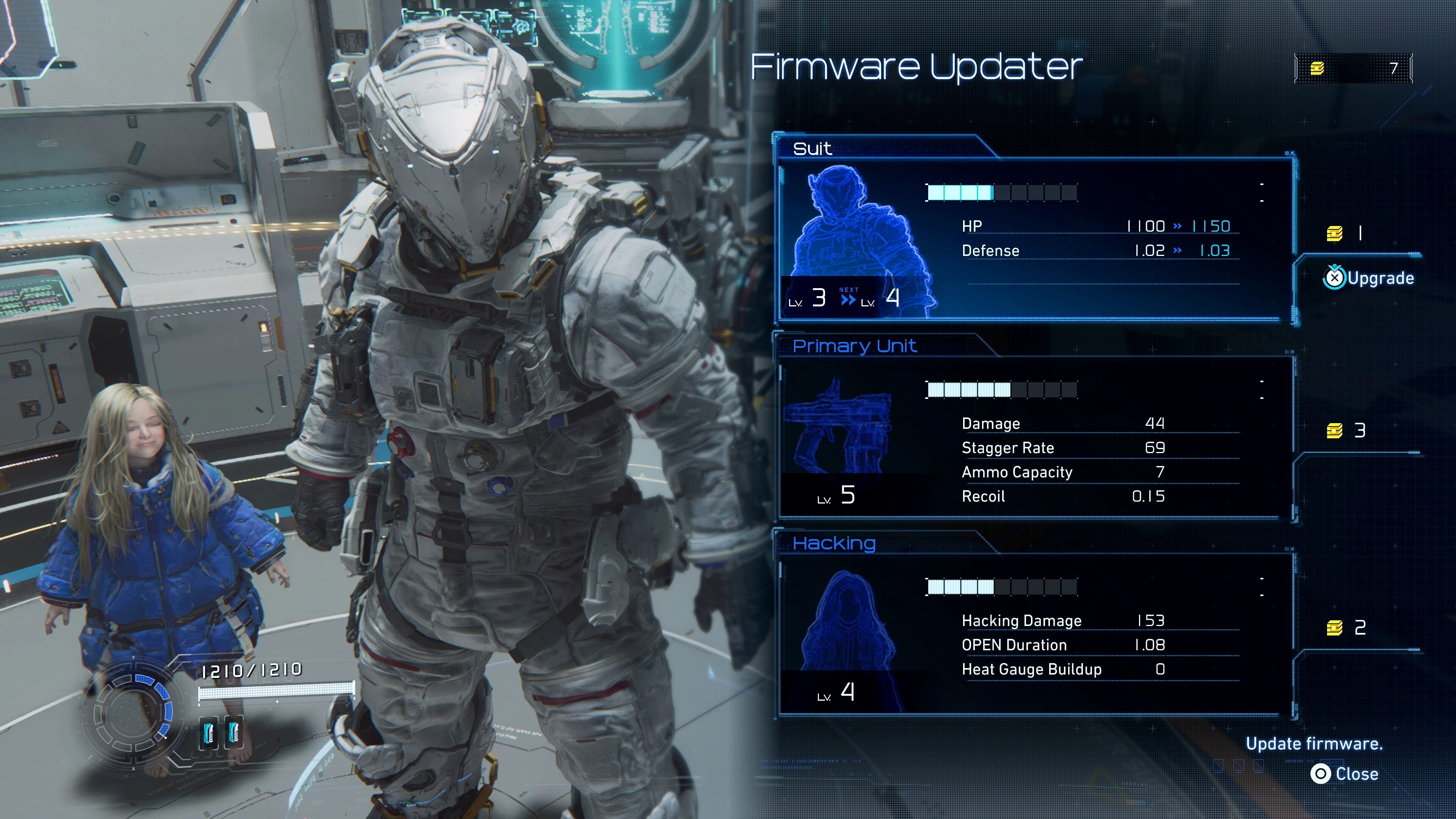
Anyone who’s played the public demo will know that Pragmata’s sci-fi shooting mechanics – other than the one key puzzle-hacking twist – are comfortably familiar, and you can basically see how the game will play out structurally from the outset. Protagonist Hugh and his android companion Diana move from action set-piece to key-and-lock puzzle, occasionally returning to a hub to upgrade their weapons and gear, before being rewarded with a big boss and it’s yard-long energy bar.
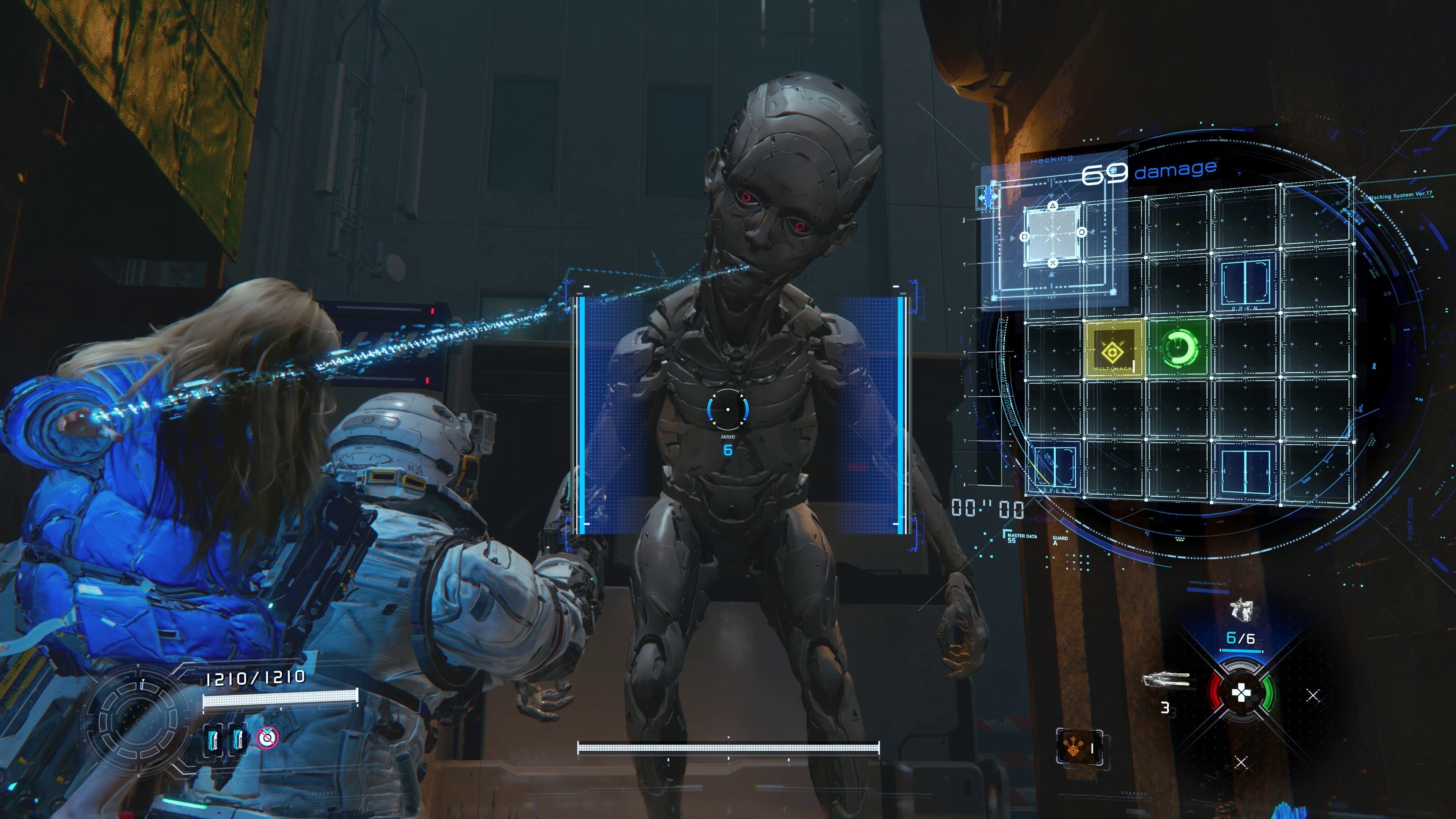
The twist is that the enemy robots on the lunar research station have security systems that must be hacked via a mini-game, which plays out simultaneously to the combat gameplay. It’s very much the combat equivalent of patting your head and rubbing your tummy at the same time, but it’s a compelling twist after it clicks into place.
The formula of the public demo feels consistent with the later section of the game I was recently able to play at Capcom, which takes place towards the middle of the story. Hugh and Diana are still moving from room to room, fighting groups of enemies, solving key puzzles, and opening loot chests. But when the combat feels this good, coupled with more sublime RE Engine flourish, I was more than content to slip into the comfort of a 2010-era shooter loop.
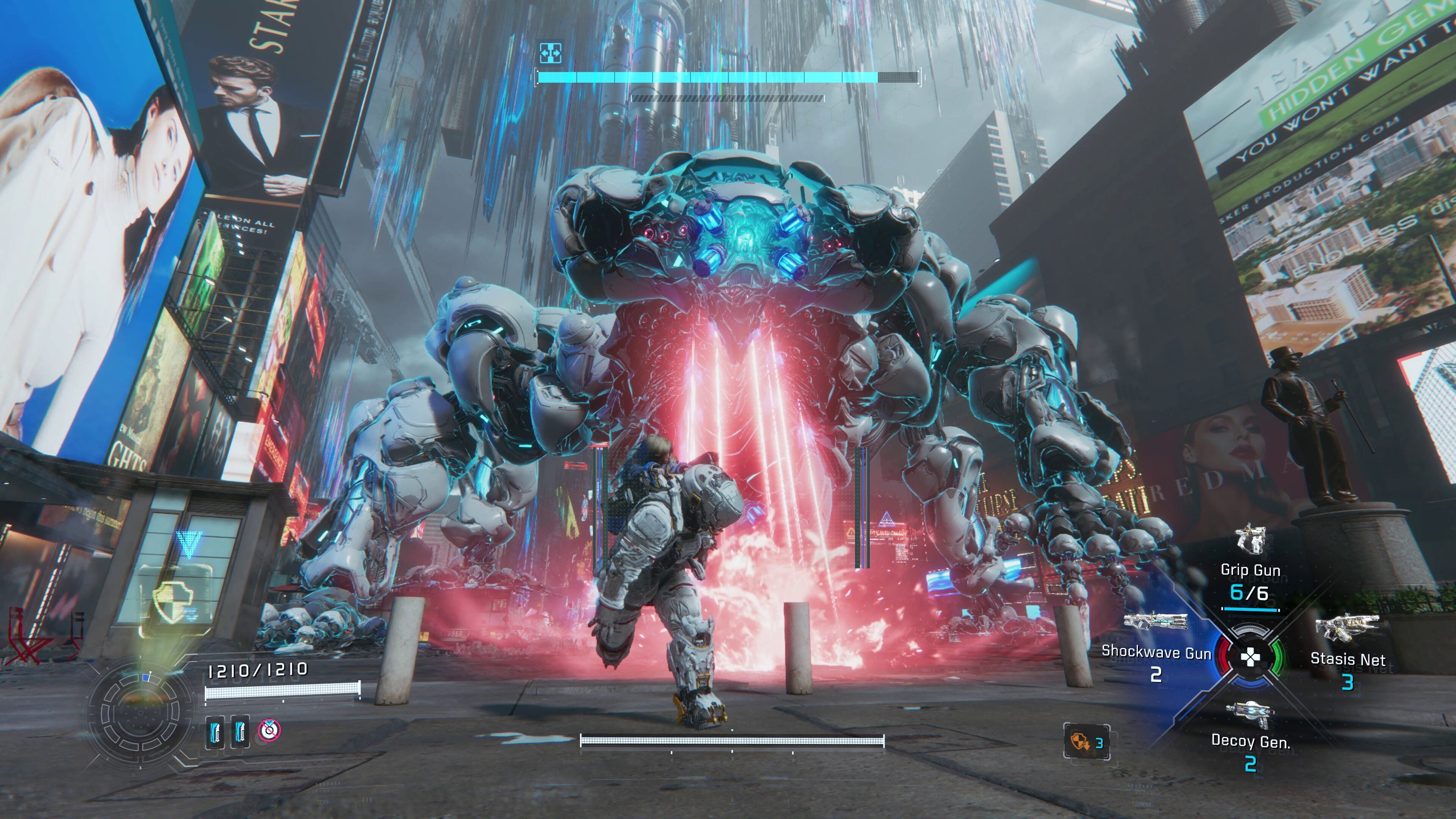
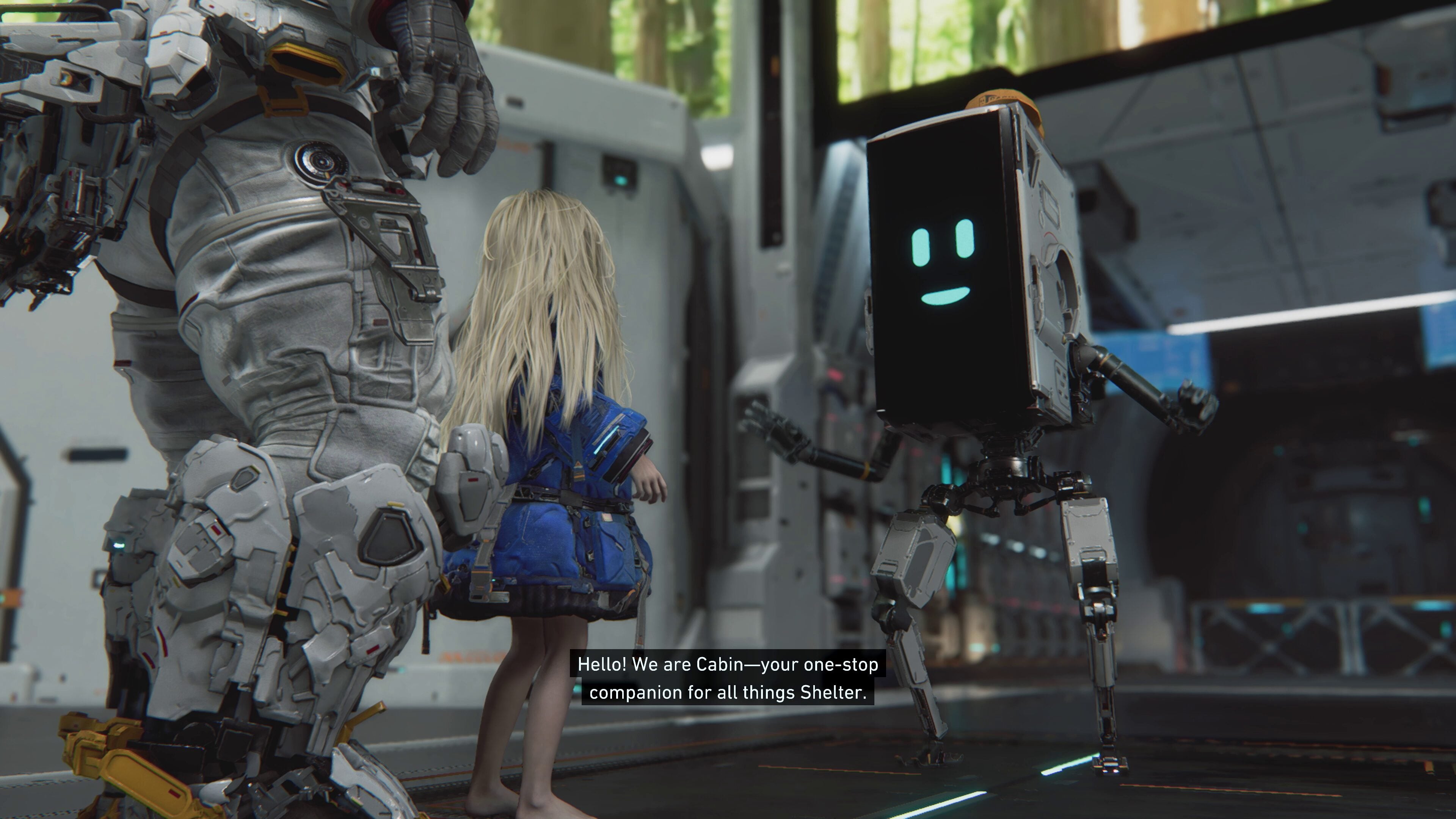
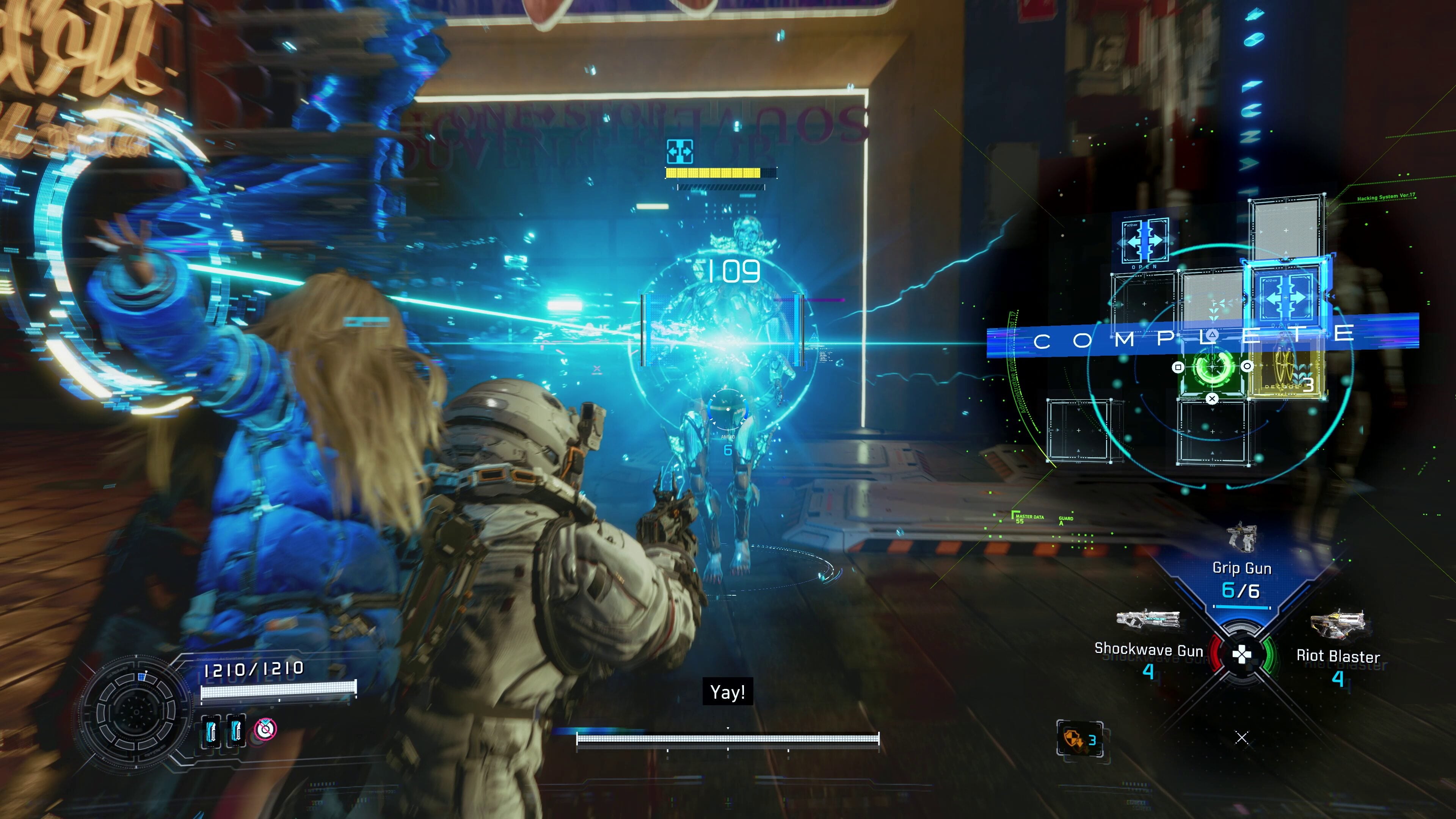
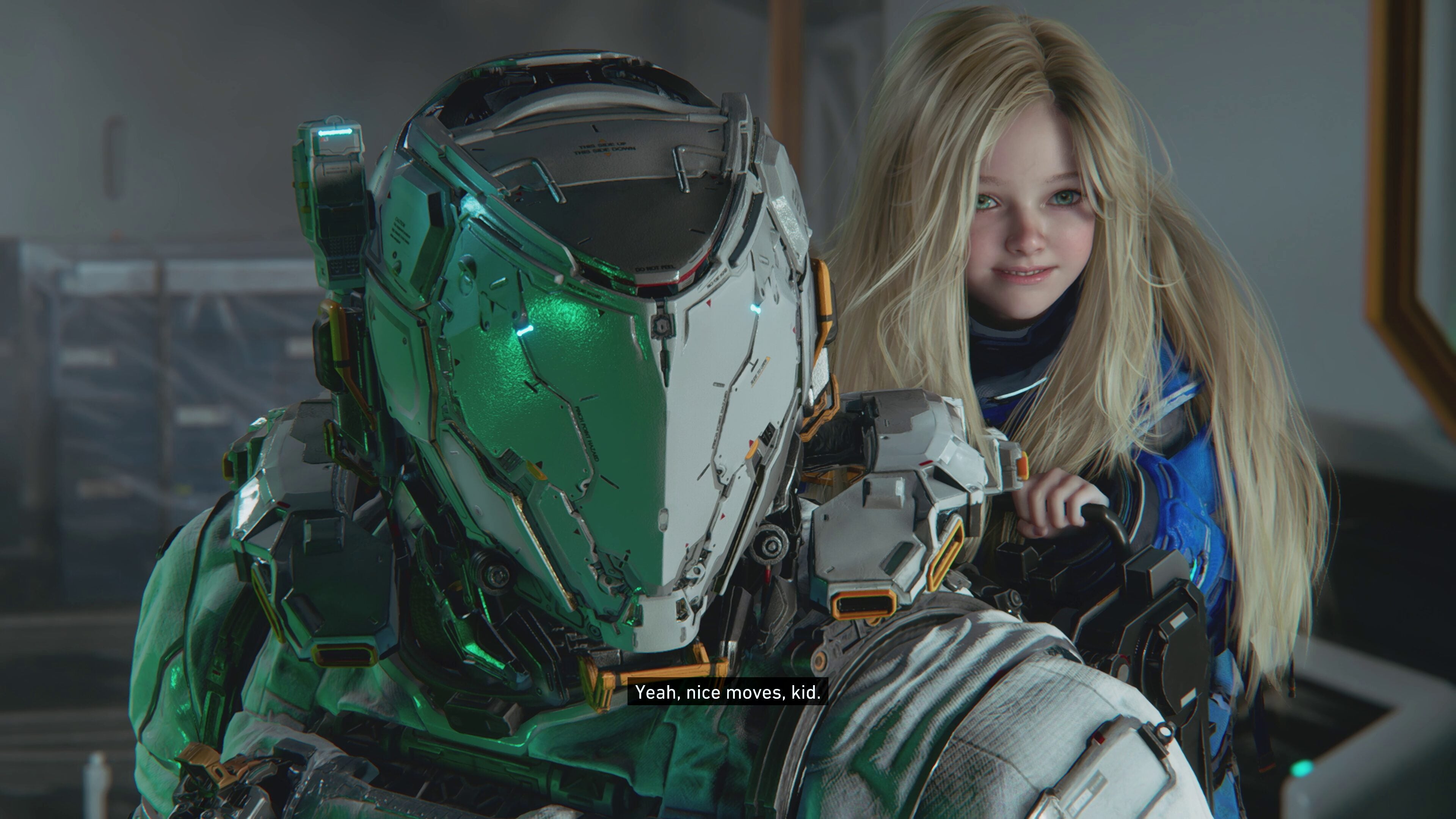
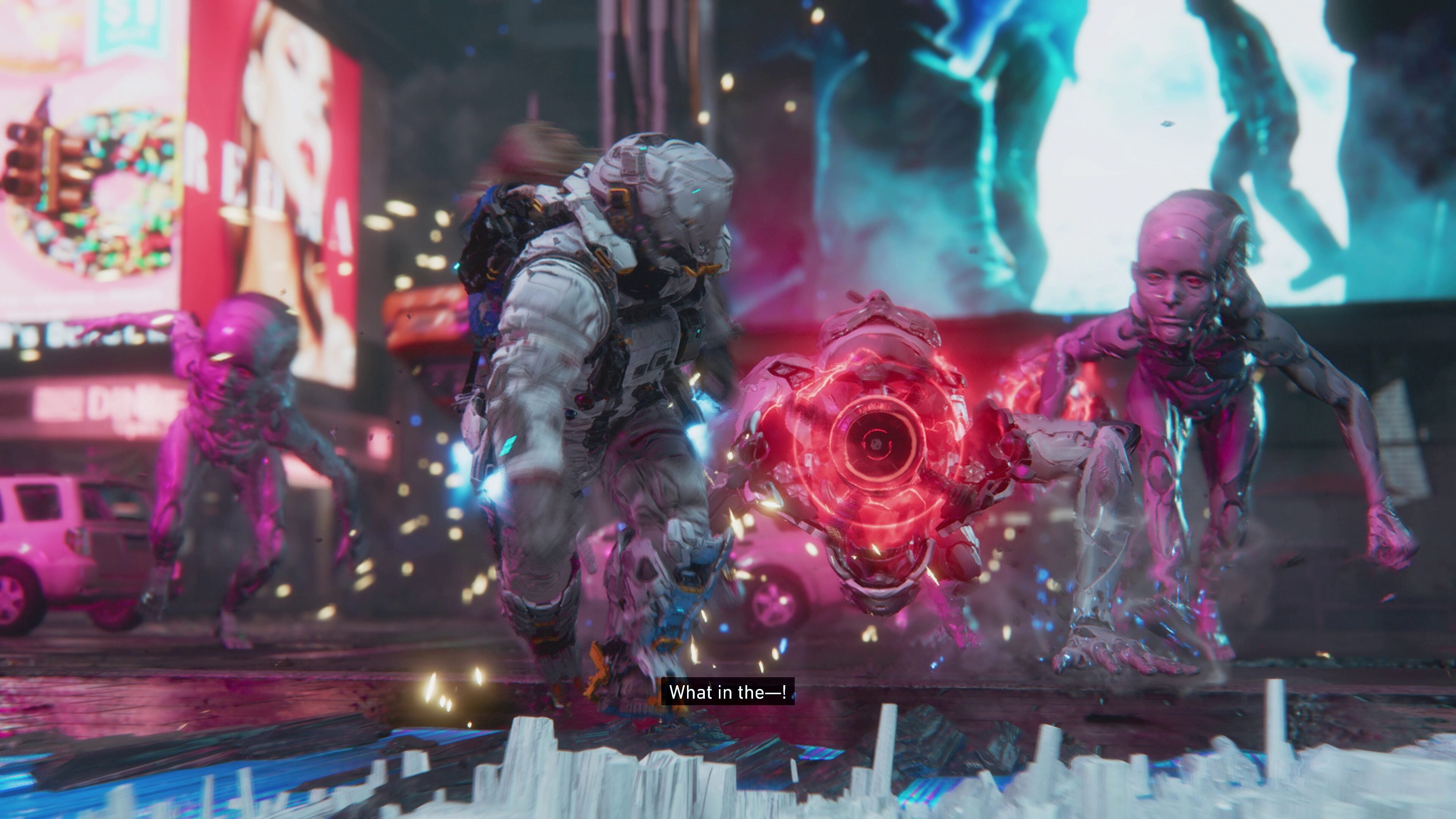
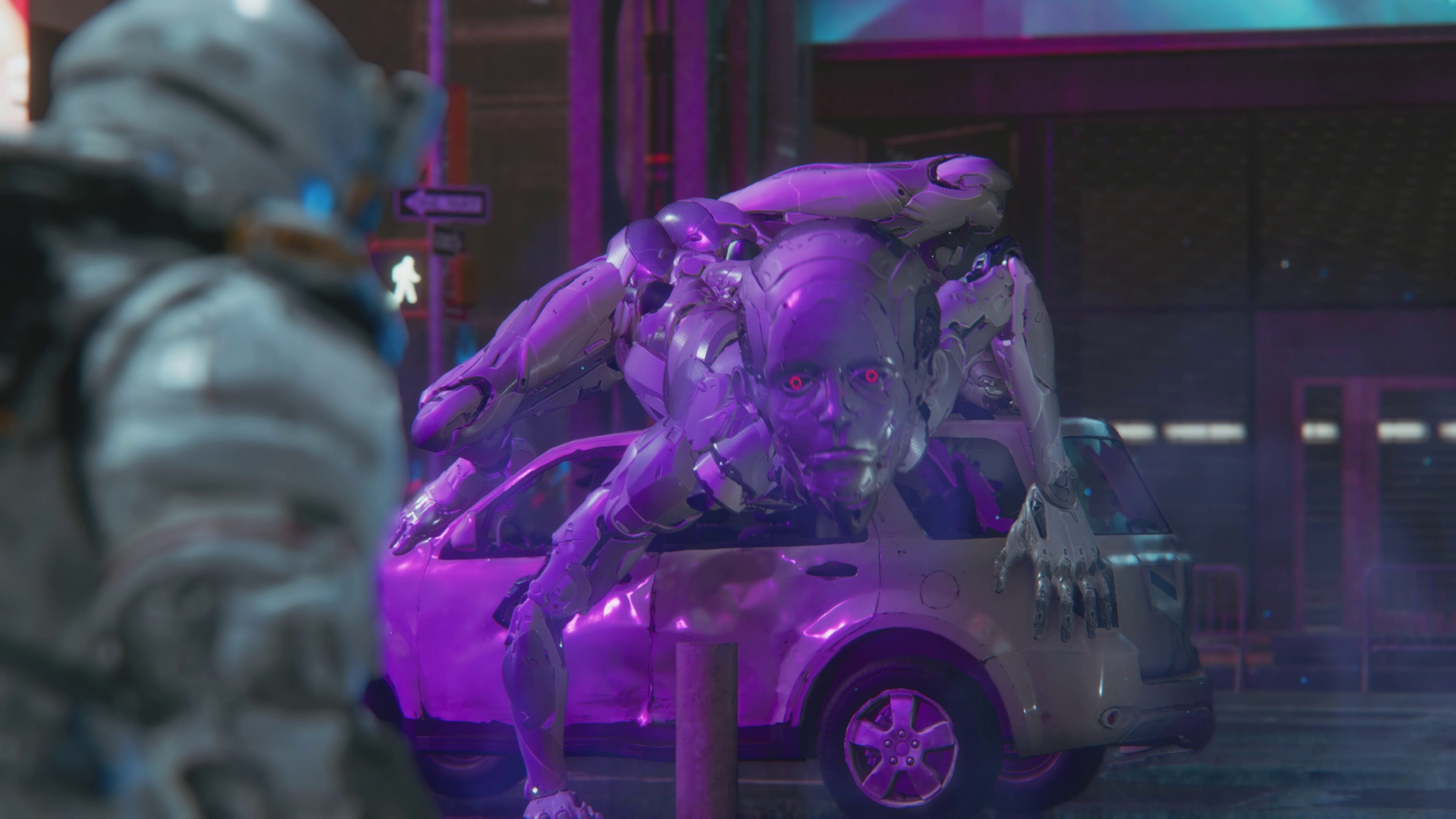
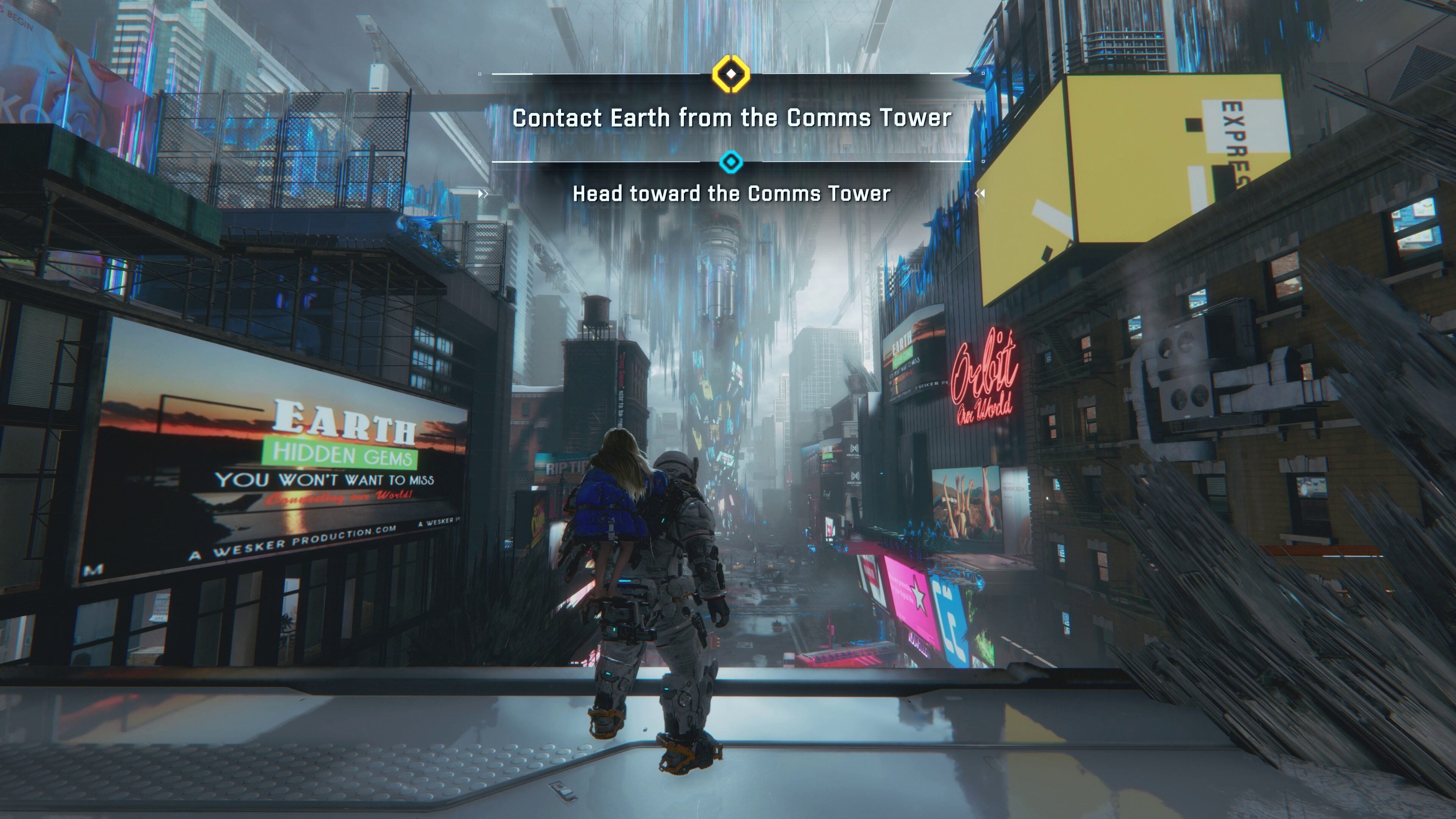
This section of the game takes place in a sort of 3D-printed New York Times Square, only instead of tourists and ticket touts, Hugh has to deal with bus-sized humanoid androids. Visually, it’s a sublime contrast to the sterile sci-fi corridors of earlier in the game, especially when new sections of the environment are literally ‘printed’ out by a celestial factory bot, creating new pathways and bridges.
As in the public demo, combat feels tense in a Resident Evil 4 mould, with robotic baddies stumbling towards the player as you frantically fight to hack their shields using the face buttons. Here, we’re introduced to some deeper twists on the mechanic, with Hugh able to quickly hack incoming missile projectiles, sending them blasting back to the attacker, while some of the larger enemies can block hacking entirely with a physical antenna that must be manually shot away.
“Visually, it’s a sublime contrast to the sterile sci-fi corridors of earlier in the game, especially when new sections of the environment are literally ‘printed’ out by a celestial factory bot.”
Some respite is provided by the introduction of a multihack power-up for use during the hacking mini-game, and a charge ability that Diana can use to similarly break the shields of all nearby enemies at once. As you’d expect from Capcom, weaponry feels satisfyingly weighty with crunchy projectile impacts, especially when you get your hands on its equivalent of a shotgun and charge laser beam.
And, of course, everything is tied up with a boss enemy the size of a small block of flats, which Hugh must dispatch by targeting specific parts of its body, while simultaneously dodging barrages of laser beams.
Pragmata feels like something Shinji Mikami or Platinum Games would’ve made 15 years ago, with the blockbuster polish of modern RE Engine titles – and I mean in a very complimentary way. The same question I had before playing the newest segment remains: can Pragmata’s ideas hold up across the entire length of the game, without more meaningful evolution? However, I’m more confident with Capcom at the helm than without.