Pokémon Go at 10: Developers reflect on the game that changed Pokémon forever
Scopely Explore shares stories from the first decade – and what’s coming next
10 years ago, in the Summer of 2016, Pokémon Go was released and changed the franchise forever. Other than Pokémon Red & Green, Pokémon Go is the most significant release in franchise history, and the catalyst for the reignition of interest in the hobby that continues to this day.
It was more than a mobile game; it was a cultural moment, not unlike the first time Pikachu and friends came to the West. People still talk about the Pokémon Go Summer as if it were the last moments before the highly divided, politicized world came into being. That’s not quite true, of course, but the level of nostalgia that’s held for sprinting around your local park after a Snorlax is undeniable.
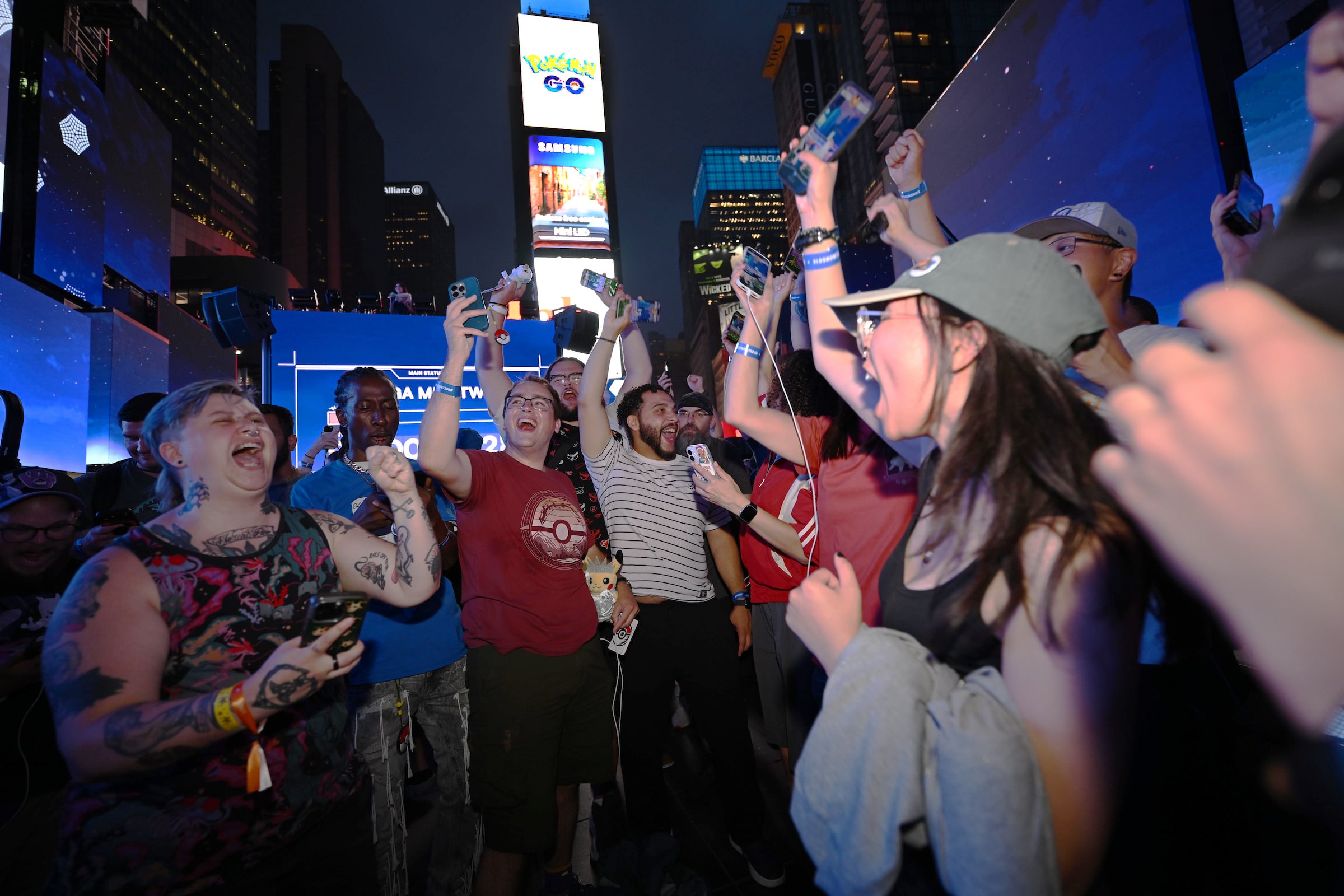
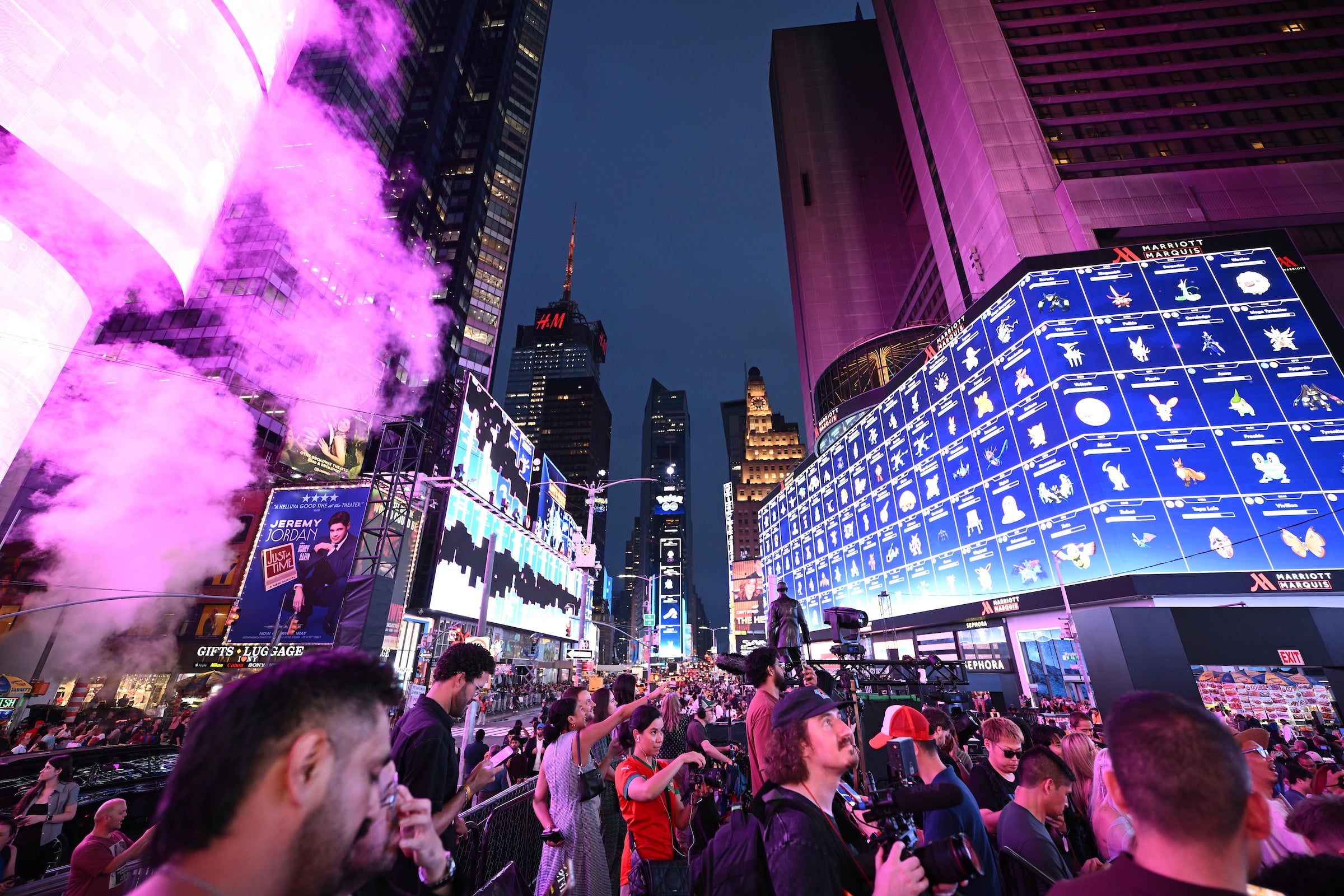
This week, Pokémon Go celebrates its tenth anniversary, the same way it started, with Mewtwo taking over New York’s World Famous Times Square. In a recreation of the closing moments of the game’s first trailer, thousands of players descended on the most famous few blocks on earth to take down Pokémon‘s original legendary. Virtually every screen in the advertising Nirvana was taken over by Pokémon and their trainers.
It was an astonishing spectacle.
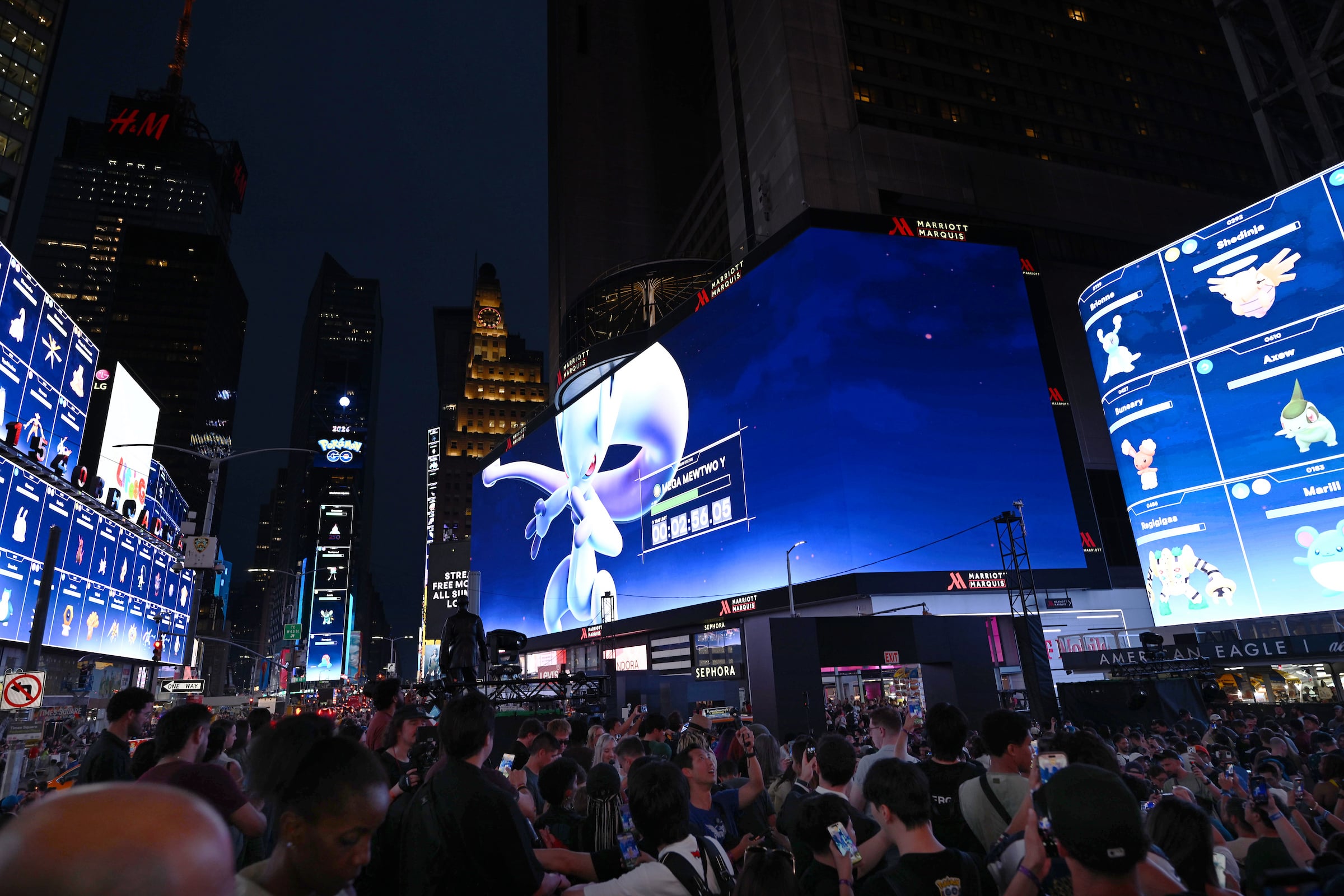
“That moment in the trailer has been a guiding light for us,” said Ed Wu, President at Scopely Explore. “It does feel a little bit like fulfilling our promise.”
Wu is one of the few members of the original Pokémon Go team who still work on the product every day. In a presentation held before our interview, Wu shared a photo of his daughter playing with a stuffed Pokéball. Wu told us she has the distinction of being the first child to throw a Pokéball in Pokémon Go.
Pokémon Go began as a quiet April Fool’s Day prank that was released on Google Maps in 2014. Pokémon Go’s original director, Tatsuo Nomura, worked on Google’s Maps team and wanted to share his love of the franchise. Seeing this, Niantic founder John Hanke contacted Nomura with the idea of combining Niantic’s ARG game, Ingress, with the Pokémon map idea. With the help of The Pokémon Company boss Tsunekazu Ishihara, the game was brought to life.
“That moment in the trailer has been a guiding light for us. It does feel a little bit like fulfilling our promise.”
Pokémon Go’s launch was massive, but it was also troubled. Players who missed out on the 2016 iteration of the game will never understand the constant login issues, bugs (not the Caterpie kind), and the relative lack of content compared to the original game. All players could do was catch Pokémon, spin Pokestops, and battle for Gyms.
When Pokémon soft-launched in Australia and New Zealand, Wu tells me that he was up for over 24 hours straight, doubling server capacity, then doubling it again, then doubling it again. The demand was unprecedented. Due to players being able to sideload the app outside of Australia and New Zealand, players got access to Pokémon Go far earlier than Wu had hoped, or the team could keep up with.
Wu laughs as he recalls frantically turning off PokeStops and Gyms in areas where the game wasn’t supposed to be available. I asked him if there was a moment he realized just how popular the game was going to become.
“I think about 6 hours in… things went off the hook nearly immediately,” Wu said. “We had some idea this was going to be a great game, but the scale of enthusiasm was way beyond what we were thinking about.”
Wu shared with me a graph of how many players were throwing Pokeballs at once, in-game. In the week before the game officially launched, a few thousand players were trying to catch Pokémon at the same time. On launch week, almost 1 million Pokéballs were being thrown every second.
By that August, at any one moment in Pokémon Go, there were up to 5 million Pokéballs flying every single second. The computing power required to run all these instances of the game at once was enormous.
“The 10s of thousands of CPUs that Pokémon Go was running on may now seem trivial compared to some of the largest instances today, but 10 years ago, Pokémon Go was the largest computing cluster of its kind anywhere on the planet.”
“We had some idea this was going to be a great game, but the scale of enthusiasm was way beyond what we were thinking about.”
Pokémon Go in 2026 is a much better game, but I can’t help but have nostalgia for when even the silhouette of a rare creature popping up in the bottom corner would cause chaos. Wu shares his memory of a viral video, filmed near his Bellevue office, showing players sprinting towards a Squirtle. “I thought I was hallucinating,” he laughs.
I have a very distinct memory of Pokémon Go Summer, where my friend and I walked from my house all the way into town, catching everything we could on this perfect July day.
Eventually, we got to a Gym near Paisley Abbey and took it down. Then, we saw it had been taken back, so we took it again. After hours of back-and-forth, we ran into the group that was playing against us, all tapping away as quickly as they could, and they walked around with us for the rest of the night. It was a genuinely unifying experience.
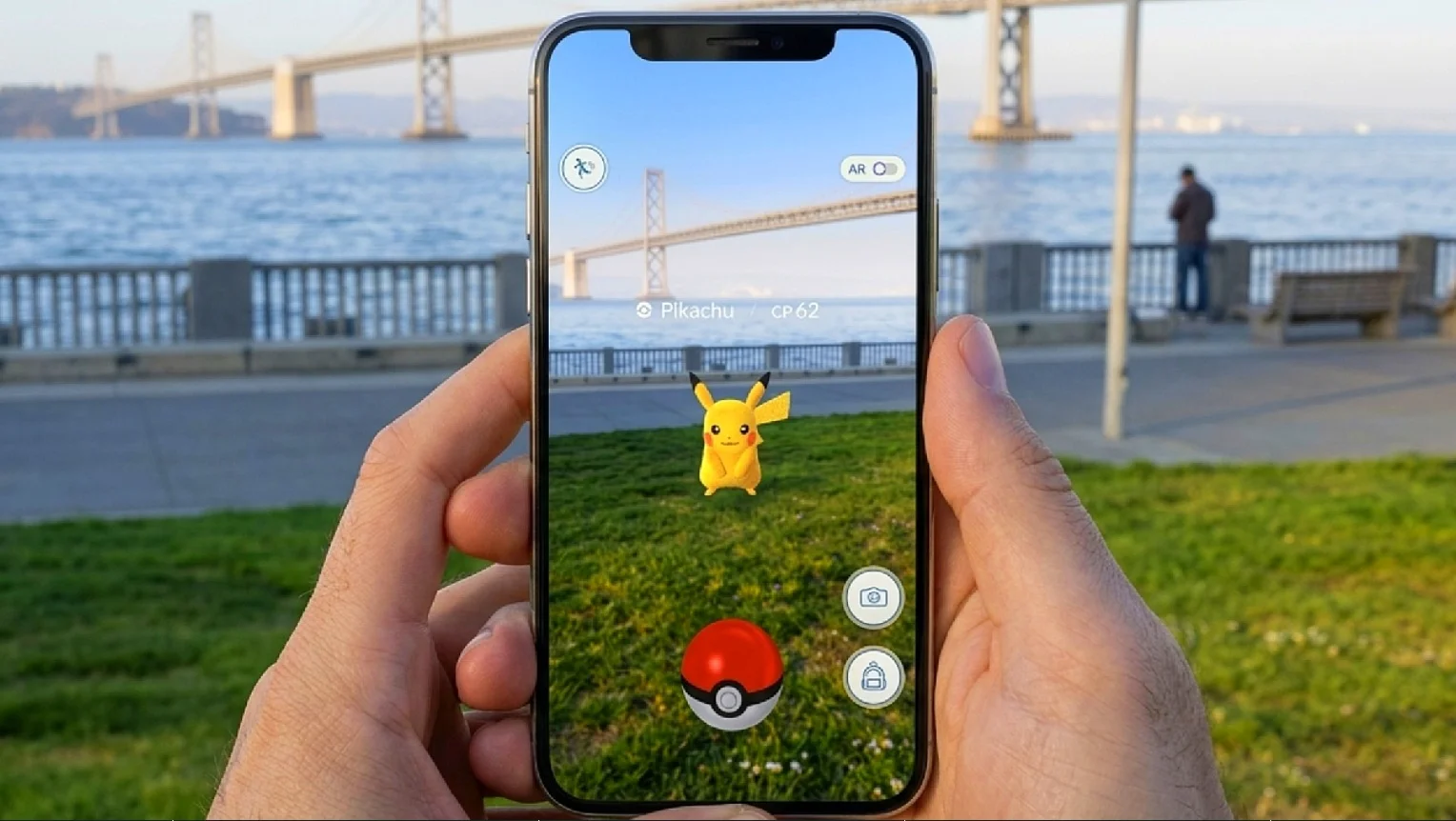
This week, I’ve been in New York, where Pokémon Go still thrives. Walking through Central Park, you can spot those taking down Raids a mile away, battery back plugged into the bottom, holding the phone in their left hand and lining up a curveball Pokéball throw with the other. Being here is the closest recreation of Pokémon Go Summer I’ve felt.
Those personal stories are what keep Michael Steranka, vice president of product for Pokémon Go at Scopely, so passionate about the project. During his portion of the presentation, he shared the story of how he and his now-wife spent 8 hours chasing a regional exclusive Farfetch’d around Hong Kong on their first vacation as a couple.
Steranka shared a picture of himself and his partner, exhausted smiles on their faces, holding up the phone screen with the successfully caught Pokémon. He tells us that the heat in Hong Kong in August was so bad that he “sweated through his pants,” and that he was “so sure she was going to dump (him),” after spending a full day on the rare spawn.
“The 10s of thousands of CPUs that Pokémon Go was running on may now seem trivial… but 10 years ago, Pokémon Go was the largest computing cluster on the planet.”
Sternaka tells me this is when he knew he wanted to be a part of Pokémon Go. However, his early days at the company weren’t smooth. Sternaka helmed the first official in-person large Pokémon Go event, Global Go Fest Chicago. In July 2017, 20,000 players descended on Chicago’s Grant Park.
It was a total disaster. Players couldn’t connect to the game, in-game events didn’t work, and the entire time this was happening, the event was being streamed online. Fans in attendance began chanting “fix your game,” and the chant was beamed around the world.
Sternaka says he should have been fired for that event. “I got in my shower after that first and just cried.” He shared text messages from the day, as family and friends reached out to check on him and his team while the event fell apart.
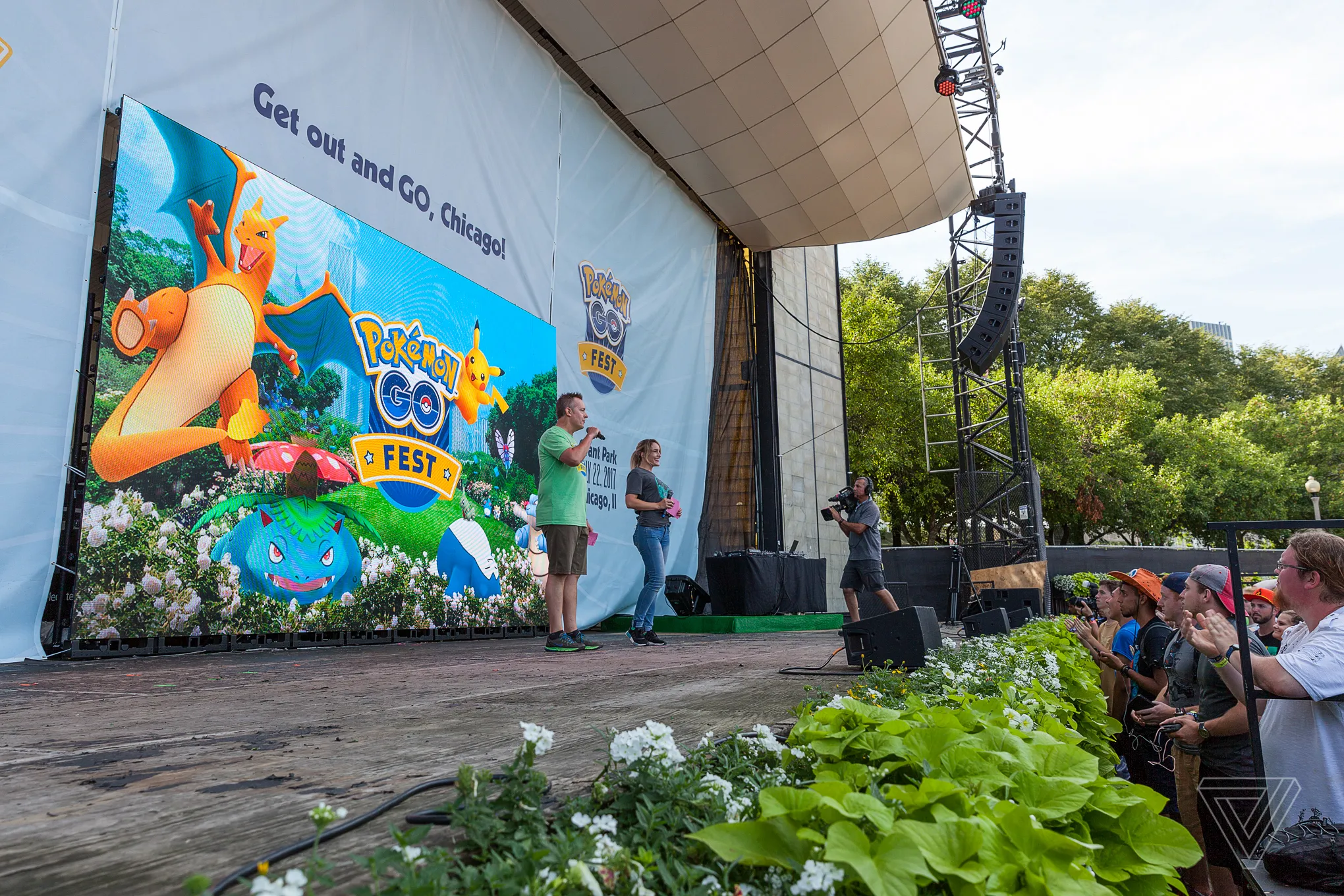
The second day of the event was the blueprint for Pokémon Go’s successful live event format, which continues to this day. Players aren’t caged into a specific park, instead, events are spread across host cities, with some informal meeting hubs in parks for players to connect. Now, Global Go Fest takes place in cities across the world and is a core part of Scopely’s Go business.
“We want to bring our live events to as many players around the world as possible,” Sternaka tells me. “I think anybody who goes to a Pokémon Go live event can attest to the fact that this is by far the best way to experience the game.
“We also know that, despite having millions of people attend our events over the years, there are millions more who haven’t, so we’re doing everything we can to get to as many players as we can.”
“I think anybody who goes to a Pokémon Go live event can attest to the fact that this is by far the best way to experience the game.”
Like any game that lasts a decade, Pokémon Go has faced its share of challenges. While some were of the team’s own doing, no one could have prepared for the world-altering impact of the 2020 Pandemic on a game that was so tied to exploring the world.
“It definitely challenged us. It challenged us in fundamental ways. The goal of the game was to explore the game together. When we realized the together part wasn’t really possible, we tried to focus on the explore part.”
During this time, in-game changes were made, such as an increased number of Pokémon spawning in the wild, players could be further away from Gyms and Pokéstops and still interact with them, and remote raiding became a huge factor. Some of the changes, like the increased spawn area and interaction area, were so popular that fans were disappointed when they were eventually removed.
Another point of contention over the years has been Pokémon Go’s approach to monetization. Players can pay for extra raid passes, cosmetic items, incubators to hatch eggs, and several more in-game items. While virtually every item that can be bought can also be earned in-game, the process for doing so can be glacially slow in some cases.
Despite this, Sternaka tells me that the free Pokémon Go experience is the guiding light. “We’ve always tried to maintain Pokémon Go as a free-to-play game first and foremost,” they said.
“When I look at other free-to-play games in the market, I feel incredibly proud at just how much of Pokémon Go you can enjoy without spending a dime. At the same time, there are tons of players who want to invest in games like Pokémon Go, so we have a team of people who are always trying to think about what ways we can provide value to people who want to invest in this game they’re so fond of.”
“When I look at other free-to-play games in the market, I feel incredibly proud at just how much of Pokémon Go you can enjoy without spending a dime.”
Once the celebrations are finished for the 10th anniversary of Pokémon Go, the natural question becomes: what’s next? There are a few dozen Pokémon still missing, and Pokémon Winds and Waves will surely add plenty more, but outside of new creatures, what does the next decade look like for Pokémon Go?
I asked Ed Wu if, now, 10 years on, what the team was looking at doing with a few to the 20th anniversary. Is it time for drastic changes to the game itself?
“There are some things that I think are just fundamental: the ball, the throw, the catching sequence- that is just so perfect. Folks have done it hundreds of thousands of times individually. I think we’d loath to mess with that.”
Another core element of the game, which has existed from the very beginning, will be getting a makeover, however.
“We’re deeply looking at the Gym system and how we can improve upon that,” Sternaka tells me. “We haven’t really touched it in many, many years. I think those are important points of interest around the world that can do a better job of becoming this gathering spot for communities to help people connect with each other.”
And what of the game’s most hardcore contingent? What is next for those players when they’ve grinded as much as possible and hit the limits of the game’s level cap?
For Michael Steranka, he wants the out-of-phone social experience to come more to the fore. While it will never be possible to recreate the early days of the game again, that moment of seeing a stranger tapping on their phone and becoming instant friends is something Scopely chases.
“I think for even the most diehard minmaxxers in Pokémon, they deep down also really love and appreciate the out-of-game experience that they get with Pokémon Go. So for us, what we’ve always been talking about, now even more than before, is what is that out-of-phone experience that we’re creating for people?”
“We’re deeply looking at the Gym system and how we can improve upon that. We haven’t really touched it in many, many years.”
“It’s easier said than done, right? Because what does that even mean? We only have control of what’s happening in your phone. But we also have the ability to help people discover things around them, and that is endless; that’s not filling your Pokedex. Exploring the world is an endless objective.”
Pokémon Go remains a special game. That summer of 2016 will live with millions of players forever. The game wasn’t perfect. In fact, it barely functioned because so many people wanted to play it, but the way it captured players’ imagination is something that’s never been recreated.
Pokémon Go will likely continue as long as Pokémon will, which is to say, long after we’re all gone. While other ARG games have fallen to the side, the community that’s formed around this game, and continues to this day, is the lifeblood of Pokémon Go. Being in New York, surrounded by the hardest of the hardcore of that community, it’s hard not to fall back in love with one of the most important mobile titles yet.