Developers: Please give me the option to remove swear words from your games
In the era of excellent accessibility options, parents should be able to play certain games in front of their children without reaching for the volume
Chris Scullion
Given the subject matter, this article obviously contains numerous instances of swearing.
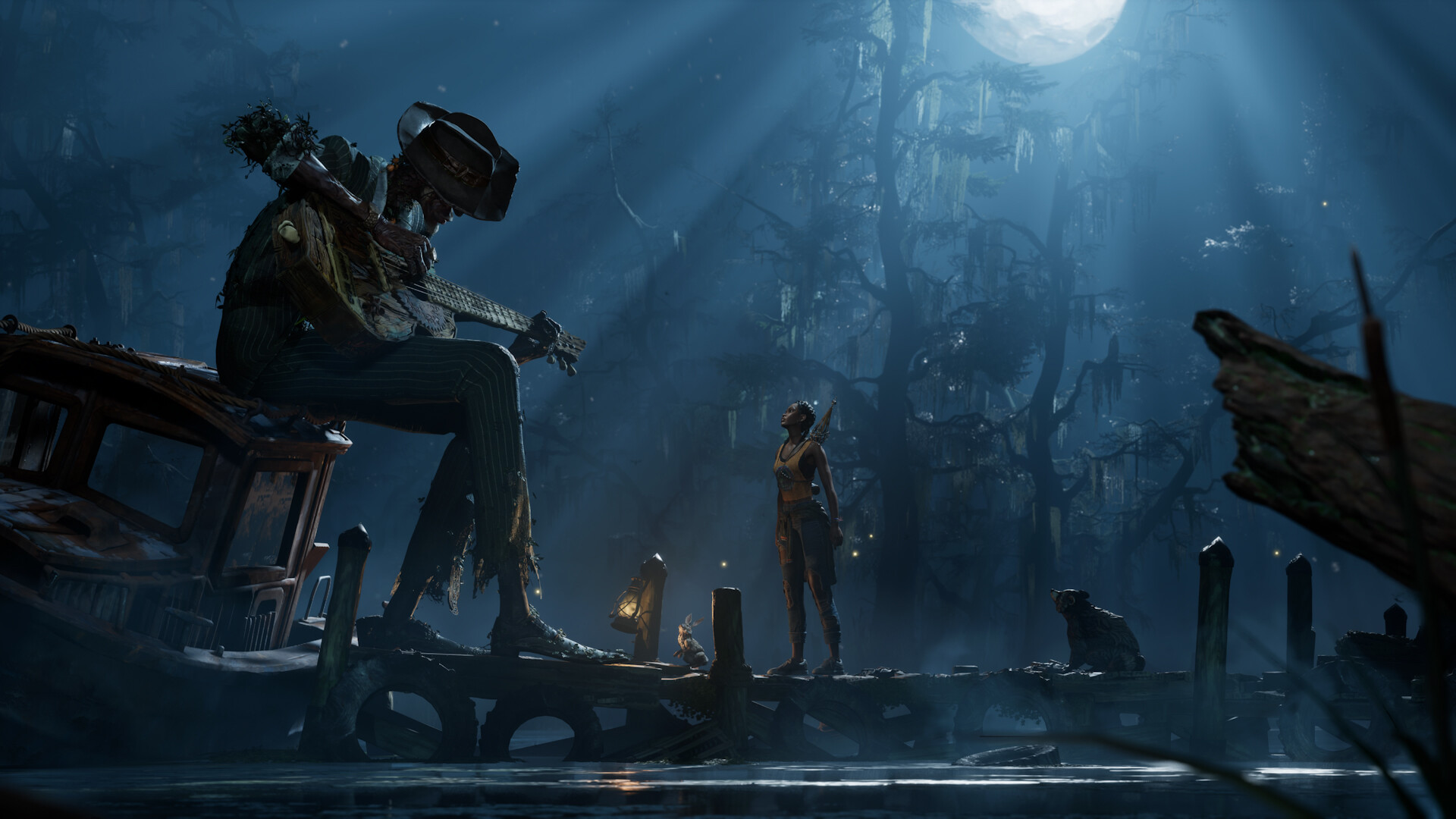
Last year, I reviewed South of Midnight for VGC, and while I found its combat repetitive, I thought it was a beautiful adventure that featured a setting, characters, and subject matter that aren’t frequently explored in this medium.
Not only does it look and sound superb, but it also has a strong female protagonist, and as someone with a young daughter, I figured it would be a great game to play while she was around.
For context, my daughter was about to turn 7 years old when South of Midnight was released. And yes, the game’s age rating suggested that it wasn’t suitable for her. But the aim wasn’t to have her play it – I just wanted to make sure it was safe for me to play in the background while she was in the room – and having played an hour or so of the game for a preview, I had a pretty good feel for what it was offering.
Everyone knows what their own child can handle, and my kid is usually fine with fantasy combat, especially given that the enemy designs in South of Midnight are weird but not exactly terrifying. I was ready to skip some cut-scenes if needed, but by and large, she would have been fine playing with her toys or doing some colouring while I played through the game for review. And if a woman kicking arse in the background somehow rubbed off on her, all the better.
Within five minutes of the game starting, protagonist Hazel is asked to go to her neighbour’s house to check on them as an enormous storm is approaching. When she knocks on the door, out comes Beaux.
“Oh, Hazel,” he laughs. “Come on in and grab some punch. Ugh, it is fucked up out here.”
Fun fact: that air wasn’t blue until she started talking
I looked down at the kid, who was sitting on the floor playing with her Disney figures. If she heard that, she wasn’t showing it. We don’t swear in the house around her, so she’s generally oblivious to bad language, and unless her fellow 7-year-olds at school already have mouths like Popeye, I’d like to keep it that way for as long as possible.
I played on. As the storm got worse, Hazel tried to get back to her home, but ended up falling into the water.
“Ah! What the fuck? Holy shit! What just happened? How did I get back to the shore?! Oh, no, no, no! That doesn’t sound good… shit! It took out the bridge.”
And so, off went South of Midnight after ten minutes. I obviously still had a review to write, so I spent the next week playing it in the evenings after the kid had gone to bed.
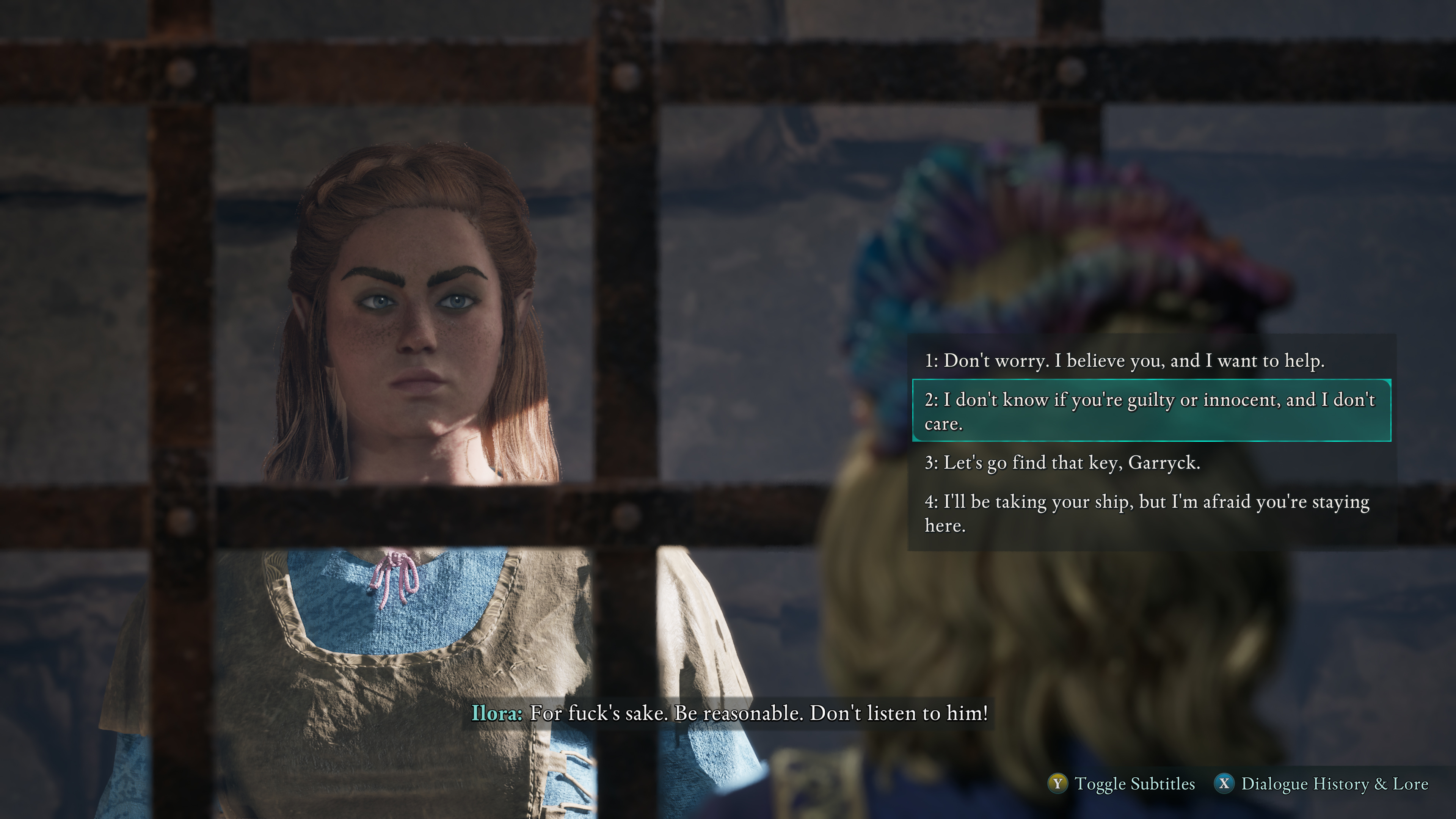
The annoying thing is that this was the second time this had happened in as many months. When I was reviewing Avowed – again, another game with strong female characters and fantasy violence that I would have been fine with playing with my kid in the room – there was a lot of swearing in that too, not least from the quirky Yatzli who had a habit of shouting “ONDRA’S TITTIES!” as an exclamation (along with the usual F-bombs, of course).
Before we go on, here’s the paragraph that you’re free to quote on social media when people inevitably moan at the headline of this article without actually reading it. In no way, shape, or form am I saying that these games should have their swearing removed or that the content of the game should be compromised in any way for the people who want to play them unedited.
When it’s used well in a game – as in real life – swearing can deliver impact, it can deliver humour, it can deliver fear. Or, in the case of Scarface: The World is Yours, it can be used to simply deliver the beginning, middle, or end of every sentence (sometimes all three). I am categorically not against swearing in games: if anything, in the right circumstances, I’m in favour of it.
My point is simply that in some games – those games where it isn’t actually necessary – I’d like to see a developer take the initiative and provide the option to turn the swearing off, for parents who want to enjoy the game in a family setting without worrying about little Jimmy getting a bunch of effing and jeffing fired into his innocent earholes.
It doesn’t even need major rewrites or anything – an alternate audio track where the swearing is bleeped and an alternate subtitle track where it’s XXXX’ed out is all that’s really needed, and in some situations (such as mine), that can be the difference between whether I can play the game with my family or not.
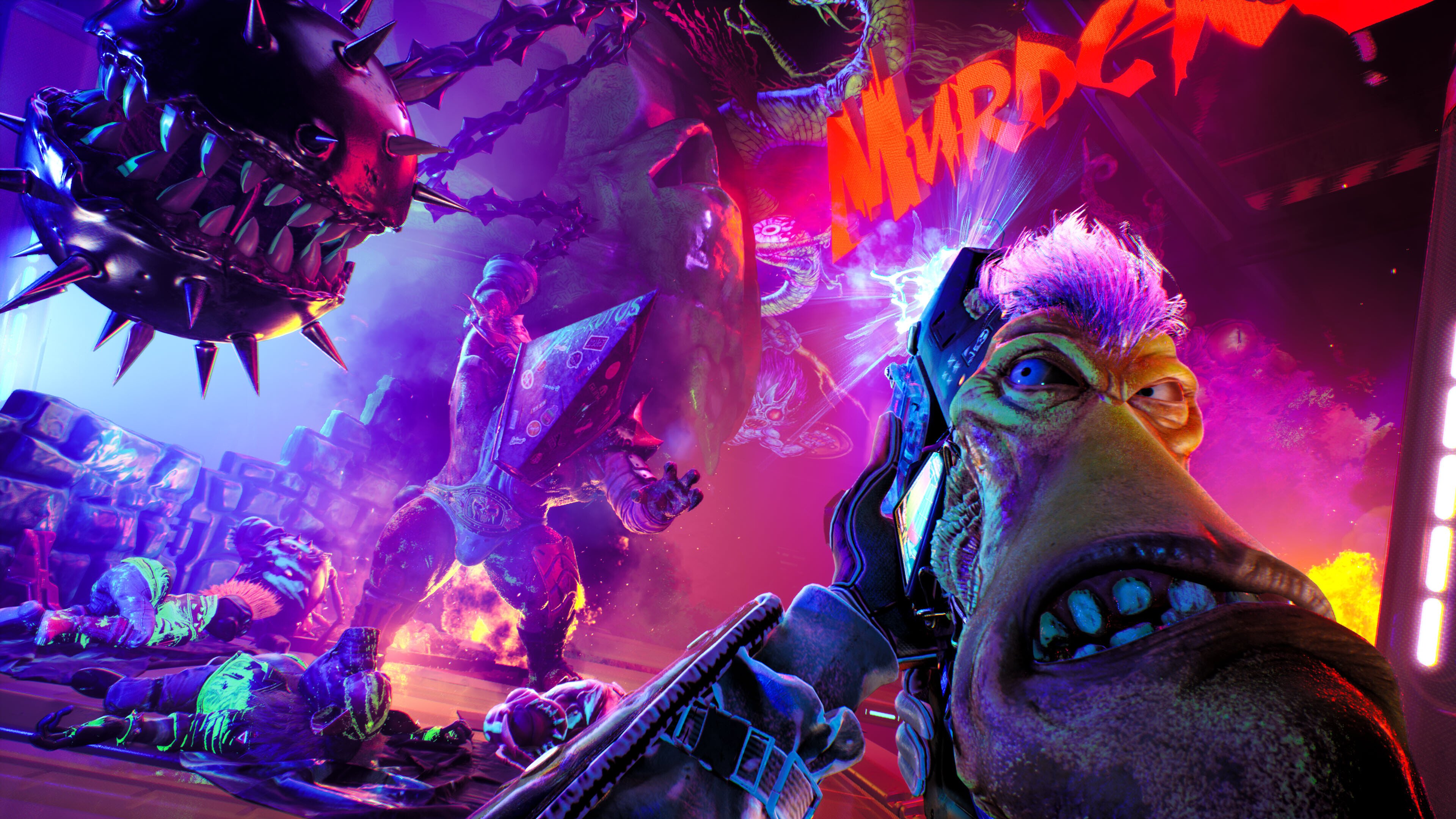
Obviously, for some games, it’s not really viable. Removing the swearing from Grand Theft Auto 6 or something like Hellraiser: Revival is unlikely to make the game suitable for kids, and adding a swearing-free mode to High on Life 2 – which based on my Gamescom hands-on, is going to have more four-letter words in it than a Knuckle Tattoo Convention – would involve far too much work.
I’m talking more about the games that throw in “fucks”, “shits”, and other things less frequently, when they offer nothing at all to the game. Would Starfield really suffer from an optional profanity filter? Would Spider-Man 2 have dropped out of people’s 2023 Game of the Year lists if an option to remove the occasional utterance of “prick” had been in there?
Removing all the swearing from High on Life 2 would be like removing all the green from a football pitch.
MultiVersus (God rest it) actually did the opposite – it had a little-known setting in the options that turned on a ‘mature’ mode, where some of the characters gained extra lines. Turning it on, let Batman say “file that under badass” when he won, and have Harley Quinn occasionally exclaim “holy shitburgers”. Frankie Boyle it ain’t, but the option was there, and nobody complained that the game was being censored (mainly because they were too busy complaining about everything else in it).
Ultimately, we now live in a world where many developers are finally implementing a solid range of accessibility options to help make their games playable by players with myriad conditions, disabilities or any other situations which may otherwise prevent them from enjoying a game fully. We also live in a world where games like Grounded, Star Wars Jedi: Survivor, and Monster Hunter Wilds have arachnophobia modes for people who don’t like encountering bugs in games.
Surely, if we’re replacing giant spiders with big jelly blobs, adding visual sound cues for deaf players, letting players skip QTEs (or replace button-bashing ones with simply holding the button) and adding numerous other quality of life features to games – all of which are objectively good things to do for those who need them – it doesn’t take that much extra work to add ‘English (no swearing)’ in the language settings?