The Witcher 3: Developers talk remastering a classic and creating Songs of the Past
Witcher 3 developers discuss Songs of the Past, the remaster’s combat overhaul, and why Dandelion’s story deserved more
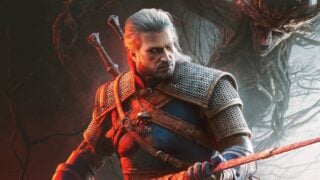
Ten years after its original release, The Witcher 3: Wild Hunt returns today with a remaster, and a brand new expansion, Songs of the Past, will follow next year.
Available today for consoles and PC, The Witcher 3 Remastered features enhanced visuals and combat, and a revamped skill tree. Meanwhile, Songs of the Past will explore the new region of Letten in a ‘fully-fledged’ expansion CDPR is comparing to fan-favorite Blood and Wine, in terms of scope.
Developed by Fool’s Theory in collaboration with CD Projekt Red, the expansion grew from an idea first explored during work on The Witcher 3’s 2022 next-gen update, senior developers told VGC. The project also brings together several developers who worked on the original game, giving the team a chance to return to the world and characters they helped create.
We spoke with Fool’s Theory’s creative vision director Karolina Kuzia-Rokosz and CD Projekt Red’s Paweł Sasko about revisiting the beloved RPG, bringing new life to its gameplay and visuals, and more.
Firstly, could you tell us a bit about your roles on The Witcher 3: Wild Hunt – Songs of the Past?
Karolina Kuzia-Rokosz: My role is creative vision director for the project, and at Fool’s Theory I am a chief designer.
Paweł Sasko: I am mainly on Cyberpunk 2 and The Witcher 4: those are my main things, but I actually consulted specifically on the remaster part with The Witcher team. I handled that part, and of course I’m well in the loop on what the team is doing for Songs of the Past.
What came first, the idea for the expansion or the idea for the remaster?
Sasko: I do know, actually, because that was in 2022. We were working on the update for the next-gen version of The Witcher 3. At the time, that was the team of [writers] Philipp Weber and Ola Motyka, working on a quest we added in 2022. We called it ‘the Netflix Quest’ at the time, and you probably remember we refreshed the key visual and so on.
At that time, the team was thinking about what they could actually build; this was an early seed, and the expansion now is built on that seed. So it was Philip and Ola, working with Karolina at Fool’s Theory… she was basically very deeply involved in the creation of the idea.
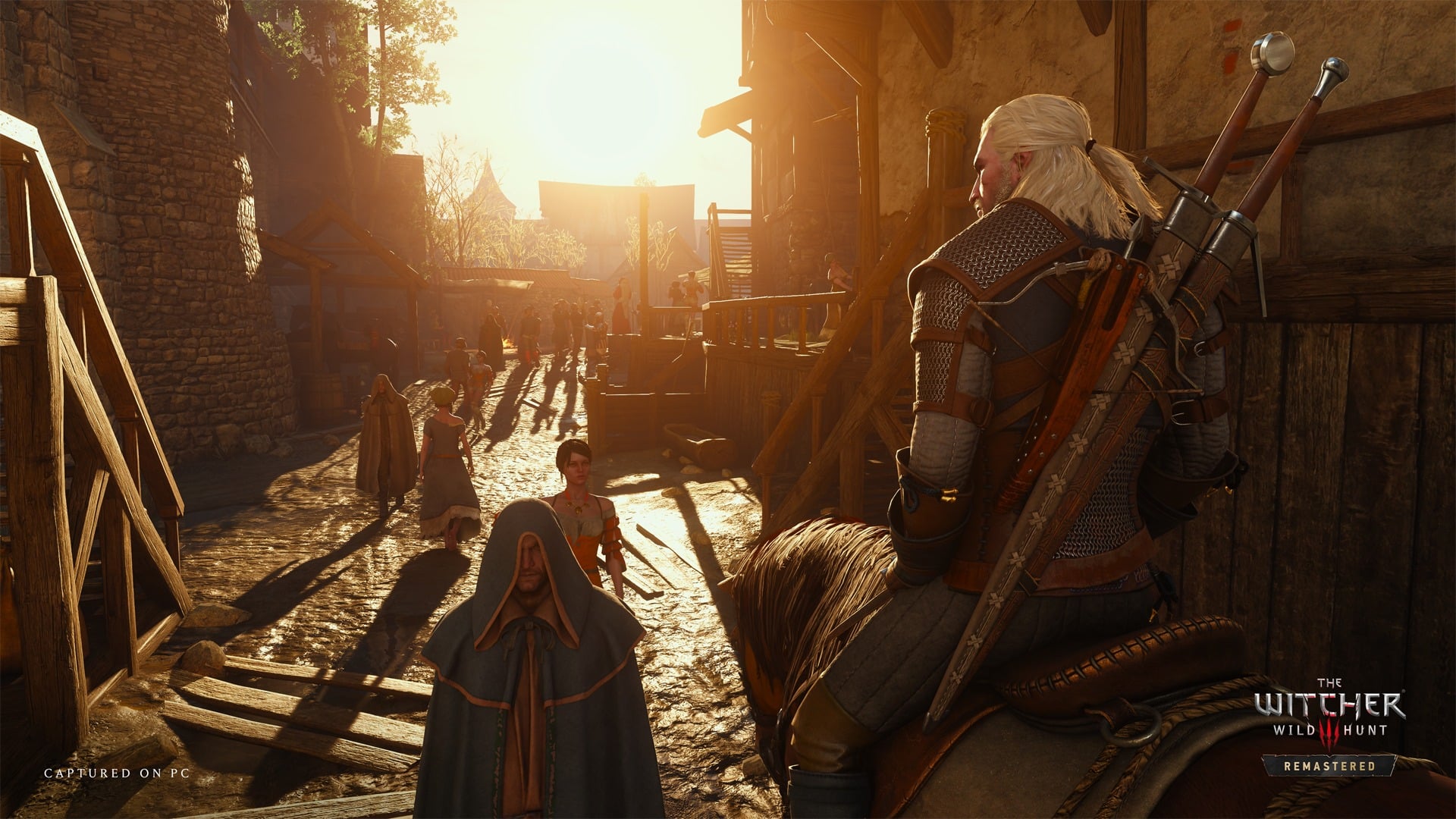
So this is what came first, and we sort of let it simmer for a while while working on the 2022 update, so we could potentially do something like that in the future. As we say, sometimes you just need the right timing. We were looking for the right partner, and of course, Fool’s Theory is made up of a lot of people that we know. I’ve known Karolina for at least 15 years.
Kuzia-Rokosz: We worked on The Witcher 3 together, and also many people from our current studio worked on this one as well. We know each other. We are at the leadership level right now, so we are trying to guide everyone and stick to the truth.
So a lot of original Witcher 3 developers have worked on this expansion?
Sasko: From both sides of Fool’s Theory and CDPR, yeah. That’s the case because we have some developers on the remaster who are from CDPR and some developers from Fool’s Theory who were on the original team.
But just to finish the previous question, we had this idea for quite some time, and then we were looking for a partner, actually, because our board, our business members, had an idea that we wanted to do that expansion, but I have so many ideas, and most of them I can’t do. You really need the right partner at the right time, and we found the right partner.
The Fool’s Theory team has been growing for a couple of years. They shipped multiple projects. The last one was The Thaumaturge, and that was pretty favorably reviewed. So we thought that they were almost a perfect team to work with, and when the stars aligned, we leaned into that older idea, and this is where the whole work started.
“The core idea was presented to us by CDPR. It was a great opportunity to tell something new about already established characters and to show them from a different angle.”
When you decided to make a new expansion for this 10-year-old game, were you tempted to make it an epilogue for Geralt, since The Witcher 4 is moving away from the character?
Kuzia-Rokosz: The core idea was presented to us by CDPR. It was a great opportunity to tell something new about already established characters and to show them from a different angle. What I mean is, this is still a fully-fledged expansion and a richer story first and foremost, but then we have Geralt’s best friend with us, who also faces some important stuff in his life, right?
We always wanted to say more about the people who are important to Geralt. So, it isn’t like we wanted to strongly conclude something, more that we still believe that there is still more to say about Geralt.
Sasko: What I like about this, and Karolina alluded to it, is that The Witcher 3’s previous expansions were about Ciri and Geralt, and it was about their relationship and their story. But as Karolina mentioned, there’s more to Geralt and to the relationship. And there’s his friend, there’s Dandelion, and the relationship between them and the friendship that they have. In the base game and previous expansions, we didn’t really have much space to explore that.
It’s interesting because Karolina did one of the quests for Dandelion [in The Witcher 3] and I did the other one, because we were both quest designers.
Kuzia-Rokosz: We were sitting next to each other!
Sasko: That main story focuses a lot on Geralt and his relationship with Ciri, but we wanted to tell the story about his friends. Dandelion in the books, but also in the games, has a certain role. Geralt has this impenetrable shell in a way; he’s this very stoic sort of character who keeps to himself and rarely reacts in any emotional way.
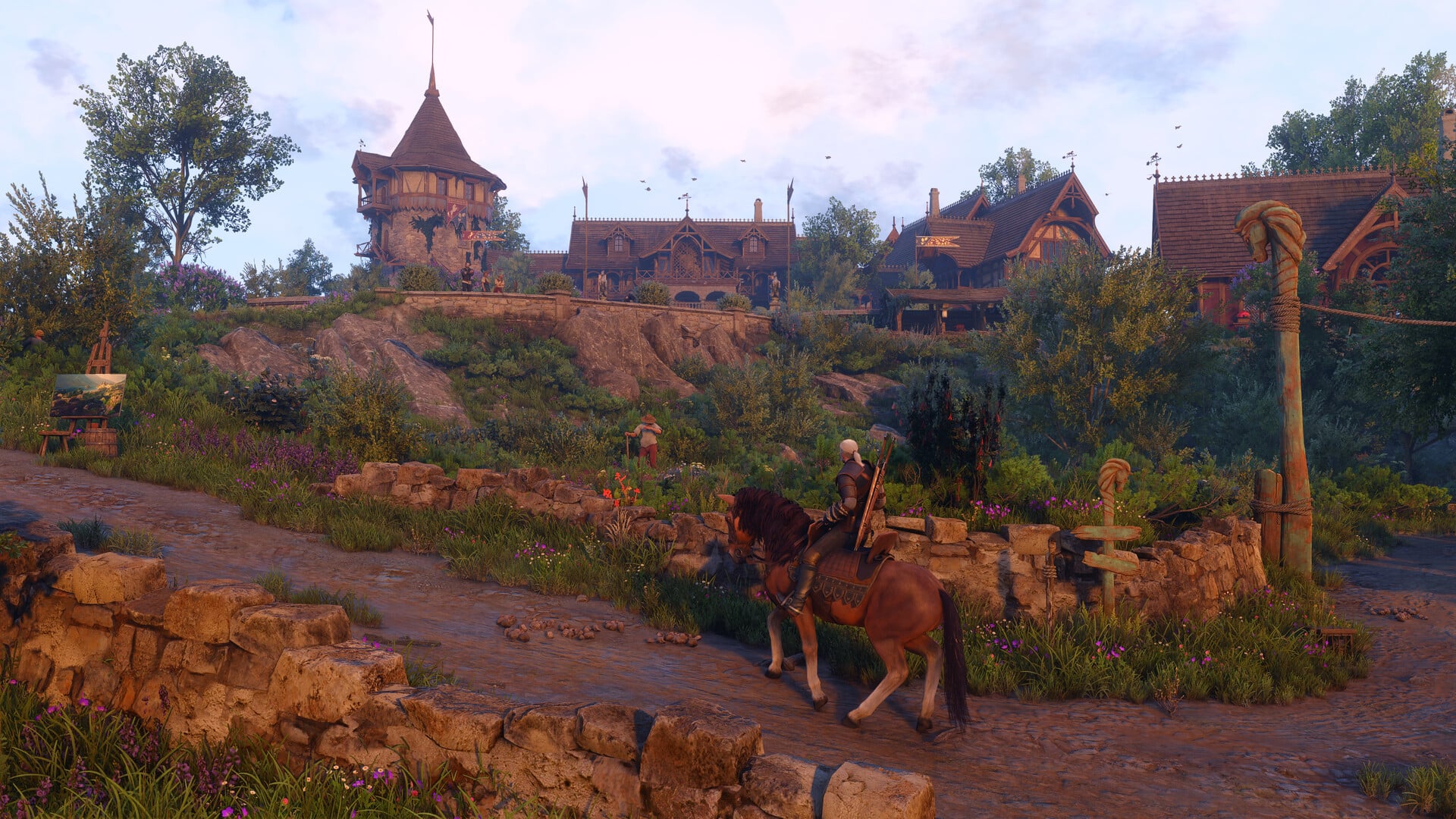
Dandelion is very often the one who actually pierces that shell. He’s the one who is getting out of Geralt the things that he wouldn’t say. He’s sometimes the voice of reason. Sometimes he’s also a comic relief. But what’s important for us is to show the depth in this character and the friendship between them. And that was a little bit of a part that we never really had space to show in The Witcher 3 and in the expansions.
He was very often in The Witcher 3, a lot more like a comic character, and he was bringing that truth to Geralt, but not to the level that Karolina mentioned when we wanted to actually bring the friendship between them to the front. So really that is the purpose, the narrative purpose of the existence of this expansion.
Kuzia-Rokosz: On top of that, it’s important to mention that this is still the same Dandelion. But we are going on an adventure with him, when we will be seeing another side of him, maybe, or a part that was not yet seen, not yet explored in stories, a part that really makes him human.
Where does the expansion story fit in the timeline? Can players jump into it regardless of whether they finish the main game? How does it work?
Kuzia-Rokosz: From a practical side, people will be able to start Songs of the Past immediately after finishing the main story. So, you do not have to finish the expansions. However, when it comes to the timeline, those expansions were before, so we continue with the story that Geralt really wanted to retire, but then he cannot because his best friend asks him for this one last favor to accompany him.
And then we, of course, continue the story depending on whether the player has finished the second expansion or not. We carry that in the story, in dialogue, consequences, and so on. But you do not have to finish previous expansions to start Songs of the Past.
“From a practical side, people will be able to start Songs of the Past immediately after finishing the main story. So, you do not have to finish the expansions.”
The new remaster has graphic improvements, overhauled combat, and so on. How did you go about deciding what bits you wanted to improve and what you wanted to leave behind? Because obviously some of those updates fundamentally change the game.
Sasko: So actually I was quite involved in that process, and together with some of the old members of The Witcher team, we looked into how The Witcher 3 plays out, the common complaints from our players, and which areas hadn’t aged that well.
The story is still relevant, you can play it, and it’s beautiful, and the characters are fun, but when you look at the gameplay side, it was obvious that this was almost the weakest side. And when you look at the opinions of the journalists and the players, everyone’s kind of saying the same thing, which is that gameplay is the weakest part of The Witcher 3.
Therefore, it was obvious that we wanted to address that issue. And that is actually broken down into multiple different things. There’s the moveset of Geralt, so things such as animations, finishers, and exploration movement.
There is also a revamped skill tree, and here we used a lot of the experience from the Cyberpunk 2.0 version because I was deeply involved in the redesign of that. So we did a little of that, the same sort of process and thought process, thinking about what kind of builds would be actually satisfactory to use, and would actually work not only in the base game and expansions, but also in Songs of the Past.
Another part is also handling Roach. We added numerous new behaviors and more to this aspect. Then, of course, the part that everyone sees is the visuals,
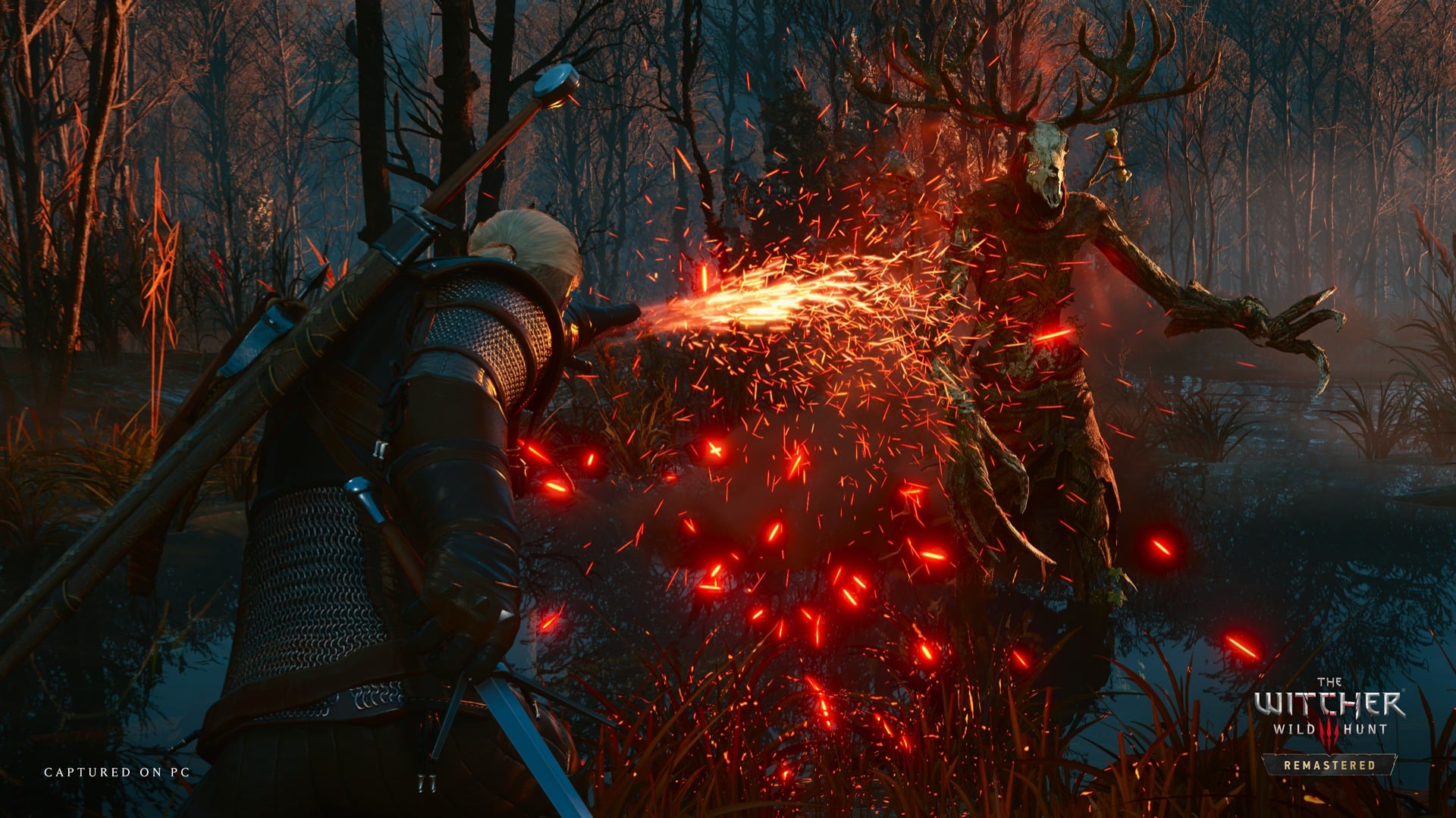
We learned a lot on Cyberpunk 2077, working with NVIDIA, with Intel, with AMD on the upscalers. Things that we introduced for the first time, which were basically premiered in Cyberpunk at that time, we are now bringing to Remaster because we know how it works. We did it for Red Engine 4. Now we are bringing it to Red Engine 3, which is the engine that The Witcher 3 is using, so the visual part, and yeah, there are numerous updates.
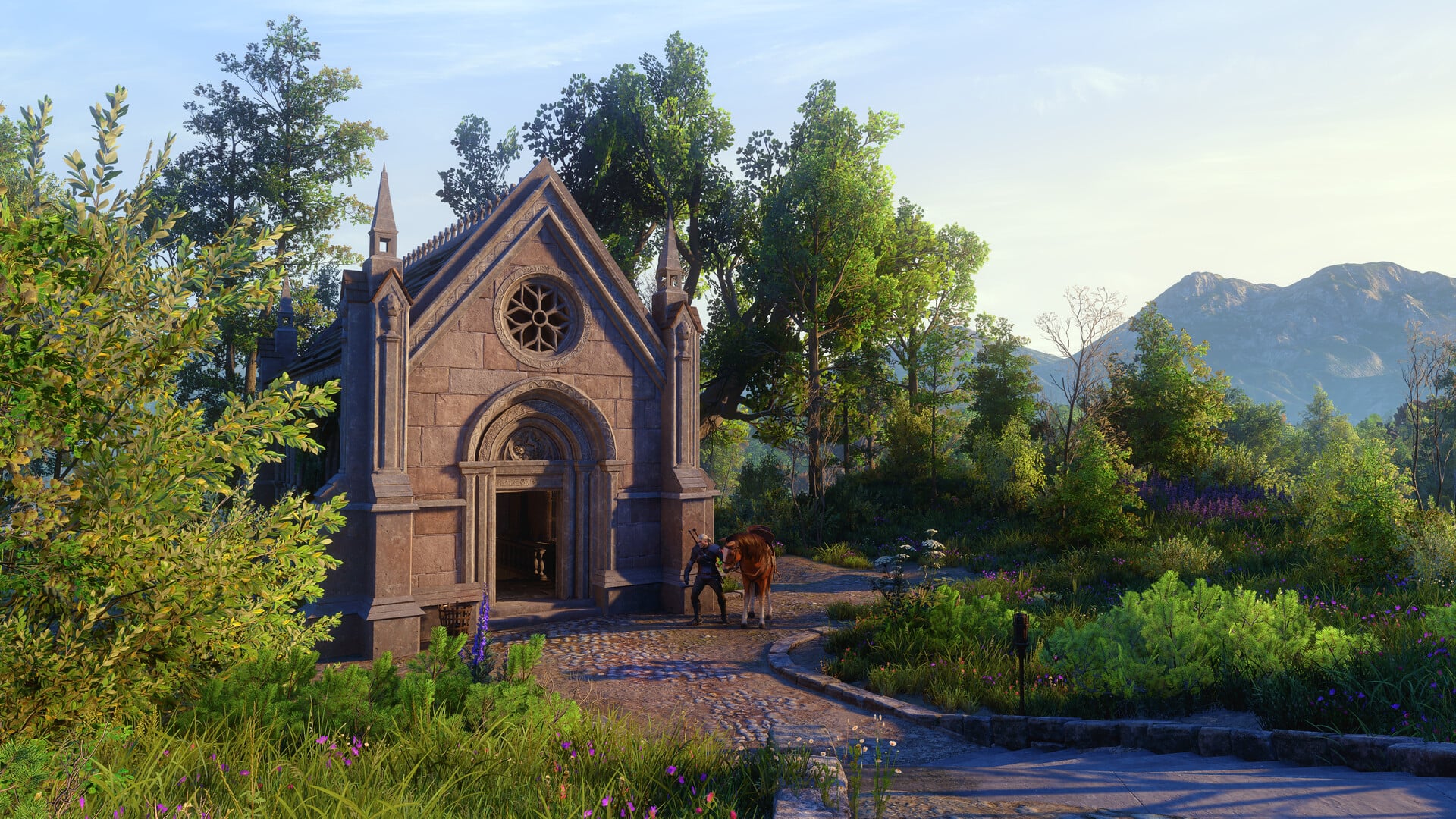
From the clouds to the weather to actual reflections and the whole ray tracing and path tracing, this is a pretty large update. Of course, there are a few more trivial things, such as texture updates. There’s also this shot in the trailer of a bird that used to be like three triangles before. Right now, it’s more like 20 polygons! I laughed when I saw that.
Were there any technical challenges revisiting Red Engine, in the sense that the studio has since moved on to Unreal?
Sasko: All of the updates and so on are done by the team that knows it intimately, really. It’s kind of the same crew working on it as it used to. So no, not really, to be honest. We do have a core CDPR team, and then we have Geeksoft, the team of modders we started working with in 2021 when they started working on the modding tools for Cyberpunk.
This team is based in Budapest, Hungary, and they’re pretty large at this point. Amazing crew, actually. They’re pretty much kind of like us, meaning the mindset and so on. They worked with us on Phantom Liberty and 2.0 as well, so they know Red Engine 4 quite well, and a lot of them actually are responsible for the work on this remaster.
So there wasn’t really a moment when we had to adapt a team that didn’t know it. Then with the Fool’s Theory team, some of them are new, but again, they have a lot of developers who are seasoned and know Red Engine 3, like Karolina, for instance, who implemented all her quests using that engine.
“Things that we introduced for the first time, that were basically premiered in Cyberpunk at that time, we are now bringing to Remaster”
Kuzia-Rokosz: I opened it and found a lot of my implementations and was like, ‘yeah, I remember this one!’
You mentioned Cyberpunk 2.0, which resulted in quite a radically different experience for players. How different will The Witcher 3 Remastered playthroughs be compared to the original game?
Sasko: I would say it is quite fundamentally different. Now, is the comparison to Cyberpunk 2.0 justified? I think it is justified. But is it that impactful? That’s a little harder for me to judge.
That being said, there is an important point regarding the skill tree specifically and how it was revamped. Compared to Cyberpunk, there was already a structure in the game set. Cyberpunk was designed to have a variety of play styles from the beginning. So the foundation was different than in The Witcher.
In The Witcher, you’re playing as Geralt, who’s a fixed character who has a style of fighting, so the revamp of the skill tree is still within the boundaries of this. So, I would say the comparison is justified, but I don’t think it’s as impactful, and this actually comes from the design of the fundamentals.
In Cyberpunk 2.0, you have play styles, varied builds, and varied characters, but Geralt’s always Geralt. Now you can make a really different Geralt, and that was the same thought process: how we can build with more active abilities than passive abilities. That was the issue with the previous system.
Actually, when we were working on the 2022 update, we already talked about how it would be good to update this at some point because it was a little rusty, but we didn’t really have enough time or a team to do it. Now we actually could, you know, be like, okay, let’s bring it up, really, to modern standards as much as we can, within the boundaries of what that structure really allows us.
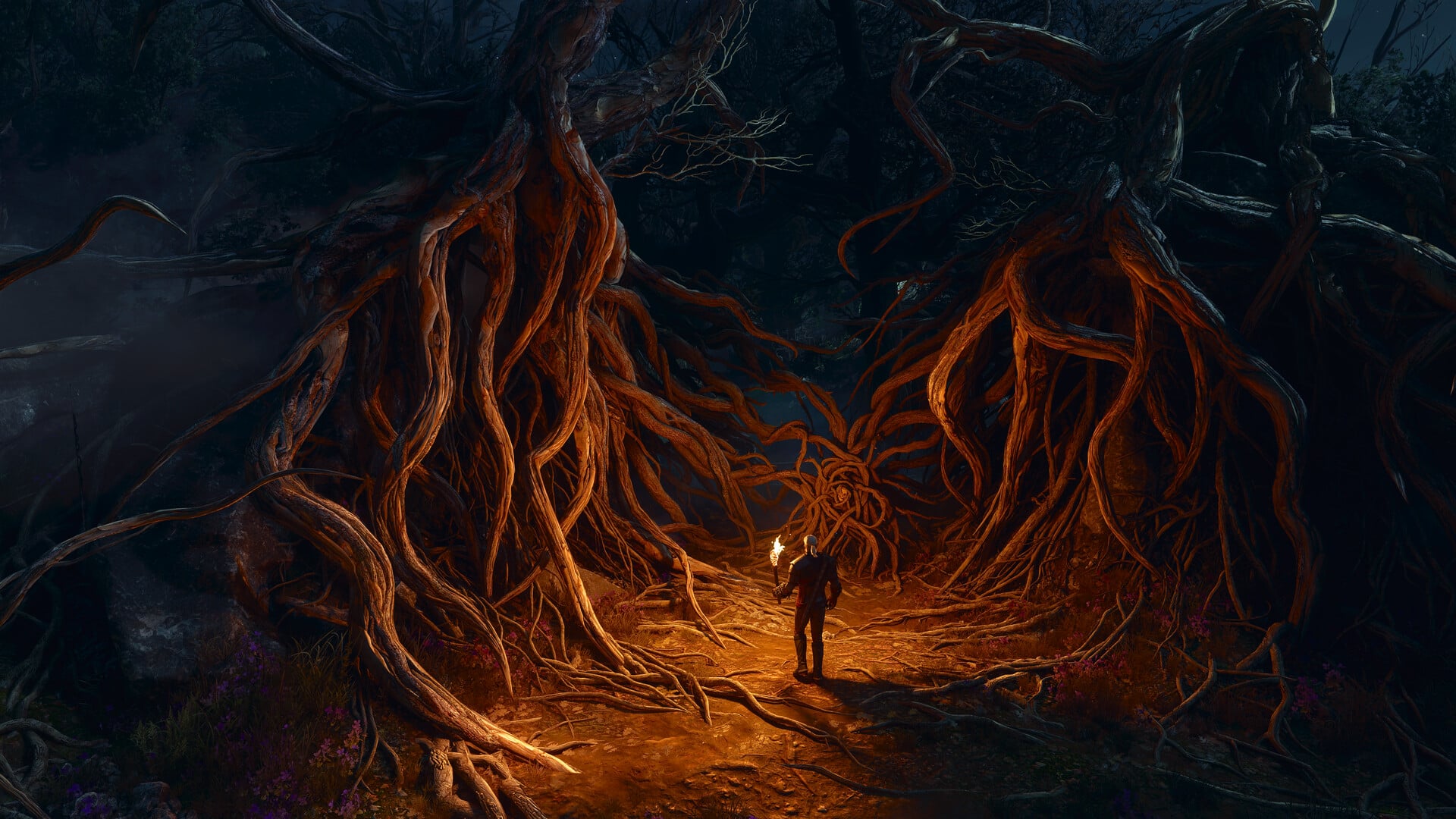
You’ve described the scope of Songs of the Past as close to Blood and Wine. How do you define that? In sheer size, number of hours…?
Kuzia-Rokosz: Multiple factors. Like, I would say the size of our new world is closer to Blood and Wine than to what the first expansion introduced. Then in terms of the number of quests, activities, and hours of playtime.
Did you take a lot of influence from Blood and Wine overall? It’s obviously a big fan favorite, especially the quests.
Kuzia-Rokosz: We took lessons from other expansions as well as how to build those experiences. This is a fully-fledged Witcher expansion. So, an open world, a nonlinear approach to quests, with problems to solve and decisions to make, and then consequences to those. There’s a new environment filled with new characters and enemies, new monsters, as well as some old ones. There are new weapons, new armor, the chain… I’m really excited!
Sasko: Witcher 3 is like the bread-and-butter Witcher story. Basically, all the things that you would see in the Witcher story are there. Hearts of Stone is an extension of that. With Blood and Wine, you can see that we experimented with a lot of things because it’s an expansion.
So when you look stylistically at the narrative, you can see that it has differences. As developers, we can use this core, expand a little, and be a little more ridiculous. Now, when you look at Songs of the Past, you can see that approach a little bit too. It’s not in a way that is funnier or more ridiculous, but stylistically, when you play the demo, you can feel it a little bit.
“This is a fully-fledged Witcher expansion. So, an open world, a nonlinear approach to quests, with problems to solve and decisions to make, and then consequences to those.”
There are enough new things that you feel it brings something to the table that you didn’t experience yet as a player, stylistically. It also ties with the art, with the music; it’s a lot dreamier. So, and that’s kind of like our approach with any expansion, really, like we want to make sure that it actually justifies its purpose and role, why it’s even being made.
What’s changed at CD Projekt that made revisiting The Witcher 3 feel like a different experience, if anything?
Kuzia-Rokosz: It still feels the same, I would say. The same talent is there, the same people who support us. It feels like nothing ever changes in a way. It feels like it was yesterday that we formed Fool’s Theory, but then we are cooperating again.
Sasko: On my side, we are, as a company, right now in the process of scaling through multiple projects. At that time, we were just making The Witcher 3 and Gwent as a side project, but really it was always just one big game that all of us were focused on. And then Cyberpunk, and Phantom Liberty.
And from that point on, we started splitting. There was The Witcher 4 team, the Cyberpunk 2 team… as a company, we changed and grew a lot, and I would say we professionalized a lot more.
Karolina started on The Witcher 2, and there are some people who started on The Witcher 1, and back then it was just really a garage company in Poland that had very big ambitions. So you know, it changed quite a bit.
Right now we have many different projects. Also, I feel we understand what we are doing far deeper than before. A lot more; before, it was more like a gut-feeling kind of thing. Right now, we understand from a different level. That being said, as Karolina mentioned, it’s kind of the same people working again. There’s fresh talent, which I think is very important, really, to bring it in. But it’s still the same crew.
Kuzia-Rokosz: And from the practical side, since I know this engine from the bottom since I was the developer back then, what’s changed is that tools are there for us. Back on The Witcher 3, we were still developing or inventing them. We still modify them to some extent to make our lives easier, but the base is there.
Sasko: That’s a great point. Actually, like yeah, both Horse of Standby and Wine, we’re still adding stuff to the engine and developing it, and so on. Less and less and less fundamental grant, you know. But that’s a good point. Nowadays, we just work on the actual toolset that exists.