I think Star Wars: Galactic Racer might be the Burnout revival I’ve waited decades for
Fuse and Lucasfilm Games discuss Galactic Racer’s high-octane action and surprisingly deep story mode
Before playing Star Wars: Galactic Racer at Summer Game Fest 2026, I’d assumed that it would be a thrilling, if somewhat lightweight, racer, allowing long-time Star Wars fans to smash their action figures together and pilot some classic ships from across the series.
What I wasn’t expecting was a Star Wars version of Burnout that’s also essentially a racing roguelike. Star Wars: Galactic Racer is being developed by Fuse, a team formed in 2023 that’s full to the brim with Critereon veterans. If you didn’t already know that before playing Star Wars: Galactic Racer, you’d work it out pretty quickly.
From the sense of speed to the voyeuristic obsession with vehicles smashing into walls at absurd speed, Star Wars: Galactic Racer is pure Burnout. That would have genuinely been enough for me. I’ve been desperate for the series to return for half of my life, and while other racers have gotten somewhere near the thrill of the original series, Star Wars: Galactic Racer is closer to scratching the itch than any other.
The connection to Burnout goes far beyond purely mechanical, according to the minds behind the game. Matt Webster, founder & CEO, Fuse Games, and Craig Derrick, executive producer, Lucasfilm Games spoke to Summer Game Fest and revealed that Star Wars and Burnout have been linked long before Galactic Racer.
“We like to think that Burnout ripped off Episode One crashing, that’s really what we think! We’ve returned,” Derrick told VGC.
Matt Webster added, “You’re absolutely right. We absolutely did, because we would go take a bunch of that as reference, and we would use those camera cuts and the blueprints and the bounces. But yeah, we absolutely did that, yeah.”
“Inspired by it, not ripped off…,” Derrick replied.
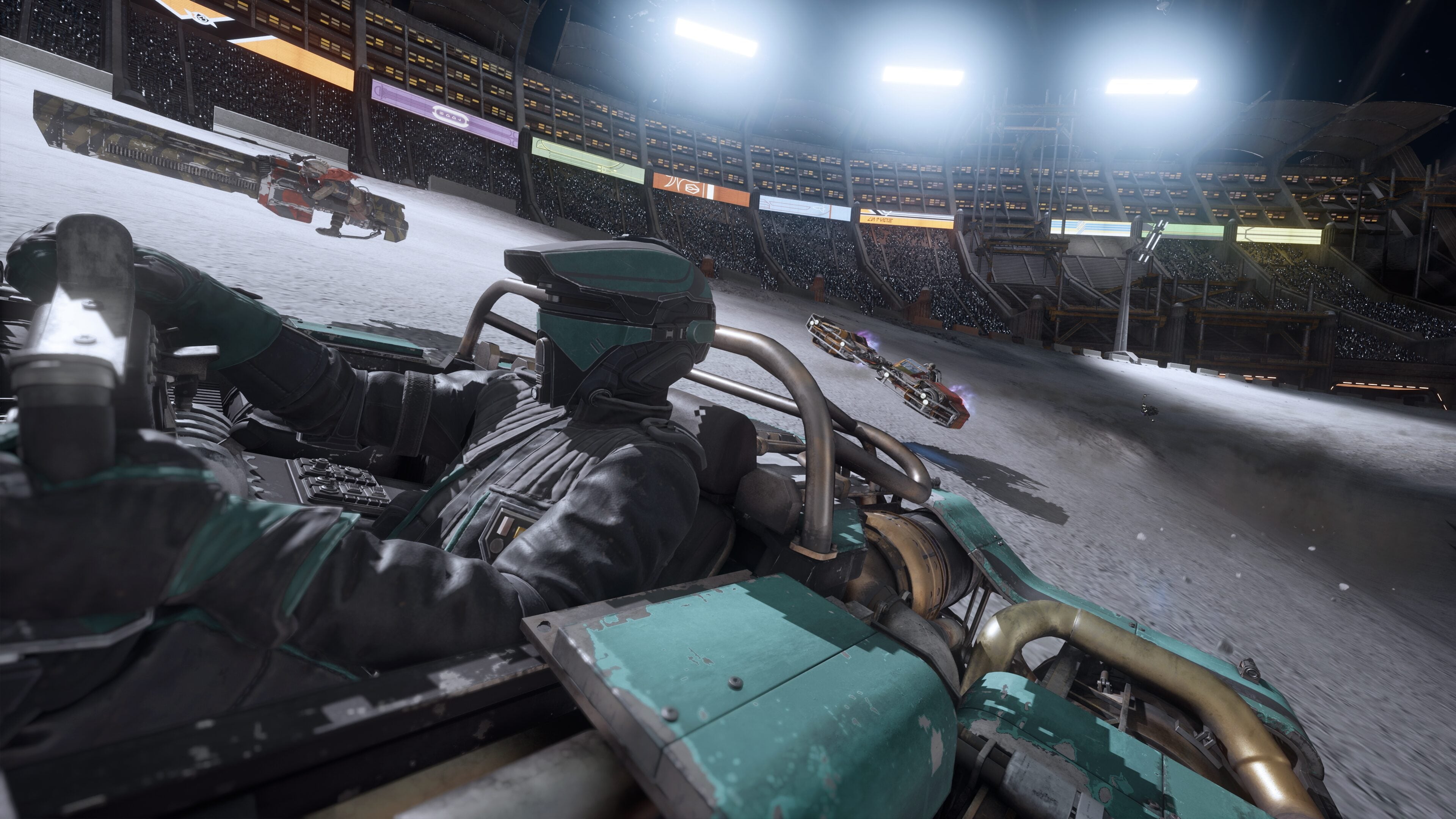
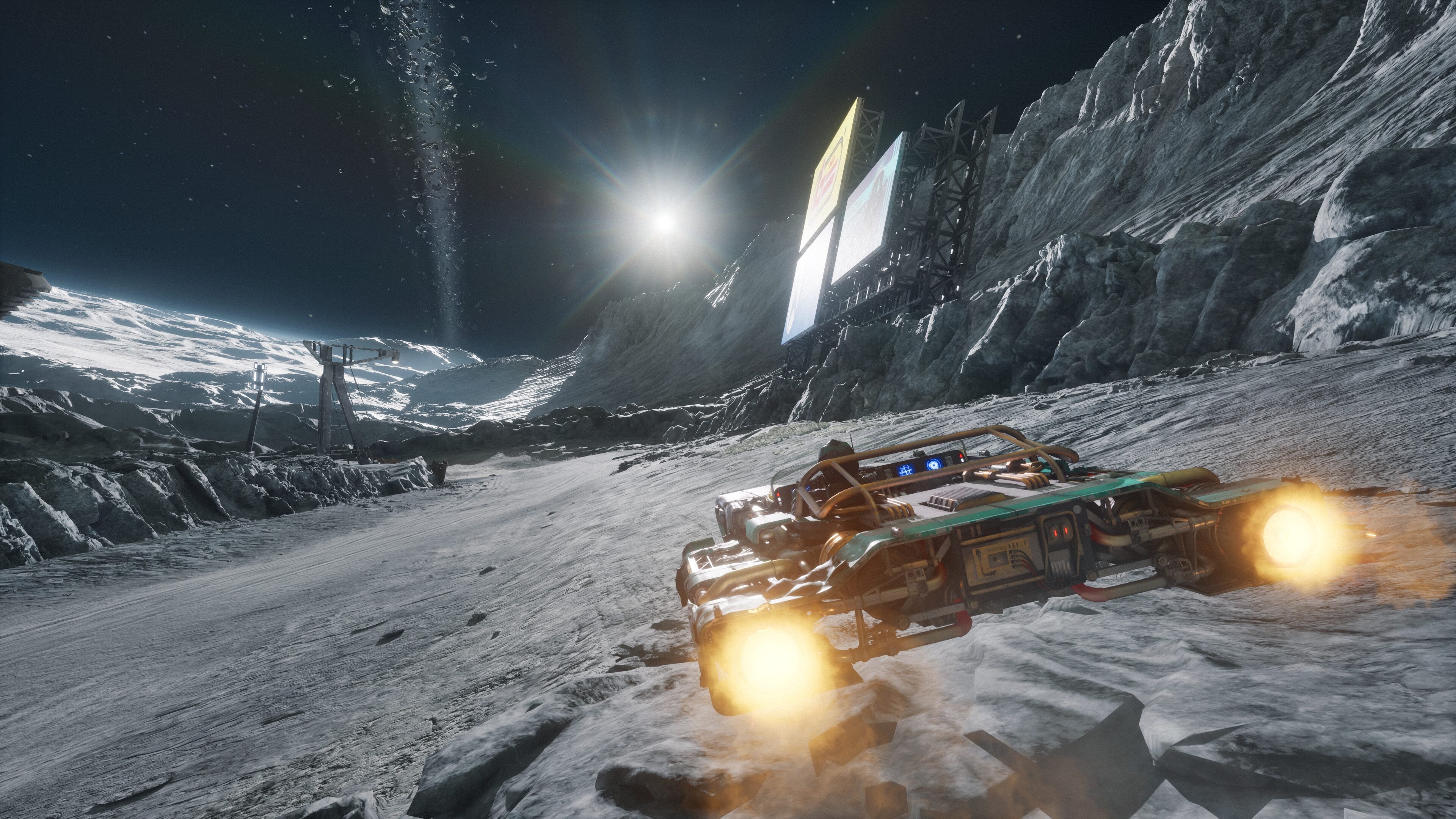
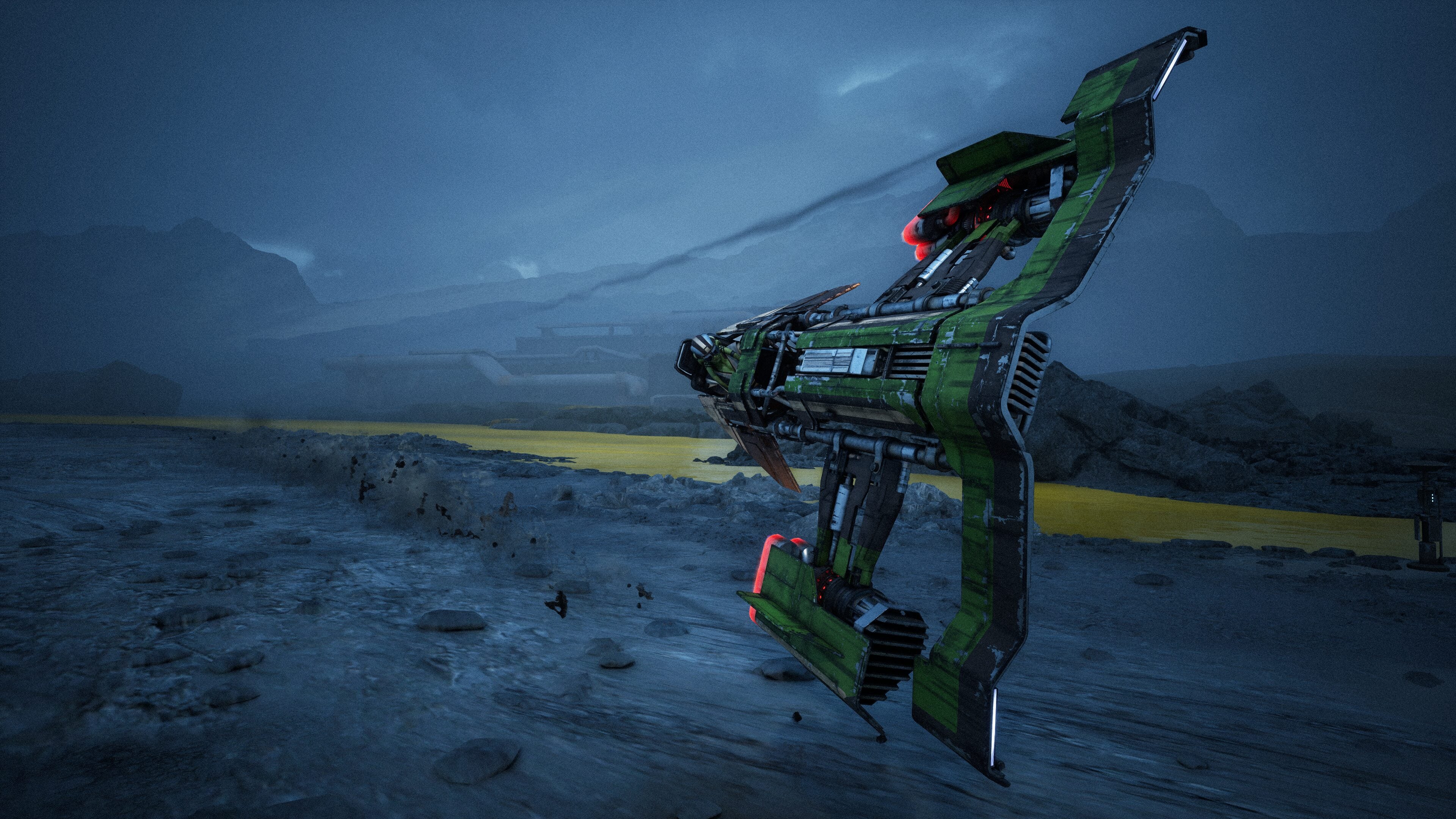
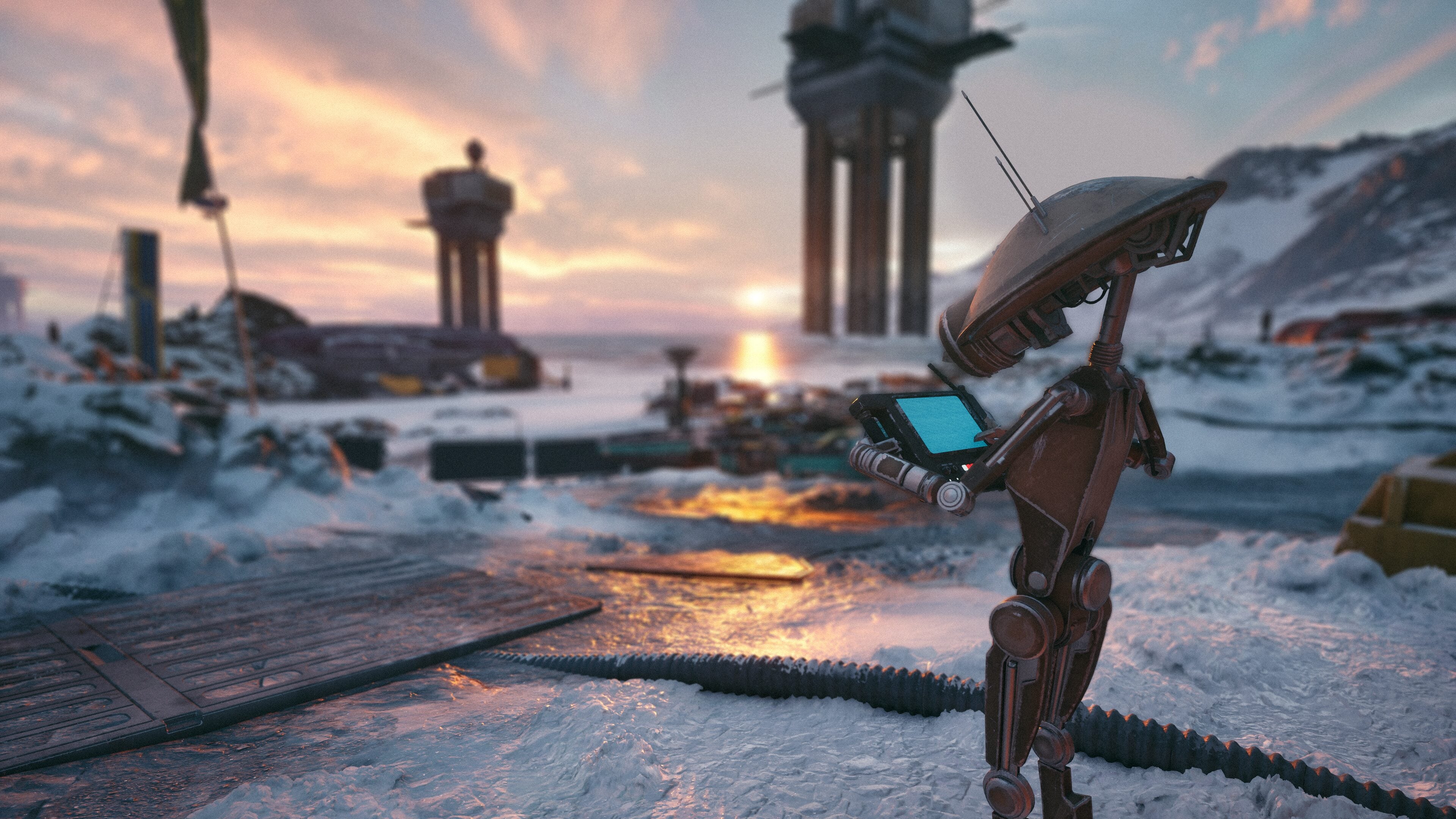
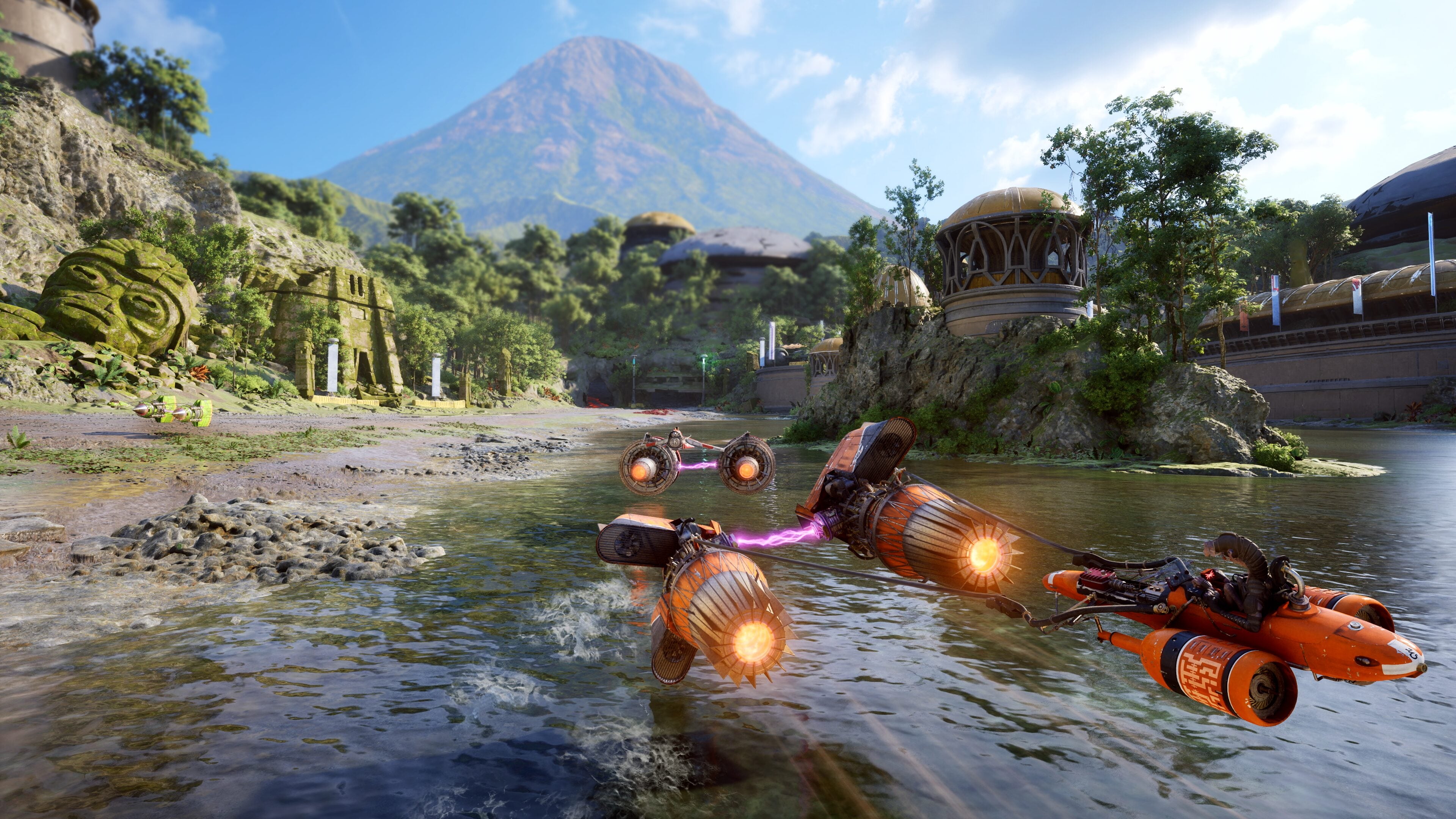
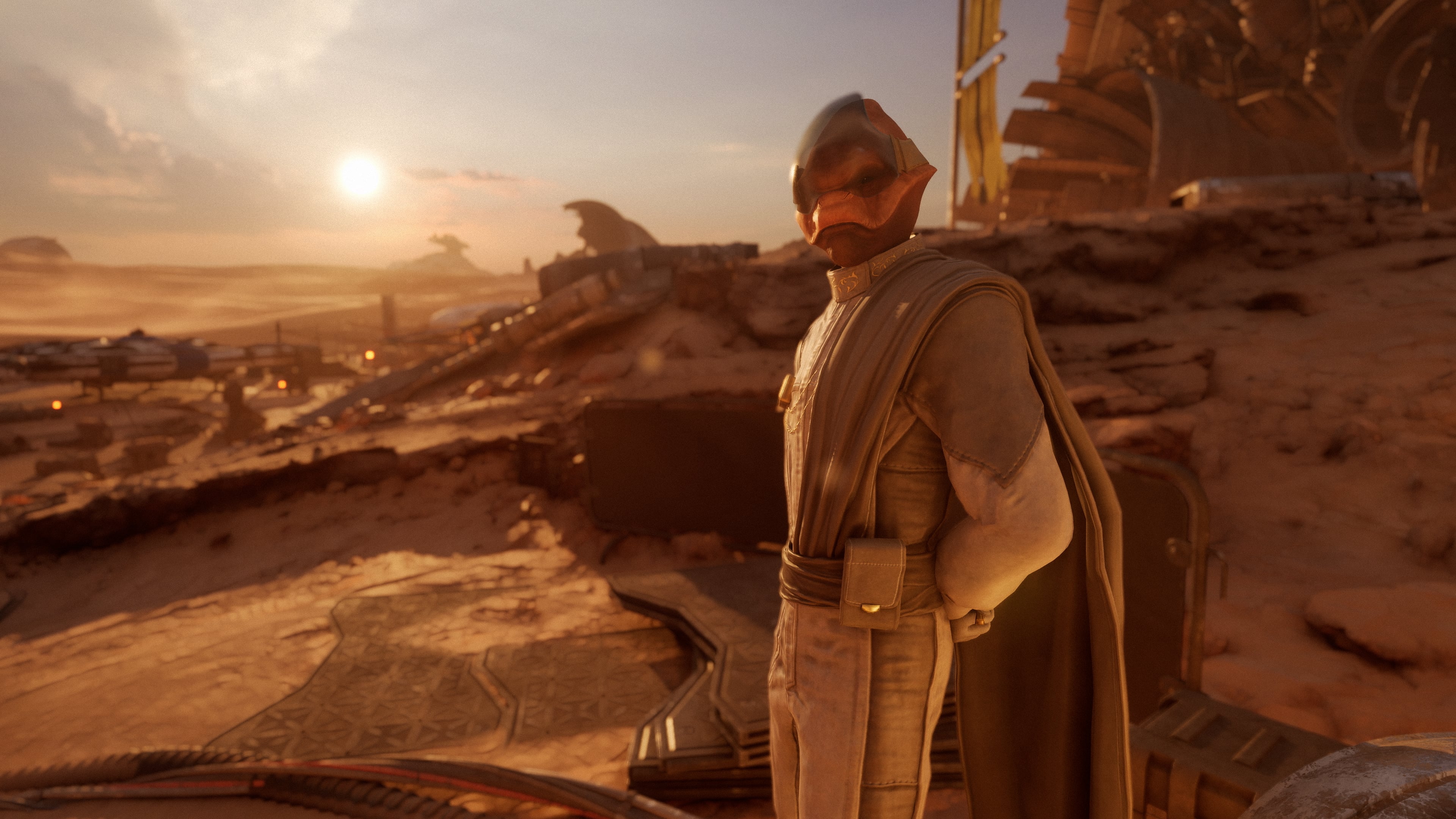
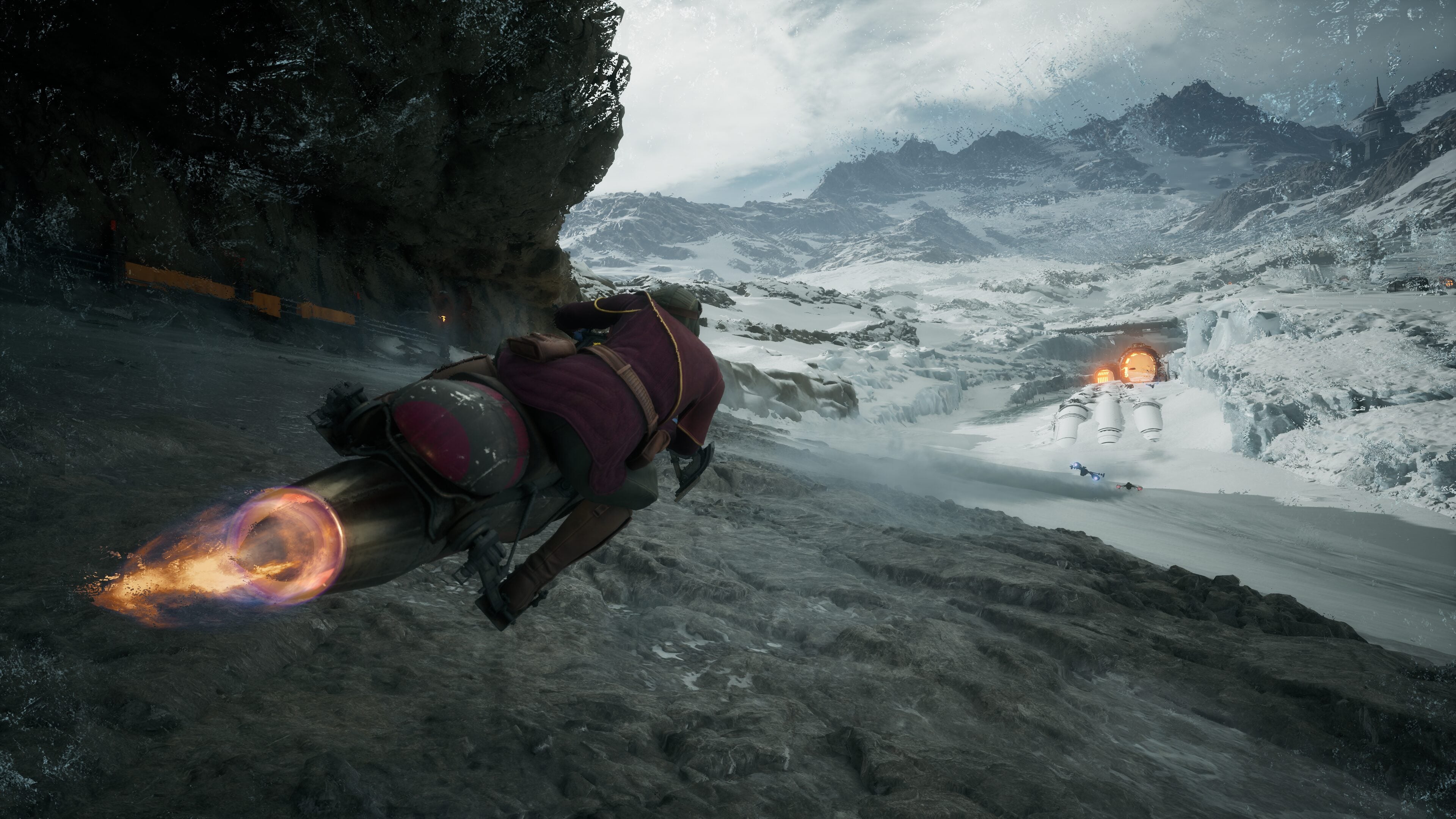
On top of that rock-solid gameplay foundation, Fuse has built an intriguing campaign mode that makes Star Wars: Galactic Racer far more than the pass-the-time arcade racer some were expecting. You play as Shade, a mysterious masked racer who plans to enter Tours to dethrone the champion. Not only is there a huge amount of voice-acted lore here, but far more Star Wars races and planets appeared in our hour-long session than I was expecting from the full game.
According to Derrick and Webster, the game takes place just after the events of Return of the Jedi.
Both say the game’s story is inspired by “the end of World War 2,” when soldiers and mechanics who’d previously been members of the armed forces had to return to normal life. In the US, this resulted in the birth of the Hot Rod scene, where teenagers and young adults began modifying and racing model cars. In Star Wars: Galactic Racer, former soldiers, on both the Rebel and Empire side, now use their skills to race and maintain speederbikes, landspeeders, and more.
At the start of each run in the game’s campaign, you’ll be given a League Token, which is essentially your entry to that tournament. You can choose events on a grid, each of which will provide specific rewards. These are essentially branching paths, meaning that each Tour you enter, you can work towards the specific rewards you want.
However, the catch is that if you crash out too often on a run, you’ll be eliminated, and your progress will be lost. You’ll still get some rewards for what you’ve already done, but you’ll have to start from the beginning of the race series again.
In practice, this means that you pay far more attention to the health of your ship, and your overall lives than you would if there was no peril other than losing a race you could simply restart. It also adds a risk-versus-reward system for which races you choose to engage in on your run. If you’re running low on lives, you probably don’t want to pick a tight, high-speed course that you’re extremely likely to crash on, even if the rewards are great.

There are ways to heal your vehicle and extend your run; however, we didn’t see much of that during our early-game session. This roguelike element in the game’s campaign is a clever way to add stakes to what could easily have been a simple list of racers to compete against. What little I got to see of the story itself made me keen to see more, with witty writing and obscure Star Wars races getting their moment to shine. There’s an Ardennian mechanic in the game that may be the first Scouser in Star Wars history.
When you’re actually in a race, the driving (flying?) in Star Wars: Galactic Racer feels excellent. There’s a weight to the ships that makes them feel supercar-like even when they’re not tethered to the ground. Similarly, the drifting feels exactly how you’d want it to feel.
Fuse is well aware of the unique challenges offered by creating a racing game with fantasy vehicles, but the firm’s boss, Matt Webster, told us that not being confined by cars touching the tracks gave the team a lot of freedom.
“This roguelike element in the game’s campaign is a clever way to add stakes to what could easily have been a simple list of racers to compete against.”
“We’ve done car-based games, and now, when we’re not bound by the constraint of a tire touching tarmac, what does that do to how we design race tracks? So some of the things here, we’ve got big drops, and big climbs, and it’s kind of like 3D racing.
“It’s going up a hill in a car, but here we’re ripping up the side of a volcano through a tropical rainforest and dropping down. It allows us to do, not just that visceral spectacle feel is great, but actually the racing in those things, like make it tight, make it wide open for a bunch of different varieties.”
The only issue I ran into was being able to sight-read some of the tracks. You’re racing through Star Wars locations, and although they’ve obviously been shaped into a racing track-ish configuration, there were still a few moments where it was difficult to tell which direction the upcoming turn was, or if I was heading towards a jump or a solid wall. This is something players will likely get used to when they play the same tracks multiple times in a row, but considering the speed the game goes at, a few more in-world indicators of direction wouldn’t go amiss.

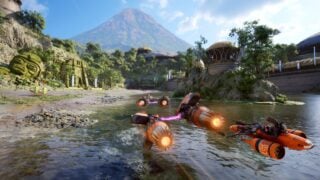
Outside of the campaign mode, there’s also an arcade mode for your traditional time-trial and casual racing. It’s here I got to try out Podracing. I played as Sebulba and flew around the Mos Espa track, best known from the only watchable sequence in The Phantom Menace. Joining me were Gasgano, Ebe E. Endocott, Ben Quadinaros, and other classic characters known only to Wookieepedia season ticket holders.
“I think if you’re gonna have podracing, people are going to wonder where Subulba is,” said Derrick.
“We know where all our characters are, we know where they were in the stories we’ve shown in our films and games. Many times we haven’t shown those stories, so when Matt and the team said they were going to create brand new characters for our story, but we also want to re-introduce some familiar faces… we’re there to figure out “okay, Sebulba, where was he after Episode 1, did he survive? Where did he go after that?” In our story, he plays a pretty significant role.”
Podracing was frantic, incredibly fast-paced, and actually pretty difficult to control. This is largely due to the absolutely ridiculous speed of the pod-racers themselves. I preferred the heavier vehicles of the campaign mode, but if you’re making a Star Wars game like this, including the Podracers was essential.
Star Wars: Galactic Racer’s presentation is excellent so far. The visuals are strong, and the game ran beautifully during my session. Obviously, the music is excellent, but that’s essentially a cheat code when you’re making a Star Wars game.
I’m thrilled with what I’ve played of Star Wars: Galactic Racer so far. It’s a high-octane racer that will thrill Burnout fans, but beyond that, the game’s campaign mode has a depth that I didn’t expect. My main question now is the length of the campaign, and just how different each run can be. But even if the depth shown off in this demo isn’t fully realized in the final game, the racing itself has done more than enough to convince me.