Don’t sleep on No Law: It has the potential to be one of 2027’s most stunning games
The open-world cyberpunk FPS impressed us more than any other title at Gamescom

The first time I was shown No Law was just before The Game Awards last year.
The game – which is set for release next year on PS5, Xbox Series X/S and PC – was shown to select press ahead of its debut trailer at the show, allowing publications to prep their coverage in advance. I thought it looked quite impressive, and was quite excited to see how it would be received.
Ultimately, it ended up getting lost among the reveals for Control Resonant, Star Wars: Galactic Racer, a new Mega Man game and two Tomb Raider games, not to mention the controversy around the “and finally” announcement of Highguard.
At Gamescom I was invited to get a proper look at No Law’s gameplay, following the reveal of another trailer during Gamescom Opening Night Live. Once again much of the discourse following the show was focused on other things, from the Witcher 3 remaster announcement to a general “that was an underwhelming show” narrative.
Having now seen No Law in action, I am urging you to take heed – do not let this game fly under your radar, because it has the potential to be something very special.
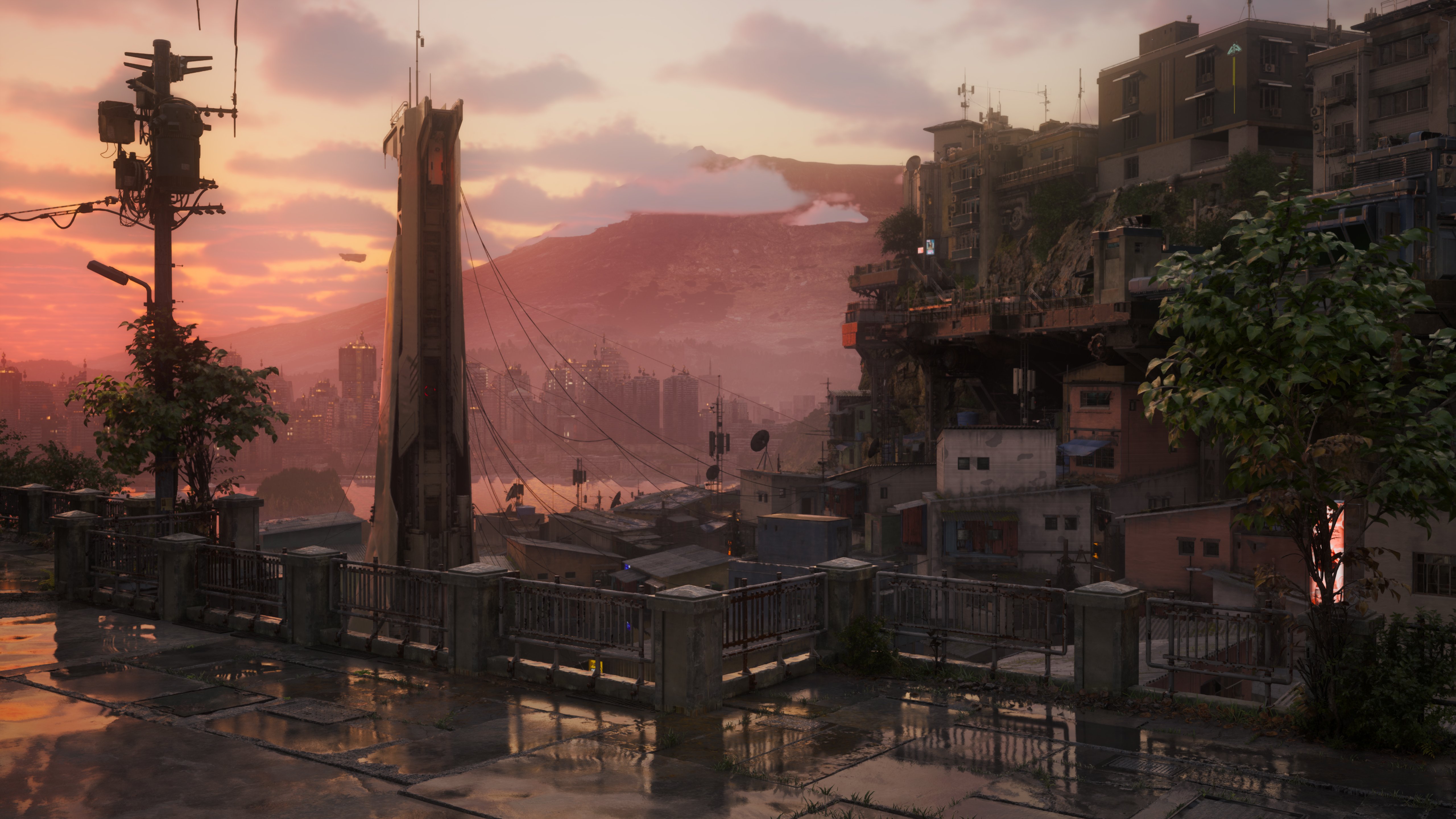
No Law is set in Port Desire, an “industrial cybergrunge city”. Rather than your typical cyberpunk location though, Port Desire isn’t just all neon lights and grimy streets – it absolutely does have that, but it’s also got a surprising degree of greenery. If you’ve ever wondered where all the plants went in cyberpunk cities, they all appear to have ended up here.
My hands-off demo session was presented to me by Arcade Berg and Tor Frick. The pair were co-founders of studio Neon Giant, and were co-directors on The Ascent, the surprisingly detailed cyberpunk twin-stick shooter from 2021. Both are now co-creative directors on No Law, but this – as well as the general cyberpunk aesthetic – is the only major thing in common between both games.
“I am urging you to take heed – do not let this game fly under your radar, because it has the potential to be something very special.”
Rather than a twin-stick shooter, No Law is an open-world first-person shooter with RPG elements. You play as Grey Harker, a grizzled veteran who’s turned his back on military life and heads to Port Desire in search of a peaceful life, free of any more trouble.
It soon turns out that Harker doesn’t get to make that decision, because trouble finds its way to him, kicking off an adventure where he reluctantly heads out to settle some old scores.
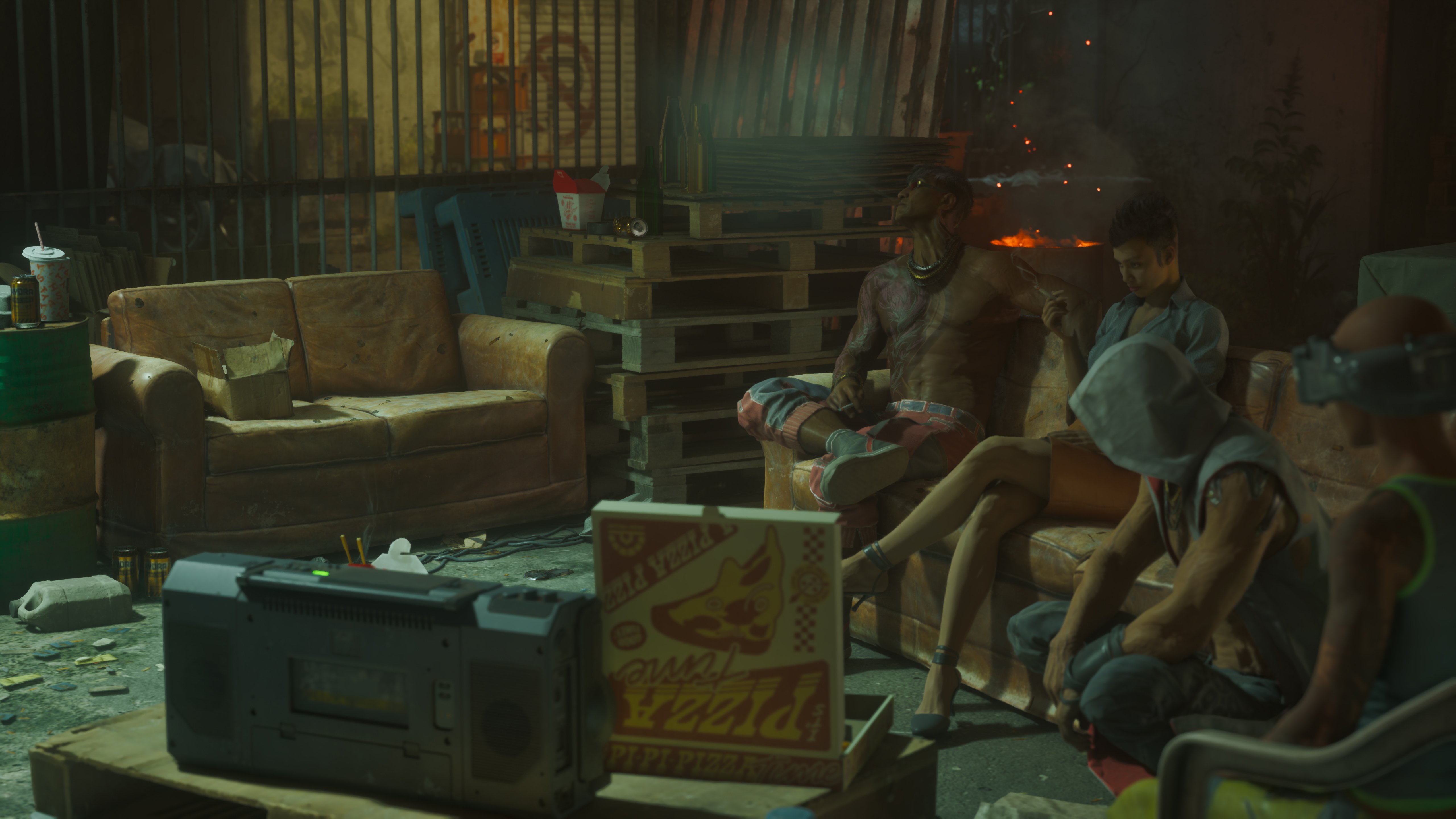
The first thing that struck me was the incredible attention to detail that’s gone into creating Port Desire. This isn’t just a bunch of buildings joined together in a rudimentary fashion – the thought that’s gone into how each street connects, and how its citizens go about their day-to-day lives is unreal (speaking of which, the city is heavily populated, so it’s going to be interesting to see how that affects performance).
If you’re suspicious that I’m dabbling in a touch of hyperbole, watch this tech demo from Unreal Fest to see how the team rejected procedural generation and focused on density over scale to create its highly detailed city:
It was pointed out to me that every street is signposted, and every building, apartment block and individual apartment is numbered. While you can be directed to your next task as in any other modern adventure game, the level of detail here also allows for an optional ’immersive’ mode, where all your markers are turned off and you need to use the actual information in the streets and on the buildings themselves to find your way around.
The attention to minutiae doesn’t stop there – I was shown the inside of the local store, where all the different products had their own packaging and their own information on the label. I noted that one of the most immersive-breaking things I see in a game is when things like shops have low-texture, repeated objects on the shelves and I was told this was important to the team too.
I was also told that, on a similar note, each of the game’s apartments has been uniquely designed, so you’re not going to find that a lot of Port Desire’s residents live in cookie cutter homes with similar furniture and the same five books on the shelf. This is supported to be a living, breathing city, and the priority is making sure that illusion is never broken.
This extends to behaviours and consequences that you don’t often see in many games. There’s a day/night cycle where the shop opens and closes, which is nothing new, but you can also choose to shoot the shopkeeper, and if you do this he’ll remain dead for the rest of the game. The store will close, and you’ll no longer be able to buy anything from it.


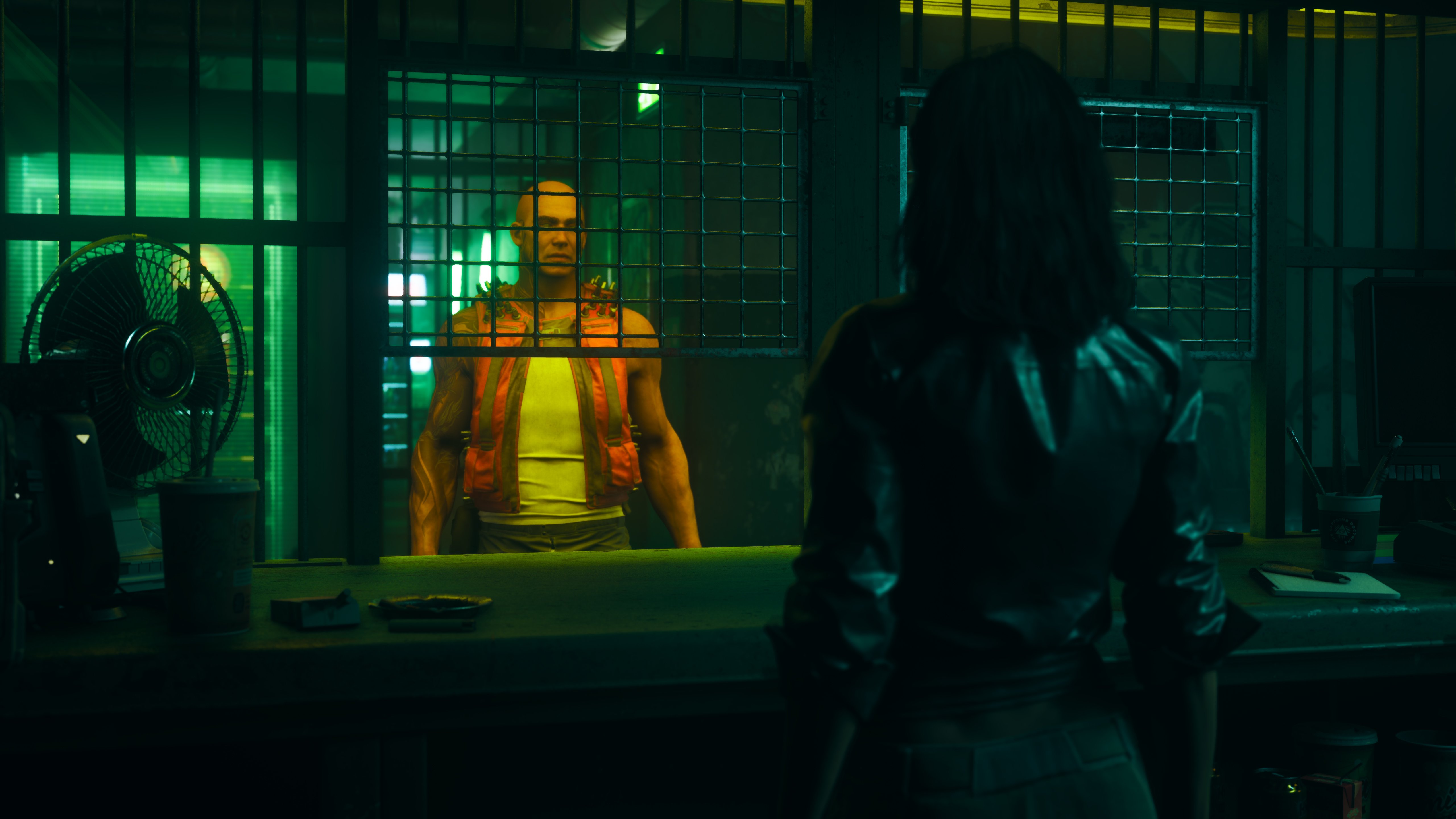





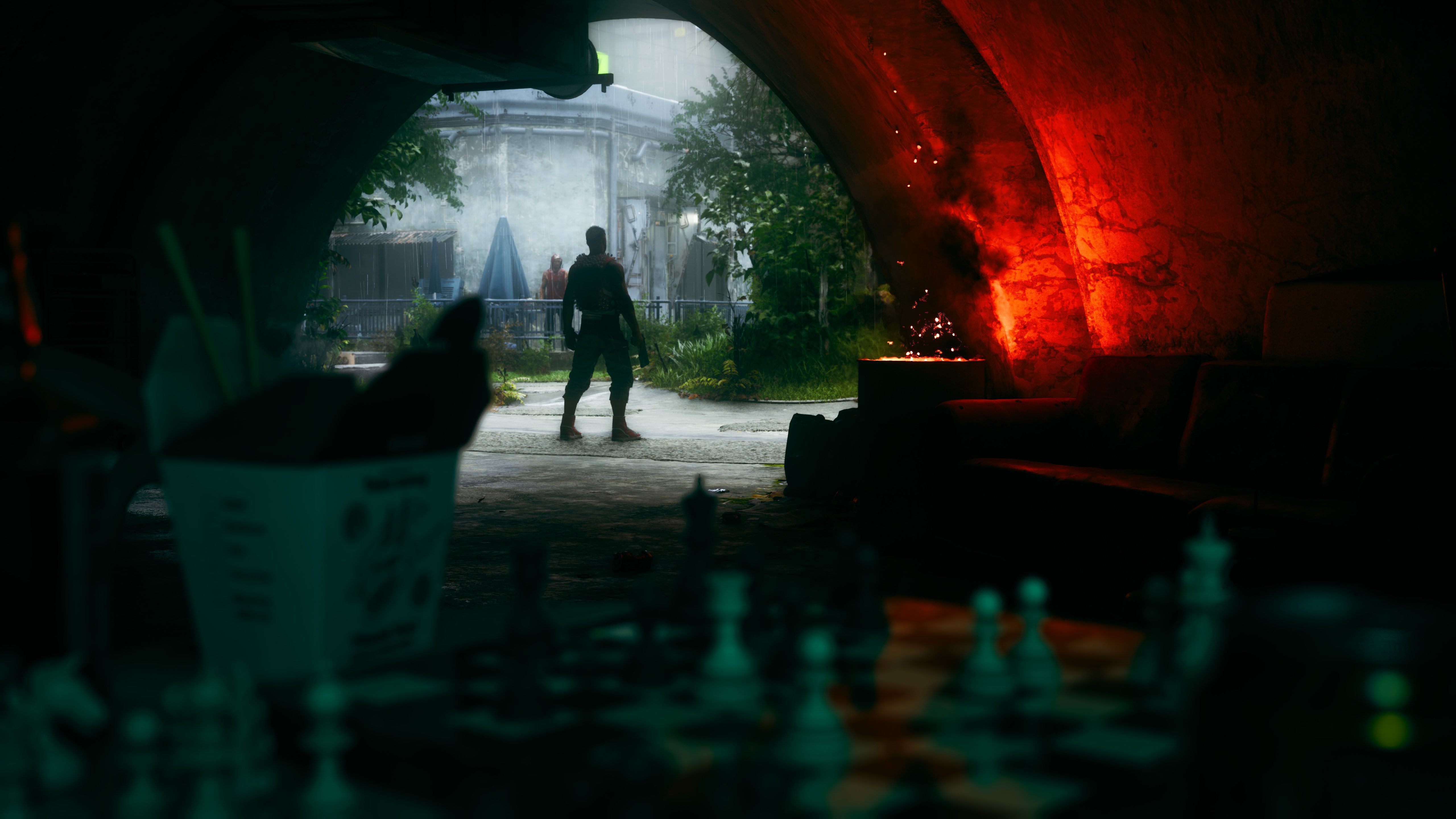
The same goes for anyone in the city – shoot them and your game will continue, but it may have consequences. One early mission I was shown involves accessing an informant’s apartment, and one way to do this is to speak to the receptionist and convince them to let you in. If you decide to shoot them, they’ll stay dead, meaning that option will be closed off to you.
That’s not to suggest there won’t be other ways into the apartment, of course. I was shown two very different takes on the same mission – one way involved stacking crates to get over a fence, entering the window of a neighbouring apartment, picking locks and sneaking past someone sleeping in their bedroom. The other way involved going in all guns blazing, blowing shit up along the way. Incidentally, in a fantastic touch, I was shown how one explosion caused objects to fall off a shelf in a different room in the same building.
The crucial thing is that neither method was the ‘correct’ way, and Iron Giant is determined to make sure one route isn’t more beneficial to the player than another. It was explained to me that the game only gives the player XP when they complete a mission, not while they’re doing it – if the player realises they can get more XP from lockpicking than headshots, for example, they’ll feel like the game is forcing them down a stealth route, and the developer doesn’t want to coax them along any specific path.
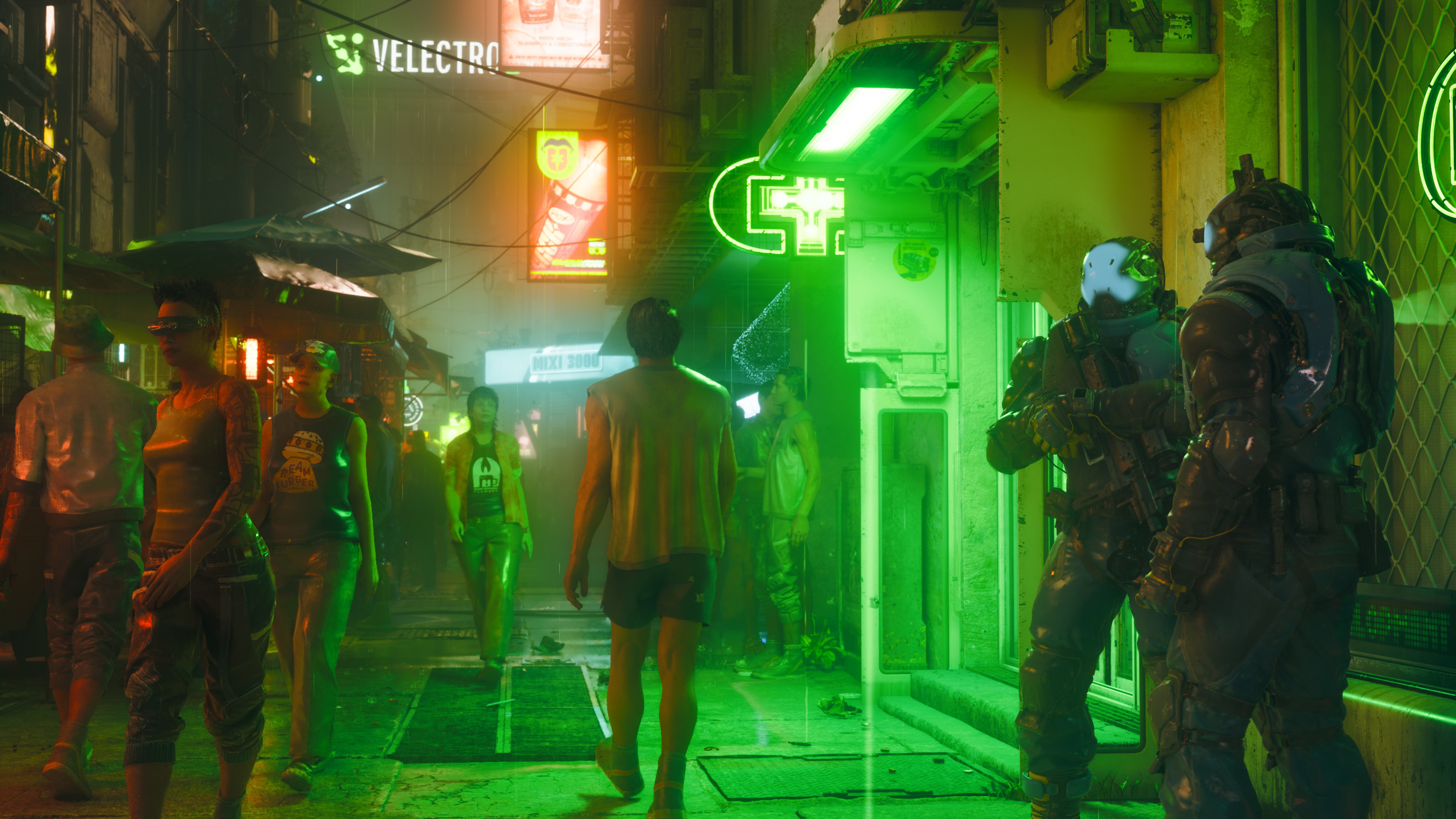
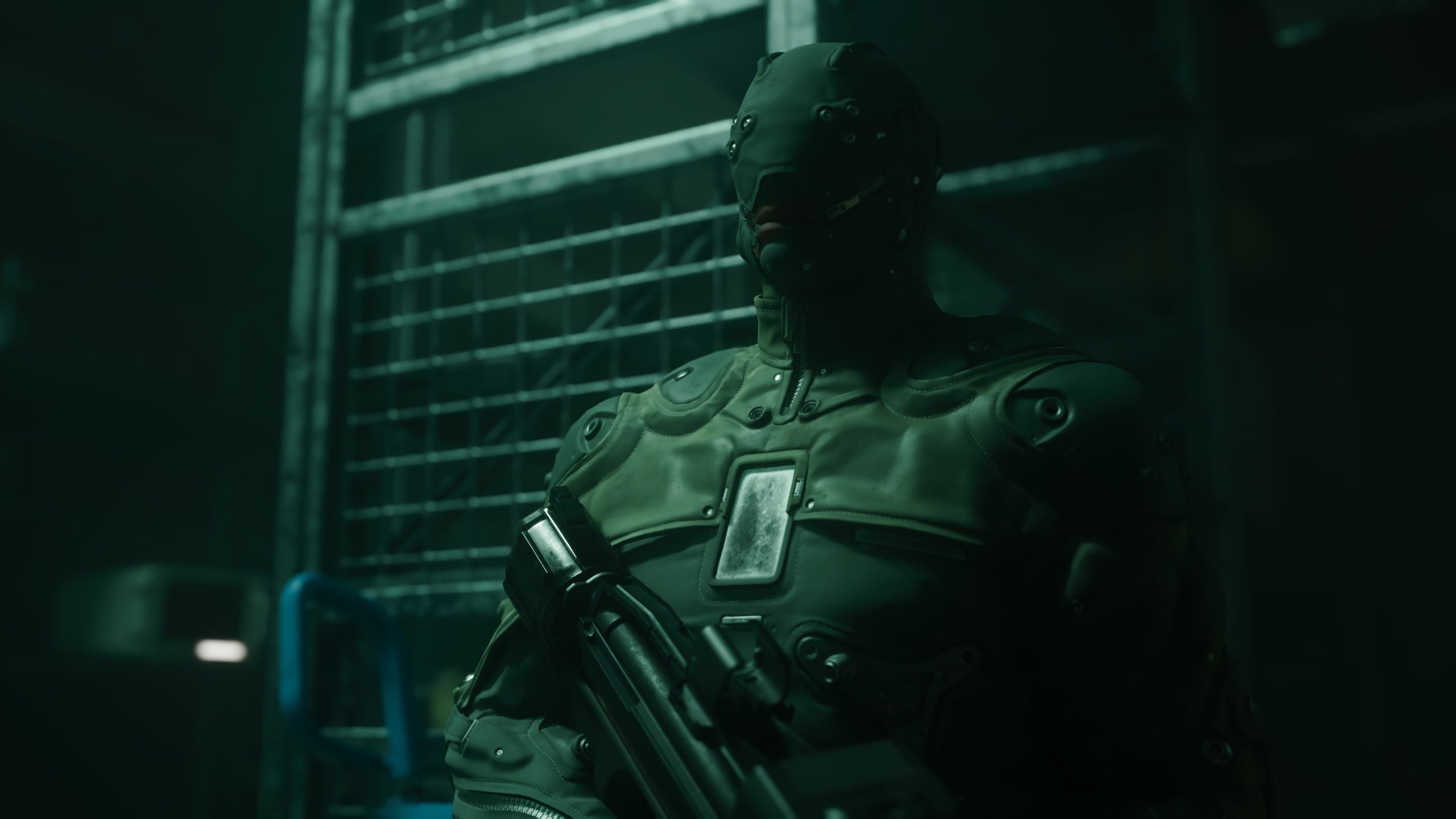
Every little detail I was shown continued to impress me. When it rains, security tends to hang around inside, making it easier to approach the front of buildings. If you can steal the anti-theft sensor near the door of a shop, you can combine it with grenades to make proximity grenades which only detonate when someone comes close. It feels like the studio has thought of everything, and the fact it all looks so fantastic on top of that is all the more exciting.
It did feel a bit too good to be true, though, so I had to ask the question. I was told, in no uncertain terms, that although the core team only consists of 24 people – which is ridiculous considering how detailed the game is – absolutely no generational AI was used in the game’s creation.
“I was told, in no uncertain terms, that although the core team only consists of 24 people – which is ridiculous considering how detailed the game is – absolutely no generational AI was used in the game’s creation.”
So far the only thing that’s really disappointed me about No Law is the fact that not many people are talking about it yet. If anyone was to be shown the same presentation I was, I have no doubt the game would be top of their wishlist for next year. I’d even suggest that Iron Giant make an official version of that presentation and put it on the game’s YouTube channel, to really get across what’s going on here.
With any luck, the next time we see a No Law trailer during another presentation – this year’s Game Awards, maybe? – there’ll be more buzz around it. Or maybe it’s destined to become one of these games – assuming it does end up being great, of course – that doesn’t properly take off until it’s released and word-of-mouth spreads.
Whatever happens, if No Law does eventually become a huge critical success when it releases in 2027, and people start wondering “where the hell did that come from?”, you can’t say I didn’t warn you.