Castlevania: Belmont’s Curse doesn’t seem to raise the stakes, but should still be worth sinking your teeth into
Hands-on: The first side-scrolling entry in 13 years enters a genre that’s far more competitive than before
There are few video game genres as satisfying as the Metroidvania, but it could be argued that this has become a problem of sorts.
The basic structure of the genre is perfect for a medium where progress is one of the core principles. By not going for a series of linear stages and instead offering a large, non-linear world which slowly becomes more accessible as you gain new abilities, being able to backtrack and defy those barriers that previously hindered you is constantly fulfilling.
As a result of this – not to mention the fact that designing a 2D game is often cheaper and more straightforward than a 3D one – these days you can’t move for Metroidvanias, meaning for every Animal Well, Hollow Knight, Guacamelee or Ori there are hundreds of others that struggle to climb to the top of the pile and gain recognition.
Saturation of the market makes it increasingly difficult for a Metroidvania game to get noticed, then, but there are of course two exceptions – the two series the category is named after – meaning any time there’s actually a new Metroid or ‘vania, people pay attention.
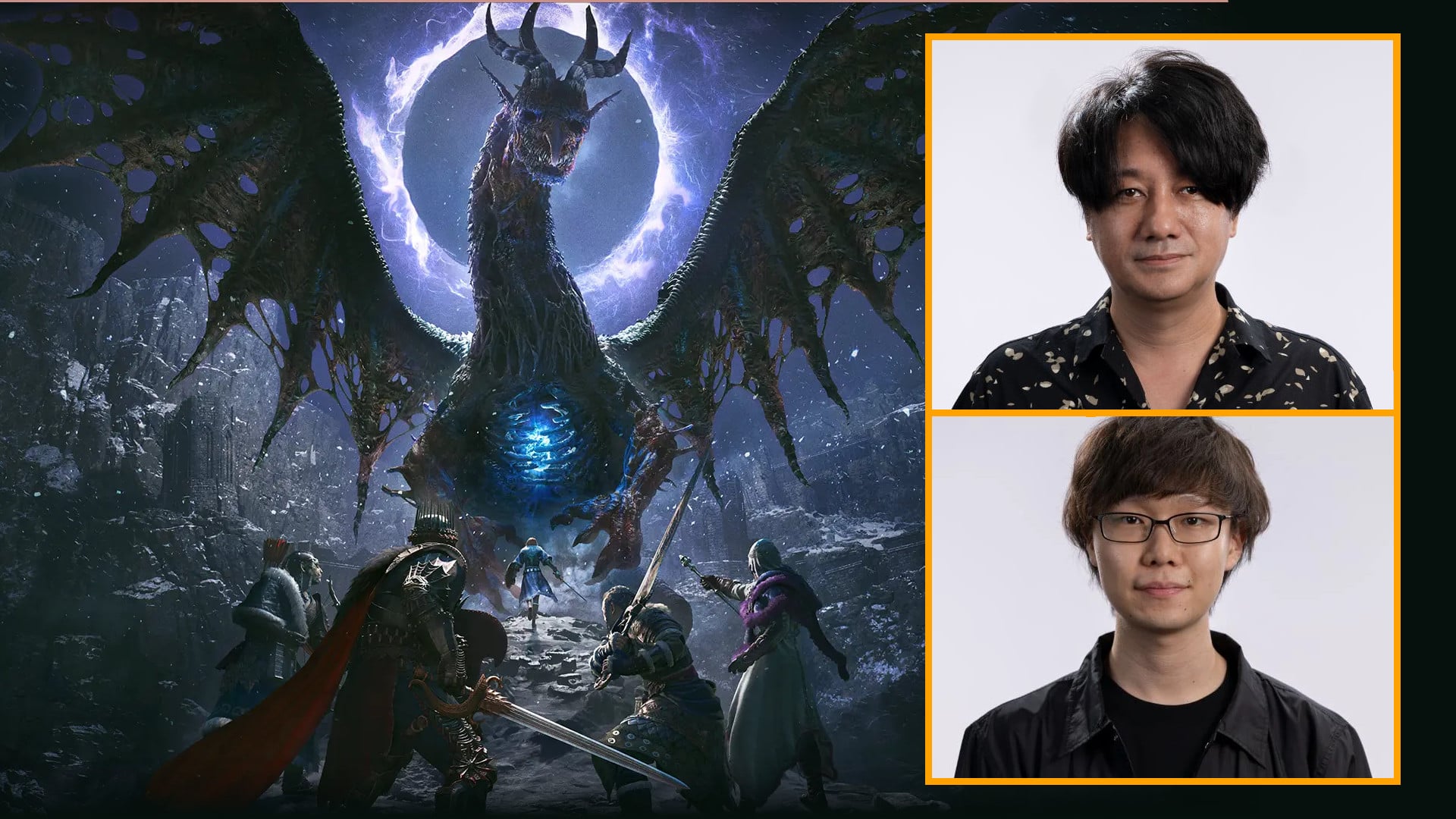
Astonishingly, despite being one of the two founding series of a genre that’s been perpetually popular, there hasn’t been a new side-scrolling Castlevania game for 13 years (the last being the excellent Castlevania: Lords of Shadow – Mirror of Fate). This makes the arrival of Castlevania: Belmont’s Curse all the more exciting, and having played it at Gamescom for an hour, excitement continues to be the overriding emotion, even if what I played felt relatively safe.
Belmont’s Curse is set 23 years after the events of the NES game Castlevania 3: Dracula’s Curse, which saw Trevor Belmont taking on Dracula in the year 1476. It’s now 1499, and Trevor’s been informed by a bishop that Paris has been overrun by demons. The problem is, Trevor’s now 43 years old, and while the spirit is still willing, the body is weakening (I’m 43 too Trev so I fully understand, mate).
As such, Trevor has called on his daughter Rose to travel to Paris with him, so she can basically do all the legwork while he sits back and gives advice as some sort of backseat vampire slayer.
Just to make sure he definitely doesn’t get involved, Trevor gives Rose the Vampire Killer – the legendary whip that would later be passed down through the Belmont clan from generation to generation – so she can use it on her quest to save Paris from evil. And if you don’t think Dracula’s going to be involved in some way, you must be new to this.
My hour-long Gamescom demo took place right at the start of the game, where Rose only has a few moves – a wall jump, a slide and a dodge – as well as a dagger and her first ‘Arcana’.
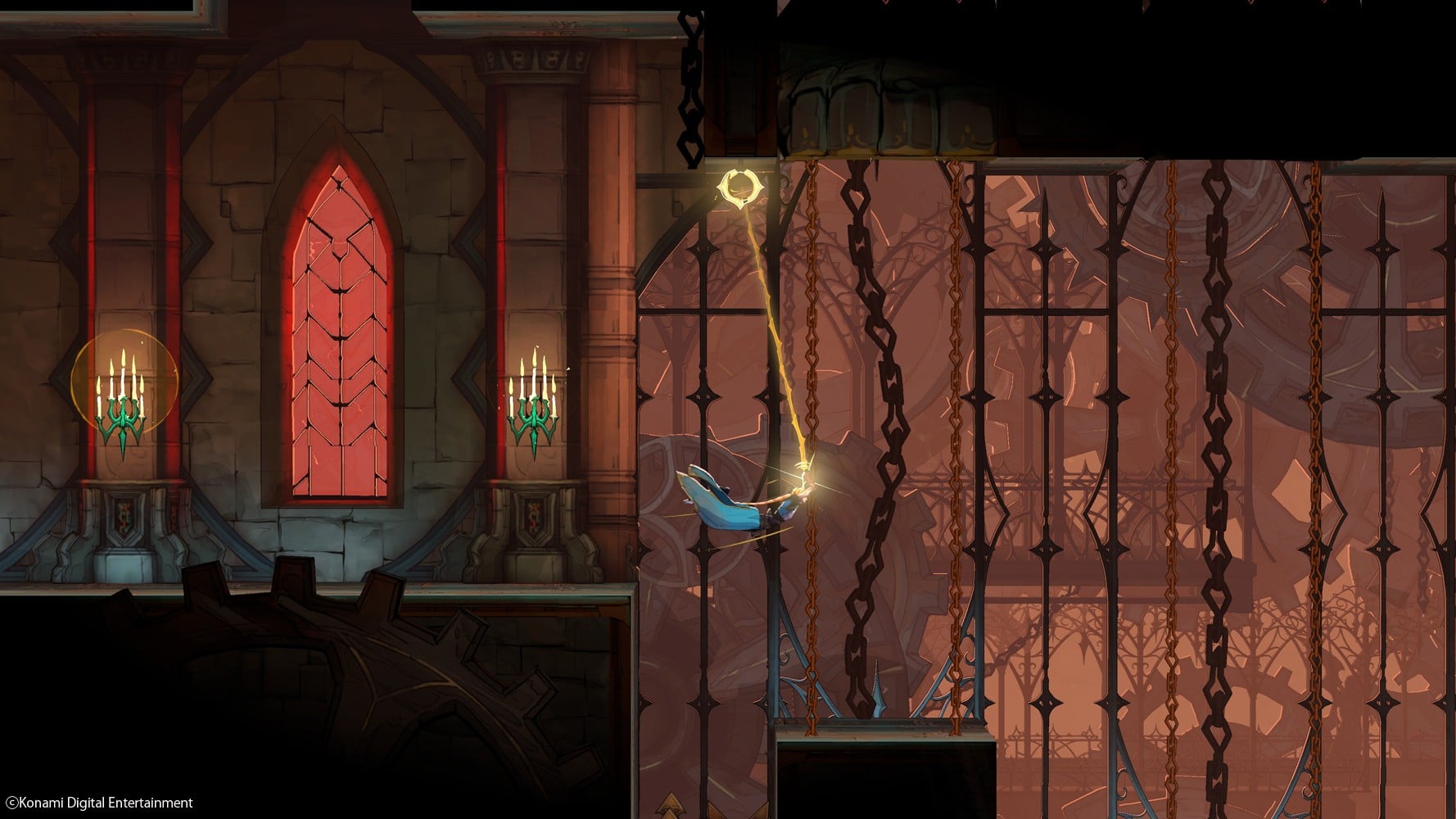
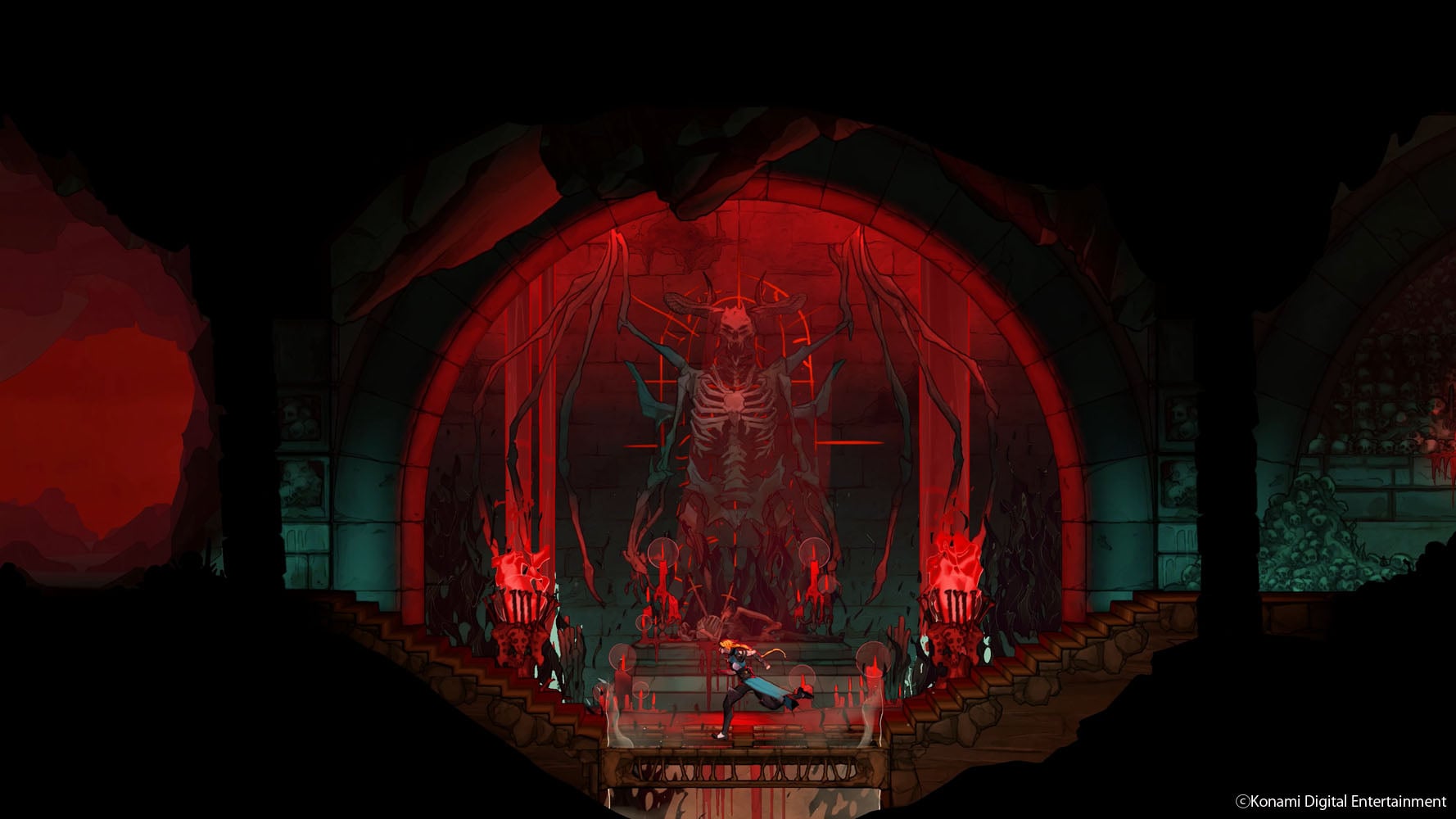
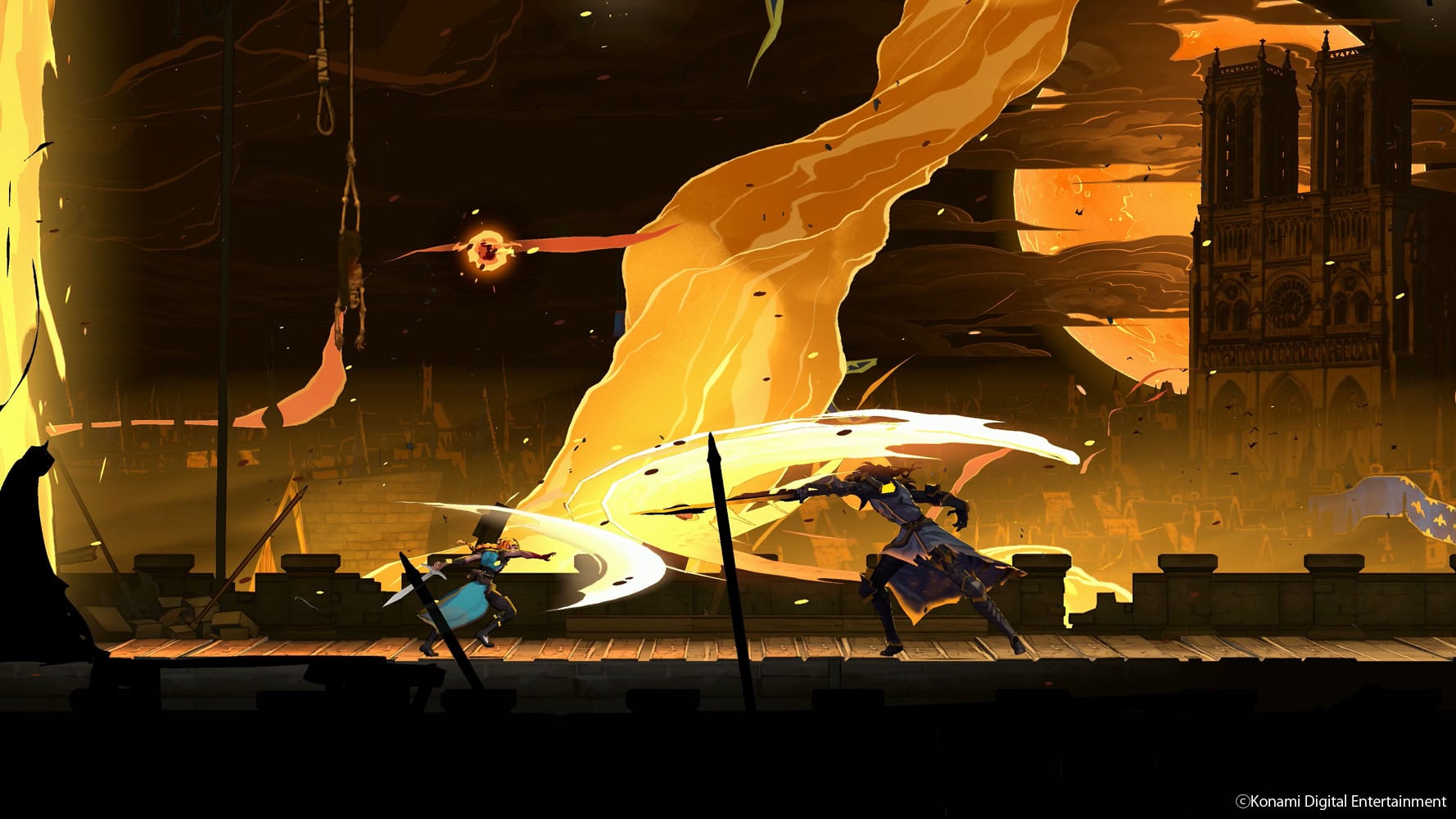
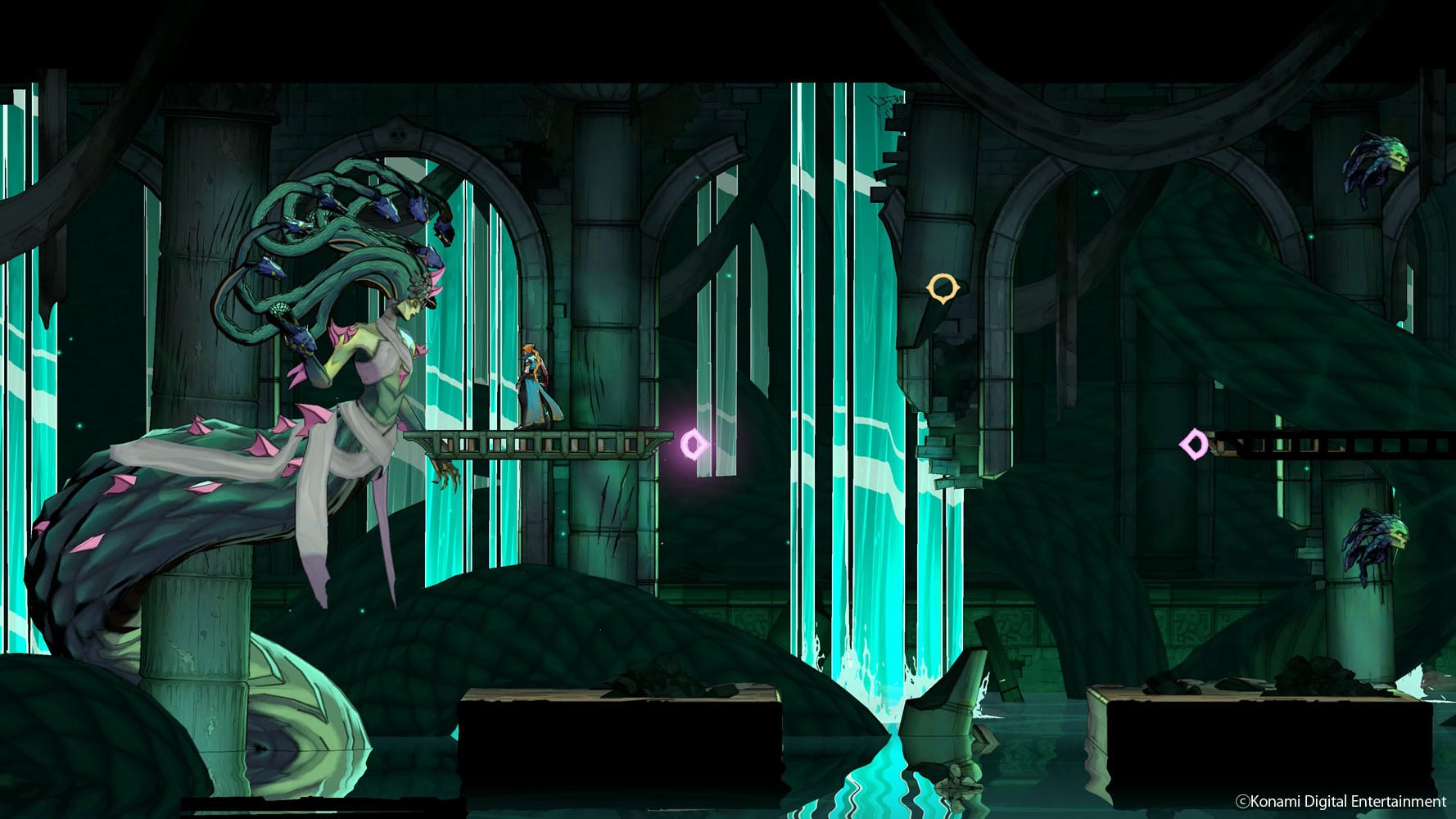
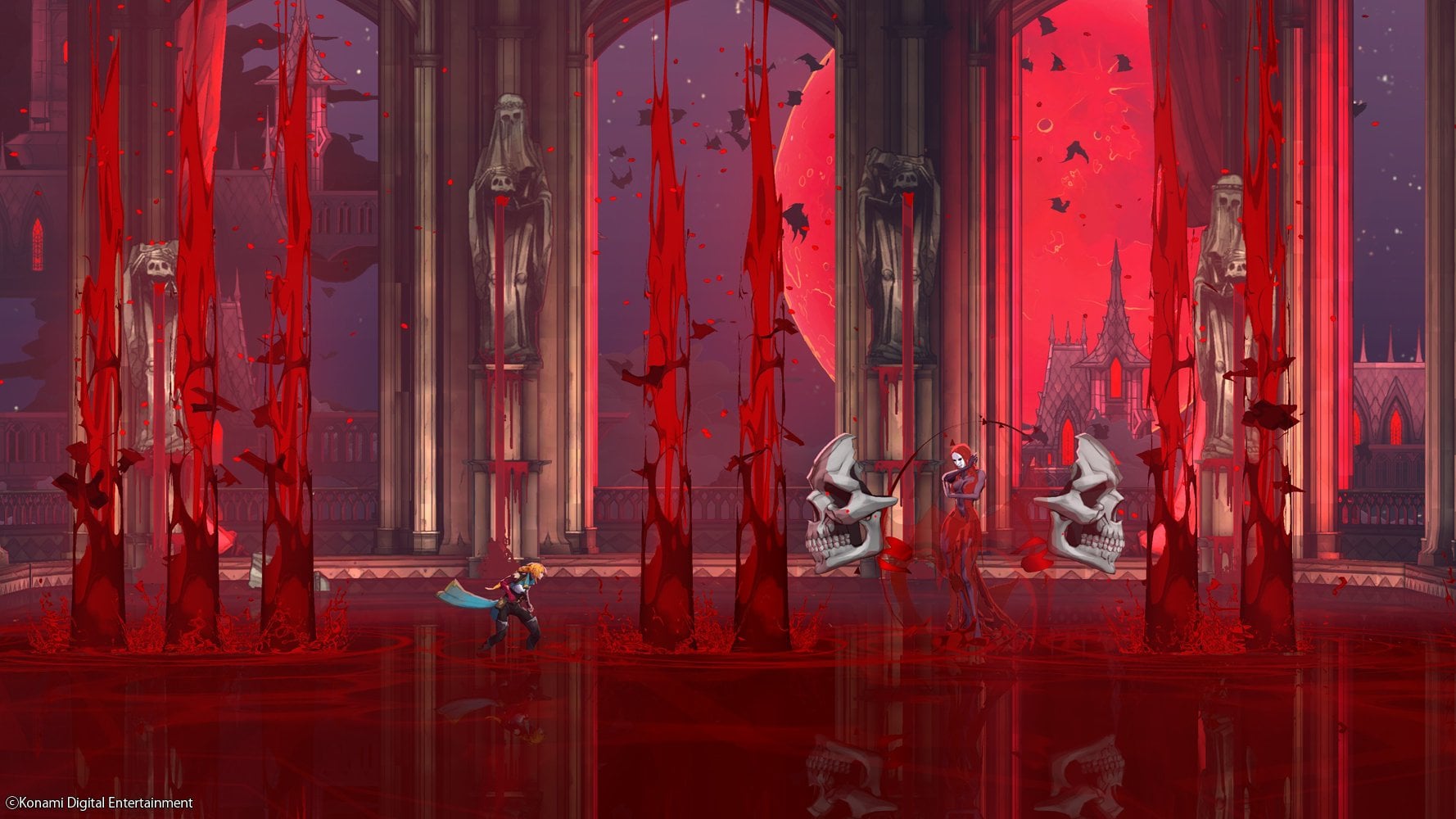
Arcanas are special attacks which use up magic points, and the first is a fire attack. It looks like there will be at least 15 Arcanas, and before the demo ended I unlocked a second one, the Holy Cross (the boomerang-like weapon which has been in the series since the first Castlevania on NES). Arcanas can also be improved by carrying out ‘Works of Mercy’, which are essentially achievements.
For example, the Holy Cross has three Works of Mercy, which are awarded when you fine three whip-like weapons, kill 10 enemies with a whip attack and kill five enemies with the same cross attack.
Completing each of these earns you a Blessing, which can be spent on upgrades – the ability to throw two crosses at once, the ability to do more damage the further away the enemy is, and the ability to gain back MP if you catch the cross when it returns.
By attaching ‘achievements’ to each of these secondary weapons, it should hopefully encourage the player to experiment with them, instead of finding the one they like best and sticking with it for the majority of their playthrough.
During my demo period I managed to reach two bosses – a mysterious large chap called The Fallen, and none other than Joan of Arc. Both boss fights are as you would expect from a game like this, with patterns that have to be learned before you can defeat them without taking too much damage. Naturally, defeating them also earns you the extra powers needed to progress through the game.
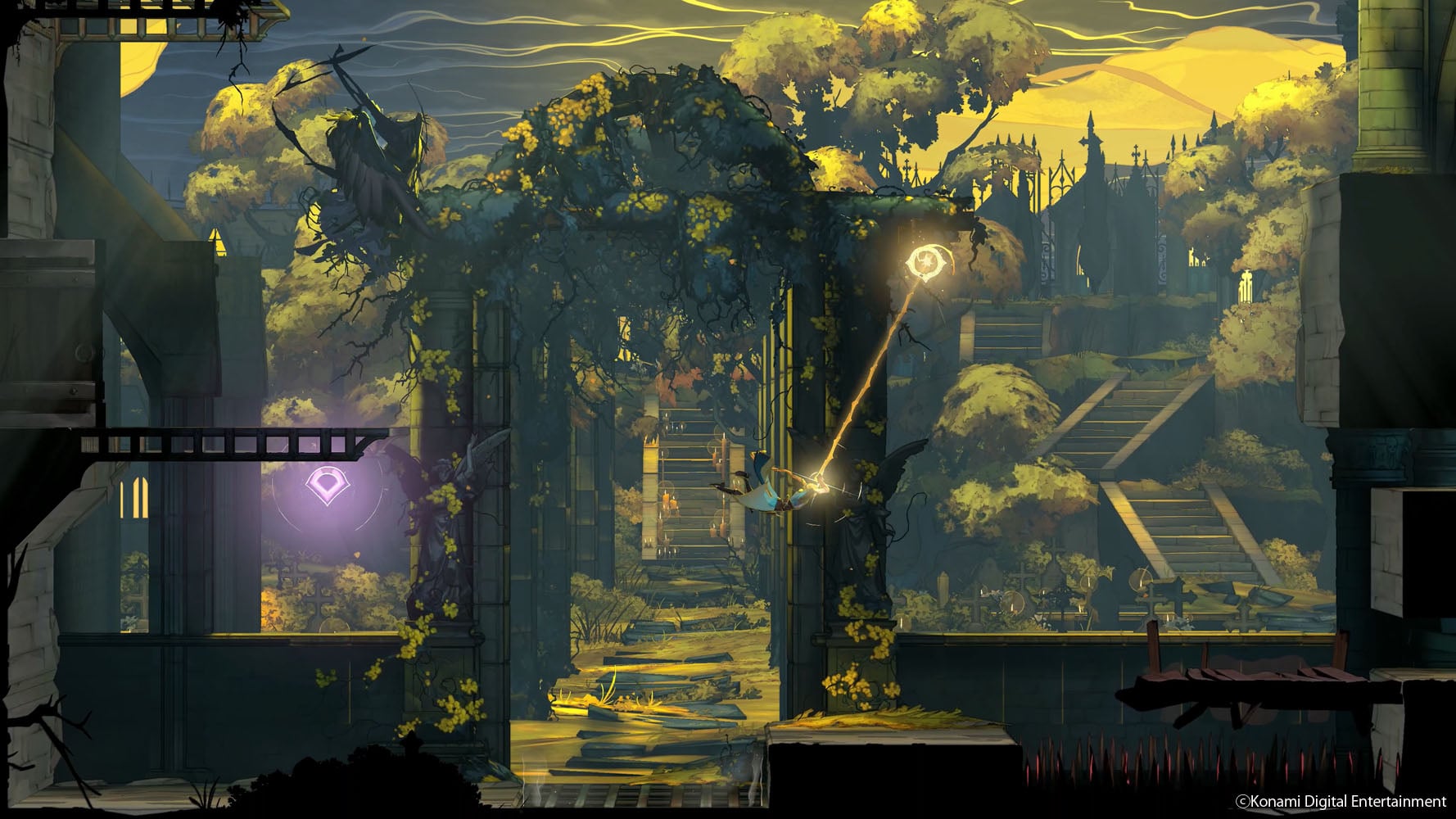
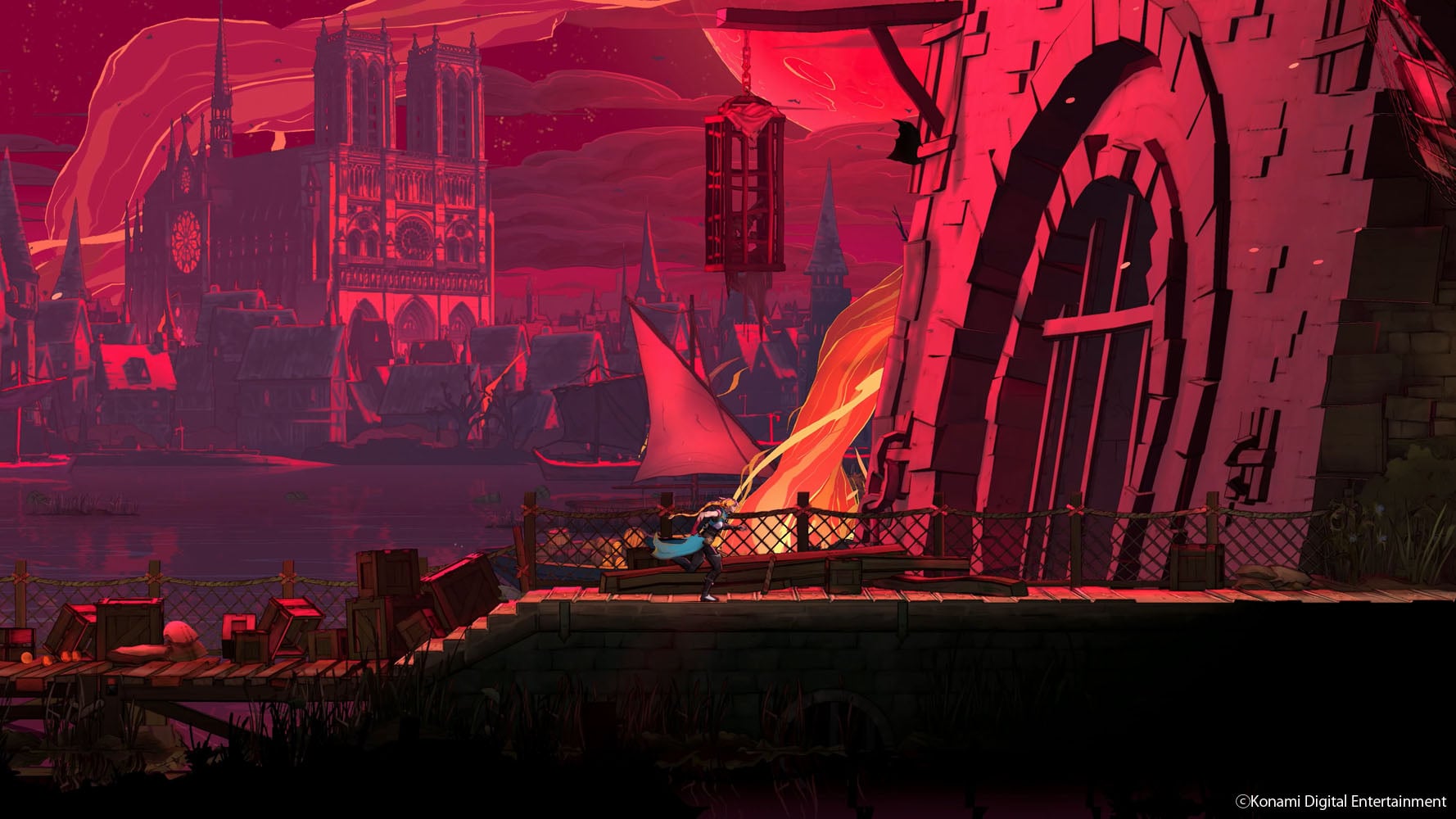
The game’s visual style is strong – it’s a polygonal 2.5D designed to look like a flat 2D game, meaning a lot of the foreground stage elements have black comic-style outlines. The result is a game with a striking hand-drawn appearance but the ability to zoom in and out and provide impressive vistas of a burning Paris in the background in some areas.
During the occasional moments when it zooms right in, the character model for Rose perhaps looks a tad basic, but these moments are usually accompanied by dialogue boxes featuring 2D artwork of her to give a better representation of her expression during such scenes. For the most part though, this is a lovely looking game.
It sounds even better than it looks. Fans were hopeful that Castlevania veteran Michiru Yamane – who composed the music for nine games over the years, including many series highlights like Symphony of the Night, two of the three GBA games and all three DS titles – would return for Belmont’s Curse, but sadly she confirmed that back in May that she’s not involved here.
While this is disappointing, that feeling doesn’t last for long once the game starts, because Belmont’s Curse has some fantastic music that combines gothic, choral and electronic sounds for something that sounds suitably epic, with a slightly modern flair.
If there’s one negative that can be levelled at Belmont’s Curse – and even then it’s a subjective one – it’s that the first hour of the game doesn’t feel particularly revolutionary in any way. There’s every chance that some major new mechanic may appear further down the line, but while I thoroughly enjoyed what I played, it all feels rather similar.
Of course, there’s nothing to say it has to reinvent the wheel. If ever there was a series that has earned the right to deliver a game that simply offers a familiar but solid Metroidvania adventure, it’s the one that co-coined the term in the first place. And so far, based on the first hour at least, familiar but solid absolutely sums it up.