Before Alien: Isolation, a 1980s Commodore 64 game nailed first-person terror
Aliens: The Computer Game’s designer reflects on the pivotal release, on the 40th anniversary of the James Cameron movie

Words by Mike Diver
Confusingly, two games titled Aliens: The Computer Game were released in the wake of James Cameron’s classic, which marked its 40th anniversary this weekend.
The first, developed in the US by Activision, recreated scenes from the sci-fi blockbuster, such as the dropship arrival at LV-426 and the rescue of Newt near the film’s climax. But the UK-made Aliens: The Computer Game was a different kettle of acid-blooded beasties – and far scarier for stepping away from Aliens’ plot.
Released for Commodore 64 and 16/Plus 4, Amstrad CPC, MSX and ZX Spectrum shortly after the US version arrived in stores, the UK version of Aliens: The Computer Game was developed at Southampton-based Software Studios.
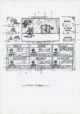
This unique adaptation took familiar characters like Ripley, Bishop, and Hicks and dropped them into an adventure entirely of its own. And its striking first-person perspective immerses you in the action as you blast away (or sneak around) roaming aliens and steadily move across a vast facility that you absolutely had to have a map for.
“The first-person aspect seemed natural,” says the game’s designer Mark Eyles. “The game is sort of a ‘missing link’ between 2D and 3D first-person shooters. Given the story, there had to be shooting, and also having a team to control seemed essential.”

The player must find their way through the maze-like installation, guiding six characters – the aforementioned trio are joined by Burke, Vasquez and Gorman – from the starting position of a Mobile Tactical Operations Bay through to the queen’s chamber. No colonists to rescue, no alien assault on Medical, no “they mostly come at night, mostly” – just a sprawling settlement full of menacing monsters secreting resin all over the walls.
And it’s genuinely tense, likely to leave players hopelessly lost unless they have the game’s map (a navigation aid and copy-protection device). Where each character is, amid this dizzying nightmare, is displayed beneath their on-screen name, allowing for strategic movement solo or in small groups, with the currently-selected character’s portrait shown in the centre-bottom section of the screen. If a character is killed, their screen will show only static – a nice nod to the head-mounted cameras of the movie.
At no point was Eyles’s creativity compromised by input from Aliens licensors 20th Century Fox. “I was given free rein, although the design did get approval from America. The American version [of the game] retold the movie’s story with episodic gameplay but I took a different approach – I wanted to create the world and let the player control the fate of the characters. It’s more like an open-world game – there’s no single, linear path through the game, which gives the player more agency and more freedom.”
As the project was nearing its tight deadline, enforced so that it wouldn’t be released too long after the movie, Eyles’s “brilliant and dedicated” colleagues endured “excessive hours of work, sleeping under desks, and surviving on pizza”. Any tweaks Eyles wanted to make as development progressed had to be carefully considered – for time and technical constraints, but also whether or not it’d be faithful to Aliens. Or, rather, to its 1979 predecessor, as Eyles recalls: “At the time it was all about capturing the atmosphere of Alien – because I’d seen that movie, but not Aliens.”
That Alien mindset contributes to the game’s menacing atmosphere. The alarms that sound when a character is in close proximity to an alien never fail to set the heart racing. Another character can be sent to their aid, rescuing them by destroying the alien in the same room. This mechanic means you can preserve lives that’d otherwise be lost – but the game provides its share of challenges elsewhere to balance everything out.
Ammo is limited, characters only have so much stamina per turn, and aliens can destroy the lighting in sections of the complex. It all adds up to a hard game. “In retrospect, I would have preferred the game to be a bit easier,” says Eyles. “Although, that could have broken it. The danger to the player feels very real, and makes this a scary game to play. If it’d have been too easy, that tension could have been broken.”

Reviews were very positive. Zzap!64 called the Commodore 64 release “the best film tie-in to date”, while the ZX Spectrum game earned a perfect 5/5 in the pages of Sinclair User. Eyles was pleased with the critical reception, and remains very happy with his work.
“I wouldn’t change the core gameplay. If it’d have been possible to include more [visual] variety in the rooms, that would have been good, but the technical constraints didn’t really allow for that. There’s only so much you can fit into the 48K of RAM that made up the Spectrum version! Having different difficulty levels is something I’d have liked to try out – but again, that might have made the game less scary. If the player has nothing to fear, no real obstacles to overcome, then what’s the point of playing the game? It did turn out harder than I’d anticipated, but it’s Aliens – it shouldn’t be a breeze.”

Aliens: The Computer Game remains enjoyable today, and feels like a natural predecessor to the later first-person likes of Alien Resurrection and Alien: Isolation, where the perspective is crucial to the immersive terror. But if you need a modernised version of this high watermark of mid-1980s horror gaming, an unlicensed remake called LV-426 was released in 2007 and can be found online, offering several updates but retaining the core, blood-curdling 8-bit experience.
This is an edited version of a chapter from Aliens: The Video Games, written by Mike Diver and published by White Owl. The book is available to pre-order from the publisher and is available in August 2026. Mark Eyles is now a fantasy and sci-fi author whose work can be found at his official website.