After two hours playing The Legend of Zelda: Ocarina of Time remake, it’s fired a Hookshot into my heart again
Nintendo looks set to remind everyone why Link’s N64 adventure is many people’s favourite game of all time
On a Monday evening in September, a group of journalists shared their concerns over dinner.
The group – including me – were set to go hands-on with Nintendo’s Switch 2 remake of The Legend of Zelda: Ocarina of Time the next day, but the consensus among those at the table was that there was a real worry about how it was going to go.
Were we concerned about the art style? The new controls? How much it was going to potentially differ from the original? No, none of that.
“I worry that when I see the Deku Tree, I’m going to start crying,” one person said.
“It’ll be the Hyrule Field music for me,” said another. A third was worried that saying goodbye to Saria would trigger the waterworks.
This isn’t a normal conversation to have during press events, to be clear. But then, Ocarina of Time isn’t a normal game. For many players of a certain age, this was the first game they played that made them fall in love with the medium, that absorbed their attention, that presented them with a world and characters that have remained in their heart for the rest of their life.
There’s a reason the Nintendo 64 original is still the highest rated game of all time on Metacritic, with a score of 99. Why it was the first ever game to get a perfect 40 (four scores of 10) in prestigious Japanese magazine Famitsu. Why Nintendo has managed to find a way to get it onto every console it’s made since. Why it already remade it once before, on the 3DS.
Ocarina of Time isn’t just a game that people loved, it’s a game that people lived. It holds a deep place in the hearts of a lot of players, because it shaped their passion for this hobby. For many, Ocarina was their gateway to the medium, the first game that truly hooked them and led to decades’ worth of other adventures.
30 minutes of exclusive The Legend of Zelda: Ocarina of Time remake gameplay
To put it plainly, this game is important. It’s also why remaking it is a risky move by Nintendo. Get it right and an entirely new generation of players can fall in love with it for the first time. Get it wrong and you end up with the 2006 remake of The Wicker Man, where the original’s legacy is replaced by videos of Nicholas Cage in a bear suit punching a woman in the face.
Thankfully, after spending a couple of hours with the game, I can happily report that so far it looks like it’s going to sit in the former camp. What I played was a visually stunning recreation of the N64 original, one that respects what made it so iconic but isn’t afraid to make a few tweaks and introduce a few little things here and there.
This is clear right away from the opening section in the Kokiri Forest. At its core, it’s the same basic idea – Link’s been given a fairy called Navi and has been summoned to see the Great Deku Tree, but before he can reach it he needs to find a sword and shield. Most of what follows will be familiar to Ocarina fans, but with some sprinklings of new content here and there.
For starters, anyone who was disappointed that visiting the other Kokiri’s treehouses meant walking into an empty room, realising there’s nothing there and leaving right away, will be happy to hear that Nintendo has added some new content to liven things up a bit.
Enter one house, for example, and you’ll now find a Kokiri sitting at a table, using chalk to draw pictures of rupees. She’ll then teach you the song she uses to remember how much each rupee is worth. It’s hardly adding the deleted Jabba the Hutt scene to Star Wars, but it’s a nice little extra which makes the forest feel more inhabited, and is an early sign to the player that this isn’t a straight 1:1 recreation – there will be other new things along the way.
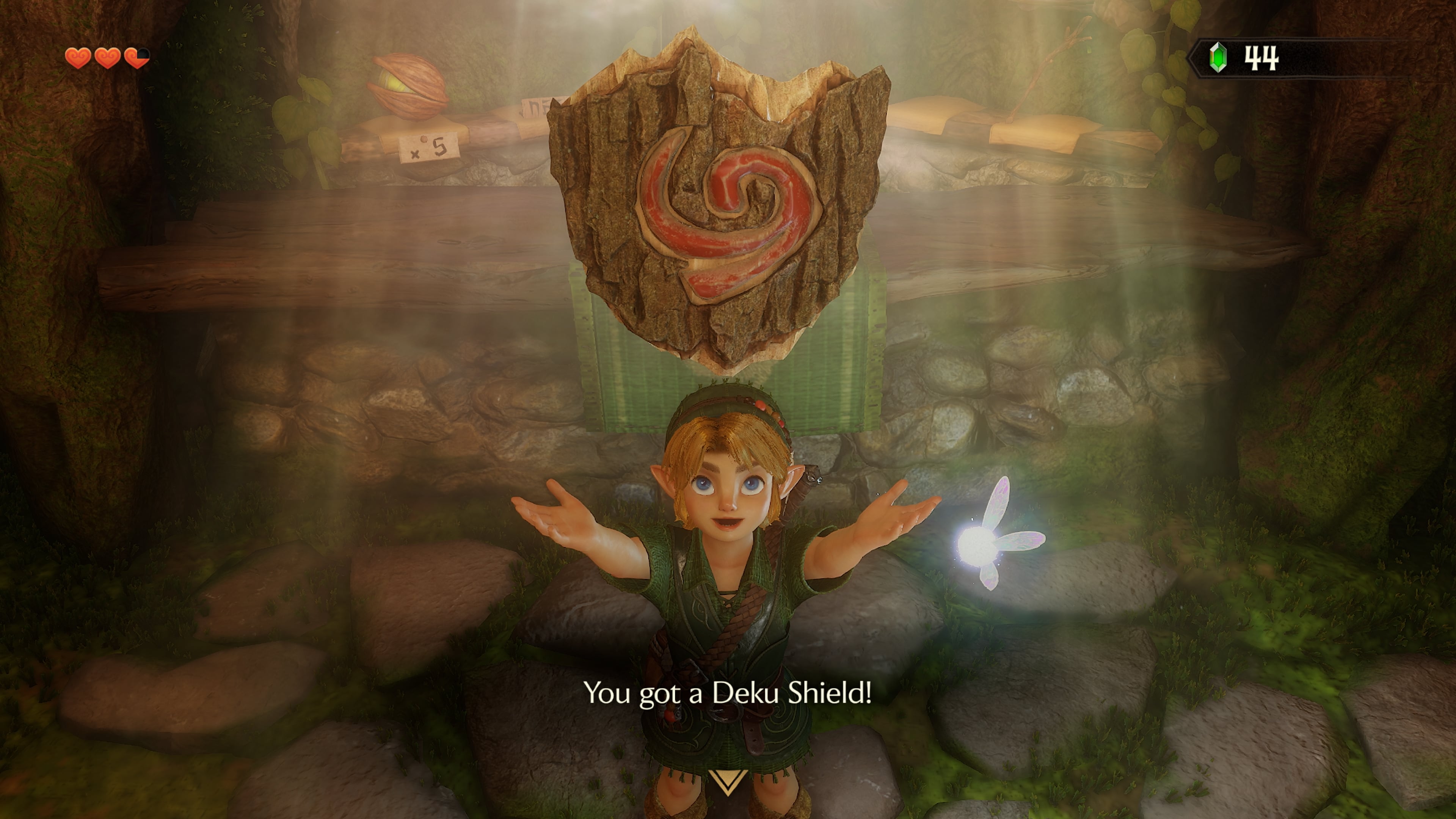
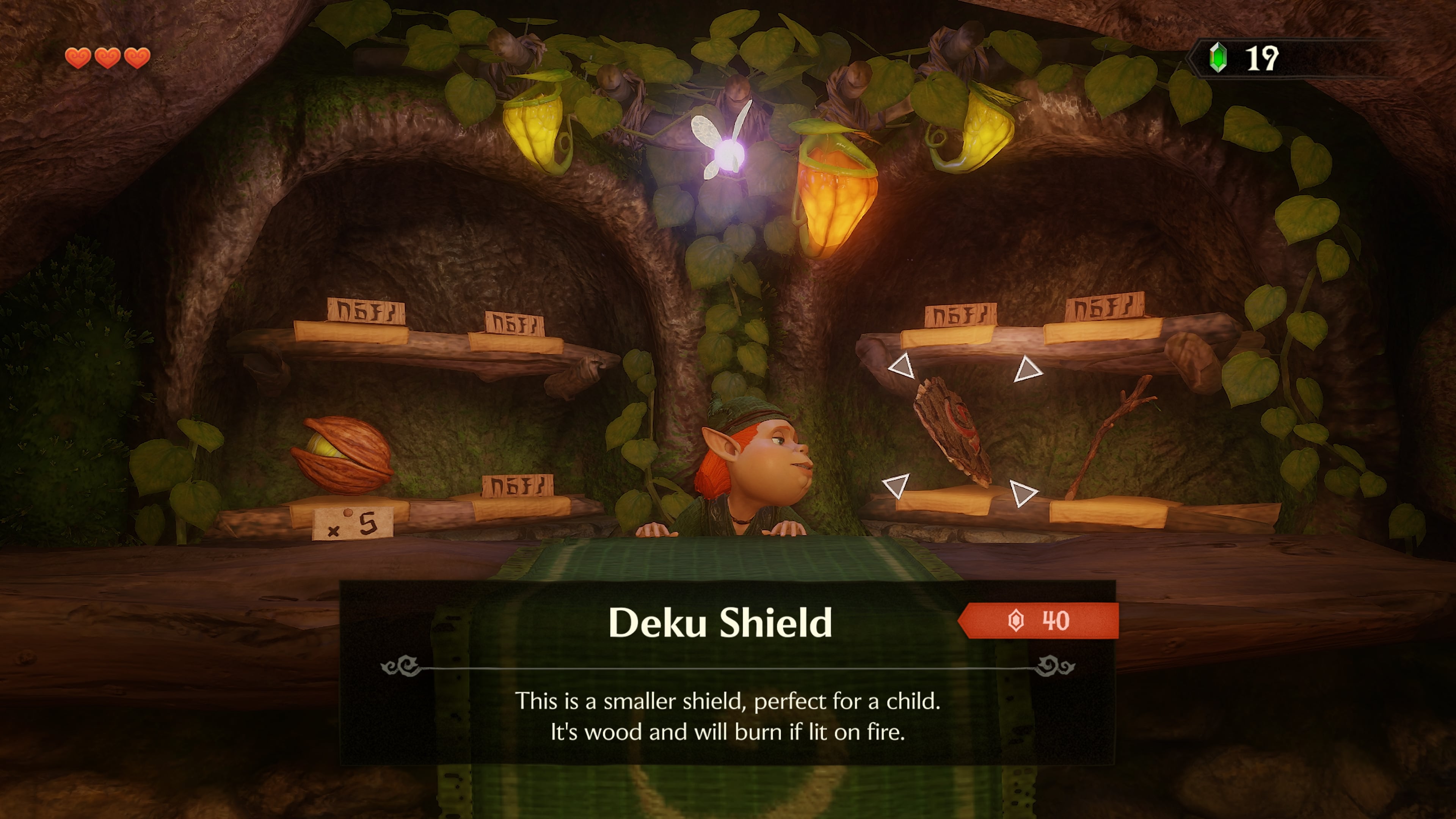
Other changes are more subtle. Anyone who’s played Ocarina will know the mild frustration in trying to collect enough rupees to be able to afford the Deku Shield needed to meet the Deku Tree. Whereas the N64 original was skimpy with the rupees, the remake is comparatively generous with them.
Indeed, I found that by simply heading up to the higher part of the forest and entering the tunnel to find the sword, I had already collected enough rupees along the way to buy the shield without having to actively go looking for more cash.
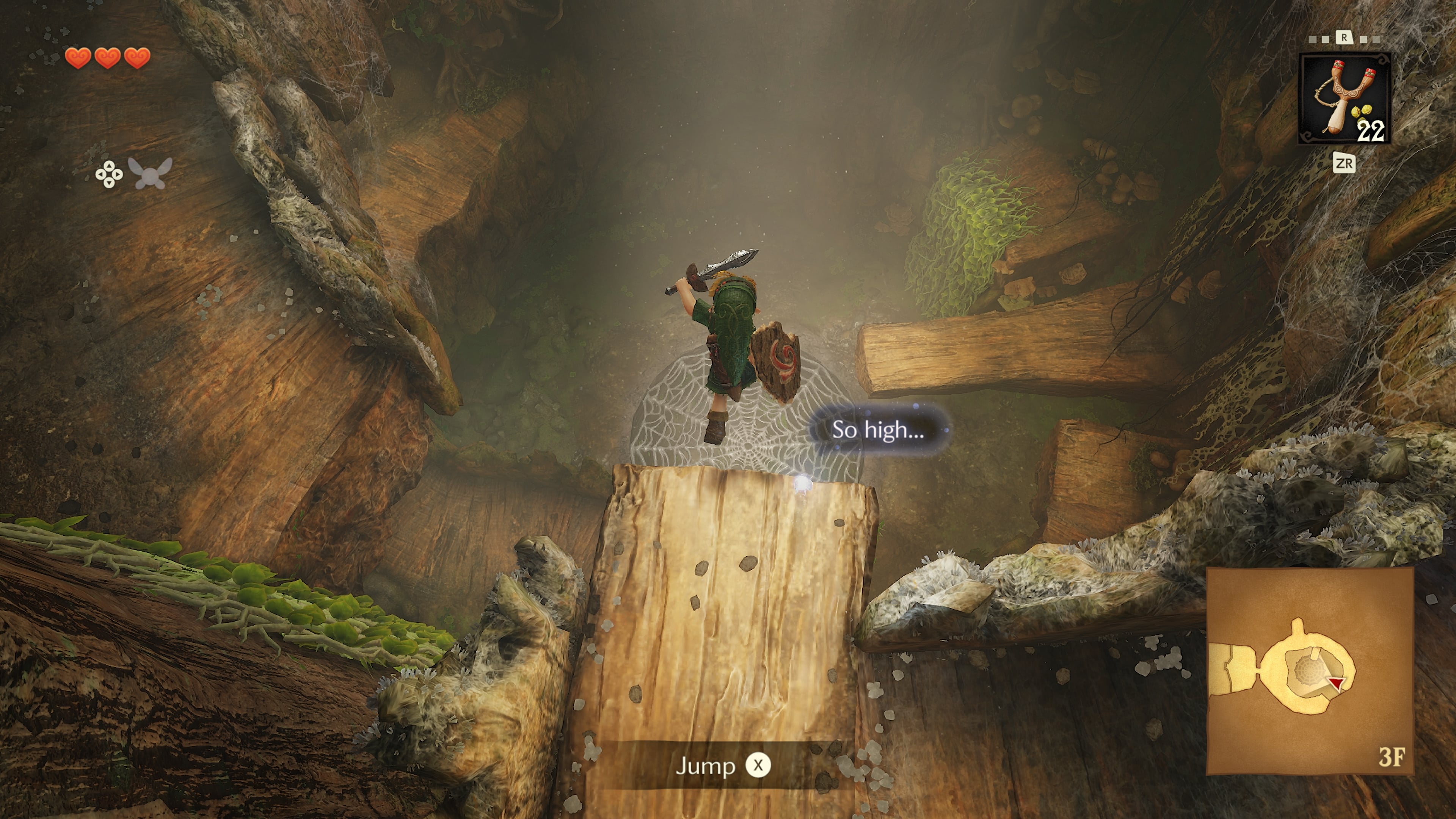
My demo session also included exploring some of the Deku Tree itself, which is essentially the game’s first dungeon (albeit a much smaller one than what’s to follow later in the game). It’s here where Navi first becomes useful for newcomers, but the way she’s handled is slightly different this time.
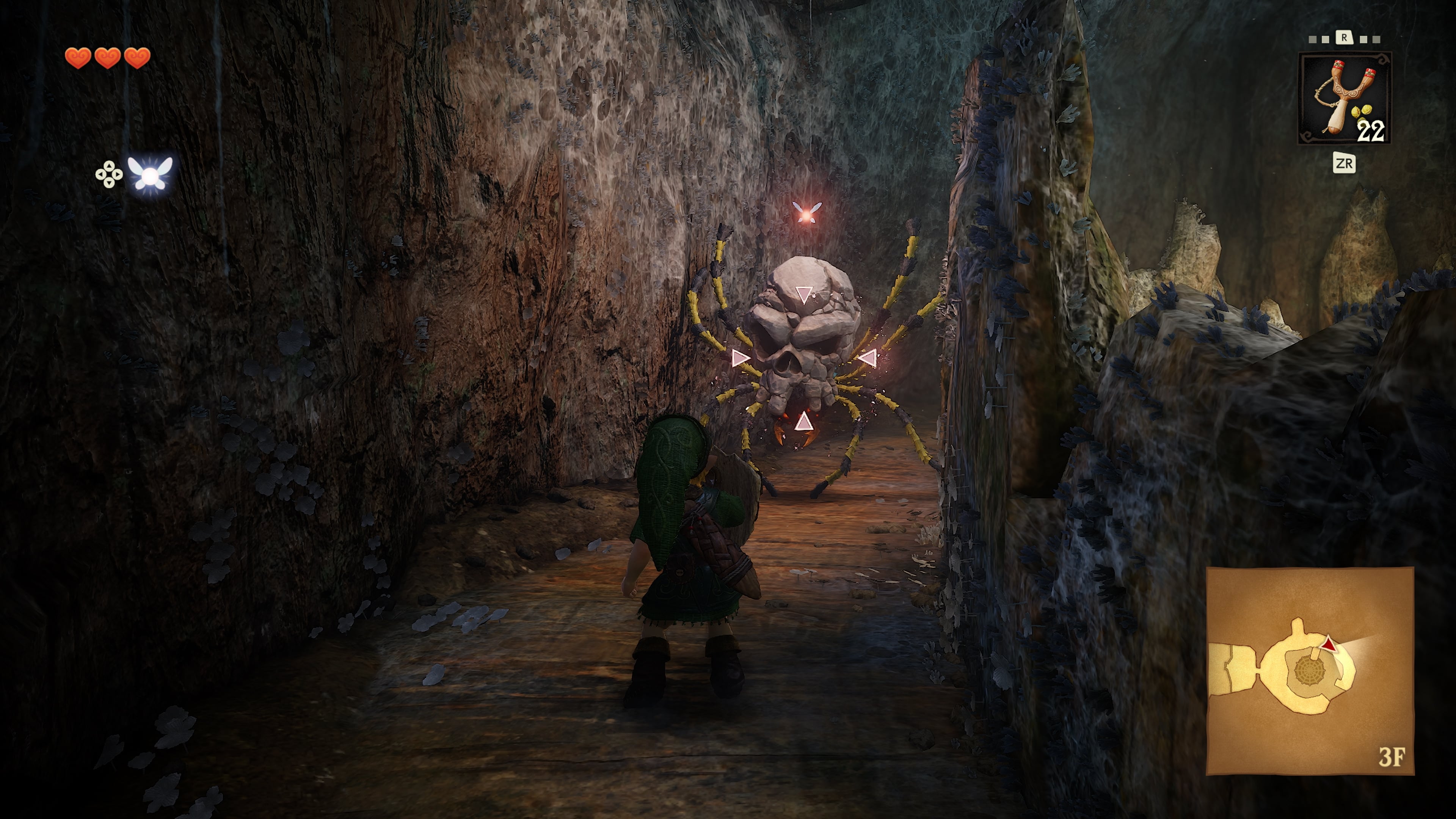
The classic “HEY! LISTEN!” line is often associated with one of the more annoying elements of the N64 original, given how often Navi would interrupt you. This time her interruptions are far less frequent – she can be called upon during battles if you lock onto an enemy then press Right on the D-Pad, at which point she’ll give advice on how to defeat them, but this is purely optional.
When she does feel the need to make comments without prompting, it now often comes in the form of speech bubbles. It’s similar to the way NPCs behave in recent Mario games like Super Mario Odyssey, where if you walk close to them a speech bubble will appear with dialogue, without you having to actively walk up to them and press a button.
Navi now does this too, flying in front of you and delivering a short line of dialogue as you continue to play. It’s a much better way of doing things, because it stops her from being annoying but also ensures she’s still involved in the adventure instead of being ignored. This is a partnership, after all.
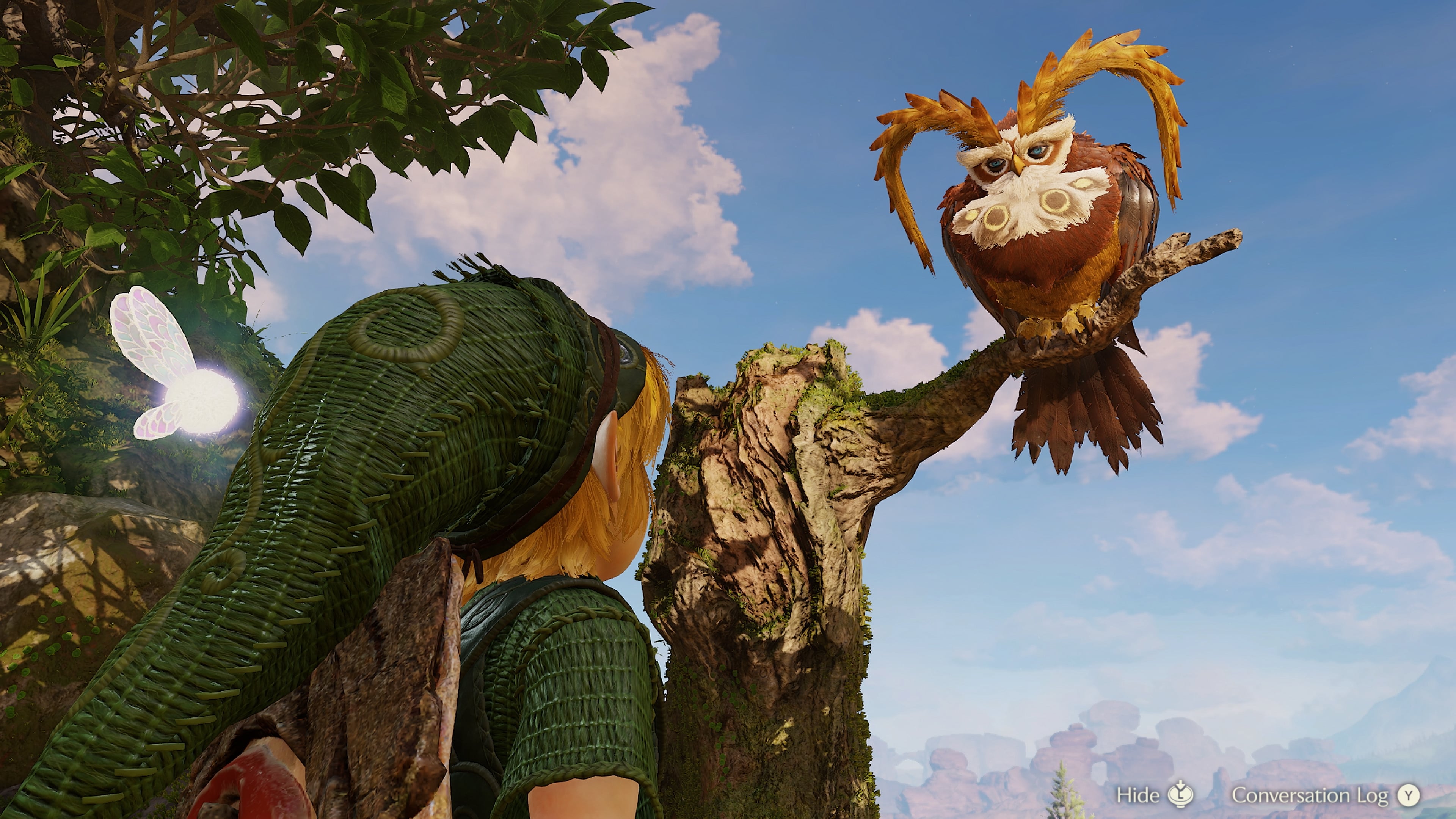
After making way through part of the Deku Tree section, my demo session was then moved onto slightly later in the game, after Link says goodbye to Saria (yes, the person in question did cry) and makes his way to Hyrule Field, but not before a brief chat with the wise owl Kaepora Gaebora, who at first I thought was voiced by Stephen Fry but realised it was more like an American trying to impersonate Stephen Fry.
Hyrule Field was the perfect place to try out the game’s new sprint function. Realising that players often spent their time in Ocarina continually performing forward roll moves because it was faster than running normally, Nintendo has wisely added a new sprint which can be performed by simply holding down a button.
“Realising that players often spent their time in Ocarina continually performing forward roll moves because it was faster than running normally, Nintendo has wisely added a new sprint which can be performed by simply holding down a button.”
It’s obviously useful for covering large tracts of land like Hyrule Field, but I found it handy when backtracking around the dungeon later in my session too (more on that in a bit), because it just generally kept things running at a brisker pace without me rolling into a wall and smacking my head.
Eventually I made my way to Hyrule Castle Town, which has received a major upgrade. In the Nintendo 64 original, the centre of the town basically involved placing a single camera in the middle of a fountain and turning it as Link moved around the area. When you then moved to the back alleys, you would have a static camera, like a Resident Evil game.
On Switch 2 it’s been completely overhauled. Now the centre of the town, the alleys and the shops are one connected location with no loading transitions, where you can move and rotate the camera freely. It makes exploring the town a lot more enjoyable, especially given that so many of the townspeople now have new dialogue that gives them more personality.
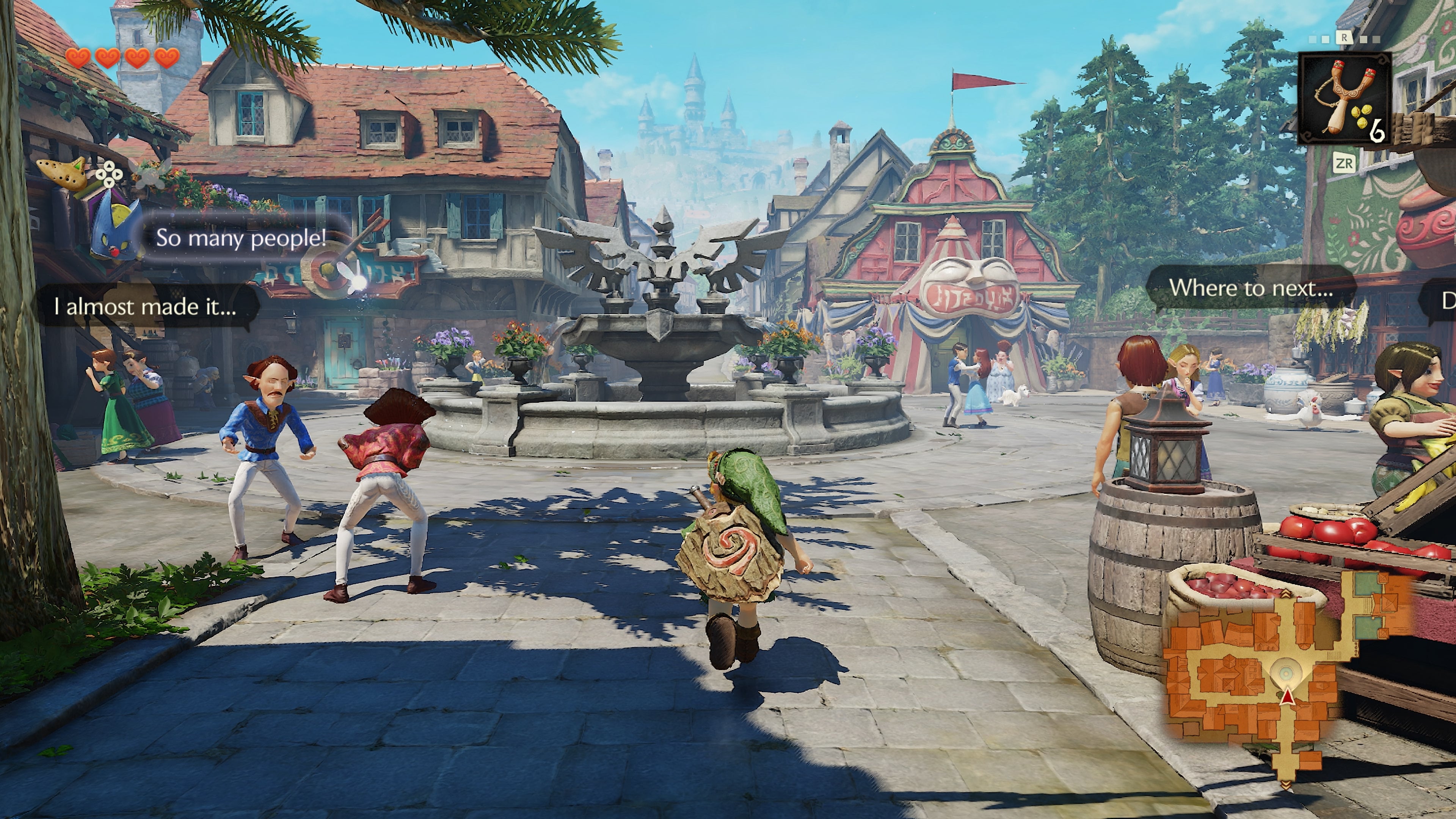
You may remember a character in the original game who stood in the market and had a massive beard. If you walked over to him, he would simply say: “Ahem! Hrrm! This beard is my pride and joy! Doesn’t it look luxuriant, kid?” This time he not only speaks more, he’s actually useful.
Now he introduces himself to you as “the famous Bearded Guy of Castle Town”, and explains that he’s more than just a pretty face. “My beard is actually a beacon of sorts,” he tells you. “This baby can locate other bearded fellas all throughout the kingdom.”
Ask him to help you find Talon (which is your mission at the time), and you’ll hear him do a “doodoodoodoodoo” radar noise, before telling you he’s at Hyrule Castle. Mark my words, Bearded Guy is going to become the most popular character on social media once this game’s out – you heard it here first.
After exploring Hyrule Castle Town for a while and checking to see if you can still trigger a mass Cucco attack if you hit one with your sword – you can, and they’re absolutely ruthless this time – I was whisked to the final part of my demo, where I got to explore the Forest Temple with adult Link.
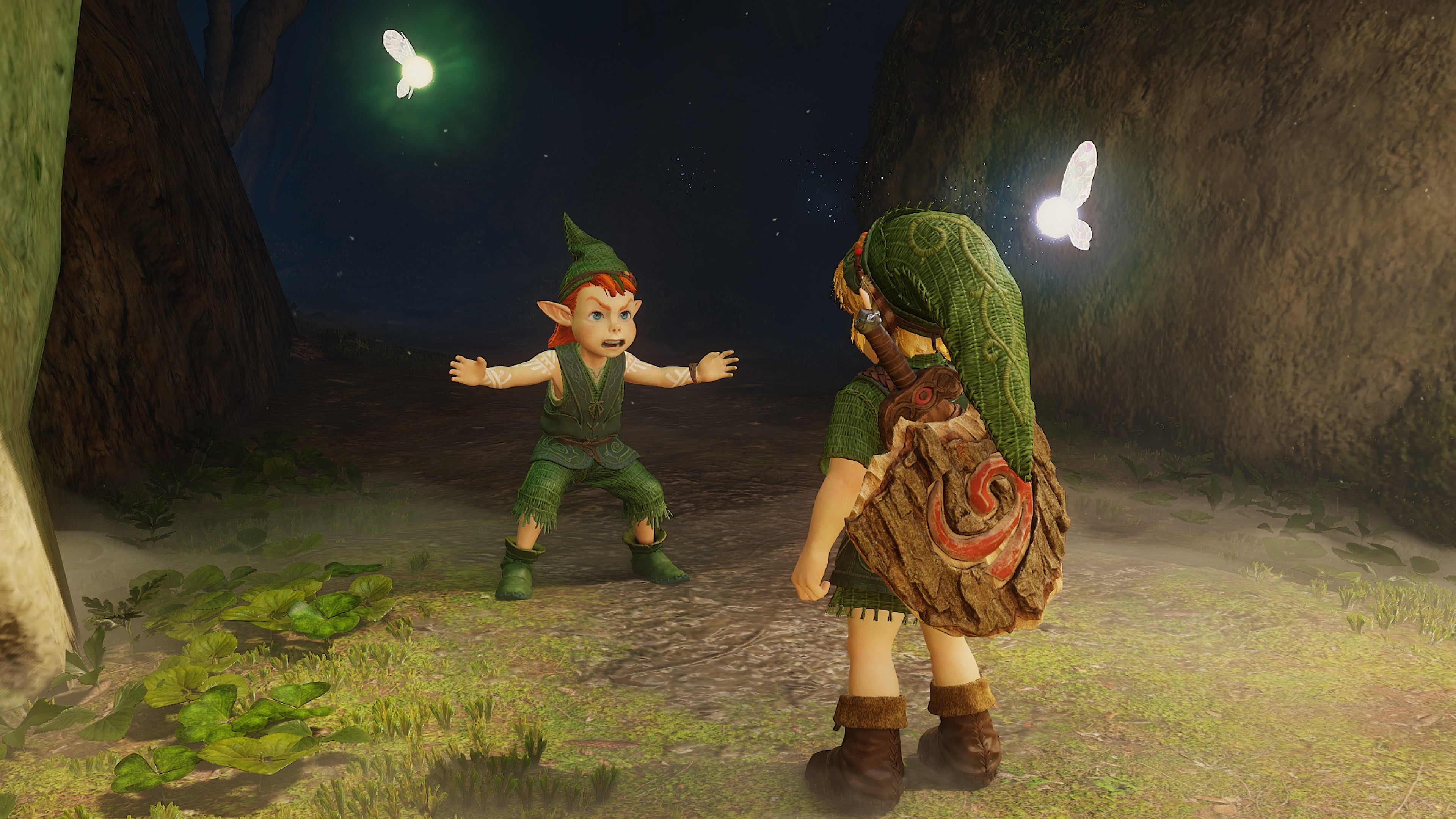
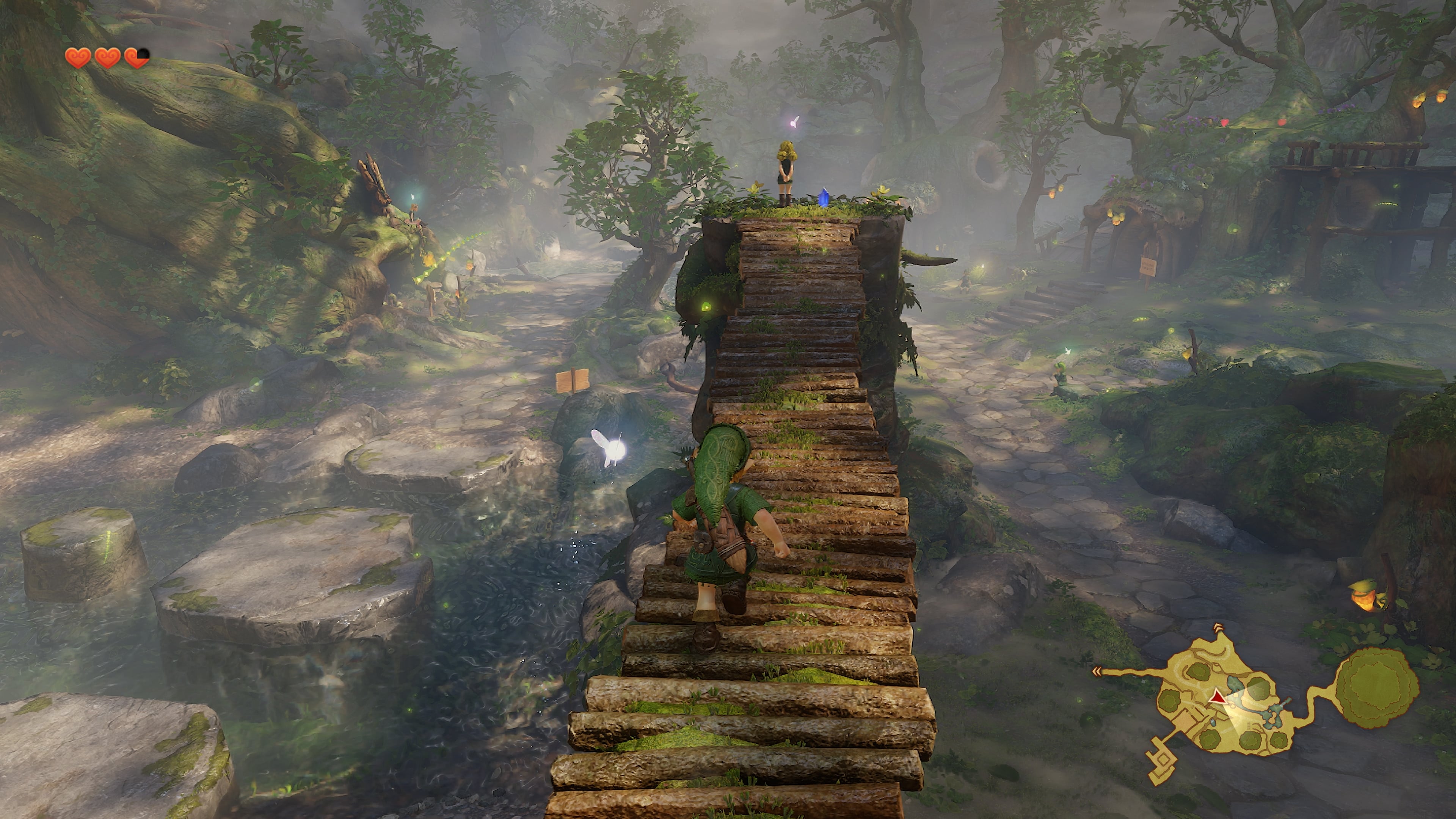
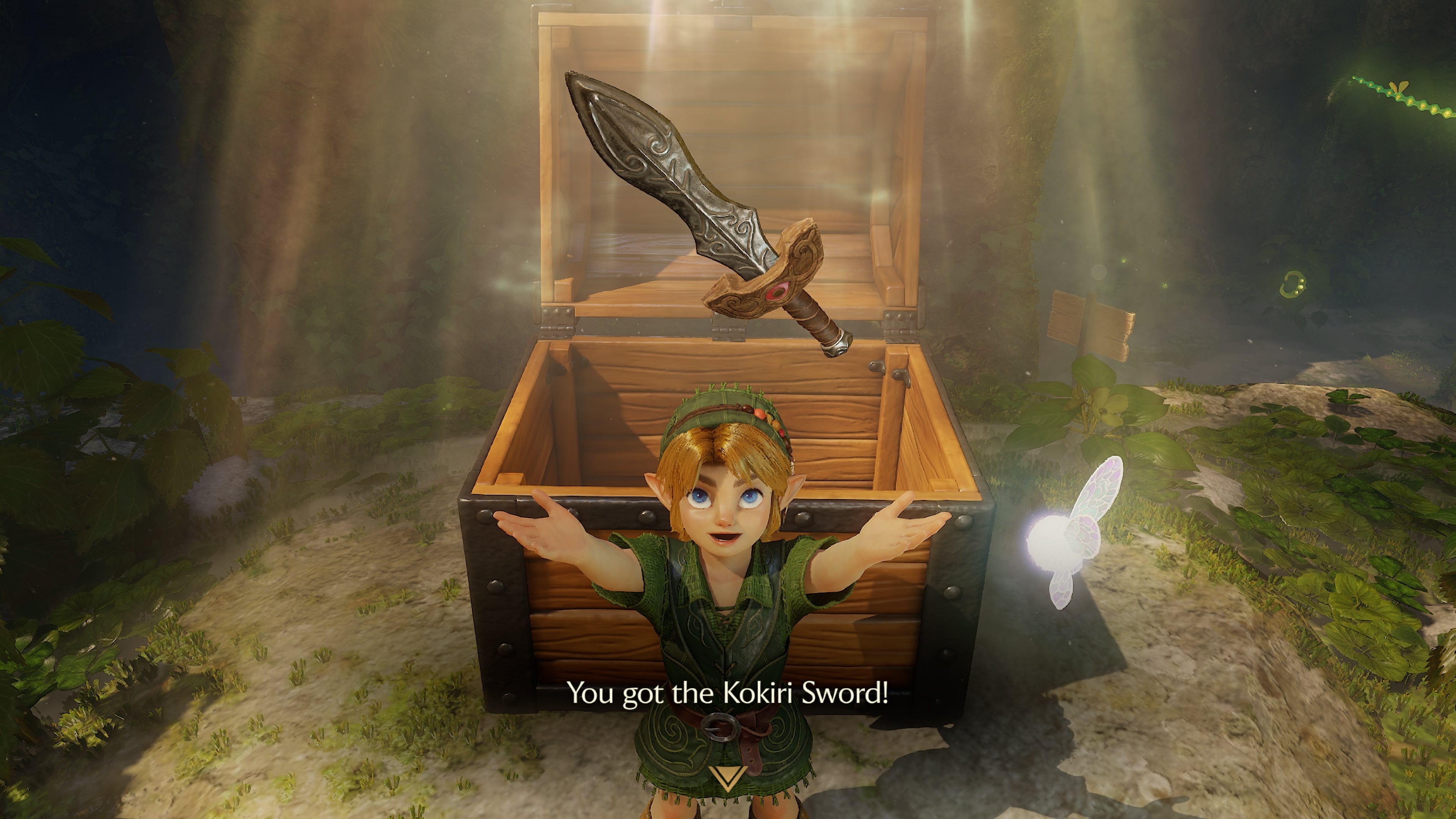
This takes place roughly before the halfway point in the game, and it’s been a while since I played through it so I was concerned that I would spend my limited demo time stumbling around aimlessly. Instead, it was a far more satisfying experience than I remember it being back in the day, mainly thanks to a number of quality of life improvements.
For starters, the upgrade to 60 frames per second – three times the 20fps the N64 game offered – means the controls feel far more responsive. Those slightly annoying Stalfos fights are a lot more satisfying, as flipping to the side or jumping back when they attack is far more intuitive.
One thing to note, though – because you now have a separate jump button, your jump attack is no longer a case of locking onto an enemy and simply pressing A. Now you have to lock on, press the jump button then press Y to swing your sword. If you’ve still got muscle memory from the original you’ll take a little while to get used to the extra step, but I do prefer it because it feels more engaging.
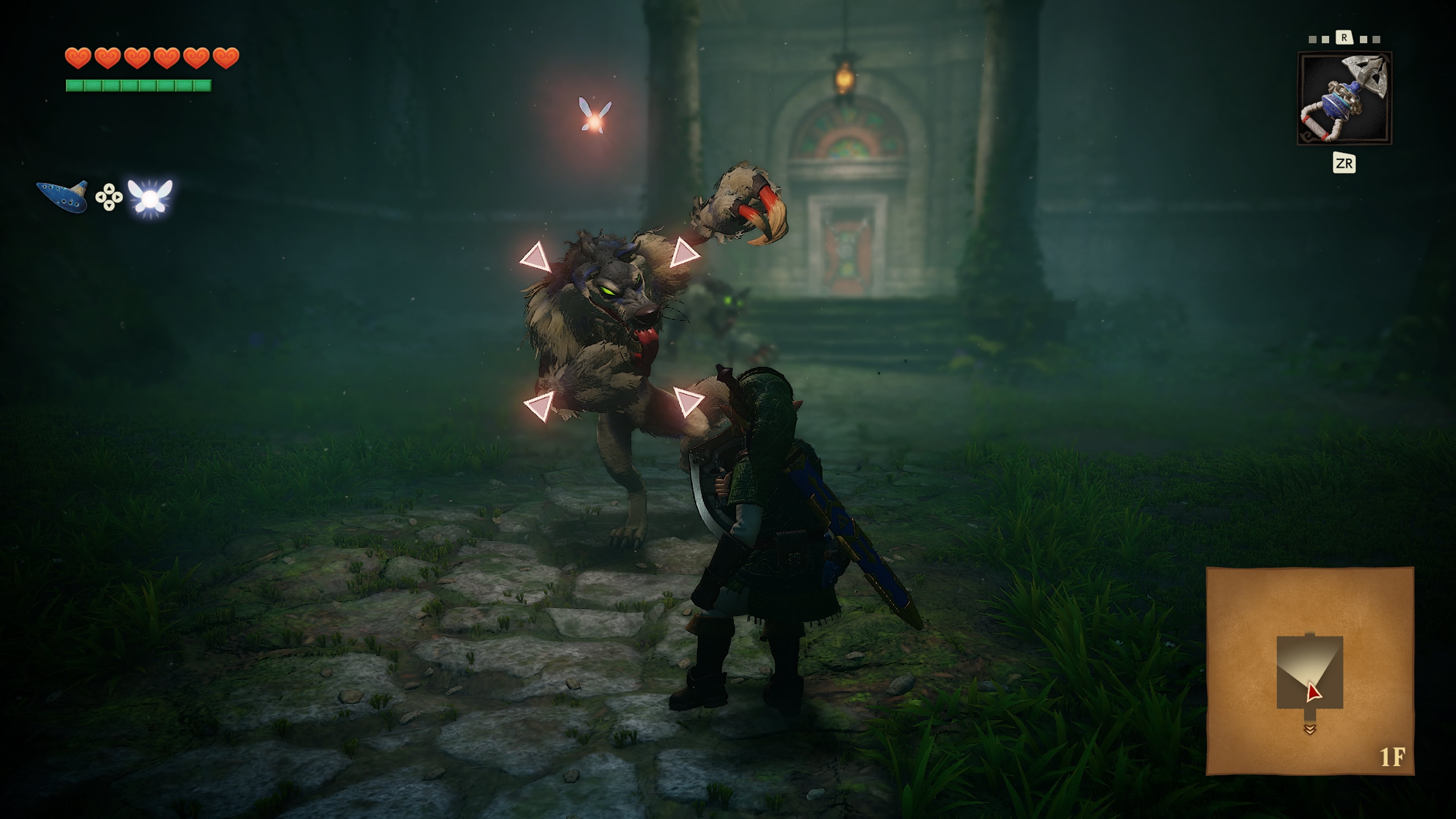
The ability to quickly switch between items in your inventory is also a huge help. In the original you had to hit Start and wait for the elaborate menu animation to play out before choosing your item, but here you simply hit the L or R button to bring up an on-screen menu and choose between your Hookshot, Bow, potion or what have you.
Because of this new quick swapping mechanic, I no longer fear the Water Temple and its constant equipping and removing of the Iron Boots. Maybe I still should though.
Because of this new quick swapping mechanic, I no longer fear the Water Temple and its constant equipping and removing of the Iron Boots. Maybe I still should though.
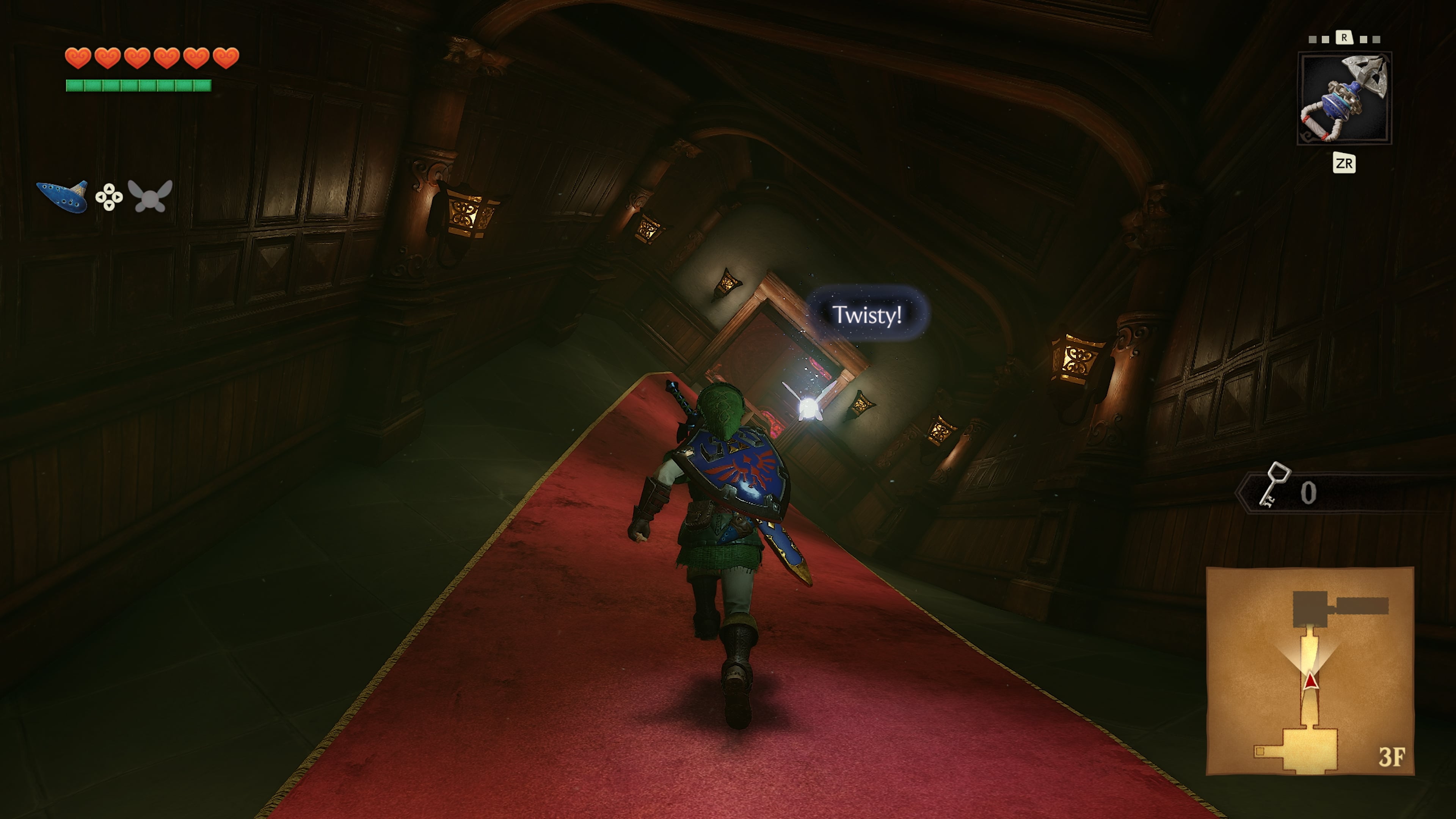
The other major help is the addition of a map at the corner of the screen at all times now. It was a minor nightmare when you were lost in a dungeon in the N64 original and found yourself constantly pausing to check the map, then resuming the game and trying to remember the layout in your head.
With the map always there now, showing you which way you’re facing and which rooms you haven’t visited yet, it’s much easier to keep your bearings and methodically make your way through the dungeon. Obviously there will be purists who hate this idea – turn that frown 180 degrees, because there are three settings for the in-game interface.
Normal gives you the standard display, with your map, selected item, control prompts and other information on the screen. Pro removes a number of these, giving you just the minimal information you need. And if you’re a masochist (or just want the full cinematic experience), setting it to Master turns off the HUD entirely.
As my time with the Ocarina of Time remake demo came to an end, I found myself falling in love with the game again. I was 15 when the original was released, and obsessed over it like so many others around the world did at the time. When I played the 3DS remake 15 years ago I enjoyed it, but it retained some of the clunkiness which was unavoidable in the N64 era, meaning it didn’t quite enthrall me in the same way the original did back in 1998.
This time, however, I felt it. It was only a couple of hours, but the quality of life improvements, the enormous visual overhaul, the fantastic music arrangements, the new content taking me by surprise (minor though it may be), and just the overall feel were enough to fire a perfectly gyro-aimed Hookshot right into my heart again.
I could go on for even longer explaining how excited I am for the game’s November 5 release, but in the interest of taking up no more of your time, I’ll just sum up my current mindset by paraphrasing Majora’s Mask:
22 days remain.