Three hours with 007 First Light convinced me it’s a game of the year contender – and maybe the best Bond yet
HANDS-ON: A truer representation of James Bond has never existed in gaming – with apologies to GoldenEye

Normally, you wouldn’t describe James Bond as chameleonic. This is a super spy who in his stories rarely blends in and often flippantly dispenses with fake names and cover stories as a matter of course. In the real world, he’s much more mutable, though. In this framing Bond does have an aspect of the chameleon as he’s been more or less everything – from a level of camp that barely distinguishes him from parody to brooding, gritty, and murderous.
Those examples will surely evoke thoughts of the films. But it goes beyond that: there’s Ian Fleming’s original substance-abusing, womanizing blunt instrument, Charlie Higson’s curious adventurer of the Young Bond novels, the distant-but-intimate romantic muse of Samantha Weinberg’s The Moneypenny Diaries series… even the annoying little shit that was James Bond Jr. And then, of course, there’s the video games.
Among many offerings, 1982’s Shaken but Not Stirred closely resembled Fleming’s novels in text adventure form. 1992’s James Bond Jr. titles reimagined the spy in crap platformer guise. The Duel offered a slightly better platformer where you at least had a gun. In the late nineties, we got a pair of bangers: a lesser-known but totally brilliant Game Boy title that played a bit like the 2D Metal Gear games – and, of course, N64‘s GoldenEye. GoldenEye is rightly regarded as the best James Bond video game – but at the same time, it isn’t the best video game James Bond.
GoldenEye is a truly brilliant, unassailable game, and in many ways it totally oozes Bond, crafted with a total love of the character and series. At the same time, technical constraints of the era meant that the core of GoldenEye was DOOM or Virtua Cop-esque blasting, which isn’t actually all that Bondian.
The feeling is pumped along by an all-time great score and occasional detours – the odd bit of spycraft (chucking bugs on things), cinematic recreation (lasering doorways), stealth (sniping, shooting guys before they could hit alarms), and gallantry (protecting that glorious idiot Natalya) – and so on. But in the end, the core of the game was mowing down hundreds of dudes – despite Bond being a character who actually doesn’t do all that much indiscriminate blasting with an AK.
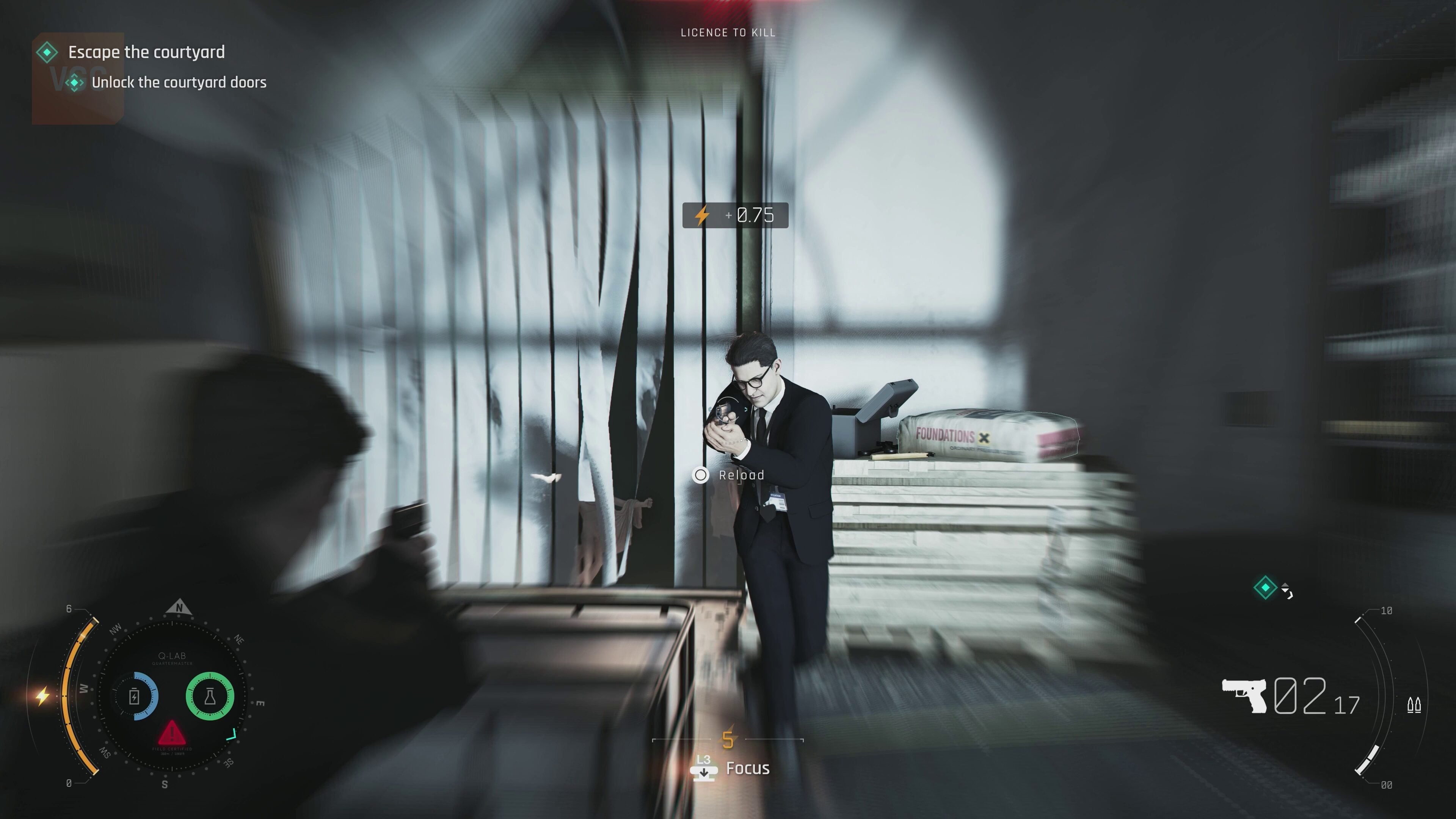
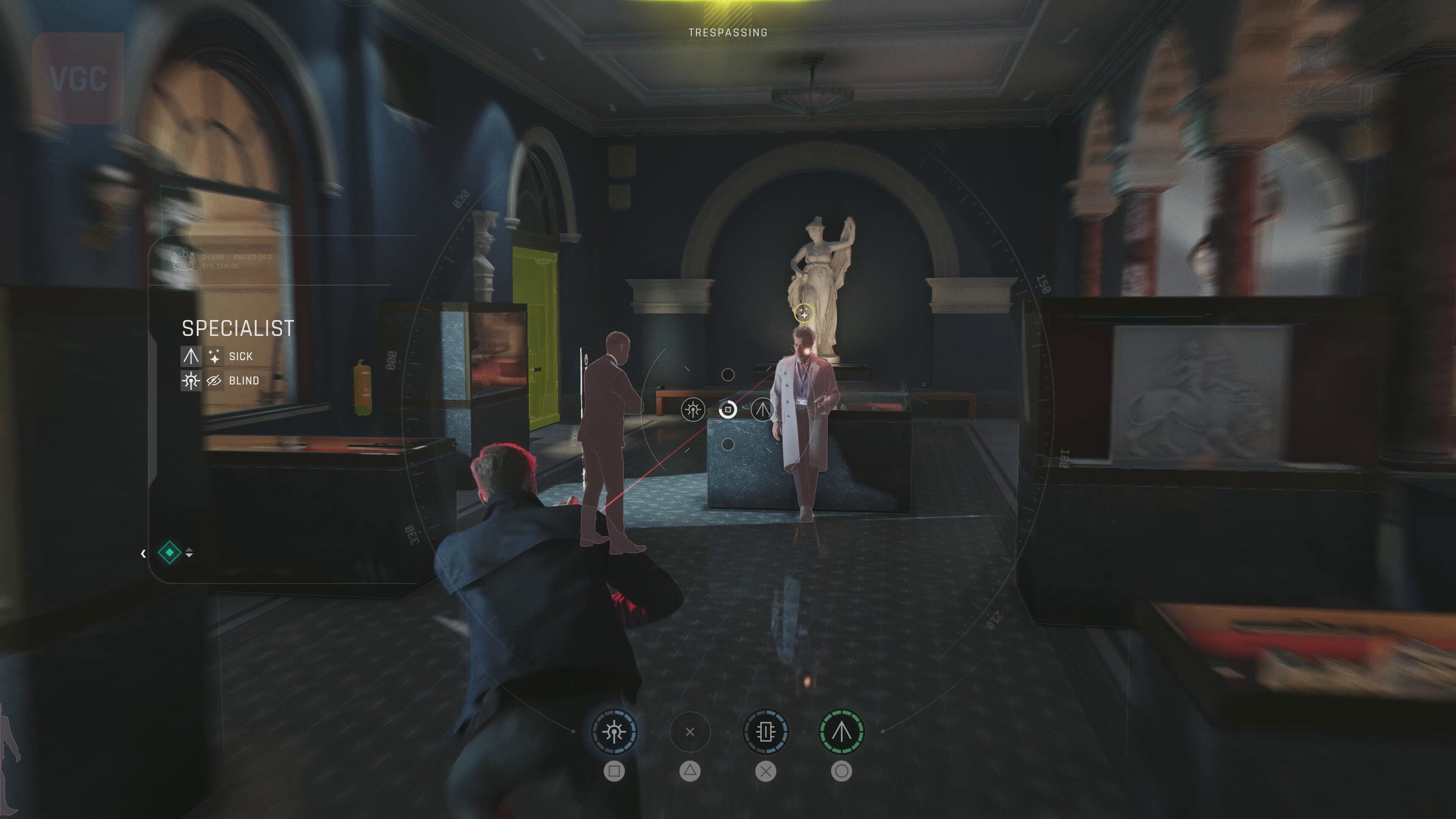
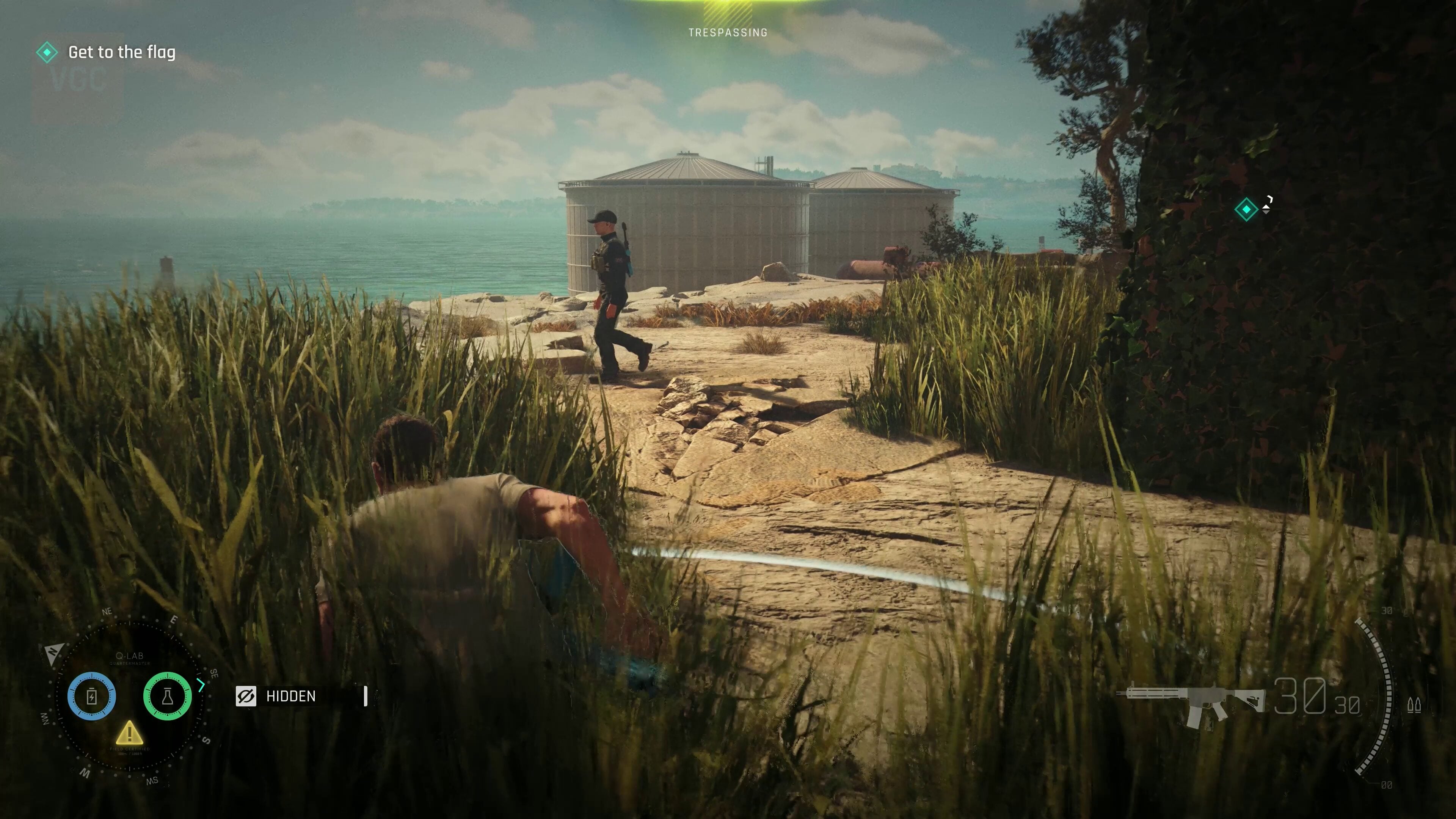
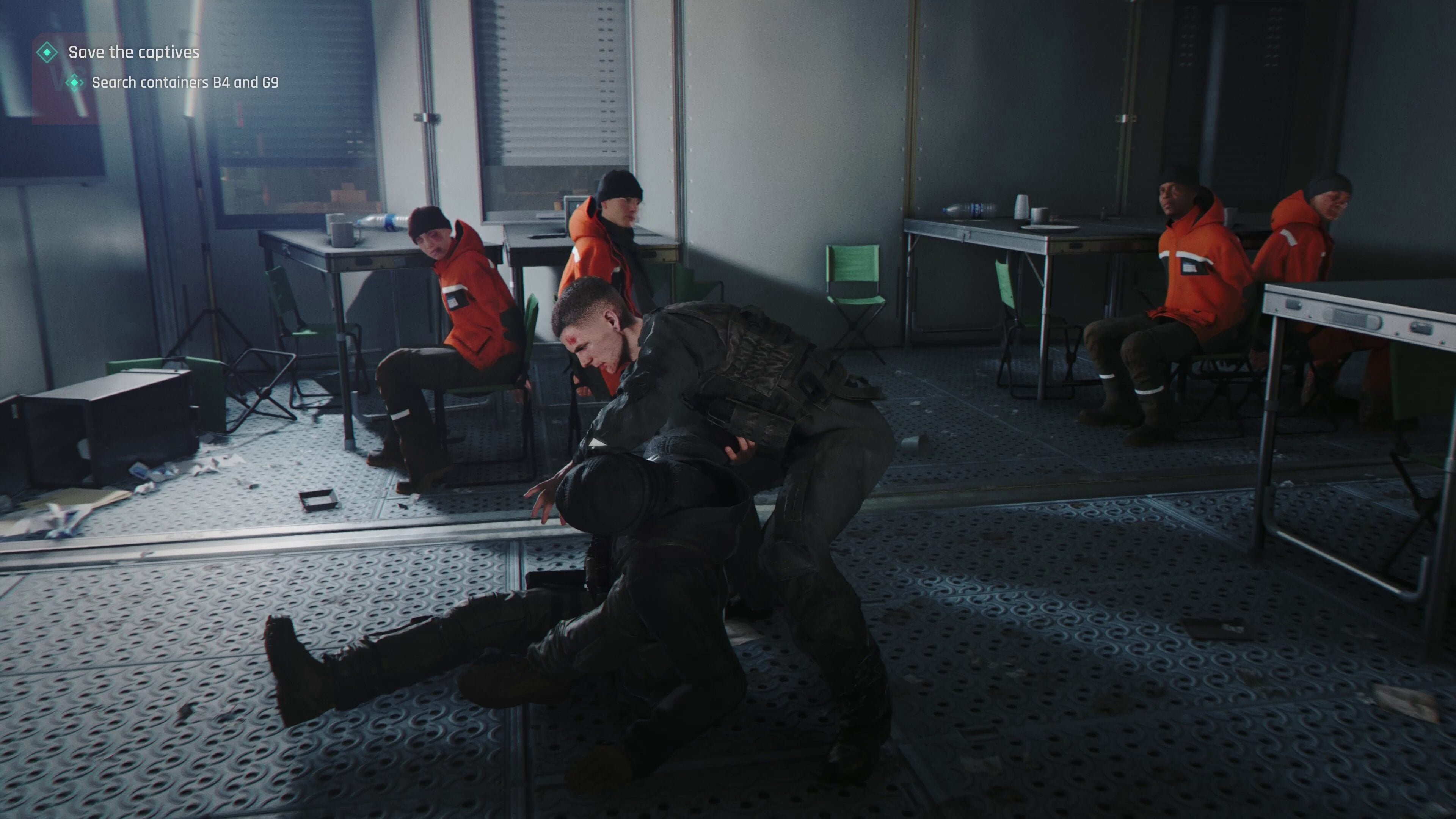
In the years since, we’ve had a range of games that have made attempts to bridge that gap, blending cinematic and non-shooting elements of Bond’s adventures with competent blasting. Several of these were better at doing the James Bond thing, but the actual games were simply never as good as GoldenEye. But 007 First Light may well change that.
The easy, reductive way of describing First Light would be to say that it’s Uncharted-style directed action mixed with Hitman-like open-ended zones. That in itself sounds pretty hot, right? Sold! It’s also, however, a description that totally undersells the experience.
Developer IO Interactive describes a game with a split down the middle. What IO calls ‘Guided’ gameplay is the stuff we might use Nathan Drake as a shorthand for – linear action set pieces that take you from A to B in a tightly controlled path. ‘Core’ gameplay, meanwhile, is the Hitman-esque stuff, with open pathways that you can forge a way through.
“The easy, reductive way of describing First Light would be to say that it’s Uncharted-style directed action mixed with Hitman-like open-ended zones”
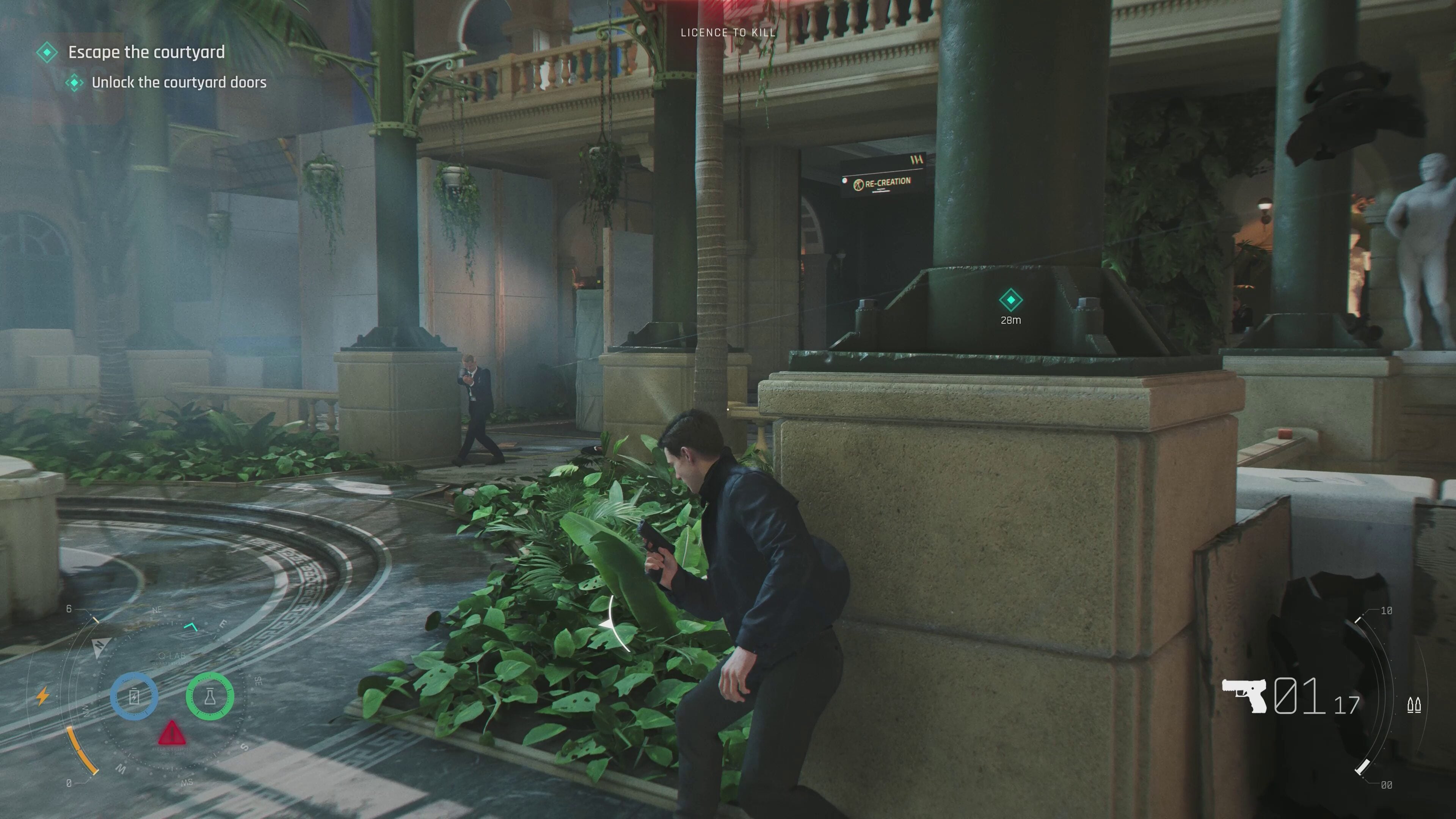
You might go full-stealth, for instance, darting from cover-to-cover and hiding in tall grass or behind desks and cabinets. You might use traversal to skirt around the outside of a level, avoiding guards. Or you could channel your inner 1997 and just start blasting – within reason (more on that later). The point is, the choice is largely yours.
The First Light preview hands-on, which lasted a little over three hours, offered a great slice to demonstrate this. The game’s introduction sees a brooding, silent Bond aboard a Royal Marine helicopter on a mission. Bond here isn’t the seasoned commander we know – in fact, he’s just an aircrewman; a recruit. The mission goes quickly awry in the way Bond intro sequences do – and he ends up alone. At one point he’s told over comms that he has a ‘Less than 1% chance of success’ – Bond goes for it, of course.
What you get here initially is a short level, pre-tutorial, which gives you a glimpse at both styles of play. The game seamlessly switches back and forth between stuff that is entirely guided and zones where you have a bit of choice. It’s a simple hourglass structure. In the end, everything will funnel you back to the same place for the next big mandatory set piece – but even in the game’s introduction it’s surprising how many pathways and options there appear to be.

In the end, a wry quip sends Bond crashing into the previously-released title sequence – and then IO skips me forward a little way to the true tutorial mission. Bond is in training on a British army base in Malta, one of many young new 00 Agents being put through their paces. This challenge is a microcosm of the game: a compact but many-pathed level where you have to reach and capture a flag – but how you do it is entirely up to you.
First Light is essentially about different ‘game states’, most heavily emphasized in the switch between melee and gunplay. As an MI6 Agent, Bond is one of the good guys – therefore he cannot just indiscriminately blast. If you’re spotted by an enemy who then becomes aggressive to you, there’s a seamless sort of transition from stealthy exploration to melee combat. These battles are somewhat reminiscent of the rhythmic, counter-driven brawling of the Batman: Arkham games.
This is especially satisfying, and has a delightful Bondian touch of an emphasis on blunt and brutal environmental play – smashing people into walls, picking up beer bottles from countertops to dome somebody with, etcetera. I think of Pierce Brosnan smashing henchman over the head with an ashtray as I do similar in the game and think: yep, legitimate. If you’re able to beat the enemies at this stage, you’ll transition back to stealth as the game’s UI coolly tells you that the situation has been ‘Contained’.
“First Light is essentially about different ‘game states’, most heavily emphasized in the switch between melee and gunplay.”
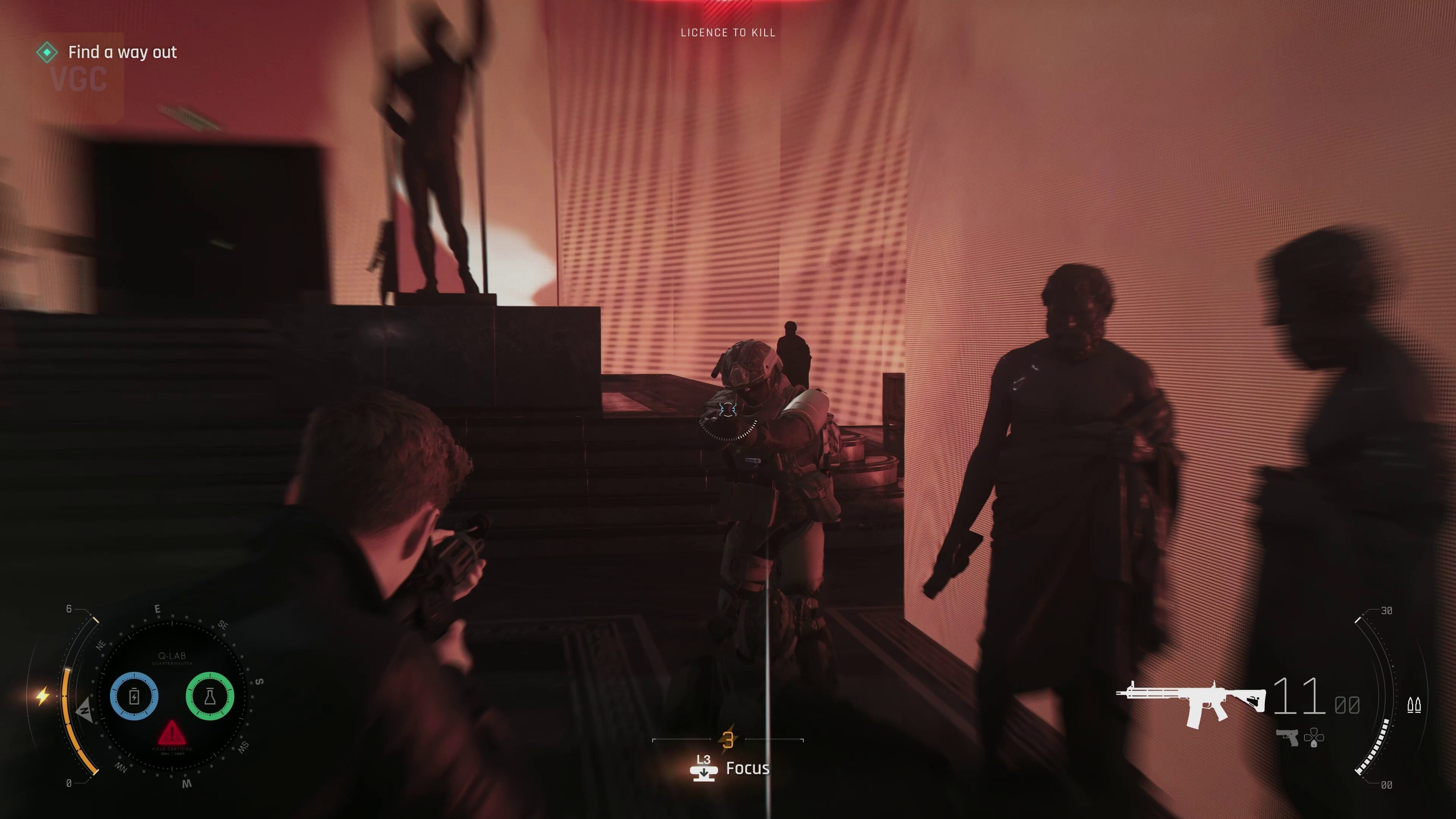
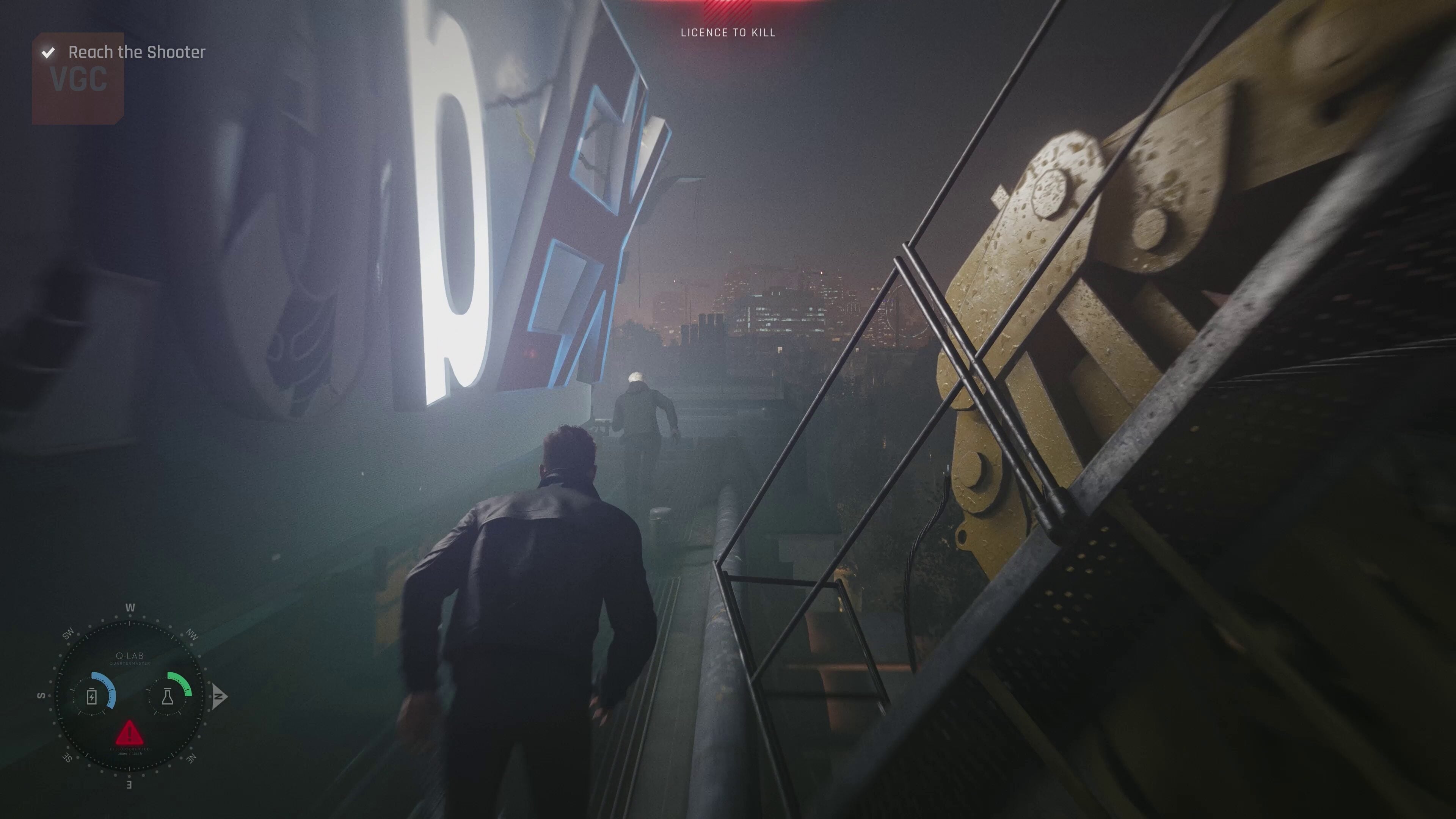
But the moment an enemy draws a weapon with which they intend to use deadly force, the game state changes: your License to Kill is activated. This is a brilliant use of the Bond terminology and iconography, but it’s also just flat-out clever game design, delineating the different modes of gameplay.
You can keep brawling while attempting to dodge enemy fire if you want, but at this stage, a squeeze of the trigger draws your weapon, and you’re good to go with smooth, snappy, and satisfying shooting. Throughout this demo, Bond only carries a sidearm by default, so it’s up to you to secure bigger and better boomsticks in the environment or from downed enemies.
One thing I want to stress here is that 007 First Light shares many elements and systems with Hitman, but it assuredly does not feel the same. What’s astonishing, in fact, is how different IO has succeeded in making Agent 007 feel when compared to Agent 47, despite the fact that the two clearly share much behind-the-scenes.

Bond is scrappy, fluid, and loose, whereas 47 is deliberate and rigid. Getting into a gunfight in Hitman is stressful because the monk-like 47’s control scheme and game feel is not really built for one-on-many encounters. Bond’s, however, is. The main difference between the two is arguably that 47 is always applying the brakes – while no matter the situation First Light’s Bond is always maintaining forward momentum.
Similarly, that ‘Situation Contained’ UI element speaks to another crucial difference between the games. In Hitman’s huge Rube Goldberg machine levels, being spotted or going into combat can quickly cascade into the whole level becoming a warzone. First Light seems to go to great pains to divide even its larger levels into more discrete zones – meaning even if one turns into a bloodbath as bullets fly, there’ll be a certain point where the situation ‘resets’ for the next zone.
While there are clear mechanical lines between the modes of gameplay, in the moment, each switch feels totally seamless. Skills are transferable between the two to some degree, also. Take Bond’s gadgets: in stealth mode, the laser from Q Branch’s suped-up Omega Seamaster watch can be used to create environmental distractions like dropping a chandelier – but in exploration and traversal, that same laser may shoot a lock off a door, opening a new path. In combat, a quick blast of the watch laser could blind an enemy at a critical moment, giving you time to get to cover or reload.
“What’s astonishing is how different IO has succeeded in making Agent 007 feel when compared to Agent 47, despite the fact that the two clearly share much behind-the-scenes.”
There’s a range of multi-functional gadgets along these lines. As with Hitman’s environmental play, there’s scope for great fun with these gadgets – triggering traps to knock out enemies or just cause fun mayhem. There is the promise of further gadget range as the game progresses, too. In short, the interplay between stealth, melee, shooting, and gadgets feels well balanced.
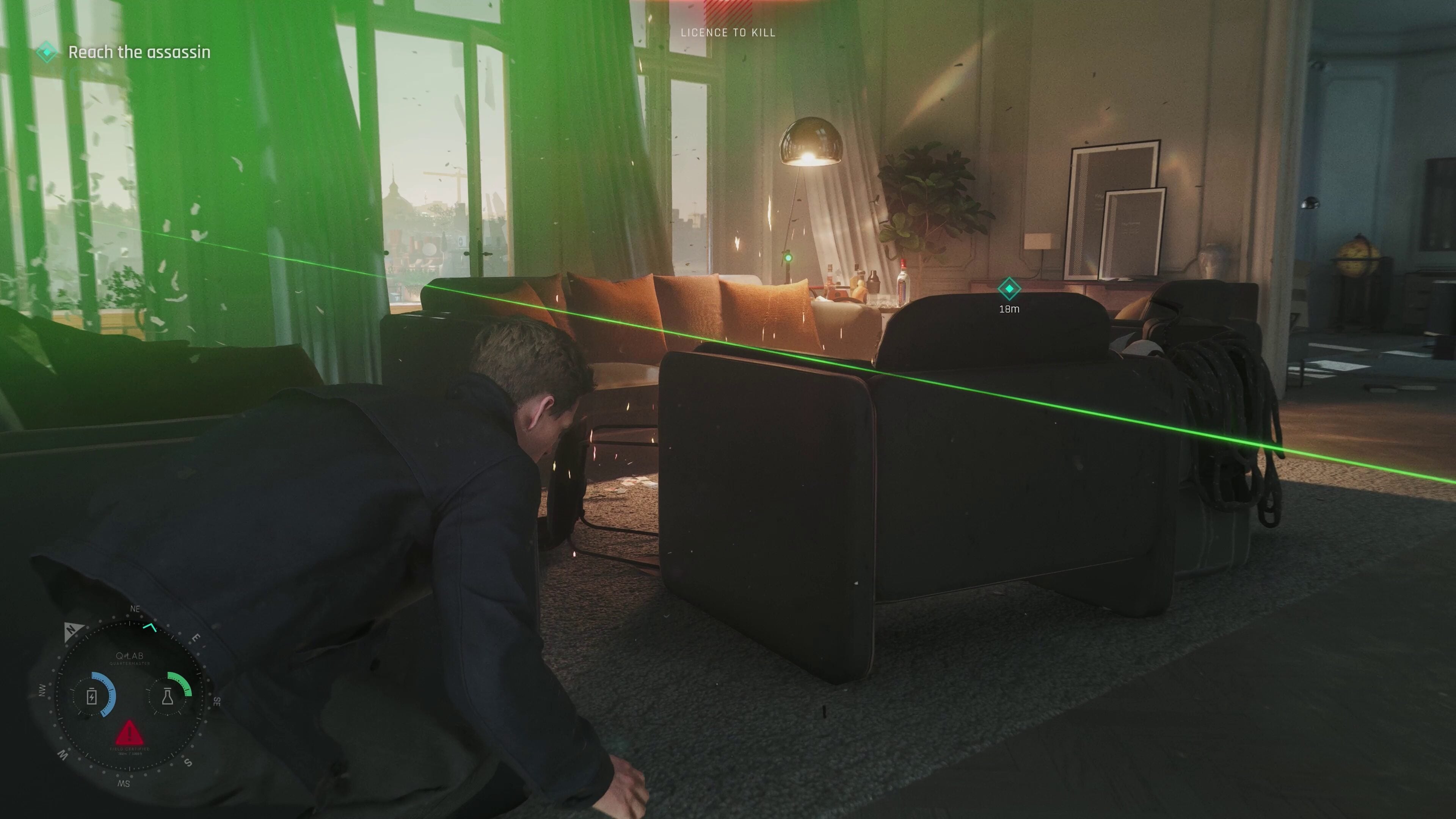
The third and final chunk of the hands-on is a stage in London. A quick and spoiler-free walkthrough of the flow of this level should give you an idea of how the game plays at large. The level opens with a casual, narrative-heavy exploration of a narratively revealing environment. An assassin tries to kill Bond: there’s then a thrilling action sequence where you must try to reach the sniper as they fire on you, utilizing cover and gadgets to get to them.
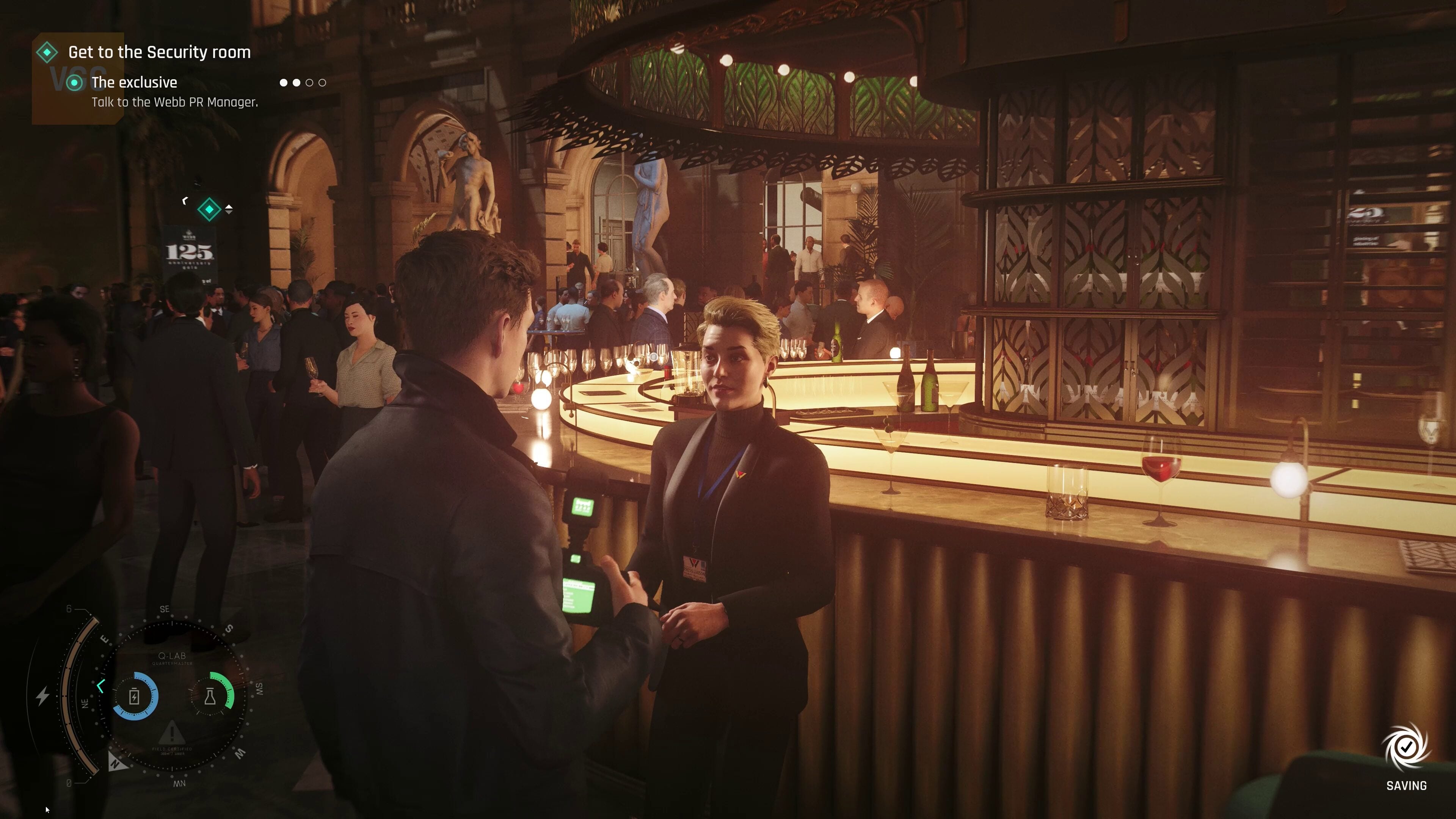
After this, Bond finds himself at a high society party. The first job is to obtain an invitation to the party in a Hitman-like open world zone. You might find one discarded somewhere, or you could distract and steal one from a party goer. Once inside the party, there are layers of security, meaning you have to use your smarts to find ways past the guards.

This could be stealing access passes or pretending to be someone you’re not, with leads gathered by eavesdropping on or outright charming the other party attendees. In these scenarios, it’s impossible to transition the game to a combat state – Bond isn’t going to start punching people in a crowded party – again differentiating from the do-whatever chaos of Hitman.
Eventually, the mission leads Bond to the event’s security offices. Here you have more options – stealth, melee, bluffing – even license to kill. Stealth could be sneaking, but it could also be using some of Bond’s ‘Instinct’ – a limited resource – to act like he’s supposed to be there, giving you free rein to roam in front of many guards unless a higher level ‘Enforcer’ who knows who his team are and who is meant to be there spots you – a mechanic borrowed wholesale from Hitman.
Eventually, this section leads towards a cool boss battle with an emphasis on gadgets that call to mind some of the better boss battles of the Deus Ex games. After this, events tighten to the more cinematic – multiple choice dialogue option chattiness, some narratively enforced sneaking around, and then a great big battle arena as armor-clad enemies flood through the doorway.
“As with Hitman’s environmental play, there’s scope for great fun with gadgets – triggering traps to knock out enemies or just cause fun mayhem.”
Even this zone is interesting, though: license to kill is permanently activated here and the enemies know Bond is present and are there to kill him – but you don’t necessarily have to get behind cover and treat it like Gears of War. If the use of the environment and gadgets to disable Bond’s would-be assailants is preferable, you can do that. You can also sneak around and take the hit squad out one by one. In these ‘core’ zones, one can also see the seeds for how IOI plans to keep First Light running with challenge missions and the like in its ‘TacSim’ mode, allowing the game to live on beyond story completion as with Hitman.
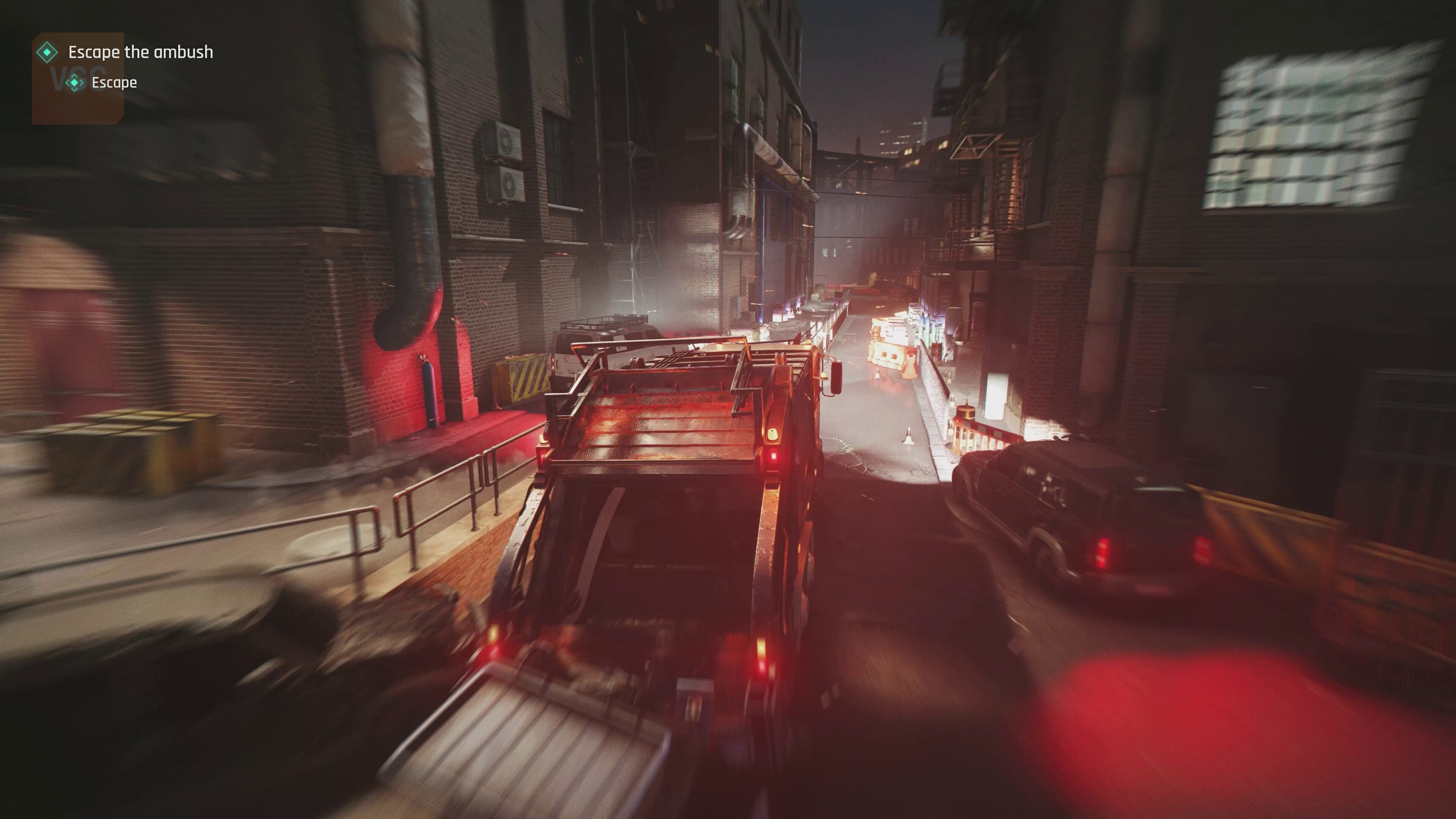
Finally, the level hurtles to a conclusion which involves an unlikely commandeered video and a car chase of sorts through the streets of London, which, of course, is entirely linear. To be clear, all of the above is one mission, which ebbs and flows through the different game states and styles that First Light offers. I honestly thought it was bloody brilliant.
There’s one final bit of solid gold threaded throughout all of this to seal the deal, though – and that’s James Bond himself. I can’t say much beyond that Patrick Gibson absolutely embodies the character – he is Bond, aided of course by brilliant animation efforts from the team at IOI. This version of the character is pure energy, which perfectly matches the constant momentum of the game.

What you need to understand, of course, is that this is a different version of Bond – Gibson clearly eyes the other holders of the role, and the version from the books, but does his own thing. I think he has the right mix of cool detachment and smug self-assurance to make the role sing, though.
Also, I never really considered until I played how Bond’s penchant for deadpan quips is absolutely perfect for a third-person action game character who, yes, on occasion, talks to himself to fill the dead air. Anyway, the long story short is that I laughed out loud at several one-liners in this three-hour slice – without Gibson’s Bond coming over as a silly caricature.
This is already an overlong preview. I’ve been writing about games for a long time, and usually such a transcript only runs away with you in two scenarios: when something is shaping up to be rubbish, or when something is shaping up to be truly special. Three hours have convinced me that First Light is likely to be the latter – I really hope IOI sticks the landing next month.